 How to resolve AdBlock issue?
News
- Details
- Written by: Esther Oertel
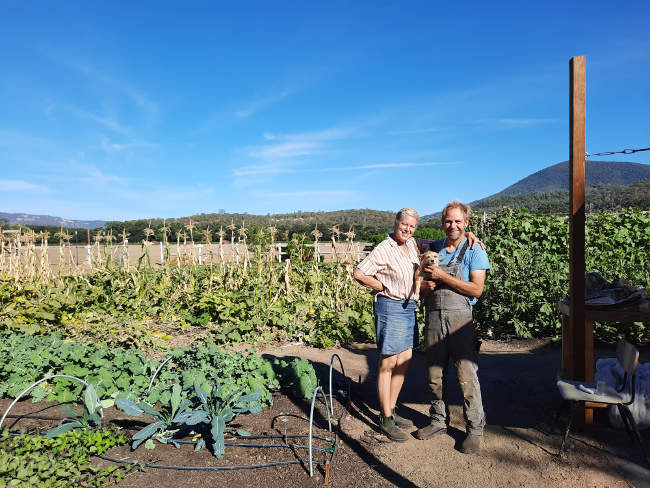
KELSEYVILLE, Calif. – On a recent afternoon I had the pleasure of visiting what I imagine is one of the most aptly named agricultural spaces in the world – Peace and Plenty Farm in Kelseyville.
I sat under the shade of a spreading walnut tree with Melinda Price, who, along with her husband, Simon Avery, developed the only commercial organic saffron farm in North America.
With our chairs appropriately distanced, we sipped the house-made lavender lemonade sold at their farm stand and chatted about saffron, farming and making dreams come true.
Saffron, a spice derived from the purple Crocus sativus, is ounce for ounce the most expensive food in the world, rivaling the price of truffles, caviar and even gold.
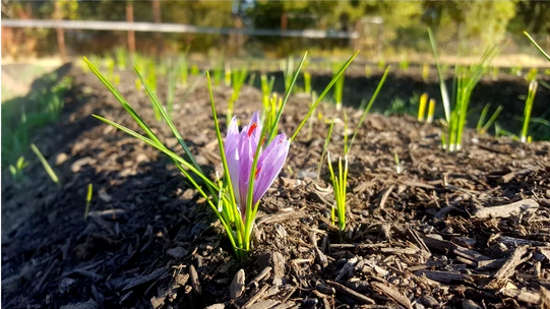
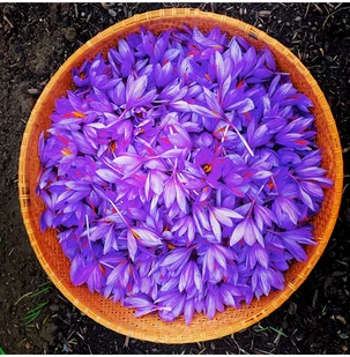
Each bloom produces three red stigmas, also known as threads, apt since they look a bit like frayed filaments. These are harvested by hand, making saffron a deeply labor-intensive crop, leading to its steep price.
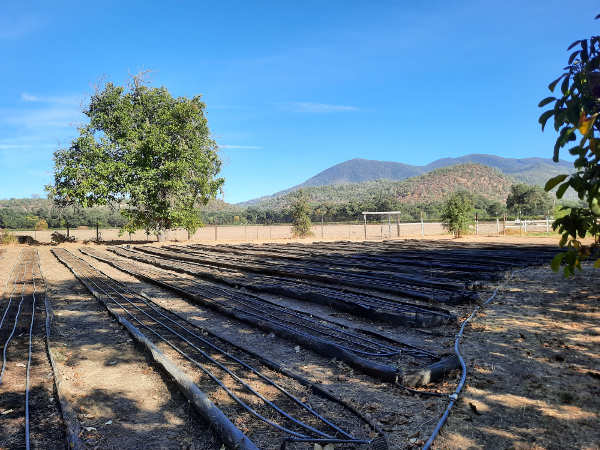
Blooms are picked before the sun hits them to preserve the integrity of the saffron. Once the flowers are collected, each thread is painstakingly plucked from their centers. The threads are then dried to be sold as saffron.
It’s backbreaking and time-consuming work but deeply satisfying to Price and Avery, who first began growing organic saffron in Lake County in 2017.
Saffron is beloved in cuisines around the world – from Europe to North Africa to Asia – and is particularly essential to the food of Iran, India and Morocco. It’s a crucial ingredient in some classic European dishes, where it’s been popular since Medieval times – think Spanish paella, French bouillabaisse or Swedish saffron buns.
Iran produces the bulk of the world’s saffron crop – a full 90 percent – and may well be the place of origin of the lovely saffron crocus; however, there are other contenders, namely Greece and Mesopotamia.
Though growers exist in other parts of the world, saffron is grown chiefly in the Mediterranean region in a belt from Spain in the west to Kashmir in the east. Spain and Kashmir both claim their saffron to be superior in quality to the mass amounts grown in Iran.
California’s Mediterranean climate is ideal for growing saffron, a factor that contributed to Avery and Price’s decision to cultivate it in Lake County.
They had considered other specialty crops – mushrooms, wasabi, vanilla, hops – but none were exactly what they were looking for. For example, mushrooms would have them working inside rather than out, and hops require a lot of water, not the best choice for drought-ridden California.
When Avery heard about saffron farming via a National Public Radio broadcast, something clicked. The crop checked all their proverbial boxes.
Shortly afterward – and before they had purchased land – Price found herself on a plane to Vermont where she would attend a workshop on growing saffron. She returned from the conference with 7,500 crocus bulbs known as corms. They were committed.
This was in February of 2017, and by June they had purchased the former Gaddy Ranch in Kelseyville. Within three months they had planted all 7,500 corms.
There’s a quick turnaround between planting and harvesting with saffron. If corms are planted in early September, flowers can bloom as quickly as October. Their timing was perfect for a harvest in their first year.
It wasn’t easy. They contended with star thistle, which stood more than 6 feet tall in places. Gophers and voles destroyed many of their corms until Avery designed and installed a planting system to thwart them.
Their hard work has paid off. The 7,500 corms have grown to 500,000 and last year they harvested a full kilo of dried saffron.
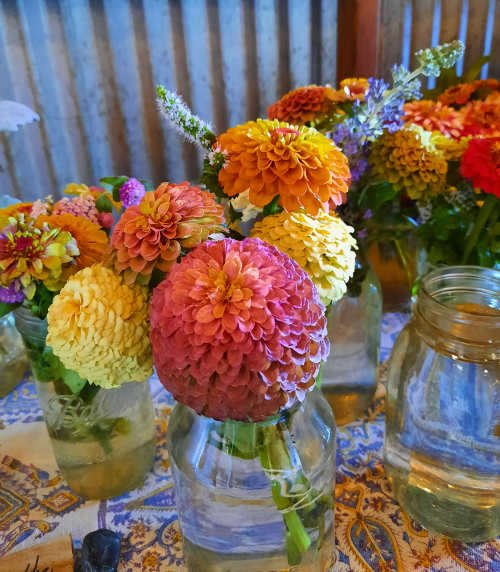
In addition to saffron, the farm has a lush and productive market garden that provides vegetables for the year-round farm stand, and a cottage that is available for farm stays.
Eggs from their large flock of chickens, dry-farmed walnuts, flowers, and a variety of saffron-infused value-added products like honey and soap are also sold at the farm stand, which is open daily from 9 a.m. till dusk.
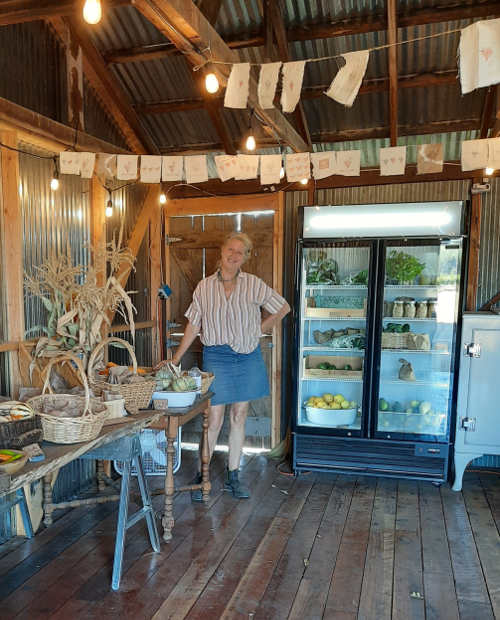
As Price and I enjoyed the peace of the walnut orchard, Avery ambled by on a lawn mower. He stopped long enough to say hello and afterward I learned that his native England has a history of saffron farming.
The Essex town of Saffron Walden, whose coat of arms includes a saffron crocus, grew the crop in the 16th and 17th centuries. English saffron farmers in those times were known as croquers, a moniker derived from crocus.
Since ancient times, saffron has been used as a treatment for a variety of ailments. Modern studies reveal a high antioxidant content, with associated benefits stemming from that, not the least of which is reducing inflammation in the body.
Saffron enhances memory (studies reveal it can help Alzheimer’s patients) and is a mood improver. There is growing evidence that saffron may be a useful treatment addition for depression.
Saffron, which has a nuanced flavor with sweet floral and earthy notes, may be used to enhance a wide variety of foods, but pairs especially well with rice (think paella or saffron rice), seafood (think bouillabaisse), chicken (even chicken soup!), curries and baked goods.
A simple tea can be made by steeping a bit of saffron in warm water. Alternatively, let saffron soak in water overnight in the fridge for an iced version.
Price enjoys saffron steamed milk with her daily espresso, which I think would be utterly delightful with some buttery saffron shortbread.
Since its flavor is best released through heat, steeping saffron in hot (but not boiling) liquid as part of the cooking process is key. The liquid in your recipe, whether water, broth or wine, can be used for this.
Saffron may also be toasted in a pan and then crushed for addition to recipes; however, be aware that it burns easily, rendering it unusable.
A little goes a long way with saffron and the flavor is stronger in a dish the second day. Usually, a pinch, just a few threads, is all you need.
Protect saffron from light and moisture when storing it and be sure its container is clean and free from scent as saffron is known to easily absorb odors and flavors.
And finally, refrain from using wooden utensils when stirring your saffron-infused dish as its luscious flavor might be absorbed into the spoon.
If you wish to learn more about Peace and Plenty Farm, their online shop or farm stays, visit them at www.peaceplentyfarm.com.
Today’s recipe is for golden milk with saffron. Golden milk is a soothing drink infused with turmeric and other warm spices. I’ve adapted this version to include saffron.
In addition to being comforting and delicious, the turmeric, ginger and saffron help reduce inflammation in the body, making it a healthful treat.
Golden milk with saffron
Ingredients
1 teaspoon coconut oil
1 teaspoon ground turmeric
5 whole peppercorns
1-inch section unpeeled ginger root, roughly chopped
1 cinnamon stick, broken into several pieces
3 to 4 cardamom pods
2 threads saffron
1 cup coconut milk (or other milk of your choice)
1 teaspoon honey
Procedure
Add the coconut oil and all spices except saffron to a saucepan. Heat over low heat for two to three minutes until aromatic.
Add the milk and saffron to the saucepan and warm mixture over medium-low heat until hot and steaming but not boiling.
Strain the mixture through a fine sieve. Pour strained milk into a cup, add the honey and enjoy!
Esther Oertel is a writer and passionate home cook from a family of chefs. She grew up in a restaurant, where she began creating recipes from a young age. She’s taught culinary classes in a variety of venues in Lake County and previously wrote “The Veggie Girl” column for Lake County News. Most recently she’s taught culinary classes at Sur La Table in Santa Rosa. She lives in Middletown.
- Details
- Written by: Lake County News reports
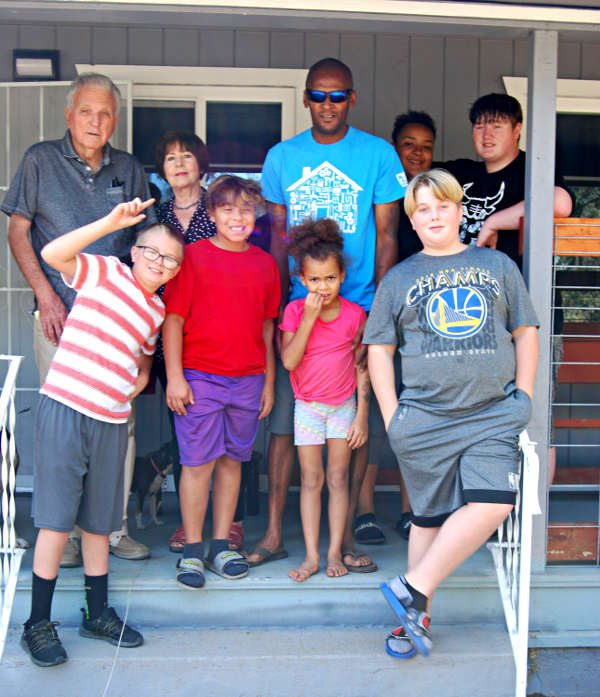
LAKE COUNTY, Calif. – After delays created by COVID-19, fires and weather, on Sept. 26 Habitat for Humanity Lake County, along with friends and extended family, gathered to celebrate and welcome the Bryant family into their new home.
Guests were invited to share treats and tour the home and property and offer their well-wishes to Quentin Bryant and his daughter during a brief ceremony to present them the keys to their home.
“I’m just so grateful,” Bryant said. “I don’t know what else to say. All the hard work’s been worth it now, to give my daughter a home, her own room, a place to grow up. This wouldn’t have happened without Habitat’s help. I’m so thankful.”
Habitat for Humanity Lake County’s goal is to help qualified low-income families get into safe, decent, affordable housing.
To learn more about program qualifications and to receive a preapplication, visit the office at 15312 Lakeshore Dr. in Clearlake or call 707-994-1100, Extension 108.
Qualification is based on Lake County residency, household income, and household need.
Everyone is encouraged to apply.
- Details
- Written by: Laurie Archbald-Pannone, University of Virginia
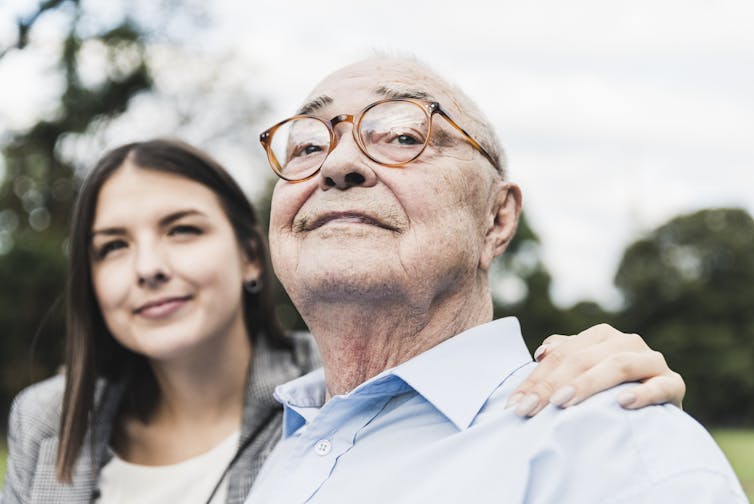
Deaths from dementia during the summer of 2020 are nearly 20% higher than the number of dementia-related deaths during that time in previous years, and experts don’t yet know why. An estimated 61,000 people have died from dementia, which is 11,000 more than usual within that period.
“There’s something wrong, there’s something going on and it needs to be sorted out,” Robert Anderson, chief of mortality statistics at the U.S. Centers for Disease Control and Prevention, said in a recent interview with Politico. “This is highly unusual.”
As a geriatrician, I find this statistic sad but not shocking. I care for dementia patients in my clinical practice. I see firsthand how the isolation caused by the pandemic has changed their lives, whether they’re home alone, living with a caregiver, or in a long-term care facility.

Deciphering the statistics is a challenge. Hiding within them are many factors that have contributed to the deaths from dementia during the pandemic. Here are four of them.
Social isolation
Social distancing – or staying at least 6 feet apart, wearing a mask and avoiding crowds – is a proven way to decrease COVID-19 risk, especially from people with the infection but without symptoms. But social distancing is different from social isolation, which leads to a sense of disconnection from the community. Social isolation, which essentially is little or no contact with others, is the last thing seniors with dementia need. But it’s what many have received, as caregivers are forced to limit visits during the pandemic.
Social isolation is a risk for poor health outcomes, particularly as people age. And in the U.S., 28% of those over 65 (13.8 million) live alone. Socially isolated people have higher rates of not only dementia, but heart disease, high blood pressure, depression, cognitive decline and death.

Caregiver burnout
On the best of days, caregiving for a family member with dementia is difficult. Watching the decline of a loved one is hard. Having to help them with things that are basic and personal makes it even harder. The commitment, 24 hours a day, offers little time for breaks. Often the caregiver, unsung and overlooked, is suffering.
And during COVID-19, caregivers have been isolated too. What help they had from the outside is now probably gone. Burnout becomes more likely. For dementia patients to get the best care, their caregivers also need care and support.
Decreased access to medical care
Throughout the U.S., hospitals and clinics have seen fewer people coming in. Many missed visits were for preventive care and treatment of chronic conditions. For dementia patients, accessing care may even be more problematic. Telemedicine, often an option for other patients, may not be manageable for those with dementia. Physicians and staff need to reach out to them. And agencies and volunteer groups are available in many communities to assist seniors who need access to technology.
Staying home
Because of COVID-19, some of my patients choose to stay home. They’ve decided a medical issue is not worth the risk of leaving the house. I also have patients living in facilities who choose to use the care available there instead of going to the hospital.
This is a good example of something we doctors call goal-concordant care: when doctors understand a patient’s health goals, and then provide them with the best they can within the scope of those goals.
Some advice
Dementia is a complex medical condition with no cure. But that doesn’t mean nothing can be done to make a patient’s life better, even during COVID-19. With each challenge there are ways to provide help and support, not just to those with dementia, but for those who care for them.
[Deep knowledge, daily. Sign up for The Conversation’s newsletter.]
If you know someone with dementia, whether they live at home or in a facility, check in on them. Because in-person visits are not the safest option, you can call to see how they’re doing or if you can help. You don’t need the latest technology to connect; many with dementia may have challenges going online. Landlines and cellphones are just fine, allowing your elderly friend to hear a human voice. It does you good too: Building relationships with people who aren’t our age gives us insights and perspectives we may have never considered.
Also, check in on the caregiver; call to chat and, most important, listen. You don’t need to have the answers; just be supportive. If you are a caregiver, reach out to local agencies; many have easy-to-access virtual support groups.
And talk with loved ones about what you would want if you had dementia and couldn’t speak effectively for yourself. Your primary care doctor can help you think through these types of situations. Such conversations are uncomfortable, but necessary.
Laurie Archbald-Pannone, Associate Professor Medicine, Geriatrics, University of Virginia
This article is republished from The Conversation under a Creative Commons license. Read the original article.
- Details
- Written by: Mara Johnson-Groh
Scientists created light curves using the high-resolution images of the sun to understand what a sunspot would look like on a distant star. They studied different layers of the sun from the visible surface to the outer atmosphere using 14 different wavelengths, including the six shown here (top left to right: photosphere, magnetic flux of the photosphere, ultraviolet 304 angstroms; bottom left to right: ultraviolet 171 angstroms, ultraviolet 131 angstroms, x-ray). Credits: NASA/SDO/JAXA/NAOJ/Hinode.
NASA’s extensive fleet of spacecraft allows scientists to study the sun extremely close-up – one of the agency’s spacecraft is even on its way to fly through the sun’s outer atmosphere. But sometimes taking a step back can provide new insight.
In a new study, scientists looked at sunspots – darkened patches on the sun caused by its magnetic field – at low resolution as if they were trillions of miles away. What resulted was a simulated view of distant stars, which can help us understand stellar activity and the conditions for life on planets orbiting other stars.
“We wanted to know what a sunspot region would look like if we couldn’t resolve it in an image,” said Shin Toriumi, lead author on the new study and scientist at the Institute of Space and Astronautical Science at JAXA. “So, we used the solar data as if it came from a distant star to have a better connection between solar physics and stellar physics.”
Sunspots are often precursors to solar flares – intense outbursts of energy from the surface of the Sun – so monitoring sunspots is important to understanding why and how flares occur.
Additionally, understanding the frequency of flares on other stars is one of the keys to understanding their chance of harboring life.
Having a few flares may help build up complex molecules like RNA and DNA from simpler building blocks. But too many strong flares can strip entire atmospheres, rendering a planet uninhabitable.
To see what a sunspot and its effect on the solar atmosphere would look like on a distant star, the scientists started with high-resolution data of the sun from NASA’s Solar Dynamics Observatory and JAXA/NASA’s Hinode mission.
By adding up all the light in each image, the scientists converted the high-resolution images into single datapoints.
Stringing subsequent datapoints together, the scientists created plots of how the light changed as the sunspot passed across the sun’s rotating face. These plots, which scientists call light curves, showed what a passing sunspot on the sun would look like if it were many light-years away.
“The sun is our closest star. Using solar observing satellites, we can resolve signatures on the surface 100 miles wide,” said Vladimir Airapetian, co-author on the new study and astrophysicist at NASA’s Goddard Space Flight Center in Greenbelt, Maryland. “On other stars you might only get one pixel showing the entire surface, so we wanted to create a template to decode activity on other stars.”
The new study, published in the Astrophysical Journal, looked at simple cases where there is just one group of sunspots visible across the entire face of the sun. Even though NASA and JAXA missions have continually gathered observations of the sun for over a decade, these cases are quite rare.
Usually there are either several sunspots – such as during the solar maximum, which we are now moving toward – or none at all. In all the years of data, the scientists only found a handful of instances of just one isolated sunspot group.
Studying these events, the scientists found the light curves differed when they measured different wavelengths. In visible light, when a singular sunspot appears at the center of the sun, the sun is dimmer.
However, when the sunspot group is near the edge of the sun, it’s actually brighter due to faculae – bright magnetic features around sunspots – because, near the edge, the hot walls of their nearly vertical magnetic fields become increasingly visible.
The scientists also looked at the light curves in x-ray and ultraviolet light, which show the atmosphere above the sunspots. As the atmospheres above sunspots are magnetically heated, the scientists found brightening there at some wavelengths.
However, the scientists also unexpectedly discovered that the heating could also cause a dimming in the light coming from the lower temperature atmosphere. These findings may provide a tool to diagnose the environments of spots on the stars.
“So far we’ve done the best-case scenarios, where there’s only one sunspot visible,” Toriumi said. “Next we are planning on doing some numerical modeling to understand what happens if we have multiple sunspots.”
By studying stellar activity on young stars in particular, scientists can glean a view of what our young sun may have been like. This will help scientists understand how the young sun – which was overall more dim but active – impacted Venus, Earth and Mars in their early days. It could also help explain why life on Earth started four billion years ago, which some scientists speculate is linked to intense solar activity.
Studying young stars can also contribute to scientists’ understanding of what triggers superflares – those that are 10 to 1000 times stronger than the biggest seen on the sun in recent decades. Young stars are typically more active, with superflares happening almost daily. Whereas, on our more mature sun, they may only occur once in a thousand years or so.
Spotting young suns that are conducive to supporting habitable planets, helps scientists who focus on astrobiology, the study of the origin evolution, and distribution of life in the universe.
Several next-generation telescopes in production, which will be able to observe other stars in x-ray and ultraviolet wavelengths, could use the new results to decode observations of distant stars.
In turn, this will help identify those stars with appropriate levels of stellar activity for life – and that can then be followed up by observations from other upcoming high-resolution missions, such as NASA’s James Webb Space Telescope.
Mara Johnson-Groh works for NASA’s Goddard Space Flight Center in Greenbelt, Maryland.
- Garamendi comes out against Scott Dam removal; demands Lake County have a seat at the table in determining future of Potter Valley Project, Lake Pillsbury
- Public Health officer reports on latest COVID-19-related deaths, releases race and ethnicity case data
- Work of lookout volunteers, extra fire resources quickly knocks out Highway 20 blaze