 How to resolve AdBlock issue?
News
- Details
- Written by: Elizabeth Larson
Dogs available for adoption this week include mixes of Chihuahua, Labrador Retriever, shepherd and Shih Tzu.
Dogs that are adopted from Lake County Animal Care and Control are either neutered or spayed, microchipped and, if old enough, given a rabies shot and county license before being released to their new owner. License fees do not apply to residents of the cities of Lakeport or Clearlake.
The following dogs at the Lake County Animal Care and Control shelter have been cleared for adoption (additional dogs on the animal control Web site not listed are still “on hold”).
Call Lake County Animal Care and Control at 707-263-0278 or visit the shelter online at http://www.co.lake.ca.us/Government/Directory/Animal_Care_And_Control.htm for information on visiting or adopting.
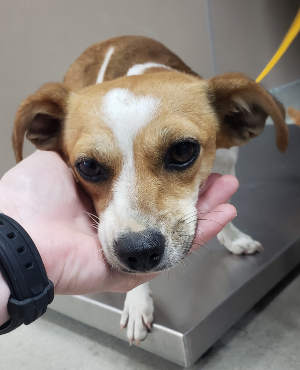
Female Chihuahua-terrier
This female Chihuahua-terrier has a short tan and white coat.
She is in kennel No. 15a, ID No. 13953.

Male Chihuahua
This male Chihuahua has a short tan coat.
He is in kennel No. 15b, ID No. 13954.
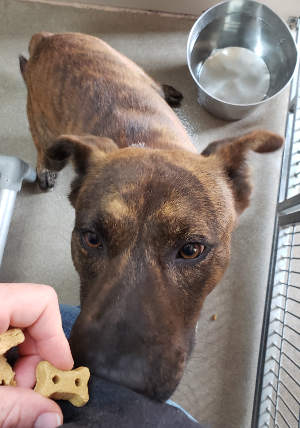
Male shepherd mix
This male shepherd mix a medium-length brindle coat.
He is in kennel No. 17, ID No. 13924.
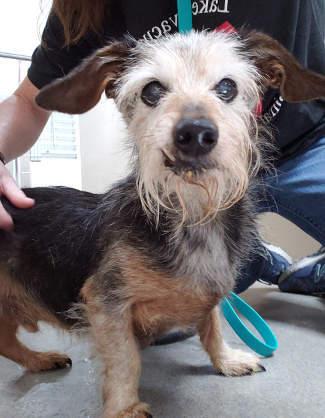
Male terrier
This male terrier has a coarse tricolor coat.
He has been neutered.
He is in kennel No. 25, ID No. 13925.
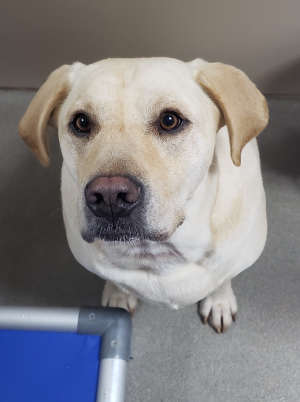
‘Hunter’
“Hunter” is a male yellow Labrador Retriever.
He has been neutered.
He’s in kennel No. 30, ID No. 13896.

‘Mary’
“Mary” is a Shih Tzu with a long white coat.
She has been spayed.
She’s in kennel No. 32, ID No. 7845.
Email Elizabeth Larson at
- Details
- Written by: NATIONAL AERONAUTICS AND SPACE ADMINISTRATION

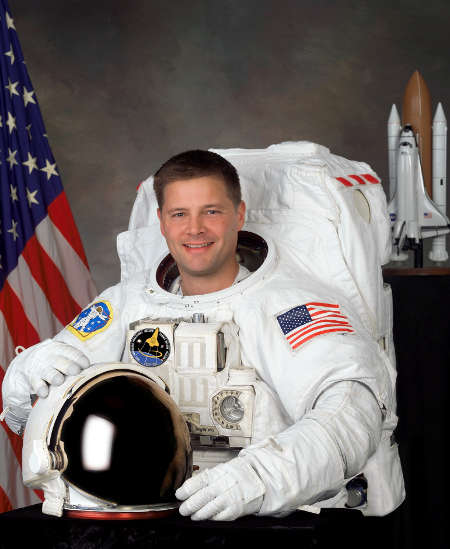
Astronaut Doug “Wheels” Wheelock spent his NASA career expanding knowledge of living and working in space. His new mission is working to determine the best way to train astronauts to return to the surface of the moon.
Wheelock is a veteran test pilot and retired U.S. Army colonel who has accumulated 178 days in space and was a guest speaker at NASA’s Armstrong Flight Research Center in California during a recent virtual Safety Day.
During his NASA career he conducted six spacewalks, flew in Space Shuttle Discovery and the Russian Soyuz and served as International Space Station Expedition 25 commander.
He was recently selected by the NASA Flight Operations directorate at NASA’s Johnson Space Center in Houston to lead the human lander system joint testing. He also is co-chairman of the joint test panel for the lunar landing project that is part of NASA’s Artemis mission to return astronauts for sustainable human exploration of the Moon.
A broad agency announcement to define, develop and bid on lunar lander platform was the basis of an award April 30 to three companies to design and build human landing systems. The three companies include Blue Origin of Kent, Washington, Dynetics of Huntsville, Alabama, and Space-X of Hawthorne, California.
NASA’s Johnson Space Center in Houston asked Wheelock to lead the joint test team, which is essentially looking at training crews to land on the moon.
“We have these companies that are building landers, but we need to be able to train our crews,” Wheelock said. “ I am managing the test development and eventual testing and selection of platforms we will use for fixed base mockups, motion simulation and inflight trainers.”
It wasn’t always space missions and lunar landers for Wheelock. From an early age he said he learned from Neil Armstrong, as he watched as the first man on the moon showcase qualities he believed leaders should have, such as humility and authenticity.
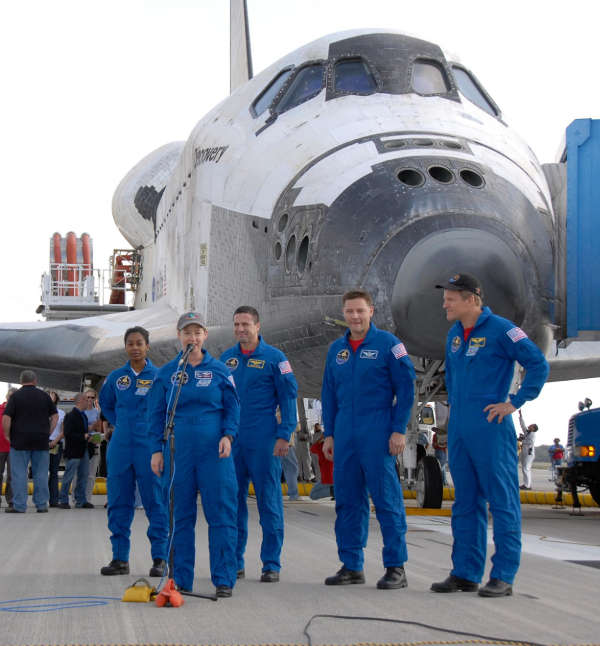
“I had a chance to ask him a question (when I was a kid), and I wanted to know how he felt as an extraordinary superhero,” he said. Armstrong did not view himself in that way, which had an even bigger influence on Wheelock.
“How does an ordinary boy end up standing on the moon?” he thought. “I later learned that ordinary kids from ordinary places do intersect with the extraordinary.
It wasn’t until years later after he had been an astronaut that he recalled what a first grade teacher told him, "You could land on the moon one day, too." As an astronaut, he remembered that and knows, “Children of all ages look to NASA for redefining what’s possible for them.”
On Aug. 24, 1998, he was selected as an astronaut and learned how to tackle complex challenges.
“It’s like when we have pieces to a 1,000 piece puzzle and all pieces in front of us, but the box was taken away,” he said. “We don’t know what it looks like, but we look for the corners. Corners are the existence of our hearts, minds, bodies and souls.”
The approach applies to a number of challenges.
“What we do in the simulators, or flying test plans, we know what the picture is supposed to look like,” Wheelock said. “However, we may be doing something we have never done before, or trying to gain knowledge on a piece of equipment for the first time and that also is a puzzle. If we don’t approach it by looking for the corners and connective parts, then we’re not going to solve it.”
Wheelock said being an astronaut isn’t easy and he had to overcome several fears if he was to conquer the skies and space. He had an intense fear of falling and loud noises. Through strength, courage and a commitment to teamwork, he overcame it all and was rewarded for his hard work.
“When I went to space I wanted to rush to the window,” he recalled. I wanted to look at the thin blue line of the atmosphere and see from space the small town I came from.”
- Details
- Written by: Elizabeth Larson
Dr. Gary Pace confirmed the death in a Saturday afternoon statement.
“Late yesterday, we received confirmation a fourth Lake County resident had died with a COVID-19-related illness,” Pace said.
“This person was older than 65, was living in a residential facility and had very serious, long-term medical issues. They had a positive COVID-19 test when they passed away yesterday,” he said.
Pace offered no other details about the individual to protect the privacy of the person and their family.
Lake County’s previous COVID-related deaths were reported July 3, Aug. 5 and Aug. 19, as Lake County News has reported.
The news of the county’s fourth death related to COVID-19 comes as Public Health on Saturday reported another increase in cases, with the county’s caseload now at 332, an increase of eight since Friday.
Lake County currently has 28 active cases and three hospitalizations, down from a peak of five patients requiring hospitalization earlier this week. So far, 300 cases are said to be recovered and a total of 25 patients have required hospitalization, and 9,606 tests have been conducted, according to the Public Health COVID-19 dashboard.
Pace said that whenever an individual in a congregate living situation tests positive for COVID-19 – as was the case with the patient who died on Friday – there is “great concern” others may have been exposed.
“Staff at the residential care facility are appropriately responding by testing, isolating and quarantining residents and employees, alike, using established protocols,” he said. “The county of Lake’s Public Health Division and the California Department of Public Health have both provided consultation, and every available measure is being taken to limit the probability of spread.”
Pace, in a previous interview, explained that his agency does not determine the cause of death for patients, but that responsibility lies with the individual’s attending physician.
Factors used to determine cause of death include underlying conditions, symptom progression and recent test results, with autopsies typically not required if the illness follows an expected course, Pace said.
“This is yet another tragic reminder that all Lake County residents must take precautions that can slow the spread of this virus,” Pace said of this latest death. “Potential consequences of a lack of vigilance are profound, and some COVID-positive individuals have few or no symptoms.”
He added, “We must pull together to defeat this virus. Each of us can do our part by taking simple precautions, like wearing a mask when outside of our households. Making safe personal choices limits the chance we will unknowingly transmit the virus to others.”
Email Elizabeth Larson at
- Details
- Written by: Lake County News reports
LAKE COUNTY, Calif. – On Friday, Gov. Gavin Newsom unveiled a new plan that he said is meant to offer guidance on how California can live with COVID-19 for the long haul, with the new system ranking Lake County in the second-highest category due to case prevalence and spread.
The Blueprint for a Safer Economy, which the governor said is based on data and science like previous aspects of the state’s response, makes a number of changes to the state’s previous resilience roadmap.
It also replaces the state’s County Data Monitoring List for determining what business can and cannot open. At one point, the majority of the state’s counties had been on that monitoring list, with Lake County avoiding it.
“This blueprint is statewide, stringent and slow,” said Gov. Newsom. “We have made notable progress over recent weeks, but the disease is still too widespread across the state. COVID-19 will be with us for a long time and we all need to adapt. We need to live differently. And we need to minimize exposure for our health, for our families and for our communities.”
Newsom’s new plan imposes risk-based criteria on tightening and loosening COVID-19 allowable activities and expands the length of time between changes to assess how any movement affects the trajectory of the disease.
Californians can visit this site to find out where their county falls and what activities are allowable in each county.
The new system includes the following:
– At least 21 days to expand activities beyond the initial tier to ensure California better limits the spread of the virus;
– Mandatory metrics – case rates and test positivity – to measure how widespread COVID-19 is in each county and guide what is allowed;
– A uniform state framework, with four categories instead of 58 different sets of rules;
– A more nuanced way of allowing activity: Instead of open vs. closed, sectors can be partially opened and progressively add to their operations as disease transmission decreases; and
– A new process for tightening back up again quickly when conditions worsen.
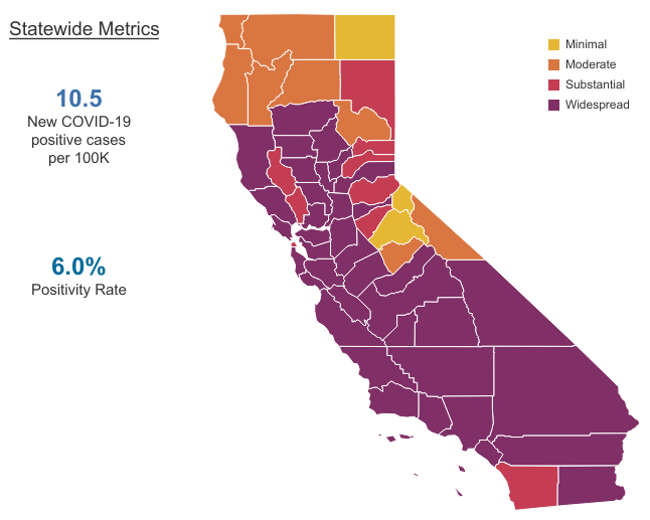
Based on recent data, each county will fall into one of four colored tiers – purple (widespread), red (substantial), orange (moderate) and yellow (minimal) – based on how prevalent COVID-19 is in each county and the extent of community spread. That color will indicate how sectors can operate.
As examples, the state said that in the purple (widespread) tier where the disease is widespread, restaurants can only operate outdoors. But once a county has achieved a lower level of disease transmission and moved into the red (substantial) tier, restaurants can operate with 25 percent capacity indoors or 100 patrons, whichever is fewer.
Lake County, which had a total caseload on Friday of 324, is ranked as being in the red (substantial) tier. Lake County on Friday had a positivity rate of 4.2 percent and 4.2 new cases per 100,000, according to the state. However, that rate fluctuates on a daily basis and Lake County’s rate has frequently trended far lower.
The Governor’s Office said the blueprint relies on two leading health metrics: number of cases per 100,000 residents and percentage of COVID-19 tests that come back positive.
In addition, counties will also be required to show they are targeting resources and making the greatest efforts to prevent and fight COVID in communities and with individuals with the highest risk, and demonstrate improvements in outcomes.
Counties must remain in every tier but purple for a minimum of 21 days before being eligible to move into the next tier.
Each Tuesday, California will update each county’s data for the previous week and make corresponding changes to tiers. In order to move into a less restrictive tier, a county must meet that tier’s criteria for two straight weeks.
Conversely, counties that fail to meet the metrics for their current tier for two consecutive weeks must move to the next most restrictive tier. The plan also includes an “emergency brake” where the state can intervene more immediately for concerning factors like hospitalizations.
Purple (widespread) is substituted for the previous County Data Monitoring List (which has equivalent criteria to purple). Schools in the (purple) widespread tier aren’t permitted to reopen for in-person instruction unless they receive a waiver from their local health department for TK-6 grades. Schools can reopen for in-person instruction once their county has been in the red (substantial) tier for at least two weeks.
The plan also emphasizes that no matter what restrictions the state puts in place, COVID-19 will get the upper hand if Californians don’t adapt their behaviors for the duration of the pandemic.
The Governor’s office said that means until an effective vaccine is distributed, Californians must wear a mask every time they’re with people outside their household. Residents must take activities outside and maintain distance even with loved ones who do not live with them.
Officials also said Californians must realize that the safest place to be is still at home and that the elderly and those with medical conditions should still stay away from others as much as possible.