How to resolve AdBlock issue?
Refresh this page
Lake County News,California
  • Home
    • Registration Form
  • News
    • Education
    • Veterans
    • Community
      • Obituaries
      • Letters
      • Commentary
    • Police Logs
    • Business
    • Recreation
    • Health
    • Religion
    • Legals
    • Arts & Life
    • Regional
  • Calendar
  • Contact us
    • FAQs
    • Phones, E-Mail
    • Subscribe
  • Advertise Here
  • Login
How to resolve AdBlock issue?
Refresh this page

News

As tuberculosis cases rise in the US and worldwide, health officials puzzle over the resurgence of a disease once in decline


A microscopic view of Mycobacterium tuberculosis, the bacteria that causes tuberculosis. koto_feja/E+ via Getty Images
Karen Dobos, Colorado State University and Marcela Henao-Tamayo, Colorado State University

An outbreak of tuberculosis, or TB – a lung disease that is often accompanied by a hacking cough – began in January 2024 in Kansas City, Kansas, and two nearby counties and continues as of early March 2025. To date, 147 people have been reportedly diagnosed with TB in the outbreak, with 67 becoming ill. The remaining 80 people diagnosed with TB in Kansas contracted the illness but showed no symptoms, which is called a latent infection.

TB is the leading infectious cause of death around the world, outpaced only by COVID-19 during the first three years of the pandemic.

The Conversation asked microbiologists Karen Dobos and Marcela Henao-Tamayo, both from Colorado State University, to explain why this ancient disease seems to be making a comeback.

What’s the history of TB?

Mycobacterium tuberculosis is the organism that causes the disease tuberculosis in humans. The disease has been infecting humans for thousands of years. Researchers found evidence of the disease 9,000 years ago in the excavated remains of people who lived in the Eastern Mediterranean region during that time.

Reports of TB date back to around 410-400 B.C.E., when the physician Hippocrates termed the disease phthisis, an archaic word that means a progressive “wasting away,” due to the way people with the disease become emaciated.

TB was also known as consumption for the same reason. Similarly, it was called the white plague or white death – due to anemia from the disease, with people appearing pallid or chalky – leading to near-certain death. Untreated active TB, meaning cases that are symptomatic, is highly lethal.

About half of all people with untreated active TB die from the disease, whereas treatment reduces the death rate to 12%.

One of the more colorful phrases describing TB is “the king’s evil.” This is a form of TB that also causes neck swelling and lesions, a condition called scrofula. During the Middle Ages, people believed that the touch of a king could cure a person from this form of TB through miraculous intervention.
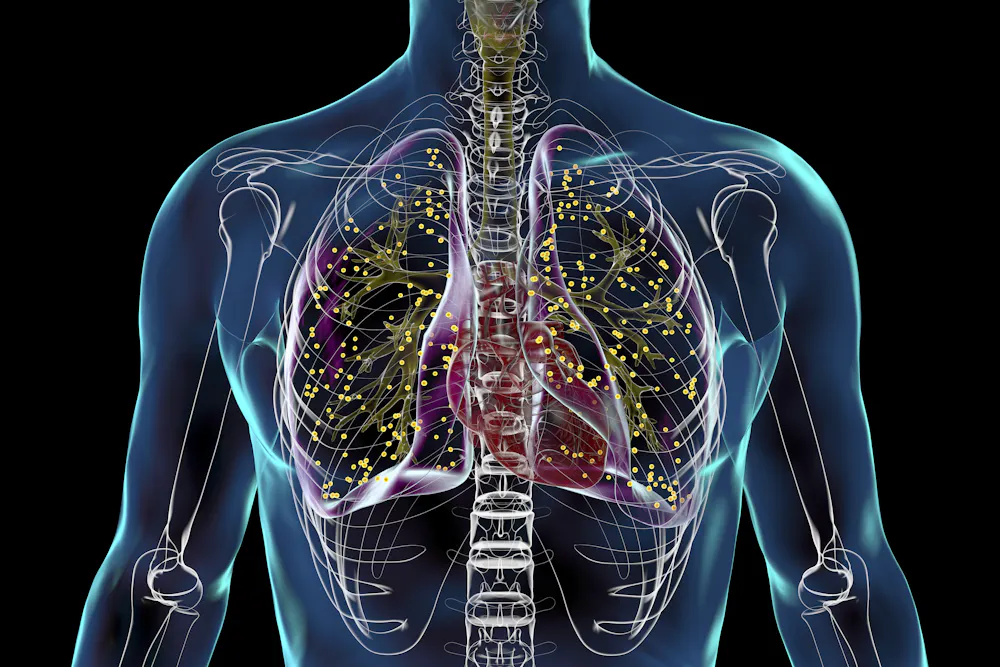
This illustration shows a TB infection in the lungs of a patient.
TB infections, which are typically found in the lungs, have risen since the COVID-19 pandemic. Kateryna Kon/Science Photo Library via Getty Images

Finally, TB was most ominously called the “robber of youth” due to its historical propensity to afflict people 15 to 30 years old.

In 1865, Jean Antoine Villemin, an army physician in Paris, demonstrated that TB could be transmitted from infected animals to healthy ones through inoculation. Before these studies, the cause of TB was presumed to be primarily constitutional, by either an inherent predisposition or from unhealthy or immoral lifestyles.

The microorganism causing TB was ultimately discovered in 1882 by the German physician Robert Koch. Koch announced his findings on March 24, 1882, a day globally recognized as World TB Day.

How does TB spread?

Tuberculosis is spread by small infectious droplets in the air. A TB patient may emit these droplets by coughing, singing and potentially from regular breathing that occurs during sleep or resting.

One form of TB can be spread through unpasteurized dairy products. While rare, there have been reports of TB transmission through bone grafts, in which healthy, donated bone material is used to replace damaged bones.

Computer illustration of the microbes that cause TB.
Close-up view of an infection by Mycobacterium tuberculosis. Kateryna Kon/Science Photo Library via Getty Images

The origin of the TB outbreak in Kansas remains unknown as of early March 2025. The outbreak has disproportionately affected those in low-income communities, and two people have died from it.

Importantly, a patient with untreated TB can infect 10 to 15 others.

Could the COVID-19 pandemic be a factor?

The COVID-19 pandemic has played a pivotal role in the resurgence of TB. Cases increased globally by 4.6% from 2020 to 2023, reversing decades of steady declines in the disease. In the U.S. alone, TB cases rose by more than 15% from 2022 to 2023.

During mandatory shutdowns, people were less able to access health care centers for early diagnosis of TB or to fill prescriptions for treatment, perhaps due to the fear of contracting COVID-19 while visiting a medical care facility. COVID-19-related disruptions in care resulted in nearly 700,000 excess deaths from TB.

Access to health care may not be the only factor behind this uptick. Medical supply shortages and delays in shipment may have also played a role. For example, the U.S. experienced shortages of one of the primary TB drugs between 2021 and 2023.

An historical photo of a doctor and nurse examining a TB-positive X-ray.
As illustrated by this 1963 photo, TB is often detected by an X-ray of the chest. Smith Collection/Gado/Archive Photos via Getty Images

What are the main treatments?

Multidrug treatment is currently the only way to cure TB and stop its spread.

Prior to the late 1930s, when the first antibiotic for TB treatment was developed, TB treatments included bloodletting and consumption of cod liver oil. The most popular treatment involved isolated sanatoriums in high-altitude areas such as the Adirondacks and the Rocky Mountains, where the cold, dry air was believed to be a cure. Scholars at the time suggested that the potential for cure was due to these environments being more invigorating for the body and providing more restful sleep. There is no evidence to support these beliefs.

Streptomycin was the first antibiotic treatment to become available for TB, in the 1940s. However, the microorganism quickly became drug resistant. A second antibiotic, called isoniazid, was developed as a first-line treatment against TB in the 1950s. Again, the microorganism became drug resistant.

Two- and four-drug combinations are now used to treat both latent infections and active disease. Treatment of active TB requires at least six months of uninterrupted therapy. Disruptions in treatment result in further spread of TB and the emergence of multidrug resistant TB, which requires additional drugs and more than nine months of treatment.

All TB drugs are toxic; the quality of life for TB patients deteriorates during treatment and remains so throughout their lives. Finding cases and treating TB illness early, before symptoms begin, is important because it not only reduces the spread of disease but also greatly reduces drug toxicity.

What should people be aware of?

People should be aware that TB is still a public health problem across the globe. Education on the transmission, treatment and need for active work to eradicate TB is the best defense.

One of the reasons why education and awareness about TB are so important is that a person with latent TB may be unknowingly harboring the microorganism for years. In the absence of symptoms, these people are unlikely to seek care and will not be diagnosed and treated unless identified as part of an outbreak, as was the case for more than half of the patients in Kansas.The Conversation

Karen Dobos, Professor of Microbiology, Colorado State University and Marcela Henao-Tamayo, Associate Professor of Microbiology & Immunology, Colorado State University

This article is republished from The Conversation under a Creative Commons license. Read the original article.

Man charged with break-in, domestic violence assault considered for mental health diversion

LAKEPORT, Calif. — Should a man with a history of violent physical abuse against the mother of his children — who seven months ago broke into her home and assaulted her again — be considered eligible for mental health diversion and no prison sentence?

That’s the question before Lake County Superior Court Judge Shanda Harry as she considers the case of Justin Simon Lord, 42, of Middletown.

Harry held a hearing Tuesday afternoon in an effort to make a decision on the matter, which is expected to be handed down when Lord — who attended via Zoom from the Lake County Jail — next appears in court at 1:30 p.m. April 8.

Lord was arrested in August after a nighttime break-in at the Kelseyville home of his former partner in which the woman woke up to find him standing over her. When she got up to call for help, he pulled a blade off the ceiling fan and beat her with it.

The victim, identified in the court as “C.V.” in order to protect her, told Lake County News that Lord had attempted to smother her by forcing her face down into her bed. Her daughter cut short the 911 call for fear that she was dead.

He took the phone from his 9-year-old daughter who was trying to call 911, shoved his former girlfriend into a clothes rack, broke a metal bar off the rack and proceeded to destroy two televisions and a closet door with it, also striking her in the head and then chasing her and the child through the house.

After he left the house, Lord got into a physical fight with the victim’s husband, threatening him with a knife. The victim’s husband had a handgun that the two men wrestled for and, during the struggle, Lord was shot in the leg.

The incident occurred on the night of Aug. 8. Lord was taken to an out-of-county hospital for treatment and then released, but not directly into custody. An arrest warrant was issued for him on Aug. 16 and he was taken into custody during a court appearance on Aug. 27.

Lord’s attorney, Justin Petersen, had tried unsuccessfully to get the warrant withdrawn.

Lord is charged in the case with burglary; inflicting corporal injury on the mother of his children, with a previous conviction for that crime in December 2020; two counts of stalking, with a February 2022 conviction for violating a restraining order; assault with a deadly weapon, in this case, the metal rod that he used to beat his former partner and break two televisions; assault with force likely to cause great bodily injury; vandalism; two counts of making criminal threats, one for the female victim, and one for both her husband and a neighbor who fought with Lord; assault with a deadly weapon, a knife, on the victim’s husband who shot Lord; and a misdemeanor charge for damaging a communications device to prevent help, which is for taking the phone from his daughter who was calling authorities.

Senior Deputy District Attorney Rachel Abelson, who is prosecuting the case, previously reported that a conviction on those charges could result in Lord receiving a 10-year prison sentence.

The assault with a deadly weapon and criminal threats counts both become strikes upon conviction, meaning a third strike could earn him an even longer prison sentence in the future.

At Petersen’s request, the preliminary hearing, originally scheduled for Sept. 5, was held over until later that month, but a decision has been held over and continued since then. That preliminary hearing decision, along with the mental health diversion petition, was the reason for the Tuesday hearing, but no decision was offered on either.

In the meantime, Lord has remained in custody at the Lake County Jail, without bail. That’s because Judge Andrew Blum found Lord to be “unreasonably dangerous.”

Lord has a criminal record in Lake County that includes convictions for driving under the influence, a felony assault case from 2020 that appears to involve C.V. and their children and a felony vandalism from February 2022.

A member of Middletown Rancheria, he’s previously served as lead security supervisor at the tribe’s Twin Pine Casino, been casino manager, EPA director, tribal/rancheria maintenance director, according to his resume.

Diversion cases and legal criteria

In Harry’s Department 4 courtroom on Tuesday afternoon, several cases involving mental health or CARE Court were on the docket.

One of the cases involved a woman charged with felony assault against an elder and assault with a deadly weapon in August, her only criminal case in the local courts, who now is up for the appointment of a conservatorship.
In another case, a man facing a felony drug offense from 2024, with no other criminal record in Lake County, was on the docket, appearing from a hospital via Zoom to check in.

Another petition for mental health diversion was sought by the Public Defender’s Office for a man with a lengthy criminal history, with cases involving drugs, driving under the influence, property crimes and assault.

Yet another of the cases involved a man facing misdemeanor trespass, with a criminal history involving one assault conviction and two misdemeanors, for whom criminal proceedings were suspended after the Public Defender’s Office raised competency issues. He has been found not competent and is set for a hearing next month for placement in a hospital.

California Code Section 1001.36, enacted in 2018, allows for pretrial diversion to a defendant if two criteria are met: they have been diagnosed with a mental disorder — including, but not limited to — bipolar disorder, schizophrenia, schizoaffective disorder, or post-traumatic stress disorder, and if that mental disorder is “was a significant factor in the commission of the charged offense.”

Defendants who meet those two requirements may then be found suitable for pretrial diversion if four other criteria are met: A qualified mental health expert’s opinion is that the criminal behavior would respond to mental health treatment; the defendant consents to diversion and waives their right to a speedy trial, unless they’ve been found to be an appropriate candidate for diversion in lieu of commitment; the defendant agrees to comply with treatment as a condition of diversion, unless the defendant has been found to be an appropriate candidate for diversion in lieu of commitment for restoration of competency treatment; and the defendant will not pose an unreasonable risk of danger to public safety.

On that fourth point, the statute notes, “The court may consider the opinions of the district attorney, the defense, or a qualified mental health expert, and may consider the defendant's treatment plan, the defendant's violence and criminal history, the current charged offense, and any other factors that the court deems appropriate.”

Diversion for Lord means that the case against him for the August assault would be completely dismissed.

Judge takes testimony from victim, supporters

With a decision on the preliminary hearing, bail review and the mental health division not set to take place until the April 8 hearing, Harry said she would hear the testimony from several people, including the victim, who showed up to speak on Tuesday.

Petersen objected. “We can’t just have people coming up to give their opinions about why someone should or shouldn’t” get diversion he said.

Harry said she would let them speak and decide what was relevant. “I’ll sort through it and you can object.”

And object he did, repeatedly asking for answers to questions to be stricken from the record. Harry approved several of those requests.

Advocating for the victim was attorney Angela Carter, a well-known Lake County attorney who previously ran the county’s public defense contract.

Petersen also objected to Carter’s involvement. In turn, Carter — who has worked in the local courts for about 30 years — said she could testify as a witness and they could “get into things I had not intended to get into.”

Several women came forward to tell the court that they had seen the victim with bruises and scratches from Lord’s physical abuse over the years, and they shared their concerns for the three children.

The testimony attributed Lord’s violence to alcoholism and cocaine use, not mental health issues.

According to their testimony, Lord’s attack on his former partner had followed them taking their children to their first day of school.

Petersen continued his objections throughout. “I can’t see how a lay person’s opinion can possibly be relevant,” he said.

He did, however, question the first witness about whether she had seen domestic violence go “both ways” with the couple, and she said, “Absolutely.”

The victim has had no domestic violence charges filed against her in Lake County, according to court records.

When a family member of the victim raised her concerns about Lord being in the community, Petersen again objected.

“This is not about dangerousness, it’s about suitability,” said Harry, appearing to focus more on Lord’s ability to go into mental diversion rather than community safety, which is a requirement for diversion set out in the statute.

The court was also told by a family member that the couple’s children “have been battered and they are scared” of their father. “The children are the ones that really feel this.”

Petersen objected and wanted the comments stricken, and Harry allowed it.

When C.V. came to the stand, Petersen objected again, saying she had her chance to testify during the preliminary hearing. C.V. responded, “You stopped me.”

Petersen then said C.V. didn’t need an attorney. “Well, I would object to that,” Carter interjected.

“I believe the victim has a right to her say so and representation in court,” said Carter, with Petersen continuing to object.

Harry allowed C.V. to take the stand. One of the few questions she was able to answer completely before being interrupted by Petersen related to how Lord had previously acted when in substance abuse treatment.

C.V. called him “a chameleon,” a highly intelligent man who will be the star student in any situation. “He knows exactly what he’s doing” when sitting in the doctor's office and telling him what they want to hear, she said, before Petersen objected and Harry sustained it.

She said he had been to three rehab stays before Petersen objected to the comments and Harry again had them stricken from the record.

Carter said she had a lot to say regarding Lord’s release, but would reserve those statements for the April 8 bail review and preliminary hearing followup appearance.

“It’s fun for the defense to not have to hear any opinions or defense from the victim,” Carter said.

Petersen responded that it's not fun and it’s not evidence.

“I don t think there’s any doubt that there have been many cases of DV [domestic violence] with C.V. as the victim,” said Harry. “The issue here is suitability for mental health diversion.”

Harry said she will let Carter make her arguments on April 8, at which time she also will hear from Lord’s family, other witnesses and health professionals. “He’s not going to be released today one way or the other.”

C.V. asked if Lord could be released. Harry said it’s possible.

“They’re going to kill each other if that happens,” one of C.V.’s friends said from the audience.

“I’m not saying that’s going to happen, I’m saying that’s what kind of hearing it is,” said Harry in response to C.V.’s question, at which point C.V., sitting in the audience, began to cry.

As the hearing drew to a close, Petersen called to Lord on the Zoom, “I’ll see you on the eighth, Justin.”

C.V. told Lake County News after the hearing that she fears for the safety of her children and herself. She said Lord has a history of violating protective orders, explaining she has had seven of them against him.

She said there is video of him chasing her through Konocti Vista Casino.

“It’s endless,” she said.

Email Elizabeth Larson at This email address is being protected from spambots. You need JavaScript enabled to view it.. Follow her on Twitter, @ERLarson, and on Bluesky, @erlarson.bsky.social. Find Lake County News on the following platforms: Facebook, @LakeCoNews; X, @LakeCoNews; Threads, @lakeconews, and on Bluesky, @lakeconews.bsky.social.

Storm series to bring wind, rain and possible snow

LAKE COUNTY, Calif. — Forecasters said a series of storms arriving Wednesday will bring wind and rain, and possibly even snow, to Lake County.

The National Weather Service issued a wind advisory that will be in effect from 7 a.m. to 5 p.m. Wednesday due to south winds of 25 to 35 miles per hour, with gusts of up to 50 miles per hour.

Showers are expected on Wednesday, with more rain and possibly snow starting on Thursday and continuing into Friday.

More chances of rain are in the forecast from Saturday through Tuesday.

Daytime temperatures through Friday are forecast to be in the 40s during the day and 30s at night, rising into the 50s during the day and 40s at night through the weekend.

Email Elizabeth Larson at This email address is being protected from spambots. You need JavaScript enabled to view it.. Follow her on Twitter, @ERLarson, and on Bluesky, @erlarson.bsky.social. Find Lake County News on the following platforms: Facebook, @LakeCoNews; X, @LakeCoNews; Threads, @lakeconews, and on Bluesky, @lakeconews.bsky.social.

Middletown Area Town Hall to meet March 13

MIDDLETOWN, Calif. — The Middletown Area Town Hall, or MATH, has plans this week to discuss community asset mapping and project updates around the south county area.

MATH will meet at 7 p.m. Thursday, March 13, in the Middletown Community Meeting Room/Library at 21256 Washington St., Middletown. The meeting is open to the public.

Zoom will not be available. Viewers can participate via PEG TV at www.youtube.com/LakeCountyPegTV.

On the agenda are guest speakers Magdalena and Eliot Hurwitz of the Springs Community Redevelopment Association who will present highlights from the Cobb Mountain Area Community Resilience and Development Strategy as it relates to identifying community assets for the purpose of fire resiliency and updating the General Plan and Area Plans.

MATH will discuss a presentation to the Board of Supervisors, a grievance committee report on a February complaint, work on the bylaws and take action on correspondence, as well as get updates on the Cannabis Ordinance Task Force and planning projects in the Middletown and Hidden Valley Lake areas.

MATH — established by resolution of the Lake County Board of Supervisors on Dec. 12, 2006 — is a municipal advisory council serving the residents of Anderson Springs, Cobb, Coyote Valley (including Hidden Valley Lake), Long Valley and Middletown.

For more information email This email address is being protected from spambots. You need JavaScript enabled to view it.. 

Email Elizabeth Larson at This email address is being protected from spambots. You need JavaScript enabled to view it.. Follow her on Twitter, @ERLarson, and on Bluesky, @erlarson.bsky.social. Find Lake County News on the following platforms: Facebook, @LakeCoNews; X, @LakeCoNews; Threads, @lakeconews, and on Bluesky, @lakeconews.bsky.social.

5 reasons veterans are especially hard-hit by federal cuts


A protester holds a sign during a demonstration against President Donald Trump, Elon Musk and the Trump administration outside the Indiana Statehouse in Indianapolis. Jeremy Hogan/SOPA Images/LightRocket via Getty Images
Jamie Rowen, UMass Amherst

The Department of Veterans Affairs is planning to cut 83,000 jobs, slashing employment by over 17% at the federal agency that provides health care for millions of veterans, according to an internal memo obtained by The Associated Press on March 5, 2025.

The department known as the VA manages and directly provides comprehensive services for veterans. Those services include health care, short- and long-term housing options, life insurance, pensions, education stipends, and assistance in jails and courts. The VA also engages in pathbreaking public health research. One-quarter of the VA’s 482,000 employees are veterans.

For the past month, the Trump administration has been cutting federal spending, causing numerous hardships for government employees, the agencies they work for and the people they serve.

But veterans are among those hardest hit, and the impact goes well beyond job loss.

My research on veterans in the criminal legal system illustrates the stark challenges that service members already face as they integrate back into civilian life.

Trump’s budget cuts will make this process only harder. Here are five reasons why.

A man standing with a sign that says 'I'm a USAIR Force veteran Republican leaders are all cowards!'
A protest of layoffs at the VA in Jamaica Plain on Feb. 21, 2025. Stuart Cahill/Boston Herald via Getty Images

1. Eroding the federal workforce

Federal law requires employers to give veterans an advantage in hiring over people who have not served in the military.

Under the 1944 Veterans Preference Act, employers should hire veterans over other candidates and retain veterans over other employees during layoffs. The idea is to compensate for the economic loss of serving in the military and acknowledge the government’s obligation, especially, to support disabled veterans.

Due to this veterans preference, nearly 30% of federal workers are veterans, half of whom are disabled. This means that veterans, who make up 6.1% of the U.S. population, are disproportionately affected by federal worker cuts.

One estimate is that of the 38,000 federal employees fired in the first five weeks of the Trump administration, 6,000 are veterans.

2. Gutting VA health care

Cuts to the federal workforce are also affecting medical care for veterans. The Veterans Health Administration workforce constitutes 90% of the VA’s 482,000 workers, so cuts to VA workers mean cuts to health care.

These cuts come at a time when veterans’ health care needs are increasing. The VA enrolled 400,000 veterans in its benefits system from March 2023 through March 2024, 30% more than the prior year. It also expanded eligibility for former service members to receive VA health care. Trump’s cuts will make it more difficult for the VA to provide health care for these newly eligible veterans.

These cuts roll back President Joe Biden’s investment in the VA to address long-standing staffing problems. The Office of Inspector General’s 2024 report on VA staffing shortages reveals that 137 of 139 VA health centers nationwide report a severe staffing shortage in at least one area, particularly nursing and psychology.

Staff shortages have led to long wait times for care. These wait times vary from days to months, with some VA clinics still so understaffed that they are unable to take new patients for primary care or mental health needs. Staff increases over the past few years shortened wait times while providing care to more veterans.

In 2024, the VA said it was working hard to fill its 66,000 vacancies, aiming to improve health care for the more than 9 million veterans it serves.

Now, just one year later, the VA faces the loss of 83,000 jobs. These cuts may contribute to fundamental changes in VA health care. Rather than help veterans directly, the VA may pay for veterans to seek medical care outside the VA system, leading to higher costs and lower quality.

Other Trump directives will prevent gender-affirming care to veterans. Veterans with diagnoses related to gender identity increased from 2,513 to 10,457 between 2011 to 2021.

3. Destaffing the suicide hotline

In Trump’s cuts to social services, the country’s Veterans Crisis Line, which both the VA and the Department of Health and Human Services oversee, is losing employees to layoffs, despite existing staffing shortages. An estimated 800 to 900 of the 1,130 crisis-line workers have always worked remotely, so ending remote work options will further undermine staffing.

Signs on the side of a granite building.
A quote from Abraham Lincoln about the Veterans Affairs mission is affixed to the side of one of the department’s buildings. Government Accounting Office

Current data shows an average of 17.6 veteran suicides per day. Suicide remains the second-leading cause of death among veterans under 45 years old. Current VCL caller data is not publicly available, but staff report that the service fields 60,000 calls a month.

In the past, the VA reported nearly 3 million calls between 2009 and 2017, which led to 82,000 emergency dispatches to prevent veterans from harming themselves. The VA steadily increased crisis-line staffing to address concerns that, given the volume of calls, veterans were not receiving help in a timely manner.

Fewer staff, already suffering from burnout, undermines this work, as callers already at high risk for suicide will face longer wait times and improper care.

The first Trump administration made veteran suicide prevention a policy priority; its latest moves impede this goal.

4. Losing research

The VA’s investment in research, about $916 million a year, has contributed to a comprehensive understanding of veterans’ well-being, meaning the government can target aid toward those in need.

VA research has also helped spark major medical breakthroughs on the link between smoking and cancer, prompting the surgeon general to put warnings on cigarettes, and the most widely used method to measure and treat prostate cancer.

VA research and data are instrumental in the social sciences. There are millions of veterans who come from diverse sociodemographic groups, and social science researchers are able to track them over time.

With overall budget cuts at the VA and the federal workforce reduction, at least 350 VA researchers will likely lose their jobs. That, along with a Trump directive to stop research on how poverty and race shape veteran health outcomes, will undermine not only the general well-being of veterans but also the entire medical establishment’s knowledge about substance use, mental health and deeper insights that VA research can provide on prevention and treatment of cancer and cardiovascular disease.

5. Looming cuts to other benefits

Numerous reports indicate that Republicans in Congress want to reduce so-called entitlements, including food stamps and Medicaid, the health insurance for the country’s poorest citizens.

Cutting Medicaid would hurt veterans’ health, too, because not all veterans have access to federally funded health care through the VA, for a variety of reasons. Estimates show that over the past decade nearly 10% of veterans use Medicaid for at least some of their health care benefits, and 40% of those veterans rely exclusively on Medicaid for all their health care.

Further, approximately 400,000 veterans are uninsured. Given their income, half of these uninsured veterans should be eligible for Medicaid, as long as looming cuts don’t change eligibility requirements.

In addition, 1.2 million veterans received aid through the federally funded supplemental nutritional access program, or SNAP. Working-age veterans face an elevated risk of experiencing food insecurity compared to their nonveteran peers.

Veterans are still overrepresented among the homeless population. Many do not have financial flexibility to make up for these cuts.

Making good on a promise

All Americans are affected by Trump’s federal funding cuts. But as my research shows, the budget-slashing looks to be especially hard on those who served in the military.

The media and political blowback against Trump’s cuts has already begun. Negatively impacted veterans are gaining increasing visibility. Both Democratic and Republican lawmakers have begun calling on the Department of Defense to prioritize retaining and rehiring veterans.

The first Trump administration committed to expanding services for veterans. Now, it’s executing a stark policy reversal with acute consequences for the very same veterans the U.S. government promised to protect and serve since the country’s founding.The Conversation

Jamie Rowen, Associate Professor of Legal Studies and Political Science, UMass Amherst

This article is republished from The Conversation under a Creative Commons license. Read the original article.

Salato named North Coast Woman of the Year

Dr. Becky Salato. Courtesy photo.

LAKE COUNTY, Calif. — On Monday, Senate Leader Mike McGuire led a celebration during a Senate floor ceremony at the State Capitol honoring Becky Salato, superintendent of Konocti Unified School District, as the 2025 North Coast Woman of the Year.

As superintendent, Becky Salato prides herself on building bridges and strong relationships in Lake County and the communities she works for, constantly delivering results for the students and families she proudly serves.

McGuire said Salato has fearlessly guided Konocti Unified through some of the toughest challenges facing the community including the COVID pandemic, low graduation rates, and multiple wildfires that have upended lives and destroyed countless homes in Lake County.

“Becky Salato has dedicated her life to improving the lives of kids. Her belief is simple, but bold: all kids, no matter their background, deserve the best,” McGuire said. “Her leadership during some of the most challenging times Lake County has faced has been stellar. The entire Lake County community has benefited from her dedication and leadership and we are so fortunate to have her here in Northern California. This recognition is very well deserved.”

Sen. McGuire honored Salato on the Senate floor with a resolution as part of the Senate’s annual Woman of the Year ceremony.

“I am so honored to be acknowledged by Sen. McGuire,” said Salato. “He’s a tireless advocate for our students and we’re all grateful for his partnership. I feel incredibly fortunate to be able to do the work I do with our amazing Konocti students, teachers, and staff. Their futures are always worth the fight. I look forward to many more years of serving our community together.”

Becky Salato has been serving as Konocti Unified School District’s superintendent for five years.

She said she is proud of the district’s accomplishments in recent years but says the work is far from over.

Last month, the Association of California School Administrators named Salato the 2024 Region 4 Superintendent of the Year, as Lake County News has reported.

McGuire is President pro Tempore of the California Senate. He represents the North Coast of California, which stretches from the Golden Gate Bridge to the Oregon border, including Del Norte, Trinity, Humboldt, Lake, Mendocino, Sonoma, and Marin counties.
  • 278
  • 279
  • 280
  • 281
  • 282
  • 283
  • 284
  • 285
  • 286
  • 287

Community

  • Sheriff’s Activities League and Clearlake Bassmasters offer youth fishing clinic

  • City Nature Challenge takes place April 24 to 27

Public Safety

  • Lakeport Police logs: Wednesday, Feb. 11

  • Lakeport Police logs: Tuesday, Feb. 10

Education

  • Ramos measure requiring school officer training in use of anti-opioid drug moves forward

  • Lake County Chapter of CWA announces annual scholarships 

Health

  • California ranks 24th in America’s Health Rankings Annual Report from United Health Foundation

  • Healthy blood donors especially vital during active flu season

Business

  • Employment law summit takes place March 9

  • Two Lake County Mediacom employees earn company’s top service awards

Obituaries

  • Terry Knight

  • Ellen Thomas

Opinion & Letters

  • Who should pay for AI’s power? Not California ratepayers

  • Crandell: Supporting nephew for reelection in supervisorial race

Veterans

  • State honors fallen chief warrant officer killed in conflict in Iran

  • CalVet and CSU Long Beach team up to improve data collection related to veteran suicides

Recreation

  • April Audubon program will show how volunteers can help monitor local osprey nests

  • First guided nature walk of spring at Anderson Marsh State Historic Park April 11

  • Second Saturday guided nature walks continue at Anderson Marsh State Historic Park

  • Wet weather trail closure in effect on Upper Lake Ranger District

Religion

  • Kelseyville Presbyterian Church plans Easter service

  • Easter ‘Sonrise’ Service returns to Xabatin Community Park

Arts & Life

  • ‘CIA’ delves into the shadowy world of an espionage thriller

  • ‘War Machine’ shifts the battlefield into uncharted territory

Government & Politics

  • Lake County Democratic Central Committee endorses Falkenberg

  • Crandell launches reelection campaign plans March 15 event

Legals

  • April 23 hearing on Lake Coco Farms Major Use Permit

  • NOTICE OF 30-DAY PUBLIC COMMENT PERIOD & NOTICE OF PUBLIC HEARING

How to resolve AdBlock issue?
Refresh this page