How to resolve AdBlock issue?
Refresh this page
Lake County News,California
  • Home
    • Registration Form
  • News
    • Education
    • Veterans
    • Community
      • Obituaries
      • Letters
      • Commentary
    • Police Logs
    • Business
    • Recreation
    • Health
    • Religion
    • Legals
    • Arts & Life
    • Regional
  • Calendar
  • Contact us
    • FAQs
    • Phones, E-Mail
    • Subscribe
  • Advertise Here
  • Login
How to resolve AdBlock issue?
Refresh this page

News

NOAA’s vast public weather data powers the local forecasts on your phone and TV – a private company alone couldn’t match it


A forecaster monitors incoming data for Hurricane Irma in 2017 at the National Hurricane Center, part of the NOAA. Matt McClain/The Washington Post via Getty Images

The forecasts can seem effortless, but behind the scenes, a vast network of satellites, airplanes, radar, computer models and weather analysts are providing access to the latest data – and warnings when necessary. This data comes from analysts at the National Oceanic and Atmospheric Administration, known as NOAA, and its National Weather Service.

Atmospheric scientists Christine Wiedinmyer and Kari Bowen, who is a former National Weather Service forecaster, explained NOAA’s central role in most U.S. weather forecasts.

When people see a weather report on TV, what went on at NOAA to make that forecast possible?

A lot of the weather information Americans rely on starts with real-time data collected by NOAA satellites, airplanes, weather balloons, radar and maritime buoys, as well as weather stations around the world.

All of that information goes into the agency’s computers, which process the data to begin defining what’s going on in different parts of the atmosphere.

NOAA forecasters use computer models that simulate physics and the behavior of the atmosphere, along with their own experience and local knowledge, to start to paint a picture of the weather – what’s coming in a few minutes or hours or days. They also use that data to project seasonal conditions out over weeks or months.
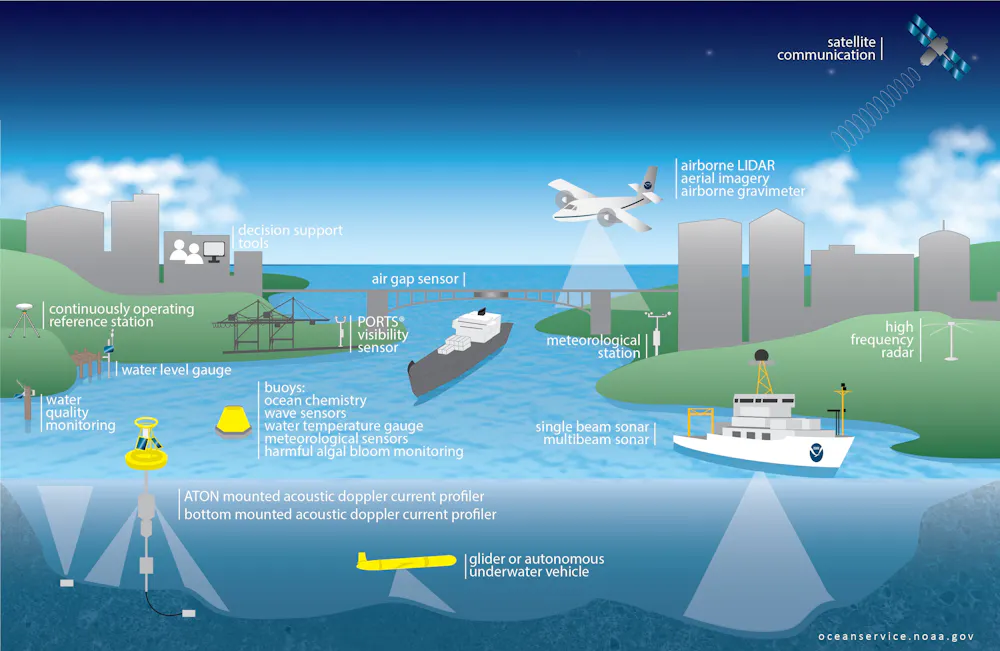
An illustration shows ships, satellites, planes and ocean-going vessels.
NOAA’s data comes from many sources to provide a more complete picture of developing climate and weather conditions. Communities and economies rely on that constantly updated information. NOAA

When severe weather is on the way, the agency issues the official alerts you’ll see in the news and on your phone.

All of this analysis happens before the information reaches private weather apps and TV stations.

No matter who you are, you can freely access that data and the analyses. In fact, a large number of private companies use NOAA data to create fancy maps and other weather products that they sell.

It would be extremely difficult to do all of that without NOAA.

The agency operates a fleet of 18 satellites that are packed with instruments dedicated to observing weather phenomena essential to predicting the weather, from how hot the land surface is to the water content of the atmosphere. Some are geostationary satellites which sit high above different parts of the U.S. measuring weather conditions 24/7. Others orbit the planet. Many of these are operated as part of partnerships with NASA or the Air Force.

Some private companies are starting to invest in satellites, but it would take an enormous amount of money to replicate the range of instrumentation and coverage that NOAA has in place. Satellites only last so long and take time to build, so NOAA is continually planning for the future, and using its technical expertise to develop new instruments and computer algorithms to interpret the data.
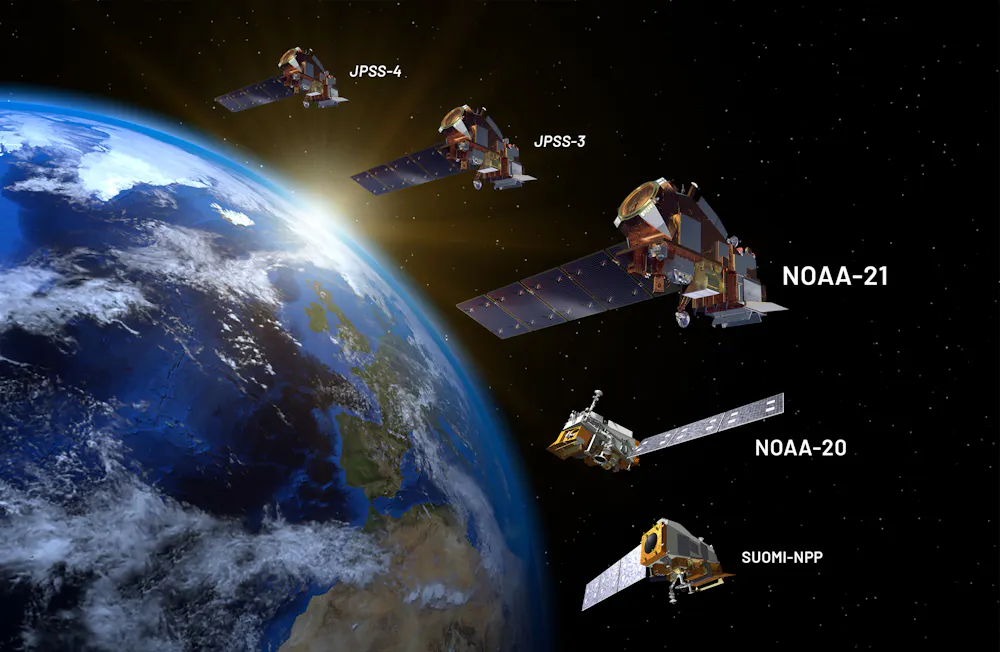
An illustration of several NOAA satellites.
NOAA’s low earth orbiting satellites circle the planet from pole to pole and across the equator 14 times a day to provide a full picture of the year twice a day. The agency also has geostationary satellites that provide continuous coverage over the U.S. NOAA

Maritime buoys are another measuring system that would be difficult to replicate. Over 1,300 buoys across oceans around the world measure water temperature, wind and wave height – all of which are essential for coastal warnings, as well as long-term forecasts.

Weather observation has been around a long time. President Ulysses S. Grant created the first national weather service in the War Department in 1870. It became a civilian service in 1880 under the Department of Agriculture and is now in the Commerce Department. The information its scientists and technologists produce is essential for safety and also benefits people and industries in a lot of ways.

Could a private company create forecasts on its own without NOAA data?

It would be difficult for one company to provide comprehensive weather data in a reliable way that is also accessible to the entire public.

Some companies might be able to launch their own satellite, but one satellite only gives you part of the picture. NOAA’s weather observation network has been around for a long time and collects data from points all over the U.S. and the oceans. Without that robust data, computer models and the broad network of forecasters and developers, forecasting also becomes less reliable.

Analyzing that data is also complex. You’re not going to be able to take satellite data, run a model on a standard laptop and suddenly have a forecast.

And there’s a question of whether a private company would want to take on the legal risk of being responsible for the nation’s forecasts and severe weather warnings.

Neil Jacobs, nominated to oversee NOAA, explains why the agency is essential for accurate national weather forecasting, and why private companies might not want to take on the legal risk on their own.

NOAA is taxpayer-funded, so it is a public good – its services provide safety and security for everyone, not just those who can pay for it.

If weather data was only available at a price, one town might be able to afford the weather information necessary to protect its residents, while a smaller town or a rural area across the state might not. If you’re in a tornado-prone area or coastal zone, that information can be the difference between life or death.

Is climate data and research into the changing climate important for forecasts?

The Earth’s systems – its land, water and the atmosphere – are changing, and we have to be able to assess how those changes will impact weather tomorrow, in two weeks and far into the future.

Rising global temperatures affect weather patterns. Dryness can fuel wildfires. Forecasts have to take the changing climate into account to be accurate, no matter who is creating the forecast.

Drought is an example. The dryness of the Earth controls how much water gets exchanged with the atmosphere to form clouds and rainfall. To have an accurate weather prediction, we need to know how dry things are at the surface and how that has changed over time. That requires long-term climate information.

NOAA doesn’t do all of this by itself – who else is involved?

NOAA partners with private sector, academia, nonprofits and many others around the world to ensure that everyone has the best information to produce the most robust weather forecasts. Private weather companies and media also play important roles in getting those forecasts and alerts out more widely to the public.

A lot of businesses rely on accuracy from NOAA’s weather data and forecasts: aviation, energy companies, insurance, even modern tractors’ precision farming equipment. The agency’s long-range forecasts are essential for managing state reservoirs to ensure enough water is saved and to avoid flooding.

The government agency can be held accountable in a way private businesses are not because it answers to Congress. So, the data is trustworthy, accessible and developed with the goal to protect public safety and property for everyone. Could the same be said if only for-profit companies were producing that data?The Conversation

Christine Wiedinmyer, Associate Director for Science at CIRES, University of Colorado Boulder and Kari Bowen, Atmospheric Scientist, Program Manager at CIRES, University of Colorado Boulder

This article is republished from The Conversation under a Creative Commons license. Read the original article.

When a hurricane or tornado starts to form, your local weather forecasters can quickly pull up maps tracking its movement and showing where it’s headed. But have you ever wondered where they get all that information?
Western Region Town Hall to discuss biochar project

UPPER LAKE, Calif. — The Western Region Town Hall will meet this week to discuss a biochar project which community members are appealing.

The meeting will take place from 5:30 to 7 p.m. Wednesday, Feb. 19, in the Habematolel tribal room, 9460 Main St. in Upper Lake.

The meeting also will be available on Zoom. The link is here; the webinar ID is 833 1071 8838, passcode is 222669.

On the agenda is a discussion of a biochar project proposed by Scotts Valley Energy on county-owned property that the Lake County Planning Commission approved late last year. Community members have joined together and are appealing the project to the Board of Supervisors.

In other business, Angela DePalma-Dow of Lake County Water Resources will discuss with the group the Clover Creek diversion channel.

There also will be subcommittee reports on Upper Lake traffic safety, Pyle Road and the Upper Lake levees.

Email Elizabeth Larson at This email address is being protected from spambots. You need JavaScript enabled to view it.. Follow her on Twitter, @ERLarson, and on Bluesky, @erlarson.bsky.social. Find Lake County News on the following platforms: Facebook, @LakeCoNews; X, @LakeCoNews; Threads, @lakeconews, and on Bluesky, @lakeconews.bsky.social.

Flu activity remains high, but it’s not too late to get vaccinated

Seasonal influenza cases and activity are high in California, but it’s not too late to get the flu shot to prevent severe illness and hospitalization.

The California Department of Public Health, or CDPH, recommends all Californians six months of age and older receive the flu vaccine to help protect against flu complications.

“Over the last several weeks, we have seen an increase in flu cases and hospitalizations,” said Dr. Erica Pan, CDPH director and State Public Health officer. “As long as flu is circulating in our communities, it’s not too late to get your flu vaccine, so we encourage all Californians who have not yet received their flu vaccine to get vaccinated. As a parent and a pediatrician, I ensure my family gets flu vaccine every year because I am confident the flu vaccine is safe and can help prevent serious illness like pneumonia and hospitalization."

Flu test positivity remains very high at 26.7% for the week ending Feb. 8. This indicates a continued high level of flu activity across the state.

This winter, flu has caused more hospitalizations than COVID-19 for all age groups. In addition, CDPH has received reports of 11 children who have had flu related deaths. This is a reminder that influenza can cause severe illness in people of all ages.

Additional influenza data is available on CDPH’s Respiratory Virus Report.

At the same time, fewer Californians have received the seasonal flu vaccine than in years past. Vaccines are safe and effective at protecting against severe illness due to flu, and CDPH continues to recommend that all eligible individuals ages six months and older to receive a flu vaccine.

Scheduling: Schedule a vaccine appointment by visiting MyTurn.ca.gov, or contacting your local pharmacy or health care provider.

Cost: Flu vaccines are covered for most people through their health insurance plans, including Medi-Cal and regular health care providers. Those having difficulty obtaining vaccines can contact their health care provider or local health department for help finding a place to get immunized.

The Vaccines For Children, or VFC, program is a federally funded program that provides vaccines at no cost to children (18 and younger) who might not otherwise be vaccinated because of an inability to pay. Contact your doctor to learn if they are enrolled in VFC or visit MyTurn to find a location based on your eligibility.

Protect Yourself and Your Loved Ones: In addition to vaccines, people can follow simple actions to prevent viruses from spreading this winter.

Stay Home When Sick: Flu is a contagious respiratory illness, staying home when you're sick helps prevent the spread to others.

Test and Treat: If you have symptoms (like fever, chills, body aches, runny or stuffy nose, cough, sore throat, stomach issues), contact your health care provider and ask about prescription medications which work best when started right after symptoms begin. Learn more about flu treatments.

Wear a High-quality Mask (N95, KN95, KF94) in Indoor Public Places: Wearing a mask significantly reduces the spread of the flu, especially in crowded or poorly ventilated spaces.

Wash Hands: Wash hands throughout the day with soap and warm water for at least 20 seconds. If soap and water are not available, use a hand sanitizer with at least 60% alcohol.

Cover Coughs and Sneezes: Remember to cough or sneeze into your elbow, your arm, or a disposable tissue to help prevent the spread of viruses. Wash or sanitize your hands and dispose of your tissue after.

Ventilate Indoor Spaces: Good ventilation helps reduce the spread of viruses. If it is safe to do so, open doors and windows as much as possible to bring in fresh outdoor air. This can help keep virus particles from building up indoors.

Get more information about respiratory virus prevention by visiting CDPH's Influenza (Flu) webpage.

Bipartisan bill introduced to promote wildfire mitigation through wildlife grazing

U.S. Senators Alex Padilla (D-Calif.), Jerry Moran (R-Kan.), Mazie Hirono (D-Hawaii), and James Lankford (R-Okla.) introduced bipartisan legislation to promote research on how grazing can support wildfire mitigation, fuels reduction and post-fire recovery.

Several states have implemented pilot programs in which animals like goats and cattle, called “ungulates,” have grazed on prescribed areas of land containing highly flammable grasses and shrubs to mitigate fire risk.

These pilot efforts have successfully reduced vegetation that can fuel rapid fire growth. However, limited scientific research has been conducted on optimal grazing land management techniques that also protect against other environmental harms.

To address this critical research gap, the Wildfire Resilience Through Grazing Research Act would add the “Grazing for Wildfire Mitigation Initiative” to the National Institute of Food and Agriculture’s High-Priority Research List.

“As devastating wildfires pose increasingly severe threats to our communities, we need to explore out-of-the-box approaches to blunt these disasters,” said Sen. Padilla. “Grazing animals like goats and cattle have been successfully used to reduce the hazardous brush that fuels wildfires. Expanding our understanding of novel grazing strategies can make it a cost-effective tool to save lives and protect homes.”

“Using grazing as a way to reduce wildfires is both beneficial to our ranchers and important to eliminating the grasses that accelerate fires on the prairie,” said Sen. Moran. “Kansans have faced devastating wildfires in recent years and understand the importance of proactively working to keep our land healthy and free of undergrowth that can make these fires worse.”

“As the people of Lahaina continue to recover from the devastating wildfires in 2023, we recognize just how necessary it is to pre-emptively reduce wildfire risk,” said Sen. Hirono. “As wildfires occur with increasing frequency across the country, this legislation is a crucial step to help strengthen community resilience by studying the implementation of grazing as a strategy for reducing vegetation that can fuel wildfires. I’m glad to join my colleagues in introducing this important bill to help prevent wildfires and protect our communities.”

“The Nature Conservancy welcomes this bill as a jump start for the utilization of grazing as a tool for wildfire risk reduction,” said Whitney Forman-Cook, senior policy advisor for Forests and Fire at The Nature Conservancy. “In our Roadmap for Wildfire Resilience, we recommend federal land management agencies research and implement new strategies for forest and rangeland fuels reduction treatments at landscape scales. Targeted grazing satisfies that call for a new, cost-effective approach to promoting both drought and wildfire resilience while maintaining rangeland health.”

“Wildfires are growing more intense, destructive and frequent—demanding bold, science-driven solutions. The Wildfire Resilience Through Grazing Research Act invests in the critical research needed to unlock the full potential of sustainable grazing as a wildfire mitigation tool. By equipping land managers, farmers and foresters with data-backed strategies, Congress can ensure grazing reduces fire risk while enhancing soil health, biodiversity and long-term ecosystem resilience,” said Eric Holst, AVP, Wildfire Resilience at Environmental Defense Fund.

Specifically, the Wildfire Resilience Through Grazing Research Act would:

Support research and development of grazing land management techniques for wildfire mitigation and recovery by driving research at land-grant colleges and universities like the University of California system, Kansas State University, University of Hawaiʻi at Mānoa, and Oklahoma State University.

Promote the dissemination of information on these wildlife grazing land management techniques to public and private landowners, land managers, and livestock owners, including land management activities that protect against negative environmental impacts and improve soil health.

The bill is endorsed by the Environmental Defense Fund and The Nature Conservancy.

Salato named ACSA Region 4 Superintendent of the Year

Dr. Becky Salato. Courtesy photo.

LAKE COUNTY, Calif. — Konocti Unified School District Superintendent Becky Salato, Ed.D., is a “five-foot-nothing powerhouse” who takes on the hardest, messiest challenges so she can help students thrive, according to those who work with her.

In recognition of her efforts, the Association of California School Administrators, or ACSA, named Salato the 2024 Region 4 Superintendent of the Year.

Five years ago, Konocti Unified was looking for a new superintendent. The district had been struggling for years. It was under state scrutiny for budget shortfalls and program deficiencies. School board members worried they would not be able to find a qualified superintendent given the district’s challenges.

At that time, Salato was a successful educational coach and consultant. However, she had been considering how she could make a deeper impact — the kind that is only possible with a long-term commitment. When she saw the Konocti Unified job opening, she applied.

Since then, she has taken the approach of “getting better at getting better” to make notable improvements in Lake County’s biggest school district. She is proud of the district’s accomplishments in recent years and says her work is far from over.

“When I arrived, I saw a district full of potential but faced with some significant challenges. Working with the team, we created a five-year plan to improve our academic standing. We became laser-focused on implementing new curriculum, investing in our teachers, and holding ourselves to a higher standard. Now, we’re seeing real progress. In education, there is no finish line. There is only continuous improvement,” she said.

Lake County Superintendent of Schools Brock Falkenberg lauded Salato for her dedication to students in Lake County.

“Becky Salato is a dedicated educational leader committed to improving student outcomes through strategic, data-driven decision-making,” Falkenberg said. “With a focus on growth and access, she fosters a culture of continuous improvement, empowering educators to create engaging learning environments that support the success of every student. Through her leadership, Becky drives meaningful change, ensuring all students have access to the resources, support, and opportunities needed to thrive.”

Deputy Superintendent Becky Walker agreed, adding, “She’s a champion ready to do battle all the time. She knows her stuff and she looks for ways to make real and lasting change. I first met her years ago when I was the principal of Fort Bragg High School in Mendocino County and she was an Action Learning coach. Our work together made me a better principal.”

Salato is a systems thinker who plays the long game. She values collaboration and builds relationships with those who can help her support students and their families, from education colleagues to policy makers and local leaders.

“Becky has been an instrumental leader in our county and someone I turn to often for advice as a new superintendent,” said fellow Lake County school district Superintendent Dr. Nicki Thomas of Kelseyville Unified. “She is fiercely driven to do what is best for kids, and that type of leader is what is needed in today's world.”

“Becky is thinking about how to do things today, so they bring about the changes she wants to see ten years from now. She’s like an orchestra conductor, pulling all the musicians together so we can play our part at the perfect time,” said Konocti Unified Director of Instructional Support Services Dr. Shellie Perry.

Salato said that change takes time and believes that as long as Konocti Unified maintains a system that works for students of all skill levels, it can’t go wrong.

She noted that high-performing districts often preserve their focus over time, while low-performing districts bounce from program to program looking for quick fixes.

“We are staying the course. We see progress so we know our approach is working,” Salato said.

The ACSA is the largest umbrella organization for school leaders in the United States, serving more than 17,000 California educators.

Region 4 covers Lake County, Mendocino County, Sonoma County, Napa County, Marin County, Solano County and Vallejo City.

Konocti Unified School District serves more than 3,600 students in grades TK-12 with public schools located in the cities of Clearlake, Clearlake Oaks and Lower Lake. The Konocti Unified mission is to provide students with an engaging curriculum, high-quality staff, and learning experiences which prepare them to succeed in a diverse and ever-changing society.

Thompson blasts Musk for firing all federal agriculture smoke exposure researchers in California

On Saturday, Rep. Mike Thompson (CA-04) blasted unelected billionaire Elon Musk for ordering the Department of Agriculture to waste a decade of research by abruptly firing two smoke exposure researchers at UC Davis, leaving the largest wine producing region without anyone to continue this important research.

“When wildfires rip through our communities, smoke exposure can destroy millions of dollars of grapes. That’s why I lead a bipartisan group of members every year to secure federal research funds at the USDA’s Agricultural Research Service to fund smoke exposure research,” said Thompson. “A better understanding and faster detection process for identifying grapes exposed to smoke is critical for growers’ ability to limit their losses after a fire.

Thompson added, “In firing the only two smoke exposure researchers in our region, Elon Musk and his Republican enablers are not only throwing out a decade of research progress, they are making it harder for our agriculture producers to recover after wildfires strike. The only waste, fraud, and abuse here is that losing this research is a waste, Musk is a government efficiency fraud, and our growers are being abused by this non-transparent process to cripple critical federal services.”

In the Fiscal Year 24 appropriations bill, Congressman Thompson secured $5 million in funding for ongoing work in the Mitigating the Adverse Consequences of Wildfire Smoke of Wine Grapes program, which is administered by the U.S. Department of Agriculture.

However, this research is now halted by these firings. It would allow industry representatives to collaborate with land grant university researchers in West Coast states to research what causes the grapes to be damaged by smoke and how to best mitigate this damage. This research would provide for better testing and prediction of risk, thereby reducing the uncertainty for producers in fire-prone areas.

In addition, in 2023, Congressman Thompson helped secure $1.2 million for the University of California, Davis, to conduct smoke exposure research.

The funding was to purchase two pieces of equipment that are essential for grape smoke exposure research. Congressman Thompson secured this funding in the 2023 appropriations government funding bill.

In an executive order entitled “Implementing The President’s ‘Department of Government Efficiency’ Workforce Optimization Initiative,” President Trump directed agencies to significantly reduce the number of federal workers.

Elon Musk’s Department of Government Efficiency is working with government departments and agencies to remove staff and cut federal services.

Thompson represents California’s Fourth Congressional District, which includes all or part of Lake, Napa, Solano, Sonoma and Yolo counties.
  • 294
  • 295
  • 296
  • 297
  • 298
  • 299
  • 300
  • 301
  • 302
  • 303

Community

  • Sheriff’s Activities League and Clearlake Bassmasters offer youth fishing clinic

  • City Nature Challenge takes place April 24 to 27

Public Safety

  • Lakeport Police logs: Wednesday, Feb. 11

  • Lakeport Police logs: Tuesday, Feb. 10

Education

  • Ramos measure requiring school officer training in use of anti-opioid drug moves forward

  • Lake County Chapter of CWA announces annual scholarships 

Health

  • California ranks 24th in America’s Health Rankings Annual Report from United Health Foundation

  • Healthy blood donors especially vital during active flu season

Business

  • Employment law summit takes place March 9

  • Two Lake County Mediacom employees earn company’s top service awards

Obituaries

  • Terry Knight

  • Ellen Thomas

Opinion & Letters

  • Who should pay for AI’s power? Not California ratepayers

  • Crandell: Supporting nephew for reelection in supervisorial race

Veterans

  • State honors fallen chief warrant officer killed in conflict in Iran

  • CalVet and CSU Long Beach team up to improve data collection related to veteran suicides

Recreation

  • April Audubon program will show how volunteers can help monitor local osprey nests

  • First guided nature walk of spring at Anderson Marsh State Historic Park April 11

  • Second Saturday guided nature walks continue at Anderson Marsh State Historic Park

  • Wet weather trail closure in effect on Upper Lake Ranger District

Religion

  • Kelseyville Presbyterian Church plans Easter service

  • Easter ‘Sonrise’ Service returns to Xabatin Community Park

Arts & Life

  • ‘CIA’ delves into the shadowy world of an espionage thriller

  • ‘War Machine’ shifts the battlefield into uncharted territory

Government & Politics

  • Lake County Democratic Central Committee endorses Falkenberg

  • Crandell launches reelection campaign plans March 15 event

Legals

  • April 23 hearing on Lake Coco Farms Major Use Permit

  • NOTICE OF 30-DAY PUBLIC COMMENT PERIOD & NOTICE OF PUBLIC HEARING

How to resolve AdBlock issue?
Refresh this page