How to resolve AdBlock issue?
Refresh this page
Lake County News,California
  • Home
    • Registration Form
  • News
    • Education
    • Veterans
    • Community
      • Obituaries
      • Letters
      • Commentary
    • Police Logs
    • Business
    • Recreation
    • Health
    • Religion
    • Legals
    • Arts & Life
    • Regional
  • Calendar
  • Contact us
    • FAQs
    • Phones, E-Mail
    • Subscribe
  • Advertise Here
  • Login
How to resolve AdBlock issue?

Refresh this page

News

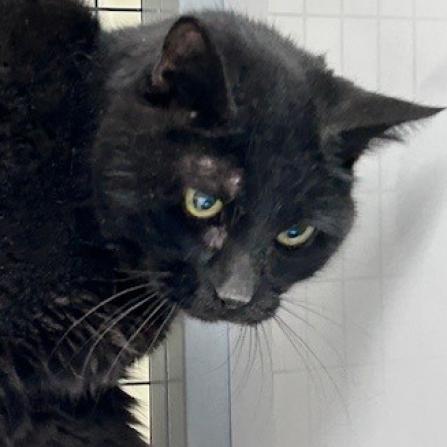
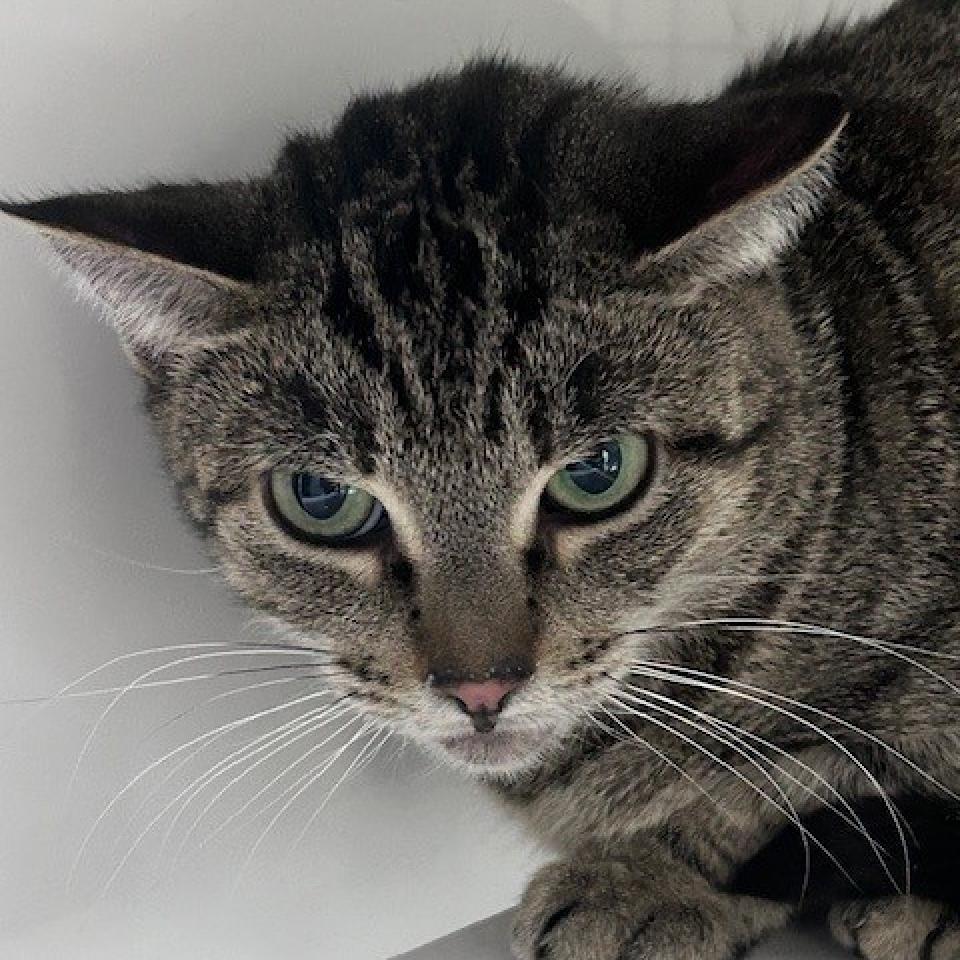
Purrfect Pals: This week’s new cats

LAKE COUNTY, Calif. — Lake County Animal Care and Control has more new cats and kittens waiting for adoption.

The kittens and cats at the shelter that are shown on this page have been cleared for adoption.

Call Lake County Animal Care and Control at 707-263-0278 or visit the shelter online for information on visiting or adopting.

The shelter is located at 4949 Helbush in Lakeport.

Email Elizabeth Larson at This email address is being protected from spambots. You need JavaScript enabled to view it.. Follow her on Twitter, @ERLarson, or Lake County News, @LakeCoNews.


A#111's preview photo
A#111


A#99's preview photo
A#99

A#99's preview photo
A#99


B#130a's preview photo
B#130a

B#130b's preview photo
B#130b

A#49a's preview photo
A#49a

A#70b's preview photo
A#70b

A#70c's preview photo
A#70c

A#70d's preview photo
A#70d

A#70e's preview photo
A#70e


A visit to the polls: Good turnout, new voters amid concerns over mail-in ballots

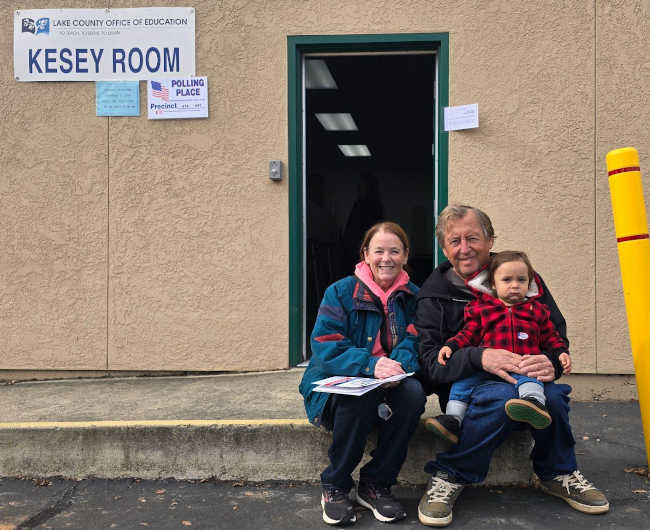
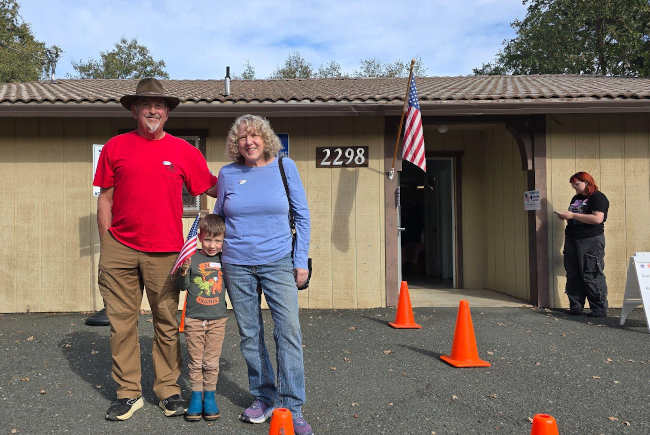
Raymond and Judy Ruminski with their grandson Lincoln at the exit of the polling station at Lake County Office of Education in Lakeport, California, on Tuesday, Nov. 5, 2024. Photo by Lingzi Chen/Lake County News.

LAKE COUNTY, Calif. — On Election Day, poll workers across Lake County observed a solid voter turnout, with many first-time voters.

Concerns and confusions over mail-in ballots also brought in lots of drop-off and provisional ballots, poll workers said.

Lake County News visited 10 of the county’s 20 polling stations, where many poll workers felt Tuesday’s turnout surpassed that seen in recent years.

“We have more people coming in than we did in the last election,” said poll worker Rhondee Epperson at the Scotts Valley Women’s Clubhouse of the station’s voter turnout in comparison to the 2020 General Election she worked for. “You can see the difference.”

“I’ve worked maybe four or five different elections at this address, and this time it seems about the busiest,” said Eugene Gaffrey, polling station inspector at Lower Lake Methodist Church.

Lake County has the most registered voters this year among all recent elections —with 37,915 registered voters for the 2024 General Election, up from 37,262 in 2020 which had increased from under 35,000 of the 2016 and 2012 elections.

Historical voter turnout has also improved, with 78% in 2020 compared to 72.28% in 2016 and 67.8% in 2012.

So far, 20.99% of ballots in Lake County have been counted for this election, with a final turnout rate estimated around 71% based on currently available data, down from the 2020 election.

This year’s consolidation to 48 precincts from 70 in 2020 may explain some poll workers’ impression of higher turnout.

No official voter turnout data has been released as of the time of publication.

At 6:30 p.m. on Tuesday, one and half an hour before the poll station closed, Gaffrey told Lake County News that there had been a constant and strong turnout throughout the day, among them, a good number of first-time voters.

“We’ve had a good number of new voters, both young and older,” added Gaffrey. “It’s been good to see the enthusiasm to exercise your right to vote.”

Election technician Teresa Johnson at First Lutheran Church Parish Hall found lots of first-time voters coming in. Even her 76-year-old landlord came to vote for the first time, she said.

Kathryn Parankema, clerk at the Community Baptist Church in Nice, showed a woman who had never voted before how to go into the precinct. The turnout of new voters, for her, was “indicative of a level of concern.”

“Today we saw more young people; the primary doesn’t draw them as much,” said Susan Dillard, inspector at the North Shore Christian Fellowship polling station in Upper Lake.

In addition, “We did see an uptick in the native people voting,” Dillard said.

In terms of voter registration, the number of registered voters in both the younger and older age groups in Lake County does not show significant differences from the 2020 election, according to data drawn from state reports. But the actual turnout rate across age groups remains unknown for this year.

Distrust over mail-in ballots

Despite the option to mail in their ballots, many voters opted to hand-deliver completed ballots to polling stations on election day.

The large yellow vote-by-mail drop-off bag was nearly full by late afternoon at the North Shore Christian Fellowship station in Upper Lake, according to clerk Bruce Graves.

Over at the Little Red Schoolhouse that sits in the woods in Cobb, the bag filled even faster, almost reaching capacity by 4 p.m. “As you can tell,” Inspector Cathy Prather said, straining slightly as she lifted the heavy yellow bag, “this is really full now.”

Poll workers said many voters who came to drop off their ballots at the polling stations because they did not trust the mail system or the six official drop boxes. Instead, they preferred the security with staff being there and assisting.

“There’s just a lot of people that like to see the process and come into the polls,” said Diane Allen, inspector at the Lake County Office of Education station in Lakeport, adding that some people “don’t really like the drop boxes because there’s nobody overseeing.”

By 5:30 p.m., the station at Hidden Valley Lake Community Services District Office was on its second yellow bag.

When asked how many ballots would fit in one bag, Inspector Sandy Damitz said, “I have no idea, depends upon how well you stuff it.”

For some stations, drop-offs took the lead. “A lot more dropped the ballot than voted [here],” said Epperson at 1 p.m., who was hand-tracking the numbers with the five-stroke tally marks on her notebook.

Many poll workers, like Graves, also reported large numbers of voters who had “surrendered” their own ballots and requested for a “fresh one” at the polling station. Speaking of the possible reasons behind it, some again attributed it to distrust.

“Still a lot of them want to use our ballots, even though they’re the same thing,” said Epperson. “I don’t know if it’s just from paranoia and that they don’t trust them.”

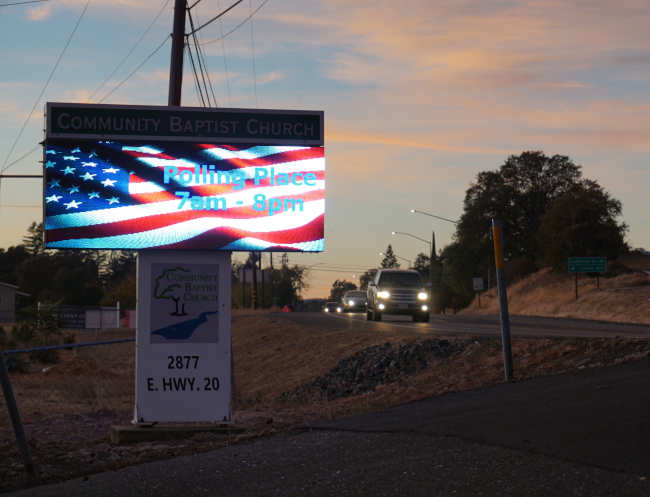
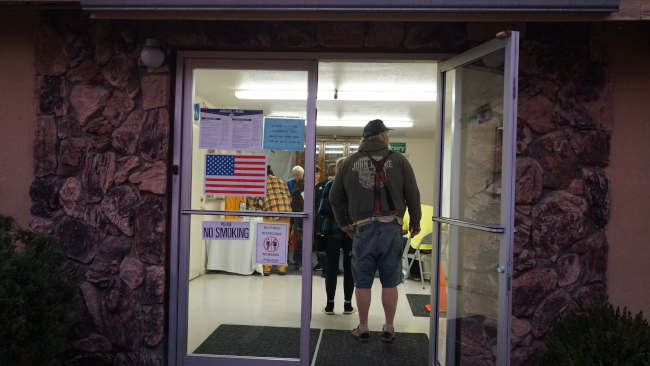
The polling precinct at Community Baptist Church in Nice, California, on Tuesday, Nov. 5, 2024. Photo by Elizabeth Larson/Lake County News.

Lots of verifications and provisionals

The most complicated situation happened when voters wanted a new ballot at the polling station, but walked in without their own ballot to surrender, for which polling staff could not immediately verify if they had already cast their vote.

In this case, the inspector at the station had to call the Registrar of Voters Office to void the ballot before handing the voter a “fresh one,” which was a critical step to protecting the integrity of the election.

“We have to cross-check to make sure people don’t vote twice,” Epperson said.

For Allen, who had been making those calls constantly since the beginning of the day, “That’s been more crazy this election.”

Some voters were not sure about if they had received a ballot through mail, some forgot, while others didn’t want to deal with their mail-in ballots, according to poll workers.

“People are really confused and I don’t know the reason,” said Prather. She also noticed that “they get irritated that they get one and they don’t want one.”

California just became the eighth state in the country to make universal mail-in ballots permanent. In 2021, Gov. Gavin Newsom signed into law a bill that requires a mail-in ballot be sent to every actively registered voter.

“Many people have adapted and adopted,” said Parankema.

But for her, it’s hard to say if voters are moving to the vote-by-mail ballots. “We have a natural resistance to change,” she said.

Prather showed Lake County News the log of the phone calls to the registrar office she had made throughout the day. Up to 4 p.m., she had called the elections office 209 times and about 30 calls went through.

Like Prather, every other inspector was making these calls.

Richard Adams, inspector at Calpine Geothermal Visitor Center, said at one point he had three to four voters in line waiting for the call to go through to be verified all at once.

If the phone call never went through, the voter could vote provisional, which required an extra step afterwards for election officials to confirm that the voter did not already vote before taking the ballot into account.

But either way, it was guaranteed that “everybody can cast the ballot,” Adams said.

Kandee and Greg Stolesen with their grandson Sloane in front of Scotts Valley Women’s Clubhouse in Lakeport, California, on Tuesday, Nov. 5, 2024. Photo by Lingzi Chen/Lake County News.


Vote in-person with children

At one point in the Little Red Schoolhouse in Cobb, when Lake County News visited, about four children were hanging around in the polling station, while a few more babies were resting in the arms of their mothers.

Voters liked to bring the whole family, “because everyone wants to get stickers,” said Prather, smiling.

For Raymond and Judy Ruminski, they brought their 16-month-old grandson Lincoln because they needed to take care of the little one while going to vote.

When Raymond Ruminski — who retired in 2018 after serving as Lake County’s Environmental Health director — was filling up his ballot with his right hand at the voting booth, Lincoln was sitting in his left arm, eyes sweeping around the polling station. It’s Lincoln’s first election.

“I like the old-fashioned way, it’s just a tradition,” said Ruminski of why he came to vote in-person. “Plus a lot of these people we know.”

For him, whether the voter ID is required at the poll was not an issue. “I come here and I know the people. I say hi to Bobby,” he added, referring to one of the poll workers. “They know who we are.”

His wife, Judy, liked the permanence of the old-way of going into the precinct. “They’re long-term. They don’t just get up and move,” she said, adding that they had been voting at this location for many years.

The couple voted mostly in similar directions, despite some differences.

“I vote for all the guys that usually don’t win,” Raymond said. Judy chimed in to explain, “This is a Democratic state where you don’t vote Democrats.”

“There’s a lot of things going on now about taking rights away from parents and letting their children do things that are harmful to them,” Judy Ruminski said about why they voted Republican. “So we vote for families.”

Kandee and Greg Stolesen walked into the poll station at Scotts Valley Women’s Clubhouse with their 4-year-old grandson, Sloane.

The couple had already filled up their ballots; it’s mostly for Sloane, who was holding a mini national flag, to slide the ballots into the large yellow drop-off bag. And of course, he got an “I voted” sticker from Rhondee.

“Instead of just putting in the mail, we thought it’d be great to bring him down, let him see the process,” Kandee Stoleson said.

Before coming to the poll, Sloane had voted at an election game at his preschool, for which both sides won the election, Sloane said.

Stoleson said she voted for Democratic candidates Kamala Harris and Tim Walz. “I’m a registered Democrat. But I don’t vote always by the party; I vote for what I believe in,” she said.

For all state propositions and local measures, “we voted ‘no’ on everything except, I think, Proposition 36,” Kandee said.

The family had dropped their votes at 1 p.m. and was heading home. “We’re all hungry; lunch time,” Stoleson said and smiled.

Email staff reporter Lingzi Chen at This email address is being protected from spambots. You need JavaScript enabled to view it.. 

Editor/Publisher Elizabeth Larson contributed to this report. Email her at This email address is being protected from spambots. You need JavaScript enabled to view it.. 

Voters line up early in the evening at the polling precinct at Community Baptist Church in Nice, California, on Tuesday, Nov. 5, 2024. Photo by Elizabeth Larson/Lake County News.

Helping Paws: Little terriers and big dogs

LAKE COUNTY, Calif. — Lake County Animal Care and Control has dogs ranging from small terriers to big working dogs ready to be adopted this week.

The dogs available for adoption this week include mixes of Anatolian shepherd, Australian shepherd, border collie, boxer, brussels griffon, bull terrier, cane corso, cattle dog, Dogo Argentino, German shepherd, Great Pyrenees, husky, Labrador Retriever, pit bull terrier, spaniel and terrier.

Dogs that are adopted from Lake County Animal Care and Control are either neutered or spayed, microchipped and, if old enough, given a rabies shot and county license before being released to their new owner. License fees do not apply to residents of the cities of Lakeport or Clearlake.

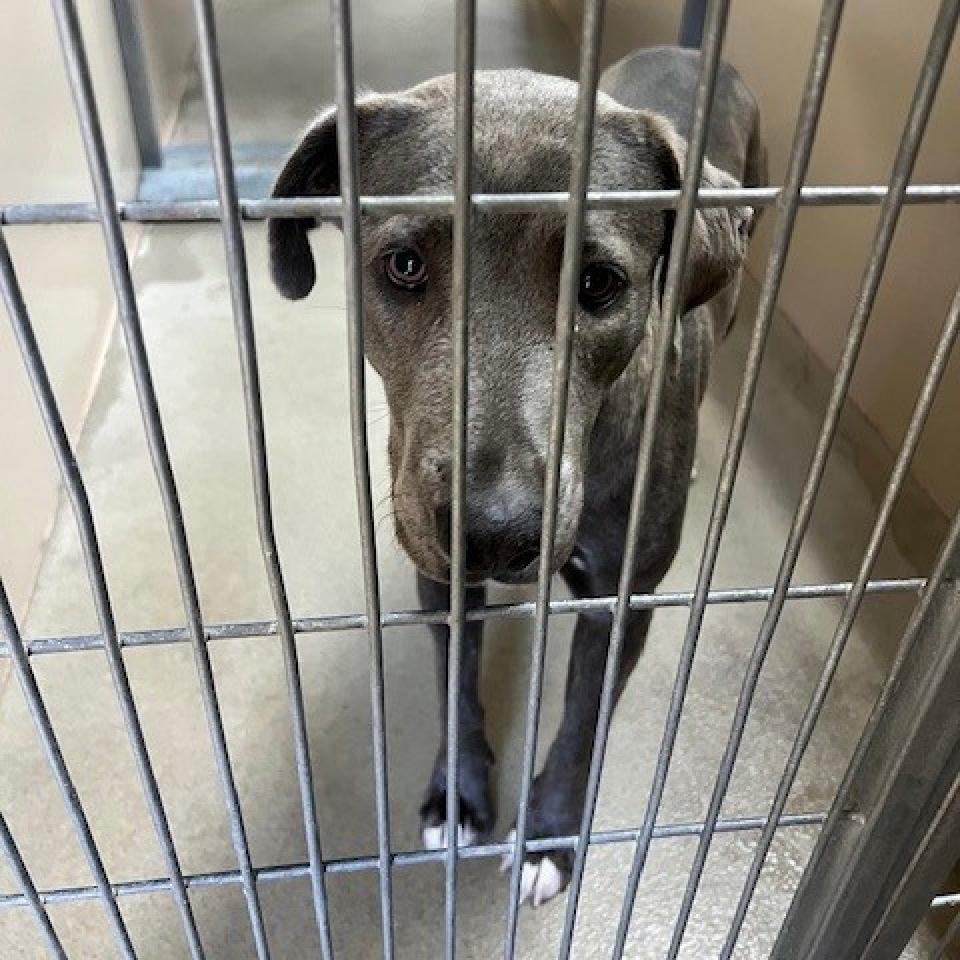
Those dogs and the others shown on this page at the Lake County Animal Care and Control shelter have been cleared for adoption.

Call Lake County Animal Care and Control at 707-263-0278 or visit the shelter online for information on visiting or adopting.

The shelter is located at 4949 Helbush in Lakeport.

Email Elizabeth Larson at This email address is being protected from spambots. You need JavaScript enabled to view it.. Follow her on Twitter, @ERLarson, or Lake County News, @LakeCoNews.
 

Kennel#21's preview photo
Kennel#21

Kennel#2's preview photo
Kennel#2

Kennel#22's preview photo
Kennel#22

Kennel#18's preview photo
Kennel#18

Kennel#19(Otis)'s preview photo
Kennel#19(Otis)

Kennel#29's preview photo
Kennel#29

Kennel#28's preview photo
Kennel#28

Kennel#31's preview photo
Kennel#31

Kennel#32b's preview photo
Kennel#32b

Kennel#9's preview photo
Kennel#9

Kennel#12's preview photo
Kennel#12

Kennel#11's preview photo
Kennel#11

Kennel#7's preview photo
Kennel#7

Kennel#5's preview photo
Kennel#5

Kennel#10's preview photo
Kennel#10

Kennel#16(Caney)'s preview photo
Kennel#16(Caney)

Kennel#20's preview photo
Kennel#20

Kennel#30's preview photo
Kennel#30

Kennel#3's preview photo
Kennel#3

Kennel#6's preview photo
Kennel#6

Kennel#13's preview photo
Kennel#13

Kennel#14's preview photo
Kennel#14

 
Kennel#26(Ben)'s preview photo
Kennel#26(Ben)

Kennel#25(Jerry)'s preview photo
Kennel#25(Jerry)

Kennel#33's preview photo
Kennel#33

 
Kennel#17's preview photo
Kennel#17

Kennel#34's preview photo
Kennel#34


Kennel#8's preview photo
Kennel#8

Kennel#24's preview photo
Kennel#24


C#60b

Osteoporosis, the silent disease, can shorten your life − here’s how to prevent fractures and keep bones healthy


With some simple lifestyle changes, you can lower your risk of osteoporosis. MoMo Productions/DigitalVision via Getty Images

Because there are typically no symptoms until the first fracture occurs, osteoporosis is considered a silent disease. Some call it a silent killer.

Osteoporosis is a bone disease characterized by decreased bone density and strength, leading to fragile, brittle bones that increase the risk of fractures, especially in the spine, hips and wrists.

The National Osteoporosis Foundation estimates that more than 10 million Americans have osteoporosis. Another 43 million have low bone mass, which is the precursor to osteoporosis. By 2030, the number of adults with osteoporosis or low bone mass is estimated to increase by more than 30%, to 71 million.

The reasons for the increase include lifestyle issues, particularly smoking, lack of physical activity and alcohol abuse. Our aging population, along with the insufficient attention paid to this disease, are also why osteoporosis is on the rise.

An illustration of osteoporosis of the spine, which features sponge-like, brownish tissue.
An illustration of osteoporosis of the spine. Note the sponge-like tissue, which is partially destroyed. BSIP/Universal Images Group via Getty Images

If you are older, it may be discouraging to read those statistics. But as orthopedic specialists who have studied this disease, we know that osteoporosis is not inevitable. The key to having healthy bones for a lifetime is to take some simple preventive measures – and the earlier, the better.

Although the symptoms are not obvious early on, certain signs will indicate your bones are becoming weaker. The most serious complications of osteoporosis are fractures, which can lead to chronic pain, hospitalization, disability, depression, reduced quality of life and increased mortality. Worldwide, osteoporosis causes nearly 9 million fractures annually. That’s one osteoporotic fracture every three seconds.

Height loss, back pain

Minor bumps or falls may lead to fractures, especially in the hip, wrist or spine. These types of fractures are often the first sign of the disease.

If you notice that you’re getting shorter, the cause could be compression fractures in the spine; this too is a common symptom of osteoporosis.

Although it’s typical for most people to lose height as they age – about 1 to 1½ inches (2.5 to 3.8 centimeters) over a lifetime – those with osteoporosis who have multiple spinal fractures could lose 2 to 3 inches or more in a relatively rapid time frame.

Curved posture, or noticeable changes in posture, may lead to a hunched back, which could be a sign that your spine is weakening and losing density.

Persistent back pain is another indicator – this too is the result of tiny fractures or compression of the spine.

A healthy diet and exercise are two ways to build up bone density.

Calcium and vitamin D

Osteoporosis cannot be completely cured, but certain lifestyle and dietary factors can lower your risk.

Calcium and vitamin D are essential for bone health. Calcium helps maintain strong bones, while vitamin D assists in calcium absorption. Women over age 50 and men over 70 should consume at least 1,200 milligrams of calcium daily from food and, if necessary, supplements.

The easy way to get calcium is through dairy products. Milk, yogurt and cheese are among the richest sources. One cup of milk provides about 300 milligrams of calcium, one-fourth of the daily requirement. If you are vegan, calcium is in many plant-based foods, including soy, beans, peas, lentils, oranges, almonds and dark leafy greens.

Adults should aim for two to three servings of calcium-rich foods daily. Consuming them throughout the day with meals helps improve absorption.

Vitamin D is obtained mostly from supplements and sunlight, which is the easiest way to get the recommended dose. Your body will produce enough vitamin D if you expose your arms, legs and face to direct sunlight for 10 to 30 minutes between 10 a.m. and 3 p.m., two to three times a week.

Although it’s best to wear short-sleeve shirts and shorts during this brief period, it’s okay to wear sunglasses and apply sunscreen to your face. Sunlight through a window won’t have the same effect – glass reduces absorption of the UV rays needed for vitamin D production. People with darker skin, or those living in less sunny regions, may need more sunlight to get the same effect.

If a doctor has given you a diagnosis of osteoporosis, it’s possible the calcium and vitamin D that you’re getting through food and sun exposure alone is not enough; you should ask your doctor if you need medication.

Chickpeas, sesame seeds and dark green vegetables, such as kale, arugula and broccoli, are good sources of calcium.

Dance, jog, lift weights and avoid alcohol

Regular exercise is an excellent activity that can help stave off osteoporosis. Weight-bearing exercises, such as brisk walking, jogging and dancing, are great for increasing bone density. Strength training, such as lifting weights, helps with stability and flexibility, which reduces the risk of falling.

Aim for 30 minutes of weight-bearing exercise at least four days a week, combined with muscle-strengthening exercises at least twice a week.

Particularly for women, who lose bone density during and after menopause, regular exercise is critical. Working out prior to menopause will reduce the risk of osteoporosis in your later years.

And avoid harmful habits – smoking and heavy alcohol consumption can weaken bone density and increase the risk of fractures.

Fall prevention strategies and balance training are crucial and can help reduce the risk of fractures.

Screening and treatment

Women should start osteoporosis screening at age 65, according to the U.S. Preventive Services Task Force. Men should consider screening if they have risk factors for osteoporosis, which include smoking, alcohol use disorder, some chronic diseases such as diabetes, and age. Men over 70 are at higher risk.

Medical imaging such as a bone density scan and spinal X-rays can help confirm osteoporosis and detect compression fractures. These basic tests, combined with age and medical history, are enough to make a clear diagnosis.

Managing osteoporosis is a long-term process that requires ongoing commitment to lifestyle changes. Recognizing the early warning signs and making these proactive lifestyle changes is the first step to prevent the disease and keep your bones healthy.The Conversation

Ting Zhang, Research Scholar of Orthopedics, University of Pittsburgh and Jianying Zhang, Research Professor of Orthopaedic Surgery, University of Pittsburgh

This article is republished from The Conversation under a Creative Commons license. Read the original article.

Snow and tell: Caltrans plows ahead to help Californians navigate frosty travel


Months before Mother Nature trades short sleeves for snowshoes, Caltrans maintenance personnel throughout the Golden State begin preparations for the season’s first flurries.

Caltrans crews operate on a 24/7 schedule during adverse weather conditions to keep the roads safe.

The video above takes viewers behind the scenes as Department maintenance experts shore up more than 1,500 pieces of heavy machinery and snowplows in preparation for their deployment into wintry conditions:

Here are a few trusted driving tips that will help Californians stay safe during winter travel.

WINTER DRIVING TIPS:

• Before you get on the road, go to the Caltrans website and check QuickMap (quickmap.dot.ca.gov) for real-time traffic information or call 1-800-427-ROAD.
• Move over to allow Caltrans maintenance crews, California Highway Patrol officers, and other emergency personnel to perform the important tasks needed to keep the roads open and quickly respond to emergencies.
• Turn on your headlights to see and be seen. Be observant and maintain a safe distance behind snow removal equipment. Do not crowd the plow. Do not pass snowplows unless directed to do so by law enforcement or emergency public service personnel.
• Be prepared for delays and carry extra food, water, blankets and other essentials, and pack cell phone chargers.
• Check your tires. Make sure they are properly inflated, and the tread is in good condition.
• Always carry chains. Make sure they are the proper size for your tires and are in working order.
• Winterize your vehicle. Make sure brakes, windshield wipers, heater/defroster, and exhaust system are in good working order. Make sure fluids are topped-off, especially windshield washer fluid.
• Reduce your speed to match driving conditions and allow more time to reach your destination. • Know that bridges and ramps may be more slippery and icier than the roadway.
• Keep your electric vehicle batteries charged and your fuel tank full. Bad weather may cause long delays or closures.
• If you start sliding on snow or ice, slowly take your foot off the gas pedal and steer in the direction you wish to travel. Do not lock your brakes — pump the brakes if needed or apply steady pressure if your vehicle is equipped with anti-lock brakes.

Additional winter safe driving tips and more information about Caltrans efforts to prepare the transportation system for seasonal weather can be found on the Caltrans website.

Space News: Powerful new US-Indian satellite will track Earth’s changing surface


We don’t always notice it, but much of Earth’s surface is in constant motion. Scientists have used satellites and ground-based instruments to track land movement associated with volcanoes, earthquakes, landslides, and other phenomena.

But a new satellite from NASA and the Indian Space Research Organisation, or ISRO, aims to improve what we know and, potentially, help us prepare for and recover from natural and human-caused disasters.

The NISAR (NASA-ISRO Synthetic Aperture Radar) mission will measure the motion of nearly all of the planet’s land and ice-covered surfaces twice every 12 days.

The pace of NISAR’s data collection will give researchers a fuller picture of how Earth’s surface changes over time.

“This kind of regular observation allows us to look at how Earth’s surface moves across nearly the entire planet,” said Cathleen Jones, NISAR applications lead at NASA’s Jet Propulsion Laboratory in Southern California.

Together with complementary measurements from other satellites and instruments, NISAR’s data will provide a more complete picture of how Earth’s surface moves horizontally and vertically.

The information will be crucial to better understanding everything from the mechanics of Earth’s crust to which parts of the world are prone to earthquakes and volcanic eruptions. It could even help resolve whether sections of a levee are damaged or if a hillside is starting to move in a landslide.

What lies beneath

Targeting an early 2025 launch from India, the mission will be able to detect surface motions down to fractions of an inch. In addition to monitoring changes to Earth’s surface, the satellite will be able to track the motion of ice sheets, glaciers, and sea ice, and map changes to vegetation.

The source of that remarkable detail is a pair of radar instruments that operate at long wavelengths: an L-band system built by JPL and an S-band system built by ISRO. The NISAR satellite is the first to carry both. Each instrument can collect measurements day and night and see through clouds that can obstruct the view of optical instruments.

The L-band instrument will also be able to penetrate dense vegetation to measure ground motion. This capability will be especially useful in areas surrounding volcanoes or faults that are obscured by vegetation.

“The NISAR satellite won’t tell us when earthquakes will happen. Instead, it will help us better understand which areas of the world are most susceptible to significant earthquakes,” said Mark Simons, the U.S. solid Earth science lead for the mission at Caltech in Pasadena, California.

Data from the satellite will give researchers insight into which parts of a fault slowly move without producing earthquakes and which sections are locked together and might suddenly slip.

In relatively well-monitored areas like California, researchers can use NISAR to focus on specific regions that could produce an earthquake. But in parts of the world that aren’t as well monitored, NISAR measurements could reveal new earthquake-prone areas.

And when earthquakes do occur, data from the satellite will help researchers understand what happened on the faults that ruptured.

“From the ISRO perspective, we are particularly interested in the Himalayan plate boundary,” said Sreejith K M, the ISRO solid Earth science lead for NISAR at the Space Applications Center in Ahmedabad, India. “The area has produced great magnitude earthquakes in the past, and NISAR will give us unprecedented information on the seismic hazards of the Himalaya.”

Surface motion is also important for volcano researchers, who need data collected regularly over time to detect land movements that may be precursors to an eruption. As magma shifts below Earth’s surface, the land can bulge or sink. The NISAR satellite will help provide a fuller picture for why a volcano deforms and whether that movement signals an eruption.

Finding normal

When it comes to infrastructure such as levees, aqueducts, and dams, NISAR’s ability to provide continuous measurements over years will help to establish the usual state of the structures and surrounding land. Then, if something changes, resource managers may be able to pinpoint specific areas to examine.

“Instead of going out and surveying an entire aqueduct every five years, you can target your surveys to problem areas,” said Jones.

The data could be equally valuable for showing that a dam hasn’t changed after a disaster like an earthquake. For instance, if a large earthquake struck San Francisco, liquefaction — where loosely packed or waterlogged sediment loses its stability after severe ground shaking — could pose a problem for dams and levees along the Sacramento-San Joaquin River Delta.

“There’s over a thousand miles of levees,” said Jones. “You’d need an army to go out and look at them all.” The NISAR mission would help authorities survey them from space and identify damaged areas. “Then you can save your time and only go out to inspect areas that have changed. That could save a lot of money on repairs after a disaster.”

The NISAR mission is an equal collaboration between NASA and ISRO and marks the first time the two agencies have cooperated on hardware development for an Earth-observing mission.

Managed for the agency by Caltech, JPL leads the U.S. component of the project and is providing the mission’s L-band SAR. NASA is also providing the radar reflector antenna, the deployable boom, a high-rate communication subsystem for science data, GPS receivers, a solid-state recorder, and payload data subsystem.

The U R Rao Satellite Centre in Bengaluru, India, which leads the ISRO component of the mission, is providing the spacecraft bus, the launch vehicle, and associated launch services and satellite mission operations. The ISRO Space Applications Centre in Ahmedabad is providing the S-band SAR electronics.

To learn more about NISAR, visit https://nisar.jpl.nasa.gov.
  • 365
  • 366
  • 367
  • 368
  • 369
  • 370
  • 371
  • 372
  • 373
  • 374

Community

  • Sheriff’s Activities League and Clearlake Bassmasters offer youth fishing clinic

  • City Nature Challenge takes place April 24 to 27

Public Safety

  • Lakeport Police logs: Wednesday, Feb. 11

  • Lakeport Police logs: Tuesday, Feb. 10

Education

  • Ramos measure requiring school officer training in use of anti-opioid drug moves forward

  • Lake County Chapter of CWA announces annual scholarships 

Health

  • California ranks 24th in America’s Health Rankings Annual Report from United Health Foundation

  • Healthy blood donors especially vital during active flu season

Business

  • Employment law summit takes place March 9

  • Two Lake County Mediacom employees earn company’s top service awards

Obituaries

  • Terry Knight

  • Ellen Thomas

Opinion & Letters

  • Who should pay for AI’s power? Not California ratepayers

  • Crandell: Supporting nephew for reelection in supervisorial race

Veterans

  • State honors fallen chief warrant officer killed in conflict in Iran

  • CalVet and CSU Long Beach team up to improve data collection related to veteran suicides

Recreation

  • April Audubon program will show how volunteers can help monitor local osprey nests

  • First guided nature walk of spring at Anderson Marsh State Historic Park April 11

  • Second Saturday guided nature walks continue at Anderson Marsh State Historic Park

  • Wet weather trail closure in effect on Upper Lake Ranger District

Religion

  • Kelseyville Presbyterian Church plans Easter service

  • Easter ‘Sonrise’ Service returns to Xabatin Community Park

Arts & Life

  • ‘CIA’ delves into the shadowy world of an espionage thriller

  • ‘War Machine’ shifts the battlefield into uncharted territory

Government & Politics

  • Lake County Democratic Central Committee endorses Falkenberg

  • Crandell launches reelection campaign plans March 15 event

Legals

  • April 23 hearing on Lake Coco Farms Major Use Permit

  • NOTICE OF 30-DAY PUBLIC COMMENT PERIOD & NOTICE OF PUBLIC HEARING

How to resolve AdBlock issue?

Refresh this page