 How to resolve AdBlock issue?
Mill Fire burning operations send more smoke into Lake County
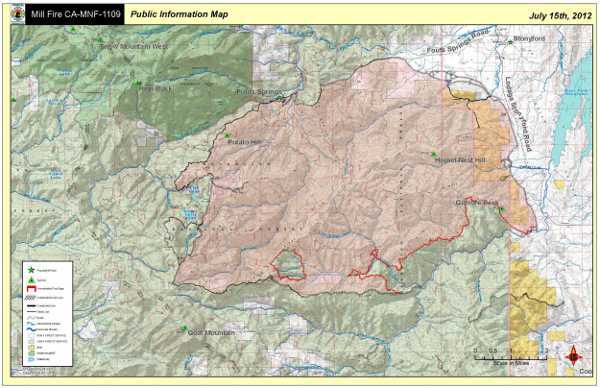
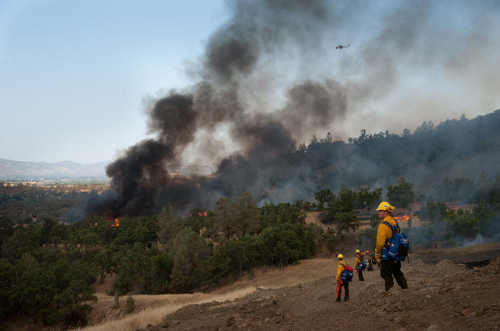
NORTHERN CALIFORNIA – Burning operations on the Mill Fire in the Mendocino National Forest contributed not only to an increase in acreage on Sunday but also to continued smoky skies over Lake County.
The firing operations are meant to reduce fuel, and help slow and ultimately stop the fire, which by Sunday morning had burned 27,122 acres of brush and timber in the rugged terrain of the Colusa County side of the forest, 10 miles west of Stonyford.
Firefighters had contained 60 percent of the fire by Sunday morning. Forest officials expect it to take until next Friday, July 20, to fully contain the incident.
Resources committed to the fire on Sunday included 1,699 personnel, 30 Type 1 crews, 16 Type 2 crews, nine helicopters, 105 engines, 19 dozers and 13 water tenders.
With that huge resource commitment comes a growing price tag that on Sunday was estimated at $9.75 million.
Firing operations are expected to be completed on Sunday, according to an incident team report.
Deb Schweizer, an incident team spokesperson, confirmed that the firing operations were sending more smoke into Lake County.
County residents on Sunday were reporting thick smoke and, in some areas, ashes from the fire.
Additionally, an incident team weather update had anticipated north winds would send smoke to the south for at least another day.
Cooler temperatures and higher humidity are predicted for early in the coming week, as a low pressure weather system arrives in the region. The incident team report said area winds are expected to change direction and increase along ridge tops with the arrival on the new system.
Altogether, five outbuildings have been destroyed in the fire, some on private property, some on U.S. Forest Service land, said Schweizer.
No damage has been done to the Mill Valley, Mill Creek and Letts Lake Campgrounds, which were evacuated shortly after the fire began. “The campgrounds are fine,” Schweizer said.
Lake County News received a report of problems with personnel working security at the fire’s base camp at the Stonyford Rodeo grounds, where they were reportedly harassing fire officials and contractors alike as they came into the camp.
Schweizer said she couldn’t comment on the matter, as it was a personnel issue.
The Sunday incident team report noted that of the 27,122 acres burned so far, 23,891 acres were U.S. Forest Service land, 1,574 acres belonged to Bureau of Land Management and 1,659 acres were privately owned.
Email Elizabeth Larson at
Mill Fire sees slight increase in acreage, containment
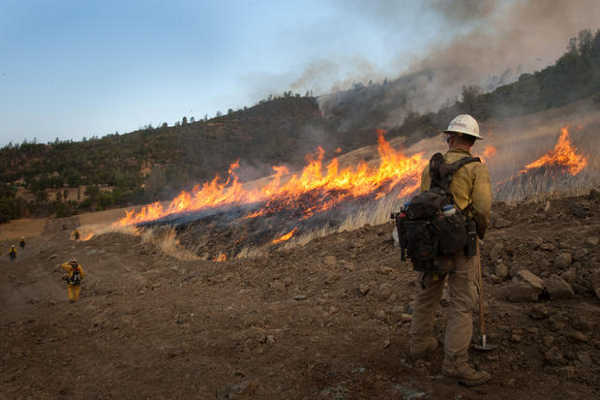
NORTHERN CALIFORNIA – A wildland fire burning for the past week in the Mendocino National Forest appeared to be in a crucial holding pattern on Saturday, with small advances both in acreage and containment on Saturday night.
The Mill Fire, burning near Upper Letts Lake and 10 miles west of Stonyford in the Colusa County side of the forest, began burning last Saturday, July 7. Forest officials have estimated it will take another full week to contain it.
By Saturday the fire had burned 25,578 acres, up approximately 44 acres from the previous day, with containment rising 5 percent to reach 55 percent, according to the Mendocino National Forest.
Forest officials have put the firefighting costs to date at $9 million.
Approximately 1,664 firefighting personnel continued to work on the fire Saturday. Included in the effort were 30 Type 1 crews, 15 Type 2 crews, nine helicopters, 107 engines, 20 dozers and 13 water tenders.
As they had for the last several days, on Saturday firefighters continued burning operations in order to secure the Mill Fire’s containment lines and remove fuel. Firing on the fire’s south and southeast flanks is expected to continue Sunday.
While Lake County Air Quality Management District had predicted air quality conditions in the “good” category on Saturday, Lake County residents experienced more smoke coming into the air basin from the fire.
A Saturday night report cautioned that residents should still be aware of smoke impacts, as smoke from the fire will be visible as burnout operations continue for at least one more day.
In addition to firing operations, firefighters on Saturday were working to extinguish hot spots on the edge of the fire, and also patroling 300 feet inside the fire lines to assess conditions and begin making repairs related to the fire suppression effort, officials reported.
Visitors to the Mendocino National Forest should be aware that Goat Mountain Road is now closed. Forest officials reported that the closure will be in effect for the duration of firing operations, and is for firefighter and public safety.
Fire crews will be working on the narrow road and falling debris may make travel dangerous, officials reported.
Email Elizabeth Larson at

The Veggie Girl: Zucchini apocalypse
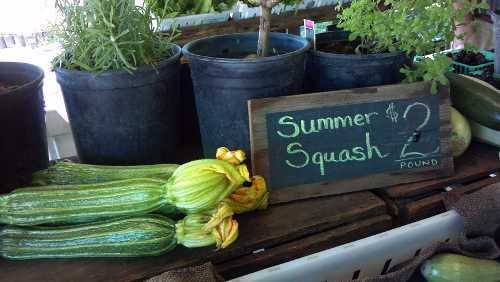
Forget the zombie apocalypse. It’s summertime and the zucchini apocalypse is upon us.
You’ve probably heard the jokes about getting rid of over-zealous zucchini this time of year, especially if you’re a home gardener. For example:
How do you know someone’s got no friends? When you see them shopping for zucchini in summertime.
Or, when do country folks lock their car doors? In the height of summer, for fear someone might slip a bag of zucchini in there.
You get the idea.
A single zucchini plant can produce dozens of fruits over the course of a couple of months, prompting stealth gifts to neighbors and friends.
The truth is that young, tender, recently-picked zucchinis are a magnificent treat.
As to their overabundance, zucchini can be frozen for later use in recipes, a useful thing if friends hide when you ring their doorbell with a bag stuffed full of the summer crop.
All squashes, including the ancestors of modern day zucchini, originated in Mesoamerica, in an area between Mexico and Guatemala, and gradually spread throughout the Americas.
They were brought to Europe from the New World by explorers. Christopher Columbus, for example, is credited for bringing squash seeds back from his journeys there.
The English word “squash” derives from the Native American “askutasquash,” a word from the Narragansett language, spoken in what is now Rhode Island. It literally means “a green thing eaten raw.”
Zuchinni, known as zucchina in Italy and courgette in France and Britain, was developed in Italy – likely in the late 18th century – from squash brought to Europe from the New World.
While zucchini is used as a vegetable in most culinary applications, it’s botanically considered a fruit, being the swollen ovary of the zucchini flower.
As popular as it is now, it’s hard to believe that zucchini was virtually unknown in the U.S. as little as three decades ago.
Typically elongated and deep green, hybrids have been developed in recent years, including yellow, light green, striped, and even round varieties of zucchini.
If left on the vine, zucchini can grow to a mammoth length of more than two feet, with the skin becoming tough and the seeds large and bitter at this size.
The best tasting zucchini are harvested when young, before their flavor is diluted from the increased water content that comes with growth.
They should be picked just as the blossom on the end of the squash begins to turn brown. An ideal zucchini is between 4 and 8 inches long.
Low in calories and high in water content, zucchini is a good source of manganese, vitamin C, magnesium, vitamin A, fiber, potassium, vitamin K and folate.
These nutrients have been shown to be beneficial for the prevention of atherosclerosis (hardening of the arteries due to fatty deposits), high blood pressure and diabetic heart disease.
Although phytonutrient research on zucchini and other summer squashes is limited, in studies they’ve shown a mild benefit in the prevention of cancer-like changes in cells. Other studies have shown them to be useful in reducing symptoms associated with prostate enlargement in men.
Zucchini is delightful prepared on the grill. I like to slice them in half lengthwise for grilling, but they can also be skewered.
Simply slice them into half rounds and thread them on a skewer so they lie flat on the grill. Brush them with a bit of olive oil, season with salt and pepper, and sprinkle chopped fresh rosemary or tender thyme tips on top. Grill until they’re seared and tender. Cherry tomatoes make for a nice contrast of color and flavor when threaded between the zucchini slices.
If sautéing zucchini, onions, garlic, or sun-dried tomatoes (along with their oil, if jarred) add flavor and interest, pairing well with them in the pan.
If a quintessential versatile vegetable exists, it must be zucchini. They can be used in sweet applications, such as being added to breads and muffins, as well as in a plethora of savory ways.
Zucchini may be added to pasta sauces, soups, stews, quiches, lasagna and casseroles, either as a complement to the recipe or the star of the show.
It can be thinly sliced to make a crust for a vegetable or meat pie or can be used in lieu of eggplant in an Eggplant Parmagiana recipe.
Zucchini is a key ingredient in ratatouille, the classic vegetable dish birthed in the Provence region of France, along with other summer bounty like tomatoes and eggplant.
Slice zucchini thin on pizza with feta cheese, grate it as an addition to potato pancakes, make it into fritters, build a frittata around it, or make a hearty grilled veggie sandwich or wrap.
For a vegetarian treat, small zucchini may be roasted till tender in the oven or on the grill and used in lieu of hot dogs in a bun.
When zucchini is frozen, it softens and is not ideal on its own, but since it serves as a component of so many recipes, it’s wonderful to have a supply on hand in your freezer.
To freeze, wash and slice the squash and blanch in boiling water for two to three minutes. Remove from the boiling water and place in an ice water bath to cool it down. Once cooled, drain the squash thoroughly and place in freezer safe zipper locked bags.
Remove as much air as possible, seal partially and suck the remaining air out with a straw before sealing all the way. Lay bags flat in the freezer until frozen through.
I freeze grated zucchini raw in quantities needed for bread or muffin recipes, and allow it to thaw and drain before I use it.
Zucchini blossoms are also edible. They’re sometimes available at farmers’ markets, but if you have a home garden, this tasty treat is at your fingertips. They’re quite perishable, so should be used within hours of harvest or purchase.
If you harvest them yourself, it’s best to do so in the early morning before the blossoms have twisted shut. Some enthusiastic souls harvest them at night by flashlight, as – according to them – insects are less likely to be found in the blossoms then.
Each zucchini plant has male and female blossoms. The male blossoms appear on long stems and can be harvested without affecting production of the squash. They should be picked with a length of stem attached.
Female blossoms are attached to the end of the squash itself. They can be nipped off on their own, or harvested along with the young squash.
These large, orange-yellow blossoms make a tasty and colorful addition to salads or as a garnish for soup.
They can be added to the pan when sautéing summer squash, paired with cream cheese in an omelet or with Asiago cheese in a frittata.
Chop them fine to mix with a spread (such as with cream cheese and chives) or add them to quesadillas, a favorite use for them in Mexico.
Is your mouth watering yet? Maybe the zucchini apocalypse isn’t such a bad thing after all.
Zucchini are available year-round in the supermarket, but at this time of year I’d suggest heading to a farmers’ market to find them freshly-picked and locally grown.
Or maybe just leave your car doors unlocked.
Either way, here’s a recipe to get you started. Enjoy!
Green and gold zucchini with penne and ricotta
1 cup fresh ricotta, cow’s milk or sheep’s milk (the freshest you can get, preferably whole milk) 2 pounds zucchini, mixed green and yellow
2 tablespoons olive oil
3 plump garlic cloves, chopped
3 tablespoons marjoram or opal basil
Sea salt and freshly ground black pepper
1 pound penne pasta
Freshly grated Parmesan or Dry Monterey Jack Cheese
Put water on for the pasta. Remove the ricotta from the refrigerator and spoon it onto a plate so that it will warm to room temperature.
Slice the zucchini on the diagonal a scant ½ inch thick, then slice into strips so that each piece resembles the quill-shaped pasta.
Heat the oil in a wide skillet. Add the zucchini and sauté over medium-high heat until golden, about 5 minutes. Add the garlic and marjoram, toss with the squash, and turn off the heat. Season well with salt and pepper.
When the water boils, add salt and the penne. Cook until al dente, then drain and add it to the zucchini. Toss, season with salt and pepper, then add the ricotta cheese in spoonfuls.
Grate the cheese over the dish and serve.
Note: Fresh goat cheese may be used in place of the ricotta, or a combination of the two. Since a wonderful goat dairy exists in Lake County, this is a nice choice.
Recipe by Deborah Madison and courtesy of “Local Flavors: Cooking and Eating from America’s Farmers’ Markets.”
Esther Oertel, a freelance writer, cooking teacher, and speaker, is passionate about local produce and all foods in the vegetable kingdom. She welcomes your questions and comments and may be reached at
Helping Paws: Big group of new dogs
LAKEPORT, Calif. – A whole new group of dogs, big and little, are are the county’s animal shelter and ready for adoption.
Mastiff mix pups, Chihuahuas and terriers, an Australian Kelpie, husky and dachshund mixes, and much more can be found for those looking for forever friends.
Thanks to Lake County Animal Care and Control’s new veterinary clinic, many of the animals offered for adoption already are spayed or neutered and ready to go home with their new families.
Dogs that are adopted from Lake County Animal Care and Control are either neutered or spayed, microchipped and, if old enough, given a rabies shot and county license before being released to their new owner. License fees do not apply to residents of the cities of Lakeport or Clearlake.
If you're looking for a new companion, visit the shelter. There are many great pets hoping you'll choose them.
The following dogs at the Lake County Animal Care and Control shelter have been cleared for adoption (additional dogs on the animal control Web site not listed are still “on hold”).

‘Carlos’
“Carlos” is a 7-month-old male dachshund-terrier mix.
He has a short tan coat, floppy ears and big brown eyes, weighs just over 11 pounds and has not yet been altered.
He’s in kennel No. 7, ID No. 33433.

‘Brandon’
“Brandon,” like his kennel mate Carlos, is a 7-month-old male dachshund-terrier mix.
He weighs 9 pounds, has a short tan coat, floppy ears and brown eyes, and has not yet been neutered.
Find him in kennel No. 7, ID No. 33432.

Female shepherd mix
This female shepherd mix is 1 year old.
She has a short brown and black coat, and weighs 46 pounds.
She’s in kennel No. 12, ID No. 33364.

‘Cali’
“Cali” is a female Chihuahua mix is 8 years old.
She has a short black and brown coat, and has been spayed.
She’s in kennel No. 13, ID No. 33343.

‘Taco’
“Taco” is a 3-year-old male Chihuahua mix.
He has a short white coat, and is not yet neutered.
He’s in kennel No. 16, ID No. 33342.

Chihuahua-terrier mix
This female Chihuahua-terrier mix is 4 years old.
She weighs 9 pounds and has a short tan coat.
Find her in kennel No. 18, ID No. 33273.

‘Boda’
“Boda” is 6-month-old female springer spaniel-border collie mix.
She has a short black and white coat, and is not yet spayed.
She is in kennel No. 19, ID No. 33494.

Boxer mix
This female boxer mix is 4 years old.
She has red and white coloring, a docked tale and weighs 50 pounds.
She’s in kennel No. 20, ID No. 33284.

‘Slick’
“Slick” is a 3-year-old male Australian Kelpie mix.
He has a short tricolor coat and weighs just over 42 pounds.
Find him in kennel No. 22, ID No. 33397.

Jack Russell terrier mix
This female Jack Russell terrier mix is 4 years old.
She has a long tricolor coat and weighs just over 16 pounds.
She’s in kennel No. 23, ID No. 33445.

Female dachshund mix
This female dachshund mix is 1 year old.
She has a short black coat, weighs 32 pounds and has not yet been spayed.
She’s in kennel No. 24, ID No. 33221.

Male husky mix
This male husky mix is just over 4 years old.
He has a long red and tan coat, gold eyes and erect ears, weighs just over 56 pounds and has been neutered.
Find him in kennel No. 30, ID No. 32738.

Pit bull terrier mix
This male pit bull terrier mix is 8 months old.
He weighs nearly 39 pounds, and has a short brown and brindle coat.
He’s in kennel No. 31, ID No. 33400.

Male mastiff mix pup
This male mastiff mix pup is 14 weeks old.
He has a short black coat with white markings, and has not yet been altered.
Find him in kennel No. 32a, ID No. 33551.

Male mastiff mix pup
This male mastiff mix pup is 14 weeks old.
He has a short black coat with white markings, and has not yet been altered.
Find him in kennel No. 32b, ID No. 33552.

Female mastiff mix pup
This female mastiff mix pup is 14 weeks old.
She has a short black coat with white markings, and has not yet been altered.
Find her in kennel No. 32c, ID No. 33551.

Female mastiff mix pup
This female mastiff mix pup is 14 weeks old.
She has a short black coat with white markings, and has not yet been altered.
Find her in kennel No. 33b, ID No. 33555.

Female mastiff mix pup
This male mastiff mix pup is 14 weeks old.
He has a short black coat with white markings, and has not yet been altered.
Find him in kennel No. 33c, ID No. 33556.
Adoptable dogs also can be seen at http://www.co.lake.ca.us/Government/Directory/Animal_Care_And_Control/Adopt/Dogs_and_Puppies.htm or at www.petfinder.com .
Please note: Dogs listed at the shelter's Web page that are said to be “on hold” are not yet cleared for adoption.
To fill out an adoption application online visit http://www.co.lake.ca.us/Government/Directory/Animal_Care_And_Control/Adopt/Dog___Cat_Adoption_Application.htm .
Lake County Animal Care and Control is located at 4949 Helbush in Lakeport, next to the Hill Road Correctional Facility.
Office hours are Monday through Friday, 8 a.m. to 5 p.m., and 1 p.m. to 3 p.m., Saturday. The shelter is open from 10:30 a.m. to 4:30 p.m. Monday through Friday and on Saturday from 1 p.m. to 3 p.m.
Visit the shelter online at http://www.co.lake.ca.us/Government/Directory/Animal_Care_And_Control.htm .
For more information call Lake County Animal Care and Control at 707-263-0278.
Email Elizabeth Larson at




