How to resolve AdBlock issue?
News
Judge Arthur Mann handed down the sentence to Sean Thomas Selig, 24, on Jan. 20, according to a statement from the Lake County District Attorney's Office.
Selig was represented by attorney Judy Conard and prosecuted by Deputy District Attorney John Langan.
The charges against Selig arose from an Oct. 6, 2004, crash in which his passenger, 21-year-old Samuel Adrian Solario, was killed.
The two young men, who investigators said had been spotted having drinks at a Nice restaurant and bar, were riding in a GMC Sierra pickup truck, driven by Selig, along Lakeshore Boulevard in Nice when the crash occurred.
Selig overturned the vehicle then, according to investigators, he fled, allegedly leaving Solario at the scene, where he died.
The District Attorney's Office said that Selig allegedly went to a friend's home where he spent the night, not mentioning that he had been involved in the crash.
According to the report, Selig allegedly told law enforcement that he had an “alcoholic blackout.”
Langan said Solario's parents confronted Selig the day after the fatal crash.
Selig allegedly told them that Solario had been driving, a story he would repeat to law enforcement throughout the investigation. Langan said Selig first gave that statement to officials not long after the crash occurred.
Selig also allegedly had stated that he had been ejected through the driver side window from the passenger seat without suffering any apparent injury, a story which the District Attorney's Office called “implausible.”
Early in 2005, Selig left Lake County to move to Redding. He was staying there with his grandparents when he was arrested by the California Highway Patrol in August of that year and brought back to the county for face the charges.
The case took a long time to resolve. Since it got under way, the original prosecutor, David McKillop, left to accept a position in Kern County, so Langan took the case over.
More recently, Conard – who could not be reached for comment late Monday – had accident reconstructions prepared in order to evaluate the incident, according to Langan.
Fleeing the scene and the accounts of the story he gave to officials ended up being “aggravating factors” that counted against Selig in court, according to the District Attorney's Office.
Mann found those factors outweighed Selig's youth and lack of any prior criminal convictions. He also denied Selig's probation request, nothing that his actions belied his account of the blackout.
Selig, now being held in the Lake County Jail, originally also had faced hit-and-run charges.
Although Mann denied Selig's probation request, the prison time he gave, based on the penal code's description of gross vehicular manslaughter sentences, was the lower term. Selig could have faced a maximum of 10 years in prison.
E-mail Elizabeth Larson at
{mos_sb_discuss:2}
Sherrill and Howard Foster and Sheila Burton's lawsuit against Shannon Edmonds and his ex-girlfriend, Lori Tyler, concluded following a Dec. 12 settlement conference facilitated by a federal court judge, according to Russell Robinson, the attorney for the Fosters and Burton.
The families sued over the deaths of their sons, Rashad Williams and Christian Foster, both 22, who were shot to death as they fled from Edmonds' and Tyler's Clearlake Park home in the early morning hours of Dec. 7, 2005.
Robinson said the settlement is governed by a confidentiality agreement, so the monetary amount cannot be disclosed.
The San Francisco law firm Cesari, Werner and Moriarty represented Tyler. Dennis Moriarty, one of the lawyers representing Tyler, did not return calls seeking comment on the case.
In a Sept. 25, 2008, letter to federal Magistrate Bernard Zimmerman of the U.S. District Court for the Northern District of California, Tyler's attorneys noted that she was unemployed and on disability. “Like defendant Edmonds, Ms. Tyler has no funds to contribute towards a settlement ...”
Allied Insurance, which court records noted was the liability insurance carrier at the time for Edmonds and Tyler, paid the settlement.
“We have settled with our policy holder and as far as we are concerned the matter is closed,” said Liz Christopher, a media spokesperson for Allied and its parent company, Nationwide Insurance.
Christopher added that the company does not discuss the details of private policies.
In 2007 the Foster and Burton families filed the lawsuit against Edmonds and Tyler in federal court, alleging that the shootings were racially motivated and followed a fight, as Lake County News has reported.
Edmonds allegedly shot Christian Foster and Rashad Williams as they ran from his home. Their families have denied they were there to take part in a break-in, which is what the District Attorney's Office alleged had led to the shootings.
The District Attorney's Office did not file charges against Edmonds, who is white, for shooting the two young black men, saying they did not believe they could successfully prosecute him based on the available evidence.
Officials did prosecute the young mens' friend, Renato Hughes, for their shootings under the provocative act law, which allows a person to be prosecuted for any deaths that occur during a violent crime in which they are alleged to have taken part.
The case led to accusations of racism and allegations that Hughes could not get a fair trial in Lake County. His trial was moved to Martinez and he was acquitted this past summer of the two mens' deaths, but found guilty of burglary and assault with a firearm, and sentenced to eight years in prison. He is appealing the conviction.
The families' suit alleged that Rashad Williams' and Christian Foster's civil rights were violated.
The lawsuit was amended after its original filing to add the city of Clearlake, the county of Lake and 100 unnamed individuals – believed to have been Clearlake Police or Lake County Sheriff's employees at the time – as defendants.
The Foster and Burton families alleged that Edmonds was a known drug dealer. They added the local governments to the suit for allowing Edmonds and Tyler “unlawfully to sell recreational drugs, to possess firearms, to use minors in unlawful sale of recreational drugs, and for failing to protect persons such as Christian and Rashad.”
In May, federal Judge William Alsup dismissed the case against the county and city, as Lake County News has reported.
The case was set to move to trial in September of 2009. However, with the federal claims against the jurisdictions dismissed, Robinson said the federal court was losing its jurisdiction over the case.
Zimmerman, a magistrate judge, kept the case in federal court, however, and asked the two sides – including Allied Insurance – to sit down to the Dec. 12 settlement conference, Robinson said.
Robinson said the parties reached an agreement by day's end.
“It was not an easy case to settle,” he said, crediting Zimmerman for bringing the two sides together.
The families willingly settled the case, but it isn't a truly satisfying conclusion, he said.
“You can't bring their kids back,” said Robinson.
E-mail Elizabeth Larson at
{mos_sb_discuss:2}

LAKE COUNTY – Unemployment rates in Lake County, California and the nation are continuing their steep upward climb, according to new government reports. {sidebar id=116}
California's unemployment hit 9.3 percent in December, up from 8.4 percent in November, according to the state Employment Development Department (EDD). In December of 2007, unemployment in California was at 5.9 percent.
The US unemployment rate was 7.2 percent for December, up from 4.9 the previous year, according to the US Bureau of Labor Statistics.
In Lake County, December's unemployment rate was at 13.1 percent, the highest local rate since March of 1997, according to EDD records. That was up from the 12.4 percent rate last November.
Lake County's December 2007 unemployment rate was 9.6 percent, with 2,420 people out of work. This past month, approximately 3,430 people were out of work locally, a growth of 1,010 people added to the unemployment rolls over a year's time.
California lost 78,200 nonfarm jobs in December, and had 257,400 fewer jobs in December 2008 than it did the previous year, according to the EDD.
In all, California has 1,732,000 unemployed workers – a number that was up by 166,000 from November and up by 653,000 compared with December of 2007. Those who were unemployed included 785,200 who were laid off and 125,300 who left their jobs voluntarily.
The rest were either new entrants or reentrants into the labor market, or persons who completed temporary jobs, according to a federal household survey.
Not all of those on unemployment are receiving any help. The EDD reported that 655,445 people across the state received regular unemployment insurance benefits during the December survey week, compared with 593,670 in November and 451,098 in December 2007.
EDD reported that new claims for unemployment insurance were 87,979 in December 2008, compared with 80,920 in November and 56,984 in December of last year.
The US Bureau of Labor Statistics reported that, nationwide, payroll employment fell by 524,000 jobs in December and by 1.9 million over the last four months of 2008, with job losses being “large and widespread across major industry sectors.”
The actual number of unemployed nationwide increased by 632,000 in December to reach 11.1 million, the bureau reported.
Since December 2007, when the recession is recorded as starting, 3.6 million people have become unemployed across the nation, which caused the national unemployment rate to climb by 2.3 percentage points.
Government looks at solutions
In a statement on the recent unemployment report, Gov. Arnold Schwarzenegger said he is fighting for “aggressive economic stimulus” in the state's drawn out budget negotiations.
“Our increasing unemployment rate makes it clear that the crisis in our nation’s economy that has led to job losses is completely tied to our state budget shortfall,” Schwarzenegger said.
He said the state's fiscal problems can't be solved without working to stimulate the economy, and he's pushing for four elements he believes are immediately necessary: spending reductions, increasing revenues, making government run more efficiently and stimulating the economy by putting people back to work and helping families stay in their homes.
Economic stimulus for the entire nation is a stated goal of legislation at the federal level.
Last week, North Coast Congressman Mike Thompson reported that the House Ways and Means Committee, of which he is a member, voted 24-13 to support a comprehensive economic recovery package – HR 598 – that is making its way through Congress. The legislation is due to be combined with other legislative components into HR 1, the American Recovery and Reinvestment Act.
Thompson is advocating for rural areas to receive a fair share of bond funding in the legislation that is targeted at infrastructure projects and job training programs.
During his first weekly address on Saturday, President Barack Obama discussed the $825 billion American Recovery and Reinvestment Plan, which he said will jumpstart the economy and tackle unemployment.
“Just this week, we saw more people file for unemployment than at any time in the last 26 years,” he said, noting that experts agree that if nothing is done the nation's unemployment rate could reach double digits.
Some of the plan's key points involve creating four millions jobs over the next few years while building new infrastructure – such as 3,000 miles of new electric grid transmission lines – weatherizing millions of homes, securing ports, renovating schools and protection health insurance for millions of Americans who face losing it.
Republicans in Congress, including Sen. John McCain and House Minority Leader John Boehner, are skeptical of the proposal.
In a Sunday appearance on NBC's “Meet the Press,” Boehner warned against raising taxes during a recession, and was critical of the plan favored by Obama and a reported majority of Democrats.
“We need an economic rescue package, but we all want one that works, one that helps small businesses, helps American families, helps create jobs and preserves jobs in America, and what we see with their plan is a lot of spending that I just don’t think will work,” Boehner said.
E-mail Elizabeth Larson at
{mos_sb_discuss:2}
County staff will provide updates on the redevelopment process and other issues, and community organizations will cover the local volunteer efforts.
The agenda includes gathering additional community input on redevelopment questions and the Lucerne clubhouse.
This is your opportunity to participate in an open forum discussing critical issues of concern to the Lucerne Community.
The Lucerne Senior Center is located on Country Club Drive between 9th and 10th streets.
For more information, contact Rushing at 263-2368 or
{mos_sb_discuss:3}

I stopped by the Kitchen Gallery in Lakeport to pick up some things and asked Lexie Firth if she could recommend someplace for lunch. Without hesitation she said Molly Brennan’s, just a few doors down, right there on Main Street. She continued to say that they had a fantastic shepherd’s pie, great fish and chips, and many different types of beer.
So I walked down the block and I was seated quickly and took note of the room. The early industrial look of the old Main Street buildings gives the appearance that Molly Brennan’s has been in business for over a century. It has a very Irish pub décor to it with natural brick walls, wood floors, and the almost stereo-typical UK beer advertisements.
The menu if full of the type of food you would expect from a pub-style restaurant. It’s a good-sized menu, not pages full of meaningless dishes trying to please everybody. On the menu was Guinness Irish stew (don’t think that didn’t tempt me), bangers and mash, salmon, burgers, even salads, appetizers, and soups. This is basic meat and potatoes cuisine; if you’re looking for truffles, foie gras and caviar you won’t find it here. My Anglophile wife could happily eat at Molly Brennan’s every meal for a month and never get bored.
I asked my waitress, Jessica, if Molly Brennan’s had either a signature dish or something that she recommended, and without hesitation she said the fish and chips. I love fish and chips so Jessica was already doing great.
The lunch crowd started to fill the room quickly and I was asked to move from my table to the bar to make room for the swelling population, and I’m OK with that. The move allowed me to more closely watch Jessica, the sole waitress on duty, as she swiftly but deftly managed to take care of every table without ignoring anyone. Normally a lone waitperson tends to get flustered under a lunchtime crush but not today. Jessica moved swiftly yet unhurriedly through the room as if she practiced moving around the room blindfolded in her spare time.
The other patrons at the bar were openly talking to each other even though they didn’t know each other. People were talking about their plans for the day, the depth of the lake and how Californians don’t know the meaning of the word cold like people from the Midwest do. As I sat there listening to everyone around me I started to realize that Molly Brennan’s isn’t a reasonable copy of an Irish pub, it was an authentic Irish pub! I’d bet that the only person who wouldn’t feel welcome there would be someone carrying a snake.
My food came in a reasonable amount of time and I was happy to see that it was a full plate of food. The fish was cooked just right and had a crunchy breading. The fish itself was moist and hot, and sat on top of a side of coleslaw that was a surprising discovery, it was one of the best coleslaws I’ve ever had. There seemed to be a hint of orange to it, which by itself will get me to come back just to try it again. The plate included a caper tartar sauce (I love capers so Jessica’s recommendation was spot on!).
Personally I think there are only two ways to make fish and chips: you either do a great job or you screw it up. There’s no middle ground, and no best ever, just great or bad. Molly Brennan’s did a great job. In addition to the caper tartar sauce, salt, fresh pepper (in a grinder), ketchup, and malt vinegar were all offered with the meal. I just can’t pass up malt vinegar with deep fried fish, can you?
The fries … oops sorry, chips, were lightly seasoned and obviously freshly made. For all of the people who don’t watch the BBC everyday, in the United Kingdom French fries are called “chips” and potato chips are called “crisps.” As the great Irishman Oscar Wilde said, “We have really everything in common with America nowadays except, of course, language.”
Molly Brennan’s has a beautiful Web site with all of the information about the restaurant that you could need. The Web site alone makes you feel like you’re in a pub. There’s a calendar of events, and the whole menu for you to browse at your own convenience, but I caution you, it’ll make you hungry!
They also have a Myspace page ... it’s probably best if you just browse for their page when you get to Myspace than for me to type out the link, so if you can’t get enough of the Irish pub community it’s a nice place to visit.
Molly Brennan’s hours of operation are Monday, Wednesdays and Thursday, 11a.m. to 11 p.m., and Friday, Saturday and Sunday, 11a.m. to 2 p.m. (closed Tuesdays).
Ross A. Christensen is an award-winning gardener and gourmet cook. He is the author of "Sushi A to Z, The Ultimate Guide" and is currently working on a new book. He has been a public speaker for many years and enjoys being involved in the community.
{mos_sb_discuss:2}
…build your penitentiaries
we build your schools
brainwash education
to make us the fool …
– Bob Marley, circa 1976
In the academic year 1968-69, I was a freshman at Willamette University in Salem, Ore. The school was founded in 1842 by Jason Lee and the Christian Pioneers. It is the oldest university west of the Mississippi.
Trust me, I was no Rhodes Scholar, but one day in freshman English class, I did excel. I had the dubious distinction of being the only African-American in the class. There were only 12 of us enrolled at the campus of, I believe, 1,200 students.
Our English professor was a kindly matron whose name I recall as Mrs. Bothun. On that fine day of CyberSoulMan excellence, Mrs. Bothun asked the class in general, in whom did Dr. Martin Luther King pattern his nonviolent civil rights movement strategy after.
I remember the stunned, what-on-earth-is-she-talking-about, blank stare from my classmates. Mind you these were the peerless, fearless, cream of the Pacific Northwest scholars. I was astonished that they didn’t know that Dr. King had studied Mahatma Gandhi. How could they not know of some semblance of the train of nonviolent thought?
In what may very well have been my only verbal response of the whole semester, I gave the correct answer. I may not have been able to talk much, but my little brain was rapidly spinning toward the precept of what Mr. Marley was singing about above.
*******
Just about this time last year, thanks to my association with www.theworldofblues.com, I was on the legendary Rhythm & Blues Cruise somewhere in the eastern Caribbean. It was a blues-studded voyage. There was a slew of performing artists aboard including Charlie Musselwhite, Papa Mali, Michael Burks, Irma Thomas, Cyril Neville, Shemekia Copeland and the great Master, Taj Mahal. All in all, there was something like 70 artists on 19 different stages. You’ll have to trust me on this one. This is not a commercial.
We embarked from Fort Lauderdale and made ports of call in San Juan, Puerto Rico, St. Croix, U.S. Virgin Islands and St. Kitts, West Indies. Taj Mahal’s family genealogy wove its way through St. Kitts in generations past. It was very interesting to see Taj come off the boat to headline the St. Croix Music Festival when we got there. I reported on it for www.soul-patrol.com. Excerpts from that coverage are reprinted with permission here.
Taj Mahal, the “Grand Marshall” of the cruise, afforded me an opportunity for an exclusive interview, most certainly African in its points of origin, yet globally universal in its content.
Approaching the halfway point in the weeklong cruise, the ship docked at the island of St. Croix. Taj came off the ship to headline the St. Croix Music Festival. He reached the stage at about 9:30 p.m. after a daylong lineup of great music. The crowd was jubilant and in the zone.
I noticed that during some up-tempo numbers, Taj's singing voice slips into what I perceived as kind of an “alter ego,” lower register voice that seemed to inject spurts of party down, dancing energy into the crowd. I asked Taj about that alter ego and he clarified my perception by saying, “That voice exists deeply in Africa. It's a spirit channeling voice. You find it in West Africa, Central and South.”
If you listen to the South African vocal group Mahiathina & The Mahotello Queens, they have a section with two different guys that sing real low. They're called Groaners. They channel the spirit voice of the ancestors. It's like the song says:
when you hear that spirit
movin' in your soul,
it's a message from an ancestor
who lived a long time ago
(ruled the world and all of its gold).
(The following is, transcribed to the best of my ability, the words and thoughts of African Elder Taj Mahal, Ethnomusicologist, Philosopher and Funky World Traveler and Musician …)
The Master's Dissertation
We've had to go through the experience of re-aligning ourselves after slavery disconnected us from the cultures in Africa; west, east, wherever people came from. We had no cohesive cultural situation short of redeveloping ourselves in this new land that we were brought to and enslaved in.
By the time the technology to record came around, of course the dominant culture first recorded everything that had Eurocentric ideas. Then they recorded black music. The technology recorded the information but someone outside the community decided what got recorded. They made the choice according to what they thought was the most commercially viable music and that's where a lot of confusion stems from.
This history is a bittersweet pill. Everybody has to take the position that they took. Number one was coming up with the information and giving it up. Two was getting the information and deciding it had commercial viability.
So, over the years, it was a hand-in-hand thing, but we, the ones generating the information were not necessarily conscious of it. It was always tied to the monetary factor that was not connected to culture. If you're lucky enough to visualize how music fits in our lives as a cultural aspect then you realize the necessity of getting busy and passing it on to the next generation.
You see, the music is connected. It's a common mistake that African Americans make when we say, “Well, I don't wanna hear that because that's taking me back, blah, blah, blah, blah, blah.”
Brother, you can't get forward if you do know what's goin' on in the back. There's a wealth of information that's there in modern antiquity as well as ancient antiquity. Information that is empowering to you being in this world. You don't necessarily have to be, or feel outnumbered. You can feel you! You by yourself. Are you with? Are you without? Wherever you are, you’ve got to stand the ground that you're on.
My perspective is that artists like me have a huge audience that's under serviced. I'm talkin' bout Keb' Mo', Guy Davis, Corey Harris, Sparky Rucker, Jerry Ricks and Otis Taylor, among others.
Responsibilities of black artists
If you know that what you are doing as an artist is important, then you need to protect that work. It needs to be protected all the time. You can't allow yourself to get so far out there that there is no protection around what you are doing. You don't have to go back too far to understand how deep this is. All I have to do is say Fred Hampton or Sam Cooke and let it rest.
The real point of it is, not what you are against, but what you are for. In the end, it's what you are for. Oftentimes, because of the way we were raised in this environment, we tend to use the negative as the conversational point. We sit up and spit all day long about how this person is or ain't this or that. It goes back to that master/slave relationship. "If "Massa" would do right, kind of thing. Then, when "Massa" walk up on you and wanna know what you talkin' bout' we say, "Oh, nuthin' Massa. We ain't got nuthin' ta say roun' h'yar. Whus it lak? We sick today or sump'n?"
It's all a version of that mindset that we must grow out of. We have to move toward a more global way of doing things. We must face the fact that we are not going to be able to refit the pieces the way they were before they changed them. You gotta go from where it is now.
One of the reasons I take people off the cruise to St. Kitts, where my father's people are from, is that most Americans have very little idea beyond themselves about anyone around them. No common understanding about other peoples. The whole system was designed and conspired to keep people workers. You don't wanna be thinkin' too much. Now, there ain't no jobs so they don't care. You can starve! Go to jail. We'll let you work!
We need to get above all this craziness that they have layered in on our minds and become proactive. Information like The Secret and The Four Agreements is great in that respect. That is what I liked about the '60s. There was so much information around. So much they didn't want you to know. A lot of it only went through a couple of different printings and it was gone. Great stuff on alternative energy and alternative spiritual stuff. Yogi Bhajan, Baba Meir, they were all coming through. Of course it didn't come through on the commercial side of things. You have to have your antennae up. As the Rastas say, serious reasonings for you mind. That's what I appreciate.
The failure to support originators of the music
Everything is tied to the money scene. People are used to making decisions based on having or acquiring more money. When you do not have, you make a different decision the decision to go play for $125 at the casino as opposed to $35 at a juke joint, for example. What's a brother to do? One is the environment, the other your pocket being fat.
You really figure out the politics involved in what people are supposed to do. They are not going to work on what's right. It's going to be based on the politics. You see, the average guy can never afford to fail upwards. You see these other guys come in, lose several billion dollars, get ousted, beat down in the public's eye, then somehow in a couple of years, morph into the head of blah, blah, blah, inc. Wait a minute. You know that wouldn't happen in the community. You mess up, we don't forget it.
Ultimately, we must become responsible for creating the places that young people can study the history of and play the music. Until we do that we just have to put up with the way it changes.
Conservative estimates say that over $500 billion goes through the hand of African Americans yearly. That would make us somewhere between ninth and 13th as a country in terms of gross national product. Can you imagine the impact on Haiti and other Third World, Central and South American, South Pacific Island and African countries we could have if we actually controlled that? Anywhere we wanted to really. That's as opposed to still having to come out from under Massa's house. "Oh, Massa, you really gon' let me go to Africa? Oh, Lord have mercy, Massa."
Why do we have to have the table set for us? And I ain't mad at nobody. I'm just talkin' 'bout, well, here's the money. And we have all these people posturing, sitting around.
I'm sure the dominant culture looks down on us. We have all this money coming through and we don't even have national convention hall!
So our work is cut out for us. We sorely need a sound economic base if we are to begin to implement real change. We need to impress upon our youth the historical connection and impact it is having on what they/we are doing and not doing.
And what might be working for us spiritually is the fact that the one drop theory may yet come back and kick the dominant culture in the butt!
(End of Excerpt.)
When Taj Mahal makes his point above in the paragraph that starts with, we need to get above all the craziness … I believe he underscores the the pervasiveness of the brainwash education theory.
From my personal experience here in Lake County, working with students at two of the local high schools (that shall remain unnamed), I was appalled at the lack of discipline exhibited by students at one of the schools. In one classroom I visited, it was very sad to observe the obvious disconnect from learning by the students. Some of the educators appeared to be just doing time. We as parents and citizens have a huge amount of work to do. It is imperative that we come together and get busy.
Keep prayin’, keep thinkin’ those kind thoughts!
*******
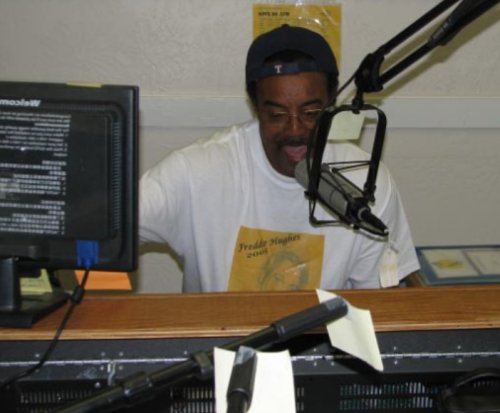
Join me on Monday, Jan. 26, on KPFZ 88.1 FM for Blue Monday. At 8 a.m. I will be interviewing Teeny Tucker, nominee for best independent blues CD of 2008 by the Memphis Blues Foundation. This interview also will be streamed over the Internet on Tuesday, Feb. 3, at 3:00 p.m. on www.theworldofblues.com, In The Blues Spot.
Upcoming cool show: Morris Day & The Time at Cache Creek Casino; Saturday, Feb. 14, at 8 p.m.
T. Watts is a writer, radio host and music critic. Visit his Web site at www.teewatts.biz.
{mos_sb_discuss:4}