How to resolve AdBlock issue?
News
California Highway Patrol Officer Adam Garcia reported that the collision occurred at 6:34 p.m. on Highway 29 at the intersection with Highway 175 in Middletown.
Garcia said that 55-year-old Steven Shafer of Lakeport was stopped in his 2005 Porsche SUV on northbound Highway 29 preparing for a left turn onto Highway 175.
Driving southbound on Highway 29 at Highway 175 was 36-year-old Ronnie Boyd Jr. of Clearlake in a 2003 Ford Ambulance owned by South Lake County Fire Protection District, said Garcia.
Roy Pike, 65, of Hidden Valley Lake was driving his 2001 Dodge Intrepid northbound on SR-29 approaching the rear of Shafer. Garcia said Pike was distracted and did not notice the Porsche stopped to his front until just prior to impact.
Pike swerved left but was unable to avoid a collision with the left rear of the Porsche, according to Garcia. Pike’s vehicle then struck the ambulance head on.
All parties involved sustained minor to moderate injuries, said Garcia.
Pike, Boyd and the ambulance passenger Mark Jones of St. Helena were taken to St. Helena Hospital Clearlake by South Lake Fire ambulance. Garcia said Shafer was not transported.
Traffic was detoured for approximately an hour until the scene could be cleared, Garcia reported.
Garcia said Officer Steve Curtis is handling the investigation.
{mos_sb_discuss:2}
Eighteen-year-old Erik Michael McPherson of Clearlake will go on trial this month for the May 2008 stabbing death of Nicolai Chukreeff, also of Clearlake.
On Tuesday Judge Stephen Hedstrom heard a motion filed by Senior Deputy District Attorney John DeChaine, who requested that Hedstrom dismiss the case because DeChaine held that a key prosecution witness would not be available for the trial if it began this month.
DeChaine called the female witness “foundational” to his case against McPherson. He explained that the woman had allegedly driven McPherson to the Harbor Lite Motel in Clearlake. There, Chukreeff was stabbed once in the chest following an alleged confrontation.
The woman told investigators that she sat in her car waiting for 30 minutes when, according to DeChaine, McPherson allegedly came running back to the car with someone chasing after him – reportedly Chukreeff himself. McPherson is then alleged to have jumped into the car and demanded that the woman drive off.
She and McPherson then allegedly drove around during the middle of the night, with the woman telling officials that he was attempting to hide things in the bushes, DeChaine said. They they went back to her home, where McPherson allegedly put his clothes in garbage bags before disappearing into the night.
The issues with the woman's availability arose late last month, said DeChaine.
It was then that the woman allegedly stabbed herself in the chest with a knife in what appears to have been a suicide attempt.
Now living in Massachusetts, the woman was rushed to a Boston-area hospital where she underwent open heart surgery to repair an injury to her heart as well as a collapsed lung. She later required followup surgery due to internal bleeding.
During the more than two and a half hours of arguments on the motion Tuesday, DeChaine and defense attorney Stephen Carter argued whether the woman was recovered enough to take part in the trial.
DeChaine said not having her testimony could damage his case. He told the court that, if the case was dismissed, he intended to refile charges against McPherson the same day. That would allow the case to be presented at a later time when the woman was recovered enough to travel west.
Carter called DeChaine's motion a “fallback position” that he was using because he couldn't justify getting a continuance for the trial. He also called DeChaine's plan to seek a dismissal and to refile “a problem.”
McPherson, Carter argued, has a constitutional right to a speedy and fair trial. Dismissing the case and then refiling it over the witness issue would be a blatant attempt to undermine that right.
“That's the true basis of our objection to this motion to dismiss,” Carter explained.
The time to schedule McPherson's trial ran out on Tuesday, said Carter.
Carter said his private investigator found that the witness ahadn't decided whether or not she intended to cooperate with the prosecution and testify.
On Monday, the defense and prosecution had met with Hedstrom in chambers, during which time the judge had offered to get one of the victim's doctors on the phone to discuss her ability to travel. Carter said that DeChaine hadn't been interested in pursuing that discussion.
The defense's attempts to track down the witness also were meeting with limited success, said Carter. He and his law partner and wife, Angela Carter, had requested the woman's contact information from DeChaine but had yet to receive it. Stephen Carter also accused DeChaine of stalling his attempts to receive the witness' medical records.
“It's not OK what they're doing,” Carter said of the prosecution, who he suggested was trying to delay the trial because they didn't like how it was shaping up.
Carter said a dismissal or continuance could cause problems for the case at the appellate level, where he's found murder cases thrown out because of similar delaying actions.
DeChaine said his reasons for seeking the dismissal were simple: Based on the available information, the prosecution couldn't move forward with its case unless its key witness was available at the start of the trial.
He denied trying to stall the defense, which also had filed a motion it later dropped accusing him of prosecutorial misconduct, allegedly because he withheld information. “I haven't tried to hide the ball here.”
Carter, in rebutting DeChaine, accused him of “negligent and lame” attempts to get the court information on his dismissal motion.
He said DeChaine's real motive was to reevaluate the evidence, including the defense's allegations that another man is responsible for Chukreeff's murder.
“What the prosecution wants, your honor, is more time because they think they might lose,” said Carter.
Carter said the prosecution isn't supposed to seek dismissals in order to prolong a case. They're supposed to pursue “justice – always justice,” not just a conviction.
Hedstrom called a break until later in the afternoon and asked DeChaine to provide the Carters with medical information on the key witness.
Following the break, DeChaine reported he had the opportunity to speak with the witness' doctor, who submitted an electronic declaration testifying to the woman's current condition.
Looking at the declaration, Carter said the doctor had placed no travel restrictions on the woman, which meant she could come to give testimony right away, and wouldn't have to wait at least a month, as DeChaine originally had estimated.
DeChaine argued that Carter was minimizing what the doctor said, explaining that the woman's condition still needs to be stabilized. She's being treated for a pulmonary embolism – a blockage of a pulmonary artery – and needs to have her medications checked twice weekly, which DeChaine called “not insignificant.”
He maintained that he still wasn't comfortable with moving forward with the case due to his concerns about the womans' condition.
In making his ruling, Hedstrom said the reasons for the witness' possible availability issues are very serious. “This is no minor thing,” he said. “Apparently, she stabbed herself.”
A witness in the case could be subjected to serious stress, said Hedstrom, adding that she clearly has other issues.
However, Hedstrom felt it was reasonable for the woman to have one of her regular checkups, then to fly out to California, give her testimony and then return home to Massachusetts.
Some case dismissals are appropriate, said Hedstrom. Based on certain merits, “This court was fully prepared to grant a dismissal.”
However, the main factor of whether or not the woman could attend the trial changed with the new information from the doctor, said Hedstrom. For that reason, he couldn't find substantial reasons to support the prosecution's dismissal motion.
“Therefore that motion is denied,” he said.
The defense and prosecution have given varying estimates of how long the trial could last – from six to eight weeks.
E-mail Elizabeth Larson at
{mos_sb_discuss:2}
The California Highway Patrol reported that the crash occurred at about 6: 30 p.m. at Highway 175 and Highway 29 on the way to Cobb.
Two vehicles were reported to be involved. Responders included the CHP and Cal Fire.
Some of the vehicle passengers were reported to have suffered minor injuries, the CHP reported. No medical transports were reported.
Traffic was being diverted around the crash scene because the damaged vehicles were blocking the intersection, according to the CHP.
CHP reported that the roadway was cleared shortly after 7:30 p.m.
Names of the crash victims were not available from the CHP Tuesday evening.
E-mail Elizabeth Larson at
{mos_sb_discuss:2}
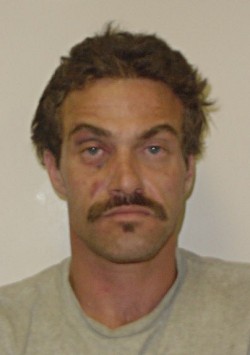
LAKEPORT – A Contra Costa County man received a life sentence on Monday for a June 2008 sexual assault.
Judge Arthur H. Mann sentenced Timothy Hanse Freeman, 43, a mechanic from San Pablo, to an indeterminate term of 50 years to life in state prison for a sexual assault which took place on June 13, 2008, according to a report from the Lake County District Attorney's Office.
Attorney Ken Roush, who defended Freeman, did not receive a call seeking comment.
Deputy District Attorney Ed Borg prosecuted the case. Det. Martin Snyder of the Clearlake Police Department acted as lead investigator.
On Nov. 3, 2008, Freeman pleaded guilty to one count of sexual intercourse with a child 10 years of age or younger and one count of aggravated sexual assault of a child, the District Attorney's Office report.
In addition, officials said Freeman admitted to a special allegation that he had previously been convicted of a violation of rape by force, as well as admitting that he had suffered a prior strike for rape.
In exchange for Freeman's plea, the District Attorney's Office dismissed several additional counts and special allegations.
According to police reports, Freeman – who was on parole for a weapons charge – absconded from parole in Contra Costa County in May of 2008.
Investigators discovered that Freeman and the victim’s mother had a mutual acquaintance, and he made his way to the city of Clearlake, where he stayed with the victim’s family for several weeks. The victim’s mother was aware that Freeman was a parolee but unaware that he had absconded from parole.
On June 12, 2008, the victim’s mother asked Freeman to watch her two children – the victim, a 9-year-old girl, and her 7-year-old brother, while she worked a graveyard shift because her regular babysitter was unavailable, according to the investigation.
The prosecution alleged that later that evening Freeman assaulted the victim.
The young victim told her mother about the assault early the next morning, according to investigators. The girl's mother then told Freeman to leave and notified the Clearlake Police Department, which arrested him later that day.
Because the charges he pleaded to are violent felonies, Freeman must serve 85 percent of 50 years, or 42.5 years, before he is eligible for parole. That would make him nearly 86 years old before he could have the opportunity to be released.
{mos_sb_discuss:2}

UPPER LAKE – The Middle Creek Coordinated Resource Management and Planning (CRMP) group will serve as this year’s host to the Lake County watershed groups for a celebration of activities and achievements throughout 2008.
The annual “year in review” will be held on Thursday, Jan. 15, at 6 p.m., at the Odd Fellows Hall, 9480 Main Street in Upper Lake.
The evening will shine a spotlight on the events and accomplishments of the various watershed groups in the county’s Upper Cache Creek Watershed, the two local Resource Conservation Districts, and their partners in the Upper Putah Creek Watershed.
The West Lake Resource Conservation District (RCD) will announce the recipient of their “2008 Partner of the Year” award. Last year’s well-deserved award was given to the Lake County Department of Public Services, under the direction of Kim Clymire.
This will be the second year for the presentation of the Volunteer of the Year awards. Sponsored by the Upper Cache Creek Watershed Alliance, the award will recognize an outstanding volunteer from each of the active watershed groups.
Last year's recipients were Kevin Ingram, Big Valley Watershed Council; Robert Geary, Chi Council for the Clear Lake Hitch; Fran Ransley, Lower Lake Watershed Council; Joe Dias, Middle Creek CRMP; Jim Bridges, Nice Watershed Council, and Patty Patten, Scotts Creek Watershed Council.
Greg Dills, watershed coordinator for the East Lake and West Lake RCDs, will present the highlights of 2008 for the watershed groups in the Upper Cache Creek Watershed.
Dwight Holford will present activities for the Upper Putah Creek Stewardship, and Korinn Woodard will discuss the accomplishments of the Natural Resources Conservation Service.
The event provides a wonderful opportunity for the community to see what these groups do. Be sure to mark this great event on your calendar.
All stewardships, CRMPs and watershed councils are invited to attend, and are being asked to assist with potluck refreshments and food.
The groups also are encouraged to bring materials that they’d like to display or share with others. Natural resource partners, public agencies, tribes, neighbors, friends, and everyone interested in the health of the local watersheds are welcome and encouraged to attend the event.
For questions about the event or refreshments, please call Linda Juntunen, 263-4180, Extension 16, or Greg Dills, 263-4180, Extension 12.
{mos_sb_discuss:2}
“People across this country are struggling to pay their mortgages and afford rising health care costs, but rural communities are being hit even harder by the tough economy,” said Congressman Thompson. “Congress must ensure that America’s rural areas receive their fair share of any economic stimulus package by investing in the highways, bridges, and other infrastructure that are the arteries of our country’s economy. America cannot be restored to greatness without the help of all Americans, not just those in urban areas.”
His colleagues also emphasized the importance of public-private partnerships and investing in rural infrastructure such as broadband and electric grids.
In the letter to Pelosi, they wrote, “As Congress continues to craft an economic stimulus package, it is critical that the benefits of any stimulus are broadly distributed throughout rural, urban, and suburban America.”
That's because, according to the letter, approximately 50 million Americans live in rural communities.
“An economic stimulus package must recognize that rural Americans make vital contributions to our economy and face the same struggles with rising unemployment as people living in urban and suburban communities,” the members of Congress explained. “In fact, seasonally adjusted unemployment rates for non-metropolitan areas were higher each quarter in 2008 than for metropolitan areas.”
Thompson and his colleagues – all of them from rural districts – assured Pelosi of their support for her continued efforts to include infrastructure spending in a recovery package.
“However,” they said, “legislation with infrastructure spending that ultimately only funds projects in urban and suburban communities will fail to provide the broad economic benefit the American people expect. Facing rising unemployment, rural America cannot afford to be shortchanged in an economic recovery package.
“As representatives of rural districts, we know that rural communities are prepared with ready-to-go infrastructure projects that could put people to work within months,” the members of Congress wrote. “Rural communities have the workforce and the infrastructure needs to effectively utilize new federal spending. Rural areas should be provided with an equitable share of economic stimulus funds to improve their local economies just like metropolitan communities.”
The Job Creation and Unemployment Relief Act of 2008, H.R. 7110, included a provision to distribute stimulus funds between rural and metropolitan communities.
The letter explained that funds in the Federal Transit Administration Transit Capital Assistance Grants were specifically reserved for rural formula grants.
The representatives said Congress should “build on the precedent created by the transit funds in the Job Creation and Unemployment Relief Act with guarantees in new economic recovery legislation to ensure an equitable distribution of all infrastructure funds between rural and metropolitan areas.”
In adding to Thompson, Rahall, Gordon and Filner, signatories to the letter included Reps. Joe Baca, John Barrow, Marion Berry, Dan Boren, Leonard Boswell, Shelley Moore Capito, Chris Carney, Ben Chandler, Travis Childers, Jim Costa, Jerry Costello, Henry Cuellar, Lincoln Davis, Bob Etheridge, Frank Kratovil Jr., Jim Marshall, Eric Massa, Jim Matheson, Charlie Melancon, Mike Michaud, Alan Mollohan, Collin Peterson, Mike Ross, John Salazar, Heath Shuler, Mike Simpson, John Tanner, Tim Walz and Peter Welch.
{mos_sb_discuss:2}