How to resolve AdBlock issue?
News
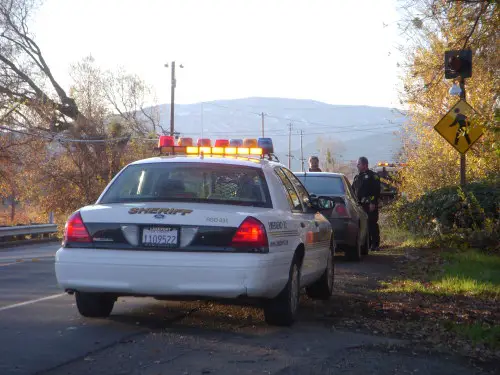
UPPER LAKE – A Ukiah man has been arrested for allegedly firing a handgun at a local man in what officials are calling a case of road rage.
Sukhbir Singh, 36, a gas station owner, was arrested Wednesday afternoon near Upper Lake, according to a report from Capt. James Bauman of the Lake County Sheriff's Office.
Bauman said the California Highway Patrol received a wireless 911 call at about 2:30 p.m. Wednesday reporting that shots had been fired from a vehicle traveling westbound on Highway 20 in Clearlake Oaks.
No one was injured as a result of the incident, Bauman said.
Information about the suspect vehicle – described as a black Lexus sedan – was relayed to the Lake County Sheriff's Dispatch and sheriff's deputies responded to the area of the reported shooting, according to Bauman.
Singh's vehicle was located about 20 minutes later, spotted by Deputy Steve Herdt on Highway 20 in Upper Lake, Bauman said. Herdt stopped Singh's vehicle about a block east of Government Street and detained him without incident. Singh was alone in the car.
Bauman said the victim in the alleged shooting, 47-year-old Bruce Hutchins of Clearlake Oaks, was in the area and positively identified Singh as the shooter.
The alleged weapon, a .22 caliber revolver, was recovered during the car stop, said Bauman.
Radio reports from the scene indicated that Singh has several handguns registered to his name, ranging in size from .22 caliber up to .44. He also is reported to have a history of speeding tickets.
At the scene, Capt. Russell Perdock said Herdt was leading the investigation into the alleged shooting.
Singh was arrested and transported to the Lake County Jail, where he was booked on a felony charge of negligent discharge of a firearm and a misdemeanor charge of brandishing a firearm, with bail set at $11,000.
He was released from jail later in the evening and is due to appear in court on Friday, according to his booking information.
Bauman said more information on the case will be available on Thursday.
Correspondent Harold LaBonte contributed to this report.
E-mail Elizabeth Larson at
{mos_sb_discuss:2}
The Contractors State License Board (CSLB), in cooperation with the Lake County District Attorney’s Office, performed the undercover operation on Dec. 10.
Members of CSLB’s Statewide Investigative Fraud Unit posed as property owners and took bids on projects that included fencing, landscaping, roofing, painting and exterior trim, the agency reported.
When the suspects offered bids over $500, they were arrested and given a notice to appear for contracting without a license. The license board reported that California law requires a state contractor’s license for home improvement jobs that are valued at $500 or more in material and labor.
CSLB investigators issued 14 notices to appear, five administrative citations and two warning letters.
James Arthur Lee Jr., 36, of Lucerne received both a notice to appear and citation after he bid $9,000 for the labor portion of a fencing project. The license board reported that Lee is no stranger to CSLB or breaking the law – he has received two prior CSLB citations for unlicensed activity.
In addition to Lee, those arrested were Ronald Carl Peterson, 38, of Clearlake; Bruce Suter, 57, of Clearlake; Gary Benson, 57, of Hidden Valley; Ronald Trader, 48, of Cobb; Luis Rodriguez, 42, Kelseyville; Jerry Heidebrect, 51, of Lower Lake; Jack Paulin, 52, of Lakeport; Stephen Cova, 40, of Clearlake; Blair Kirkpatrick, 41, of Lakeport; Benjamin Perry, 48, of Lakeport; Rodney Miller, 52, of Lower Lake; Richard Jensen, 39, of Kelseyville; Herson Prmando Marroquin, 39, of Nice; Mei Hing Dye, 46, of Lakeport; Daniel Morgan Dye, 61, of Lakeport; Jack Conrad, 59, of Kelseyville; and David Wilhelm, 52, Lakeport.
Venus Stromberg, a CSLB information officer, said the number arrested during this sting – 14 – is an average number in any given sting around the state, with some netting as many as 30 at a time.
Those arrested last week are facing misdemeanor charges of contracting without a license when they appear in Lake County Superior Court on Feb. 9, 2009, said Stromberg. The charges carry a potential sentence of up to six months in jail and/or a $500 fine.
For repeat offenders, “the penalties just keep increasing,” she said, with higher fines and the potential for jail time.
Those operating without licenses in state or federally declared disaster zones can face felony charges, said Stromberg, who said that's the case for those arrested in a sting in a Southern California fire scene recently.
She said there are concerns about unlicensed contractor activity in Lake County but added, “It's a common problem, frankly, throughout the state.”
Unlicensed contractors tend to prey on the elderly, she said, and that's a concern for a place like Lake County, which has a large senior population.
The license board conducts a sting once a week somewhere within the state, said Stromberg, noting that there are field offices for the agency throughout the state.
A key to holding the stings is cooperation with local law enforcement, who often provide the impetus for the actions by calling CSLB to request their help, said Stromberg.
The CSLB reports that unlicensed operators are part of a multi-billion dollar underground economy that takes jobs away from legitimate contractors, and tax dollars from schools, roads and law enforcement. Illegal operators never carry workers’ compensation or liability insurance, and homeowners have little recourse if something goes wrong with an unlicensed operator.
Stromberg said she believes there is more sensitivity to the issue right now because everybody wants to get a deal in order to stretch their dollars. At the same time, legitimate contractors are not getting as much business because of the economic situation.
To qualify for a license, a contractor must verify four years of journey-level experience in the trade, pass both a trade and license law examination, and post a license bond. Stromberg said the license board works with unlicensed contractors in order to help them get their licenses.
Stromberg said the CSLB currently is watching two other cases involving unlicensed contractors in Lake County.
One involves the case of Ronald Paul Odbert, 71, of Nice.
Stromberg said Odbert was working on a trailer for a 63-year-old woman who is a cancer patient even though his contractor's license had been revoked in 2005.
His record shows an outstanding civil judgment, an outstanding contractor's bond payment and failure to meet worker's compensation requirements.
He is alleged to have diverted approximately $20,590 from the woman's project for his own personal use, said Stromberg.
Odbert also is alleged to have required an excessive down payment of $10,300 for a project he failed to complete, and also failed once again to maintain proper workers' compensation.
Stromberg said Odbert's case is going to court. He's due to appear in Lake County Superior Court on Jan. 16.
The second case involves 54-year-old Larry Brown of Lakeport, who the license board is investigating for allegedly defrauding at least three elderly victims in Lake County.
Brown, operating under the name “All Seasons Tree Service,” has allegedly taken large down payments or full payment for tree trimming, deck repair and fences and never returned to finish the work. There also are reports of him soliciting work in Sonoma County, according to the license board.
Late last month, the CSLB Statewide Investigative Fraud Team investigators delivered a case against Brown to local prosecutors that includes multiple felony charges of elder abuse, grand theft, diversion of funds, in addition to misdemeanor charges of contracting without a license and illegal advertising.
Brown has a long history of run-ins with local law enforcement authorities and a prison record, according to the license board. He also was on parole from a prior drug and theft conviction.
The CSLB and Lakeport Police believe there may be additional victims and are encouraging them to come forward. Anyone who has contracted with or has information about Larry Brown is asked to contact CSLB at 916-255-4602.
E-mail Elizabeth Larson at
{mos_sb_discuss:2}
The Board of Parole Hearings decided against giving parole to James Robert Isvich, 46, following a lifer hearing at California State Prison, Solano, according to Chief Deputy District Attorney Richard Hinchcliff.
Hinchcliff attended the hearing to argue against Isvich's release.
Isvich was convicted of the second-degree murder of his 56-year-old mother, Patricia Erickson, and sentenced by Superior Court Judge Robert L. Crone to 16 years to life on Jan. 14, 1991, said Hinchcliff.
Hinchcliff said Isvich's minimum eligible parole date was March 31, 2001. In April of 2000 Hinchcliff attended a parole to oppose Isvich's release.
According to investigation reports by the Clearlake Police Department, Ivsich was living with his mother at the time of her death at their residence on Alvita Avenue in the city of Clearlake.
Ivsich was abusing alcohol and had been verbally abusive and threatening toward his mother on previous occasions, according to witnesses.
When officers arrived at the Alvita Avenue residence on May 1, 1990, they found Erickson inside the residence with two stab wounds, one in her chest and one in her back, Hinchcliff said. Ivsich was sitting in a chair with a bloody fixed blade knife lying next to him. His blood alcohol level shortly after the incident was .32, four times the legal limit for driving.
Ivsich initially told investigators he did not remember what happened except that he was home with his mother when she suddenly fell over with a knife in her back, said Hinchcliff.
Subsequently, Isvich told investigators that he had left the house and when he returned home he gave his mother a hug and found a knife in her back, according to Hinchcliff.
Isvich reported changed his story again, telling investigators he came home and an unknown intruder ran out of the house past him and he found his mother with a knife in her, Hinchcliff said.
Hinchcliff noted that Ivsich’s next parole hearing will be in three years.
{mos_sb_discuss:2}
Sent out to several dozen Pomo, the envelopes contained resolutions for each person, passed in a 3-0 vote held by the Robinson Rancheria Citizens Business Council on Dec. 5, informing them that they had been disenrolled from the tribe and their names removed from its rolls.
The resolutions were signed by Tribal Chair Tracey Avila and Secretary-Treasurer Kim Fernandez on Dec. 10.
Avila had previously told Lake County News that 60 of Robinson's 347 tribal members had been under consideration for disenrollment.
On Tuesday, she said six people had proved their lineage and so were allowed to retain their tribal membership, while several more had asked for special consideration to be able to secure documents proving their lineal descent from tribal members on the tribe's original rolls.
EJ Crandell, who was elected tribal chair in June in an election that was decertified by the tribe's election committee, has asserted that as many as 74 tribal members faced disenrollment, and supplied Lake County News with a list of about 50 names of people who he said had confirmed receiving the disenrollment resolution.
Crandell's wife's family was among those disenrolled. He said he's concerned that he and his immediate family may be next.
Gone for the people receiving the resolutions are free access to the rancheria, health care services, food services for homebound seniors, pensions and per capita payments funded by Robinson Rancheria Resort and Casino.
Some were fired from jobs before the disenrollment resolutions were approved, which Crandell and other tribal members critical of the council said were retaliatory actions. Avila denied that, saying the firings were based on poor job performance and were unconnected to the tribe's action.
Most of the disenrollees don't live on the rancheria, said Avila. Those who do live on the rancheria are concerned about losing their homes, but Avila said the tribe doesn't plan to take action to remove them because the homes were funded through a program that supports Indian housing. “We can allow them to live there,” she said.
Among those removed from the rolls include the entire 35-member Quitiquit family, which includes decorated veterans, and traditional artisans and basket makers.
Avila said the people who were disenrolled have been “on the table for many, many years.”
The council changed its enrollment ordinance because it conflicted with the tribe's constitution, said Avila. A provision in the enrollment ordinance was removed that had allowed for membership in the tribe through adoption of individuals whose names appeared on a 1940 tribal census roll and their lineal descendants.
Avila said the council is trying to clean up its ordinances in order to stabilize operations.
She traces the tribe's issues with its rolls back to termination of tribes in the 1950s and 1960s, when many tribes lost land and federal recognition. Many Indians didn't have a place to go and some were adopted into other tribes, such as Robinson.
Avila said the tribe has to take care of its own members first before they can help anyone else. The goal is to use the proceeds from Robinson Rancheria Resort and Casino to help the tribe, but Avila said the casino – while it's an important revenue source – doesn't pull in the kind of business found among the bigger gaming tribes' casinos.
Crandell and other opponents of the disenrollments allege that Avila and the rest of the business council – Curtis Anderson Jr., Kim Fernandez, Stoney Timmons, Nicholas Medina and Buffy White – are taking the actions ahead of a January election for the tribal leadership. They said the members who are disenrolled supported Crandell's election.
Avila denies that. “It just happened at this time,” she said. “I wish this had been dealt with earlier.”
Also just taking place are additional payments to existing tribal members, who reportedly each received $400 checks in the last few weeks. Avila said those payments are not connected to the disenrollments.
She said she considers the disenrollments an internal tribal matter, and doesn't understand why anyone outside of the tribe should be concerned about it.
Are more disenrollments planned? “As far as I know, no,” said Avila.
Group meets to rally disenrollees
On Saturday, the American Indian Rights and Resources Organization – AIRRO for short – held a board meeting in Upper Lake to discuss strategy for assisting the tribal members who received the disenrollment resolutions.
AIRRO President John Gomez, whose family was disenrolled by the Pechanga tribe, is helping lead the families through the process of appealing their cases to the Bureau of Indian Affairs.
Robinson Rancheria's 1980 constitution calls for the Bureau of Indian Affairs' involvement with determining tribal membership.
Article 3, Section 3 states: “The official membership roll shall be prepared in accordance with an ordinance adopted by the governing body and approved by the Secretary of the Interior or his authorized representative. Such ordinance shall contain provisions for enrollment procedures, enrollment committees, application form, approval or disapproval of application, rejection notice, appeals, corrections and provisions for keeping the roll on a current basis.”
In his experience – both personally and working with AIRRO – Gomez said disenrollments usually occur before important tribal elections.
The other important function of the Saturday AIRRO meeting was to offer hope and support to people whose worlds have been turned upside down by the tribe's actions.
AIRRO Chair Carla Foreman-Maslin, along with her husband, Mark, and her brother, Bobby, traveled from the Redding area for the meeting.
Foreman-Maslin is the daughter of the late Bob Foreman, Redding Rancheria's first tribal chair, who died last month at age 72. The 76-member Foreman family was disenrolled from the Redding Rancheria in 2004 after other tribal members began circulating a rumor questioning their lineage.
“We thought we were the only ones,” Foreman-Maslin said. “I'd never heard of disenrollment.”
Foreman-Maslin wept as she recounted how, at the request of tribal leadership, her family exhumed the bodies of her grandmother and great-great-grandmother in order to prove their lineage through DNA testing. The family was stripped of its tribal membership despite those tests proving their ancestry.
“To have to do that and live with this recurring nightmare is wrong,” she said.
AIRRO was born when the Foremans and other tribal members hit by disenrollments came together to unify and fight for Indians' civil rights, she said.
“It hurts your whole core, your heart, your spirit,” she said of the pain of being alienated from her tribe.
Gomez agreed about the pain and the trauma disenrollment leaves in its wake.
“You never get used to this, even though we've lived through it. You never get used to this, even when it happens to other people,” he said.
He said he and other AIRRO members realize it's their responsibility to help other Indians facing life without their tribe, “but it never gets easy.”
Gomez said it was hard to see the Quitiquits – who had become a part of the AIRRO family long before they were disenrolled – face this now. “When this happened here, it became personal for us,” said Gomez, who was with the Quitiquits when they began receiving their disenrollment resolutions late last week.
A crisis exists in Indian Country as a direct result of the disenrollments, said Gomez.
AIRRO pledged to assist those cut out of Robinson's membership. “We'll fight with you, we'll fight for you,” Gomez said. “And you guys are going to win. I believe that in my heart.”
Robinson Rancheria's constitutional clause giving the BIA authority over tribal membership gives the Quitiquits and the others fighting for their memberships a unique opportunity to appeal the tribal council's decision, said Gomez.
Over the last five years, AIRRO and its support network of advocates and attorneys have been able to create some inroads and awareness in the California Legislature, Gomez said.
As a result, earlier this year they were able to help stop SB 331, introduced by state Sen. Gloria Romero (D-East Los Angeles) and supported by the Barona Tribe of Mission Indians, a Southern California gaming tribe.
The bill would have created a new infraction with fines if a person was found guilty of trespassing on tribal lands. While the bill was in the Assembly a clause was inserted that would mean it didn't apply to former tribal members, after which the bill was pulled. Gomez said the bill was meant to oppress disenrollees.
AIRRO is working to get more notice from Congress on the disenrollment issue. Going through the courts hasn't been a success, Gomez said.
“The courts have not been our friends,” he said. “The courts have always deferred to sovereignty.”
He said a 1978 US Supreme Court ruling in Santa Clara Pueblo v. Martinez the court deferred to tribal sovereignty and in doing so took away the rights of individual Indians to sue tribes for Indian Civil Rights Act violations.
That, in turn, has set the stage for the kinds of human and civil rights violations which AIRRO says is scarring Indian Country now.
“This is a sad day because it's continuing to happen,” he said.
He told the disenrollees, “The worst thing that could happen is for you to just lie down and accept it.”
Luwana Quitiquit, a traditional Pomo artisan and former tribal council member, told Lake County News last week that she plans to fight the decision to disenroll her family.
“I'm ready to fight,” she said. “They're not going to make me cry. I'm going to fight all the way.”
The only way to win, she said, is for all of those facing separation from the tribe to work together.
BIA will look at appeals
Earlier this month, Lake County News ran a three-part series on the disenrollment issue. On Dec. 5, the first day the series ran, North Coast Congressman Mike Thompson wrote a letter to BIA Regional Director Dale Morris, citing the Lake County News article and his concern over his local Indian constituents facing disenrollment. He asked Morris about what recourse is available for Indians who are disenrolled.
The issue arose locally just as Thompson was being discussed as a possible interior secretary candidate in the cabinet of President-elect Barack Obama.
Troy Burdick, superintendent of the BIA's Sacramento-based Central California Agency, said the BIA usually can't get involved in disenrollments because most tribes' laws don't provide for a BIA review process on membership disputes.
“Congress has the ultimate authority to decide whether or not any federal agency is going to have the authority to review or overturn those types of things,” he said.
BIA doesn't currently have the general authority to intervene and Congress – which is aware of that problem – isn't ready to grant the BIA more latitude, said Burdick.
However, the BIA is getting involved in the case of the San Pasqual Band of Mission Indians, whose tribal constitution – like Robinson's – also allows the BIA a role in membership issues. Late last month the BIA halted that tribe's attempt to disenroll between 60 and 80 members.
Robinson's disenrolled members currently are in the process of sending appeals to the BIA. Burdick said the appeals will be sent to him first.
“I have not seen any of those appeals yet, although I understand they're on their way,” he said.
He would then review the appeals and quickly pass them on to Morris' office, where a decision will be made. How long it might take to deal with the appeals is hard to specify, he said.
Few tribes have provisions in their constitutions, like San Pasqual and Robinson, that allow the BIA to be involved in enrollment matters, said Burdick.
While the Robinson Rancheria constitution allows for the BIA to have a say in its membership, Avila said the agency can't make the tribe recognize members they've disenrolled. “They can't get that involved in it,” she said.
Said Burdick, “That's her opinion.”
Robinson's disenrollment does, however, provide the BIA – and Burdick himself – with a very rare situation, especially if the tribal council refuses to accept the agency's ultimate opinion on the disenrollments.
Just what the BIA would do in that case is hard to predict. “I can't say whether there will be any sanctions or not,” Burdick said.
He added, “This is the first time I've encountered this.”
E-mail Elizabeth Larson at
{mos_sb_discuss:2}
The outage was reported at 7:30 a.m., according to Pacific Gas and Electric spokesperson Jana Morris.
Morris said about 2,800 customers in the Kelseyville, Cobb, Loch Lomond, and Adams and Siegler Springs areas were out of power as a result.
The outage began due to a wire down on Spurr Road, which was caused by the weather, Morris said.
PG&E crews got on scene by 9:30 a.m. and began repairs, said Morris.
She estimated that power was expected be restored to all customers by 2:45 p.m. Tuesday.
Some Cobb-area customers reported their power had come back on mid-morning.
E-mail Elizabeth Larson at
{mos_sb_discuss:2}
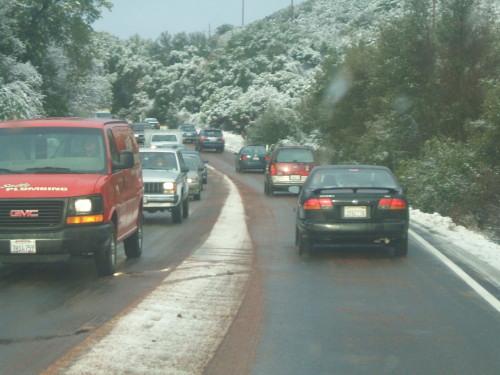
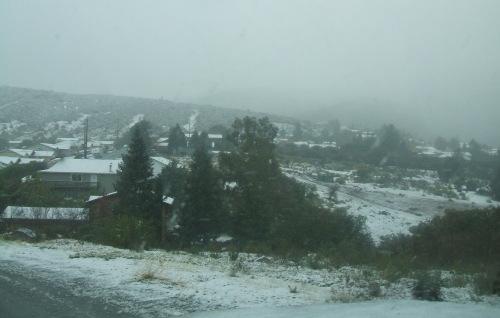
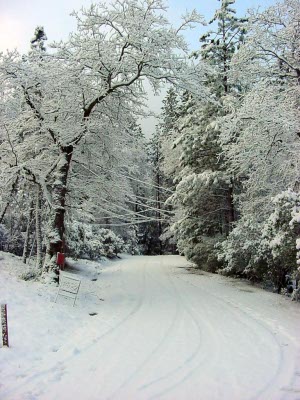
LAKE COUNTY – Snowy weather continued around Lake County on Monday, with the white fluffy stuff – reportedly falling from Lakeport to Cobb to Clearlake – proving a danger for drivers traversing icy road.
The National Weather Service is reporting that snow could continue through Tuesday, and several days and nights of below-freezing temperatures are predicted.
California Highway Patrol Officer Adam Garcia reported that CHP received numerous calls of stranded vehicles and snow-related collisions on Sunday and Monday.
Garcia said CHP officers responded to three stranded motorists and six collisions resulting in property damage. By noon on Monday there were more reports, this time relating to six stranded motorists, four property damage collisions and one collision with injuries. He added that those were just the collisions reported to CHP.
The tricky driving conditions would lead to continued reports throughout the rest of the day, with more vehicles reported in ditches and a vehicle rollover occurring on Soda Bay Road.
Icy conditions caused problems on 11th Street in Lakeport later in the evening. Lakeport city workers were called to the scene to try to address the problems.
County Road Superintendent Steve Stangland said members of his road crew were out all night on Sunday and early Monday morning plowing and sanding county roads.
While the road department does much of its work in the day, Stangland said they were splitting up shifts in order to be out again all night on Monday so they could to keep the roads clear.
“We had snow all the way down to the lake by the Riviera,” he said.
He warned that, no matter how many people they have working the department's 10 snow plows, they can't be everywhere. Stangland's department is responsible for 612 miles of county roads.
Stangland said some drivers seemed to forget how to drive safely in the first snow of the winter season. “Some of our plow trucks were getting passed,” he said, with his staff reporting “crazy” driving by some members of the public.
He said if you have to be on the roads, it's important to drive slowly.
Stangland warned that shadowed areas on roads and highways can be expected to have more ice, and it's important to slow down, especially on corners.
“A good rule of thumb, anywhere you see a guard rail, it's a good place to slow down. That guard rail is there for a reason,” he said.
The road department issued a road advisory Monday that calls for chains in all areas of Cobb, and on Socrates Mine, Seigler Canyon, Elk Mountain and Bartlett Springs roads. Stangland said they leave the chain restrictions in place until the storms have passed.
Like Stangland, Garcia said it's important to slow down, because many crashes are caused by driving too fast for current conditions.
For that reason, it's important to prepare in advance for traveling by leaving early and allowing yourself plenty of time to get where you're going, Garcia said.
He said not to forget that the law requires you have your headlights on any time you have your windshield wipers on continuously.
CHP offers winter driving tips at its Web site, www.chp.ca.gov.
For current road conditions, call the Caltrans Road Conditions Hotline at 1-800-427-ROAD (7623) or visit the agency's Web site at www.dot.ca.gov.
E-mail Elizabeth Larson at

{mos_sb_discuss:2}