How to resolve AdBlock issue?
News

My wife loves potatoes. No wait, I don’t think you understood what I said, “MY WIFE LOVES POTATOES!” So I have a general rule when I make dinner: if I’m making something that is really exotic or “special” and there is a chance that she’ll hate, say, Sweetbreads a la Gusteau with Anchovy Licorice Sauce (all the kids laughed at that one – it's a dish from the Disney movie “Ratatouille”), I’ll include a heaping side of potatoes to the plate.
More often than not her dinner plate will be returned to the kitchen counter with the sweetbreads untouched and not a molecule of potato remains. If I dare try to make the potatoes healthier by omitting the butter, milk or sour cream she will sulk for the rest of the day as if I took away Christmas.
Another accommodation I make for her potato craving: when I make mashed potatoes for dinner, I cook six to eight potatoes so that there is a lot of leftovers for my wife to make potato pancakes out of for the next few days. Really, she would eat potatoes in one form or another every day if she had the chance.
The potato pancakes she makes are something I had never seen before I met her. I knew from my own heritage about lefsa, a Scandinavian potato crepe, and the rosti, the national dish of Switzerland which is a pancake made from shredded potatoes, and I had even heard of the traditional Passover latkes, but the recipe she makes is unique and evidentially passed down through the generations of her family. Aside from the emotional element involved, the reason my wife likes using mashed potatoes rather than the usually called-for grated potatoes, is because the texture is more like a pancake.
I’ve tried to convince my wife that mashed potatoes made with a food mill are far better than when made with a potato masher, but she stands her ground saying that she likes the little unmashed chunks that the masher misses; she says it makes it more “like Mom made them.”
I argue back with science: the process of mashing and stirring potatoes activates the glutens in the potato starch and it makes them “gluey,” so you have to flick your wrist to get them off of the serving spoon as if the potatoes were from outer space and actually consuming the spoon. The less you mix your mashed potatoes the less gluten you activate. Processing potatoes through a food mill (not the same as a food processor) or a potato ricer mashes the potatoes instantly and doesn’t activate much of the gluten in the potato.
The other nice thing about using a food mill is that you don’t have to peel the potatoes first, you just cook them then put them in the food mill peel and all and the mashed potato flesh falls through to the bowl below while the peels stay in the food mill, thus saving work. But for my wife the issue is an emotional one having to do with “comfort foods” and memories of childhood, so I can’t win this one with logic. By the way, food mills are available locally at specialty kitchen or sometimes health food stores.
Something to keep in mind when making mashed potatoes is that you should try to preheat any ingredients that you wish to mix into your mashed potatoes so you don’t cool the potatoes down when adding them in. While the potatoes cook I melt butter, milk, sour cream, salt and white pepper together. I use white pepper so as not to spoil the look of the potatoes with little black flecks.
Potatoes are high in carbohydrates, fiber and vitamin C, but beyond that they aren’t real nutritional powerhouses. Wild potatoes are full of glycoalkaloids in toxic amounts to humans, but the domesticated potato has had most of these toxins bred out of them. Occasionally you will see the green areas on a potato that indicates the presence of these toxins. The good news is that most of these toxins remain on the surface of the potato with the skin so they can be peeled off, AND they are destroyed around 340 degrees.
Years ago it was believed that the discovery of the cinnamon vine (Dioscorea Batata) was going to make the traditional potato disappear from the planet. To be precise they are in fact related to the yam, although unlike yams they are safe to eat raw. Also unlike the yams they taste remarkably like regular potatoes.
The Great Potato Famine in Ireland made people realize how dangerous it was to rely on the potato as a staple. The cinnamon vine on the other hand grew like a weed (and is considered a noxious weed in many places), had no disease or pest problems, and produced 3-foot-long potato-like tubers that when cooked tasted just like potatoes. It also produces miniature tubers in its flowers so you can have plenty of seeds for next year’s crop.
So with the cinnamon vine we could have potatoes without having to worry about losing a crop, and it would be cheaper to grow since they wouldn’t need to be sprayed for any reason. Hallelujah, we have solved world hunger!
The failure of this plant as the solution to world hunger came directly from its productivity; we have no kind of harvesting machine that can pull a 3-foot-long potato out of the ground. Poof! The miracle replacement for potatoes fell into obscurity. In my yard we grow cinnamon vines, but we do it in wine barrels filled with potting soil. When it’s time to harvest we just tip the barrel over and pull the soil out and spread it around the yard.
One shocker for someone new to these tubers is that they are very mucilaginous so when you slice them raw there is a lot of slime that comes off of them and onto your hands and knife, so use caution when handling. In our house they have come to be known as “slug potatoes” since they release slime like slugs. This slime doesn’t affect their flavor once cooked, and they are excellent when used as a substitute for potato chips.
Now, back to the original potatoes, and the potato pancakes my wife makes from the leftovers. There is one odd thing that I have to mention that you might not believe but when I prepare potatoes I’ll peel them and throw the peels in the compost pile. Yes, it’s an organic gardening habit, but I really have no choice; my garbage disposal is allergic to potatoes. If even one molecule of potato goes down my drain it will clog. Even though I could stuff an entire disassembled Volkswagen Beetle down my kitchen sink and not have a single problem, if one tiny potato peel goes down my sink is useless.
By the way, in case you didn’t know, the United Nations (evidently having solved all of the planet’s problems and having nothing else to do) has named 2008 as “The Year of the Potato.” Hurry, run and tell all your friends!
Tonight’s dinner is going to be fried tofu with a carrot-chipotle sauce ... and lots of potatoes.
Potato pancakes
1 to 1 and a 1/2 cups leftover mashed potatoes
1/4 cup flour
1/4 cup diced onions
1 egg
1 to 2 tablespoons milk, as needed for consistency
White pepper to taste
Butter to fry in, about 2 tablespoons
Sour cream
Mix the first four ingredients well. Add enough milk to make the mixture spreadable, but still thick. Spoon onto a buttered frying pan set to medium heat and cook until golden brown. Serve with sour cream on top and add some snipped chives if you desire.
Ross A. Christensen is an award-winning gardener and gourmet cook. He is the author of "Sushi A to Z, The Ultimate Guide" and is currently working on a new book. He has been a public speaker for many years and enjoys being involved in the community.
{mos_sb_discuss:4}

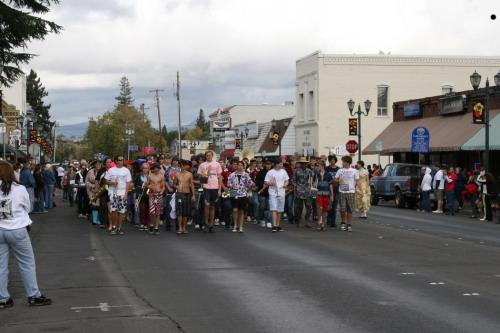
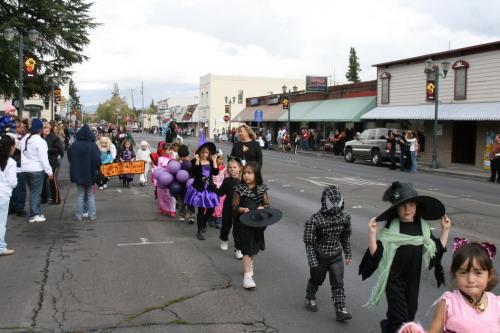
LAKEPORT – Downtown Lakeport got a little spooky Friday afternoon as local students participated in an annual Halloween parade along Main Street.
The Lakeport Elementary Halloween Parade included hundreds of children from several grades and classrooms, as well as members of the Clear Lake High School Band. Some children not yet in school also came along for the fun.
Costumes included everything from witches and monsters to soldiers and super heroes.
The students marched from the north end of town down Main Street from Natural High School and turned around at First Street. There was cool weather but no rain to foil the fun.
E-mail Harold LaBonte at



{mos_sb_discuss:2}
Lake County's contributions to congressional and presidential races this year total $99,150, up slightly from the $94,340 donated in 2004 and more than double the $41,182 in contributions to federal races in 2000, according to the Center for Responsive Politics, www.opensecrets.org, as Lake County News has reported.
In the presidential race alone, Lake County residents have so far contributed approximately $28,200, based on fundraising records.
Sen. Barack Obama (D-IL) has received the most local contributions, totaling $7,750, compared to Sen. John McCain's (R-AZ) $3,450.
Other presidential candidates receiving local contributions included Sen. Hillary Clinton (D-NY), $6,400; former Sen. John Edwards (D-NC); $3,550; former Gov. Mitt Romney (R-Mass), $3,300; Congressman Ron Paul (R-TX), $1,900; Congressman Tom Tancredo (R-CO), $1,000; Congressman Dennis Kucinich (D-OH), $600; and former Congressman Bob Barr (Libertarian-Georgia), $250.
Perhaps the most interesting federal election story is the strength of Congressman Mike Thompson's fundraising efforts.
Thompson, who the Center for Responsive Politics lists among the top 10 best members of the House of Representatives when it comes to reporting his finances – he has a 100-percent rating – has raised $1,782,280 in the 2008 election cycle so far, up about $40,000 over his 2006 earnings. That places him fifth among the 53 members of California's congressional delegation in terms of fundraising since the start of 2007.
In Lake County alone he has raised $19,959, almost twice the amount McCain and Obama have raised, combined.
So far Thompson has spent $1,192,729 in his bid for reelection, the center reported.
His opponents this year include Green Party candidate and Mendocino County resident Carol Wolman, who ran against Thompson in 2006 as an independent write-in candidate. Wolman has reported $5,490 in contributions and $5,317 in expenditures.
Thompson also has a third opponent, Zane Starkewolf of Davis, who calls himself a “Green Republican.”
As of the last reporting deadline, Oct. 15, Starkewolf has submitted no financial reports, according to the Center for Responsive Politics.
However, Starkewolf must have some funding coming in, because he has been using robocalls to get out his message.
The calls, which went out this past weekend, were believed by some First District residents to be obscene phone calls at first, with a woman using a suggestive tone of voice to tell voters, “Mike Thompson has been a bad boy ...”
Starkewolf has taken responsibility for the calls which may have violated campaign law by now having a live person introduce them. However, that didn't stop him from sending out another round of the same calls the day after the first. The calls also have garnered Starkewolf national attention.
Laurel Brown, Thompson's spokeswoman, said the calls were a “sophomoric and tasteless prank.”
“As our nation deals with a financial crisis and two ongoing wars, it's incredible that someone would waste voters' time with this drivel,” she said in a written statement.
Local Republican groups show fundraising power
When it comes to groups that have fundraising muscle, the Republican Party has proved to be particularly effective locally, with various party-affiliated groups reporting contributions totaling approximately $25,348.
The Lake County Central Committee has raised $16,258 since the beginning of 2007, with the Lake Elephants raising another $6,500.
The Republican National Committee brought in $830; the New Republican Majority Fund, Sen. Trent Lott's (R-MS) political action committee, reported contributions of $700; the Republican Party of Yolo County received $560; and the National Republican Congressional Committee reported $500.
The largest donor from a local individual was an August 2007 donation in the amount of $3,000 from Supervisor Rob Brown to the Lake County Republican Central Committee.
While candidates associated with the Democratic Party did well overall, groups and political action committees fell far short of the funds raised by their Republican counterparts.
The Democratic Senatorial Campaign Committee reported $2,750 and the Democratic Congressional Campaign Committee received $500.
The Solidarity PAC for Bay Area Congressman George Miller, a Democrat, raised $5,000 in Lake County. That amount, incidentally, came from one donor, the Scotts Valley Band of Pomos, who had the largest single group contribution for the election cycle, given this past May. The tribe has a proposal to build a casino in Richmond, which is in Miller's Seventh Congressional District.
In the state Assembly race, former state Sen. Wes Chesbro is seeking to succeed Patty Berg in the Assembly. Berg is being termed out at the end of this year.
Chesbro has raised $243,530.95 since the start of January, and spent $369,249.40, according to the California Secretary of State's Office. He had more than $165,000 that he carried over from previous fundraising.
The Secretary of State's Office did not have contribution records for Chesbro's opponent, Republican James J. Pell of Eureka.
Below is a breakdown, by community, of presidential and federal election contributions for the 2008 election cycle, with total amounts raised for election years 2000, 2004 and 2008 listed by the community name.
Clearlake (2008, $7,895; 2004, $6,914; 2000, $1,240)
Sen. Elizabeth Dole (R-NC), $2,220
Sen. Hillary Clinton, $1,500
Congressman Tom Tancredo (R-CO), $1,000
New Republican Majority Fund, $700
Congressman Mike Thompson, $500
American College of Surgeons Professional Association, $500
Dr. Deborah Travis Honeycutt (R-GA), candidate for US Congress, $500
Congressman Dennis Kucinich, $350
Sen. Barack Obama, $250
Bob Barr Leadership Fund, $250
Clearlake Oaks (2008, $10,200; 2004, $3,175; 2000, $1,300)
Sen. Hillary Clinton, $3,500
Lake County Republican Central Committee, $3,500
Lake Elephants, $2,000
Congressman Mike Thompson, $700
Republican National Committee, $500
Clearlake Park (2008, $0; 2004, $1,500; 2000, $1,000)
No contributions reported.
Cobb (2008, $650; 2004, $722; 2000, $625)
Sen. Barack Obama, $450
Sen. John McCain, $200
Finley (2008, $750; 2004, $450; 2000, $0)
Congressman Mike Thompson, $750
Glenhaven (2008, $950; 2004, $500; 2000, $0)
Sen. Barack Obama, $750
Sen. Barbara Boxer, $200
Kelseyville (2008, $24,249; 2004, $20,114; 2000, $16,393)
Congressman Mike Thompson, $8,444
Lake County Republican Central Committee, $5,625
Democratic Senatorial Campaign Committee, $2,500
Lake Elephants, $2,000
Congressman Ron Paul, $1,200
Sen. Barack Obama, $1,050
Safari Club International (protects hunting freedoms, advocates wildlife conservation worldwide), $1,000
Democratic Congressional Campaign Committee, $500
Sen. John McCain, $450
Republican National Committee, $330
Lakeport (2008, $33,268; 2004, $30,020; 2000, $11,750)
Lake County Republican Central Committee, $6,633
Solidarity PAC (PAC for Bay Area Congressman George Miller), $5,000
Congressman Mike Thompson, $3,987
Gov. Mitt Romney, $3,300
Lake Elephants, $2,000
National Community Pharmacists Association, $2,000
Congressman Greg Walden (R-OR), $1,400
Sen. Hillary Clinton, $1,150
California Association of Realtors, $1,052
Loch Lomond/Middletown (2008, $4,880; 2004, $7,509; 2000, $3,524)
Congressman Mike Thompson, $3,070
Sen. Barack Obama, $1,000
Republican Party of Yolo County, $560
Congressman Dennis Kucinich, $250
Lower Lake (2008, $8,600; 2004, $5,990; 2000, $750)
Sen. Barack Obama, $3,300
Sen. John Edwards, $2,550
Congressman Mike Thompson, $1,250
Congressman Ron Paul, $500
National Republican Congressional Committee, $500
Democratic Senatorial Campaign Committee, $250
Sen. Hillary Clinton, $250
Lucerne (2008, $5,335; 2004, $1,750; 2000, $4,400)
Sen. John McCain, $2,300
Sen. John Edwards, $1,000
Congressman Mike Thompson, $535
American Nursery and Landscape Association, $500
Lake Elephants, $500
Lake County Republican Central Committee, $500
Nice (2008, $1,773; 2004, $11,951; 2000, $0)
Sen. Barack Obama, $750
Congressman Mike Thompson, $523
Sen. John McCain, $500
Upper Lake (2008, $600; 2004, $3,745; 2000, $1,200)
Sen. Barack Obama, $200
Congressman Ron Paul, $200
Congressman Mike Thompson, $200
For more on campaign finance, as well as breakdowns of local contributors and statistics, visit www.opensecrets.org and click on the “Get Local” tab on the lefthand menu, which offers zip code details.
E-mail Elizabeth Larson at
{mos_sb_discuss:3}
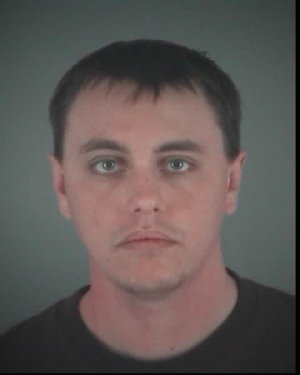
LAKEPORT – After four years in hiding to arrest prosecution, a former Lakeport resident has been arrested on charges that he allegedly sexually assaulted two girls.
Dustin Graham Powell, 26, was arrested Thursday in Lane County, Ore., in connection with the 2004 case, according to Lt. Brad Rasmussen of the Lakeport Police Department.
Rasmussen reported that in 2004 police first investigated the case of two female juveniles who had been sexually assaulted, allegedly by Powell, with whom police had other previous contacts, though not for this type of offense.
The girls, ages 13 and 15 at the time of the assault, are cousins, said Rasmussen. Powell was an acquaintance of the girls' families, which is how he was able to get close to them.
Following a complete investigation of the incident, the Lake County District Attorney's Office filed felony sexual assault charges against Powell and an arrest warrant was issued in the amount of $20,000, said Rasmussen.
The charges filed against Powell included one count of unlawful or lewd acts with a minor child under the age of 14, two counts of rape by intoxication or a controlled substance, and one count of penetration when the victim is under 16 years of age and the perpetrator is over the age of 21.
Based on the facts of the case, Rasmussen said Lakeport Police considers it particularly egregious.
“This is a case where he specifically took advantage and preyed on the two girls,” Rasmussen said.
Before investigators could arrest Powell, he is believed to have fled Lake County to Oregon, where he's been hiding out to avoid prosecution ever since, according to Rasmussen.
Rasmussen said Lakeport Police investigators have worked with law enforcement agencies in Oregon in an effort to locate Powell.
The Oregon State Police arrested Powell without incident on Thursday after receiving information on his whereabouts.
Because of his previous effort to escape prosecution, Lakeport Police investigators believed the original bail of $20,000 was not sufficient to secure his appearance, said Rasmussen.
As a result, on Friday Rasmussen said Det. Norm Taylor presented a Lake County Superior Court Judge with an application for increased bail and Powell’s bail was ordered increased to $250,000.
Powell is being held in the Lane County Oregon Correctional Facility pending extradition
to Lake County. Rasmussen said Lakeport Police is waiting to hear about when he will be brought back to Lake County, and hope to have more information on Monday.
Rasmussen said that, before Powell is brought back, he must make a court appearance in Oregon and be informed of his rights relating to extradition to California.
“If he makes an effort to fight extradition it could hold it up for a while,” Rasmussen said.
E-mail Elizabeth Larson at
{mos_sb_discuss:2}
Daylight Saving Time ends at 2 a.m. on the first Sunday of November, when clocks are turned back one hour. That extra hour will give people a little more daylight as the days continue to shorten into the winter months.
On the second Sunday in March at 2 a.m. Daylight Saving Time will begin, with clocks moving forward once more.
Beginning in 2007, Daylight Saving Time was extended by one month as a result of the Energy Policy Act of 2005, according to the California Energy Commission.
States and US territories including Hawaii, American Samoa, Guam, Puerto Rico, the Virgin Islands and most of Arizona – except the Navajo Indian Reservation – don't observe Daylight Saving Time, the California Energy Commission reported.
California's Legislature sent a joint resolution to the White House and Congress in May of 2001 to ask that Daylight Saving Time be extended year-round due to the state's energy crisis, the commission reported. However, the events of Sept. 11, 2001, led to no action being taken on the request, which has not been renewed by state leaders.
E-mail Elizabeth Larson at
{mos_sb_discuss:2}
The nonprofit Center for Responsive Politics, www.opensecrets.org, is tracking election contributions, with its staff having gone through two million records.
“We've known, of course, that 2008 would be the most expensive ever,” Executive Director Sheila Krumholz told reporters in a pre-election analysis conference call.
Just how big will it be?
Krumholz estimates the federal election, including the presidential and all congressional races, will hit the $5.3 billion mark, surpassing the 2004 election cycle numbers by 27 percent. She said $4.5 billion already has been raised in all races.
Sens. John McCain and Barack Obama already have raised $1.5 billion since the election cycle began in January 2007. The Center for Responsive Politics noted that this is the first time that candidates for the White House have raised and spent more than $1 billion, and this year's total is on track to nearly double candidate fundraising in 2004 and triple 2000.
The presidential race alone is expected to reach $2.4 billion in funds raised, Krumholz added.
To put those numbers in perspective, Krumholz noted that US consumers spent $17 billion on Valentine's Day this year, and $8.7 billion on Super Bowl celebrations.
In California alone, itemized contributions for this campaign cycle have reached $283.7 million, with Democrats raising $185.9 million to Republicans' $96.8 million, the center reported.
And here in Lake County, contributions to congressional and presidential races this year total $99,150, up slightly from the $94,340 donated in 2004 and more than double the $41,182 in contributions to federal races in 2000, according to the center's statistics.
This election, Krumholz added, will blow through historic records on a number of counts.
In the 2008 election cycle, Krumholz noted that Democrats have raised 52 percent more in contributions than they did in 2004, while Republicans have shown only a 2-percent contribution growth rate in that same period.
Top contributors this year are those who list their occupation as “retired" (accounting for at least $204.3 million), lawyers and law firms ($180.9 million), the securities/investment industry ($122.8 million), real estate ($105.5 million) and health professionals ($69.6 million). Business interests account for about 72 percent of all contributions, with ideological, labor and other interests making up the rest.
Viewed more broadly, the finance, insurance and real estate sector once again dominates in political contributions, said Krumholz, exceeding $373 million in the center’s most recent analysis. Democrats have a slight edge with the finance sector.
The top donors this cycle, based on contributions from their PACs and employees, is dominated by companies in the financial sector, and most of them favor Democrats.
After ActBlue, the online organization that directs individual contributions to progressive candidates, the top corporation in 2008 is once again Goldman Sachs, the center reported. The global investment bank's employees and PAC have contributed at least $5 million to the 2008 campaign. Citigroup is next at $4.2 million, followed by JPMorgan Chase & Co. at $4.1 million.
The biggest-giving industry association is the National Association of Realtors, which has given nearly $3.2 million, the center reported.
Krumholz said Wall Street and other industries in the financial sector don't seem to have tightened their belts, with no signs of recession in their political giving. “Of course, their contributions may be part of a strategy to continue securing government assistance for their businesses as the economy heads further south,” she said.
Among the big-giving industries, the Democrats' advantage is smaller than in the overall election, Jrumholz said. Lawyers remain strongly in the Democrats' camp and Wall Street favors them, too; however, some of the other top givers – retirees, real estate and doctors and other health professionals – – mostly split at this point between the two major parties.
Additionally, Democrats have solid support in a number of traditionally supportive industries, of course, including the entertainment industry and among college professors and other educators, but Republicans can count on contributions from the oil and gas, pharmaceutical and manufacturing industries, she added.
An important finding in the center's research of candidate contributions is that the lion's share of the money influencing US elections comes from individuals, said Krumholz.
The center has identified more than one million people – less than one half of one percent of the country's population – who have given more than $200 each to political action committees and candidates. That's down slightly from the 1.1 million individuals shown in the 2004 records.
Most of those people include lawyers, bankers and chief executive officers, she notes; guys like “Joe the Plumber” don't figure as prominently as “John the Bond Trader.”
Analysts have estimated that, historically, no more than 4 percent of Americans make a contribution of any size to federal politics. By comparison, about 10 percent of American taxpayers elect to dedicate $3 of their annual tax bill to the presidential public financing system, the center reported.
At the same time, many new donors have come into the fold in 2008, she said.
The big story in this election, Krumholz added, is the number of smaller donors who are coming into the process.
She said that 61 percent of donations to Obama's campaign and 37 percent of McCain's contributions are coming from people donating $200 or less.
Krumholz said both campaigns have done a better job of raising these small amounts, presumably over the Internet, as opposed to past years. It's also a more effective strategy than the direct mail model.
“This it the yellow brick road of candidates it the future,” Krumholz said of the Internet as a fundraising tool.
Those Internet donations can't yet be tracked, said Krumholz, adding that the center would like to see all congressional contribution data filed electronically.
Krumholz said incumbents and Democrats have the advantage in House and Senate races. The average Senate incumbent has raised $8.3 million (which includes money raised since the start of the six-year term in 2003) to the average challenger's $850,000, an advantage of nearly 10 to 1.
For candidates looking to claim an open Senate seat, the average is about $1.6 million and varies widely depending on the state's size and advertising costs, Krumholz reported.
The incumbent's advantage in the House also is lop-sided; members of the House have raised approximately $1.2 million through the third quarter of 2008, on average, while their opponents have raised an average of $286,000 – a 4-to-1 edge for the seat-holder. Open-seat candidates have collected about $497,000.
She said candidates for Congress in 2008 have spent nearly $95 million from their own pockets to get elected.
"You can't win a seat in Congress without being personally wealthy or knowing a lot of wealthy people who are willing to back you with their money," Krumholz said. "With Election Day coming up, it’s important for candidates and citizens to remember that you can't win without votes, either."
The center adds that if history is an indicator, most congressional incumbents should expect to return to Washington next year. In the last five elections, since the 1998 contests, an average of 97 percent of House incumbents have won re-election, as have 86 percent of senators. Even two years ago, when control of Congress shifted to the Democratic Party, 94 percent of House members still won re-election, as did 79 percent of senators.
In the 2008 election cycle, the Center for Responsive Politics estimates Democrats will end up taking 59 percent of the overall contributions, compared to the nearly even split between Democrats and Republicans in the 2004 cycle.
The shift in money, said Krumholz, followed the shift in power that occurred in Congress in 2006, when Democrats took over the majority.
Since then, Democrats have shown skillful use of online fundraising, especially in the presidential race, she said.
Tomorrow, Lake County's contribution numbers are broken down and analyzed.
E-mail Elizabeth Larson at
{mos_sb_discuss:3}