How to resolve AdBlock issue?
News
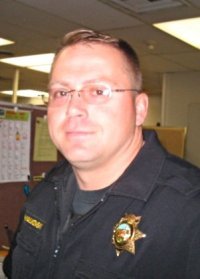
CLEARLAKE OAKS – The Clearlake Oaks Community Recovery Task Force has a new supervisor.
Lake County Sheriff/Corner Rodney K. Mitchell has selected Sgt. Chris Chwialkowski to supervise the Clearlake Oaks Community Recovery Task Force.
The task force was managed during the past 10 months by the Lake County Community Development Code Enforcement Division because of the staffing vacancies in the sheriff's department.
An office in the Oaks was opened for the public in March 2007 and located in space provided at the Clearlake Oaks Fire Station.
"This site will no longer be open as the task force base operation has returned to the second floor of the Lucerne Visitor's Center," said Voris Brumfield, former task force coordinator. "The Northshore Fire Department staff in the Oaks were helpful and supportive of our efforts to provide service and information to the community.”
Persons interested in the agencies within the Community Recovery Task Force may call 263-2309 for Code Enforcement Division, 263-0278 for Animal Care and Control or 262-4200 for the sheriff's office.
{mos_sb_discuss:2}
Michael Collins Sr., 49, was found lying in the road in the hills above Lucerne Monday, according to a Tuesday report from Sgt. Brian Martin of the Lake County Sheriff's Office Investigations Division.
Martin reported that sheriff's deputies and Northshore Fire personnel responded to a call at 9:38 a.m. Monday from a Lucerne woman who had found Collins lying next to a truck on Robinson Road, a dirt road in the hills above Lucerne.
The woman had been walking her dogs in the area when she found Collins, Martin reported. The woman notified the sheriff’s Central Dispatch and fire and law enforcement personnel immediately responded to investigate.
Upon their arrival, medics determined that the man was unresponsive and he was determined to be deceased by the deputy coroner, according to Martin.
The man was subsequently identified as Collins, said Martin. The truck he was found by was determined to belong to Collins, according to Department of Motor Vehicle records.
Martin said the area of Robinson Road where Collins was found has been the subject of numerous complaints of illegal dumping.
Deputies found Collins’ truck stopped in the middle of the road with the tailgate down, said Martin, with garbage in the back of the truck and on the ground directly behind the tailgate.
A shovel also was found on the ground next to Collins, said Martin. A light dusting of snow was on top of the garbage on the ground and the garbage in the back of the truck.
The investigation into the matter suggested that Collins may have been in that area since the previous evening, said Martin.
Collins’ next of kin were notified of his death shortly after he was discovered, according to Martin.
The investigation found no signs of foul play associated with Collins' death, Martin reported.
An autopsy on Collins has been scheduled, said Martin, with the official cause of death his still pending.
{mos_sb_discuss:2}

LAKE COUNTY – After listening to President George W. Bush's last State of the Union Address Monday night, Congressman Mike Thompson headed back to his office, riding in an elevator with some Republican colleagues.
The Democrat from St. Helena said the bipartisan consensus in the elevator ride up was that Bush's address was “one of the more, if not the most, lackluster State of the Union speeches that we had heard.”
In the hour-long Monday night address, the president outlined his goals for his final year in office. He touched on a wide variety of issues, from the economy and national security, the war in Iraq to education, energy and immigration, and his plan to “advance an agenda of compassion worldwide.”
But Thompson, speaking with reporters following the address, said Bush offered nothing new, and few actual details of how he planned to accomplish his ambitious set of plans.
On important issues like health care and the environment, Thompson said, “I don't think he left anybody with much hope or direction.”
Rather than focusing on green energy – geothermal, wind and solar – Bush is calling for more oil drilling, including a push to drill on the outer continental shelf, said Thompson. “These are things that don't lead to reducing our carbon imprint.”
Bush outlined many important issues, said Thompson, but offered no specifics. To address the country's major challenges, the congressman said it's going to take everyone working together.
He remained highly critical of Bush's strategy in Iraq, saying the surge isn't working, and pointed to the deaths of eight U.S. soldiers that same day.
Thompson said all of the major issues Bush addressed touched the First Congressional District, which includes Lake County.
He turned to immigration, one issue he and the president agree on. “I think he's been on the right track on immigration,” said Thompson, but he added that Bush hasn't done anything about it.
Last year the opportunity to push for immigration reform in Congress was “ripe” – pun intended, said Thompson, referring to the pears left on county trees for lack of workers to harvest in recent years. Yet, nothing happened.
He said he would have loved to hear Bush say he would bring the troops home, but there again Thompson was disappointed.
The president promised greater support for returning veterans, including better health care for wounded service members.
Thompson, a Vietnam veteran, said that was the most “disingenuous” part of the president's speech. A regular visitor to the Walter Reed and Bethesda military hospitals, Thompson said he's seen firsthand the system's failure to help veterans.
He said that when Congress tried last year to give members of the military a 3.5-percent cost of living increase, Bush “fought that every inch of the way.”
There are a whole series of problems with returning vets, said Thompson – from a high number of suicides to brain injuries. “It's more horrendous than past wars.”
Thompson suggested that those problems could be handled, in part, by properly funding veterans facilities, but the president so far hasn't been willing to do that.
When reporters asked him who he's voting for in the presidential primary, Thompson was forthright in saying he chose Sen. Hillary Clinton.
However, he said of Clinton and her opponent, Sen. Barack Obama, “I think either one of them would be a great president.”
Thompson said he chose Clinton because he's worked with her on issues important to the First District and Lake County. “She's strong on agriculture issues, she's strong on environmental issues and does a good job representing rural interests in her state.”
He added, “Those issues and understanding those issues are important in our district.”
E-mail Elizabeth Larson at
{mos_sb_discuss:3}

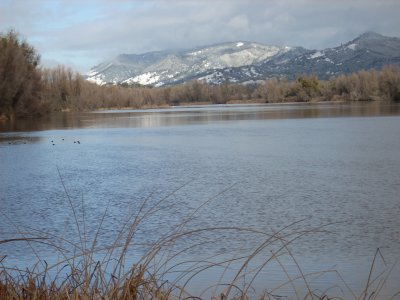
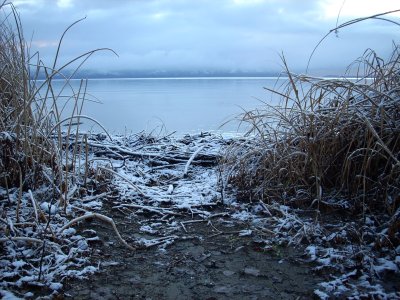
LAKE COUNTY – Snow levels dropped overnight on Sunday, bringing snow down to Clear Lake Monday morning and leaving area roadways hazardous.
Snow fell in lower elevations around the lake, with some areas along the Northshore melting off early.
In Kelseyville, area resident Ginny Craven reported finding her yard under a thick blanket of snow Monday morning.
In Cobb, resident Roger Kinney said two inches of snow fell overnight.
Weather Underground reported little precipitation around the county Monday in areas other than Cobb, which the service does not track.
Precipitation and runoff continued to fill Clear Lake, with a Monday measurement showing the lake at 4.30 Rumsey, the measurement used for Clear Lake. Zero Rumsey – Clear Lake's natural low water level – is 1318.256 feet, according to Lake County's Water Resources Division. A full lake is 7.56 Rumsey.
Lake County Department of Public Works reported late Monday that all county roads are experiencing snow and ice, with all the department's plow and sand trucks out and at work to clear the way for traffic.
Public Works reported that chains are still required on Elk Mountain Road, but chain restrictions on Bartlett Springs Road and in the Cobb area had been lifted.
A landslide on Lakeview Drive from Hillside to Mesa Drive in Clearlake Oaks has closed the roadway to all traffic, Public Works reported.
The National Weather Service in Sacramento reports that Lake County could experience snow down to 1,500 feet Tuesday, with a snow and blowing snow advisory in effect until 10 p.m.
E-mail Terre Logsdon at

{mos_sb_discuss:2}
Captain Dave Emmel of Northshore Fire Protection District said firefighters were dispatched to the scene of the explosion, which took place on Eighth Avenue, at 6:43 p.m.
Northshore Fire reported that two men were in the garage working on a car, when fuel from the gas line was ignited by a propane heater.
The result was an explosion which blew one of the men into the shut garage door. One of the men also received second-degree burns, said Robbins.
Four engines responded to the scene, said Emmel. “The fire was pretty much out when we got there.”
Emmel said firefighters stayed on scene to do some mopping up. They also ventilated smoke from the structure, which was left largely undamaged.
Neighbors a few blocks away reported hearing – and feeling – the explosion.
E-mail Elizabeth Larson at
{mos_sb_discuss:2}
EPA Region 9's Emergency Response Division – which recently completed a cleanup at Abbott Mine in 2007 and at Elem Colony in December 2006 – is handling the cleanup.
Chuck Lamb, chairman of the Clear Lake Environmental Action Network (CLEAN), said that the cleanup is not an emergency; the emergency response division is so named because it can mobilize quickly and perform the work with less red tape.
This latest cleanup will be about 10 percent of the size of the Elem Colony cleanup, which removed contaminated mine wastes from residential yards and roadways, said Rick Sugarek, the EPA's project manager on the Sulphur Bank project.
EPA reported that it plans to remove contaminated mine waste from areas along Sulphur Bank Mine Road and Ward Road and several residential properties located to the south and west of the Sulphur Bank Mercury Mine Superfund Site near Clearlake Oaks.
The Sulphur Bank Mercury Mine began operations in the mid-1800s. The miners dug for sulfur and mercury, ingredients used for gold mining and gunpowder, according to a report on the mine by University of California, Davis researchers.
The mine closed in 1957, leaving approximately 3.5 million cubic yards of production waste scattered in four major waste piles on the 220-acre mine property, according to the EPA.
Miners also left behind a 90-foot deep, flooded open pit mine known as Herman Impoundment. Contaminated water flows from Herman Impoundment through waste rock into Clear Lake contaminating the sediments and the Clear Lake ecosystem.
The EPA added the mine to the National Priorities List in 1990, and has conducted extensive field investigations to determine the nature and extent of contamination at the site.
The agency has conducted a number of cleanup actions at the mine property to prevent erosion of mine wastes into Clear Lake, to control discharges of contaminated surface water from the mine, and to seal several improperly abandoned geothermal wells on the property.
Keith Takata, the EPA's Superfund director for the Pacific Southwest region, said abandoned mines like Sulphur Bank too often leave behind “a toxic legacy that continues to threaten the health of the people and natural resources of the area.”
Sugarek said the cleanup will take about six weeks.
The area slated for cleanup was once home to miners who worked in the mine, said Sugarek. “It's basically a private residential area now.”
In the 1940s and 1950s roads in the area were built up with contaminated mine waste, said Sugarek. More recently, mine waste was used in some of the residential driveways and to repair potholes.
“We found mine waste in very specific locations,” he said.
Lamb said the EPA began conducting testing and taking samples in the area – along roads and the shoreline, and on private properties – at the request of area residents.
Final analysis of soil samples around homes and in roadways showed elevated mercury and arsenic levels at 13 locations, the EPA reported.
Lamb said that the EPA informed residents of the findings and planned to deal with 12 of the sites immediately. One site, said Lamb, is more complex and will require additional analysis before action is taken.
Without the removal action, the EPA is concerned that residents may be exposed to harmful levels of mercury and arsenic that are present in mine waste that was used as construction material in the residential area.
People can be exposed to mercury and arsenic by breathing air with contaminated dust or mercury vapor, incidental ingestion of contaminated soil or ingestion of contaminated water and food, the agency reported.
The EPA reported that it will spend approximately $800,000 to remove the contaminated material to prevent hazardous substances from coming into direct contact with area residents and from reaching Clear Lake.
Crews will work through March to excavate approximately 2,500 cubic yards of contaminated soil and transport it to the disposal site at the Sulphur Bank Mercury Mine. Clean soil will then be used to replace the contaminated soils that EPA excavates.
Sugarek said the contaminated soil is fairly shallow – between 6 and 12 inches deep. “We ought to be able to get in there and get it down straightaway,” said Sugarek.
Because of concerns for cultural resources, Sugarek said an archaeologist from the firm Pacific Legacy surveyed the area within the last few weeks.
One of the homes in the area is more than 50 years old, and therefore is a potential historic resource, along with a nearby rock wall, said Sugarek.
The archaeologist found some other historic materials which Sugarek said aren't in the work area, although they're not sure if those items are actually intact or have been previously disturbed. So a second archaeologist is taking a look at them.
At Elem, EPA relocated tribal members for several months while the extensive cleanup was underway. The agency excavated contaminated soil that the Bureau of Indian Affairs had used to build roads on the property in the early 1970s. They also replaced some housing and laid new water pipes.
However, no one will need to be relocated in this instance, Sugarek said.
Instead, EPA will use air monitoring and control dust by wetting down the area during work, said Sugarek. They'll coordinate with property owners to give them access to the property.
“If I can speak for our community, we are once again impressed with the EPA's concern for our well being and we continue to appreciate the responsible and professional manner in which these cleanups have been conducted,” said Lamb.
Elem Colony cleanup still raising issues
However, there is still controversy in some quarters about the Elem Colony cleanup.
“The issue is ongoing,” said Sugarek.
Some tribal members and archaeologist John Parker have accused the EPA of failing to follow National Historic Preservation Act guidelines during the six-month Elem cleanup.
Parker has accused the agency of failing to protect the area's cultural resources and excavating in a manner that damaged the archaeological record.
The result, Parker alleges, is the loss of 8,000 years of cultural history, which he currently estimates is work $70 million. Previously, he had put the damage at $40 million.
Ray Brown Sr., tribal chair of the Elem Colony, says he's “80-percent happy” with the cleanup.
“Overall what they did there was a lot better than what was there,” said Brown.
However, Brown said the tribe's general membership voted in favor of suing the EPA over the cleanup.
“They don't know what they're getting into,” said Brown. “It's really not practical for us to even get it started.”
He said he didn't think attempting a lawsuit against the government was worth it. “I'm against it.”
For its part, EPA has responded that it complied with the National Historic Preservation Act guidelines as far as was required by the Comprehensive Environmental Response, Compensation and Liability Act (CERCLA), the 1980 legislation that created the Superfund program.
On Dec. 11 the Advisory Council on Historic Preservation sent Takata a letter suggesting that EPA could have done a better following the National Historic Preservation Act.
Sugarek said his interpretation of the letter is that it asks, “How do we make sure that we protect cultural resources in future projects if the procedures that they set up are cumbersome. How do we do it?”
He said EPA still owes the council a response. “We need to have some internal discussions first.”
National Historic Preservation Act sometimes don't work in the context of cleanup emergencies, said Sugarek.
E-mail Elizabeth Larson at
{mos_sb_discuss:2}