How to resolve AdBlock issue?
Refresh this page
Lake County News,California
  • Home
    • Registration Form
  • News
    • Education
    • Veterans
    • Community
      • Obituaries
      • Letters
      • Commentary
    • Police Logs
    • Business
    • Recreation
    • Health
    • Religion
    • Legals
    • Arts & Life
    • Regional
  • Calendar
  • Contact us
    • FAQs
    • Phones, E-Mail
    • Subscribe
  • Advertise Here
  • Login
How to resolve AdBlock issue?
Refresh this page

News

Sonoma County earthquake felt in Lake County

NORTH COAST, Calif. — A midnight earthquake in northern Sonoma County was felt by residents in several areas of Lake County early Thursday.

The United States Geological Survey said the 4.2-magnitude quake occurred just after midnight Thursday morning.

Its epicenter was located 7 miles east northeast of Cloverdale at a depth of just under a mile and a half, the US Geological Survey reported.

On his Facebook page, State Sen. Mike McGuire called it a “pretty good shaker” felt in northern Sonoma County as well as western Lake County. 

“No early reports of damage or injuries,” McGuire said.

As of 1 a.m. Thursday, 172 shake reports had been submitted to the US Geological Survey from 33 zip codes.

In Lake County, reports came from Clearlake Oaks, Kelseyville, Lakeport, Middletown and Nice.

That 4.2-magnitude quake was followed by less than a minute by a 2.7-magnitude just to the north, US Geological Survey records showed.

Email Elizabeth Larson at This email address is being protected from spambots. You need JavaScript enabled to view it.. Follow her on Twitter, @ERLarson, and on Bluesky, @erlarson.bsky.social. Find Lake County News on the following platforms: Facebook, @LakeCoNews; X, @LakeCoNews; Threads, @lakeconews, and on Bluesky, @lakeconews.bsky.social. 

West Coast Health Alliance recommends American Academy of Pediatrics Vaccine schedule

The West Coast Health Alliance continues to recommend vaccination in alignment with the American Academy of Pediatrics Recommended Child and Adolescent Immunization Schedule.

On Jan. 5, 2026, the acting director of the Centers for Disease Control and Prevention signed a decision memorandum to revise the Child and Adolescent Immunization Schedule and significantly reduce the number of vaccinations routinely recommended for all U.S. children. 

This decision did not follow established procedure for vaccine policy recommendations and threatens an increase in vaccine-preventable diseases in children nationwide. 

Children getting sick from the diseases prevented by recommended immunizations leads to missed school for children, missed work for parents, and even hospitalization and death in some children.

The current American Academy of Pediatrics Recommended Child and Adolescent Immunization Schedule is based on established vaccine safety and effectiveness evidence. 

AAP recommendations consider:

• When children are most vulnerable to diseases;
• When vaccines work best with children’s immune systems;
• The safety of vaccinations being recommended;
• The risk of diseases in the United States;
• Our current access to health care and immunizations; and
• Cost effectiveness of implementing national recommendations for a particular vaccination.

While the first three concerns are similar across countries, the last three concerns may differ considerably between countries. 

The AAP recommended immunization schedule serves as a starting point for discussions between families and their providers, as it always has. 

Officials said parents should continue to make informed decisions about the vaccines that their children receive based on discussions with their child’s health care provider.

Prior to 2025, AAP had endorsed the Centers for Disease Control and Prevention recommendations, based on the Advisory Committee on Immunization Practices, which followed a rigorous review of data on risk of disease and safety of vaccination in the United States. 

Changes in the newly released recommended immunization schedule are not based on changes in vaccine safety and effectiveness data, officials said.

The changes were based on a comparison of the number of routine vaccinations recommended in the United States versus select other countries. It did not consider the different conditions in each country. These changes were also not vetted by experts from medical and public health organizations, health care providers, or the public before they were published.

“We do not expect these changes to affect insurance coverage for vaccines for this plan year,” the alliance reported. “All child and adolescent immunizations recommended as of December 31, 2025 will remain available and covered by public and private insurers; however the changes create confusion and will put more children at risk of preventable diseases. 

The West Coast Health Alliance said it will continue to review available vaccine science and ensure continued access to recommended vaccines. 

Each state is examining the impact of these federal changes on vaccine access in their respective states. 

The West Coast Health Alliance and American Academy of Pediatrics continue to support these longstanding recommendations including informed parental decisions for the best protection of their children.

Board of Supervisors appoints Rachel Smith as new Animal Care and Control director 

LAKE COUNTY, Calif. — The Board of Supervisors on Tuesday appointed a new Animal Care and Control director.

The board came out of a closed session shortly after 2:45 p.m. to vote for the hire of Rachel Smith.

Vice Chair Jessica Pyska moved to approve Smith’s hire, effective Feb. 9, with Supervisor Bruno Sabatier offering the second. The board’s vote was unanimous. 

Pyska’s motion stated that Smith will start at step two of the salary scale. The county of Lake’s Human Resources website shows the job’s overall pay scale ranges from $92,952 to $112,980 annually. 

The resolution establishing salaries and benefits for management unit employees, in effect from July 1, 2025, to June 30, 2029, shows that the second step starts at $8,133 a month, or $97,596 annually.

“I am looking forward to leading Lake County’s Animal Care and Control team and collaborating with County stakeholders to promote a more humane world for animals,” said Smith. “Listening to and supporting the needs of the community will be critical. Through these efforts, we will improve the health, safety, and welfare of both pets and those who care for them.”

Smith brings nearly a decade of experience in the animal welfare field, along with an academic background that includes a bachelor’s degree in criminal justice and psychology, the county reported.

She is certified by the California Commission on Peace Officer Standards and Training, or POST, is a nationally certified animal control officer and holds multiple professional certifications, according to the county’s announcement.

Her LinkedIn page shows certifications involving investigation, forensics and animal welfare.

It also showed past positions in Cedar Rapids, Iowa, Denver and Boulder, Colorado, and El Dorado County.

“She has extensive experience conducting complex animal welfare related investigations and is a nationally recognized speaker on animal welfare investigations,” the county said. 

She hosted the Animal Welfare Investigations Project podcast and served as chair of the Animal Welfare Investigation Board.

Smith also is a former affiliated member of the International Society for Animal Forensic Sciences, an organization “founded to advocate for the advancement and excellence in investigations involving crimes against animals,” according to its website.

Efforts to fill the position

The county has attempted to fill the Animal Care and Control director’s position since last year after losing two directors in just over a year’s time.

Jonathan Armas was director from March 2019 to until the summer of 2024. In June of that year, County Administrative Officer Susan Parker was appointed interim Animal Care and Control director. 

In October 2024, Gregory Wilkins — who came from Texas, with animal control experience in six states — was appointed to the job following a nationwide search. He continued in the job until June of last year. 

Since July 1, the Animal Care and Control director position has been held on an interim basis by Assistant County Administrative Officer Stephen Carter Jr. 

Email Elizabeth Larson at This email address is being protected from spambots. You need JavaScript enabled to view it.. Follow her on Twitter, @ERLarson, and on Bluesky, @erlarson.bsky.social. Find Lake County News on the following platforms: Facebook, @LakeCoNews; X, @LakeCoNews; Threads, @lakeconews, and on Bluesky, @lakeconews.bsky.social. 

Rep. LaMalfa’s death triggers special election, reshapes field for new congressional district

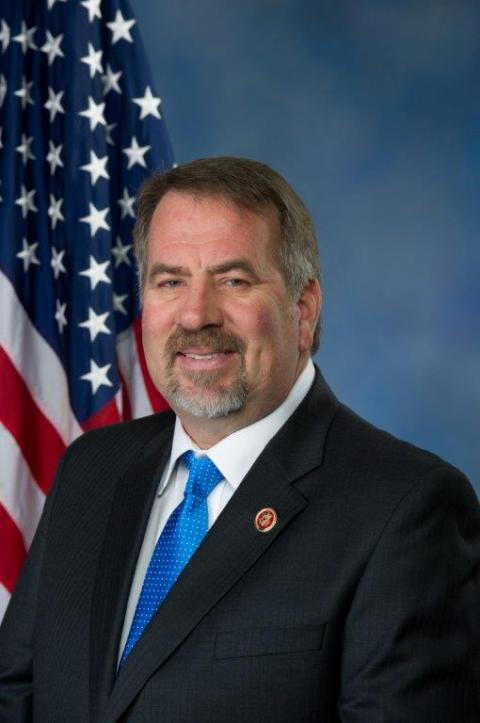
Congressman Doug LaMalfa. Courtesy photo.

LAKE COUNTY, Calif. — The death on Monday of a longtime Northern California member of Congress will trigger a special election and impact the field forming to run for a newly redrawn congressional district.

Congressman Doug LaMalfa, representing the First Congressional District, died suddenly on Monday night. He was 65 years old.

The Butte County Sheriff’s Office said it received a 911 call at 6:50 p.m. Monday from LaMalfa’s Richvale residence regarding a medical emergency. 

Authorities said the call was transferred to medical personnel, who immediately responded to the residence and transported LaMalfa to Enloe Hospital in Chico for treatment.

When he arrived at the hospital, he was taken into emergency surgery, where he died, the agency said. 

“In accordance with standard protocols, the Coroner’s Unit of the Butte County Sheriff’s Office is conducting an investigation to determine the cause of death. A forensic pathologist is scheduled to conduct an autopsy as part of this investigation, according to the report.

Years of service in state, federal governments

LaMalfa was an Oroville native and rice farmer who served eight years in the California Legislature. During his tenure, he supported Proposition 209, which ended affirmative action in California and later supported Proposition 8 to ban same sex marriage in the state. He was an opponent of California’s bullet train.

He was elected in 2013 to the U.S. House of Representatives, where he served until his death. LaMalfa supported the overturning of Roe v. Wade, questioned climate change, voted against making Juneteenth a federal holiday and voted to cancel military support to Ukraine in its war with Russia. 

LaMalfa was the part-owner of a family farm in Richvale that analysis by the Environmental Working Group, or EWG, found received more than $5.5 million in commodity and disaster subsidies from 1995 through 2024. The EWG also reported that LaMalfa's family business received the most in subsidies among all members of Congress and their immediate families for that period.

Despite his strong partisan stances, LaMalfa had worked often with Congressman Mike Thompson, a Democrat who represents Lake County. 

Their latest bipartisan effort, announced last month, was to introduce a bill to deliver tariff relief for wine and specialty crop growers.

He and Thompson also aligned on other issues, including the effort to stop the removal of the Potter Valley Project, which will save Lake Pillsbury. 

In December, LaMalfa sent a formal letter to the Federal Energy Regulatory Commission opposing the request to decommission Scott and Cape Horn Dams, which create Lake Pillsbury and Van Arsdale Reservoir, respectively, which supply water for irrigation, residential use, and firefighting across Humboldt, Lake, Mendocino and Sonoma counties.

“The removal of these dams would have profound, far-reaching, and irreparable adverse consequences for the towns, farms, and natural environment in Humboldt, Lake, Mendocino, and Sonoma counties and across Northern California,” LaMalfa’s letter said. 

LaMalfa also has been a longtime supporter of the Sites Reservoir plan in the Sacramento Valley.

On Facebook Tuesday, Thompson posted, “Saddened by the loss of my longtime colleague, Doug LaMalfa. Doug was a lifelong Northern Californian who loved his community and I was glad to work with him often on bipartisan efforts to improve life for our constituents, including to support our farmers, help prevent fires, and tackle the home insurance crisis. Jan and I have Doug’s wife Jill, their children, and Doug’s staff in our prayers.”

Also on Tuesday, Gov. Gavin Newsom and his wife offered their condolences to LaMalfa’s family. 

“Congressman Doug LaMalfa was a devoted public servant who deeply loved his country, his state, and the communities he represented. While we often approached issues from different perspectives, he fought every day for the people of California with conviction and care. He will be deeply missed,” Newsom said. “Jennifer and I are holding Doug’s family, loved ones, and colleagues in our thoughts as California mourns his passing.

Newsom ordered the flags at the State Capitol and Capitol Annex Swing Space to be flown at half-staff in LaMalfa’s honor.

U.S. Secretary of Agriculture Sonny Perdue, Secretary of the Interior Ryan Zinke, center, along with Congressman Doug LaMalfa (third from right) and a host of other officials participated in a Round Table with producers at Strain Ranches in Arbuckle, California, on Tuesday, Nov. 27, 2018. Photo by Elizabeth Larson.


Special election to be called; field begins to form for redrawn district 

Based on protocols set out in the U.S. Constitution, it will be up to Newsom to call for a special election to fill LaMalfa’s seat for the remainder of his term, which was to run through the end of this year.

Regarding a U.S. House vacancy, California election code requires the governor issue a proclamation for a special election within 14 days of the vacancy. A copy of that proclamation must be sent to the board of supervisors of every affected county.

State election code further requires that the special election called by the governor must take place on a Tuesday at least 126 days after, but not more than 140 days after, the issuance of the proclamation.

That timing could coincide with the statewide primary. Newsom issued a proclamation on Monday setting the primary for Tuesday, June 2.

LaMalfa was due to seek reelection in that primary, but was expected to face serious challenges due to his First District having been redrawn by Proposition 50, passed by voters in a special election this past November to temporarily change congressional district maps. It was a response to a similar effort in Texas.

That redrawn First District will now include portions of Lake, Mendocino and Sonoma counties, along with Glenn, Tehama, Butte and Plumas. 

As the move to redraw his district mounted, LaMalfa visited locations including Lake and Sonoma counties. 

However, Congressman Mike Thompson told Lake County News that the new district is expected to flip from a Republican to a Democrat representative.

State Sen. Mike McGuire, whose district includes Lake County, is among those who have entered the race. He and his wife Erika also offered condolences to LaMalfa’s family, friends and colleagues on Monday.

“Public service is a noble calling, regardless of party, and Congressman LaMalfa’s dedication to serving the people of California deserves recognition, respect and gratitude,” said McGuire. “Our prayers are with his family and the communities he has proudly served.

In addition to McGuire, also actively in the race for the newly redrawn First District seat are Democrats Audrey Denney, a Chico resident who founded a business to work with nonprofits, and Kyle Wilson, a Santa Rosa attorney. 

Other candidates in federal election filings are Democrat Casey Stewart of Rancho Cordova and Erica Rhoden of Long Beach, whose party affiliation is listed as “unknown.” Democrat James Salegui of Siskiyou County dropped out of the race in November after the redistricting was approved due to Prop. 50.

Email Elizabeth Larson at This email address is being protected from spambots. You need JavaScript enabled to view it.. Follow her on Twitter, @ERLarson, and on Bluesky, @erlarson.bsky.social. Find Lake County News on the following platforms: Facebook, @LakeCoNews; X, @LakeCoNews; Threads, @lakeconews, and on Bluesky, @lakeconews.bsky.social. 

Rising waters and record catches: Clear Lake prepares for the Winter Open

A Clear Lake sunset during the recent storm. Photo by Craig Nelson.

LAKE COUNTY, Calif. — Clear Lake’s ecosystem is receiving a vital boost this winter.

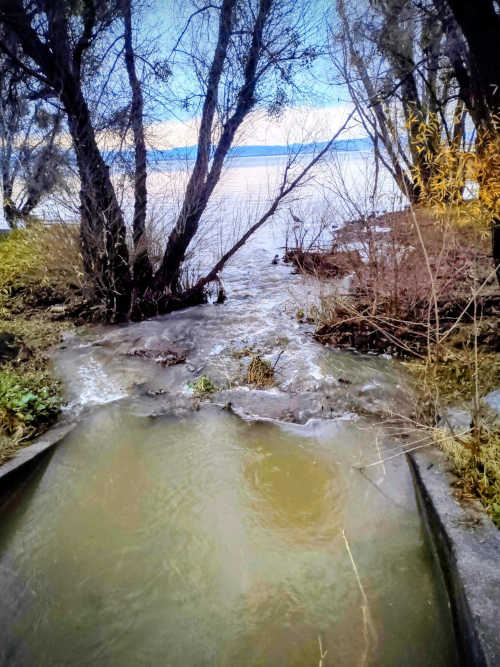
As feeder creeks begin to flow, the lake level is steadily rising, setting a perfect stage for the world-class bass fishing that defines our region.

The level of our lake is measured by the Rumsey Gage, a historic reference point established in 1873 by Captain DeHitt Clinton Rumsey. Recent rainfall has significantly impacted current levels.

As of early Wednesday, the lake is at 6.37 feet on the Rumsey Gage. Levels have risen over 2 feet Rumsey over the last four months. The area has received 17.06 inches of rain during this period. A "full lake" is officially reached at a measurement of 7.56 feet.

This influx of fresh water is essential for the local food chain. The flowing water attracts zooplankton, which brings in bait fish and, eventually, the lake’s most famous predator: the largemouth bass.

Lucerne Park Creek. Photo by Craig Nelson.


Ranked as the No. 1 bass fishing destination in the nation, Clear Lake continues to attract anglers from around the globe. 

Many visit with the hope of achieving the "Century Belt" — a prestigious honor for catching over 100 pounds of bass during a three-day tournament.

The competitive season kicks off this week with the inaugural WON Bass Winter Open. The three-day event, from Jan. 8 to 10, is a shared weight competition. 

The top professional will walk away with a Ranger/Mercury package valued at $55,000. 

With the lake rising and the ecosystem thriving, local experts believe a Century Belt performance is well within reach for this year’s competitors.

Craig Nelson is a former professional golfer who fell in love with tournament bass fishing 20 years ago. He found Lake County after fishing an FLW Stren Series event and never left. He’s the back-to-back winner of the Konocti Classic and runner up in the inaugural WON Bass Clear Lake Open.

Resolve to stop punching the clock: Why you might be able to change when and how long you work

The U.S. workweek hasn’t always been 40 hours long, so maybe something else is possible. Gearstd/iStock via Getty Images Plus

About 1 in 3 Americans make at least one New Year’s resolution, according to Pew Research. While most of these vows focus on weight loss, fitness and other health-related goals, many fall into a distinct category: work.

Work-related New Year’s resolutions tend to focus on someone’s current job and career, whether to find a new job or, if the timing and conditions are right, whether to embark on a new career path.

We’re an organizational psychologist and a philosopher who have teamed up to study why people work – and what they give up for it. We believe that there is good reason to consider concerns that apply to many if not most professionals: how much work to do and when to get it done, as well as how to make sure your work doesn’t harm your physical and mental health – while attaining some semblance of work-life balance.

Country music icon Dolly Parton wrote and sang the theme song in the movie ‘9 to 5,’ and had a starring role as well.

How we got here

Most Americans consider the 40-hour workweek, which calls for employees being on the job from nine to five, to be a standard schedule.

This ubiquitous notion is the basis of a hit Dolly Parton song and 1980 comedy film, “9 to 5,” in which the country music star had a starring role. Microsoft Outlook calendars by default shade those hours with a different color than the rest of the day.

This schedule didn’t always reign supreme.

Prior to the Great Depression, which lasted from 1929-1941, 6-day workweeks were the norm. In most industries, U.S. workers got Sundays off so they could go to church. Eventually, it became customary for employees to get half of Saturday off too.

Legislation that President Franklin D. Roosevelt signed into law as part of his sweeping New Deal reforms helped establish the 40-hour workweek as we know it today. Labor unions had long advocated for this abridged schedule, and their activism helped crystallize it across diverse occupations.

Despite many changes in technology as well as when and how work gets done, these hours have had a surprising amount of staying power.

Americans work longer hours

In general, workers in richer countries tend to work fewer hours. However, in the U.S. today, people work more on average than in most other wealthy countries.

For many Americans, this is not so much a choice as it is part of an entrenched working culture.

There are many factors that can interfere with thriving at work, including boredom, an abusive boss or an absence of meaning and purpose. In any of those cases, it’s worth asking whether the time spent at work is worth it. Only 1 in 3 employed Americans say that they are thriving.

What’s more, employee engagement is at a 10-year low. For both engaged and disengaged employees, burnout increased as the number of work hours rose. People who were working more than 45 hours per week were at greatest risk for burnout, according to Gallup.

However, the average number of hours Americans spend working has declined from 44 hours and 6 minutes in 2019 to just under 43 hours per week in 2024. The reduction is sharper for younger employees.

We think this could be a sign that younger Americans are pushing back after years of being pressured to embrace a “hustle culture” in which people brag about working 80 and even 100 hours per week.

Critiques of ‘hustle culture’ are becoming more common.

Fight against a pervasive notion

Anne-Marie Slaughter, a lawyer and political scientist who wears many hats, coined the term “time macho” more than a decade ago to convey the notion that someone who puts in longer hours at the office automatically will outperform their colleagues.

Another term, “face time,” describes the time that we are seen by others doing our work. In some workplaces, the quantity of an employee’s face time is treated as a measure of whether they are dependable – or uncommitted.

It can be easy to jump to the conclusion that putting in more hours at the office automatically boosts an employee’s performance. However, researchers have found that productivity decreases with the number of hours worked due to fatigue.

Even those with the luxury to choose how much time they devote to work sometimes presume that they need to clock as many hours as possible to demonstrate their commitment to their jobs.

To be sure, for a significant amount of the workforce, there is no choice about how much to work because that time is dictated, whether by employers, the needs of the job or the growing necessity to work multiple jobs to make ends meet.

4-day workweek experiments

One way to shave hours off the workweek is to get more days off.

A multinational working group has examined experiments with a four-day workweek: an arrangement in which people work 80% of the time – 32 hours over four days – while getting paid the same as when they worked a standard 40-hour week. Following an initial pilot in the U.S. and Ireland in 2022, the working group has expanded to six continents. The researchers consistently found that employers and employees alike thrive in this setup and that their work didn’t suffer.

Most of those employees, who ranged from government workers to technology professionals, got Friday off. Shifting to having a three-day weekend meant that employees had more time to take care of themselves and their families. Productivity and performance metrics remained high.

This picture depicts a 4-day workweek.
Some studies examining four-day workweek experiments have had promising results. Andrzej Rostek/iStock via Getty Images Plus

Waiting for technology to take a load off

Many employment experts wonder whether advances in artificial intelligence will reduce the number of hours that Americans work.

Might AI relieve us all of the tasks we dread doing, leaving us only with the work we want to do – and which, presumably, would be worth spending time on? That does sound great to both of us.

But there’s no guarantee that this will be the case.

We think the likeliest scenario is one in which the advantages of AI are unevenly distributed among people who work for a living. Economist John Maynard Keynes predicted almost a century ago that “technological unemployment” would lead to 15-hour workweeks by 2030. As that year approaches, it’s become clear that he got that wrong.

Researchers have found that for every working hour that technology saves us, it increases our work intensity. That means work becomes more stressful and expectations regarding productivity rise.

Deciding when and how much time to work

Many adults spend so much time working that they have few waking hours left for fitness, relationships, new hobbies or anything else.

If you have a choice in the matter of when and how much you work, should you choose differently?

Even questioning whether you should stick to the 40-hour workweek is a luxury, but it’s well worth considering changing your work routines as a new year gets underway if that’s a possibility for you. To get buy-in from employers, consider demonstrating how you will still deliver your core work within your desired time frame.

And, if you are fortunate enough to be able to choose to work less or work differently, perhaps you can pass it on: You probably have the power and privilege to influence the working hours of others you employ or supervise.The Conversation

Jennifer Tosti-Kharas, Professor of Management, Babson College and Christopher Wong Michaelson, Professor of Ethics and Business Law, University of St. Thomas

This article is republished from The Conversation under a Creative Commons license. Read the original article.

  • 68
  • 69
  • 70
  • 71
  • 72
  • 73
  • 74
  • 75
  • 76
  • 77

Community

  • Sheriff’s Activities League and Clearlake Bassmasters offer youth fishing clinic

  • City Nature Challenge takes place April 24 to 27

Public Safety

  • Lakeport Police logs: Wednesday, Feb. 11

  • Lakeport Police logs: Tuesday, Feb. 10

Education

  • Ramos measure requiring school officer training in use of anti-opioid drug moves forward

  • Lake County Chapter of CWA announces annual scholarships 

Health

  • California ranks 24th in America’s Health Rankings Annual Report from United Health Foundation

  • Healthy blood donors especially vital during active flu season

Business

  • Employment law summit takes place March 9

  • Two Lake County Mediacom employees earn company’s top service awards

Obituaries

  • Terry Knight

  • Ellen Thomas

Opinion & Letters

  • Who should pay for AI’s power? Not California ratepayers

  • Crandell: Supporting nephew for reelection in supervisorial race

Veterans

  • State honors fallen chief warrant officer killed in conflict in Iran

  • CalVet and CSU Long Beach team up to improve data collection related to veteran suicides

Recreation

  • April Audubon program will show how volunteers can help monitor local osprey nests

  • First guided nature walk of spring at Anderson Marsh State Historic Park April 11

  • Second Saturday guided nature walks continue at Anderson Marsh State Historic Park

  • Wet weather trail closure in effect on Upper Lake Ranger District

Religion

  • Kelseyville Presbyterian Church plans Easter service

  • Easter ‘Sonrise’ Service returns to Xabatin Community Park

Arts & Life

  • ‘CIA’ delves into the shadowy world of an espionage thriller

  • ‘War Machine’ shifts the battlefield into uncharted territory

Government & Politics

  • Lake County Democratic Central Committee endorses Falkenberg

  • Crandell launches reelection campaign plans March 15 event

Legals

  • April 23 hearing on Lake Coco Farms Major Use Permit

  • NOTICE OF 30-DAY PUBLIC COMMENT PERIOD & NOTICE OF PUBLIC HEARING

How to resolve AdBlock issue?
Refresh this page