How to resolve AdBlock issue?
Refresh this page
Lake County News,California
  • Home
    • Registration Form
  • News
    • Education
    • Veterans
    • Community
      • Obituaries
      • Letters
      • Commentary
    • Police Logs
    • Business
    • Recreation
    • Health
    • Religion
    • Legals
    • Arts & Life
    • Regional
  • Calendar
  • Contact us
    • FAQs
    • Phones, E-Mail
    • Subscribe
  • Advertise Here
  • Login
How to resolve AdBlock issue?
Refresh this page

News

94th annual Capitol Tree lighting ceremony features LA fire survivors

Gov. Gavin Newsom speaks at the 94th annual Capitol Tree lighting ceremony on Wednesday, Dec. 10, 2025, in Sacramento, California.

Gov. Gavin Newsom and First Partner Jennifer Siebel Newsom hosted the 94th Annual California State Capitol Tree Lighting Ceremony alongside special guests 5-year-old twins Rebecca and Jude Kessler from Altadena – marking the 42nd year children from a Department of Developmental Services regional center have helped light the State Capitol tree. 

The twins and their family are survivors of the Eaton Fire, which destroyed their Altadena home. 

“Rebecca and Jude represent the very best of California — resilience, joy and a reminder that even in our toughest moments, our communities show up for one another. As families across the state join together for the holiday season, tonight’s ceremony is a celebration of generosity and the power of community,” said Gov. Newsom.

“What holds us together as Californians is the strength and community we find in each other. It was an honor to host Rebecca, Jude, and their parents at our annual tree lighting to ring in the holiday season and celebrate the resilience of the entire Los Angeles community.,” said First Partner Jennifer Siebel Newsom.

Five-year-old twins Rebecca and Jude Kessler from Altadena receive services through the San Gabriel Pomona Regional Center, or SG/PRC, which supported the family before and after the fire. Approximately 480,000 Californians with intellectual and developmental disabilities receive services from the state’s 21 regional centers, marking the 42nd consecutive year a regional center child has taken part in this cherished tradition.
 
Jude loves drawing, listening to music, and trains. At home, he wears his conductor hat. Rebecca chooses her preferred Santa hat and carries around a stuffed reindeer year-round. The twins’ participation in this year’s tree lighting highlights the importance of community support during emergencies. And for families that include individuals with intellectual or developmental disabilities, California’s regional centers are prepared to anticipate and meet their specific needs.

Jude and Rebecca began receiving early intervention services through the regional center at age 2. Diagnosed with autism, they became eligible for support provided through the Lanterman Developmental Disabilities Services Act. This past January, their Altadena family home was destroyed in the Eaton Fire. San Gabriel/Pomona Regional Center has provided ongoing support and services to the twins during the crisis which have helped to bring routine, continued growth, and community.

“Jude and Rebecca embody the heart and hope of the holiday season. Despite facing challenges no child should encounter, their enthusiasm and curiosity shine through,” said Pete Cervinka, director of DDS. “We are proud to have them represent Californians with intellectual and developmental disabilities at this year’s Tree Lighting Ceremony.”

A 60-foot tree provided by Cal Fire once again stands near the west steps of the State Capitol, continuing a tradition that began in 1983. The Capitol Tree, adorned with vibrant, hand-crafted ornaments made by Californians with intellectual and developmental disabilities, honors the creativity and contributions of communities served by the state’s 21 regional centers.

Singers at the 94th annual Capitol Tree lighting ceremony on Wednesday, Dec. 10, 2025, in Sacramento, California.


New this year, the Governor’s Office of Community Service and Engagement, or GO-Serve, hosted a holiday food drive with the Sacramento Food Bank and Family Services to support local families. California Service Corps members were joined by GO-Serve Director Josh Fryday and DDS Director Pete Cervinka to support the distribution of items to community members.

The festivities continued throughout the night with a holiday train for kids to enjoy, a cookie station and music from a local DJ to emcee the tree lighting countdown.

Complementing the main display, each regional center showcased its own six-foot tree, creating a festive forest that celebrates inclusion and statewide unity.

The Department of Developmental Services, or DDS, is responsible for overseeing the coordination and delivery of services and supports to over 480,000 Californians with, or at risk for, developmental disabilities including autism, cerebral palsy, intellectual disability, epilepsy, and related conditions. 

The state’s developmental services are designed to meet the needs and choices of individuals at each stage of their lives, and, to the extent possible, support them in their home communities, providing choices that are reflective of lifestyle, cultural and linguistic preferences.

San Gabriel/Pomona Regional Center is one of 21 regional centers in California that provide essential services and support to individuals with developmental disabilities and their families. It is a private, nonprofit corporation, funded by the State of California. SG/PRC’s mission is to collaborate, advocate, and support individuals with developmental disabilities and their families, so that every person enjoys a life of meaningful opportunities and inclusion.

The 94th annual Capitol Tree lighting ceremony took place on Wednesday, Dec. 10, 2025, in Sacramento, California.

The housing crisis is forcing Americans to choose between affordability and safety


Picture this: You’re looking to buy a place to live, and you have two options.

Option A is a beautiful home in California near good schools and job opportunities. But it goes for nearly a million dollars – the median California home sells for US$906,500 – and you’d be paying a mortgage that’s risen 82% since January 2020.

Option B is a similar home in Texas, where the median home costs less than half as much: just $353,700. The catch? Option B sits in an area with significant hurricane and flood risk.

As a professor of urban planning, I know this isn’t just a hypothetical scenario. It’s the impossible choice millions of Americans face every day as the U.S. housing crisis collides with climate change. And we’re not handling it well.

The numbers tell the story

The migration patterns are stark. Take California, which lost 239,575 residents in 2024 – the largest out-migration of any state. High housing costs are a primary driver: The median home price in California is more than double the national median.

Where are these displaced residents going? Many are heading to southern and western states like Florida and Texas. Texas, which is the top destination for former California residents, saw a net gain of 85,267 people in 2024, much of it from domestic migration. These newcomers are drawn primarily by more affordable housing markets.

Housing costs are the main driver of the California exodus, the Los Angeles Times notes.

This isn’t simply people chasing lower taxes. It’s a housing affordability crisis in motion. The annual household income needed to qualify for a mortgage on a mid-tier California home was about $237,000 in June 2025, a recent analysis found – over twice the state’s median household income.

Over 21 million renter households nationwide spent more than 30% of their income on housing costs in 2023, according to the U.S. Census Bureau. For them and others struggling to get by, the financial math is simple, even if the risk calculation isn’t.

I find this troubling. In essence, the U.S. is creating a system where your income determines your exposure to climate disasters. When housing becomes unaffordable in safer areas, the only available and affordable property is often in riskier locations – low-lying areas at flood risk in Houston and coastal Texas, or higher-wildfire-risk areas as California cities expand into fire-prone foothills and canyons.

Climate risk becomes part of the equation

The destinations drawing newcomers aren’t exactly safe havens. Research shows that America’s high-fire-risk counties saw 63,365 more people move in than out in 2023, much of that flowing to Texas. Meanwhile, my own research and other studies of post-disaster recovery have shown how the most vulnerable communities – low-income residents, people of color, renters – face the greatest barriers to rebuilding after disasters strike.

Consider the insurance crisis brewing in these destination states. Dozens of insurers in Florida, Louisiana, Texas and beyond have collapsed in recent years, unable to sustain the mounting claims from increasingly frequent and severe disasters like wildfires and hurricanes. Economists Benjamin Keys and Philip Mulder, who study climate change impacts on real estate, describe the insurance markets in some high-risk areas as “broken”. Between 2018 and 2023, insurers canceled nearly 2 million homeowner policies nationwide – four times the historically typical rate.

Yet people keep moving into risky areas. For example, recent research shows that people have been moving toward areas most at risk of wildfires, even holding wealth and other factors constant. The wild beauty of fire-prone areas may be part of the attraction, but so is housing availability and cost.

The policy failures behind the false choice

In my view, this isn’t really about individual choice – it’s about policy failure. The state of California aims to build 2.5 million new homes by 2030, which would require adding more than 350,000 units annually. Yet in 2024, the state only added about 100,000 – falling dramatically short of what’s needed. When local governments restrict housing development through exclusionary zoning, they’re effectively pricing out working families and pushing them toward risk.

My research on disaster recovery has consistently shown how housing policies intersect with climate vulnerability. Communities with limited housing options before disasters become even more constrained afterward. People can’t “choose” resilience if resilient places won’t let them build affordable housing.

The federal government started recognizing this connection – to an extent. For example, in 2023, the Federal Emergency Management Agency encouraged communities to consider “social vulnerability” in disaster planning, in addition to things like geographic risk. Social vulnerability refers to socioeconomic factors like poverty, lack of transportation or language barriers that make it harder for communities to deal with disasters.

However, the agency more recently stepped back from that move – just as the 2025 hurricane season began.

In my view, when a society forces people to choose between paying for housing and staying safe, that society has failed. Housing should be a right, not a risk calculation.

But until decision-makers address the underlying policies that create housing scarcity in safe areas and fail to protect people in vulnerable ones, climate change will continue to reshape who gets to live where – and who gets left behind when the next disaster strikes.The Conversation

Ivis García, Associate Professor of Landscape Architecture and Urban Planning, Texas A&M University

This article is republished from The Conversation under a Creative Commons license. Read the original article.
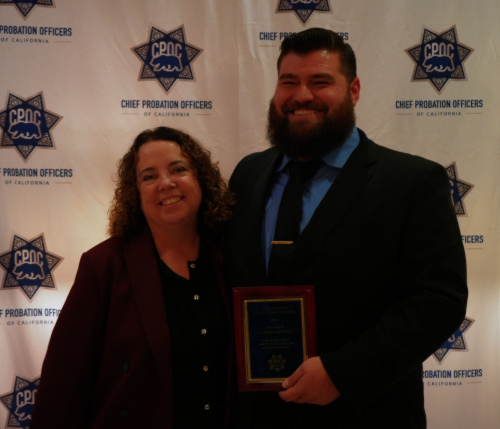
Morfin recognized as California North Region Employee of the Year at statewide probation awards ceremony

Lake County Chief Probation Officer Wendy Mondfrans (left) and Officer Roberto Morfin (right). Photo courtesy of the Chief Probation Officers of California.

 
LAKE COUNTY, Calif. — Roberto Morfin, supervising deputy probation officer with the Lake County Probation Department, has been recognized at the statewide 2025 Annual Chief Probation Officers of California Awards Ceremony as the North Region Probation Employee of the Year.

The awards honored his exceptional leadership, transformative impact on department operations, and deep commitment to supporting justice-involved individuals and staff alike.
 
“Roberto is a dedicated leader who brings consistency, compassion, and professionalism into every part of his work,” said Lake County Chief Probation Officer Wendy Mondfrans. “His ability to lead with integrity while strengthening our programs and staff makes him an invaluable member of our department. His work helps people in the justice system take part in transformative rehabilitation programs, making our communities safer for everyone.”
 
Morfin oversees day-to-day operations of the department’s South Field Office and plays a central role in ensuring programming and services operate seamlessly both in the community and within the jail. He is widely recognized as a steady, trusted leader who supports his team, provides hands-on training to new staff, and ensures the department’s mission is reflected in daily practice.
 
His leadership extends across several major department initiatives, including oversight of the Resilient Reentry Event, monthly Parole and Community Team meetings, and the county’s tattoo removal program, all programs aimed at removing barriers, increasing access to services, and helping those in the justice system build pathways to stability and long-term safety. 

Morfin is known for approaching these programs with a focus on dignity, opportunity and accountability for every individual he encounters.
 
Morfin began his career with the department at just 18 years old working in Juvenile Hall, was later promoted to deputy probation officer, and then to supervising deputy probation officer. 

His longstanding service, mentorship and unwavering positivity have made him a stabilizing force within the department and a respected leader across California.
 
“Roberto exemplifies the spirit of the probation profession throughout California through his dedication to community, his support of staff, and his strong and compassionate work with those in the justice system,” said Chief Steve Jackson, president of the Chief Probation Officers of California, or CPOC. “His leadership makes a meaningful difference every day.”
 
CPOC is recognizing Roberto Morfin for his outstanding service, leadership and meaningful contributions to the Lake County Probation Department and the broader community.
 
CPOC is an association of all 58 counties with a shared identity as law enforcement leaders. It is committed to a research-based approach to public safety that promotes positive behavior change. Their leadership guides policy and practice in prevention, community-based corrections, secure detention for youth, and direct human services. CPOC aims to prevent crime and delinquency, reduce recidivism, restore victims, and promote healthy families and communities.

Wreaths Across America commemoration takes place Dec. 13

LAKE COUNTY, Calif. — The annual Wreaths Across America commemoration is returning to Lake County this week.

The event will be held at five Lake County cemeteries — Hartley, Kelseyville, Lower Lake, Middletown and Saint Mary’s in Lakeport — at 9 a.m. Saturday, Dec. 13.

This year’s theme is “Keep Moving Forward.”

Wreaths Across America honors veterans through nationwide wreath-laying ceremonies and year-round educational outreach.

During these events, wreaths are placed on the headstones of veterans from all branches of service — Army, Marines, Navy, Air Force, Coast Guard, Space Force and Merchant Marines — as well as POW/MIA memorials. 

In 2024 alone, more than four million wreaths were placed at nearly 5,000 participating cemeteries across the country and overseas.

This tradition reminds all Americans of the sacrifices made to secure our freedoms.

Everyone is invited to attend as youth organizations, volunteers and veteran organizations conduct the Wreaths Across America ceremonies at the five cemeteries and show veterans and their families that they will not be forgotten.      

Community members are urged to take an hour out of the busy holiday season to participate in this heartfelt ceremony, where they will come together to remember the fallen, honor those who serve and teach future generations the true cost of freedom.

Thompson, Newhouse, LaMalfa, Salinas and Panetta introduce bill to deliver tariff relief for wine and specialty crop growers

WASHINGTON, DC – On Tuesday, Congressional Wine Caucus Co-Chairs Rep. Mike Thompson (CA-04) and Rep. Dan Newhouse (WA-04), alongside Rep. Doug LaMalfa (CA-01), Rep. Andrea Salinas (OR-06), and Rep. Jimmy Panetta (CA-19) introduced the Specialty Crop & Wine Producer Tariff Relief Act, legislation to provide direct support to specialty crop growers and wine producers facing economic losses from tariffs.

“Farmers and wine producers in our district are being hit hard with rising costs at home and retaliatory tariffs abroad,” said Thompson. “Northern California agriculture feeds our country and fuels our local economy. When our producers are targeted with tariffs, families here at home feel it immediately. This bill gives them targeted relief they need to stay competitive. California’s agricultural and wine community are cornerstones of our local economies, from family farms to world-class producers. Ensuring they can weather sudden tariff hikes isn’t just an economic necessity, it’s a commitment to protecting the livelihoods that make our district and community special.”

“While many crops are struggling in farm country, specialty crops are at a breaking point,” said Newhouse. “For too long, specialty crops have been left out of the conversation when financial relief for farmers is on the table, and it is essential that we begin to balance the scales. This bipartisan legislation directs USDA to establish a program that delivers much needed relief to our producers who grow some of the highest quality specialty crops in the world. If we want to continue to boost our specialty crop industry, then the federal government must make it a priority when planning for financial assistance for farmers.”

“The agricultural economy is suffering, and dividing farm country isn’t the solution,” said LaMalfa. “Row crop and specialty crop growers in my district are struggling just alike, and this bill ensures all of farm country is supported. We can’t make Americans healthy again if we continue to let tree nut, fruit, and vegetable growers fall behind in bad years while only boosting the safety net for a limited number of crops. I appreciate Reps. Thompson, Newhouse, Salinas, and Panetta for joining me in leading this effort.”

“Oregon’s wine producers and specialty crop growers make world-class products, but as countries impose tariffs in response to Trump’s trade policies, our farmers are facing higher costs, shrinking export opportunities, and real economic pain,” said Salinas. “Specialty crops and wine producers have been harmed by tariffs just like row crops, and the federal government has a responsibility to provide equal relief. This bill ensures they get the support they need to weather the economic hardship tariffs have caused. Ultimately, we need to get rid of Trump’s barriers to trade so our world-class products can truly be enjoyed all over the world, but in the meantime, Congress must step up to help our farmers where the Trump Administration has failed them.”

“This administration’s tariff policy has significantly impacted farmers of all types of crops from all across the country,” said Panetta. “That’s why as proud representatives of regions that produce specialty crops, we must ensure that that type of agriculture is protected and included in any relief type of package. Our bipartisan Specialty Crop & Wine Producer Tariff Relief Act will provide specialty crop farmers with the direct payments program that’s needed to ensure that they continue to play a vital part of our nation’s agriculture."

Specialty crop growers and wine producers rely on robust export markets around our world. With the enactment of new tariffs and trade barriers, our agricultural communities have suffered significant losses. 

Foreign competitors are filling the gap left by declining U.S. exports, strengthening their position while American producers are struggling with new market uncertainties.

This key agricultural sector is experiencing significant volatility, raising prices and reduced competitiveness. Producers are facing significant challenges accessing once reliable markets and seeing input costs skyrocket. 

This legislation would provide much needed relief to this key agricultural sector and ensure they are provided the financial resources necessary to whether the current market while Congress does its work to negotiate and implement trade agreements.

The Specialty Crop & Wine Producer Tariff Relief Act will support local growers and producers by:

• Creating a direct pay program through USDA for specialty crop growers and wine producers experiencing “covered losses” caused by increased foreign tariffs.
• Allows USDA to purchase surplus specialty crops for use in nutrition programs such as school meals and SNAP.
• Authorizes funds to be made available through 2030.
 
Thompson represents California’s Fourth Congressional District, which includes all or part of Lake, Napa, Solano, Sonoma and Yolo counties. 

What 38 million obituaries reveal about how Americans define a ‘life well lived’

Obituaries provide a window into the prevailing traditions and moral values of their time. alexmillos/iStock via Getty Images Plus

Obituaries preserve what families most want remembered about the people they cherish most. Across time, they also reveal the values each era chose to honor.

In a study published in the journal Proceedings of the National Academy of Sciences, we analyzed 38 million obituaries of Americans published from 1998 to 2024. We identified the values families most often highlight, and how those values shift across generations, regions and major historical events.

Specifically, working with psychologists Liane Young and Thomas Mazzuchi, we examined the language used on Legacy.com, an online platform where families often post obituaries and share memories of loved ones.

During their lifetime, most people tend to be guided by a small set of broad values like caring for others, honoring tradition, keeping loved ones safe and seeking personal growth. To understand how these values showed up in remembrance, we used text-analysis tools built on curated lists of everyday words people use when talking about those themes.

By analyzing the words that appeared again and again in memorials, we could see which values communities chose to emphasize when looking back on the lives of their loved ones, and how those patterns changed over time. Because the dataset included 38 million obituaries, the analysis ran on a supercomputer.

Across nearly 30 years of obituaries, words related to the value “tradition” appeared most often – many tributes described religious participation and enduring customs. Words related to the value “benevolence” – caring for the welfare of others – were also consistently prominent. In fact, tradition and benevolence formed the dominant value profile across the dataset: They appeared in more than 70% of the obituaries. By contrast, words related to values like “achievement” and “power” appeared far less often.

Historical events did leave a mark. After the attacks of Sept. 11, 2001, the language families used to remember loved ones shifted compared with the period just before the attacks – and those shifts persisted for at least a year. Words related to the value “security” – including terms like “surviving,” “health” and “order” – showed up less often. At the same time, families used more language related to values like “benevolence” and “tradition.” Terms like “caring,” “loyal” and “service” showed up more often. These changes were especially strong in New York, where the attacks had the most direct impact.

COVID-19, however, produced the most dramatic shifts. Beginning in March 2020, benevolence-related language – including terms like “love,” “sympathy” and “family” – declined sharply, and hasn’t been the same since. Tradition-related language – terms like “service,” “faith” and “heritage” – initially declined as well, then rose above baseline levels during later stages of the pandemic.

These changes show that collective disruptions impact the moral vocabulary families use when commemorating loved ones. They shift what it means to have lived a good life.

We also saw differences that reflect stereotypes about gender and age. Obituaries for men contained more language linked to achievement, conformity and power. Meanwhile, obituaries for women contained more language associated with benevolence and enjoying life’s pleasures.

An elderly woman works on a laptop, looking grim, with a bouquet of flowers behind it.
There are notable differences in the values highlighted in obituaries of older versus younger adults. AWelshLad/iStock / Getty Images Plus

Older adults were often remembered more for valuing tradition. Younger adults, on the other hand, were often remembered more for valuing the welfare of all people and nature, and for being motivated to think and act independently. Value patterns in men’s obituaries shifted more across the lifespan than those in women’s. In other words, the values highlighted in younger and older men’s obituaries differed more from each other, while women’s value profiles stayed relatively consistent across age.

Why it matters

The most visited parts of print newspapers and online memorial sites, obituaries offer a window into what societies value at different points in time.

This study contributes to the broader scientific understanding of legacy. People often hold strong preferences about how they want to be remembered, but far less is known about how they actually are remembered, in part because large-scale evidence about real memorials is rare. Our analysis of millions of obituaries helps fill that gap.

What’s next

Obituaries allow researchers to trace cultural values across time, geography and social groups. Future work can examine differences across race and occupation, as well as across regions. It could also look to earlier periods using historical obituary archives, such as those preserved in older newspapers and local records.

Another direction is to examine whether highlighting how often kindness shows up in obituaries could inspire people to be more caring in daily life.

Understanding what endures in memory helps clarify what people consider meaningful; those values shape how they choose to live.

The Research Brief is a short take on interesting academic work.The Conversation

Stylianos Syropoulos, Assistant Professor of Psychology, Arizona State University; David Markowitz, Associate Professor of Communication, Michigan State University, and Kyle Fiore Law, Postdoctoral Research Scholar in Sustainability, Arizona State University

This article is republished from The Conversation under a Creative Commons license. Read the original article.

  • 87
  • 88
  • 89
  • 90
  • 91
  • 92
  • 93
  • 94
  • 95
  • 96

Community

  • Sheriff’s Activities League and Clearlake Bassmasters offer youth fishing clinic

  • City Nature Challenge takes place April 24 to 27

Public Safety

  • Lakeport Police logs: Wednesday, Feb. 11

  • Lakeport Police logs: Tuesday, Feb. 10

Education

  • Ramos measure requiring school officer training in use of anti-opioid drug moves forward

  • Lake County Chapter of CWA announces annual scholarships 

Health

  • California ranks 24th in America’s Health Rankings Annual Report from United Health Foundation

  • Healthy blood donors especially vital during active flu season

Business

  • Employment law summit takes place March 9

  • Two Lake County Mediacom employees earn company’s top service awards

Obituaries

  • Terry Knight

  • Ellen Thomas

Opinion & Letters

  • Who should pay for AI’s power? Not California ratepayers

  • Crandell: Supporting nephew for reelection in supervisorial race

Veterans

  • State honors fallen chief warrant officer killed in conflict in Iran

  • CalVet and CSU Long Beach team up to improve data collection related to veteran suicides

Recreation

  • April Audubon program will show how volunteers can help monitor local osprey nests

  • First guided nature walk of spring at Anderson Marsh State Historic Park April 11

  • Second Saturday guided nature walks continue at Anderson Marsh State Historic Park

  • Wet weather trail closure in effect on Upper Lake Ranger District

Religion

  • Kelseyville Presbyterian Church plans Easter service

  • Easter ‘Sonrise’ Service returns to Xabatin Community Park

Arts & Life

  • ‘CIA’ delves into the shadowy world of an espionage thriller

  • ‘War Machine’ shifts the battlefield into uncharted territory

Government & Politics

  • Lake County Democratic Central Committee endorses Falkenberg

  • Crandell launches reelection campaign plans March 15 event

Legals

  • April 23 hearing on Lake Coco Farms Major Use Permit

  • NOTICE OF 30-DAY PUBLIC COMMENT PERIOD & NOTICE OF PUBLIC HEARING

How to resolve AdBlock issue?
Refresh this page