
Business News
Most Americans remain uncertain of self-driving cars, but a new AAA survey found some vehicle technologies offering semi-autonomous capabilities are finding wider acceptance.
AAA revealed that 66 percent of U.S. drivers were “fearful” of self-driving cars, while 25 percent were “uncertain.”
Only 9 percent trusted self-driving cars enough to be a passenger. And while fully autonomous vehicles are not commercially available, nearly one in ten drivers (8 percent) believe they are available for purchase and can drive while they sleep.
“Education and transparency are key as we move towards a future where safety and innovation converge,” AAA Northern California spokesperson John Treanor said.
The survey also revealed a growing interest in advanced driver assistance systems (ADAS), with U.S. drivers indicating interest in most of these systems:
• Automatic emergency braking (63%);
• Reverse automatic emergency braking (62%);
• Lane keeping assistance (58%);
• Adaptive cruise control (55%);
• Active driving assistance (46%).
“These technologies are meant to aid drivers, not replace them. The promise in enhancing road safety can only be realized when drivers know how, when and where to use these systems properly. AAA has been at the forefront of educating drivers and will continue to work with manufacturers and policy makers to give drivers the resources to make the most of these features,” Treanor said.
The survey was conducted Jan. 11 to 16 using a probability-based panel designed to be representative of the U.S. household population overall.
The panel provides sample coverage of approximately 97% of the U.S. household population. Most surveys were completed online; consumers without Internet access were surveyed over the phone.
A total of 1,220 interviews were completed among U.S. adults, 18 years of age or older, of which 1,010 qualified for the study. The margin of error for the study overall is 4.1% at the 95% confidence level. Smaller subgroups have larger error margins.
AAA revealed that 66 percent of U.S. drivers were “fearful” of self-driving cars, while 25 percent were “uncertain.”
Only 9 percent trusted self-driving cars enough to be a passenger. And while fully autonomous vehicles are not commercially available, nearly one in ten drivers (8 percent) believe they are available for purchase and can drive while they sleep.
“Education and transparency are key as we move towards a future where safety and innovation converge,” AAA Northern California spokesperson John Treanor said.
The survey also revealed a growing interest in advanced driver assistance systems (ADAS), with U.S. drivers indicating interest in most of these systems:
• Automatic emergency braking (63%);
• Reverse automatic emergency braking (62%);
• Lane keeping assistance (58%);
• Adaptive cruise control (55%);
• Active driving assistance (46%).
“These technologies are meant to aid drivers, not replace them. The promise in enhancing road safety can only be realized when drivers know how, when and where to use these systems properly. AAA has been at the forefront of educating drivers and will continue to work with manufacturers and policy makers to give drivers the resources to make the most of these features,” Treanor said.
The survey was conducted Jan. 11 to 16 using a probability-based panel designed to be representative of the U.S. household population overall.
The panel provides sample coverage of approximately 97% of the U.S. household population. Most surveys were completed online; consumers without Internet access were surveyed over the phone.
A total of 1,220 interviews were completed among U.S. adults, 18 years of age or older, of which 1,010 qualified for the study. The margin of error for the study overall is 4.1% at the 95% confidence level. Smaller subgroups have larger error margins.
- Details
- Written by: AAA
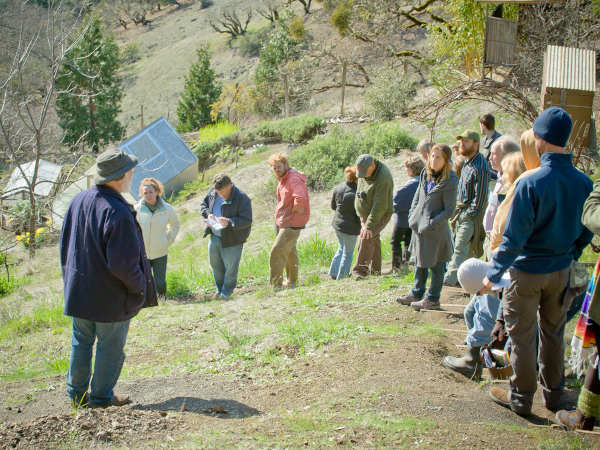
UKIAH, Calif. — North Coast Opportunities is excited to collaborate once again on the North Coast Farmers’ Convergence, held at Ridgewood Ranch on Tuesday, March 19.
This annual event brings together food producers from Lake, Mendocino, Sonoma, and Humboldt counties (the North Coast region), along with local food retailers, chefs, food activists, and interested community members.
The North Coast Farmers’ Convergence is a celebration of the North Coast region’s growing local food system and the vital profession of farming in Northern California. Each year since 2013 (with a short break for COVID), the Farmers’ Convergence has brought together over 150 local farmers, ranchers, retailers, and advocates for a day of networking, education, and inspiration.
This year’s focus is rebuilding our local food web, an issue that “became sort of urgent,” said Michael Foley, chair of the board and director of the School of Adaptive Agriculture, with the closing of the sole full-service grocery store in Laytonville, Geiger’s Long Valley Market.
Without a strong local food web to step up and fill the hole left by the store’s closing, residents have faced difficulty sourcing groceries in the area.
A local food web describes the links between local food producers, retailers and consumers.
Historically, the North Coast region has had a rich and diverse food web. Today, it faces the challenges of a decline in local production.
While wheat, peas, potatoes and more have historically been key crops in Mendocino and Lake counties, their production now represents only a fraction of their rich history.
Today, a local food web still exists, but it is a shadow of its former strength. This is a reality that will become increasingly problematic as climate change and fossil fuel scarcity continue to take a toll on global food distribution networks.
“We are going to be more and more reliant on our local food web,” said Foley.
The Farmers’ Convergence provides an opportunity to foster the connections and relationships that a local food web is built on. And it is a way for those that participate in the local food web to discuss and tackle the barriers and challenges that face the community.
“We often hear from farmers that farming can feel very solitary,’ said NCO Food Policy and Promotions Manager Sarah Marshall. “This event is a chance for attendees to share inspiration, share common woes, and really feel supported by our local community,”
This year’s Farmers’ Convergence boasts an impressive lineup of experts and innovators in the agricultural community who will lead roundtables on a variety of topics requested by our local producer network.
Roundtables at this year’s event include topics covering marketing, seed saving and locally adapted seeds, conversations on land access and building working farm teams, a breakout discussion on feeding Laytonville, connection opportunities for farm to school producers and cooks, an advocacy training for local food policy, and a farm demonstration on off-grid salad mix washing station. Register today to see the full lineup of roundtables and their descriptions.
In celebration of the Spring Equinox, the schedule will feature wellness sessions including a yoga meditation hour from Flourish & Flow studio and hand reflexology sessions.
Attendees are invited to join a mixer to connect with fellow farmers, buyers, school food service directors, and supporters. Producers are encouraged to bring samples of their products to share with potential buyers, and seeds to swap with other growers.
Tickets for the event are on a sliding scale, set your own price. Your generosity is appreciated.
Register online by March 18: bit.ly/farmersconvergence24 or day-of on site. Your ticket includes a delicious, farm-fresh lunch and access to the full day of programming as well as the mixer.
Tuesday, March 19: Program
• 8 a.m. – Check in, coffee and breakfast available
• 8:45 a.m. – Welcoming address
• 9:30 a.m. – Panel: Finding the Sweet Spot: Choosing the Right Mix of Wholesale, Retail, CSA, Restaurant, or School Sales for My Farm
• 10:45am – Roundtable Session I
• 12 p.m. – Locally sourced lunch
• 1:45 p.m. – Roundtable Session II
• 2:45 p.m. – Roundtable Session III
• 4 p.m. – Mixer
The Ninth Annual North Coast Farmers’ Convergence is a collaboration between North Coast Opportunities, the School of Adaptive Agriculture, Blue Zones Project- Mendocino County, and the CDFA Farm to School Regional Lead staff.
NCO is the Community Action Agency that serves Lake and Mendocino Counties, as well as parts of Humboldt, Sonoma, Del Norte and Solano counties. NCO reacts and adjusts to community needs, including disaster response and recovery.
For more information visit www.ncoinc.org or call 707-467-3200.
- Details
- Written by: North Coast Opportunities





 How to resolve AdBlock issue?