 How to resolve AdBlock issue?
Opinion
- Details
- Written by: Dr. Nicki Thomas
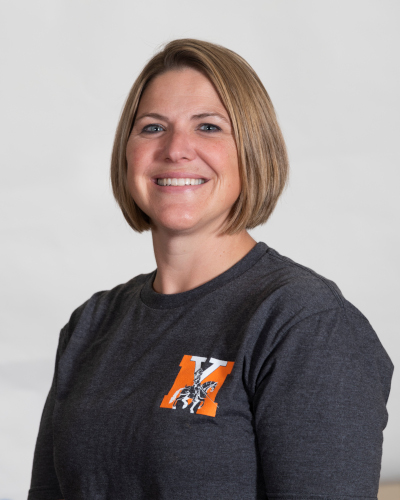
KELSEYVILLE, Calif. — At our October school board meeting, our trustees agreed to put other projects on hold to fund new stadium lights at Kelseyville High School rather than letting the stadium go dark after this 2025-26 school year.
Why we need new lights
The lights were originally installed in the early 1990s through a partnership with PG&E and Kelseyville Boosters, but the final safety inspection was never completed. (Keep in mind, this was 30 years ago. Our current maintenance director is a stickler for final inspections.)
In 2022, when we pulled permits for other stadium renovations, we discovered this oversight. The Division of the State Architect then performed the required final "hammer test" in 2024, and two of the light poles failed to meet current safety standards. Now we are required by law to take them down at the end of the school year.
Stadium lights allow outdoor events to take place after the sun sets, not only high school football and soccer games and practices, but Kelseyville Chiefs Youth Football as well as other school and community events–including our high school graduation ceremony.
Funding challenges
Everyone I know supports new stadium lights until I ask them what they are willing to give up to purchase them. Much of the money school districts receive comes with strict rules about how it can be spent. The money available for significant repairs and maintenance generally comes from bond funding. Periodically, state and federal legislators allocate modernization funds to update school facilities.
Last year, Kelseyville Unified School District put Measure R on the ballot to fund new classrooms, repair leaky roofs, and update inadequate electrical systems, among other projects. Unfortunately, the measure didn’t pass. This broke my heart because kids deserve our community’s support. They shouldn’t have to choose between new heating and air conditioning systems to keep them comfortable, and stadium lights that contribute to their physical and social/emotional health.
The good news is that Kelseyville Unified School District is known for its careful and responsible use of financial resources. We plan ahead and squeeze every dollar for maximum impact as we use funding in accordance with state and federal requirements. The District also actively pursues grants and other funding sources when we can.
Hoping for the best
During the October school board meeting, a lot of thoughtful discussion centered around how we can do as much as possible as quickly as possible. Before we learned that our stadium lights would go dark, we had earmarked modernization funds to replace the half-dozen remaining HVAC systems that are 30+ years old. We know these will fail; we just don’t know when.
When you replace several HVAC systems at once, you can get discounted rates for materials and labor. Plus, you avoid the discomfort students would endure when a system stops working. Just like fire alarms and going into labor, HVAC systems don’t tend to break at a convenient time. Fire alarms and labor only seem to occur in the middle of the night. HVAC systems only go out in the dead of winter or during a blazing heat wave.
All that said, the upwelling of community support for new stadium lights let us know how much everyone values sports and other community gatherings under the lights. I think the school board made the right choice in funding the lights. Now, I’m hoping the HVAC systems will only go out one at a time and not all in the same year.
Support local schools
If you happen to see a school bond measure on a future ballot, please remember that this is how school districts raise funds to keep school facilities in good working order. Without bond funding, classrooms fall into disrepair and it becomes even more expensive to provide safe, modern spaces for kids to learn and grow.
Dr. Nicki Thomas is superintendent of the Kelseyville Unified School District.
- Details
- Written by: Julia Carrera
Dear Editor,
The Christmas holiday and New Year are at our doorstep. So am I, as I approach the last six months of my campaign for District 3 supervisor in our beautiful Lake County. This moment is also a very important time for the Third District.
If you haven’t already signed up for the Northshore Chapter of A Simple Gesture, our community-based food drive, I hope you will find it in your heart to do so this holiday season. All donated food stays within the Third District, which is the Highway 20 corridor from the Mendocino County line to the Calusa County line. It’s easy, impactful, and only takes three steps:
1. Go to the A Simple Gesture website, enter your ZIP code, and select the Northshore Chapter (there are chapters all around the lake — join one near you). Then click Register.
2. Gather shelf-stable food such as beans, rice, powdered milk, spices, cereal, etc., and place them in a bag on your front porch on the next pickup date. Volunteers will collect the food and deliver it to a local pantry. Our next pickup date is January 10, 2026, with monthly pickups thereafter.
3. Click Yes for next month, or, you can skip a month or more. We can do better together by feeding our neighbors in need.
Lake Pillsbury and Scott Dam are part of the PG&E Hydroelectric Project currently being decommissioned right here in the 3rd District. PG&E has chosen to sell off individual assets of the project. Mendocino and Sonoma Counties partnered to purchase everything except Scott Dam and Lake Pillsbury. With no buyer stepping forward, the dam is now slated for removal—an outcome that would be detrimental to both humans and wildlife region wide, with Lake County being the hardest hit economically – something we can’t afford.
The decision to decommission with an application into the Federal Energy Regulatory Commission (FERC) thus far is being made with little, if any, comprehensive scientific evaluation or empirical data regarding the long-term impacts. Concerns include fire protection, loss of wildlife sanctuary, tourism and property tax revenue declines, and reduced water availability for up to 600,000 people during summer months when the Eel River runs dry, among many others.
As of Dec. 19 at 2 p.m., FERC closed the public input portion of its decommissioning review process. I have read every one of the thousands of letters submitted—both for and against decommissioning. I appreciate Lake County’s unified position against decommissioning and the work they are doing. If I already was an elected official during this process, I would continue to be on the phone and at my computer day and night seeking state and federal funding for Lake County to purchase Scott Dam and Lake Pillsbury, partner with others, and install a hydroelectric system to serve our residents. This would be a positive community and economic investment and directly supports my campaign priorities.
It also supports my vision of localized microgrids for food, power, and water as we move forward into an uncertain future—working together toward sustainability.
With six months left to earn your trust and your vote, I am shifting my focus away from attending 3rd District Municipal Advisory Council meetings and various committees where I do not hold a position, and instead spending that time knocking on doors and holding coffee conversations throughout our community, come rain or shine.
I continue to be amazed by the intelligence, compassion, and care our citizens share as I travel door to door and business to business — discussing issues, answering questions, brainstorming solutions, and genuinely connecting. Our citizens are our greatest sustainable resource. I am humbled and honored to work hand in hand with you to strengthen our community.
We can do better together.
We are living in unique times — times that create uncertainty but also opportunity. Running for public office during these moments brings renewed meaning to the words public servant. I am fully prepared to be in public service to my community of Lake County if elected as your 3rd District Supervisor.
This holiday season, I wish all Lake County residents peace, joy, and hope. God bless you and your families.
Julia Carrera is a candidate for Lake County District 3 supervisor.
- Details
- Written by: Jeff Ribordy, M.D.
Caring for our mental health is important at all stages of life. It is especially pivotal for the youngest, most vulnerable members of our community. Empowering our community with the resources and support available to care for their mental health has proven to have a widespread impact.
The most recent comprehensive national data on mental health status for pediatric members enrolled in Medicaid indicates that the percentage with any diagnosed mental health or neurodevelopmental disorder increased from 10.7% in 2010 to 16.5% in 2019.
While these data are pre-COVID-19, studies have shown significant increases in attention-deficit / hyperactivity disorder, trauma- and stressor-related disorders, anxiety, autism spectrum disorders, and depressive disorders among Medicaid-insured children during this period.
Multiple studies have shown post-COVID-19, the proportion of children with anxiety, depression, and suicidality increased significantly, with 1 in 5 youth now experiencing a mental health disorder.
For California specifically, data from 2014 – 2015 found that 14% of children insured through Medi-Cal had a documented mental health diagnosis. Rates were substantially higher among those with child protection system involvement. With this increase in diagnoses come additional problems with access to needed mental health care.
One positive outcome of the COVID-19 pandemic was the increased ability for health care providers to utilize telemedicine to provide needed care. This is demonstrated by data showing that during the pandemic, overall mental health service use among Medicaid-enrolled children declined by 9.1% from 2019 to 2020, but telepsychiatry visits increased by 829.6%.
Psychiatric and mental health counseling are particularly well-suited for telehealth care and a way to improve upon current access concerns related to these vital services.
Another way to increase mental health care for children is by providing education to primary care providers so they are readily available to provide this care.
One such program is Cal-MAP from UCSF’s Department of Adolescent and Child Psychiatry department. Their mission notes it is “designed to increase timely access to mental health care for youth throughout California's communities, especially in the state’s most underserved and rural areas.”
Cal-MAP employs a team of psychiatrists, psychologists, and social workers to collaborate alongside primary care providers as they support mental and behavioral health concerns in youth up to age 25. In addition to supporting primary care providers, Cal-MAP offers resources for families impacted by mental and behavioral health challenges in the community.
Mobile apps can also provide California youth and families with access to mental health services and support. Launched by the California Department of Health Care Services, there are currently two such apps available, BrightLife Kids and Soluna.
These apps are described as “free, statewide behavioral health platforms that offer children, youth, young adults, and families access to timely, culturally responsive, and confidential mental health support.” The services provided by both BrightLife Kids and Soluna are available to all California families, regardless of income, immigration status, or insurance coverage.
With innovative approaches leveraging telehealth services, collaborative efforts, and technology, there is hope that access to much needed mental health care for our pediatric members is improving. Access issues certainly remain a challenge, particularly in our rural California counties, but together, we are raising awareness, one conversation at a time.
Dr. Jeff Ribordy, a pediatrician, is a regional medical director at Partnership HealthPlan of California. Partnership is a community-based, safety-net health care organization that contracts with the state to administer Medi-Cal benefits. Partnership provides quality care to over 900,000 Medi-Cal members. Starting in Solano County in 1994, Partnership now serves 24 Northern California counties – Butte, Colusa, Del Norte, Glenn, Humboldt, Lake, Lassen, Marin, Mendocino, Modoc, Napa, Nevada, Placer, Plumas, Shasta, Sierra, Siskiyou, Solano, Sonoma, Sutter, Tehama, Trinity, Yolo, and Yuba. Learn more about Partnership at PartnershipHP.org.
- Details
- Written by: Dr. Nicki Thomas
Have you ever seen the look on a young child’s face when their parent comes to school to volunteer? I have, and it’s heart-warming.
When parents volunteer at their child’s school, it not only helps the school meet student needs, it also sends a message to kids.
Volunteering says, “What happens here at school is important and worth my time. I care about education — and I care about you.”
We all know actions speak louder than words, and students pay attention. When our actions and our words align, our messages have a bigger impact.
Our students thrive when parents, caregivers, and community members help schools by providing additional support and creating memorable experiences. From general campus assistance to specialized committees, there are many ways you can make a meaningful difference.
General volunteering
All KVUSD schools are actively seeking general volunteers to help on campus and during field trips. Whether you can help us for a special event from time to time or are able to volunteer on a regular basis, your contribution matters.
General volunteering can involve working in classrooms, supervising during lunch and/or recess, helping with afterschool or evening events, working in the school office, and more.
Right now, Mountain Vista Middle School has a special need for lunchtime volunteers to help supervise students, organize activities, and play games with the kids. Structured play during lunch builds teamwork, friendships, and creates positive energy on campus – plus it's a lot of fun!
Parent-Teacher Organization (PTO)
At the elementary schools, we have active parent-teacher organizations. Kelseyville Elementary and Riviera Elementary PTO members attend monthly meetings to discuss ideas. They also sponsor fundraising efforts to support field trips, assemblies, and other school activities.
School Site Council (SSC)
All KVUSD schools have site councils where parents, community members, and all who want a voice in determining the direction of our schools are welcome. This important committee plays a key role in school planning and decision-making.
English Learner Advisory Committee (ELAC)
All KVUSD schools also have English Learner Advisory Committees, where members support the unique challenges and opportunities of our English learner students by advising school officials on programs and services.
Get started today
If you’re interested in volunteering, pick up a volunteer application from Lisa Pendleton at the KVUSD District Office, located at 4410 Konocti Road in Kelseyville.
The volunteer application process includes fingerprinting and a TB test to ensure student safety. The district pays for fingerprinting and the associated background check done through the Department of Justice.
If you want to drive students (other than your own children) to or from a school function, there are a few additional requirements, including insurance and a DMV report. To learn more about each school’s specific volunteering needs, contact the school directly.
Remember, your involvement helps create a stronger school community and provides valuable support that enhances the educational experience for all students.
Dr. Nicki Thomas is superintendent of the Konocti Unified School District.