 How to resolve AdBlock issue?
Opinion
- Details
- Written by: TIMOTHY TOYE

“The road to hell is paved with good intentions.” So goes the ancient proverb. The City Council of Clearlake wants to help its citizens by improving the quality of its housing. That is its good intention.
It is concerned that tenants living in the city are afraid to go to code enforcement to complain about their sub-standard housing out of fear of reprisal from the landlord, even though that is already illegal in California.
We are not sure how the current method of addressing code enforcement complaints is being addressed, if at all, but the city has a better idea, which is to require every single rental property, every single vacation rental, and every single hotel room to register with the city and to allow for regular annual inspections, through enforcing an ordinance which has been on the books for some years, but has not been actioned till now.
They cannot leave it to the people, or to code enforcement or to the market. City staff are counting 6,600 of these properties.
Every property must be registered, by the owner, for a $105 annual fee, as well as another fee, when the inspection happens of $135, more for re-inspections. There will be fines if repair conditions are not rectified. Do the math on that? It’s a substantial amount of money. Very close to a million dollars annually.
It has been suggested that, if the City Council is concerned about the quality of its housing and their citizens being afraid of reporting to Code Enforcement, they educate their citizens as to what is considered a safe and healthy home. That would be cheaper to do, but, no, it is not helpful enough, and it would not require the collection of fees, and produce income for the city.
Every tenant would have to make their home available for inspection, and will be given a four hour window during the work week, to await the arrival of the inspector. The inspector may require upgrades, which may be inconvenient for the tenant, might even require them to move out?
The property owner will be required to pay these fees, but because landlords view their rental properties as a business, will they take these additional fees into account when setting or raising the rent? I think we know that answer. The extra money for the city has to come from somewhere.
Will this increase or reduce the supply of housing in the city? Some landlords are already now looking to sell and get out of the business. If supply reduces, will rents increase?
If you live in Clearlake, do you think this is a good or bad idea? If you are a tenant or a landlord, it will affect you, so it might be the time for you to be part of the consideration?
The problem with good intentions is unintended consequences. That is the road to hell. Is that one Clearlake should risk taking? The city of Salinas in Monterey County just repealed a similar ordinance after passionate pushback from its citizens over increased rents as a result. Larkspur in Marin County just did the same.
There is a suggestion that rental properties under professional realtor management be exempted because the landlord is already paying for annual inspections to ensure the rental property is healthy and safe. Otherwise, these landlords would be double billed.
There is another suggestion by county Supervisor Bruno Sabatier that a pilot program be put into place before jumping in the deep end with this considerable expansion of city authority and intervention into its citizen’s housing.
Are these good ideas? You are invited to be part of the conversation before it is too late.
Timothy Toye has been selling real estate in Lake County, California, for more than 30 years. His brokerage, Timothy Toye & Associates is one of the largest property managers of homes in the county. He can be contacted at 707-928-6900 or
- Details
- Written by: Jordan Cade
In 2022, the PACT Act was signed into law, allowing veterans suffering from conditions linked to toxic exposure to access compensation and free healthcare without having to prove a link between this exposure and their disease.
However, PFAS, also known as the so-called forever chemicals, are not listed as presumptive toxic agents under this Act, despite evidence of their toxicity.
These substances are widely used by the U.S. Military on a large scale, including firefighting foams and equipment, protective gear, lubricants, and coatings. Yet, clear documentation of exposure for veterans is lacking.
To address this problem, the PFAS Registry Act of 2023 was proposed.
The act seeks to create a comprehensive national registry of active-duty personnel and veterans who may have been exposed to PFAS during their military service.
This registry would serve as both a tool for tracking long-term health outcomes and a mechanism for identifying exposure patterns across branches, bases, and roles. By collecting consistent data, the act seeks to close the gap in exposure documentation, which is currently a major barrier to compensating affected veterans.
Identifying exposure zones and environmental health risks in Lake County
The U.S. Geological Survey, or USGS, conducted a study in 2021 that found at least 45% of U.S. drinking water contains PFAS, with higher concentrations detected across various regions and states, including California.
In the United States, a total of 720 military bases are contaminated with PFAS or are suspected of being contaminated with these chemicals.
In California, 62 military facilities have been identified with known or suspected PFAS releases. While Lake County does not host major military installations, contamination can spread.
California has the largest veteran population in the country, with more than 1.8 million former service members.
Almost 5.000 of these veterans live in Lake County, and many were stationed with their families across military bases in this state.
Many of these veterans and their loved ones may now experience PFAS-related diseases, and cannot benefit from compensation unless they go through a lengthy bureaucratic and legal process of proving causality.
Barriers to implementing the PFAS Registry Act
With clear documentation of exposure and sufficient scientific evidence on toxicity, PFAS could be included as presumptive toxic agents under the PACT Act. However, the VA may be unable to sustain at this time an increase in claims processing, as well as an increase in funds allocated for compensation.
Since the implementation of the PACT Act, over 1.7 million claims have been processed, with more than 1.1 million approved. This is a 25% increase in all claims approved when compared to 2021. More than 6.8 billion have been granted in compensation within the first two years since the Act took effect, whereas in 2021, the total amount granted in new claims was only $3.7 billion.
An analysis by the Office of Inspector General, or OIG, found that more than 31.000 PACT Act-related claims were processed with incorrect effective dates, resulting in approximately $6.8 million in improper payments. This raises significant concerns about the VA’s capacity to process a high volume of claims and grant proper compensation to veterans and their families.
Even with well-documented evidence of exposure, including PFAS, and without the necessary staff and infrastructure for claims evaluation, errors may occur in the system.
Nevertheless, despite these barriers to implementing the PFAS Registry Act, as evidence of toxicity for various forever chemicals accumulates, so does social pressure.
Veterans and their communities are increasingly demanding recognition, accountability, and support for PFAS-related illnesses. Ignoring the growing body of evidence not only delays justice but also undermines the very purpose of the PACT Act, which is to honor service with meaningful care and compensation.
Jordan Cade is an attorney at Environmental Litigation Group, P.C., working closely with veterans and their families to secure compensation for toxic exposure. He is a dedicated advocate for fair access to healthcare and legal support for communities affected by environmental hazards.
- Details
- Written by: Dr. Nicki Thomas
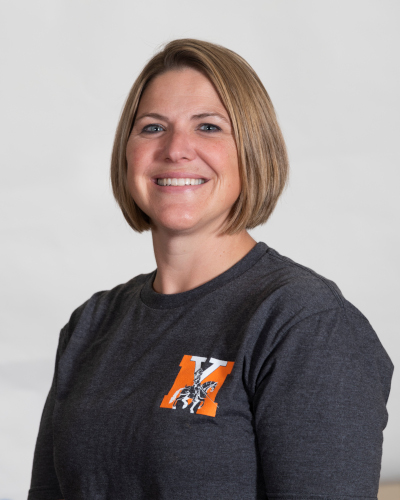
Kelseyville Unified School District Superintendent Dr. Nicki Thomas.
KELSEYVILLE, Calif. — While summer is a great time for relaxation, it can also be used to help students improve their academic skills, build social connections and prepare for the upcoming school year.
The following programs offer great opportunities for students — and most are free of charge.
Summer School (Kindergarten to Grade 12)
Elementary and middle school students (K-8) can attend summer school at Kelseyville Elementary School to strengthen foundational skills in core academic subjects including language arts and mathematics. All students are welcome regardless of their academic standing for either enrichment or additional practice.
Kelseyville High School has summer credit recovery for students in Grades 9-12 who need to complete a required course for graduation in language arts, mathematics, social studies, history, health, and geography. Summer school at the high school is also open to students interested in enrichment or brushing up on foundational skills. I’m really excited about the college-level welding course taught by Mr. Zeni (who was just named Lake County teacher of the year!).
Summer school programs are offered weekday mornings July 7 through August 1. Breakfast and lunch provided daily at no charge. For details, reach out to school counselors.
EDMO Summer Camp (Kindergarten to Grade 8)
For all-day fun, elementary and middle school students can enjoy the EDMO Summer Camp. It begins June 23 and goes through Aug. 1, and runs weekdays from 8 a.m. to 5 p.m. Breakfast and lunch provided daily at no charge.
The program is STEAM-focused with hands-on science, technology, engineering, art, and mathematics activities. K-8 students who attend summer school for half-day can finish their day attending EDMO Summer Camp.
The program is offered at three locations:
- TK–second graders: Kelseyville Elementary.
• TK–fifth graders: Riviera Elementary.
• Third through eighth graders: Mountain Vista Middle School.
For more information, visit kvusd.org/programs-services/student-programs/summer-programs.
Mendocino College Summer Scholar Program
Finally, we have the Mendo College Summer Scholar Program. This program enables incoming students in Grades nine to 12 to complete up to two courses during the six-week summer session from June 16 to July 24 from 9 a.m. to 3 p.m. Classes will be taught at the Mendocino College Lake Center in Lakeport.
Students enrolling in the program have the opportunity to earn a $300 stipend by completing two courses and one lab class with a grade of C or higher. The program is also taking students on a college trip, which includes transportation and meals. Interested students should speak to their high school counselor.
Summer baking and cake decorating class
Kelseyville High School Culinary Arts instructor Tami Cramer is also offering a two-week baking class for incoming KVUSD 9-12th graders, weekday mornings from July 7 through 18. There’s no written work and students can earn elective credits! For details, contact Mrs. Cramer at
Boys and Girls Basketball Camp
For kids interested in athletics, we’re offering students in Grades 1-8 a basketball camp where they can learn the fundamentals of basketball, practice teamwork, and have tons of fun!
The camp will be held June 23 to 27 in the Kelseyville High School Gym. Students in Grades 1-4 will attend in the morning (8 to 11 a.m.), and students in Grades fifth through eighth will attend in the afternoon (12 - 3 pm). For details, contact Coach Russel at
Library hours
Finally, we plan to offer library hours at all of our comprehensive schools: Kelseyville High School, Mountain Vista Middle School, Kelseyville Elementary School, and Riviera Elementary School. We are still working on the details but basically, our librarians have agreed to open the doors one day a week from 10 am - 2 pm for the six weeks of summer. They’re talking about offering story time, reading challenges and more.
Every summer, students who stop reading altogether lose some of the skills they gained during the school year. Making sure all kids have access to books means everyone can read all summer long!
We wish everyone a safe and happy summer full of fun and learning.
Dr. Nicki Thomas is superintendent of Kelseyville Unified School District.
- Details
- Written by: Jordan O’Halloran

Jordan O’Halloran. Courtesy photo.
LAKE COUNTY, Calif. — Ever since I moved to Lake County eight years ago, I’ve had one clear goal: Show up as my true self authentically even if people don’t like it. Even if I don’t like it.
However, with all of the professional jobs I’ve had here, separating the two sometimes would be difficult.
That was until I realized my true love for writing again.
I began taking action to activate my creative side. Taking classes at the Middletown Art Center, meeting other creatives and taking time for solitude. My soul had a push to break out of my shell.
So, I did. I came out with my first novel, “Clean Up on Aisle Three.” The story follows a main character who has bipolar disorder like me and I had put my heart on the line.
I had never publicly discussed having this disorder and the tribulations that come with it. I had never told anyone about the days where I don’t shower, don’t want to be around people, or isolate. I showed the side of me that’s outgoing, empathetic and fully engaged. However, most people don’t realize both of those sides of me can exist together.
As I began to do book events, having my book at the libraries, and selling it local places, the book began to grow traction. I was overjoyed and nervous. People began to ask me how I got the voice of the main character so believable.
I began to admit that Lucy’s experience with her mental health was nearly identical to my own. Like Lucy, I take medications daily, keep my friend group small, and constantly doubt myself. Even when things feel good and okay, I have anxieties of not doing enough or even being enough.
Nonetheless, the last year has shown me my strength. My bipolar sometimes wants to take over and be the driver of my life, but I'm learning more than ever how to deal with those tough days.
Therapy, reminding myself of my accomplishments, seeking connection, and realizing I’m not alone has saved me from spiraling more times than I’d like to admit.
As May comes to an end and it being Mental Health Awareness Month, I’m reminded of how we’re not alone. It’s OK to not be OK. It’s OK if you take an entire day to yourself to sleep all day. It’s OK if all you did today was wake up. Not every day has to be perfect or productive.
Try and remember in those dark moments, you aren’t alone. People love and care about you. Your brain is lying to you and you’re worth infinitely more than anything you feel.
Take care of yourself.
Call a friend.
Eat your favorite food.
Watch your favorite TV show. (I’m partial to Parks & Recreation and Deep Space Nine.)
Locally, you can call Lake County Behavioral Health’s crisis line at 800-900-2075 if you need someone to help.
There’s also plenty of Suicide Prevention Services available:
- North Bay Suicide Prevention Hotline of Lake County: Phone 855-587-6373
- National Suicide Prevention Lifeline: Phone 800-273-TALK (8255).
- Call. Text. Chat. 988 — Suicide & Crisis Lifeline
Take care of yourself first. You deserve a beautiful life. Always.
Jordan O'Halloran is an advocate for mental health and kindness. She lives in Lake County with her partner, cat and roommate.