 How to resolve AdBlock issue?
Opinion
- Details
- Written by: Becky Salato
In June, just a week after celebrating their high school graduation, four friends were out riding dirt bikes in Morgan Valley, a remote part of the county, when two of them came around opposite ends of a blind corner and collided.
Logan was thrown from his bike, landing on his back on a pile of rocks and knocked unconscious. Zach’s foot was sliced open.
As unlucky as this was, there was an element of good fortune. A third friend, Brady, had completed the emergency medical services class at Lower Lake High School, part of the Public Safety Career and Technical Education, or CTE, pathway.
Brady’s training kicked in and he immediately began assessing how much danger his friends were in.
He ran toward Logan, his best friend since childhood, while calling the fire chief, Willie Sapeta, to request that dispatch send emergency medical responders.
Most kids would call 911 — and that would be the right move — but since Logan’s dad was the fire chief (and Brady’s godfather), he called him directly.
Chief Sapeta and his wife, Rachelle, had just finished dinner when the call came in. As soon as Brady said there’d been an accident, Chief Sapeta and Rachelle jumped into action. The chief called for two air ambulances and other emergency support.
Their son, Logan, was well known to many emergency responders because he was an Explorer, a junior fire fighter who accompanies fire fighters on calls to do “mop up” and other support functions.
Once those calls were made, the chief said he threw the phone to Rachelle to keep talking to Brady, and he grabbed his keys so they could meet the emergency vehicles on scene.
In the moments after the accident, Logan was unconscious and had snoring respirations, meaning his tongue could block his airway. Brady moved Logan’s jaw to open the airway and then held Logan in a “c-spine,” a position that restricted his mobility to prevent further injury.
Brady instructed the other uninjured friend, Michael, to check on Zach’s foot. While Zach’s injury was serious, it didn’t appear life threatening, so Brady asked Michael to hold Logan still while he performed a spinal step-up check. As Brady ran his fingers along Logan’s spine, he felt a bump that could indicate a spinal injury.
Logan began to regain consciousness, but Michael kept him still and didn’t let him stand. According to the doctors who cared for Logan later, this prevented Logan from becoming a paraplegic.
Once emergency responders arrived on the scene, Logan and Zach were evacuated by medical helicopter: Logan to UC Davis Medical Center and Zach to a hospital in Santa Rosa before also being transported to UC Davis. Thankfully, both boys are expected to make a full recovery.
Chief Sapeta has been a firefighter for 45 years, so he has seen plenty of serious injuries, but he said he now has a whole new appreciation for what people go through when this kind of accident involves your loved one, especially your child.
As he talked about how thankful he was that Brady kept his head and used his training, we got to talking about the partnership between Konocti Unified School District and the Lake County Fire District.
Chief Sapeta has been supporting the school district since long before I arrived. For 20 years, he provided Carlé students with hazardous material training, so they could be certified by the California Specialized Training Institute and work in the field. After that, we began the emergency services training.
A big part of why the emergency medical training provided through Lower Lake High School is so successful is because Fire Battalion Chief Marc Hill works with CTE teacher Miriam Garner to teach many of the classes, imparting skills he has acquired during his many years of experience as a firefighter.
Chief Sapeta is a huge advocate for the kind of hands-on training that provides students with a way to support themselves and give back to whatever community they’re a part of–and becoming a certified emergency medical technician, or EMT, opens a lot of doors.
He mentioned that in addition to working on a fire crew or ambulance, EMTs can work in hospitals and other medical settings, as well as on location where accidents are more likely to happen like Hollywood sets where stuntmen are working, and oil rigs where the nearest emergency room isn’t anywhere close. Chief Sapeta has several Lower Lake High School graduates working for him at the fire department.
CTE is a great example of how education is continually evolving toward more experiential learning. Konocti Unified is expanding in this direction, and so are many other districts.
Traditional classroom learning remains valuable, of course, but as our world keeps changing, so do the needs of our students. Providing students with real-world scenarios and allowing them to test their skills outside the classroom is incredibly valuable.
The story of what happened to Logan and Zach illustrates this. This accident could have had a very different outcome. If the boys didn’t have such deep friendships (reinforced by their time together in school), if they didn’t have this emergency response training (made possible through community partnerships), things could have gone very differently. I am so grateful for a community that embraces our students and helps them grow and learn, and I am so happy this story had a happy ending.
As a postscript, after having completed their emergency medical training at Lower Lake High School, Brady and Logan plan to pursue careers in public safety, Brady as a firefighter here in Lake County and Logan as a heavy machine operator for Cal Fire.
In recent weeks, Brady received notice that he passed the national emergency medical technician certification exam, and he is now in the process of obtaining the driver’s license endorsement that will allow him to drive an ambulance while he continues his training.
Everyone involved agrees that even if you don’t plan to go into public safety as a career, it’s a great idea to take a first aid/CPR class.
As Brady said, “You just never know what’s going to happen.”
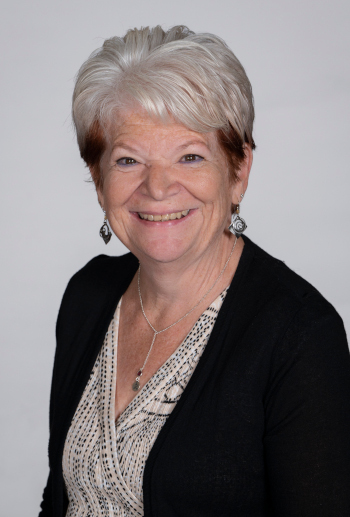
Becky Salato is superintendent of the Konocti Unified School District.
- Details
- Written by: Paul Barthel
Most often, my public reflections center on the fair and ethical treatment of animals. That cause has shaped much of my work and my voice. But today, I step away from that familiar ground to reflect on something both personal and tragically widespread.
Until recently, I had never encountered the term polypharmacy. I did not know it referred to the practice of prescribing multiple psychiatric medications simultaneously, nor that it could carry profound — and sometimes dangerous — consequences. I learned the word only after my partner, Nancy, took her own life at the age of 54.
Her death opened my eyes to a crisis that affects countless families across the country: the quiet, often unseen toll of polypharmacy — the layering of one psychiatric drug upon another until dependence, confusion, and risk overtake the promise of healing. Millions now live at the mercy of pharmaceutical regimens that may stabilize for a time but too often destabilize in the long run.
In the weeks since, I have been searching for answers — about her care, her prescriptions, and whether the very treatments intended to help her may have contributed to her death.
Reviewing her records and psychiatric evaluations was sobering. I found a succession of potent medications — antidepressants, benzodiazepines, mood stabilizers — prescribed by different providers across multiple facilities, often with little regard for her prior usage, the cumulative effects, or the potential for dangerous drug interactions.
Each new prescription seemed to exist in isolation, detached from her broader history and the complexity of her condition.
Over time, Nancy developed a dependence on the very medications meant to manage her symptoms. When one physician declined to renew a prescription, she would sometimes turn — desperately — to another provider or hospital. This cycle became a struggle for stability that remained elusive.
At times, she endured it in silence — sleeping for days, withdrawing from loved ones, isolating herself from family and support. For those of us who loved her most deeply, the weight of her absence is compounded by lingering questions: what more could we have done, and might her death have been preventable?
The last months of her life illustrate the problem. After she broke her leg, Nancy was prescribed an opioid painkiller. Was there any careful consideration of how this would interact with her psychiatric medications, or whether it could destabilize her? If there was, we never heard it. The reflexive answer was always another pill.
Research confirms what we witnessed firsthand. Polypharmacy significantly increases the risk of adverse drug events, particularly in fragmented systems where patients see multiple prescribers. The FDA’s own black box warnings note that certain antidepressants may increase suicidal ideation, especially during dosage changes. Yet in practice, these warnings are too often minimized or ignored.
We can do better. Four reforms could save lives:
Mandatory interaction reviews. Every psychiatric prescription should be screened for drug–drug interactions before initiation and at every refill.
Enhanced informed consent. Patients and families deserve clear explanations of both benefits and risks, including the possibility of worsening suicidal thoughts.
Integrated care models. Medication management should be one part of a broader treatment plan that includes non-drug supports.
Continuity of care. Patients need a consistent primary prescriber or care coordinator to reduce dangerous fragmentation.
Psychiatric medications can save lives — but they can also endanger them. My partner’s story raises urgent questions: Why are we so quick to add medications without fully considering their long-term impact? Why is accountability so rare when harm occurs?
I cannot bring Nancy back. But I can use her story to demand a better system—one where prescribing psychiatric drugs is treated with the same rigor and caution we apply to other life-threatening conditions.
Lives depend on it.
Paul Barthel lives in Cary, Illinois.
- Details
- Written by: DR. BECKY SALATO
LOWER LAKE, Calif. — A new school year is more than just a date on the calendar; the new year offers the incredible power of a fresh start.
It’s a chance to begin again with purpose, energy and hope. This is when learners and educators (and all who support them) can focus on new goals to reach, new friendships to build, new challenges to grow from, and new memories to make.
Whether you're teaching, learning, leading, or supporting, each person plays a vital role in shaping a positive, empowering, and inclusive school community.
For students, the new year brings:
• A fresh opportunity to discover passions and talents.
• The chance to make new friends and strengthen old ones.
• A clean slate to set goals, try new things, and grow — both in and out of the classroom.
For staff, the new year brings:
• Renewed purpose in guiding and inspiring young minds.
• New strategies, ideas, and tools to support student learning.
• A chance to collaborate, lead, and grow professionally.
Most of our principals and assistance principals have returned and they are excited to start the new year. We have new leaders at Lower Lake High School, or LLHS, and Lower Lake Elementary School, or LLES, people with passion and new ideas.
LLHS: New assistant principals
At the high school, we have a total of three assistant principals, two of whom are new to us. We’re pleased to welcome back Gregory Fister, who is a constant presence all over campus, joking with students and staff, and providing support to all. Joining him will be Kaila Budwell and Valerie Jordan.
Kaila Budwell is an LLHS alumna. After teaching math in the Bay Area, she is ready to return to her community and step into a leadership role. She’ll focus on supporting math and science teachers and helping students work through behavior challenges.
Valerie Jordan is a veteran school administrator who worked most recently in Santa Rosa. She’ll focus on English language arts and social sciences, as well as working on master scheduling and connecting with our counselors. Like Kaila, she’ll also help students work through behavior challenges.
The role of an assistant principal is to promote learning and social-emotional health, as well as efficient operations, by making sure our campus is safe and welcoming for all. APs help teachers with instructional questions and classroom management challenges; they help students with all sorts of issues; and they organize and attend school activities, from assemblies to sporting events.
LLES: New principal
At Lower Lake Elementary School, we have a new principal: Brad Coscarelli. Brad is a veteran principal from Santa Rosa who has worked at both the elementary and secondary levels, giving him a broad understanding of how students need to be prepared at each stage of their educational journey.
Brad is all about community and family, and he is not afraid to dive into the deep end. In Santa Rosa, he was responsible for re-opening an elementary school after it was closed due to a wildfire. He has worked in bigger schools and districts, so he is well-positioned to take on the leadership of our biggest elementary school.
New year is here
I know some people say summer was too short. The truth is, I can’t wait to have the students back. They fill our campuses with energy, laughter and possibilities. We want to help each student grow into their potential academically, socially, and emotionally.
You may see the “Konocti Cares” logo around our campuses and highlighted in our activities. This is Konocti’s way of embracing the wonderful lessons of the Blue Zones Project, supporting staff, students, families, and community members as we all strive to live happy, fulfilled lives.
Our high school campus renovation reflects several Blue Zones principles, and one that I like the best is that we now have a beautiful courtyard in the center of school, a quad that encourages students to gather together, to feel a sense of belonging. The modernization of our campus also enhances safety and gives students a campus to be proud of.
As your student gets back into the swing of things, there are many things you can do to help them prepare for a good year. One is to encourage kids to embrace change, to see it as an opportunity–not the end of the old, but the beginning of the new. Remind them that it’s natural to feel nervous, and that most of their classmates are, too. They are not alone. Ask your student what they are most excited about and what they want to learn this year, inside and outside the classroom. Help them focus on the possibilities that bring a smile to their faces.
I’ll tell you what brings a smile to my face: the possibility of creating learning environments where everyone feels valued, challenged, and supported. I remain committed to getting better at getting better, always looking to the next opportunity. Let’s walk into this new year with courage, curiosity, and care (Konocti Cares) — for ourselves and for one another. Let’s make this year one of curiosity, kindness, resilience, and growth. The possibilities are endless—and they start with us.
Dr. Becky Salato is superintendent of Konocti Unified School District.
- Details
- Written by: Dr. Dinelli Monson
As kids are back at school and eager to get to know their new teachers, many families may still be trying to squeeze in some of the last details to be sure their kids are ready to succeed in their new school year.
A few important details for parents to also check in on are their children’s mental and physical well-being.
A child’s health can influence their growth, development and academic performance. To help set children and teens up for success this school year, it’s important to stay up to date with wellness appointments, including annual physicals, dental checkups, comprehensive eye exams and mental health assessments.
Here are a few things parents can consider to help support their children’s well-being.
It’s OK to talk about mental health
Mental health challenges are on the rise among young people, driven by factors like academic pressures, relationships, social media, and broader social and economic inequalities. Age, race and gender also shape how these issues manifest and affect young people.
While it's beneficial for parents to discuss health matters with their children throughout the year, an opportune time arises during the annual back-to-school exam, also known as a well-child visit. This scheduled check-up can serve as a timely platform for addressing various health concerns, including mental health, ensuring that kids are supported holistically as they prepare to return to school.
Data from UnitedHealthcare found that 60% of college students reported encountering behavioral or mental health concerns in the past year. So, even as children grow older and head off to college, be sure to check in on them emotionally, encourage open conversations, and remind your student that help is available.
No matter the age, checking in on your child’s mental health before the school year begins and throughout can help lay the foundation for a more successful and balanced year ahead.
Brush up on dental care for healthy smiles
Cavities are preventable, yet they are the most common chronic disease among children and teens in the U.S. If left untreated, cavities can cause pain that leads to problems learning and speaking, as well as contribute to other long-term health issues. Cavities can also make eating uncomfortable and can affect nutrition and development.
Children, teens and adults should visit a dentist every six months for routine preventive dental care. Dental plans usually cover preventive care, which means you may pay $0 out of pocket for certain covered preventive services if you go to a network provider.
It’s important to know that about 1 in 3 people in the United States have a fear of dental treatment. If you believe your child may experience dental fear or anxiety, speak with their dentist or primary care doctor for support.
Vision screenings can help kids see better
More than 1 in 3 school-age kids in the U.S. are nearsighted. Also known as myopia, nearsightedness can cause issues seeing things in the distance, like the front of the classroom, which may contribute to problems learning. Possible signs of vision issues in kids include frequent eye rubbing or blinking, headaches, or struggling to remember what they have read.
It’s recommended kids get regular eye screenings throughout their school years. Yet, only 38.2% of California children have recently seen an eye doctor. School-based vision screenings or pediatric office visits are valuable. Comprehensive eye exams can detect more complex issues.
Vision plans also usually cover preventive care, including comprehensive eye exams. A vision plan may also provide an allowance to purchase glasses or contacts.
Consider talking with your children’s doctor and scheduling any care visits before school starts. Check with your health plan to see what benefits are available to your family.
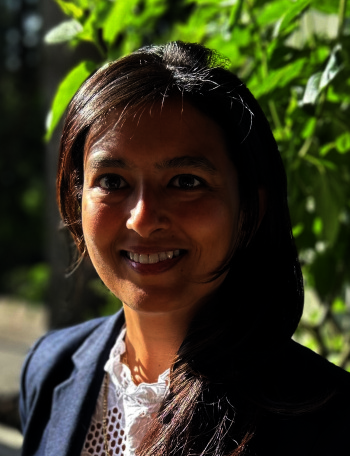
Dr. Dinelli Monson is chief medical officer for UnitedHealthcare of California.