 How to resolve AdBlock issue?
Recreation
- Details
- Written by: Elizabeth Larson
The timber harvest plans are Bear Gulch No. 2, Parlin 17, Chamberlain Confluence, Red Tail, Caspar 500 and Soda Gulch.
Areas where timber operations are occurring will be closed beginning immediately until Nov. 15.
Maps and information regarding the closure have been posted in locations near the timber harvest plans. Area closure is for public and worker safety during timber operations.
This notice is in accordance with Section 1438 and 1439, Title 14, California Code of Regulations.
For additional information, including a map of Jackson Demonstration State Forest, visit www.fire.ca.gov or contact the forest office at 802 N. Main St. in Fort Bragg or 707-964-5674.
- Details
- Written by: Elizabeth Larson
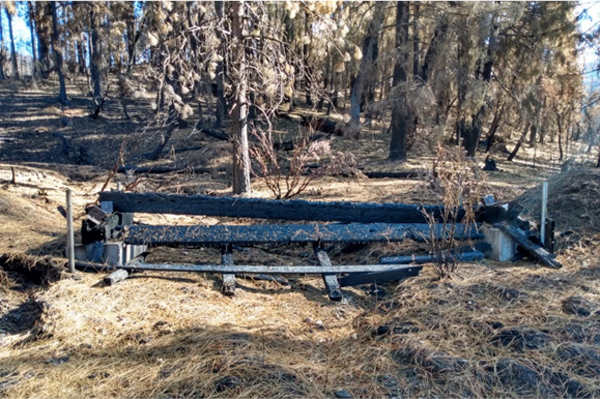
MENDOCINO NATIONAL FOREST, Calif. – Mendocino National Forest staff are seeking input on a proposal to reforest and improve safety around a campground heavily impacted by the 2020 August Complex wildfire.
The Hammerhorn Campground Restoration and Salvage Project would entail removing dead and dying trees around the campground and vicinity roads, as well as preparing and replanting sites not likely to regenerate to previously forested conditions because of high tree mortality.
Mendocino officials issued a letter Friday requesting feedback on the proposed project.
Comments citing specific concerns that are submitted during the comment period allow the commenter legal standing to object to the final decision whether to proceed with the project.
Comments are due by Monday, May 10.
The Hammerhorn Campground is located about 17 miles northwest of Covelo and is adjacent to the Yolla Bolly-Middle Eel Wilderness.
The campground and surrounding area experienced high severity wildfire during the August Complex, resulting in 75 percent or greater tree mortality and vegetation loss.
Dead and fire-damaged trees on up to 250 acres of the campground would be made available for sale through a stewardship agreement, allowing proceeds to be directed back to the area’s rehabilitation.
No actions are proposed within the Yolla Bolly-Middle Eel Wilderness.
While trees presenting hazards to campers and motorists will be the primary focus, patches of high tree mortality within the 250-acre project area could also be logged to make room for future replanting.
A percentage of trees, including those dead, suitable for forest propagation or wildlife habitat will be retained.
A more detailed project description and maps can be found online at https://go.usa.gov/xH2cK.
- Details
- Written by: Kim Shay
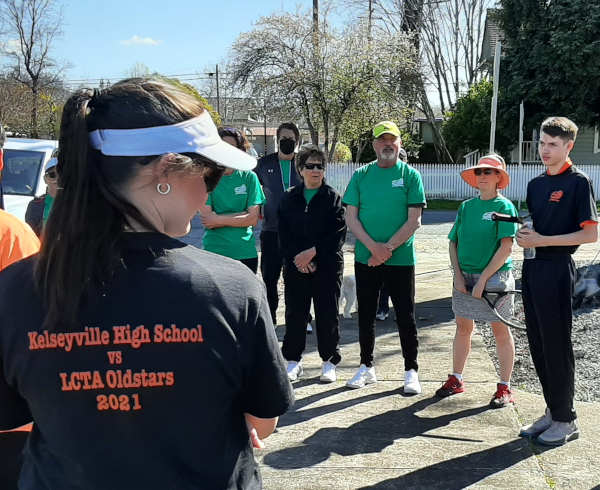
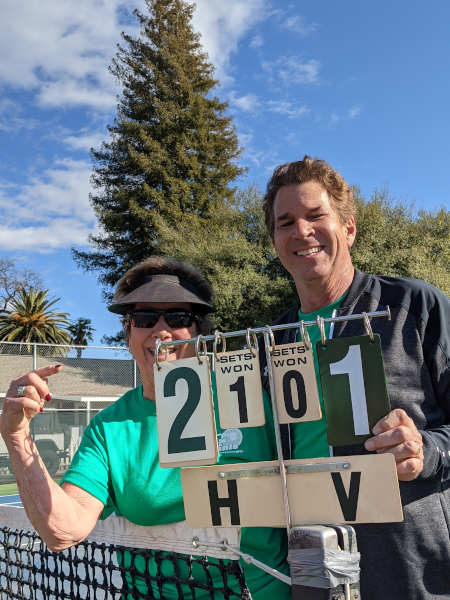
KELSEYVILLE, Calif. – On Thursday, March 25, the Kelseyville High Tennis Team squared off with the Lake County Tennis Association Old Stars.
The young high school tennis players were lined up to meet their much older competitors. This would be their first exhibition game before their season would begin, with their first game on April 20 against Cloverdale, and with the team’s first home game on April 23.
As the Kelseyville High team sized up their competition they must have been thinking to themselves there is not one player on the Oldstars under 40. The Old Stars team sized up the Kelseyville High team and thought to themselves we have our work cut out for us!
Never fear! After nerves calmed down and introductions were completed the players walked onto the courts cool as cucumbers. One watching would have thought both teams had practiced, or had maybe played this game before? Such fun!
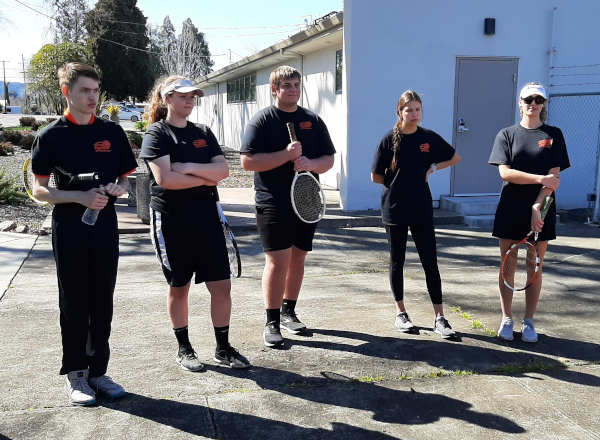
Everyone played great tennis, and the Oldstars gave the Kelseyville High Tennis Team a run for their money. The young people played each match with good skill and great ball placement, and the Oldstars responded stroke for stroke. All who attended – family, friends and tennis lovers – had a wonderful late afternoon of watching some very good tennis.
Of course none of this would have been so enjoyable without the great tennis being played by both teams.
Great job all! And let’s not forget the coaches, Iris Angeleri and Andy Dobusch. They give so freely of their time and talents to shape and make this an outstanding tennis team. The High School Tennis Team will have a wonderful season under their direction.
Way to hang in there Oldstars! Playing against those young high school students was a great way to show that you really are as young as you feel. Tennis anyone?
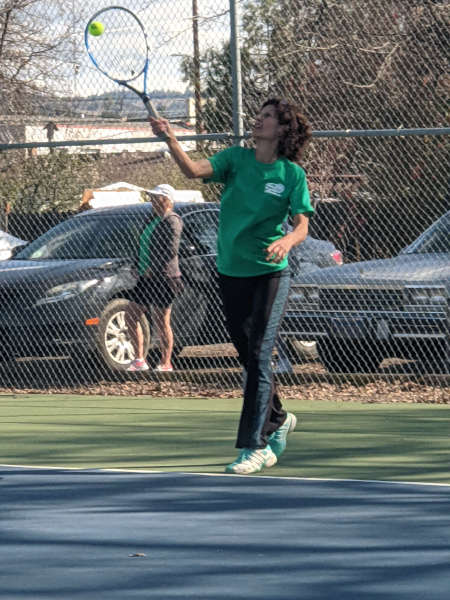
The players and results of the five matches are:
Kelseyville High School Knight Lake County Tennis Association Oldstars
1st Singles: Johnny Rixen Laurie Martin Vargas (w)
2nd Single: LaRue Furlani* Dennis Fay/Roger Duke (w)
3rd Single: LaRue Furlani*(w) David Velasquez
1st Doubles: Hanna Scully and Rylan Lipscomb (w) Madeline Murphy and Chris Welch
2nd Doubles: Maddie Madrykz and Sam Carter Jo Fay and Sandy Orwig (w)
* 3rd Singles player was unable to play therefore, LaRue played in two singles positions
(w) indicates winner
Kim Shay is a member of the Lake County Tennis Association.
- Details
- Written by: California Department of Fish and Wildlife
Oil spill response
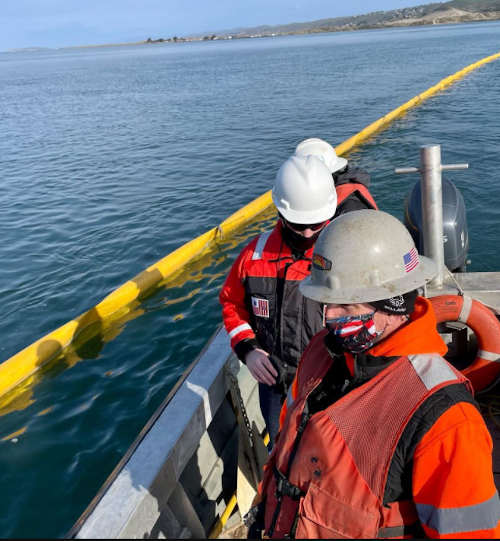
Q: I've been reading news reports about the recent oil spills in the San Francisco Bay Area and learned that the California Department of Fish and Wildlife (CDFW) is the lead state agency handling oil spills. How did the department assume this authority? (Dave)
A: CDFW’s Office of Spill Prevention and Response (OSPR) was established by the Lempert-Keene-Seastrand Oil Spill Prevention and Response Act of 1990. The legislation came on the heels of two major spills, the 1989 Exxon Valdez oil spill in Alaska, in which 11 million gallons of crude oil was released, and the American Trader spill in Orange County in 1990 that resulted in a release of 416,598 gallons of crude oil.
OSPR works to protect and preserve 3,400 miles of shoreline and 7,700 square miles of state waters from petroleum substances. When a spill occurs, OSPR deploys a team of wildlife officers, scientists and oil spill prevention specialists to manage the state’s response. These responders often work within a unified command that includes federal and local agencies, and the responsible party.
OSPR is also the state’s public trustee in protecting, managing and restoring California’s wildlife and habitat after an oil spill.
Disabled veteran
Q: I am a disabled veteran and was wondering if there are any hunts on Grizzly Island in Solano County that I could participate in. (Hal)
A: The Grizzly Island Wildlife Area has a duck blind reserved for those with disabilities each shoot day during waterfowl season. It’s available via CDFW’s Online License Sales and Services website. If nobody claims the blind one hour before shoot time – it becomes available on a first-come, first-served basis to those with disabilities.
There is a separate online reservation application process for mobility-impaired waterfowl hunters. CDFW and the national wildlife refuges it staffs during waterfowl season have dozens of duck blinds throughout northern California reserved just for disabled hunters via this online application process. Our advice would be to not limit yourself just to the one blind at Grizzly Island. Disabled duck blinds at Gray Lodge and Little Dry Creek – among many others – can shoot really well at times. Here’s a link to all of those blinds along with instructions on how to apply along with other entry procedures once the waterfowl season rolls around in the fall: www.wildlife.ca.gov/Hunting/Waterfowl/Disabled-Access.
It would also be a good idea to give the staff at Grizzly Island a call to see just how popular the mobility impaired duck blind is, how it shoots and whether your chances are good at accessing it without a reservation. Grizzly Island staff can be reached at 707-425-3828.
While Grizzly Island hosts some limited, big-game hunts each year – for tule elk in the fall through CDFW’s Big Game Drawing and for wild pig in the spring on its Joice Island Unit through a separate, online drawing – there are no special, mobility-impaired offerings here.
As a disabled veteran, however, you may qualify for CDFW’s Disabled Veteran Reduced Fee Hunting License, which is available at a significant discount to resident and nonresident disabled veterans honorably discharged with a 50 percent or greater service-connected disability.
You might also be eligible for a Disabled Archer Permit, which allows the use of crossbows during California’s archery-only deer seasons (California Code of Regulations, Title 14, section 354(j)). More information is available at CDFW’s Reduced Fee Hunting License and Disabled Entitlements webpage.
Sea urchins
Q: Where can I legally go tide-pooling for sea urchins?
A: The take of invertebrate species in ocean waters is authorized in California Code of Regulations, Title 14, section 29.05 and 29.06. You may take any species of sea urchin in a tidepool as long as it’s not within a marine protected area that prohibits the recreational take of sea urchin. There’s a general bag limit of 35 sea urchin of each species, so for example you could take 35 red urchin and 35 purple urchin in a day. The most frequently harvested species are red and purple urchin, and there’s no minimum size limit for any sea urchin species. Section 29.06 covers special regulations for harvesting sea urchin in Mendocino, Sonoma, Monterey and Humboldt counties where CDFW has increased the bag limit to aid in kelp recovery.
Ocean enhancement
Q: Do I need a saltwater fishing stamp to fish on the Pismo Beach shoreline or would a regular California fishing license work? (Long)
A: A regular fishing license will work. An Ocean Enhancement Validation is required only when fishing in ocean waters south of Point Arguello in Santa Barbara County, per California Fish and Game Code section 6596.1(a). This validation is not required when fishing with a valid one- or two-day fishing license.