 How to resolve AdBlock issue?
Recreation
- Details
- Written by: California Department of Fish and Wildlife
Question: When fishing off the shore of Tomales Bay in Marshall, Marin County, I can only use one rod, right? (Ramon)
Answer: Fishing regulations in Tomales Bay are outlined in the Ocean Sport Fishing Regulations booklet. The number of rods you can use will depend upon what species of fish you are targeting. California Code of Regulations, Title 14, section 28.65 states that any number of hooks and lines may be used in all ocean waters and bays, with these exceptions that could apply in your case:
On public piers, no person shall use more than two rods and lines, two hand lines, or two nets, traps or other appliances used to take crabs (Title 14, section 28.65).
When rockfish, lingcod, cabezon, sculpin, or kelp or rock greenlings are aboard or in possession, where only one line with not more than two hooks may be used (Title 14, section 28.65 (c)).
North of Point Conception, where only one rod and line may be used by each angler fishing for salmon, or fishing from any boat or floating device with salmon on board (Title 14, section 28.65 (e)).
Fishing rights for Native Americans
Question: I’ve heard that since I’m Native American, I can net fish in inland waters like lakes and rivers. Is this true? (Tyler)
Answer: Thanks for reaching out about allowable fishing methods for Native Americans in California. In general, tribal members outside of their home reservation or rancheria are restricted to using the same methods as anyone else fishing in California. California fishing regulations currently only allow for take of fish by hook and line and otherwise prohibit the use or possession of any nets other than dip nets for landing fish within 100 yards of inland waters (streams, lakes, canals, reservoirs) with a few limited exceptions. Tribal members fishing within their home reservation or rancheria may use any methods to fish that are authorized by their Tribe.
How to report poaching and polluting
Question: I recently watched two guys hunting at Colusa National Wildlife Refuge shoot and kill three pintails. I’m positive all three were pintails and I know the limit is one each. Then I saw them at the parking lot and they only had two pintails, so I think they got rid of one before leaving the blind. What’s the best way to report something like this?
Answer: Let’s start with the best way to report what you saw. You’re right, the daily limit for ducks is seven, but within that limit of seven a hunter may only take one pintail. A summary of those regulations is at wildlife.ca.gov/Hunting/Waterfowl. If you saw two hunters shoot three pintails, whether or not it was done by accident, one of them is in violation of an overlimit. That alone justifies a call to CalTIP, our 24-hour poaching and polluting tip line. Be prepared to include the exact location of where you saw the violation occur. National Wildlife Refuges, state Wildlife Areas, and even private duck clubs are big and a detailed location description will help a wildlife officer make contact with the appropriate persons. Otherwise, the physical description of the suspects is usually “waders and full waterfowl hunting camouflage” and that’s what everyone out there looks like! You’ll help us maximize the probability of a wildlife officer making a case if you remain available by phone to help vector them in on the alleged violator.
California Fish and Game Code section 4304 states “No person shall at any time capture or destroy any deer and detach or remove from the carcass only the head, hide, antlers, or horns.” However, it continues to include other acts of waste by stating, “nor shall any person at any time leave through carelessness or neglect any game mammal or game bird which is in his possession, or any portion of the flesh thereof usually eaten by humans, to go needlessly to waste.” Intentionally leaving behind an extra pintail even if accidentally shot would be well within the definition of “carelessness or neglect.” Thus, the situation you described would possibly involve two violations, both misdemeanors.
In the future, if you witness a poaching or polluting incident or any fish and wildlife violation, or have information about such a violation, immediately dial the toll-free CalTIP number (888) 334-CALTIP or (888) 334-2258, 24 hours a day, seven days a week. CalTIP also accepts tips via text and the CalTIP app. If you hunt and fish regularly, we encourage you to use any of these tools to report poachers and polluters.
You can find more information about CalTIP here: www.wildlife.ca.gov/enforcement/caltip.
- Details
- Written by: Elizabeth Larson
The August 2020 LNU-Lightning Complex Fire consumed the entire 21,500-acre Knoxville Wildlife Area and both units of the Cedar Roughs Wildlife Area, which is 414 acres.
The public is asked to remain vigilant of potential hazards such as falling trees and rocks, and to confine use to established old ranch road trails.
Potential for debris flow is high along the northern section of Berryessa-Knoxville Road and in the Long Canyon area during heavy rain events.
To protect public safety, this may prompt subsequent closure of the Knoxville Wildlife Area.
- Details
- Written by: Elizabeth Larson
The BLM and Forest Service intend to use the public input to help craft their grant applications for law enforcement, operations and maintenance and planning efforts to the California State Parks’ Off-Highway Motor Vehicle Recreation Grants and Cooperative Agreements Program.
“Public input is key to informing agency grant applications and fostering continued management of a sustainable program that benefits OHV enthusiasts and protects resources,” said BLM Central California District Manager Chris Heppe. “These virtual meetings are a chance for the public to tell us what improvements they would like to see in their OHV experience on public lands.”
The virtual public meetings will be held via Zoom. Click on the registration link below to receive the meeting details. Please contact the BLM or USFS for reasonable accommodations to participate. Comments may also be submitted electronically using the email addresses below.
Bishop Field Office/Inyo National Forest: Feb. 17 at 5 p.m.
Zoom registration link: https://blm.zoomgov.com/meeting/register/vJIsc-qorz4rEuMc13vyERHSZQpJ5G90h-0
Comment by email:
For specific questions, call Jeff Starosta, BLM at 760-872-5000 or Jeremy DeCell, USFS at 760-924-5536.
Ukiah Field Office: Feb. 18 at 5:30 p.m.
Zoom registration link: https://blm.zoomgov.com/meeting/register/vJItdu-qrjsrH8c_XVzMOE_p5yiX37Cc1WA
Comment by email:
For specific questions, call Ashley Poggio, BLM at 707-468-4000
Bakersfield Field Office: Feb. 23 at 6 p.m.
Zoom registration link: https://blm.zoomgov.com/meeting/register/vJItf-irqz8rHgeBK9tcbMvH3GxIZFOdPFU
Comment by email:
For specific questions, call Brie Chartier, BLM at 661-391-6089.
The Off-Highway Motor Vehicle Recreation Grants and Cooperative Agreements Program supports well-managed off-highway vehicle recreation in California by distributing more than $35 million annually collected from gas tax, entrance fees and OHV sticker registrations. Cities, counties, districts, federal and state agencies, educational institutions, federally recognized Native American tribes and nonprofit entities can apply for funds to develop, maintain and restore trails; provide law enforcement; and offer safety and training for riders.
Preliminary applications must be submitted to OHMVR Division no later than March 1, and will be available on the OHMVR Division’s website at www.ohv.parks.ca.gov/ for additional public review and comment, March 2 to May 3.
The website will provide detailed instructions for accessing the preliminary applications and submitting comments.
Public comments should be submitted to both the OHMVR Division and to the appropriate BLM field office by May 3, 2021.
- Details
- Written by: California Department of Fish and Wildlife
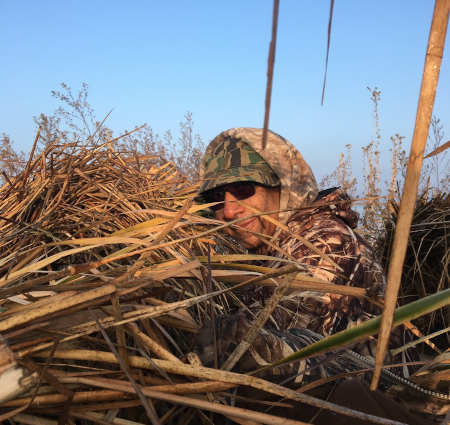
The California Department of Fish and Wildlife will reopen and staff nearly two dozen of the state’s most popular waterfowl hunting areas to welcome veterans and active military personnel for a special hunt weekend Feb. 13 and 14.
The first Veterans and Active Military Waterfowl Hunting Days take place the second weekend in February throughout the balance of the state, southern San Joaquin Valley, and Southern California waterfowl zones on both private property and public land for eligible hunters.
Species and daily bag limits are the same as the regular season with the following exceptions: Brant are not open to take and geese are not allowed to be taken in the balance of state zone on these days.
In addition to a valid California hunting license, California duck validation, federal duck stamp and Harvest Information Program validation, any person participating in these hunts must possess and present upon demand verification of eligibility.
Acceptable verification includes: a Veteran ID Card, military ID card for active duty personnel, or a state-issued driver license or ID card with veteran designation.
Qualifying veterans are those defined in Section 101, Title 38, of the United States Code. Absence of verification may subject the hunter to citation.
Among those public areas reopening for Veterans and Active Military Waterfowl Hunting Days: The Little Dry Creek Unit of the Upper Butte Basin Wildlife Area, Colusa National Wildlife Refuge, Delevan National Wildlife Refuge, Sacramento National Wildlife Refuge, Sutter National Wildlife Refuge, Grizzly Island Wildlife Area, Gray Lodge Wildlife Area, Kern National Wildlife Refuge, Los Banos Wildlife Area, Mendota Wildlife Area, Merced National Wildlife Refuge, San Luis National Wildlife Refuge, North Grasslands Wildlife Area, San Jacinto Wildlife Area, Volta Wildlife Area, Wister Unit of the Imperial Wildlife Area and Yolo Bypass Wildlife Area.
A wildlife area pass is required to hunt on Type A and Type B state-operated wildlife areas and national wildlife refuges during the hunt weekend. These items are not available for sale at hunter check stations and must be purchased ahead of time. All 2020 Type A and Type B Wildlife Area Season Passes and Type A One and Two-Day Wildlife Area Passes will be accepted during the hunt weekend. A Type A or Type B Season Pass is required to hunt on Type B Wildlife Areas.
As of Feb. 1, overnight camping is once again allowed on state-operated wildlife areas and federal refuges reopening for the Youth Waterfowl Hunting Days Feb. 6-7 and the Veterans and Active Military Waterfowl Hunting Days Feb. 13-14. Please check with the individual property for entry procedures, specific details and other regulations.
Waterfowl hunters are strongly encouraged to review the 2020 CDFW Wildlife Area Operational Changes due to COVID-19 webpage prior to visiting any state-operated wildlife area or refuge in order to understand all required health and safety practices in place to help protect visitors and staff. Waterfowl hunters are further advised to check with the individual property they are planning to hunt for specific entry procedures, details and other regulations.
Below are general COVID-19 safety guidelines to reduce the risk of exposure to the virus in the outdoors:
– Stay local: Stay close to home during this pandemic period. If you or anyone in your household is feeling sick, please remain at home and plan your trip for another time.
– Plan ahead: The ongoing pandemic response continues to be dynamic. Prior to leaving home, check to ensure your destination is open, if parking is available and what visitor guidelines may be in effect.
– Stay safer at 6 feet: No matter the recreational activity, maintain a physical distance of six feet or more. Those camping together should only include people within your immediate household. This means no guests or friends, and no gatherings or parties.
– Keep clean: Be prepared as not all services may be available. Restrooms may be unavailable or closed. Bring soap/hand sanitizer. Please pack out all trash.
– Stay covered: The state requires you to wear a face covering when you cannot maintain a physical distance of six feet or more. Individuals must have a face covering with them at all times.