
Recreation
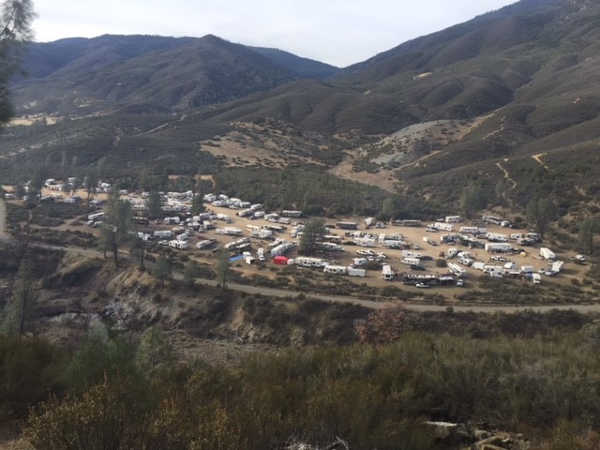
WILLOWS, Calif. – The Mendocino National Forest (MNF) is seeking input on the forest’s upcoming grant applications for the state’s 2017-2018 grant cycle.
These grants will support ongoing Off-Highway Vehicle (OHV) law enforcement management activities involving education, resource protection and enforcement as well as ground operations such as maintaining trails and equipment, operating water systems and monitoring trail conditions.
The state of California Department of Parks and Recreation and the MNF have maintained a successful partnership for over 30 years.
This partnership has provided funding assistance for OHV recreation on National Forest System lands through the California OHV Grants and Cooperative Agreements Program.
Public participation is a requirement of the fund allocation process and is an important part of the forest’s OHV program.
The MNF offers over 200 miles of designated OHV trails, providing exciting riding opportunities for a wide range of ability levels and vehicle types.
In addition, more than 1,300 miles of roughly graded roads are available for use by OHV enthusiasts.
“We appreciate your support and comments on our grant request. Your input regarding the Forest’s application for state OHV grant funding for the current Grants and Cooperative Agreements cycle is very important and will help the state determine the level of funding to provide the MNF for OHV management activities,” said Forest Engineer Shannon Pozas.
In order to view and comment on the MNF’s preliminary grant application, please visit the state of California Web site at www.ohv.parks.ca.gov then click on the grants tab.
Additionally, a link to the state’s website may be found on the forest Web site at www.fs.usda.gov/mendocino.
Comments may be provided between March 6 and April 2, 2018.
Instructions for providing comments can be found on the state of California Web site.
- Details
- Written by: Editor
Question: Is it legal to catch sunfish and use them as live bait for bigger fish? What kind of live bait can you use in freshwater? (Anonymous)
Answer: Those are seemingly simple questions, but the answers are complicated and detailed.
The basic answer is: it depends.
It depends on the California Sport Fishing District where you will be fishing, the individual body of water you plan to fish and the species of live bait you intend to use.
For starters, review the “Bait Regulations for Inland Waters” published in the 2017-2018 California Freshwater Sport Fishing Regulations.
On page 2 of the regulations booklet, you’ll find a map of the seven different California Sport Fishing Districts. Each sport fishing district will have its own additional regulations on what kind of live bait is allowed along with water-specific, area-specific and bait-specific regulations.
There are variables between districts to authorize or prohibit movement of live fish from the location where captured so pay close attention.
In the Valley Sport Fishing District, for example, which covers all or parts of 25 counties in the middle part of the state, live or dead fin fish (which includes sunfish) generally cannot be used as bait (California Code of Regulations Title 14, section 4.20).
However, there are exceptions to the general prohibition, and certain waters where live fin fish lawfully caught can be used for live bait in the waters where they were caught (CCR Title 14, section 4.20(a)-(f)).
In the Southern Sport Fishing District, by contrast, which covers all or part of seven Southern California counties, sunfish may never be used as live bait though some other fish species may be used (CCR Title 14, section 4.10).
So it’s imperative to check the Bait Fish Use regulations in the sport fishing district you plan to fish before using any live bait.
All of these regulations are available in the 2017-2018 California Sport Fishing Regulations booklet.
Catching grass shrimp for bait?
Question: My friend and I recently found out how to catch grass shrimp for bait, and we are wondering what the regulations are. I see on the CDFW Web site that the limit is 5 pounds. Does that mean we can take 5 pounds of grass shrimp home alive?
I also saw a commercial license for harvest of grass shrimp. Would we need that as well? We don’t plan on selling them. We just want to use them for fishing as they are larger than store-bought ones and native to the area. (Pean S.)
Answer: Congratulations on your new skill. Catching and fishing with your own bait, where legal to do so, adds yet another dimension to the fishing experience.
Grass shrimp – also known as bay shrimp – are an effective and popular bait in some areas. One of the reasons why they can be so effective when used in the area where caught is that they are most likely a natural food preference of the target fish.
Grass shrimp are crustaceans, and a sport fishing license is required of any person who is 16 or older to take any kind of crustacean in California, except when taken from a public pier in ocean or bay waters.
You do not need a commercial fishing license or shrimp permit since the grass shrimp are for your own recreational use.
You are correct in that the sport fishing limit is five pounds per angler (CCR Title 14, section 29.86). Grass shrimp may be kept and used alive or dead as the law makes no distinction.
Please note that there are several restrictions and regulations on the gear and methods that can be used to take grass shrimp and other crustaceans (CCR Title 14, section 29.80).
These regulations can be found on pages 36-37 of the 2017-2018 California Saltwater Sport Fishing Regulations booklet.
We wish you the best of luck and encourage you to teach others the skills you have developed to share a more holistic fishing experience.
What is a ‘resident?’
Question: I just bought a fishing license. How do the regulations define who a “resident” is in reference to buying a fishing license? (Michael)
Answer: Section 70 of the Fish and Game Code defines “resident” as any person who has resided continuously in the state of California for six months or more immediately prior to the date of his application for a license or permit, any person on active military duty with the Armed Forces of the United States or auxiliary branch thereof, or any person enrolled in the Job Corps established pursuant to section 2883 of Title 29 of the United States Code.
If you have a question you would like to see answered in the California Outdoors Q and A column, email it toThis email address is being protected from spambots. You need JavaScript enabled to view it. .
Answer: Those are seemingly simple questions, but the answers are complicated and detailed.
The basic answer is: it depends.
It depends on the California Sport Fishing District where you will be fishing, the individual body of water you plan to fish and the species of live bait you intend to use.
For starters, review the “Bait Regulations for Inland Waters” published in the 2017-2018 California Freshwater Sport Fishing Regulations.
On page 2 of the regulations booklet, you’ll find a map of the seven different California Sport Fishing Districts. Each sport fishing district will have its own additional regulations on what kind of live bait is allowed along with water-specific, area-specific and bait-specific regulations.
There are variables between districts to authorize or prohibit movement of live fish from the location where captured so pay close attention.
In the Valley Sport Fishing District, for example, which covers all or parts of 25 counties in the middle part of the state, live or dead fin fish (which includes sunfish) generally cannot be used as bait (California Code of Regulations Title 14, section 4.20).
However, there are exceptions to the general prohibition, and certain waters where live fin fish lawfully caught can be used for live bait in the waters where they were caught (CCR Title 14, section 4.20(a)-(f)).
In the Southern Sport Fishing District, by contrast, which covers all or part of seven Southern California counties, sunfish may never be used as live bait though some other fish species may be used (CCR Title 14, section 4.10).
So it’s imperative to check the Bait Fish Use regulations in the sport fishing district you plan to fish before using any live bait.
All of these regulations are available in the 2017-2018 California Sport Fishing Regulations booklet.
Catching grass shrimp for bait?
Question: My friend and I recently found out how to catch grass shrimp for bait, and we are wondering what the regulations are. I see on the CDFW Web site that the limit is 5 pounds. Does that mean we can take 5 pounds of grass shrimp home alive?
I also saw a commercial license for harvest of grass shrimp. Would we need that as well? We don’t plan on selling them. We just want to use them for fishing as they are larger than store-bought ones and native to the area. (Pean S.)
Answer: Congratulations on your new skill. Catching and fishing with your own bait, where legal to do so, adds yet another dimension to the fishing experience.
Grass shrimp – also known as bay shrimp – are an effective and popular bait in some areas. One of the reasons why they can be so effective when used in the area where caught is that they are most likely a natural food preference of the target fish.
Grass shrimp are crustaceans, and a sport fishing license is required of any person who is 16 or older to take any kind of crustacean in California, except when taken from a public pier in ocean or bay waters.
You do not need a commercial fishing license or shrimp permit since the grass shrimp are for your own recreational use.
You are correct in that the sport fishing limit is five pounds per angler (CCR Title 14, section 29.86). Grass shrimp may be kept and used alive or dead as the law makes no distinction.
Please note that there are several restrictions and regulations on the gear and methods that can be used to take grass shrimp and other crustaceans (CCR Title 14, section 29.80).
These regulations can be found on pages 36-37 of the 2017-2018 California Saltwater Sport Fishing Regulations booklet.
We wish you the best of luck and encourage you to teach others the skills you have developed to share a more holistic fishing experience.
What is a ‘resident?’
Question: I just bought a fishing license. How do the regulations define who a “resident” is in reference to buying a fishing license? (Michael)
Answer: Section 70 of the Fish and Game Code defines “resident” as any person who has resided continuously in the state of California for six months or more immediately prior to the date of his application for a license or permit, any person on active military duty with the Armed Forces of the United States or auxiliary branch thereof, or any person enrolled in the Job Corps established pursuant to section 2883 of Title 29 of the United States Code.
If you have a question you would like to see answered in the California Outdoors Q and A column, email it to
- Details
- Written by: California Department of Fish and Wildlife





 How to resolve AdBlock issue?