 How to resolve AdBlock issue?
News
- Details
- Written by: LAKE COUNTY NEWS REPORTS
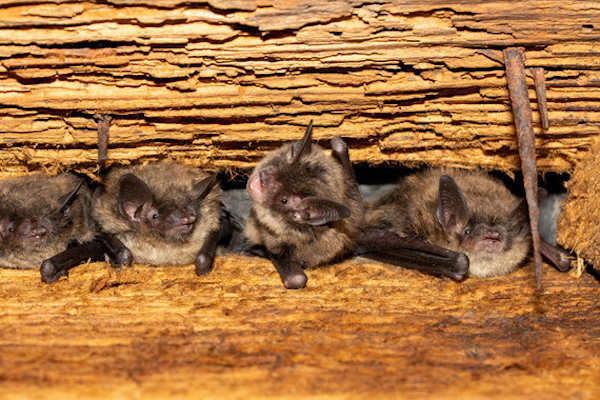
The fungus that causes white-nose syndrome in bats has been detected in several counties across California this year, although bats with visible signs of the disease have yet to be observed in the state.
White-nose syndrome has killed millions of bats across North America and decimated entire colonies.
Hibernating bats like little brown myotis, Yuma myotis and cave myotis are especially vulnerable.
While white-nose syndrome is often fatal to hibernating bats, it does not infect humans, pets, livestock or other wildlife.
White-nose syndrome develops when the fungus Pseudogymnoascus destructans invades the skin cells of bats, resulting in damage to delicate wing membranes.
The infection typically appears as white fuzz on the faces of infected bats, giving the syndrome its name.
Bats with white-nose syndrome often end winter hibernation early, when water and insect prey resources are scarce, causing them to deplete their fat reserves and become dehydrated. As a result, infected bats often perish.
In 2023, the California Department of Fish and Wildlife, or CDFW, first confirmed the definitive presence of the fungus in a bat roost in Humboldt County.
In 2024, the fungus was also confirmed to be present in Sutter, Placer, Amador and Inyo counties.
Inconclusive laboratory results suggest the fungus may also be present in Trinity, Siskiyou, Shasta, Plumas, Alpine, San Diego, and San Bernardino counties.
Additional results are still pending for several other counties around the state.
The fungus has been detected on several bat species in California, including the little brown myotis, Yuma myotis, long-legged myotis, big brown bat, Mexican free-tailed bat and Western red bat.
This is the first time a Western red bat has been reported with presence of the fungus. The positive sample was returned from a female bat captured on May 9, 2024, in Sutter County.
Both Western and Eastern red bats occur in California and can be difficult to differentiate, so CDFW used genetic sequencing to confirm this individual as Western red bat (Lasiurus frantzii, previously recognized as L. blossevillii).
While white-nose syndrome has not yet been observed in any bat in California, the presence of the fungal pathogen suggests the disease could manifest in California’s bats within the next few years. Such progression has been observed in other states, as the fungus and disease have been spreading across North America since discovery in 2006.
The fungus was first detected on the West Coast in 2016 when it was discovered on a bat in King County, Wash.
While the fungus is primarily spread from contact between bats, humans can unintentionally spread it as well. People can carry fungal spores on clothing, shoes or recreation equipment that has come into contact with the fungus at bat roosts.
To learn more about limiting the spread of white-nose syndrome, see the National White-nose Syndrome Decontamination Protocol, which was updated in March 2024.
Biologists with CDFW, the National Park Service and U.S. Fish and Wildlife Service have been sampling California’s bats for the presence of the fungus and clinical signs of white-nose syndrome since 2016 in support of national surveillance efforts led by the U.S. Geological Survey National Wildlife Health Center.
When bats at monitoring sites emerge from hibernation each spring, biologists swab their faces and wings to test for the fungus. Swabs are analyzed by the USGS National Wildlife Health Center and the Pathogen and Microbiome Institute at Northern Arizona University.
Sustained efforts to monitor bat populations will be critical to understanding and managing this devastating disease. CDFW and its partners will continue conducting white-nose syndrome surveillance and bat population monitoring across the state to assess potential impacts of the disease and inform research and management actions.
The U.S. Fish and Wildlife Service leads the collaborative national response effort for white-nose syndrome through which scientists are continuing to develop and test innovative tools to manage the disease.
California is home to 25 species of bats. A single bat can eat thousands of insects each night. California’s bats keep insect populations in check, benefiting rural, suburban and urban communities as well as a wide variety of natural landscapes that range from forests to deserts to grasslands.
The pest control services that bats provide also protect crops and benefit California’s agricultural economy — the largest in the nation. Across the country, bats contribute approximately $3.7 billion worth of insect pest control for farmers each year and their guano can be used as fertilizer to improve soil health. Robust bat populations are vital to a healthy environment and economy.
CDFW urges people to not handle wildlife, especially dead wildlife or individuals that appear sick. If you find sick or dead bats, or notice bats acting strangely, please report your sighting. Bats flying or roosting outside during the winter is an example of noteworthy behavior that can sometimes, but not always, be associated with white-nose syndrome.
You can help watch for white-nose syndrome in California by reporting bat sightings to CDFW here.
For more information about white-nose syndrome, visit https://www.whitenosesyndrome.org/.
- Details
- Written by: Elizabeth Larson
The Employment Development Department, or EDD, said Lake County had a 5.5% unemployment rate in September, down from 6.1% in August. The county’s September 2023 rate was 5.2%.
In California as a whole, unemployment remained at 5.3% in September, the EDD said. The state’s September 2023 rate was 4.9%.
Nationally, the jobless rate in September was 4.1%, compared to 4.2% in August and 3.8% in September 2023, according to the US Bureau of Labor Statistics.
In Lake County in September, there were 1,600 unemployed people, down from 1,760 in August, according to the EDD data.
The EDD said the number of Californians employed in September was 18,364,700, an increase of 2,100 persons from August’s total of 18,362,600 and up 6,300 from the employment total in September 2023.
At the same time, the number of unemployed Californians was 1,031,800 in September, an increase of 11,400 over the month and up 64,100 in comparison to September 2023.
Since May 2020, California has gained 3,164,200 jobs, which averages 59,702 jobs per month. The state’s job market expansion entered 53 months in September 2024, the EDD said.
In September, seven of California's 11 industry sectors gained jobs. The EDD said the largest increase in private education and health services, up 9,600 jobs, led by gains in health care and social assistance.
The government category added 3,800 jobs, showing above average strength in state governmental educational services as the new school year kicked off.
While leisure and hospitality posted the largest month-over reduction, down 4,400, with the most losses — 3,700 — in arts, entertainment and recreation, it retained a strong year-over gain of 22,700 jobs.
Lake County ranked No. 37 for its September rate, the EDD reported.
Lake’s neighboring county jobless rates and ranks were: Colusa, 8.2%, No. 56; Glenn, 5.8%, No. 41; Mendocino, 4.7%, No. 19; Napa, 3.9%, No. 6; Sonoma, 4%, No. 7; and Yolo, 4.9%, No. 24.
In related data that the EDD said figures into the state’s unemployment rate, there were 359,420 people certifying for Unemployment Insurance benefits during the September 2024 sample week. That compares to 382,640 people in August and 368,452 people in September 2023.
Concurrently, the EDD said 38,084 initial claims were processed in the September 2024 sample week, which was a month-over decrease of 939 claims from August as well as a year-over increase of 221 claims from September 2023.
Email Elizabeth Larson at
- Details
- Written by: LAKE COUNTY NEWS REPORTS
This outlook is for December 2024 through February 2025 and contains information on likely conditions throughout the country for temperature, precipitation and drought.
This winter, NOAA predicts wetter-than-average conditions for the entire northern tier of the continental U.S., particularly in the Pacific Northwest and the Great Lakes region, along with northern and western Alaska.
Meanwhile, drier-than-average conditions are expected from the Four Corners region of the Southwest to the Southeast, Gulf Coast and lower mid-Atlantic states.
“In September, we announced a $100 million investment into NOAA’s high-performance computer system to advance research on weather, climate and ocean predictions because understanding our climate system is essential for making longer-term predictions like the Winter Seasonal Outlook, which provides vital information for many of our partners and the public,” said Michael Morgan, Ph.D., NOAA’s assistant secretary of commerce for observation and prediction. “We continue to innovate in this space, developing new ways to share winter forecast information with the public.”
“This winter, an emerging La Nina is anticipated to influence the upcoming winter patterns, especially our precipitation predictions,” said Jon Gottschalck, chief of the Operational Prediction Branch of the Climate Prediction Center.
La Nina conditions are expected to develop later this fall and typically lead to a more northerly storm track during the winter months, leaving the southern tier of the country warmer and drier.
As a result, NOAA forecasters, in collaboration with the National Integrated Drought Information System, or NIDIS, expect drought conditions to persist and worsen across the central and southern Plains of the U.S.
“Unfortunately, after a brief period in the spring of 2024 with minimal drought conditions across the country, more than a quarter of the land mass in the continental U.S. is currently in at least a moderate drought,” said Brad Pugh, operational drought lead with NOAA’s Climate Prediction Center. “And the winter precipitation outlook does not bode well for widespread relief.”
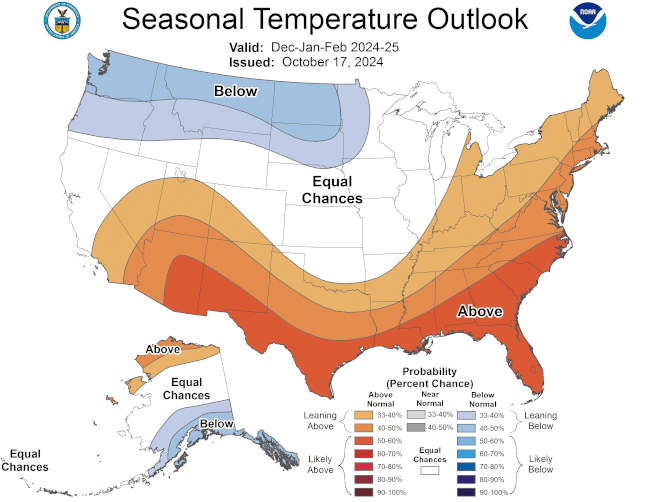
Temperature
• Warmer-than-average temperatures are favored from the southern tier of the U.S. to the eastern Great Lakes, eastern seaboard, New England and northern Alaska. These probabilities are strongest along the Gulf Coast and for most of Texas.
• Below-average temperatures are most likely in southern Alaska, with below-average temperatures slightly favored from the Pacific Northwest to the northern High Plains.
• The remaining areas have equal chances of below-, near-, or above-average seasonal mean temperatures.
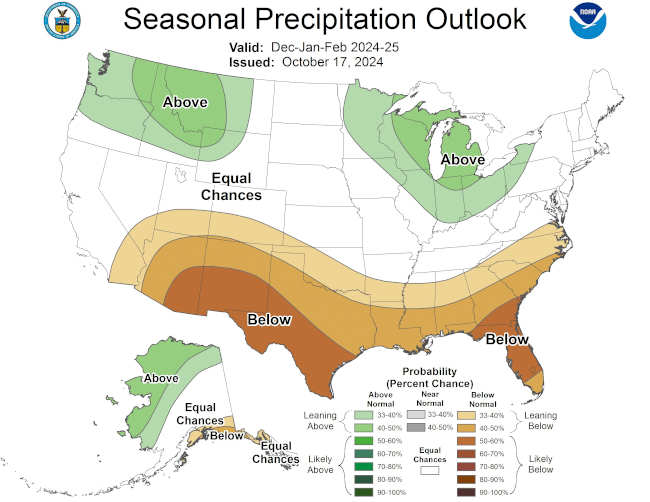
Precipitation
• Wetter-than-average conditions are most likely in the Great Lakes states, and above-average precipitation is also favored in northern and western Alaska, the Pacific Northwest and across the northern tier of the U.S. These probabilities are strongest in portions of Ohio, Indiana and Kentucky.
• The greatest likelihood for drier-than-average conditions are in states bordering the Gulf of Mexico, as well as in Texas and southern New Mexico.
• Much of California, the central Plains states and the I-95 corridor from Boston to Washington, D.C., have equal chances of below-average, near-average or above-average seasonal total precipitation.
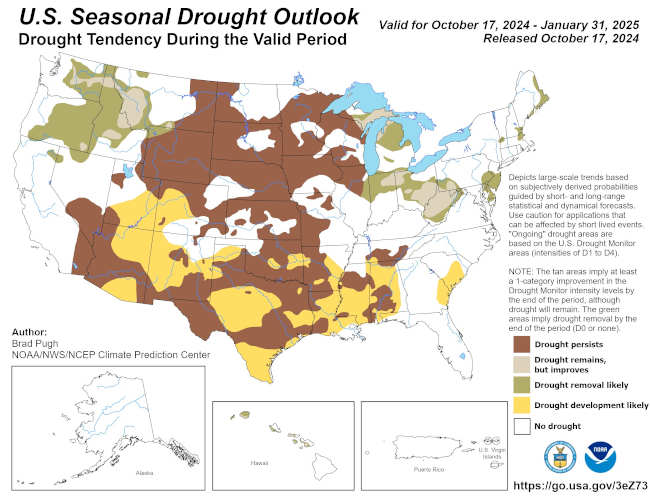
Drought
• Widespread moderate to extreme drought continues across much of the Great Plains and in portions of the Rocky Mountains, especially farther south.
• Drought conditions are expected to improve or end in the Ohio River Valley, the Great Lakes region and portions of the northwestern U.S., including eastern Washington and Oregon and northern and central Idaho.
• Drought conditions are expected to persist across the Great Plains.
• Drought is likely to develop or worsen across portions of the Southwest and Gulf Coast.
- Details
- Written by: Elizabeth Larson
The cats at the shelter that are shown on this page have been cleared for adoption.
Call Lake County Animal Care and Control at 707-263-0278 or visit the shelter online for information on visiting or adopting.
The shelter is located at 4949 Helbush in Lakeport.
Email Elizabeth Larson at

A#70a(green collar)

A#70b(yellow collar)
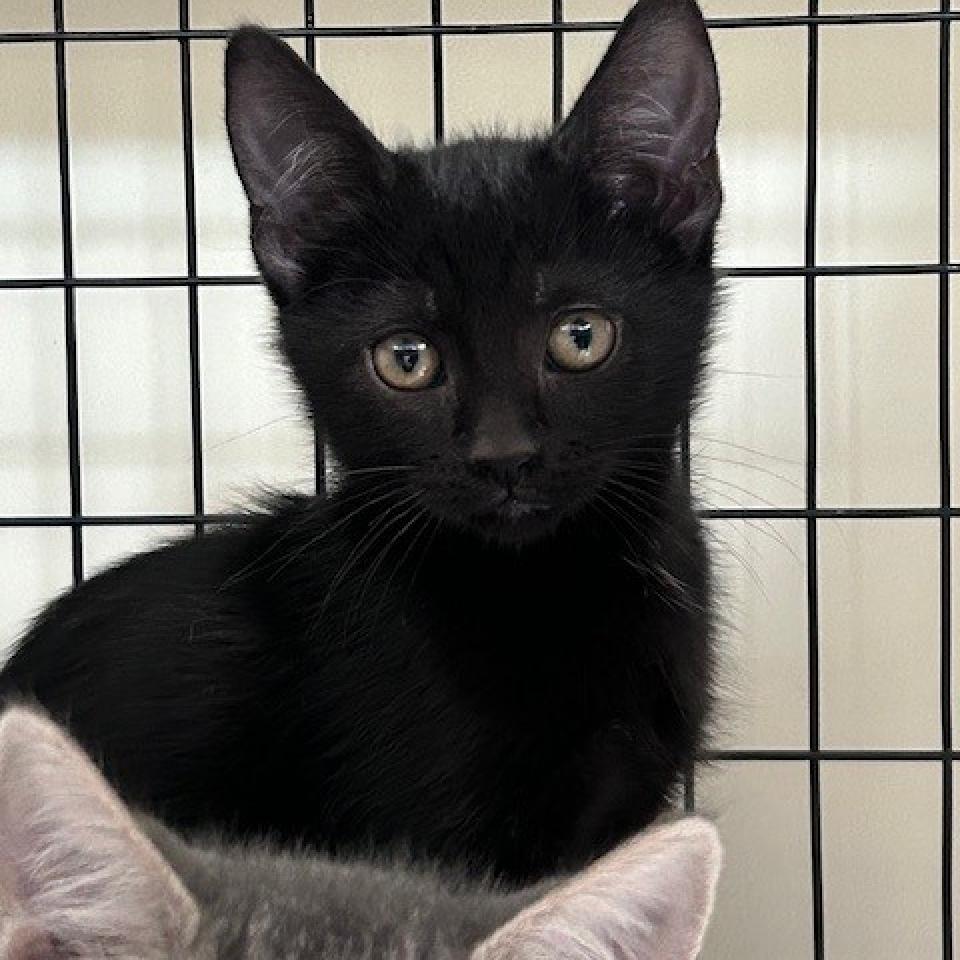
A#70c

A#70d
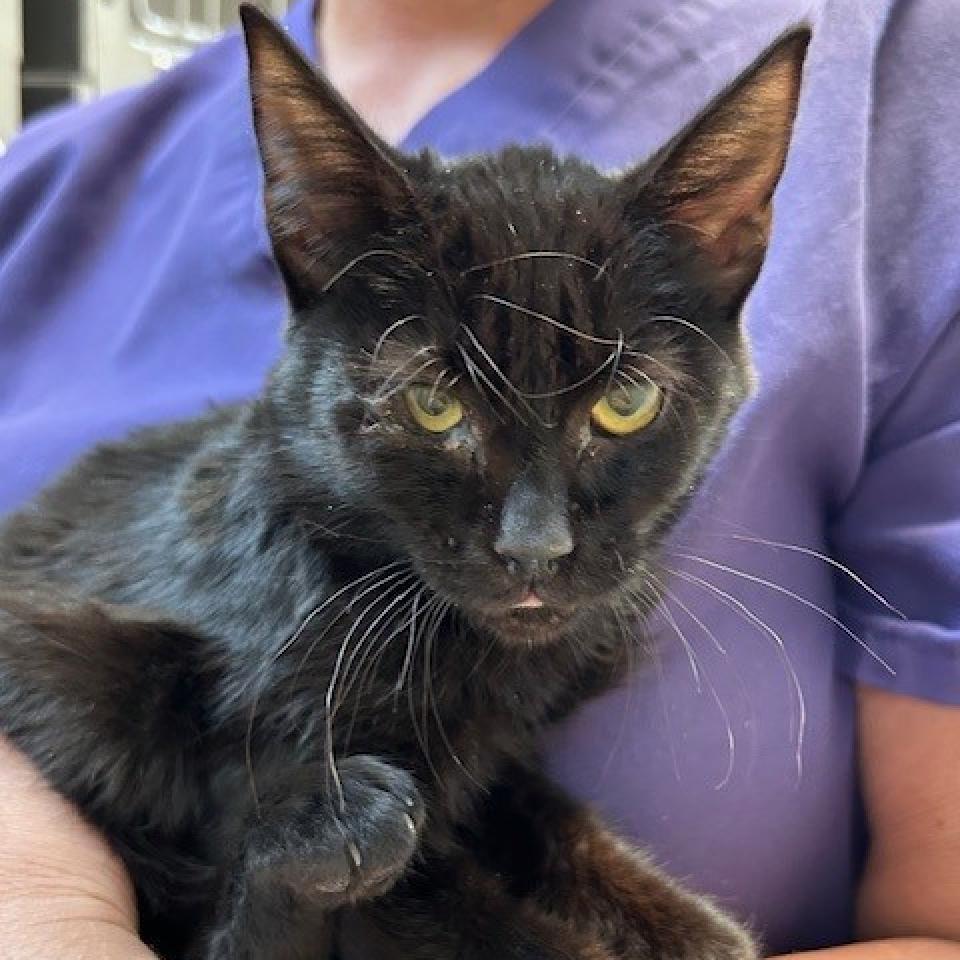
A#106a

A#55

A#146b
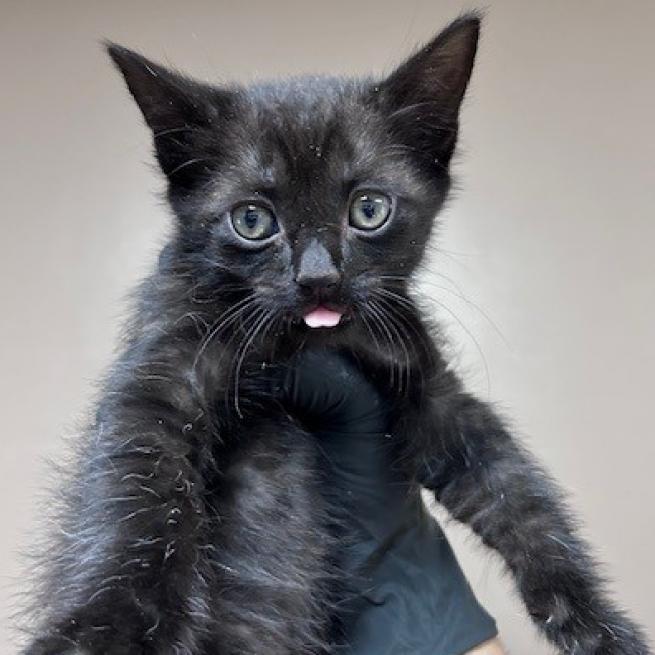
A#146a

A#52a