 How to resolve AdBlock issue?
News
- Details
- Written by: LAKE COUNTY NEWS REPORTS
The Commission on Judicial Performance has publicly admonished Judge James G. Bertoli of Sonoma County Superior Court.
The 11-member commission, chaired by Dr. Michael A. Moodian, issued a public admonishment to Judge Bertoli for engaging in improper political activity, improper social media conduct that demeaned the judicial office and improper fundraising.
The commission reported that Judge Bertoli opposed the renaming of the high school he had attended, Analy High School.
Judge Bertoli led protest rallies, made speeches, participated in fundraising, consulted with an attorney on behalf of his high school alumni association and urged people to oppose the renaming of the high school on social media.
The commission said Bertoli’s conduct involved public involvement on one side of an ongoing debate on a controversial social and political issue. That conduct violated the Code of Judicial Ethics and was not protected by the First Amendment.
“While Judge Bertoli was free to privately comment on an issue that he cares deeply about, his
judicial position required his abstention from public political activity,” the commission said.
In connection with his opposition to the change of the name of the high school, Judge Bertoli used Facebook accounts to make derogatory remarks about public officials, engage in rhetoric that inflamed the passions of the community, make profane remarks and speak derisively about those who did not agree with him.
The commission said Bertoli’s misconduct was aggravated by his prior discipline.
In 2021, he received an advisory letter for using his judicial title to promote his band, from 2011 through 2021.
“Judge Bertoli’s misconduct was further aggravated by the number of incidents of misconduct that publicly undermined respect for the judiciary and by Judge Bertoli’s failure to fully appreciate his misconduct,” the commission reported.
The public admonishment can be read below.
Bertoli DO Pub Adm 10-30-24 by LakeCoNews on Scribd
- Details
- Written by: Elizabeth Larson
Those millions of California voters include several thousand Lake County residents who have so far cast ballots early.
The California Secretary of State’s Office reported that all registered voters were issued vote-by-mail ballots.
Based on the most recent totals available on Tuesday, of the 22,829,943 vote-by-mail ballots issued across California, 4,816,335 had been returned, amounting to 21% of registered voters, the Secretary of State’s Office reported.
The state’s numbers show that mail, followed by drop boxes and drop off locations, are the most popular ways of returning ballots.
In Lake County, 38,391 vote-by-mail ballots have been issued, with 5,790 of those ballots returned. That’s a 15% early return.
The overwhelming majority of Lake County’s ballots, 80%, have been returned by mail, compared to 11% in drop boxes and 7% at drop off locations.
Overall, 98.95% of the vote-by-mail ballots submitted in California so far have been accepted, the Secretary of State’s Office reported.
When Lake County’s early ballot return rate was at 13%, Political Data Inc., or PDI, completed an analysis of the county’s early vote count that showed Democrats leading Republicans with a 47% to 35% return rate, with other parties accounting for 20%.
PDI’s stats show the returned ballots by gender almost even between men and women, with people aged 65 and above accounting for the highest number of early ballots so far, at 64%, followed by 50 to 64 year olds at 24%, with 35 to 49 year old voters at 9% and those ages 18 to 34 at 5%.
The number of registered voters has grown in Lake County since the March primary.
In March, there were 36,561 registered voters, according to the Lake County Registrar of Voters. As of this week, there were 38,391 registered Lake County voters.
Lake County’s voter turnout is expected to grow substantially over the coming week.
Based on an analysis of presidential elections since 2000, voter turnout has usually topped 70%. In 2020, it was the highest during that period, topping 78%.
This year the number of registered voters, at more than 38,000, is at its highest reported historical level.
Early voting, same day voter registration and ballot drop off can take place at the Lake County Registrar of Voters Office at 325 N. Forbes St., which also is the central counting place.
Early voting ends on Nov. 4.
Hours are 8 a.m. to 5 p.m. Monday through Friday, and 8 a.m. to 8 p.m. on Election Day.
Information is published below on ballot drop off locations and precinct locations for Election Day voting.
BALLOT DROP OFF LOCATIONS AND TIMES
24-hour dropoff locations
All sites close at 8 p.m. on Election Day, Nov. 5.
Clearlake
Redbud Library, 14785 Burns Valley Road, Clearlake
Kelseyville
Child Support Services, 3980 Gard St.
Lakeport
Lake County Courthouse, 255 N Forbes St.
Lakeport Library, 1425 N High St.
Middletown
Middletown Library, 21267 Calistoga St.
Upper Lake
Upper Lake Library, 310 Second St.
PRECINCTS FOR THE NOV. 5 ELECTION
Clearlake
Clearlake City Hall, 14050 Olympic Drive
Highlands Senior Service Center, 3245 Bowers Ave.
Living Water Christian Fellowship (First Baptist Church), 14550 Pearl Ave.
Clearlake Oaks
Orchard Shores Clubhouse, 500 Orchard Shores Drive
Cobb
Little Red Schoolhouse, 15780 Bottle Rock Road
Finley
Clearlake Grange (Big Valley Grange/Hall), 1510 Big Valley Road
Hidden Valley Lake
HVL Community Services District Office, 19400 Hartmann Road
Kelseyville
Buckingham Homeowner’s Association, 2850 Eastlake Drive
Galilee Lutheran Church, 8860 Soda Bay Road
Kelseyville Presbyterian Church Hall, 5340 Third St.
Lakeport
Lake County Office of Education (Kesey Room), 1152 S. Main St.
Lakeport Senior Activity Center, 527 Konocti Ave.
LDS Church, 600 16th St.
Scotts Valley Women’s Clubhouse, 2298 Hendricks Road
Seventh-Day Adventist Church, 1111 Park Way
Lower Lake
Lower Lake Methodist Church Social Hall, 16255 Second St.
Lucerne
Lutheran Church Parish Hall, 3863 Country Club Drive
Middletown
Calpine Geothermal Visitor Center, 15500 Central Park Road
Nice
Community Baptist Church, 2877 E. Highway 20
Upper Lake
North Shore Christian Fellowship, 9456 Main St.
Email Elizabeth Larson at
- Details
- Written by: LAKE COUNTY NEWS REPORTS
The data covers 2,230 positions and a total of nearly $64 million in 2023 wages.
The newly published data includes 1,364 positions at 20 fairs and expositions, and 866 positions at 37 First 5 commissions.
This does not include 38 fairs and expositions, and 15 First 5 commissions that did not file their report or were noncompliant.
Among those fairs that did not file was the Lake County Fair, District Agricultural Association 49.
The controller’s website shows that this is the first time since 2013 that the Lake County Fair has not filed.
Lake County’s First 5 Commission reported $105,501 in total wages and $29,657 in total retirement and health contributions.
That includes an executive director, with total wages of $82,217 and $20,016 in health and retirement contributions; a health program support specialist, with wages of $23,284 and $9,641 in health and retirement contributions; and eight unpaid commissioners.
California law requires cities, counties and special districts to annually report compensation data to the State Controller.
Controller Cohen also maintains and publishes state government and California State University salary data.
No statutory requirement exists for superior courts, University of California, community college districts, fairs, expositions, First 5 commissions, or K-12 education providers. Their reporting is voluntary.
The site contains pay and benefit information on more than two million government jobs in California, as reported annually by each entity.
As the chief fiscal officer of California, Controller Cohen is responsible for accountability and disbursement of the state’s financial resources. The controller has independent auditing authority over government agencies that spend state funds.
- Details
- Written by: LAKE COUNTY NEWS REPORTS
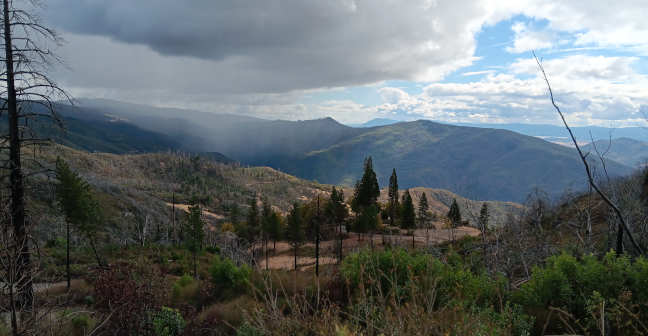
MENDOCINO NATIONAL FOREST, Calif. — The Mendocino National Forest is lifting fire restrictions beginning Wednesday, Oct. 30, at midnight.
Wet weather patterns, longer nights and cooler temperatures are reducing the potential risk for wildfires.
Beginning Wednesday, forest visitors with a valid California campfire permit may have open campfires or camp stoves outside of designated campgrounds.
Although fire danger has decreased some, there is still potential for wildfires to start. Forest officials ask everyone to practice fire safety and act responsibly to prevent wildfires.
• Campfires: Attend your campfire at all times. Ensure your fire is completely extinguished — drown with water (NOT dirt), stir with your shovel, drown again and feel for any heat using the back of your hand. Continue this process until no heat remains.
• Stoves: If using pressurized or bottled liquid fuel stoves, lanterns or heating devices, use in barren areas with at least 3 feet of clearance from grasses and other debris that may catch fire. • Prevent stoves from tipping.
• Vehicles: When traveling, ensure your chains are properly connected. The hot underside of the vehicle and dragging chains can start a fire. Stick to driving on designated roads and trails and be careful to not park your car or OHV in tall, dry vegetation, including grass.
• Spark arrestors: Ensure that all internal or external combustion engines have a spark arresting device properly installed, maintained and in effective working order.
• Smoking: Extinguish all smoking materials dead out on bare soil. Pack out all cigarette butts and filters.
• Fireworks: Fireworks are prohibited on all national forests year-round, leave them and all other pyrotechnic devices at home.
California campfire permits are available online at https://readyforwildfire.org. Visitors can check the latest alerts, orders and recreation information at https://www.fs.usda.gov/mendocino.
The Mendocino National Forest consists of 927,675 acres along northern California’s coastal range. The forest includes the Berryessa Snow Mountain National Monument, four designated wilderness areas, two designated wild and scenic rivers, Red Bluff Recreation Area, and the Chico Seed Orchard. Headquartered in Willows, the forest maintains district offices in the communities of Covelo and Upper Lake.