 How to resolve AdBlock issue?
News
- Details
- Written by: NASA Jet Propulsion Laboratory
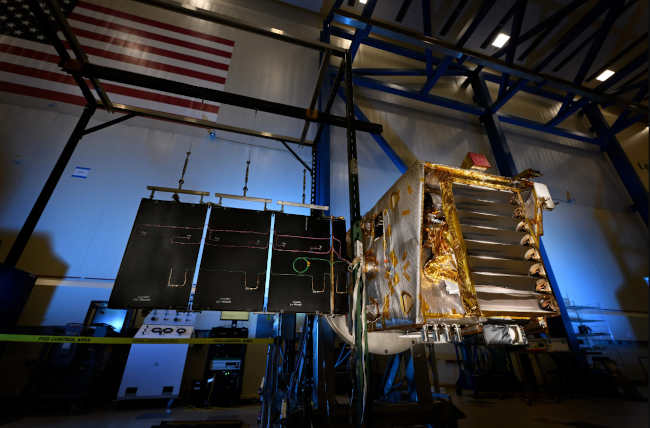
There’s water on the Moon, but scientists only have a general idea of where it is and what form it is in. A trailblazing NASA mission will get some answers.
When NASA’s Lunar Trailblazer begins orbiting the Moon next year, it will help resolve an enduring mystery: Where is the Moon’s water? Scientists have seen signs suggesting it exists even where temperatures soar on the lunar surface, and there’s good reason to believe it can be found as surface ice in permanently shadowed craters, places that have not seen direct sunlight for billions of years. But, so far, there have been few definitive answers, and a full understanding of the nature of the Moon’s water cycle remains stubbornly out of reach.
This is where Lunar Trailblazer comes in. Managed by NASA’s Jet Propulsion Laboratory and led by Caltech in Pasadena, California, the small satellite will map the Moon’s surface water in unprecedented detail to determine the water’s abundance, location, form, and how it changes over time.
“Making high-resolution measurements of the type and amount of lunar water will help us understand the lunar water cycle, and it will provide clues to other questions, like how and when did Earth get its water,” said Bethany Ehlmann, principal investigator for Lunar Trailblazer at Caltech. “But understanding the inventory of lunar water is also important if we are to establish a sustained human and robotic presence on the Moon and beyond.”
Future explorers could process lunar ice to create breathable oxygen or even fuel. And they could also conduct science. Using information from Lunar Trailblazer, future human or robotic scientific investigations could sample the ice for later study to determine where the water came from. For example, the presence of ammonia in ice samples may indicate the water came from comets; sulfur, on the other hand, could show that it was vented to the surface from the lunar interior when the Moon was young and volcanically active.
“In the future, scientists could analyze the ice in the interiors of permanently shadowed craters to learn more about the origins of water on the Moon,” said Rachel Klima, Lunar Trailblazer deputy principal investigator at the Johns Hopkins Applied Physics Laboratory in Laurel, Maryland. “Like an ice core from a glacier on Earth can reveal the ancient history of our planet’s atmospheric composition, this pristine lunar ice could provide clues as to where that water came from and how and when it got there.”
Understanding whether water molecules move freely across the surface of the Moon or are locked inside rock is also scientifically important. Water molecules could move from frosty “cold traps” to other locations throughout the lunar day. Frost heated by the Sun sublimates (turning from solid ice to a gas without going through a liquid phase), allowing the molecules to move as a gas to other cold locations, where they could form new frost as the Sun moves overhead. Knowing how water moves on the Moon could also lead to new insights into the water cycles on other airless bodies, such as asteroids.
Two instruments, one mission
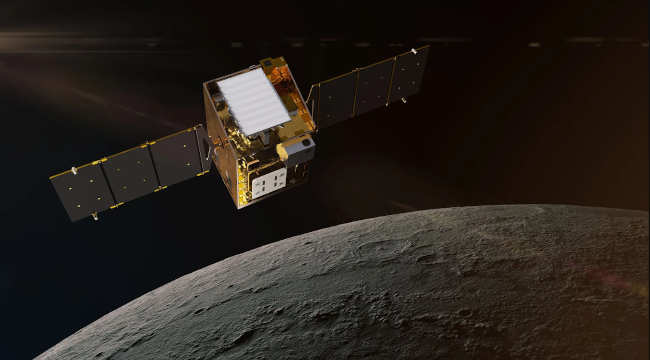
Two science instruments aboard the spacecraft will help unlock these secrets: the High-resolution Volatiles and Minerals Moon Mapper (HVM3) infrared spectrometer and the Lunar Thermal Mapper (LTM) infrared multispectral imager.
Developed by JPL, HVM3 will detect and map the spectral fingerprints, or wavelengths of reflected sunlight, of minerals and the different forms of water on the lunar surface. The spectrometer can use faint reflected light from the walls of craters to see the floor of even permanently shadowed craters.
The LTM instrument, which was built by the University of Oxford and funded by the UK Space Agency, will map the minerals and thermal properties of the same lunar landscape. Together they will create a picture of the abundance, location, and form of water while also tracking how its distribution changes over time.
“The LTM instrument precisely maps the surface temperature of the Moon while the HVM3 instrument looks for the spectral signature of water molecules,” said Neil Bowles, instrument scientist for LTM at the University of Oxford. “Both instruments will allow us to understand how surface temperature affects water, improving our knowledge of the presence and distribution of these molecules on the Moon.”
Weighing only 440 pounds (200 kilograms) and measuring 11.5 feet (3.5 meters) wide when its solar panels are fully deployed, Lunar Trailblazer will orbit the Moon about 60 miles (100 kilometers) from the surface. The mission was selected by NASA’s SIMPLEx (Small Innovative Missions for Planetary Exploration) program in 2019 and will hitch a ride on the same launch as the Intuitive Machines-2 delivery to the Moon through NASA’s Commercial Lunar Payload Services initiative. Lunar Trailblazer passed a critical operational readiness review in early October at Caltech after completing environmental testing in August at Lockheed Martin Space in Littleton, Colorado, where it was assembled.
The orbiter and its science instruments are now being put through flight system software tests that simulate key aspects of launch, maneuvers, and the science mission while in orbit around the Moon. At the same time, the operations team led by IPAC at Caltech is conducting tests to simulate commanding, communication with NASA’s Deep Space Network, and navigation.
More about Lunar Trailblazer
Lunar Trailblazer is managed by JPL, and its science investigation and mission operations are led by Caltech with the mission operations center at IPAC. Managed for NASA by Caltech, JPL also provides system engineering, mission assurance, the HVM3 instrument, as well as mission design and navigation. Lockheed Martin Space provides the spacecraft, integrates the flight system, and supports operations under contract with Caltech.
SIMPLEx mission investigations are managed by the Planetary Missions Program Office at NASA’s Marshall Space Flight Center in Huntsville, Alabama, as part of the Discovery Program at NASA Headquarters in Washington. The program conducts space science investigations in the Planetary Science Division of NASA’s Science Mission Directorate at NASA Headquarters.
For more information about Lunar Trailblazer, visit https://www.jpl.nasa.gov/missions/lunar-trailblazer.
- Details
- Written by: LAKE COUNTY NEWS REPORTS
NORTHERN CALIFORNIA — The discovery of an invasive species of mussel in the Sacramento-San Joaquin Delta has officials concerned and looking for potential impacts for other water bodies that are part of the delta water system, including Clear Lake.
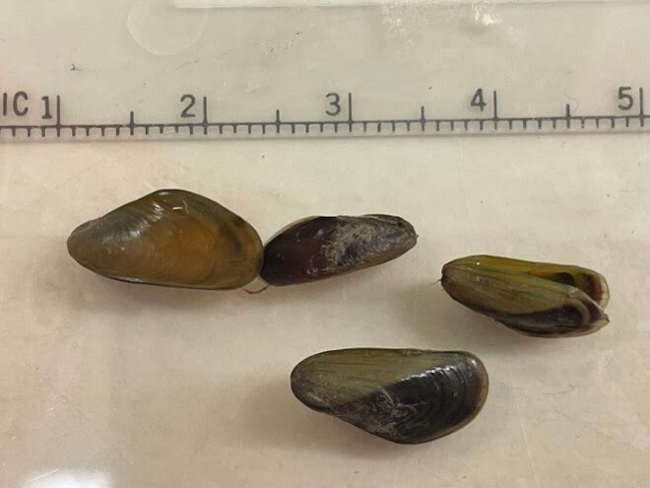
Golden mussel (Limnoperna fortunei), an invasive, non-native freshwater bivalve, was recently discovered in the Port of Stockton by California Department of Water Resources staff while conducting routine operations.
Suspected golden mussels have also been identified at O’Neill Forebay in Merced County and are currently undergoing genetic testing for confirmation.
This discovery is the first known occurrence of golden mussels in North America.
The species poses a significant immediate threat to the ecological health of the delta and all waters of the state, water conveyance systems, infrastructure and water quality.
The water from Clear Lake drains into the delta through Cache Creek and the Yolo Bypass.
In waterways where this species is present, heavy encrustations of golden mussels have blocked municipal and industrial water intakes, necessitated ongoing biofouling removal, harmed native species in the ecosystem, increased water clarity due to intense filter feeding, and diminished water quality.
The California Department of Fish and Wildlife, California State Parks, California Department of Water Resources, U.S. Fish and Wildlife Service, Bureau of Reclamation, and other state, federal, and local agencies regularly coordinate through the Aquatic Invasive Species program. This partnership aims to limit the spread of invasive species in California’s waterways, which cause damage to native species and the ecosystems they need to survive.
Golden mussels were likely introduced to California by a ship traveling from an international port. They are likely to spread throughout the Delta and through the water conveyance systems associated with it. Without containment, golden mussels are likely to spread to other freshwater bodies in California, and to other ports and inland waters of North America, and abroad.
Following the initial discovery of golden mussels in the Port of Stockton, observations of additional mussels have been made on monitoring equipment downstream. Species confirmation is pending for these organisms. Golden mussels are similar in appearance, biology, and impacts to quagga and zebra mussels and are a continued priority for prevention and containment in inland waters of Southern California and across the state.
Golden mussels are native to rivers and creeks of China and Southeast Asia. They are known to be established outside of their native range in Hong Kong, Japan, Taiwan, Brazil, Uruguay, Paraguay and Argentina. The initial introductions to these countries were also likely the result of ships from biofouling on the hulls and/or ballast water release.
In most cases, the invaded range has expanded upstream from the point of introduction and inland from ports through local, human-mediated pathways. Within the invaded range significant impacts are widely documented resulting from the dense colonization of golden mussels on hard surfaces.
Angela DePalma-Dow, invasive mussel coordinator for Lake County Water Resources, told Lake County News that more information about the mussels is being put together so that agencies, partners, and the public have more of a clear idea of what to be on the lookout for when it comes to the golden mussels.
She said the population seems to be established at the site detected, so the impact as an invasive species to California waterways has merit.
DePalma-Dow said golden mussels are similar in shape and size as quagga and zebra mussels except without the stripes, but they have potential to cause just as much damage if introduced into freshwater lakes and streams.
“While they are named ‘golden’ they really are a brown-tannish but can look ‘shiny’ or ‘shimmery’ in the light,” DePalma-Dow said.
“The conditions the mussel likes to inhabit are like other invasive mussels except for depth,” she said. “Golden mussels can tolerate a little bit more salinity for up to about 10 days, which is very concerning since many boaters come from the Delta before visiting Clear Lake.”
The good news, said DePalma-Dow, is that the golden mussel doesn’t like to be too deep, and prefers water shallower than 10 meters, whereas the quagga and zebra mussels have been observed in depths from shallow zones all the way to 50 to 90 meters in the Great Lakes area.
“If this mussel is introduced into Clear Lake, or any other Lake County waterbody, there is an expectation for significant negative impact and damage to occur, however, lucky for us we have a great prevention program in place that if maintained (current state grants are unpredictable), can help prevent the introduction of these, and other concerning invasive species, into Clear Lake,” DePalma-Dow said.
“Making sure boaters are participating in the Lake County Invasive Mussel Prevention local sticker program is key,” she added. “Boaters can easily get their vessels screened and inspected, if needed, because this is imperative to preventing introductions of unwanted aquatic species. This program will work for the prevention of Golden Mussels too! Every boat and boat operator, including personal watercrafts, kayaks, canoes, and fisherpersons, should Clean, Drain, Dry, their boats and gear between visits to different waterbodies – every waterbody, every time!”
If anyone has any questions about mussel prevention in Lake County, they can visit www.nomussels.com or call Water Resources at 707-263-2344.
DePalma-Dow also urged people to visit these links from the U.S. Fish and Wildlife Service and the National Oceanic and Atmospheric Administration to get more information specifically for golden mussels.
The California Natural Resources Agency and its partners call upon everyone working and recreating in waters of the state to clean, drain and dry watercraft and equipment every time it is removed from a waterbody. This simple measure has served to prevent spreading quagga and zebra mussels and is equally effective in stopping the overland spread of golden mussels.
DWR is now conducting boat inspections at O’Neill Forebay in an effort to reduce the spread of aquatic invasive species.
CDFW is continuing to work with state, local, and federal agencies to enhance monitoring efforts, communicate additional detection and response information, and coordinate on potential next steps. Please report organisms observed in California suspected to be golden mussels to CDFW’s Invasive Species Program. Include the specific location of the observation, and at least one clear close-up photograph of the organism, and your contact information.
Submit reports via one of the following options:
• Online at https://wildlife.ca.gov/Conservation/Invasives/Report.
• Via email to
• Via telephone to 866-440-9530.
To prevent the spread of invasive mussels, be sure to clean, drain and dry your boats. Learn more at California State Parks’ Division of Boating and Waterways webpage.
- Details
- Written by: LAKE COUNTY NEWS REPORTS
The meeting will begin at 4 p.m. at the Moose Lodge, located at 15900 Moose Lodge Lane in Clearlake Oaks.
The meeting will be available via Zoom. The meeting ID is 830 2978 1573, pass code is 503006.
On Wednesday, the guest speaker will be Lake County Public Services Director Lars Ewing, who will give an overview of the recent community meetings soliciting the public’s input for the future John T. Klaus Park in Clearlake Oaks.
The meeting’s other guest speaker will be Sarah Ryan, environmental director of the Big Valley Band of Pomo Indians, who will speak about cyanobacteria and cyanotoxins. She will give an overview of the cyanotoxin monitoring program on Clear Lake, review state guidelines on exposure and health along with 2024 monitoring results.
Other agenda items include the commercial cannabis report and Cannabis Ordinance Task Force update, as well as updates on the general plan and Shoreline Area Plan, Spring Valley, High Valley Road traffic and road condition issues, the Clearlake Oaks Consolidated Lighting District , the grid solar array at Highways 20 and 53, and the monthly report from Supervisor EJ Crandell.
ERTH’s next meeting will take place on Dec. 4.
ERTH’s members are Denise Loustalot, Jim Burton, Tony Morris, Pamela Kicenski and Maria Kann.
For more information visit the group’s Facebook page.
- Details
- Written by: LAKE COUNTY NEWS REPORTS
Federal funding for the Sideshow, Takeover, Racing, Education, and Enforcement Taskforce, or STREET III, grant comes after the CHP received $5.5 million in state funding to combat illegal street racing and sideshow activities, resulting in a 40% decrease in illegal sideshow incidents from 2021 to 2022.
The STREET III grant aims to reduce the number of fatal and injury traffic crashes attributed to reckless driving, street racing, and sideshows.
The CHP will implement a public awareness campaign to tackle these unlawful activities and conduct specialized enforcement operations such as excessive speeding behaviors where motorists are traveling more than 100 miles per hour on state highways.
Last year, CHP officers participating in specialized speed enforcement operations from January 2023 to July 2024 issued over 30,000 citations to motorists exceeding 100 miles per hour.
“Sideshows and street takeovers are reckless, criminal activities that endanger our communities and make streets less safe,” said Gov. Gavin Newsom. “We have seen too many people killed or hurt at these illegal events. California will continue to ramp up our efforts to crack down on sideshows. For anyone considering attending a sideshow: know that not only do you risk getting hurt at these events, but you also risk the potential loss of your vehicle.”
Since February, the CHP has made 1,125 arrests, seized 110 illegal guns, and recovered more than 2,000 stolen vehicles in Alameda County and the East Bay alone.
Last month, Gov. Newsom signed four bills into law that impose stricter penalties and strengthen law enforcement’s ability to combat sideshows and street takeovers.
“The CHP’s top priority is the safety of our communities. This new grant allows us to strengthen our efforts in addressing the growing issues of sideshows and illegal street racing, which endanger lives and disrupt neighborhoods,” said CHP Commissioner Sean Duryee. “By increasing patrols, deploying advanced technology, and partnering with local organizations, we are committed to making our roads safer and holding those responsible for reckless driving accountable.”
Alongside allied agencies, the CHP established task forces to tackle the challenges posed by street racing and sideshows.
In addition, social media initiatives have been introduced to enhance public awareness regarding the dangers associated with aggressive driving behaviors, including illegal street racing and sideshows.
The STREET III grant allows for a campaign starting this month through Sept. 30, 2025.
Funding for this program was provided by a grant from the California Office of Traffic Safety through the National Highway Traffic Safety Administration.