How to resolve AdBlock issue?
Refresh this page
How to resolve AdBlock issue?
Refresh this page
Lake County News,California
  • Home
    • Registration Form
  • News
    • Education
    • Veterans
    • Community
      • Obituaries
      • Letters
      • Commentary
    • Police Logs
    • Business
    • Recreation
    • Health
    • Religion
    • Legals
    • Arts & Life
    • Regional
  • Calendar
  • Contact us
    • FAQs
    • Phones, E-Mail
    • Subscribe
  • Advertise Here
  • Login
How to resolve AdBlock issue?
Refresh this page

News

Women are at a higher risk of dying from heart disease − in part because doctors don’t take major sex and gender differences into account

Details
Written by: Amy Huebschmann, University of Colorado Anschutz Medical Campus and Judith Regensteiner, University of Colorado Anschutz Medical Campus
Published: 24 October 2024


Rates of heart disease and cardiac events in women are often underestimated. eternalcreative/iStock via Getty Images

A simple difference in the genetic code – two X chromosomes versus one X chromosome and one Y chromosome – can lead to major differences in heart disease. It turns out that these genetic differences influence more than just sex organs and sex assigned at birth – they fundamentally alter the way cardiovascular disease develops and presents.

While sex influences the mechanisms behind how cardiovascular disease develops, gender plays a role in how health care providers recognize and manage it. Sex refers to biological characteristics such as genetics, hormones, anatomy and physiology, while gender refers to social, psychological and cultural constructs. Women are more likely to die after a first heart attack or stroke than men. Women are also more likely to have additional or different heart attack symptoms that go beyond chest pain, such as nausea, jaw pain, dizziness and fatigue. It is often difficult to fully disentangle the influences of sex on cardiovascular disease outcomes versus the influences of gender.

While women who haven’t entered menopause have a lower risk of cardiovascular disease than men, their cardiovascular risk accelerates dramatically after menopause. In addition, if a woman has Type 2 diabetes, her risk of heart attack accelerates to be equivalent to that of men, even if the woman with diabetes has not yet gone through menopause. Further data is needed to better understand differences in cardiovascular disease risk among nonbinary and transgender patients.

Despite these differences, one key thing is the same: Heart attack, stroke and other forms of cardiovascular disease are the leading cause of death for all people, regardless of sex or gender.

We are researchers who study women’s health and the way cardiovascular disease develops and presents differently in women and men. Our work has identified a crucial need to update medical guidelines with more sex-specific approaches to diagnosis and treatment in order to improve health outcomes for all.

Gender differences in heart disease

The reasons behind sex and gender differences in cardiovascular disease are not completely known. Nor are the distinct biological effects of sex, such as hormonal and genetic factors, versus gender, such as social, cultural and psychological factors, clearly differentiated.

What researchers do know is that the accumulated evidence of what good heart care should look like for women compared with men has as many holes in it as Swiss cheese. Medical evidence for treating cardiovascular disease often comes from trials that excluded women, since women for the most part weren’t included in scientific research until the NIH Revitalization Act of 1993. For example, current guidelines to treat cardiovascular risk factors such as high blood pressure are based primarily on data from men. This is despite evidence that differences in the way that cardiovascular disease develops leads women to experience cardiovascular disease differently.

Clinician holding stethoscope against a patient's chest
Gender biases in health care influence the kind of tests and attention that women receive. FG Trade Latin/E+ via Getty Images

In addition to sex differences, implicit gender biases among providers and gendered social norms among patients lead clinicians to underestimate the risk of cardiac events in women compared with men. These biases play a role in why women are more likely than men to die from cardiac events. For example, for patients with symptoms that are borderline for cardiovascular disease, clinicians tend to be more aggressive in ordering artery imaging for men than for women. One study linked this tendency to order less aggressive tests for women partly to a gender bias that men are more open than women to taking risks.

In a study of about 3,000 patients with a recent heart attack, women were less likely than men to think that their heart attack symptoms were due to a heart condition. Additionally, most women do not know that cardiovascular disease is the No. 1 cause of death among women. Overall, women’s misperceptions of their own risk may hold them back from getting a doctor to check out possible symptoms of a heart attack or stroke.

These issues are further exacerbated for women of color. Lack of access to health care and additional challenges drive health disparities among underrepresented racial and ethnic minority populations.

Sex difference in heart disease

Cardiovascular disease physically looks different for women and men, specifically in the plaque buildup on artery walls that contributes to illness.

Women have fewer cholesterol crystals and fewer calcium deposits in their artery plaque than men do. Physiological differences in the smallest blood vessels feeding the heart also play a role in cardiovascular outcomes.

Women are more likely than men to have cardiovascular disease that presents as multiple narrowed arteries that are not fully “clogged,” resulting in chest pain because blood flow can’t ratchet up enough to meet higher oxygen demands with exercise, much like a low-flow showerhead. When chest pain presents in this way, doctors call this condition ischemia and no obstructive coronary arteries. In comparison, men are more likely to have a “clogged” artery in a concentrated area that can be opened up with a stent or with cardiac bypass surgery. Options for multiple narrowed arteries have lagged behind treatment options for typical “clogged” arteries, which puts women at a disadvantage.

In addition, in the early stages of a heart attack, the levels of blood markers that indicate damage to the heart are lower in women than in men. This can lead to more missed diagnoses of coronary artery disease in women compared with men.

The reasons for these differences are not fully clear. Some potential factors include differences in artery plaque composition that make men’s plaque more likely to rupture or burst and women’s plaque more likely to erode. Women also have lower heart mass and smaller arteries than men even after taking body size into consideration.

Reducing sex disparities

Too often, women with symptoms of cardiovascular disease are sent away from doctor’s offices because of gender biases that “women don’t get heart disease.”

Considering how symptoms of cardiovascular disease vary by sex and gender could help doctors better care for all patients.

One way that the rubber is meeting the road is with regard to better approaches to diagnosing heart attacks for women and men. Specifically, when diagnosing heart attacks, using sex-specific cutoffs for blood tests that measure heart damage – called high-sensitivity troponin tests – can improve their accuracy, decreasing missed diagnoses, or false negatives, in women while also decreasing overdiagnoses, or false positives, in men.

Our research laboratory’s leaders, collaborators and other internationally recognized research colleagues – some of whom partner with our Ludeman Family Center for Women’s Health Research on the University of Colorado Anschutz Medical Campus – will continue this important work to close this gap between the sexes in health care. Research in this field is critical to shine a light on ways clinicians can better address sex-specific symptoms and to bring forward more tailored treatments.

The Biden administration’s recent executive order to advance women’s health research is paving the way for research to go beyond just understanding what causes sex differences in cardiovascular disease. Developing and testing right-sized approaches to care for each patient can help achieve better health for all.The Conversation

Amy Huebschmann, Professor of Medicine, University of Colorado Anschutz Medical Campus and Judith Regensteiner, Professor of Medicine, University of Colorado Anschutz Medical Campus

This article is republished from The Conversation under a Creative Commons license. Read the original article.
State attorney general announces $7.5 million settlement with Walmart for illegal disposal of hazardous waste and medical waste

Details
Written by: LAKE COUNTY NEWS REPORTS
Published: 24 October 2024
California Attorney General Rob Bonta has announced a settlement with Walmart, resolving allegations that the retail corporation unlawfully disposed of hazardous waste and medical waste from their facilities statewide to municipal landfills.

As part of the settlement, Walmart will be required to pay $7.5 million in penalties and costs and comply with injunctive terms.

Attorney General Bonta is joined by the California Department of Toxic Substances Control, or DTSC, and the district attorneys of Alameda, Fresno, Monterey, Orange, Riverside, Sacramento, San Bernardino, San Diego, San Joaquin, Solano, Tulare and Yolo counties in the settlement, which also names Lake County’s Walmart, located in Clearlake.

“Walmart’s illegal disposal of hazardous and medical waste not only violated California laws, but, if left unchecked, posed a threat to human health and the environment. As a result of this investigation and lawsuit, Walmart has taken significant steps to prevent such disposals from happening in the future. This settlement will ensure that Walmart takes the necessary steps to ensure that its hazardous waste is handled and disposed of as required by law,” said Attorney General Bonta. “At the California Department of Justice, we will continue to hold any entity accountable for violating our environmental laws. I’m grateful to the Department of Toxic Substances Control and district attorneys statewide for their partnership in reaching this important settlement.”

“This settlement is the result of DTSC’s strict enforcement of hazardous waste laws designed to protect public health and the environment,” said Katherine M. Butler, MPH, director of DTSC. “Holding Walmart accountable for this violation of improper hazardous waste disposal sends a clear message: all corporations must adhere to the environmental laws that protect Californians, without exception. This settlement emphasizes the strength of our law enforcement partnerships across all levels of government and DTSC’s commitment to holding any and all violators responsible.”

“With this settlement, Walmart has demonstrated its understanding of the critical importance of environmental responsibility by taking meaningful steps to address concerns and ensure compliance with state standards,” said San Joaquin County District Attorney Ron Freitas. “We value their efforts in not only maintaining a cleaner, safer environment for our community but also in continuing to be a strong partner with our office in the fight against retail theft. Together, we are making strides in safeguarding both the environment and the people of San Joaquin County.”

“The unlawful disposing of hazardous and medical waste creates an environmental hazard and public health threat,” said Sacramento County District Attorney Thien Ho. “This case is another example of how the District Attorney’s Office and the Attorney General’s Office can work together to protect our environment and ensure that environmental laws are followed.

“The mismanagement of hazardous wastes can result in fires and injuries — this judgment will help to ensure that retail businesses have appropriate policies and procedures in place to protect the safety of their employees, waste management staff, and the public,” said Monterey County District Attorney Jeannine M. Pacioni.

“Large corporations must be held accountable when they do not follow the law and put the health and safety of Alameda County residents at risk,” said Alameda County District Attorney Pamela Price. “I commend my office’s Consumer Justice Bureau’s active involvement in this investigation which helped bring this settlement forward and holds Walmart to account.”

“The protection of the health and safety of the people of our community and the environment are top priorities for our office. The illegal disposal and mismanagement of hazardous waste by employees pose serious risks to the environment, public health, and worker safety,” said Orange County District Attorney Todd Spitzer. “We will continue to work with our prosecution partners around the state to protect the public by holding businesses such as Walmart accountable for its violations of environmental law.”

“This settlement brings accountability that helps to protect our environment from toxic waste,” said District Attorney Summer Stephan. “These types of investigations and settlements are a reminder to corporations that they have a responsibility to be a good steward to our environment.”

The settlement is the result of over 70 waste audits conducted by the district attorneys' offices statewide and DTSC from 2015 through 2021.

During those audits, the district attorneys' offices reviewed the contents of waste that Walmart had sent from its facilities to municipal landfills and found thousands of containers of toxic aerosols and liquid wastes including spray paints, rust removers, bleach, pesticides, and medical waste, such as over-the-counter drugs.

The unlawful disposals are alleged to violate the Hazardous Waste Control Law, Medical Waste Management Act, and Unfair Competition Law.

The settlement resolves the allegations above and requires Walmart to pay $7,500,000 in civil penalties and costs.

The settlement also imposes injunctive terms, which require Walmart to hire an independent, third-party auditor to conduct three annual rounds of waste audits at its facilities throughout California during the next four years.

Walmart’s auditor must use specific requirements set forth in the settlement to ensure that the waste is thoroughly and accurately reviewed and characterized, and the audit results must be shared with the Attorney General’s Office, the Department of Toxic Substances Control, and the district attorneys involved in this settlement.

Supervisors appoint new Animal Care and Control director

Details
Written by: LAKE COUNTY NEWS REPORTS
Published: 23 October 2024
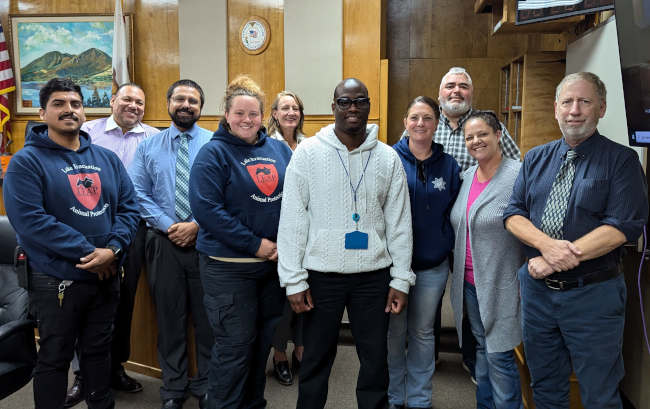
Gregory Wilkins, center, the newly appointed Lake County Animal Care and Control director with members of the Lake County Board of Supervisors on Tuesday, Oct. 22, 2024, the day his hire was announced. Photo courtesy of the county of Lake.

LAKE COUNTY, Calif. — On Tuesday, the Lake County Board of Supervisors appointed a new director for Animal Care and Control.

Gregory Wilkins was hired for the position after final closed session interviews during the board’s regular meeting.

The county reported that Wilkins’ hire was the result of a nationwide recruiting effort.

His appointment is retroactive to Monday, Oct. 21.

Wilkins succeeds Jonathan Armas, who held the Animal Care and Control director job beginning in March 2019.

Armas’ tenure ended in the summer, without a public explanation from the county.

On June 11, the board voted unanimously to appoint County Administrative Officer Susan Parker as the interim Animal Care and Control director.

The board began holding interviews for the director’s job in closed session on Aug. 6, according to meeting records.

Animal Care and Control has had other issues over the past year, including staffing shortages that caused a cutback on services and mounting complaints over neglect and abuse cases involving horses.

Since 2012, Wilkins has served in a variety of animal care-focused capacities across six states, working his way from veterinary and kennel technician roles to high responsibility shelter and program management positions.

Wilkins most recently served as shelter manager for Animal Services in Dallas, Texas. He joined that agency in August 2023, leading the major metropolitan city government’s animal care and behavior efforts while supervising a 45-employee team, the county reported.

During the seven years before his time in Dallas, Wilkins held leadership positions including four years as shelter manager for Escambia County, Florida; manager and shelter operation manager of Hillsborough County, Florida, Pet Resources; and manager of lifesaving programs for Best Friends Animal Society in Northwest Arkansas.

“These progressively responsible assignments brought significant opportunity to build knowledge and experience supportive of Wilkins’ goal to lead an animal welfare organization,” the county of Lake reported in Wilkins’ hiring announcement.

“"This important appointment provides our Animal Care and Control department the foundation to move forward in serving our communities,” said Board of Supervisors Chair Bruno Sabatier. “Our Board is confident Gregory Wilkins has the skills and experience to effectively manage the full breadth of Animal Care and Control’s services, including our veterinary clinic. His strong passion for animal welfare is well demonstrated, and we look forward to his leadership in the department. We are very pleased Director Wilkins has chosen Lake County to continue his career; he is joining a developing team that mirrors his dedication to continual growth and providing the best possible services."

“The Board of Supervisors’ trust means a lot,” said Wilkins. “Lake County is a beautiful place, and it has already become clear to me residents care deeply about the well-being of their animals. I am really excited to get to know everyone, and help build on the strengths that are already here in Lake County’s communities. I am very happy to be here!”

State attorney general reports on illegal cannabis seizures; Lake County in top 10 for largest amounts seized

Details
Written by: LAKE COUNTY NEWS REPORTS
Published: 23 October 2024
California Attorney General Rob Bonta, together with local and federal law enforcement partners, on Tuesday announced the eradication of 774,829 illegally cultivated cannabis plants and 106,141 pounds of processed cannabis, as well as 282 arrests in 36 different counties across California as part of Eradication and Prevention of Illicit Cannabis, or EPIC, program.

The total underground market price for these seizures is valued at approximately $353 million.

EPIC is an interagency task force focused on combating the illegal cannabis market, cannabis enforcement work, and investigating and prosecuting civil and criminal cases with a focus on environmental, economic and labor impacts from illegal cultivation.

“California has the largest safe, legal, and regulated cannabis market in the world, but unfortunately illegal and unlicensed grows continue to proliferate,” said Attorney General Rob Bonta. “The EPIC program was forged out of our recognition of the need for a more comprehensive approach that addresses the broader implications of the underground cannabis market. This includes tackling the environmental damage caused by these illicit activities, as well as the economic ramifications that arise from unregulated cultivation. Furthermore, there is a growing concern about labor exploitation within this underground market, where workers may face unsafe conditions and unfair treatment. I want to express my gratitude to the various partners involved in this effort, including local, state, and federal law enforcement agencies. Together, we are working toward a solution that not only curtails illegal activities but also promotes a sustainable and equitable cannabis industry in the state.”

“California has the largest state park system in the country with 1.59 million acres of park land to protect," said California State Parks Law Enforcement Assistant Chief Jeremy Stinson. "Unfortunately, illegal cannabis cultivation is a serious threat to that land with more than 400 sites documented. California State Parks appreciates being a partner agency within EPIC to help address this issue. Protecting our state’s natural resources for all Californians and future generations is an important part of our mission. We look forward to continuing this valuable partnership to preserve and protect California’s state parks system.”

“California cannabis enforcement has a long way to go to ensure that the illicit cannabis doesn’t make it into the legal market," said San Bernardino County Sheriff Shannon Dicus. "Partnerships like EPIC are a major step forward in tackling this problem.”

Over the course of the 2024 season, EPIC teams operating in Northern, Central, and Southern California, conducted 665 operations, recovered 201 weapons, and removed infrastructure, including dams, water lines, and containers of toxic chemicals, such as carbofuran, methyl parathion, aluminum phosphate, zinc phosphide, and illegal fertilizers. Carbofuran, in particular, poses untold risks to public health. A lethal insecticide that is effectively banned in the United States, carbofuran remains on plants after application and seeps into soil and nearby water sources.

In 2024, EPIC operations were conducted in the following 36 counties:

Alameda: 1 site, 751 plants eradicated
Butte: 5 sites, 4,397 plants eradicated
Colusa: 3 sites, 10 plants eradicated
Contra Costa: 2 sites, 5,010 plants eradicated
El Dorado: 8 sites, 2,174 plants eradicated
Fresno: 31 sites, 52,796 plants eradicated
Glenn: 1 site, 747 plants eradicated
Kern: 60 sites, 89,819 plants eradicated
Kings: 1 site, 539 plants eradicated
Lake: 48 sites, 42,776 plants eradicated
Lassen: 1 site, 7,359 plants eradicated
Los Angeles: 3 sites, 3,684 plants eradicated
Madera: 3 sites, 1,230 plants eradicated
Mariposa: 2 sites, 1,368 plants eradicated
Mendocino: 116 sites, 133,702 plants eradicated
Nevada: 33 sites, 28,428 plants eradicated
Riverside: 79 sites, 136,601 plants eradicated
Sacramento: 13 sites, 46,042 plants eradicated
San Bernardino: 23 sites, 27,845 plants eradicated
San Diego: 7 sites, 9,301 plants eradicated
Santa Barbara: 1 site, 362 plants eradicated
Santa Clara: 2 sites, 1,012 plants eradicated
Shasta: 67 sites, 51,289 plants eradicated
Siskiyou: 98 sites, 67,943 plants eradicated
Stanislaus: 6 sites, 5,103 plants eradicated
Trinity: 38 sites, 32,381 plants eradicated
Tulare: 7 sites, 5,468 plants eradicated
Tuolumne: 2 sites, 7,637 plants eradicated
Ventura: 3 sites, 7,891 plants eradicated
Yuba: 2 sites, 1,164 plants eradicated
Monterey: reconnaissance only
Napa: reconnaissance only
San Benito: reconnaissance only
San Luis Obispo: reconnaissance only
Santa Cruz: reconnaissance only
Solano: reconnaissance only

The EPIC program focuses on the investigation and prosecution of civil and criminal cases relating to illicit cannabis cultivation with a focus on environmental and economic harms and labor exploitation.

EPIC is a multi-agency collaboration led by DOJ in partnership with the U.S. Department of Agriculture’s U.S. Forest Service; the U.S. Department of the Interior's Bureau of Land Management and National Park Service; the California Department of Fish and Wildlife; the U.S. Department of Justice’s Drug Enforcement Administration; the California National Guard, Counter Drug Task Force; the Central Valley High Intensity Drug Trafficking Areas program; California State Parks; California Environmental Protection Agency; and other local law enforcement departments.
  1. ABC observes National Teen Driver Safety Week Oct. 20 to 26
  2. California tribes, performers, lawmakers prepare for first-ever parade to celebrate Native American Heritage Month at State Capitol
  3. New curfew bell monument to be dedicated Oct. 23
  • 569
  • 570
  • 571
  • 572
  • 573
  • 574
  • 575
  • 576
  • 577
  • 578
How to resolve AdBlock issue?
Refresh this page