 How to resolve AdBlock issue?
News
Nearly 327,000 people in the United States experiencing homelessness lived in shelters, a small proportion (0.1%) of the U.S. population from 2018 to 2022 but higher than from 2013 to 2017, according to American Community Survey (ACS) 5-year estimates released in a working paper.
The 2013-2017 ACS, the previous 5-year ACS with no overlapping years, showed there were approximately 267,000 people (0.08% of the U.S. population) in shelters during that period.
A change in the number of people experiencing homelessness and living in shelters could be due to a change in economic circumstances or resources devoted to shelters or a combination of both.
Group quarters are places — owned or managed by an entity or organization providing housing and/or services for the residents — where people live or stay in a group arrangement.
They consist of institutional (residents primarily not eligible, able or likely to participate in the labor force) and noninstitutional (residents primarily eligible, able or likely to participate in labor force) facilities. Noninstitutional group quarters include places like college dorms and military housing and other noninstitutional facilities.
In the ACS, the sheltered population experiencing homelessness is sampled from facilities where people stay overnight as part of the noninstitutional facilities:
• That operate on a first-come, first-served basis where people must leave the next morning and have no guaranteed bed for another night.
• Where people are assigned a bed for a specified period (even if they leave the building daily).
• That provide temporary shelter during extremely cold weather (like churches). This category does not include shelters that operate only in the event of a natural disaster.
The sheltered population is an estimate of the population experiencing homelessness that stay in emergency and transitional shelters. It is not a complete count of the total U.S. population experiencing homelessness, which the Department of Housing and Urban Development (HUD) estimated was 582,500 in 2022. HUD conducts a Point-in-Time count of sheltered people experiencing homelessness on a single night in January every year and a count of unsheltered people every other year.
It’s important to note that some detailed group quarters types are included in the decennial census as “other noninstitutional facilities” but not in the ACS, which may lead to higher or overestimates of this population in the ACS. More information about this is available in Estimates of the Population Experiencing Homelessness and Living in Shelters.
Who are the people who stay in shelters?
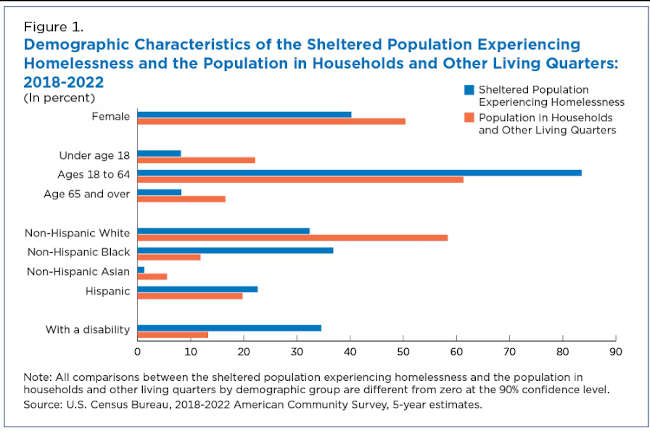
Figure 1 shows the share of the sheltered population experiencing homelessness and the population in households and other living quarters (people who lived in households and in group quarters other than emergency shelters) by different demographic groups.
Among the sheltered population experiencing homelessness: 40% were female; 8% were under the age of 18; 8% were age 65 or over; 32% were non-Hispanic White; 37% were non-Hispanic Black; and 35% had a disability.
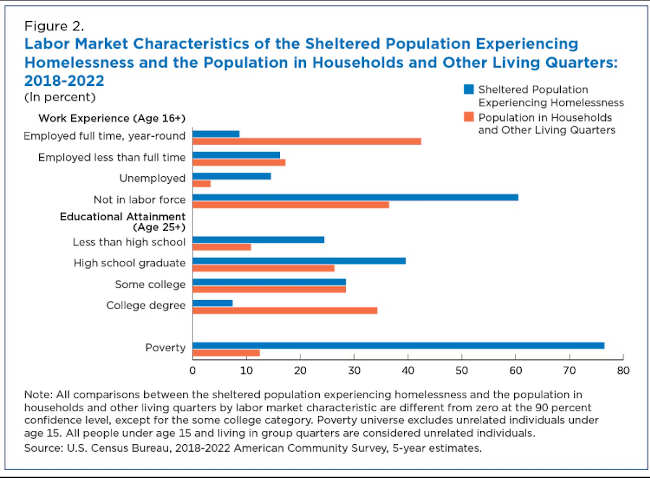
Figure 2 shows the labor market characteristics of both the sheltered population experiencing homelessness and the population in households and other living quarters.
Among the sheltered population age 16 and over experiencing homelessness, nearly 15% were unemployed and an additional 61% were not in the labor force. That means only about 25% of this population was employed compared to nearly 60% of the population in households and other living quarters.
Among the sheltered population age 25 and over experiencing homelessness, nearly 25% did not have a high school degree and just over 7% had a bachelor’s degree or higher. Low educational attainment and high unemployment likely contributed to a poverty rate over six times higher (76.5%) than for the population in households and other living quarters (12.5%).
Also important to note: nearly one quarter of people experiencing homelessness and living in shelters were not in poverty.
The national poverty rate in 2018-2022 was 12.53%. When excluding the sheltered population experiencing homelessness, the poverty rate was 12.47%, which is not significantly different statistically.
Sheltered population by state
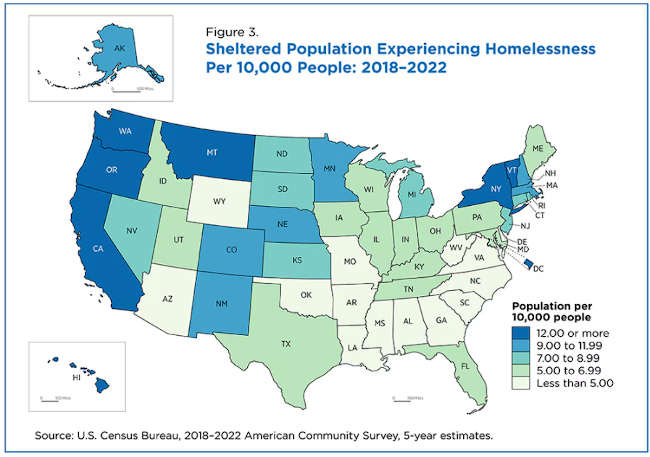
There was a lot of variation in both the number and rate of the population experiencing homelessness in shelters in each state in 2018-2022.
The sheltered population ranged from a low of 173 people in Wyoming to a high of 83,550 people in New York. In fact, four states accounted for over 50% of the total U.S. sheltered population experiencing homelessness: New York (83,550); California (57,700); Texas (15,340); and Florida (13,260).
While 10 out of every 10,000 people lived in a shelter nationally, this rate ranged from a low of 1.5 in Mississippi to a high of 61.5 in the District of Columbia (Figure 3).
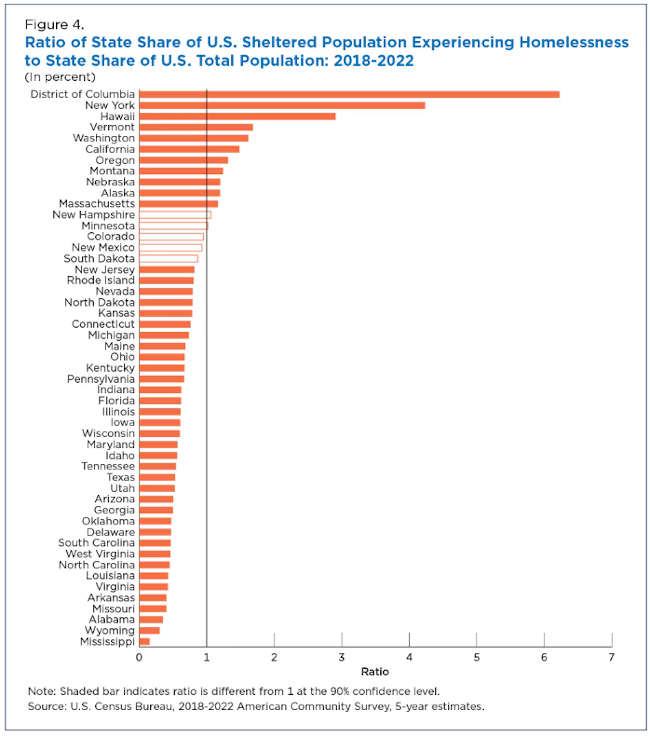
Figure 4 shows the ratio of the state share of the U.S. sheltered population to the state share of the total U.S. population. This tells us whether the share of the sheltered population experiencing homelessness in each state was higher or lower than the share of the total U.S. population in each state.
For example, New York had a ratio of 4.23 with about 6% of the U.S. population, but over 25% of the total sheltered population experiencing homelessness. Conversely, Texas had a ratio of 0.53 with nearly 9% of the U.S. population, but only about 5% of the total sheltered population experiencing homelessness.
The share of the sheltered population experiencing homelessness was higher than the state’s share of the U.S. population in 10 states and the District of Columbia and lower in 35 states. The ratio of the two population shares was not significantly different in 5 states.
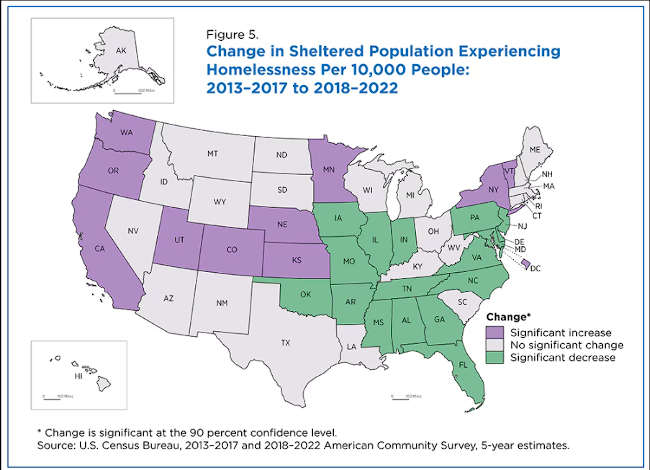
Figure 5 shows which states had a significant change in sheltered populations experiencing homelessness per 10,000 people in 2018-2022 compared to the 2013-2017 period.
While the number increased nationally, it only rose in 10 states and the District of Columbia. The sheltered population experiencing homelessness per 10,000 people decreased in 17 states and did not change significantly in the other 23 states.
Brian Glassman is an economist and chief of the Census Bureau’s Poverty Statistics Branch.
- Details
- Written by: Brian Glassman
Public safety dispatchers play a critical role in orchestrating emergency response efforts, providing vital information to both the callers and emergency responders.
“These women and men are the first point of contact during an emergency, navigating a crisis with composure and expertise to provide vital instructions, while seamlessly coordinating efforts behind the scenes,” said California Highway Patrol Commissioner Sean Duryee. “Their dedication and unwavering commitment to public service deserve praise and recognition.”
The CHP has more than 700 dedicated professionals who serve in that role, working on the front lines of public safety and service, fielding a vast majority of cellular 9-1-1 calls in the state.
Last year, the CHP handled approximately 6.6 million calls for service statewide. Of those calls, 4.6 million were to 9-1-1.
In addition to their primary responsibilities, dispatchers often act as lifelines for individuals in distress offering reassurance, guidance, and support until help arrives.
Their ability to remain calm under pressure, think quickly on their feet, and maintain professionalism in the face of chaos is truly commendable.
The CHP has several openings for public safety dispatchers and public safety operators and is actively recruiting Californians to answer the call of this rewarding career.
For more information, register to attend an online hiring seminar at 6:30 p.m. on Wednesday, April 24. Or take the next step and apply today.
The mission of the CHP is to provide the highest level of safety, service and security.
- Details
- Written by: Lake County News reports
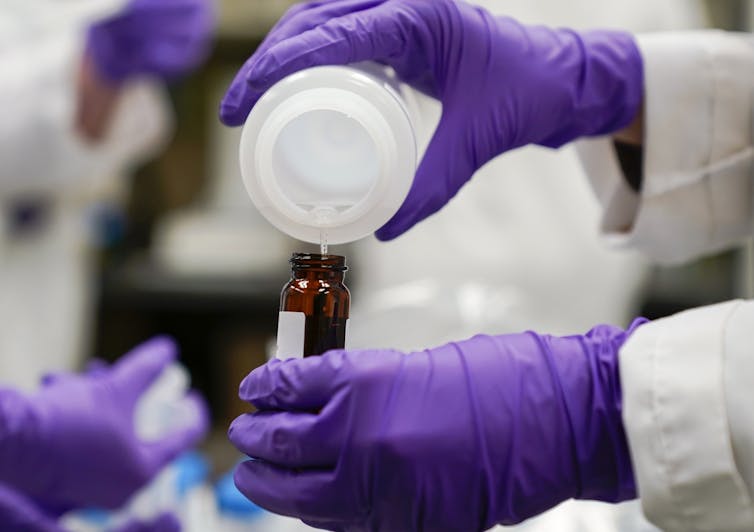
The more scientists learn about the health risks of PFAS, found in everything from nonstick cookware to carpets to ski wax, the more concerning these “forever chemicals” become.
The U.S. Environmental Protection Agency now believes there is no safe level for two common PFAS – PFOA and PFOS – in drinking water, and it acknowledges that very low concentrations of other PFAS present human health risks. The agency issued the first legally enforceable national drinking water standards for five common types of PFAS chemicals, as well as PFAS mixtures, on April 10, 2024.
I study PFAS as an environmental health scientist. Here’s a quick look at the risks these chemicals pose and efforts to regulate them.
What exactly are PFAS?
PFAS stands for per- and polyfluoroalkyl substances. This is a large group of human-made chemicals – currently estimated to be nearly 15,000 individual chemical compounds – that are used widely in consumer products and industry. They can make products resistant to water, grease and stains and protect against fire.
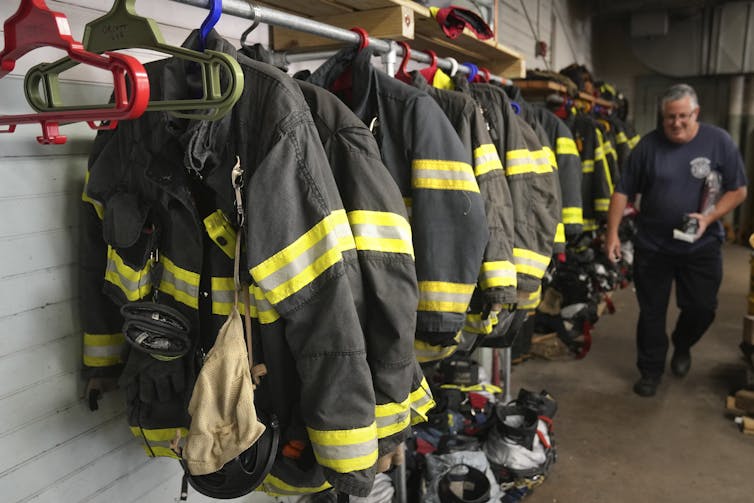
Waterproof outdoor apparel and cosmetics, stain-resistant upholstery and carpets, food packaging that is designed to prevent liquid or grease from leaking through, and certain firefighting equipment often contain PFAS.
In fact, studies have found that most products labeled stain- or water-resistant contain PFAS, and another study found that this is even true among products labeled as “nontoxic” or “green.” PFAS are also found in unexpected places such as high-performance ski and snowboard waxes, floor waxes and medical devices.
At first glance, PFAS sound pretty useful, so you might be wondering what’s the big deal?
The short answer is that PFAS are harmful to human health and the environment.
Some of the very same chemical properties that make PFAS attractive in products also mean these chemicals will persist in the environment for generations. Because of the widespread use of PFAS, these chemicals are now present in water, soil and living organisms and can be found across almost every part of the planet, including Arctic glaciers, marine mammals, remote communities living on subsistence diets and in 98% of the American public.
The U.S. Geological Survey estimates common types of PFAS are now in at least 45% of the country’s tap water. PFAS maker 3M, facing lawsuits, announced a settlement worth at least US$10.3 billion in June 2023, with public water systems to pay for PFAS testing and treatment.
What are the health risks from PFAS exposure?
Once people are exposed to PFAS, the chemicals remain in their bodies for a long time – months to years, depending on the specific compound – and they can accumulate over time.
Research consistently demonstrates that PFAS are associated with a variety of adverse health effects. A review by a panel of experts looking at research on PFAS toxicity concluded with a high degree of certainty that PFAS contribute to thyroid disease, elevated cholesterol, liver damage, and kidney and testicular cancer.

Further, they concluded with a high degree of certainty that PFAS also affect babies exposed in utero by increasing their likelihood of being born at a lower birth weight and responding less effectively to vaccines, while impairing women’s mammary gland development, which may adversely affect a mom’s ability to breastfeed.
The review also found evidence that PFAS may contribute to a number of other disorders, though further research is needed to confirm existing findings: inflammatory bowel disease, reduced fertility, breast cancer, and an increased likelihood of miscarriage and developing high blood pressure and preeclampsia during pregnancy. Additionally, current research suggests that babies exposed prenatally are at higher risk of experiencing obesity, early-onset puberty and reduced fertility later in life.
Collectively, this is a formidable list of diseases and disorders.
Who’s regulating PFAS?
PFAS chemicals have been around since the late 1930s, when a DuPont scientist created one by accident during a lab experiment. DuPont called it Teflon, which eventually became a household name for its use on nonstick pans.
Decades later, in 1998, Scotchgard maker 3M notified the Environmental Protection Agency that a PFAS chemical was showing up in human blood samples. At the time, 3M said low levels of the manufactured chemical had been detected in people’s blood as early as the 1970s.
The Agency for Toxic Substances and Disease Registry has a toxicological profile for PFAS. And the EPA had issued advisories and health-based guidelines. But despite the lengthy list of serious health risks linked to PFAS and a tremendous amount of federal investment in PFAS-related research in recent years, PFAS hadn’t been regulated at the federal level in the United States until now.
The new drinking water standards set limits for five individual PFAS – PFOA, PFOS, PFNA, PFHxS and HFPO-DA – as well as mixtures of these chemicals. The standards are part of the EPA’s road map for PFAS regulations.
The EPA has also proposed listing nine PFAS as hazardous substances under the Resource Conservation and Recovery Act, a move that worries utilities and businesses that use PFAS-containing products or processes because of the expense of cleanup.
While waiting for federal action, states have taken their own steps to protect residents against the risk of PFAS exposure.
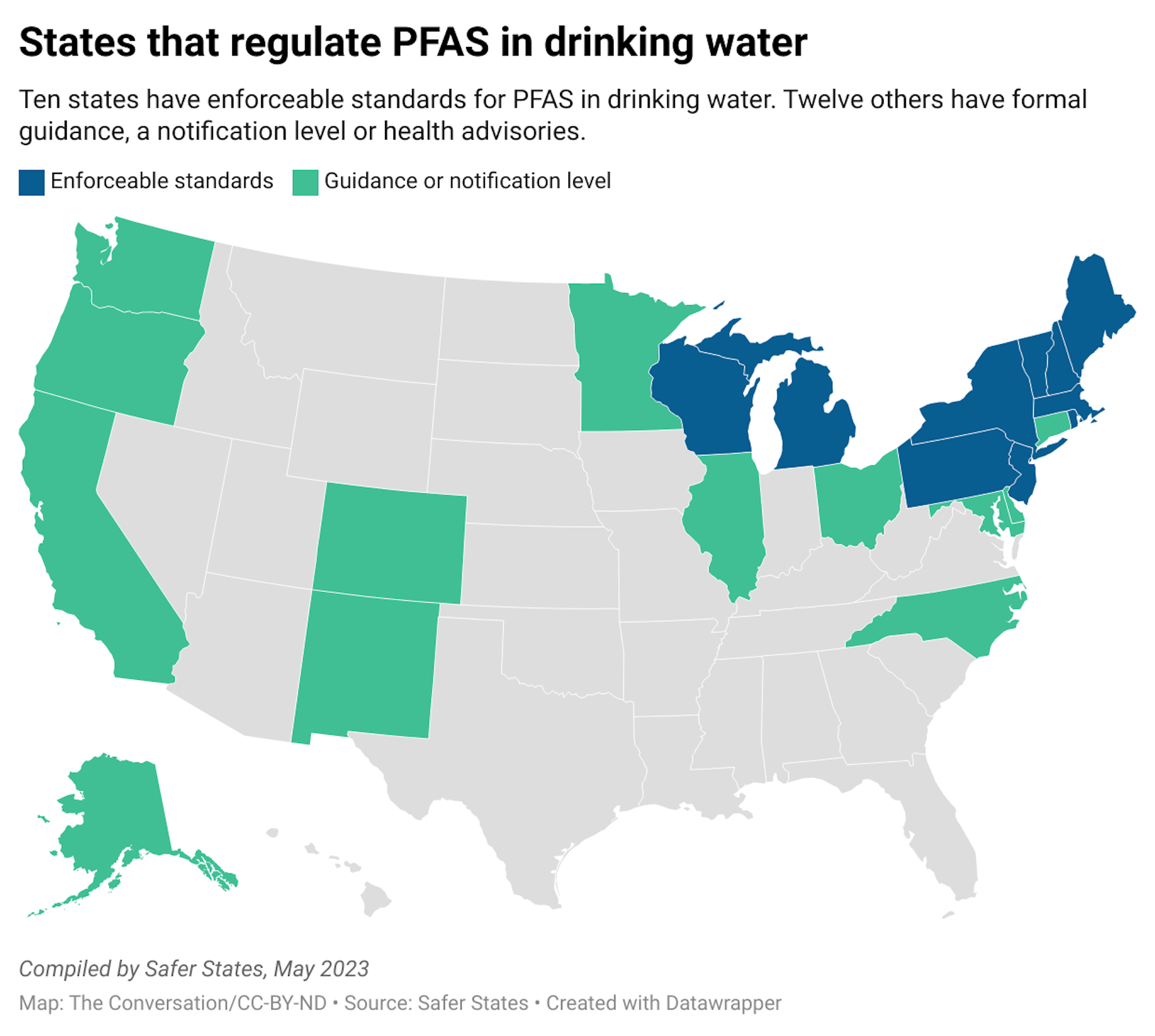
At least 28 states have laws targeting PFAS in various uses, such as in food packaging and carpets. About a dozen have drinking water standards for PFAS. But relying on state laws creates a patchwork of regulations, which places burdens on businesses and consumers to navigate regulatory nuances across state lines.
How can you reduce your PFAS exposure?
Based on current scientific understanding, most people are exposed to PFAS primarily through their diet, though drinking water and airborne exposures may be significant among some people, especially if they live near known PFAS-related industries or contamination.
The best ways to protect yourself and your family from risks associated with PFAS are to educate yourself about potential sources of exposure.
Products labeled as water- or stain-resistant have a good chance of containing PFAS. When possible, check the ingredients on products you buy and watch for chemical names containing “fluor-.” Specific trade names, such as Teflon and Gore-Tex, are also likely to contain PFAS.
Check whether there are sources of contamination near you, such as in drinking water or PFAS-related industries in the area. Strategies for monitoring and reporting PFAS contamination vary by location and PFAS source, so the absence of readily available information does not necessarily mean the region is free of PFAS problems.
For additional information about PFAS, check out the Agency for Toxic Substances and Disease Registry, EPA and U.S. Centers for Disease Control and Prevention websites, or contact your state or local public health department.
If you believe you have been exposed to PFAS and are concerned about your health, contact your health care provider. The National Academies of Sciences, Engineering, and Medicine have published guidance on PFAS exposure, testing and clinical follow-up, which includes information to help health care professionals understand monitoring and clinical implications of PFAS exposure.
This is an update to an article originally published June 21, 2022.
Kathryn Crawford, Assistant Professor of Environmental Health, Middlebury
This article is republished from The Conversation under a Creative Commons license. Read the original article.
- Details
- Written by: Kathryn Crawford, Middlebury
Dogs available for adoption this week include mixes of Alaskan husky, American blue heeler, Anatolian shepherd, border collie, German shepherd, hound, Labrador Retriever, pit bull terrier, Rottweiler and Weimaraner.
Dogs that are adopted from Lake County Animal Care and Control are either neutered or spayed, microchipped and, if old enough, given a rabies shot and county license before being released to their new owner. License fees do not apply to residents of the cities of Lakeport or Clearlake.
Those dogs and the others shown on this page at the Lake County Animal Care and Control shelter have been cleared for adoption.
Call Lake County Animal Care and Control at 707-263-0278 or visit the shelter online for information on visiting or adopting.
The shelter is located at 4949 Helbush in Lakeport.
Email Elizabeth Larson at





























- Details
- Written by: Elizabeth Larson