 How to resolve AdBlock issue?
News
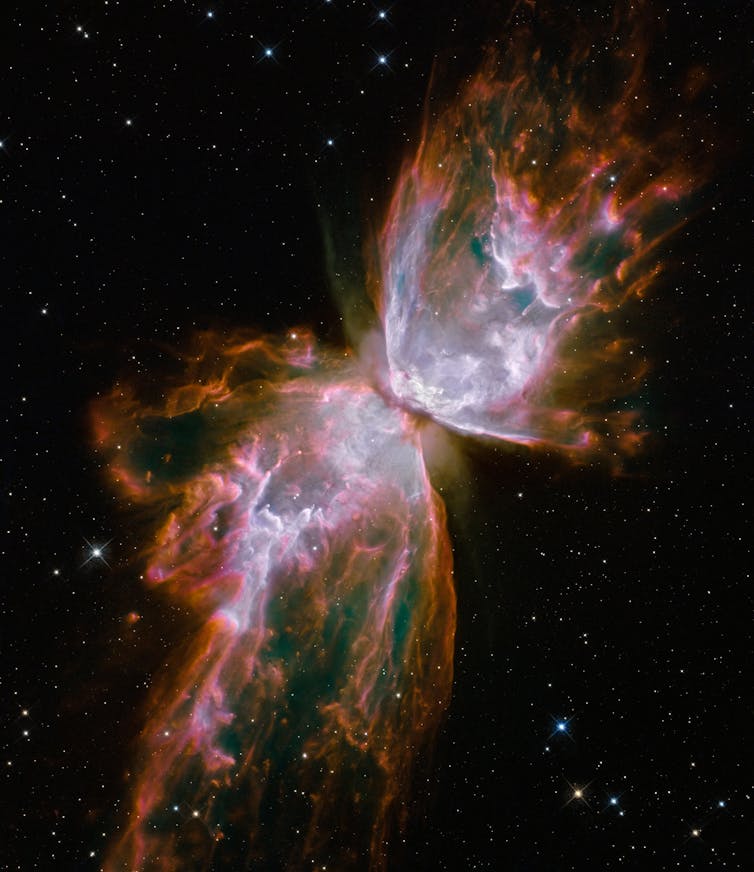
Stars like the Sun are remarkably constant. They vary in brightness by only 0.1% over years and decades, thanks to the fusion of hydrogen into helium that powers them. This process will keep the Sun shining steadily for about 5 billion more years, but when stars exhaust their nuclear fuel, their deaths can lead to pyrotechnics.
The Sun will eventually die by growing large and then condensing into a type of star called a white dwarf. But stars more than eight times more massive than the Sun die violently in an explosion called a supernova.
Supernovae happen across the Milky Way only a few times a century, and these violent explosions are usually remote enough that people here on Earth don’t notice. For a dying star to have any effect on life on our planet, it would have to go supernova within 100 light years from Earth.
I’m an astronomer who studies cosmology and black holes.
In my writing about cosmic endings, I’ve described the threat posed by stellar cataclysms such as supernovae and related phenomena such as gamma-ray bursts. Most of these cataclysms are remote, but when they occur closer to home they can pose a threat to life on Earth.
The death of a massive star
Very few stars are massive enough to die in a supernova. But when one does, it briefly rivals the brightness of billions of stars. At one supernova per 50 years, and with 100 billion galaxies in the universe, somewhere in the universe a supernova explodes every hundredth of a second.
The dying star emits high energy radiation as gamma rays. Gamma rays are a form of electromagnetic radiation with wavelengths much shorter than light waves, meaning they’re invisible to the human eye. The dying star also releases a torrent of high-energy particles in the form of cosmic rays: subatomic particles moving at close to the speed of light.
Supernovae in the Milky Way are rare, but a few have been close enough to Earth that historical records discuss them. In 185 A.D., a star appeared in a place where no star had previously been seen. It was probably a supernova.
Observers around the world saw a bright star suddenly appear in 1006 A.D. Astronomers later matched it to a supernova 7,200 light years away. Then, in 1054 A.D., Chinese astronomers recorded a star visible in the daytime sky that astronomers subsequently identified as a supernova 6,500 light years away.

Johannes Kepler observed the last supernova in the Milky Way in 1604, so in a statistical sense, the next one is overdue.
At 600 light years away, the red supergiant Betelgeuse in the constellation of Orion is the nearest massive star getting close to the end of its life. When it goes supernova, it will shine as bright as the full Moon for those watching from Earth, without causing any damage to life on our planet.
Radiation damage
If a star goes supernova close enough to Earth, the gamma-ray radiation could damage some of the planetary protection that allows life to thrive on Earth. There’s a time delay due to the finite speed of light. If a supernova goes off 100 light years away, it takes 100 years for us to see it.
Astronomers have found evidence of a supernova 300 light years away that exploded 2.5 million years ago. Radioactive atoms trapped in seafloor sediments are the telltale signs of this event. Radiation from gamma rays eroded the ozone layer, which protects life on Earth from the Sun’s harmful radiation. This event would have cooled the climate, leading to the extinction of some ancient species.
Safety from a supernova comes with greater distance. Gamma rays and cosmic rays spread out in all directions once emitted from a supernova, so the fraction that reach the Earth decreases with greater distance. For example, imagine two identical supernovae, with one 10 times closer to Earth than the other. Earth would receive radiation that’s about a hundred times stronger from the closer event.
A supernova within 30 light years would be catastrophic, severely depleting the ozone layer, disrupting the marine food chain and likely causing mass extinction. Some astronomers guess that nearby supernovae triggered a series of mass extinctions 360 to 375 million years ago. Luckily, these events happen within 30 light years only every few hundred million years.
When neutron stars collide
But supernovae aren’t the only events that emit gamma rays. Neutron star collisions cause high-energy phenomena ranging from gamma rays to gravitational waves.
Left behind after a supernova explosion, neutron stars are city-size balls of matter with the density of an atomic nucleus, so 300 trillion times denser than the Sun. These collisions created many of the gold and precious metals on Earth. The intense pressure caused by two ultradense objects colliding forces neutrons into atomic nuclei, which creates heavier elements such as gold and platinum.
A neutron star collision generates an intense burst of gamma rays. These gamma rays are concentrated into a narrow jet of radiation that packs a big punch.
If the Earth were in the line of fire of a gamma-ray burst within 10,000 light years, or 10% of the diameter of the galaxy, the burst would severely damage the ozone layer. It would also damage the DNA inside organisms’ cells, at a level that would kill many simple life forms like bacteria.
That sounds ominous, but neutron stars do not typically form in pairs, so there is only one collision in the Milky Way about every 10,000 years. They are 100 times rarer than supernova explosions. Across the entire universe, there is a neutron star collision every few minutes.
Gamma-ray bursts may not hold an imminent threat to life on Earth, but over very long time scales, bursts will inevitably hit the Earth. The odds of a gamma-ray burst triggering a mass extinction are 50% in the past 500 million years and 90% in the 4 billion years since there has been life on Earth.
By that math, it’s quite likely that a gamma-ray burst caused one of the five mass extinctions in the past 500 million years. Astronomers have argued that a gamma-ray burst caused the first mass extinction 440 million years ago, when 60% of all marine creatures disappeared.
A recent reminder
The most extreme astrophysical events have a long reach. Astronomers were reminded of this in October 2022, when a pulse of radiation swept through the solar system and overloaded all of the gamma-ray telescopes in space.
It was the brightest gamma-ray burst to occur since human civilization began. The radiation caused a sudden disturbance to the Earth’s ionosphere, even though the source was an explosion nearly 2 billion light years away. Life on Earth was unaffected, but the fact that it altered the ionosphere is sobering – a similar burst in the Milky Way would be a million times brighter.
Chris Impey, University Distinguished Professor of Astronomy, University of Arizona
This article is republished from The Conversation under a Creative Commons license. Read the original article.
- Details
- Written by: Chris Impey, University of Arizona
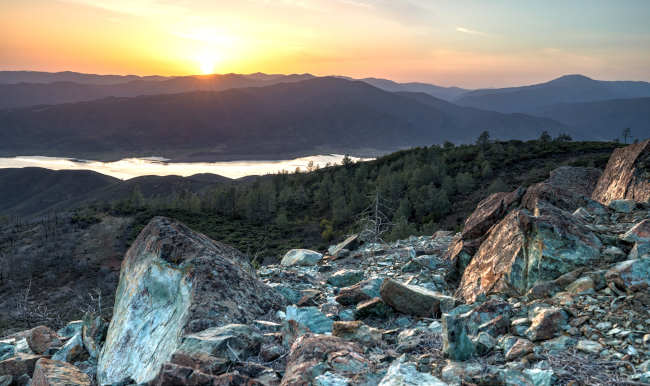
LAKE COUNTY, Calif. — The Berryessa Snow Mountain National Monument is expected to soon be expanded thanks to anticipated action by President Joe Biden.
The 330,780-acre monument — most of which is located in Lake County — is being considered for expansion through the addition of the Walker Ridge area.
That area, totaling 13,753 acres, will be referred to as “Molok Luyuk,” which means, “Condor Ridge,” in the Patwin language.
Reports came out of Washington, D.C. this week that President Biden plans to approve the monument’s expansion.
Biden was vice president when, on July 10, 2015, President Barack Obama — following an extensive campaign by state, local, tribal and federal representatives — designated the monument, which runs across the California Coastal Range in Colusa, Glenn, Lake, Mendocino, Napa, Solano and Yolo counties.
The rugged land boasts abundant wildlife, plants and other natural resources, and is a haven for outdoor recreation. It is managed by the Mendocino National Forest and the Bureau of Land Management.
Congressman Mike Thompson, Lake County’s longtime member of the House of Representatives, introduced the original legislation to designate Berryessa Monument back in 2015 and is the co-sponsor of the bill to expand the monument, as well.
"I worked to designate the Berryessa Snow Mountain region as a national monument in 2015, and I've worked to expand it ever since. The Monument's designation has played a crucial role in protecting the biodiversity of Northern California and an expansion of the Monument would have an immense positive impact on the region,” Thompson said.
While Biden’s action on the monument is pending, Sen. Bill Dodd, D-Napa, has a resolution urging the Berryessa Snow Mountain expansion which is set to be heard in a state Senate committee early next week.
“I thank the president for recognizing the incredible beauty and rich resources that make Berryessa Snow Mountain one of the most scenic and diverse landscapes in all of Northern California,” Sen. Dodd said. “It is vital to include this additional piece, which was home to native tribes for thousands of years. We can recognize the land’s cultural significance while protecting it for generations to come.”
In 2015, Sen. Dodd wrote Assembly Joint Resolution 4, the first time a state Legislature passed a measure asking the president to create a national monument. At that time, he was the Assembly member representing an area that included Lake County.
“I am proud to have been on hand when President Obama finalized the official designation,” Sen. Dodd said.
The designation arrives amid vanishing wild lands around the world. Nationwide, natural land is declining at a rate of one football field every 30 seconds, threatening plant and animal species and contributing to climate change, Dodd pointed out.
In response, both President Joe Biden and Gov. Gavin Newsom have championed the so-called 30X30 goal, which sets aside 30% of natural and coastal waters by 2030 to protect habitat, preserve history and maintain recreational opportunities.
Now, proposals before the president and Congress would expand Berryessa Snow Mountain Monument by 3,900 acres in Lake County.
They also support renaming the area commonly known as Walker Ridge to Molok Luyuk, reflecting the area’s cultural significance to many federally recognized tribes in the region.
By doing so, it would also provide opportunities for partnerships between the tribes, BLM and the U.S. Forest Service.
Sen. Dodd’s Senate Joint Resolution 10 helps fulfill state and federal goals by supporting federal approval of the monument’s expansion.
The state Senate Natural Resources committee is expected to endorse Sen. Dodd’s bill in a hearing on Monday.
Editor’s note: This story has been updated with additional information on the original legislation by Congressman Mike Thompson.
- Details
- Written by: Lake County News reports

Most of those who were discharged to long-term acute care centers had ailments that lasted for more than a year.
UC San Francisco researchers examined COVID-19 patients across the United States who survived some of the longest and most harrowing battles with the virus and found that about two-thirds still had physical, psychiatric, and cognitive problems for up to a year later.
The study, which appeared April 10 in the journal Critical Care Medicine, reveals the life-altering impact of SARS-CoV-2 on these individuals, the majority of whom had to be placed on mechanical ventilators for an average of one month.
Too sick to be discharged to a skilled nursing home or rehabilitation facility, these patients were transferred instead to special hospitals known as long-term acute care hospitals (LTACHs). These hospitals specialize in weaning patients off ventilators and providing rehabilitation care, and they were a crucial part of the pandemic response.
Among the 156 study participants, 64% reported having a persistent impairment after one year, including physical (57%), respiratory (49%), psychiatric (24%), and cognitive (15%). Nearly half, or 47%, had more than one type of problem. And 19% continued to need supplemental oxygen.
The long-term follow up helps to outline the extent of the medical problems experienced by those who became seriously ill with COVID early in the pandemic.
“We have millions of survivors of the most severe and prolonged COVID illness globally,” said the study’s first author, Anil N. Makam, MD, MAS, an associate professor of medicine at UCSF. “Our study is important to understand their recovery and long-term impairments, and to provide a nuanced understanding of their life-changing experience.”
Disabilities from long-term hospital stays
Researchers recruited 156 people who had been transferred for COVID to one of nine LTACHs in Nebraska, Texas, Georgia, Kentucky, and Connecticut between March 2020 and February 2021. They questioned them by telephone or online a year after their hospitalization.
The average total length of stay in the hospital and the LTACH for the group was about two months. Their average age was 65, and most said they had been healthy before getting COVID.
In addition to their lingering ailments from COVID, the participants also had persistent problems from their long hospital stays, including painful bedsores and nerve damage that limited the use of their arms or legs.
“Many of the participants we interviewed were most bothered by these complications, so preventing these from happening in the first place is key to recovery,” Makam said.
Although 79% said they had not returned to their usual health, 99% had returned home, and 60% of those who had previously been employed said they had gone back to work.
They were overwhelmingly grateful to have survived, often describing their survival as a “miracle.” But their recovery took longer than expected.
The results underscore that it is normal for someone who has survived such severe illness to have persistent health problems.
“The long-lasting impairments we observed are common to survivors of any prolonged critical illness, and not specific to COVID, and are best addressed through multidisciplinary rehabilitation,” Makam said.
Authors: Additional UCSF co-authors include Oanh Kieu Nguyen, MD, MAS, Eddie Espejo, MA, Cinthia Blat, MPH, W. John Boscardin, Ph.D. and Kenneth E. Covinsky, MD, MPH.
Funding: The work was supported by grants from the National Institutes of Health/National Institute on Aging (K23AG052603), the UCSF Research Evaluation and Allocation Committee (Carson and Hampton Research Funds) and the National Association of Long Term Hospitals. The authors had no conflicts of interest to disclose.
- Details
- Written by: Victoria Colliver
In addition to signing all necessary estate planning documents to put one’s affairs in order, it is necessary to consider what additional information will be needed by the persons carrying out the estate plan when the time comes.
First, it is necessary for the individual named to carry out the estate plan to know that there are estate planning documents in place, where those documents are kept, and how to gain access to them. Without such basic knowledge the family of an incapacitated or deceased person will not even know on what path to proceed.
For example, take the son of an incapacitated mother who did not know that she had transferred her financial assets to a living trust and did not know where her trust document was kept. Thus, he did not know that such planning was in place and proceeded with a court conservatorship proceeding in order to gain control over the mother’s assets to pay for her care.
The conservatorship was unnecessary under the circumstances, but the son did not know this. Eventually, the son contacted an attorney and the mother’s estate planning documents were located. The take-away is to tell the appropriate person(s) that you have estate planning documents and where they are kept.
Second, estate planning may include designating death beneficiaries to bank, brokerage and life insurance assets. This work typically does not involve the estate planning attorney as the beneficiary forms are provided by the financial institution to the customer to complete.
The disconnect between the estate plan prepared by the attorney and the death beneficiary forms prepared by the client/customer means that the estate planning binder oftentime does not disclose the identities of the account(s) and the death beneficiaries.
It is wise, therefore, to keep copies of the designated death beneficiary forms inside the estate planning binder (or other compilation of estate planning documents) so that the person administering the estate knows about such non-trust assets and knows the identities of the death beneficiaries.
These beneficiaries will then be told to contact the financial institution to request the beneficiary claims package.
For example, take the decedent who has his affairs in order except that the successor trustee discovers a retirement plan account and cannot ascertain who is the death beneficiary.
Is the beneficiary the decedent’s trust, an individual beneficiary or is it a charitable beneficiary?
Unfortunately, banks and brokerages will only provide account information about a decedent to a court appointed personal representative; this means opening a probate proceeding.
The successor trustee managing the decedent’s trust may try various hit or miss attempts at guessing who might be the designated beneficiary and having such person(s) contact the bank or brokerage to make a claim as the death beneficiary.
Alternatively, the situation may end up only be resolved by opening a probate that is otherwise unnecessary as death beneficiaries were named and so normally avoids probate.
Third, some valuable or sentimental assets may be stored in undisclosed (hidden) locations. Unless the person administering the estate knows where and how to access such valuables, it is possible that such assets will be lost due to not knowing where they are.
For example, consider the parent who hides valuable gold bars for their protection. The parent dies unexpectedly before telling his child where the gold bars are located.
Such unfortunate results may occur if someone takes it for granted that they will get to disclose such information before death but are not yet ready to do so presently. That approach is risky business.
In sum, consider what is important. Practical information about one’s estate planning and assets needs to be provided in advance to the person who will be administering the estate. This increases the likelihood of a successful administration down the road.
The foregoing brief discussion is not legal advice. Consult a qualified estate planning attorney for guidance.
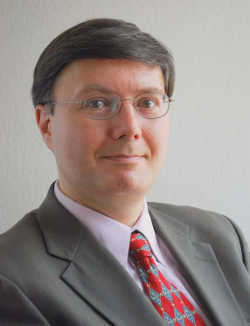
Dennis A. Fordham, attorney, is a State Bar-Certified Specialist in estate planning, probate and trust law. His office is at 870 S. Main St., Lakeport, Calif. He can be reached at
- Details
- Written by: DENNIS FORDHAM