 How to resolve AdBlock issue?
News
- Details
- Written by: Ivan Gan, University of Houston-Downtown
Travel nurses take short-term contracts that can require long commutes or temporarily living away from home. Time and again, they have to get used to new co-workers, new protocols and new workplaces.
So why would staff nurses quit their stable jobs to become travel nurses?
Well, for one, they get bigger paychecks. But U.S. nurses have other rationales besides making more money, according to a study I conducted.
To do this research, I interviewed 27 registered nurses based in different places.
Many of the people I interviewed disclosed that they left permanent positions to combat burnout. Although they welcomed the bump in pay, travel nursing also gave them the autonomy to decide when and where to work. That autonomy allowed them to pursue personal and professional interests that were meaningful to them, and it made some of the other hassles, such as long commutes, worth it.
On top of earning more money, travel nursing “gives you an opportunity to explore different areas,” said a nurse I’ll call Cynthia, because research rules require anonymity. “When you actually live there for three months, it gives you a chance to really immerse yourself in the area and really get to know not just the touristy stuff, but really hang out with the locals and really be exposed to that area.”
Other study participants said they enjoyed the novelty and educational opportunities.
“You don’t get bored or stuck in a routine,” Michelle said. “You’re always trying to learn new policies at the new hospital that you’re in, learning about the new doctors, nursing staff, new ways of doing things, where things are located. That helps keep me from feeling burned out so quickly.”
Said Patricia: “I want to see how other operating rooms across the country do things and how they do things differently. I do learn a lot of things going from place to place.”

Why it matters
A growing number of U.S. nurses were obtaining temporary assignments before the COVID-19 pandemic began.
But travel nursing became much more widespread in 2020, when hospitals were scrambling to keep their staffing levels high enough as millions of Americans were becoming infected with the coronavirus, straining capacity in many communities.
While compensation varies widely, the median pay of registered nurses in 2022 was US$81,220, about 35% less than the $110,000 that registered nurses who traveled earned.
At the height of the COVID-19 pandemic, travel nurses could earn an even bigger premium. Many were paid twice as much as staff nurses.
Once the number of Americans with severe symptoms fell, that premium declined too. But there are still over 1.7 million travel nurses in the U.S. Hiring them is one of the main ways that hospitals cope with a long-term shortage of nurses.
But nurses with permanent jobs can get aggravated by this arrangement when they learn how much more travel nurses earn for doing the same work, as I found through another research project.
What other research is being done
Research supports a widely reported trend: More Americans have temporary jobs and freelance employment than in the past.
While travel nurses can help hospitals, nursing homes and doctors’ offices meet staffing needs, there are signs that patients don’t always fare as well with their care.
And a Canadian study found that when hospitals let staff nurses work part time and offer other alternative arrangements, their retention rates may rise.
The Research Brief is a short take about interesting academic work.
Ivan Gan, Assistant Professor of Communication Studies, University of Houston-Downtown
This article is republished from The Conversation under a Creative Commons license. Read the original article.
- Details
- Written by: Robert Sanders
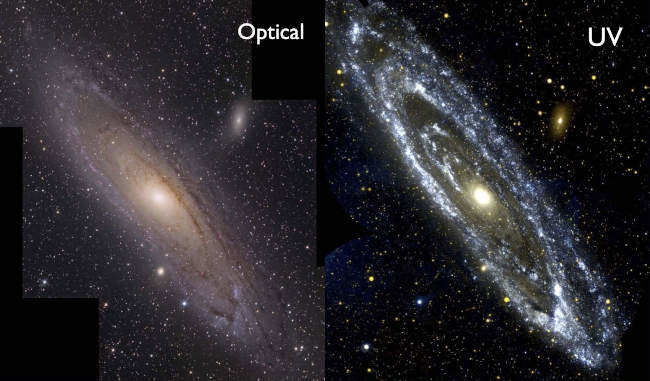
BERKELEY, Calif. — An orbiting space telescope approved by NASA last month and scheduled for launch in 2030 will conduct the first all-sky survey of ultraviolet, or UV, sources in the cosmos, providing valuable information on how galaxies and stars evolve, both today and in the distant past.
The $300 million satellite mission, called UVEX or UltraViolet EXplorer, will be managed by the Space Sciences Laboratory, or SSL, at the University of California, Berkeley.
The mission’s principal investigator is Fiona Harrison, a UC Berkeley Ph.D. recipient who is a professor of physics at the California Institute of Technology in Pasadena, California.
The telescope’s all-sky UV survey will complement ongoing or planned surveys by other missions over the next decade, including the optical and infrared Euclid mission led by the European Space Agency with NASA contributions, and NASA’s Nancy Grace Roman Space Telescope, an infrared telescope set to launch by May 2027. Together, these missions will help create a modern, multi-wavelength map of our universe.
“When UVEX launches, for the first time we'll have the entire sky covered from the UV all the way through the infrared,” said Daniel Weisz, one of the science team leaders for the UVEX mission and a UC Berkeley associate professor of astronomy. “Having ultraviolet coverage of the entire sky, which has never really been done before, is groundbreaking.”
UV emissions come from hot objects, but these wavelengths are blocked by Earth's atmosphere and must be studied from space.
The survey will focus on hot, massive blue stars — many of which are thought to be members of binary star systems — as well as exploding stars. In binary star systems, the most massive of the stellar pair often strips material from its companion, which exposes its hot UV-emitting core. UVEX will map the distribution of these “stripped” stars in galaxies around the Milky Way.
The telescope also will carry a UV spectrograph, jointly built by UC Berkeley and Caltech, to record detail about the UV wavelengths emitted by massive stars and during stellar explosions. These observations will provide new details about how stars and galaxies form and how they die.
“One of the things we're going to produce is a chart of the whole pathway from the genesis of these binary stars all the way to what happens when they explode and interact with whatever materials around them that they've lost over time,” he said. “UVEX will just completely change the field.”
UVEX will also be able to quickly point toward newly discovered sources of UV light in the universe. This will enable it to capture the light that follows bursts of gravitational waves caused by merging neutron stars in binary systems, events that are regularly recorded by three large collaborations around the globe, including the Laser Interferometer Gravitational-Wave Observatory (LIGO).
“A lot of transient events are best seen in the ultraviolet,” said Bill Craig, UVEX project manager. “Having a wide field of view to follow gravitational wave events is a really strong reason for selecting this mission now, so that as LIGO goes through its next campaigns, UVEX will be up there to zero once they see a merger. We then can zip over and see the aftermath of that.”
Low-mass galaxies today and in the early universe
Weisz is particularly interested in low-mass galaxies — those that are about one-tenth the size of the Milky Way.
The most famous of these are the Large and Small Magellanic Clouds — satellites of the Milky Way that are one-tenth and one-hundredth the mass of the Milky Way, respectively — but there should be millions of smaller galaxies within our galactic neighborhood. Only about 50,0000 have so far been seen, and few have been studied spectroscopically at UV wavelengths.
“Our sensitivity limits extend to galaxies that are 10,000 times less massive than the Milky Way,” Weisz said. “That's about a million solar masses.”
Such small, but faint, nearby galaxies are hard to identify using optical or infrared telescopes, he said, because they look nearly identical to very distant galaxies whose UV emissions have been redshifted to optical and infrared wavelengths. But if they also emit UV light, they're likely our near neighbors.
“When you see a galaxy that has UV, optical and infrared, it has to be nearby,” Weisz said. “We're trying to map out the structure of these millions of low-mass galaxies across the entire sky in order to better understand how mass, which is mostly made of dark matter, is distributed in the local universe.”
A better understanding of nearby low-mass galaxies will give insight into the nature of many low-mass galaxies now being discovered in the very early universe by the James Webb Space Telescope, or JWST.
“These nearby low-mass galaxies are pretty small, but also very deficient in metals. Some of them may only have 1% of the metals of the sun or less,” said Weisz. “And it turns out that these very metal-poor, but very active, star-forming galaxies are analogous to what people are finding with JWST at very high redshift.”
Metals, to astronomers, are anything heavier than hydrogen and helium, the primordial material of the universe. A low metal content implies that a galaxy has not had enough cycles of star formation and explosion to seed the galaxy with many of the heavier elements, like carbon, oxygen and iron.
Capturing UV from a supernova
Another UVEX science team leader from UC Berkeley, Raffaella Margutti, along with Ryan Chornock, associate adjunct professor of astronomy, are interested in what UV data can tell us about exploding supernovae.
“Our goal is to acquire the first UV spectra of very young supernovae less than two days after they explode,” said Margutti, professor of physics and of astronomy. “If we can get the first time sequence of UV spectra from a supernova, it can help constrain the chemical composition of exploding stars and help us understand their behavior in the last moments of their evolution before core-collapse.”
Other UC Berkeley members of the UVEX team are Wenbin Lu, assistant professor of astronomy, and Miller Research Fellow Yuhan Yao, who focus on high-energy transient phenomena, and Joshua Bloom, an astronomy professor who works on ways to combine data from multiple satellites and telescopes in order to respond quickly to transient events.
NASA selected the UVEX Medium-Class Explorer (MIDEX) concept to continue into development after a detailed review of two proposed MIDEX missions and two Mission of Opportunity concepts, and after evaluating the proposals based on NASA’s current astrophysics portfolio and the agency's available resources.
The UVEX mission was the only proposal selected, but its launch was pushed back two years, to 2030, because of budgetary reasons. The two-year mission will cost approximately $300 million, not including launch costs.
Craig, who has managed several other NASA-funded missions, including the Ionospheric Connection Explorer, or ICON, which launched in 2019, noted that UVEX is a much larger satellite and has about twice the budget as ICON.
SSL has also been mission control for numerous other space missions, including the Mars Atmosphere and Volatile Evolution, or MAVEN, and NuStar, an X-ray observing satellite that was also a collaboration with Fiona Harrison of Caltech.
“I think you could say that this represents a sort of validation of the fact that Berkeley and the Space Sciences Lab have built up a core competency in implementing missions that allow us to do the science that people want to do,” Craig said.
The UVEX satellite will have an elongated shape, like a shed, to accommodate the optical components of the telescope. It will measure 20 feet tall, 9 1/2 feet wide and 8 feet deep and will weigh about 2,200 pounds.
Its intended orbit, which requires one loop around the moon to establish, will at its farthest point be about 310,000 miles from Earth — closer to the moon than to our planet. This allows it to avoid the thermal stresses associated with entering and exiting Earth's shadow many times a day, which is typical of stationary satellites in low-Earth orbit.
While Craig focuses over the next six years on bringing the many pieces of the satellite together, the scientists have their own intense prep work.
“We have a ton to do because this is a two-year mission, and we're supposed to deliver everything within six months after the prime mission ends,” Weisz said. “If our job is to go find 100 million galaxies, we basically have to know how to do that before we even launch. No one's ever tried to find 100 million galaxies before across the entire sky because we've never been able to do it. So as soon as we launch and get calibrated, we're going right into science mode.”
Robert Sanders writes for the UC Berkeley News Center.
- Details
- Written by: Elizabeth Larson
MATH will meet at 6 p.m. Tuesday, April 2, in the Middletown Community Meeting Room/Library at 21256 Washington St., Middletown.
The meeting is open to the public and is in-person only.
The group will discuss and consider action on the “request for review” from the Lake County Community Development Department regarding the revised Guenoc Valley Mixed Use Planned Development Project.
The Board of Supervisors approved the project in July of 2020, but a lawsuit and a court order led to the board rescinding the approvals in June of 2022.
Community Development is asking agencies and organizations, including MATH, to determine if additional information is needed, which permits are required, and to outline environmental concerns and give recommendations for any modifications to the project to reduce potential environmental impacts.
The county is asking that comments be submitted as soon as possible, but no later than April 12.
Community Development also is planning to hold a meeting on the project in Lakeport, with the date still to be determined.
As a result, MATH is calling the special meeting and will discuss and prepare a response to the request for review.
That response will then be forwarded to the MATH membership for review before the regular April 11 meetings so that it can be submitted to Community Development by the April 12 deadline.
Documents on the project can be found here.
MATH — established by resolution of the Lake County Board of Supervisors on Dec. 12, 2006 — is a municipal advisory council serving the residents of Anderson Springs, Cobb, Coyote Valley (including Hidden Valley Lake), Long Valley and Middletown.
For more information email
Email Elizabeth Larson at
- Details
- Written by: Lake County News reports
William “Liam” Coburn of Upper Lake has been appointed to the 49th District Agricultural Association, Lake County Fair Board of Directors.
Coburn has been co-owner and culinary director of Crazy Quilt Farms since 2021. He has also been an In-Home Supportive Services provider since 2019.
Coburn was a kitchen manager at Lovejoy’s Tea Room from 2014 to 2018 and a business manager at Neiman Marcus from 2005 to 2014.
This position does not require Senate confirmation and there is no compensation.
Coburn is a Democrat.