 How to resolve AdBlock issue?
News
- Details
- Written by: Lake County News reports
The test strips detect the presence of fentanyl, offering another tool to prevent overdoses.
“Harm reduction programs like this one are a huge part of how we better protect people, how we get them into treatment,” said California Health and Human Services Secretary Mark Ghaly. “This work is time tested. Shame isn't a solution; support and science-driven policy is.”
A critical component of California’s all-hands-on-deck approach to addressing a confluence of overdose crises, NDP has distributed more than 3,918,000 kits of naloxone, resulting in more than 247,000 reported opioid overdose reversals.
The addition of test strips to that toolkit will work to prevent overdoses in the first place — and add another opportunity to connect people with recovery support and treatment.
As part of ongoing, statewide efforts, California released the Master Plan for Tackling the Fentanyl and Opioid Crisis to support overdose prevention efforts like those announced Thursday.
Recently, the state launched Opioids.ca.gov, a one-stop-shop for Californians seeking resources around prevention and treatment, as well as information on how California is working to hold Big Pharma and drug-traffickers accountable in this crisis.
- Details
- Written by: Allan Steigleman, University of Florida and Elizabeth M. Hofmeister, Uniformed Services University of the Health Sciences
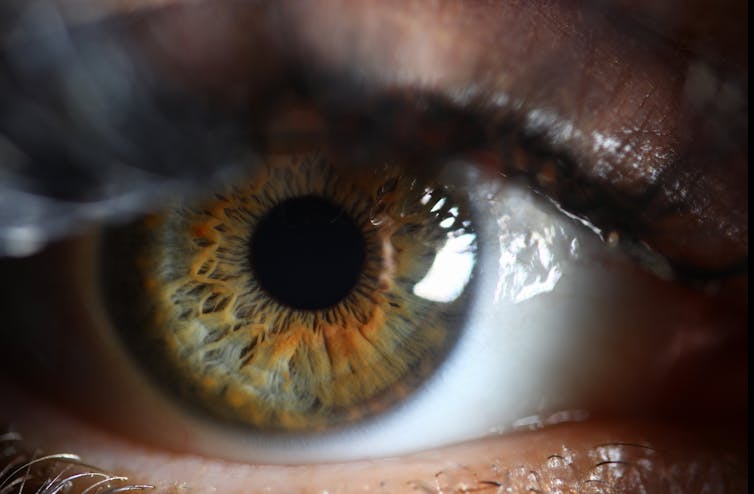
Cataract surgery is one of the most popular and commonly performed procedures in the world. The vast majority of patients have excellent outcomes with few complications.
Here are the numbers:
-
By age 80, over half of all Americans have cataracts.
-
Close to 4 million cataract surgeries are performed in the U.S. every year.
-
Over 90% of patients have 20/20 vision with glasses after surgery, although those with other eye conditions may not do as well, including those with glaucoma, a progressive disease typically associated with elevated pressure within the eye; diabetic retinopathy, which ultimately can cause leakage in the retinal tissues; and macular degeneration, a disease that is typically related to age.
-
The rate of post-surgery infection from endophthalmitis is less than 0.1%.
You can listen to more articles from The Conversation, narrated by Noa.
As ophthalmologists who have performed thousands of these procedures, we know that many patients have misconceptions about both cataracts and the surgery. For example, some think a cataract is a growth on the eye’s surface.
We like to compare a cataract with the frosted glass of a bathroom window, where light can be transmitted but details cannot. Or when turbulence from a storm causes normally clear water in the ocean to become murky. In much the same way, the eye’s once transparent lens becomes cloudy.
About the surgery
Cataract surgery removes the clouded lens of the eye and replaces it with a new, clear lens to restore your vision. Most patients report the procedure is painless.
It’s typically an elective surgery that is performed on an outpatient basis. The patient is often awake, under local anesthesia, with sedation similar to that used for dental procedures. We like to say patients receive the equivalent of three margaritas in their IV.
Numbing drops are then applied to the eye’s surface, along with an anesthetic inside the eye. Patients with claustrophobia, or movement disorders such as Parkinson’s disease, may not be suitable candidates for awake surgeries and require general anesthesia.
Before surgery, patients receive dilating drops to make the pupil as large as possible. The surgeon makes a tiny incision, usually with a small pointed scalpel, between the clear and white part of the eye to gain access to the lens capsule, a thin membrane similar in thickness to a plastic produce bag at the grocery store.
This capsule is suspended by small fibers called zonules, which are arranged like the springs that suspend a trampoline from a frame. The surgeon then creates a small opening in the capsule, called a capsulotomy, to gain access to the cataract. The cataract is then broken into smaller parts so they are removable through the small incision.
This is similar to a tiny jackhammer, breaking the large lens into smaller pieces for removal. That sounds scary, but it’s painless. Ultrasound emulsifies the lens and vacuum power then aspirates it from the eye.
Laser-assisted cataract surgery has been found to have similar outcomes to traditional cataract surgery.
Complications are rare
Serious complications, such as postoperative infection, bleeding in the eye or a postoperative retinal detachment are rare; they occur in approximately 1 in 1,000 cases. But even in many of these situations, appropriate management can salvage useful vision.
Capsular complications deserve additional discussion. According to some studies, they occur in up to 2% of cases. If a hole or tear of the posterior capsule is encountered during cataract surgery, the clear gel in the vitreous – the back chamber of the eye – may be displaced into the front chamber of the eye.
If that happens, the gel must be removed at the time of the cataract surgery. This will reduce the likelihood of additional postoperative complications, but those who have the procedure, known as a vitrectomy, have an increased risk for additional complications, including postoperative infections and postoperative swelling.
After the surgery
Patients usually go home right after the procedure. Most surgery centers require that the patient have someone drive them home, more for the anesthesia rather than the surgery. Patients begin applying postoperative drops that same day and must wear an eye shield at bedtime for a few weeks after surgery.
Patients should keep the eye clean and avoid exposure to dust, debris and water. They should try not to bend over and should avoid heavy lifting or straining in the first week or so after surgery. Lifting or straining can cause a surge of blood pressure to the face and eye. Known as a choroidal hemorrhage, it can lead to bleeding into the wall of the eye and be devastating to vision.
Things that cause only moderate increases in heart rate such as walking are OK. Routine postoperative examinations are usually completed the day after surgery, about a week after surgery and about a month after surgery.
A choice of lens
The plastic lens used to replace the cataract, or intraocular lens, requires careful sizing for optimal results and a nuanced discussion between patient and surgeon.
Early intraocular lens technologies were monofocal, and most patients with these lenses chose distance correction and used reading glasses for near tasks. This is still the preferred approach for approximately 90% of patients having cataract surgery today.
Recent advances have led to intraocular lenses that offer multifocality – the opportunity to have near as well as distance vision, without glasses. Some multifocal lenses are even in the trifocal category, which includes distance, near, and intermediate vision, the latter of which in recent years has become very important for computer and phone use.
Most patients with these advanced technology multifocal lenses are happy with them. However, a small percentage of patients with multifocal lenses can be so bothered by visual disturbances – notably night glare and halos around light sources in the dark – that they request removal of the multifocal lens to exchange it for a standard intraocular lens. These exchanges are a reasonable option for such situations and offer relief for most affected patients.
Determining who’s an ideal candidate for a multifocal intraocular lens is an area of active research. Most clinicians would recommend against such a lens for a patient with a detail-oriented personality. Such patients tend to fixate on the shortcomings of these lenses despite their potential advantages.
As with many technologies, current generation advanced technology intraocular lenses are much better than their predecessors. Future offerings are likely to offer improved vision and fewer side effects than those available today.
But these newer lenses are often not reimbursed by insurance companies and often entail substantial out-of-pocket costs for patients.
Deciding on what type of lens is best for you can be complicated. Fortunately, except in unusual circumstances, such as when a cataract develops after trauma to the eye, there is seldom a hurry for adult cataract surgery.
Allan Steigleman, Associate Professor of Ophthalmology, University of Florida and Elizabeth M. Hofmeister, Associate Professor of Surgery, Uniformed Services University of the Health Sciences
This article is republished from The Conversation under a Creative Commons license. Read the original article.
- Details
- Written by: Lake County News reports
LAKE COUNTY, Calif. — Lake County’s newest poet laureate will be inaugurated this weekend.
Brenda Yeager, the 2024-2026 Lake County poet laureate, will be celebrated in an event on Saturday, March 30.
The event will take place from 1 to 3 p.m. at Fore Family Vineyards Tasting Room, 3924 Main St. in Kelseyville.
The celebration also will include a farewell to outgoing poet laureate, Georgina Marie Guardado, who served two terms in the role.
There will be readings from former poets laureate and Yeager, along with refreshments and light snacks provided.
In addition to the in-person event on March 30, there will be a virtual inauguration via Zoom on Monday, April 1, from 5 to 7 p.m.
Register for the online event here.
- Details
- Written by: Lake County News reports
With the support of grassroots leaders, former state controller, Board of Equalization member and California budget director, Betty Yee on Wednesday officially launched her campaign for governor.
Citing her experience bringing accountability to government as an asset and her outsider mindset as a strength, Yee pledged to put the state back-on-track for all Californians.
She joins a field that so far includes Lt. Gov. Eleni Kounalakis, former State Senate leader Toni Atkins and State Superintendent of Schools Tony Thurmond.
Yee served on the Board of Equalization representing the First District — which included 21 counties, among them Lake — for several years before becoming state controller. She visited Lake County in that capacity to meet with local leaders in the spring of 2010.
As state controller, Yee said she took on big corporations, righted discrimination in the state’s tax code, giving more rights to LGBTQ+ partners, and discovered over $7 billion in improper spending, translating into real impact for California’s working families.
While traveling the state, Yee was encouraged by many to use her expertise to tackle California’s affordability crisis, to lift millions of Californians and their families into the middle class.
Yee said she could no longer ignore the need for her proven leadership and experience of knowing how to get the most out of every state budget dollar to ensure California truly adds up for everyone.
“Things in California just don’t add up anymore. Families are working harder than ever, but the cost of housing, food, college, childcare, elder care, and more is moving out of our reach,” Yee said. “Together we have the grit and the power to make California add up for all of us again.”
“I believe in Betty because she is an inclusive leader with a steady hand at the wheel. Everyday she demonstrates the drive to do the right thing –– to lift up all Californians,” said Jefferson Coombs, community leader, social justice organizer, and education advocate. “Betty's authenticity, intersectional leadership, and vision inspires and empowers ordinary people to do extraordinary things in their communities.”
Yee’s story begins with pursuing the California Dream. Yee was born in San Francisco to Chinese immigrant parents who built a laundry and dry cleaning business from scratch in the Parkside District of San Francisco.
The second oldest of six children, Yee grew up speaking no English in the home. Her family lived in a one-room apartment behind the family’s laundry, where she shared a sofa bed with her four sisters. Throughout her primary education, Yee attended the city’s public schools wearing clothes her mother sewed to save on the cost of store-bought clothes.
Like many first-generation Californians, Yee’s parents didn’t speak English, and therefore at age 8, Yee began managing the books for the family’s laundry.
Early on, Yee learned how numbers add up, but also what the numbers meant for her family — if weekly earnings came up short, that was one less carton of milk or loaf of bread for her family. She learned when things are out of balance, too many communities are left to fend for themselves, and sometimes get left behind.
With support from her family and community, Yee went on to earn a bachelor’s degree from UC Berkeley, where she returned decades later to serve on the Cal Alumni Association board to help raise funds for much-needed scholarships.
She holds a master’s degree in public administration from Golden Gate University.
She currently serves as the vice chair of the California Democratic Party.