 How to resolve AdBlock issue?
News
- Details
- Written by: Lake County News reports
The reason: Lake County Animal Care and Control is currently understaffed and so unable to provide those customary services, officials reported.
Effective Friday, March 1, those services will be suspended while new staff is onboarded and trained.
County officials reported that work has already begun to train one newly hired animal control officer and recruit for the remaining vacancy.
After-hours on-call services will resume when staffing levels allow for safe operation, the county reported.
If injured stray dogs and cats are found outside of Animal Care and Control’s business hours, they can still be taken to a local veterinarian to receive care.
“Our contract answering service will still be receiving after-hours calls during this time,” said Lake County’s Animal Care and Control Director Jonathan Armas. “Any calls received will be documented, and an officer will respond the next weekday.”
Any further questions can be directed to Lake County Animal Care and Control during regular business hours, Monday through Friday, 8 a.m. to 5 p.m., at 707-263-0278.
“We appreciate the community’s understanding and are committed to providing the best possible services within resource and staffing limitations,” said Armas.
- Details
- Written by: Lake County News reports
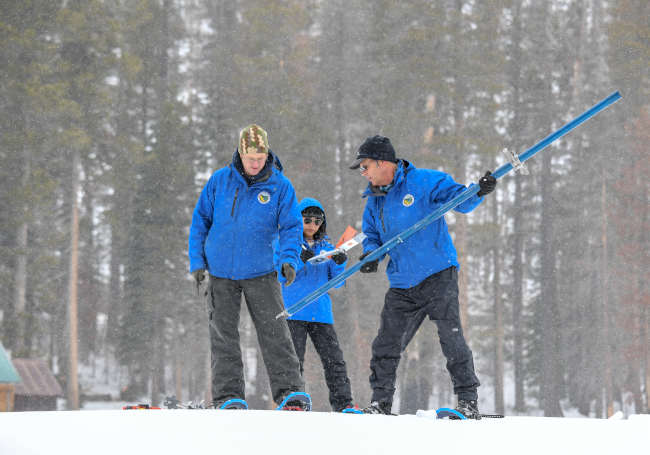
As California enters the last month of the traditional snow season, recent storms have raised the snowpack to near average levels in most regions.
The Department of Water Resources conducted the third snow survey of the season at Phillips Station on Thursday.
The manual survey recorded 47.5 inches of snow depth and a snow water equivalent of 18 inches, which is 77 percent of average for this location.
The snow water equivalent measures the amount of water contained in the snowpack and is a key component of DWR’s water supply forecast.
Thursday’s results reflect continued improvement in the snowpack since the slow and dry start to the water year.
DWR’s electronic readings from 130 stations placed throughout the state indicate that the statewide snowpack’s snow water equivalent is 18.7 inches, or 80 percent of average for this date, an improvement from just 28 percent of average on January 1.
The statewide snowpack is currently only 70 percent of the critical April 1 average, when the snowpack is typically at its peak. An incoming storm is expected to bring several feet of snow to the Sierra Nevada this weekend.
“We are now in the last month of the traditional snow season and while conditions have dramatically improved since the beginning of the year, March will be critical in determining if we finish above or below average,” said DWR Director Karla Nemeth. “No matter how the season ends, we are ready to take advantage of the water we do have to benefit communities, agriculture, and the environment, and continue storing stormwater in our groundwater basins for future use.”
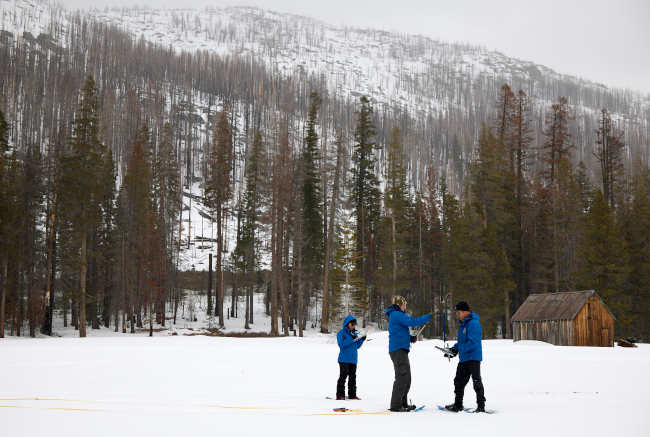
While California saw a number of storms in January and February that caused flooding in many areas of the state, the storms were warmer than average, dropping more precipitation as rain rather than snow, especially in Southern California.
Overall statewide precipitation is 103 percent of average for this date, running well ahead of the snowpack.
While surface water storage in California’s major reservoirs is currently 119 percent above average and the state continues to benefit from efforts to capture and store as much water as possible, the latest forecasts from DWR project snow runoff could be below average this spring due to the unusually dry start to the water year.
DWR recently increased projected allocations from the State Water Project, and the forecasted allocation is expected to be revised again next month based on recent storms.
“California has seen several extreme climate events so far this water year, including record rainfall in Southern California,” said Dr. Michael Anderson, state climatologist with DWR. “While this pushed statewide precipitation above average, the snowpack still has not caught up from the dry conditions earlier this winter and local conditions still vary significantly from region to region. The upcoming storm will deliver more snow, but the critical month of March will have to deliver enough snowpack to make up for the dry fall and slow start to the year.”
On average, the Sierra snowpack supplies about 30 percent of California’s water needs. Its natural ability to store water is why the Sierra snowpack is often referred to as California's “frozen reservoir.”
Data from these snow surveys and forecasts produced by DWR’s Snow Surveys and Water Supply Forecasting Unit are important factors in determining how DWR manages the state’s water resources.
DWR conducts five snow surveys at Phillips Station each winter near the first of each month, January through April and, if necessary, May. The next and possibly final survey is tentatively scheduled for April 2.
For California’s current hydrological conditions, visit https://cww.water.ca.gov.
For more information on finding your flood risk, visit https://myhazards.caloes.ca.gov/.
For information on obtaining flood insurance, visit https://www.floodsmart.gov/.
- Details
- Written by: Lake County News reports
The California Climate Credit — automatically applied to Californians’ bills every April and October — is a direct result of the state’s nation-leading cap-and-trade climate program that requires polluters to pay for climate action.
Since 2014, California households have already received an average of $971 in combined automatic April and October climate credits on their utility bills, totaling more than $14 billion statewide.
“Every year, California’s nation-leading climate laws deliver real climate action while giving you money back on your utility bills,” said Gov. Gavin Newsom. “This relief will support millions of California families.”
See how much your climate credit will be here.
California will provide a total of $2.7 billion in credits — $1.6 billion for electric customers, $1 billion for natural gas customers, and $160 million for small businesses.
The credits range from $32 to $175 for electricity bills — with most set to receive $55 to $86 — and approximately $58 to $86 on natural gas bills for residential customers of PG&E, Southern California Edison, San Diego Gas & Electric, Southern California Gas Company, Bear Valley, Liberty, PacifiCorp and Southwest Gas. Californians can check how much their credit will be here.
Californians do not need to do anything to get the credit. The California Climate Credit comes from the State’s Cap-and-Trade Program managed by the California Air Resources Board. The credit on utility bills represents the consumer’s share of the payments from the State’s program.
- Details
- Written by: Lake County News reports
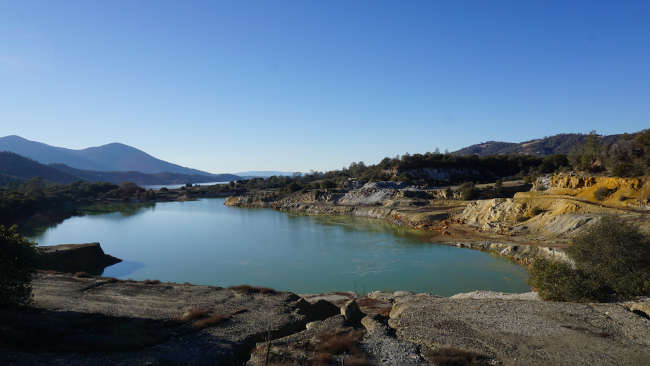
LAKE COUNTY, Calif. — The U.S. Environmental Protection Agency has announced a third and final wave of more than $1 billion for cleanup projects nationwide at over 100 Superfund sites as part of President Biden’s Investing in America agenda, one of them in Lake County.
This funding is made possible by the President’s Bipartisan Infrastructure Law and will launch new cleanup projects at 25 Superfund sites nationwide, including California’s Sulphur Bank Mercury Mine in Clearlake Oaks, Lava Cap Mine in Nevada City, and Southern Avenue Industrial Area in South Gate.
“Thanks to unprecedented funding from President Biden’s Bipartisan Infrastructure Law, EPA is delivering significant investment to achieving the goal of long-term protection for communities living closest to contaminated sites,” said EPA Pacific Southwest Regional Administrator Martha Guzman. “With our Superfund cleanups, we are taking firm action to protect the health, safety, and environment of communities throughout California and the Pacific Southwest.”
“Californians shouldn’t have to worry about the safety of their drinking water, soil, or food supply, but residents near mining and manufacturing sites face significant health risks,” said U.S. Sen. Alex Padilla. “Thanks to the Bipartisan Infrastructure Law, millions of dollars are coming to California to help clean up hazardous waste in these communities — and I will keep fighting to hold polluters responsible so that taxpayers aren’t footing the bill for cleanups.”
Thanks to the Bipartisan Infrastructure Law funding announced today, three new cleanup projects in California will start.
Today’s announcement will fund mining waste cleanup at the Sulphur Bank Mercury Mine site in Clearlake Oaks, located on Elem Colony of Pomo Indians land.
This cleanup will help protect nearby residential areas, safeguard residents’ long-term safety and health and make on-site mine areas safe for limited use by Elem Indian Colony residents for hunting, fishing, foraging, and transit to nearby lands.
The site was mined intermittently for sulfur and mercury between 1865 and 1957 and now contains about 2.5 million cubic yards of mine waste, which stretches along 1,300 feet of shoreline in the Oaks Arm area of Clear Lake.
Mine waste at the site has contaminated soils, surface water, and groundwater and has left mercury in sediments at the bottom of Clear Lake that have built up in fish.
EPA told Lake County News that its Region 9 requested $30 million for the Sulphur Bank cleanup, but the final allocation has not yet been determined.
Superfund breaks projects into “Operable Units,” or OUs, to delineate geographic areas/stages of the project.
For Sulphur Bank, there are 3 OUs. They include:
OU-1: the mine itself, Herman Impoundment (the flooded mine pit in the center of the site), and the impacted residential soil areas on the Elem Indian Colony and to the south of the site. This has a cost estimate of $94 million.
OU-2: Clear Lake and its sediments: EPA continues to study Clear Lake (OU-2) to understand how it might best address the mercury contamination in the lake. EPA anticipates the proposed plan for the lake and sediment cleanup is several years away.
OU-4: the North Wetlands and study area. OU-4 was created in 2021. EPA said it is still evaluating the contamination in this area and anticipates a cleanup plan in several years.
In other projects, at the Lava Cap Mine site in Nevada City, California, funding will be used to construct a wetland treatment plant to treat water discharging from the former mine area. The chemicals of concern at this site are arsenic, manganese, and iron. Arsenic is a known carcinogen. Iron and manganese are not considered risks to human health but can cause taste, odor, color, and staining problems when carried in water. The treatment plant will use processes, including metal precipitation, settling ponds, and lime addition, before downstream discharge. Lava Cap is a 33-acre former gold and silver mine just east of Grass Valley, California, operated from 1861 to 1943.
Finally, cleanup will begin at the Southern Avenue Industrial Area site in South Gate, where approximately 1,400 cubic yards of contaminated soil pollute the soil and groundwater. For decades, the now sectioned-off parking lot served as the site of an industrial facility for hot-melt carpet adhesive tape, contaminating the nearby soil with volatile organic compounds (VOC) like lead and polychlorinated biphenyls (PCBs). These VOCs linger in the soil to this day. Cleanup will prevent future VOC exposure, which can cause a variety of health effects including: eye, nose, and throat irritation; headaches and loss of coordination; nausea; and damage to the liver, kidneys, or central nervous system. Some VOCs are suspected or proven carcinogens. PCBs exposure can alter thyroid and reproductive function and increase the risk of developing cardiovascular and liver disease and diabetes.
In addition to the new cleanup projects, this investment supports the continued operation of a cleanup effort initially funded by prior Bipartisan Infrastructure Law – investment at the Argonaut Mine Superfund site in California.
At the Argonaut Mine site in Jackson, California, mining operations occurred from the 1850s to 1942. Portions of the site's soil still have high levels of arsenic, lead, mercury, and other metals and remain off-limits to the public.
Since 2013, EPA has been working to understand and address the contamination at the site, removing the soil from a nearby lot and several residential yards in 2013 and removing soil in addition to capping a slope at Jackson Junior High School in 2015. Thanks to earlier funding from President Biden’s Bipartisan Infrastructure Law, EPA undertook a short-term cleanup known as a removal action at Argonaut from June 1, 2022, to November 2023. This removal action addressed the highest concentrations of contamination, which posed a risk to nearby community members if they accessed the site.
That prior cleanup cost approximately $25 million and moved 130,000 cubic yards of mine waste and contaminated soil/bedrock. The area of work covered 28 acres and consolidated all tailings and contaminated soil into a landfill on top of existing tailings and was capped with layers of clay, rodent barrier (gravel or stainless-steel wool), and composted soil that is 3.5 feet thick. Other areas not part of the landfill were also capped to prevent water percolation into the subsurface and as a barrier to remaining place waste.
Thousands of contaminated sites exist nationally due to hazardous waste being dumped, left out in the open, or otherwise improperly managed. These sites can include toxic chemicals from manufacturing facilities, processing plants, landfills, and mining and can harm the health and well-being of local communities in urban and rural areas.
This new investment is the final wave of funding from the $3.5 billion allocated for Superfund cleanup work in the President’s Bipartisan Infrastructure Law.
So far, EPA has deployed over $2 billion for cleanup activities at over 150 Superfund National Priorities List sites. EPA has been able to provide as much funding for cleanup work in the past two years as it did in the previous five years while delivering on President Biden’s Justice40 Initiative, which set a goal to deliver 40% of the overall benefits of certain federal investments to disadvantaged communities that are marginalized by underinvestment and overburdened by pollution.
EPA is committed to continuing this work, advancing environmental justice, and incorporating equity considerations into all aspects of the Superfund cleanup process. More than one in four Black and Hispanic Americans live within three miles of a Superfund site.
These investments are restoring the health and economic vitality of communities exposed to pervasive legacy pollution. Thus far, nearly 80% of the funding from the Bipartisan Infrastructure Law has gone to sites in communities with potential environmental justice concerns. Out of the 25 sites to receive funding for new cleanup projects, more than 75% are in communities with potential environmental justice concerns based on data from EJSCREEN.