 How to resolve AdBlock issue?
News
- Details
- Written by: José Vadi
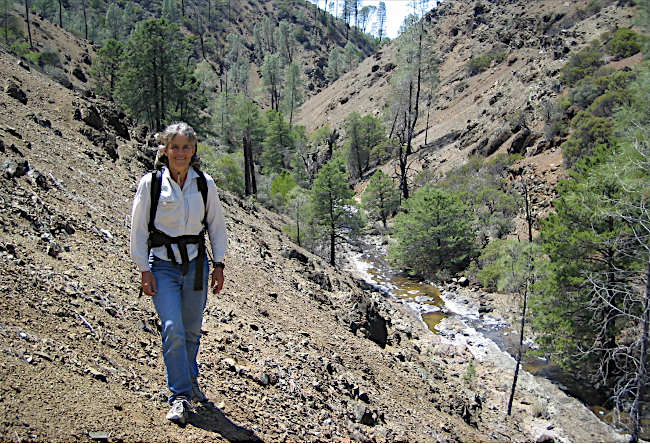
By definition, the middle of nowhere is hard to find, but Susan P. Harrison defines it as the “triple junction of Napa, Lake and Yolo counties” and the center of a wealth of research possibilities.
“If you drew a line from the northern tip of Lake Berryessa to the southern tip of Clear Lake, it’d be right in the center of that line,” Harrison said, describing UC Davis’ McLaughlin Natural Reserve, a research site “very rich in natural diversity.”
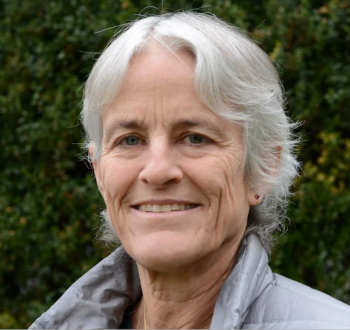
Harrison ’83, M.S. ’86, is a professor and chair of the Department of Environmental Science & Policy.
In a 15-year study at the reserve, Harrison analyzed how a loss of plant species richness, particularly of native wildflowers, is tied to drier winters such as those experienced during drought.
She reported on her work in a paper titled “Climate-Driven Diversity Loss in a Grassland Community,”published in the Proceedings of the National Academy of Sciences in 2015, before being inducted into the academy in 2018.
“There's interesting soil variation, which gives rise to lots of plant community variation,” Harrison explained, referring to McLaughlin as “this incredible place for all kinds of ecological research.”
Harrison grew up in Sonoma County with five siblings and a nature-enthusiast father. But it wasn’t until her undergraduate years at UC Davis that she became “aware” of science. She received a bachelor’s in zoology before earning a master’s in ecology. After earning her doctorate in biology at Stanford, Harrison returned to UC Davis as a faculty member in 1991.
For Harrison, it “never made all that much sense to go study someplace a thousand miles away when there's all this cool, incredible natural diversity right here in lovely Northern California.”
Pioneering work
Harrison is most proud of supporting the development of the UC Natural Reserve System, describing the network as the product of “a grassroots movement of environmental scientists.”
The need for the reserves began when researchers in Southern California encountered difficulties studying reptiles and plants, with many of their favorite research sites “getting developed and paved over,” according to Harrison. As a master’s student, she joined the campus advisory committee for the reserve system to help some reserves find better financial footing.
“I started doing my research on these reserves almost 40 years ago, and I still do,” Harrison explained, noting today the nearly 40 UC reserves across California. “There's nothing like it and it’s an amazing resource. Not only is there this beautiful piece of land that protects some special part of the natural heritage, but over time it develops this kind of knowledge base.”
Looking ahead
The future of Harrison’s work focuses on the effects of climate change and its impacts across the state, including “potentially a lot of change in forests” due to increased temperature, lack of water and fires.
From the research opportunities in the “middle of nowhere” at McLaughlin reserve to her roles on campus, Harrison has found her place and values at Davis.
“I heard somebody say once: ‘We don't hire stars, we make them,’” Harrison said. “Davis is a really wonderful place. Despite all the challenges we face, I hope that we can stay that way. I really want people to understand how important that is.”
José Vadi is a writer for Dateline UC Davis. Reprinted with permission.
- Details
- Written by: LAKE COUNTY NEWS REPORTS
“Eating disorders are serious conditions that are potentially life-threatening and have a great impact on our physical and emotional health,” Sen. Dodd said. “We must improve the public’s understanding of the causes, encourage early intervention and lay to rest the stigma of this pervasive affliction. As someone who’s had a loved one suffer from an eating disorder, I know how difficult it can be, but with support recovery is possible.”
Sen. Dodd’s resolution, Senate Concurrent Resolution 105, raises awareness of a range of significant disorders affecting people across all backgrounds. Conditions include anorexia, bulimia and binge-eating disorders, among others.
National Eating Disorders Awareness Week is a collaborative effort consisting primarily of volunteers, including eating disorder professionals, health care providers, students, educators, social workers, and individuals committed to raising awareness of the dangers surrounding eating disorders and the need for early intervention and treatment access.
California Treasurer Fiona Ma is a co-sponsor of SCR 105. Supporters have included the National Eating Disorders Association, American Nurses Association-California, Cielo House and the Eating Disorders Resource Center.
“Eating disorders affect nearly one in 10 Americans from all walks of life,” Treasurer Ma said. “While common, these serious conditions don’t have to become debilitating or deadly. Let’s break the stigma around anorexia, bulimia, and binge eating so everyone living with these conditions can find the help they need to be healthy. I’m proud to join Sen. Dodd as Eating Disorders Awareness Week will raise awareness and help those affected find hope, the first step in healing.”
“The National Eating Disorders Association is grateful to Sen. Dodd for this resolution recognizing Eating Disorders Awareness Week,” said Doreen S. Marshall, chief executive officer of the National Eating Disorders Association. “Let us all take steps this week to learn more about eating disorders as complex mental health illnesses that affect people of all races, genders, ages and body types. By elevating the national dialogue about eating disorders, we can help to ensure that those impacted by eating disorders are met with compassion, resources and support.”
Please visit www.nationaleatingdisorders.org.
- Details
- Written by: LAKE COUNTY NEWS REPORTS

California could become the first state in the U.S. to welcome a new pair of giant pandas in the latest round of a collaborative conservation effort with China.
The San Diego Zoo Wildlife Alliance announced that it has signed a cooperative agreement with the China Wildlife Conservation Association and filed a permit application with the U.S. Fish and Wildlife Service. According to reports, two pandas could arrive by the end of the summer.
“California and China share deep cultural and economic ties, and we look forward to the opportunity to again welcome these iconic bears to the Golden State,” said Governor Gavin Newsom, who led a weeklong visit to China last October. “From securing a safe future for this national treasure to fighting climate change, we’re proud to continue our long history of working together towards shared goals.”
In San Francisco last November during the Asia-Pacific Economic Cooperation, or APEC, Summit, Chinese President Xi Jinping signaled that China planned to send new pandas to the United States as "envoys of friendship” between the nations.
The APEC Summit followed Gov. Newsom’s October travel to China, during which he met with President Xi and other high-level Chinese officials to discuss climate action and cooperation, promote economic development and tourism, and strengthen cultural ties.
The state hopes that this week’s announcement will lead to further exchanges and cooperation between California and China, which have a strong foundation of partnership built by governors Schwarzenegger and Brown and the late Sen. Dianne Feinstein, as well as Gov. Newsom while serving as Mayor of San Francisco.
- Details
- Written by: Gumersindo Feijoo Costa, Universidade de Santiago de Compostela
Arsenic has long been considered “the king of poisons.” Films such as “Arsenic and Old Lace” by Frank Capra and “The Name of the Rose” by Jean-Jacques Annaud illustrate the deadly effect that a high dose has on people.
But when someone experiences arsenic poisoning, it’s usually not the direct result of a diabolical plot – in fact, it usually isn’t. So how do you figure out how the arsenic got into someone’s bloodstream?
That’s the question a team of fellow chemical engineers and I tackled more than 20 years ago after an abrupt jump in the number of U.S. cases of arsenic poisoning. We later published a peer-reviewed study documenting the investigation.
Finding the source of arsenic poisonings is not always easy, but it’s extremely important for public health. Scientists often need to combine science and detective work, which led us to conclude that landfills could be a significant source of contamination.
Yet nearly 20 years later, landfills in the U.S., Europe and around the world remain important sources of arsenic poisoning.
Exploring a mystery
Arsenic is a chemical element that occurs naturally in the environment. In its organic form, with a carbon molecule attached, it is harmless. But it is highly toxic in its inorganic form, without carbon. Inorganic arsenic is present in high levels in groundwater in 70 countries, including Chile, China, India, Mexico and the United States.
Prolonged exposure to inorganic arsenic, mainly through drinking water and food, can lead to chronic poisoning, the most characteristic effects of which are skin lesions and skin cancer.
In 2002, I was a visiting scholar at the University of Arizona studying anaerobic processes in nature – or those that occur without oxygen. My colleagues and I were focused on how anaerobic bacteria can change the number of electrons in arsenic, affecting its solubility. This is important because when arsenic is soluble, meaning it can dissolve in water or other liquids, it can become mobile.
We came across a report by the American Association of Poison Control Centers that found the number of arsenic poisonings in the U.S. jumped to 1,680 in 2001 from about 1,000 or fewer in previous years.
Based on that data, we set ourselves the goal of finding out where the arsenic may have come from and exploring what possible human-related activities were involved. To do so, we used the scientific method, which can be summarized in three stages: observation of a phenomenon, establishment of an explanatory hypothesis and validation with experimental results.
After observing the rise in arsenic cases in the data and considering a few possibilities, we hypothesized that arsenic might be escaping from city landfills and entering the American food supply via groundwater.
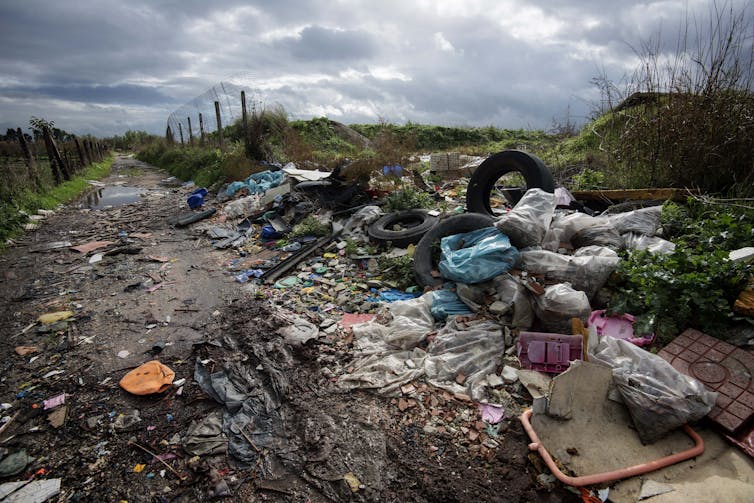
Arsenic is found in many household and industrial products, from pesticides and food additives to semiconductor chips and pharmaceuticals. And when disposed of, the arsenic in the products can leach from the landfill into the soil.
Investigating a hypothesis
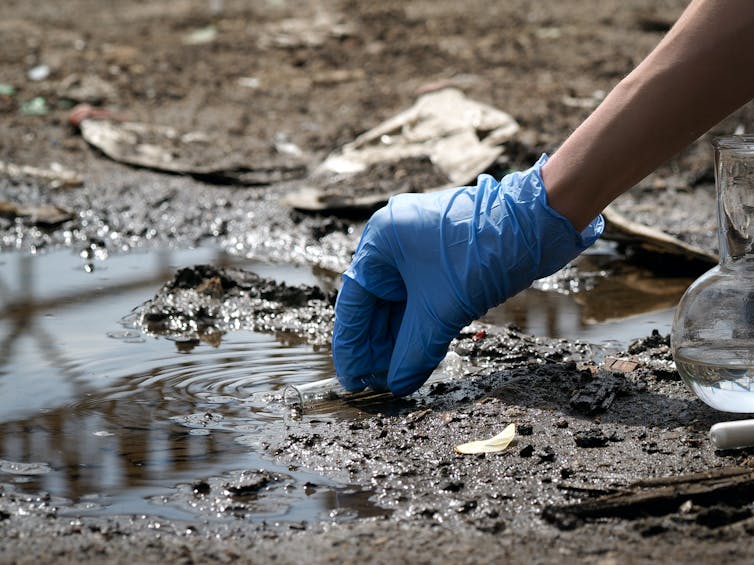
To validate our hypothesis, we designed an experiment that used three biological reactors to simulate the chemical process of how an improperly maintained landfill could leach arsenic into the groundwater. Two of the reactors contained various mixtures of insoluble arsenic and organic and inorganic material, as well as anaerobic bacteria, while the third was used as a control without the bacteria.
About 250 days after our experiment began, we found that anaerobic bacteria and organic matter had transformed the insoluble arsenic, which wasn’t able to travel through water, into its soluble form, which could travel through water. This allowed it to move through the ground as contaminated water, or leachate, and eventually end up in groundwater. From there, the arsenic can find its way to humans via drinking water or the food chain, such as in rice crops or chicken eggs.
To determine what else might be going on here, we teamed up with the Department of Pharmacology and Toxicology at the University of Arizona. With their help, we detected the presence of cacodylic acid in the leachate. This compound exponentially multiplies the toxic effects of the leachate stream, such as by promoting tumors.
Consequently, poor sealing of landfills or operating them in a way that mixes inorganic and organic waste matter significantly increases the probability of a gradual release of heavy metals like arsenic in leachates, which can lead to both environmental and human harm.
The European Commission seems to be trying to take more aggressive action against illegal landfills, which are less likely to use appropriate safeguards, and recently announced it was referring Spain to the Court of Justice of the European Union for failing to ensure that its landfills – namely, 195 illegal ones – don’t endanger human health or harm the environment.
As our research suggests, the only ways to solve the problem of arsenic leaching into the food supply is by proper landfill design and management, which necessarily involves monitoring and treatment of the leachates they generate.
Moreover, I believe the implementation of a circular economy strategy – in which reuse and recycling are maximized – in the management of cities and in the individual behaviors of citizens would lead to a minimization of waste and also greatly reduce the potential release of toxic heavy metals such as arsenic from landfills.
Gumersindo Feijoo Costa, Catedrático de Ingeniería Química, Universidade de Santiago de Compostela
This article is republished from The Conversation under a Creative Commons license. Read the original article.