How to resolve AdBlock issue?
Refresh this page
How to resolve AdBlock issue?
Refresh this page
Lake County News,California
  • Home
    • Registration Form
  • News
    • Education
    • Veterans
    • Community
      • Obituaries
      • Letters
      • Commentary
    • Police Logs
    • Business
    • Recreation
    • Health
    • Religion
    • Legals
    • Arts & Life
    • Regional
  • Calendar
  • Contact us
    • FAQs
    • Phones, E-Mail
    • Subscribe
  • Advertise Here
  • Login
How to resolve AdBlock issue?
Refresh this page

News

Cal Fire graduates record number of company officers

Details
Written by: LAKE COUNTY NEWS REPORTS
Published: 22 November 2025
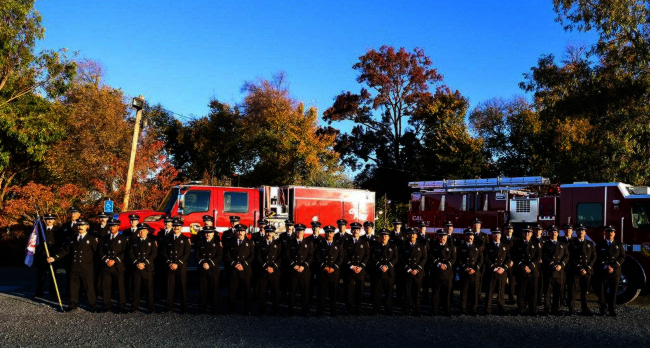
Company Officer Academy Class 25-14 Graduation. Photo courtesy of Cal Fire.


On Friday, Gov. Gavin Newsom announced the graduation of Cal Fire Company Officer Class 25-14, from the Ione Training Center, marking a milestone in Cal Fire’s history, with over 650 new company officers trained in 2025, the most ever.

Cal Fire has successfully trained over 650 new company officers in 2025 with four training centers operating at full capacity. 

The newest, the Atwater Training Center in Merced County, opened in July 2025 to meet growing training demands. Additional facilities are in Redding and Riverside.  

This historic achievement underscores the department's consistent and sustained commitment to developing highly skilled, professional leaders to serve the State of California.

Director/Fire Chief Joe Tyler acknowledged the efforts required to meet this workforce demand during his keynote address.

“This milestone year of training represents our commitment to the future of Cal Fire and the safety of California,” Tyler said. “We recognize the achievement of these 38 students, as well as the dedication of our training staff who maintained exceptionally high standards while sustaining this record-setting pace.”

Cal Fire celebrates the graduation of this final cohort, Company Officer Academy Class 25-14, marking the successful conclusion of the intensive 2025 training season. 

The 38 graduates are now highly trained company officers ready to take on leadership roles across the department.

Top-level department leadership were on hand to see the 38 students graduate, including Director/Fire Chief Joe Tyler, Chief Deputy Director of Operations Anale Burlew, and Cooperative Fire Protection Deputy Director Matthew Sully, alongside numerous Cal Fire Region and Unit Chiefs. Director/Fire Chief Tyler administered the official oath to the graduating class.

Academy rigor and standards

The rigorous 10-week curriculum began with a four-week Firefighter Academy, immediately followed by a six-week Company Officer Academy. The Training Center maintains a high standard of excellence, particularly for those aspiring to achieve Top Academic Honors.

The comprehensive assessment for the class includes a total of 13 examinations: Six written examinations, six manipulative skills examinations and one comprehensive final examination.

Earning top academic distinction is demanding and requires near-perfect performance across the curriculum; a single error — such as one missed question on a written exam or one technical fault, like a "bumped cone" during a manipulative skills test — can disqualify a student from this prestigious recognition.

With all four training centers scheduled to be operating at full capacity, Cal Fire is well-positioned to meet the department's training requirements for 2026 and beyond.

Mendocino College English professor arrested for sex with underage student

Details
Written by: LAKE COUNTY NEWS REPORTS
Published: 22 November 2025

NORTH COAST, Calif. — Authorities this week arrested a Mendocino College English professor who they said was having a sexual relationship with an underage female student.

The Ukiah Police Department said Jason Christopher Davis, 54, of Ukiah, was arrested on Thursday after an investigation found he was having sex with a student who was 15 years old.

In September, the Mendocino County Sheriff's Office referred an investigation to the Ukiah Police Department regarding a possible unlawful sexual relationship between a professor at the Mendocino College and an underage female student.

Ukiah Police began an investigation and confirmed that Davis had been in a dating relationship with a student. It was also learned that Davis was the subject of a civil suit in the Superior Court of San Francisco, in which two former students had accused Davis of sexual abuse.

Ukiah Police detectives obtained search warrants for Davis’ residence and electronic devices and confirmed that Davis had been in a sexual dating relationship and cohabitating with a former student who was 15 years old.

Detectives located photographs and videos on Davis’ electronic devices that confirmed that the sexual relationship began when the child was 13 years old.

On Thursday, a Mendocino County Superior Court judge signed an arrest warrant for Davis’ arrest for five felony charges involving sexual abuse of a minor with multiple special allegations based on the age of the victim.  

At approximately 3 p.m. Thursday, Ukiah Police detectives located Davis and took him into custody without incident. 

Davis was transported to the Mendocino County Jail and booked for lewd or lascivious acts with a child under 14 years of age, lewd or lascivious acts with a child under 15 years of age, oral copulation with person under 16 years of age, unlawful sexual intercourse with an under age female and possession of material depicting sexual conduct of a person under 18.  

Mendocino Jail records indicated Davis remained in custody on Saturday, with bail set at $1 million.

The Ukiah Police Department thanked the Mendocino County District Attorney’s Office for its assistance in the investigation.

On Friday, Mendocino College issued the following statement about the case in which it said that Davis has been placed on administrative leave.

The college’s full statement follows.

“Mendocino College is committed to fostering a safe, respectful, and supportive environment for our students, employees, and the broader community. This commitment guides every action we take as an institution.

“On November 20, 2025, Mendocino College was informed that Jason Davis, a faculty member, was taken into custody by the Ukiah Police Department on charges involving unlawful conduct with a minor. Mr. Davis is presumed innocent until proven guilty. While the College cannot discuss personnel matters or share details related to ongoing investigations, we can confirm that Mr. Davis was placed on administrative leave when the initial allegations surfaced. This step was taken in accordance with College policy and reflects our priority to ensure the safety and well-being of our campus community while the College conducts its own internal review.
Mendocino College is fully cooperating with law enforcement as this matter proceeds. Because this is an active legal case, the College will not be providing further comment at this time.”

Estate Planning: Transfers in 2025 prior to restored Medi-Cal asset test

Details
Written by: Dennis Fordham
Published: 22 November 2025
On Jan. 1, 2026, California’s Medi-Cal program restores its prior asset test used to determine eligibility for Medi-Cal benefits, as the rule existed on July 1, 2022.

This means reinstating the associated resource limits, and exemptions and asset counting rules.

This applies to all Medi-Cal recipients except the Medi-Cal recipients enrolled under the Affordable Care Act which uses the applicant’s Modified Adjusted Gross Income (“MAGI Medi-Cal”) to determine eligibility.

Hence in 2026 Medi-Cal’s 30 month look back period and its associated asset transfer Medi-Cal eligibility penalties will resume relevance both to new Medi-Cal applications, to annual renewals and redeterminations of existing Medi-Cal beneficiaries.

Meanwhile, 2025 is a quickly vanishing opportunity for anyone already on Medi-Cal, or expecting to need Medi-Cal, to act proactively by removing any excess assets that may otherwise disqualify them in 2026.

That is, transfers made in 2025 do not count for eligibility purposes after Jan. 1, 2026. Transfers made on and after Jan. 1, 2026, however, may count.

Under the restored asset test, Medi-Cal goes back to July 1, 2022, when there was allowed a cash or asset reserve of $130,000 (in otherwise available and countable non-exempt assets) for an individual, and a reserve of $195,000 for a couple, if both receive Medi-Cal.

An extra $65,000 for each additional dependent family member up to ten dependents is allowed (See Department of Health Care Services, www.dhcs.ca.gov and California Advocates for Nursing Home Reform, www.canhr.org).

Dependent family members include a person’s disabled and minor child at home. The foregoing limits when applied are subject to possible increase on a case by case basis due to a claim and showing of spousal impoverishment.

If the Medi-Cal recipient is in a skilled nursing facility, then that person has a $130,000 resource limit and the at-home / community spouse, who does not receive Medi-Cal, is also allowed a so-called “Community Spouse Resource Allowance” (“CSRA”). The CSRA for 2026 has not yet been established but it is expected to be around $160,000.

That means that the well spouse at home can have up to $160,000 in otherwise countable assets in addition to the institutionalized spouse having up to $130,000 in otherwise countable assets. Again, the CSRA can be enlarged based on spousal impoverishment of the well / stay at home spouse. Alternatively, the well spouse may be entitled to some or all of the institutionalized spouse’s income.

That said, now in 2025, a person with excess assets has a soon vanishing opportunity either to spend down to the 2026 asset limits and/or to gift those assets to a trusted relative or friend. The trusted relative or friend could in turn establish a special needs trust for the same person with such assets.

Besides the personal resource exemption, Medi-Cal beneficiaries still enjoy the longstanding exemptions for a person’s home, ordinary household contents, a car, a burial policy, and retirement plans (subject to rules). So long as a Medi-Cal recipient checks the box that they intend to return home (if they were ever to become well again), the home is an exempt asset for Medi-Cal eligibility.

The soon to be restored Medi-Cal Asset Test rejoins Medi-Cal’s continuing Share of Cost (i.e., income) and estate recovery rules. That is, first, depending on the situation, a person’s income is often required to pay a share of cost for Community Based and Long Term Care Medi-Cal programs.

Moreover, second, since 2017, Medi-Cal Estate recovery is infrequent — and avoidable — as it only applies when a deceased Medi-Cal recipient’s estate is subject to a probate, and then only if there is also no surviving spouse.

Taking any appropriate action now depends on a Medi-Cal recipient seeing a need to do so and acting quickly before Jan. 1, 2026. An agent under a power of attorney might also have the necessary authority, but only if and to the extent that the power of attorney expressly allows for gifting of assets.

The foregoing brief discussion is not legal advice. Consult a qualified estate planning attorney for guidance. 

Dennis A. Fordham, attorney, is a State Bar-Certified Specialist in estate planning, probate and trust law. His office is at 870 S. Main St., Lakeport, Calif. He can be reached at This email address is being protected from spambots. You need JavaScript enabled to view it. and 707-263-3235.

Space News: SETI’s ‘Noah’s Ark’ – a space historian explores how the advent of radio astronomy led to the USSR’s search for extraterrestrial life

Details
Written by: Gabriela Radulescu, Smithsonian Institution
Published: 22 November 2025

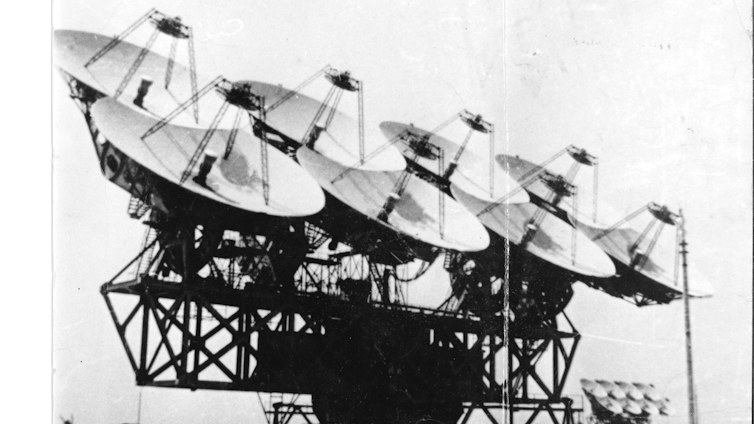
The planetary radar, built in 1960 in Crimea, from which the Morse signal ‘MIR, Lenin, USSR’ was sent in November 1962. National Radio Astronomy Observatory Archive

As humans began to explore outer space in the latter half of the 20th century, radio waves proved a powerful tool. Scientists could send out radio waves to communicate with satellites, rockets and other spacecraft, and use radio telescopes to take in radio waves emitted by objects throughout the universe.

However, sometimes radio telescopes would pick up the artificial radio signals from telecommunications. This interference threatened sensitive astronomy observations, causing inaccurate data and even damaging equipment. While this interference frustrated scientists, it also sparked an idea.

During the Cold War, a new field emerged at the intersection of radio astronomy and radio communications. It put forward the idea that astronomers could search for radio communications from possibly existing extraterrestrial civilizations. Astronomy usually dealt with observing the universe’s natural phenomena. But this new field made the detection of technologically, or artificially produced radio waves, the object of a natural science.

This field has continued today and is now called the search for extraterrestrial intelligence, or SETI. SETI encompasses all that scientists do to search for intelligent life beyond Earth. It includes one of the original uses of radio telescopes: to study signals from across the galaxy in hopes of detecting intelligent messages.

When the idea behind SETI was first proposed and pursued in the 1960s, only two countries, the U.S. and the USSR, had the technical capability for it. As the only space powers at the time, they were the key actors affected by radio frequency interference.

As a historian of science, I’ve worked to make sense of what happened throughout the history of Soviet SETI during the space race by analyzing a range of primary sources. SETI captured the scientific imagination of many prominent Soviet astronomers in the 1960s and early 1970s.

Astronomers have not yet confirmed any detection of radio signals – or any other kinds of signs – from extraterrestrial civilizations. But many scientists are still searching, even as their bold ideas run into obstacles. Some evidence suggests humans might be the only intelligent life in the universe.

Soviet SETI: The golden age of radio astronomy

SETI is intertwined with the profound changes brought by radio astronomy. Up until the second part of the 20th century, scientists could see astronomical objects and phenomena only in optical or visible light. Optical light is the same kind of light that the human eye is sensitive to.

After World War II, scientists figured out that they could peacefully use radar antennas, developed for use in that war, to detect radio signals coming from objects out in the universe. Deciphering these signals allowed researchers to study astronomical objects in the universe. They learned, for example, about the most abundant element: hydrogen.

In the former Soviet Union, the prominent radio astronomy pioneer Iosif Samuilovich Shklovsky played a key role in detecting radio signals from hydrogen.

Scientists knew that every chemical element would absorb certain wavelengths of light and reflect others, and the light signals that an object absorbed or reflected could tell astronomers what element it was. Most hydrogen could not be observed directly in optical light, so astronomers didn’t spot it out in space until they started looking beyond the visible light spectrum.

Shklovsky figured out how to detect hydrogen with radio waves, which helped astronomers map the distribution and motion of hydrogen gas in and between galaxies.

Historians generally consider the year 1960 the start of the golden age of radio astronomy. After the detection of hydrogen, astronomers discovered previously unknown types of stars, such as pulsars and quasars. These phenomena offered scientists new insights into the nature of astrophysical phenomena and fundamental physics.

A journal cover in Russian
The Priroda issue in which Shklovsky’s article ‘Is Communication with Intelligent Beings of Other Planets Possible?’ was published. Priroda/RAS

Shklovsky later grew fascinated with the possibility of using radio waves to contact other intelligent beings in the universe. In 1960, he published an article on this topic in one of the country’s most prestigious scientific journals.

Shklovsky’s article soon expanded into a widely popular book called “Universe, Life, Intelligence,” published in 1962. That same year, the USSR’s Academy of Sciences sent its first radio message in the direction of Venus from a radar in Crimea.

The experiment involved bouncing radio signals off the surface of Venus to transmit the following words using Morse code: Lenin, USSR and mir, which in Russian means both world and peace. Even though statistically increasing radio interference risk, this message was mainly symbolic. The Soviet Union wanted to depict its technological might and wasn’t expecting to communicate with extraterrestrials. Soviet SETI was thus not yet a real pursuit.

A man sitting at a desk, writing with a pen.
Iosif S. Shklovsky at a SETI conference in Soviet Russia in 1975. NRAO/AUI/NSF

Starting an organized search

Shklovsky and the majority of other radio astronomers pursuing the search for extraterrestrial intelligence were all located in central Russia at the time. The USSR Academy of Sciences was also located there. But this group needed more formal measures to move their search from a few initiatives into a coordinated effort.

Due to concerns over unwanted public attention, the scientists organized a conference far from Moscow, at the Byurakan Astrophysical Observatory in the Soviet Republic of Armenia, in 1964. At this conference, researchers formed a group specifically dedicated to studying artificial radio signals from space. With this group, SETI became a top-down, state-led activity.

A journal cover reading 'CETI' in Cyrillic – which stands for SETI in English – in big letters, with a picture of a galaxy
A 1971 Conference Proceedings volume focused on SETI (CETI in Cyrillic) and was published in Russian.

With this validation, scientists could now theoretically look for artificial signals, potentially from an alien origin. However, any discussions about artificial radio signals were subject to strict government surveillance, given the fact that military satellites depended on them, too.

Soviet scientists faced several obstacles. For example, their own government’s secrecy made coordination difficult. The Cold War also set limits on developing SETI internationally. However, they had a green light to search and study peculiar signals they suspected had artificial origin.

International collaboration

Efforts to collaborate internationally on artificial signals culminated in 1971 with a symposium, again at Byurakan. There, about 50 scientists – the majority from the U.S. and the USSR, but also some from Czechoslovakia, Hungary, the U.K. and Canada – agreed to disagree on how to best conduct SETI.

Some in attendance compared this gathering to Noah’s Ark, because an almost equal number of prominent scientists from East and West of the Iron Curtain managed to meet that year. And the gathering took place in Armenia at the foot of Mount Ararat, located in neighboring Turkey. This mountain is where archaeologists believe Noah’s Ark may have beached.

After almost a week of discussion at Byurakan, the two geopolitical blocks designated an official SETI group. That group still exists today, and it still connects researchers all around the world who conduct SETI research. Given the secrecy around radio signals in space, this international SETI group marked a momentous diplomatic achievement at the height of the Cold War.

A black and white photo of a group of people gathered by a large hill, and a black and white photo of writing reading 'Pamir Expedition, Search for Single pulses from Extra-ter. civilizations'
Postcard with Soviet scientists conducting SETI experiments in the Pamir region of Tajikistan, with a note on the back to their U.S. correspondent. NRAO/AUI/NSF

SETI started in the Soviet Union with a few strong Moscow-based initiatives. It continued through group events in Armenia – from the first state-level Soviet conference to the international one.

SETI is the first and only domain of astronomy to study artificial radio signals themselves. It indirectly addressed radio frequency interference during a time when these frequencies were highly unregulated.

Stakeholder countries eventually addressed their radio frequency interference issues with international agreements on radio frequency usage and allocation. An international committee approved a feasible and comprehensive radio frequency allocation plan for the first time in the 1970s. This plan has been revised and renewed ever since. Today, space scientists and astronomers use an internationally agreed upon plan to minimize this interference.

Remarkably, SETI began even before this allocation plan. SETI continues its rich legacy today by continuing to search for signals – and along the way discovering new astrophysical objects and phenomena.The Conversation

Gabriela Radulescu, Guggenheim Postdoctoral Fellow, Smithsonian Institution

This article is republished from The Conversation under a Creative Commons license. Read the original article.

  1. Supervisors add $60,000 for hunger relief amid surging demand for food
  2. Thompson leads 34 members of Congress to demand reversal of cancellation of bike and pedestrian infrastructure grants
  3. I treat menopause and its symptoms, and hormone replacement therapy can help – here’s the science behind the FDA’s decision to remove warnings
  • 152
  • 153
  • 154
  • 155
  • 156
  • 157
  • 158
  • 159
  • 160
  • 161
How to resolve AdBlock issue?
Refresh this page