How to resolve AdBlock issue?
Refresh this page
How to resolve AdBlock issue?
Refresh this page
Lake County News,California
  • Home
    • Registration Form
  • News
    • Education
    • Veterans
    • Community
      • Obituaries
      • Letters
      • Commentary
    • Police Logs
    • Business
    • Recreation
    • Health
    • Religion
    • Legals
    • Arts & Life
    • Regional
  • Calendar
  • Contact us
    • FAQs
    • Phones, E-Mail
    • Subscribe
  • Advertise Here
  • Login
How to resolve AdBlock issue?
Refresh this page

News

Lake County Rotary clubs partner with Polly Klaas Foundation to stop the sex-trafficking and exploitation of children

Details
Written by: LAKE COUNTY NEWS REPORTS
Published: 20 November 2025

LAKE COUNTY, Calif. — The Polly Klaas Community Theater and the Polly Klaas Foundation have announced a new partnership with Lake County Rotaries including Kelseyville, Lakeport and Clearlake.

This collaboration unites three treasured local Rotary clubs in a shared mission to ensure the safety of the children in our communities.

An estimated 85% of missing children are classified as runaways, with many having been lured by adult predators online. 

National experts, including the Polly Klaas Foundation and the National Center for Missing and Exploited Children, have identified a disturbing rise in “online abductions,” with one in six runaway children ultimately trafficked for sex. 

Lake County is particularly vulnerable due to its rural geography, limited preventative resources, and proximity to trafficking corridors like Interstate 5 and major urban centers. The urgency to act is clear — and Rotary officials said they can lead this vital effort.

“Knowledge is our most powerful tool. Prevention through education can stop the grooming process before it begins,” the local Rotary clubs said in their announcement.

That's why they are partnering with the Polly Klaas Foundation to bring their Social Media Safety Education, or SMSE, program to Lake County middle schoolers and their families.

The Polly Klaas Foundation, or PKF, has over three decades of experience supporting families of missing children. Their SMSE program is grounded in real-world cases and designed to teach youth how online behavior can make them vulnerable to exploitation.

PKF is uniquely positioned to deliver this message with credibility and impact — they are not speaking in theory but from direct experience with victims and rescues. Their evidence-based approach addresses how online interactions can lead to real-life danger.

The goal is to give children the tools they need to understand the red flags and then how to safely disengage from these online threats.

The Polly Klaas Foundation was established in 1993 after the abduction and murder of 12-year-old Polly Klaas from her home in Petaluma.

In the beginning, the foundation’s primary focus was to help families of missing children. “Over time we have evolved to focus on child safety and prevention programs… so they do not go missing in the first place.”

PKF’s primary mission remains the recovery of missing children and keeping children safe within our communities. Through its services, they have helped more than 10,000 families find their missing children. PKF’s Social Media Safety Education program has quickly become PKF’s “crown jewel” in missing child prevention.

About the collaboration
 
The interactive SMSE class provides students with vital information to help keep them safe online, thus protecting them from online predators. 

“Educating the parents of our young adults may be the difference between life or unspeakable heartbreak,” said Lake County Rotary’s Mark Lipps.

PKF’s Executive Director, Ciara Shuttleworth, furthers this sentiment by saying, “It is no longer that a predator might come in through an unlocked door; what we address now is how to keep your children safe in their own bedrooms through online safety education.”

The Lake County Rotary clubs are hosting a series of public presentations early in 2026.

All of the presentations begin at 5:30 p.m. on the following dates:

• Thursday, Jan. 8: Kelseyville/Lakeport at Kelseyville High School.
• Tuesday, Jan. 27: Middletown Middle School.
• Wednesday, Jan. 28: Upper Lake/Lucerne at the middle school.
• Thursday, Jan. 29: Konocti Unified, English presentation at Obsidian Middle School
• Friday, Jan. 30: Konocti Unified, Spanish presentation at Obsidian Middle School.

Lakeport Library closes temporarily for construction

Details
Written by: LAKE COUNTY NEWS REPORTS
Published: 20 November 2025

LAKE COUNTY, Calif. — The Lakeport Library will close to the public for the entire month of December 2025.

The temporary closure is required to install a new fire suppression system. The upgrade is funded by the California State Library's Building Forward Grant. 

An uninterrupted, one-month closure allows contractors to finish the work safely and on schedule. 

The library is scheduled to reopen for full service in January 2026.

"This is a major project that will protect our collections and facility for years to come," said Count Librarian Christopher Veach. "We are doing everything we can to provide as much service as possible, so the public still has access to the library throughout the construction."

Lakeport Library will maintain core services through a limited-service plan starting in December:

• Curbside pick-up: Call the Lakeport Library at 707-263-8817 to arrange curbside pick-up of requested items. Requested items can also be transferred to another branch for pick-up.

• Bookmobile: The Lake County Bookmobile will be open in the Lakeport Library parking lot on Fridays and Saturdays from 10 a.m. to 4 p.m.

• Digital Access: Patrons can use the online library at library.lakecountyca.gov 24/7. Free public Wi-Fi will remain available from the parking lot.

• Literacy Services: Adult and Family Literacy programs will continue by phone and at other library branches.

• Returns: Due dates for Lakeport items will be automatically extended. Patrons can hold their materials or use the book drop to return their items.

• Unavailable Services: Most events, public computers, and in-person browsing of the collection will stop until the library fully reopens. Some events will relocate or be offered digitally.

For more information about resources and events at Lake County Library, visit https://library.lakecountyca.gov. 

Lakeport Police make arrest following hit and run

Details
Written by: LAKE COUNTY NEWS REPORTS
Published: 20 November 2025
Alcohol police officers seized as part of a drunk driving and hit and run arrest on Wednesday, Nov. 19, 2025, in Lakeport, California. Photo courtesy of the Lakeport Police Department.


LAKEPORT, Calif. — A crash at a city park on Wednesday afternoon led to an arrest for felony charges including driving under the influence and hit and run.

The Lakeport Police Department said its officers were dispatched to Xabatin Park at 3:21 p.m. Wednesday for the report of a traffic collision that had escalated to a verbal altercation. 

Officers arrived on scene and met with the reporting party, who stated that the other vehicle had fled the scene. 

While speaking with the reporting party, the suspect vehicle was spotted driving in a nearby parking lot, police said.

Officers conducted a traffic stop on the suspect vehicle and contacted the driver, who had the odor of an unknown alcoholic beverage coming from his breath. 

After conducting field sobriety tests on the driver as well as a breath test, the driver was arrested for felony DUI, felony hit and run, and driving without a driver's license, police said.

Officers also located an open container of alcohol in the front cup holder, as well as several open containers of alcohol in the vehicle. 

The names of the individuals involved in the crash were not released.

“The Lakeport Police Department is dedicated to taking impaired drivers off the roadway and keeping all who work, visit, and live in the City of Lakeport safe,” the agency said in a report on the arrest.

Americans are unprepared for the expensive and complex process of aging – a geriatrician explains how they can start planning

Details
Written by: Kahli Zietlow, University of Michigan
Published: 20 November 2025

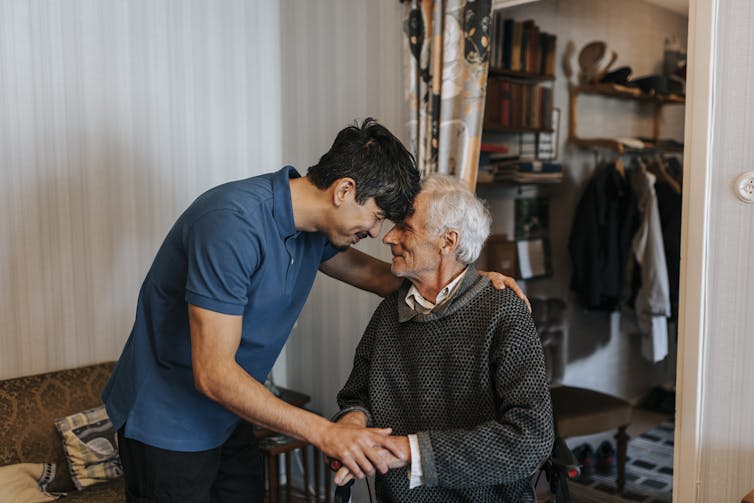
It’s important for older adults to plan for their care as they age. Maskot/Maskot via Getty Images

Hollywood legend Gene Hackman and his wife, Betsy Arakawa, were found dead in their home in February 2025. Hackman had been living with Alzheimer’s and depended on Arakawa as his full-time caregiver.

Disturbingly, postmortem data suggests that Arakawa died of complications from pulmonary Hantavirus several days before her husband passed. The discordant times of death point to a grim scenario: Hackman was left alone and helpless, trapped in his home after his wife’s death.

The couple’s story, while shocking, is not unique. It serves as a warning for our rapidly aging society. The U.S. population is aging, but most Americans are not adequately planning to meet the needs of older adulthood.

As a geriatric physician and medical educator, I care for older adults in both inpatient and outpatient settings. My research and clinical work focus on dementia and surrogate decision-making.

In my experience, regardless of race, education or socioeconomic status, there are some universal challenges that all people face with aging and there are steps everyone can take to prepare.

Aging is inevitable but unpredictable

Aging is an unpredictable, highly individualized process that varies depending on a person’s genetics, medical history, cognitive status and socioeconomic factors.

The majority of older Americans report a strong sense of purpose and self-worth. Many maintain a positive view of their overall health well into their 70s and 80s.

But at some point, the body starts to slow down. Older adults experience gradual sensory impairment, loss of muscle mass and changes in their memory. Chronic diseases are more likely with advancing age.

According to the U.S. Census Bureau, 46% of adults over age 75 live with at least one physical disability, and this proportion grows with age. Even those without major health issues may find that routine tasks like yard work, housekeeping and home repairs become insurmountable as they enter their 80s and 90s.

Some may find that subtle changes in memory make it difficult to manage household finances or keep track of their medications. Others may find that vision loss and slowed reaction time make it harder to safely drive. Still others may struggle with basic activities needed to live independently, such as bathing or using a toilet. All of these changes threaten older adults’ ability to remain independent.

The costs of aging

Nearly 70% of older Americans will require long-term care in their lifetime, whether through paid, in-home help or residence in an assisted living facility or nursing home.

But long-term care is expensive. In 2021, the Federal Long Term Care Insurance Program reported that the average hourly rate for in-home care was US$27. An assisted living apartment averaged $4,800 per month, and a nursing home bed cost nearly double that, at a rate of $276 per day.

Many Americans may be shocked to discover that these costs are not covered by Medicare or other traditional medical insurance. Long-term care insurance covers the cost of long-term care, such as in-home care or nursing home placement. However, what is covered varies from plan to plan. Currently, only a small minority of Americans have long-term care insurance due to high premiums and complex activation rules.

I am not aware of any high-quality, peer-reviewed studies that have demonstrated the cost effectiveness of long-term care insurance. Yet, for many Americans, paying for care out of pocket is simply not an option.

Medicaid can provide financial support for long-term care but only for older adults with very low income and minimal assets – criteria most Americans don’t meet until they have nearly exhausted their savings.

Those receiving Medicaid to cover the costs of long-term care have essentially no funds for anything other than medical care, room and board. And proposed federal financial cuts may further erode the limited support services available. In Michigan, for example, Medicaid-covered nursing home residents keep only $60 per month for personal needs. If individuals receive monthly income greater than $60 – for instance, from Social Security or a pension – the extra money would go toward the cost of nursing home care.

Those who don’t qualify for Medicaid or cannot afford private care often rely on family and friends for unpaid assistance, but not everyone has such support systems.

A nurse helps an older man shave.
Older adults may end up needing help with day-to-day personal care. Klaus Vedfelt/DigitalVision via Getty Images

Planning for the care you want

Beyond financial planning, older adults can make an advance directive. This is a set of legal documents that outlines preferences for medical care and asset management if a person becomes incapacitated. However, only about 25% of Americans over 50 have completed such documentation.

Without medical and financial powers of attorney in place, state laws determine who makes critical decisions, which may or may not align with a person’s wishes. For instance, an estranged child may have more legal authority over an incapacitated parent than their long-term but unmarried partner. Seniors without clear advocates risk being placed under court-appointed guardianship – a restrictive and often irreversible process.

In addition to completing advance directives, it is important that older adults talk about their wishes with their loved ones. Conversations about disability, serious illness and loss of independence can be difficult, but these discussions allow your loved ones to advocate for you in the event of a health crisis.

Who’s going to care for you?

Finding a caregiver is an important step in making arrangements for aging. If you are planning to rely on family or friends for some care, it helps to discuss this with them ahead of time and to have contingency plans in place. As the Hackman case demonstrates, if a caregiver is suddenly incapacitated, the older adult may be left in immediate danger.

Caregivers experience higher rates of stress, depression and physical illness compared with their peers. This is often exacerbated by financial strain and a lack of support. It helps if the people you will be relying on have expectations in place about their role.

For instance, some people may prefer placement in a facility rather than relying on a loved one if they can no longer use the bathroom independently. Others may wish to remain in their homes as long as this is a feasible option.

Connecting with available resources

There are local and federal initiatives designed to help aging adults find and get the help they need. The Centers for Medicare & Medicaid Services recently launched the GUIDE Model to improve care and quality of life for both those suffering from dementia and their caregivers.

This program connects caregivers with local resources and provides a 24-hour support line for crises. While GUIDE, which stands for Guiding an Improved Dementia Experience, is currently in the pilot stage, it is slowly expanding, and I am hopeful that it will eventually expand to provide enhanced coverage for those suffering from dementia nationwide.

The Program for All-Inclusive Care of the Elderly helps dual-eligible Medicare and Medicaid recipients remain at home as they age. This program provides comprehensive services including medical care, a day center and home health services.

Area agencies on aging are regionally located and can connect older adults with local resources, based on availability and income, such as meals, transportation and home modifications that help maintain independence.

Unfortunately, all of these programs and others that support older adults are threatened by recent federal budget cuts. The tax breaks and spending cuts bill, which was signed into law in July 2025, will result in progressive reductions to Medicaid funding over the next 10 years. These cuts will decrease the number of individuals eligible for Medicaid and negatively affect how nursing homes are reimbursed.

The government funding bill passed on Nov. 13 extends current Medicare funding through Jan. 30, 2026, at which point Medicare funding may be reduced.

Even as the future of these programs remains uncertain, it’s important for older adults and their caregivers to be intentional in making plans and to familiarize themselves with the resources available to them.The Conversation

Kahli Zietlow, Physician and Clinical Associate Professor of Geriatrics & Internal Medicine, University of Michigan

This article is republished from The Conversation under a Creative Commons license. Read the original article.

  1. Clearlake City Council to discuss issues with Lake County Sanitation District
  2. Registrar’s office updates Prop 50 vote count; Lake County’s overall vote flips against measure
  3. New California wolf pack confirmed
  • 154
  • 155
  • 156
  • 157
  • 158
  • 159
  • 160
  • 161
  • 162
  • 163
How to resolve AdBlock issue?
Refresh this page