 How to resolve AdBlock issue?
News
- Details
- Written by: Jennifer A. Jones, University of Florida

Lending a hand is a big U.S. tradition. More than 77.4 million Americans volunteered in 2019, completing 6.9 billion hours of service worth an estimated US$167 billion.
Today, no matter how well-intentioned, there’s a risk that those helping hands could have the unfortunate consequence of causing more people to get COVID-19. And sadly, those most in need of help are often those who would be hit the hardest should they become infected because low-income people tend to have more health problems than others.
What, then, should people do when they want to help? As a scholar of nonprofit management and how people support causes, I would like to offer a few suggestions.
1. Give money
Many social-service nonprofits are experiencing a dramatic increase in demand. This includes everything from community clinics to youth centers, food pantries and agencies addressing domestic violence to groups that care for the homeless. At the same time, history suggests that many of these same nonprofits are likely to see their donations plummet due to the economic downturn underway, making any dollar you can spare count more than ever.
You need not ignore the general guidance to avoid extra trips to the grocery store or needlessly getting too close to strangers to do your share. That’s because cash donations to food pantries go further than directly donated items such as canned beans or boxed noodles.
Funds you provide to community organizations will help ensure they have the cash to meet their burgeoning needs now, or to reopen their doors later – depending on the situation. Theaters, operas and dance companies have had to cancel performances. Museums and zoos will be spending weeks closed. Shutting down is choking off revenue streams from ticket sales, gift shop proceeds and cafeteria operations they usually rely on. If you previously paid for upcoming performances or visits, you can do your share to support those institutions by not seeking refunds. Once this pandemic ends, won’t you want to be able to explore your favorite local zoo or museum or to experience live performances again?
2. Volunteer virtually
Many organizations use virtual volunteers. Depending on your skills, you could pitch in by helping boost an organization’s profile through Facebook and other social media platforms, upgrading their website, organizing an online fundraiser, coordinating the shipment of supplies directly to the nonprofit, and more.
But be sure to reach out before you act. Managing volunteers requires staff time, which many organizations lack. Other organizations may be ready and waiting for your help.

3. Check in before dropping by
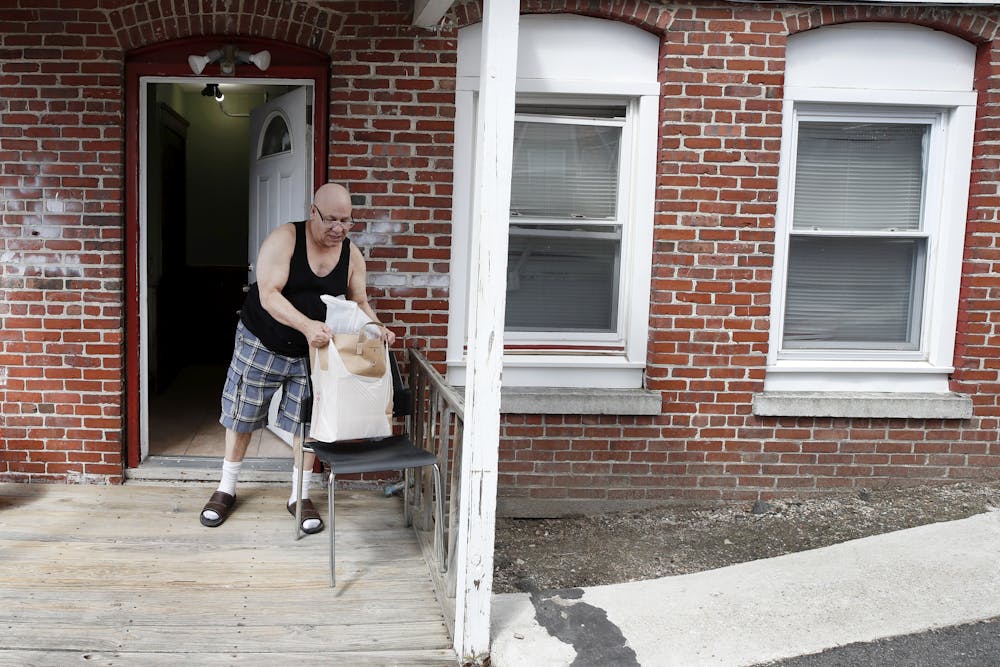
Likewise, it’s best to call or email your neighbors before you drop by to see how they are doing. Ask what, if anything, they need in advance. If they’re running low on toilet paper, soap, rice or other basic supplies, consider placing an online order to be delivered to their door. You do not have to be the only one caring for the people in your life. The “mutual aid” groups popping up all over the country for this purpose can be both a great resource for those in need and a great way to channel the desire to help.
If you realize that someone needs a hot meal, don’t just make them a casserole – even if that thoughtful gesture is one you might have made during ordinary times. If you can afford it, consider placing an order with their favorite restaurant when delivery service is available because you will be both protecting the neighbor from unnecessary contact and, also, supporting local businesses. If they need in-person help, take care to respect all social-distancing protocols.
[You need to understand the coronavirus pandemic, and we can help. Read The Conversation’s newsletter.]
Jennifer A. Jones, Assistant Professor of Nonprofit Management and Leadership, University of Florida
This article is republished from The Conversation under a Creative Commons license. Read the original article.
- Details
- Written by: Elizabeth Larson
New demographics data also is showing the impacts of the virus on the health care community and on certain ethnic groups.
Health departments across California reported more than 56,000 COVID-19 cases and 2,300 deaths as of Monday night.
On Monday, Lake County’s COVID-19 cases rose to eight, after test results confirmed that a Lake County Jail inmate had contracted the virus, as Lake County News has reported.
More than 600 county residents have been tested and there have been no COVID-19 deaths reported in Lake County.
The majority of Lake County’s cases so far have originated with out-of-county contacts that then spread to family members, according to previous public health reports.
Based on California Department of Public Health statistics, hospitalizations appeared to have peaked at just under 3,500 patients statewide last week, and since then have shown the first multiday decline since hospitalizations began to be tracked in March.
Local health officials planned for a surge at local hospitals, which hasn’t materialized. So far, only one of Lake County's confirmed cases has been hospitalized.
CDPH has launched a new data portal that tracks COVID-19 cases statewide and by county, gender, age and ethnicity. The portal also outlines statewide hospitalizations and testing efforts.
The new CDPH dashboard showed that there had been three suspected COVID-19 hospital patients and one suspected intensive care unit patient in Lake County; those are differentiated from confirmed patients. Lake County Public Health Officer Dr. Gary Pace said he did not have information on those suspected cases.
While data released by the Centers for Disease Control last week showed the number of deaths from all causes is up statewide and nationwide – a fact attributed to COVID-19 – an initial look at coroner’s statistics in Lake County indicates an opposite trend.
For the period of Jan. 1 to April 24 of 2019, there were 109 coroner cases, while for the same time period this year the number of coroner cases has dropped to 95, according to Lt. Corey Paulich of the Lake County Sheriff’s Office.
In assessing cases of pneumonia, which in some parts of the nation have been flagged for a reported connection to COVID-19, in the first four months of 2019, Lake County had eight pneumonia-related deaths while it has had only two so far this year – in January and February, Paulich said.
Pace told the Board of Supervisors last week that Public Health staff have been working on conducting surveillance testing and increasing local testing capacity.
In Lake County, the first drive-thru testing will be rolled out on Tuesday in Lakeport.
State officials said they also are working to expand access to COVID-19 testing.
More than 747,874 tests have been conducted in California and reported to CDPH. That total includes data from commercial, private and academic labs, including Quest, LabCorp, Kaiser, University of California and Stanford, and the 25 state and county health labs currently testing.
The state said laboratories have reduced the testing backlog.
Growing impacts for health care workers, certain ethnic groups
CDPH said that, as of Monday, local health departments across California have reported 6,103 confirmed positive cases in health care workers and 32 deaths statewide.
The state also has released an update on the racial demographics of COVID-19 in California, which CDPH reported is important to determine future action.
“Health outcomes are affected by forces including structural racism, poverty and the disproportionate prevalence of underlying conditions such as asthma and heart disease among Latinos and African American Californians. Only by looking at the full picture can we understand how to ensure the best outcomes for all Californians,” the agency said.
CDPH said the differences in health outcomes related to COVID-19 are most stark in COVID-19 deaths.
With nearly complete data on race and ethnicity for COVID-19 deaths, CDPH said that, overall, for adults 18 and older, Latinos, African Americans and Native Hawaiians and Pacific Islanders are dying at disproportionately higher levels.
The proportion of COVID-19 deaths in African Americans is about double their population representation across all adult age categories, CDPH reported.
For Native Hawaiians and Pacific Islanders, CDPH said overall numbers are low, but there is nearly a four-fold difference between the proportion of COVID-19 deaths and their population representation.
More males are dying from COVID-19 than females, in line with national trends, according to CDPH’s report.
On the local level, Pace has so far refused to release demographic information about Lake County’s patients.
This story has been updated to reflect that one of the previous COVID-19 cases in Lake County was hospitalized.
Email Elizabeth Larson at
- Details
- Written by: Elizabeth Larson
The council will meet virtually for a closed session at 5 p.m. Thursday, May 7, to hold a performance evaluation for City Manager Alan Flora, discuss with legal counsel a case of potential litigation and existing litigation against PG&E Corp. and a conference with labor negotiators regarding Clearlake Management/Confidential Employees, Clearlake Police Officer Association, Clearlake Municipal Employees Association and Clearlake Middle Management Association before the public portion of the meeting begins at 6 p.m.
Because of the county’s shelter in place order, Clearlake City Hall remains closed to the public, however, the virtual meeting will be broadcast live on Lake County PEG TV’s YouTube Channel.
Comments and questions can be submitted in writing for City Council consideration by sending them to City Clerk Melissa Swanson at
Each public comment emailed to the city clerk will be read aloud by the mayor or a member of staff for up to three minutes or will be displayed on a screen. Public comment emails and town hall public comment submissions that are received after the beginning of the meeting will not be included in the record.
On Thursday, the council will issue five proclamations declaring April as Sexual Assault Awareness Month, May 4 as Firefighter Appreciation Day, May 2020 as Military Appreciation Month, May 10 to 16 as Police Week and May 3 to 9 as Public Service Appreciation Week.
In council business, council members will consider a $98,890.43 Cannabis Equity Grant from the Governor’s Office of Business and Economic Development.
A report to the council from Facilities Coordinator/Deputy City Clerk Tina Viramontes explained that the grant is designed to support equitable business development in the cannabis industry.
“The grant will assist in the creation of a cannabis business portal on the City of Clearlake website for cannabis businesses and the community, as well as provide funding to obtain a consulting group to help create and design the Equity Program. The grant will also provide funding to promote community events and meetings with cannabis businesses along with the community to help develop a cannabis equity program,” Viramontes reported.
The council also will consider amending the fiscal year 2019-20 budget to include the grant revenue.
In other business, the council is being asked to ratify and authorize Flora’s purchase of a modular office building for the Animal Control facility at an estimated cost of $37,427.15.
Also on Thursday, the council will consider approving a contract with R&R Pacific Construction for the Austin Park bathroom remodel project
On the meeting's consent agenda – items that are not considered controversial and are usually adopted on a single vote – are warrant registers; consideration of continuation of declaration of local emergency issued on Oct. 9, 2017, and ratified by council action Oct. 12, 2017, in response to the Sulphur fire; second reading and adoption of Ordinance No. 240-2020, commercial cannabis regulatory permit suspension/revocation and appeal process and corrections to Ordinance No. 229-2019; annual rate increase notice from Clearlake Waste Solutions; consideration of continuation of declaration of local emergency issued on March 14, 2020, and Ratified by Council Action March 19, 2020.
Email Elizabeth Larson at
- Details
- Written by: Lake County News reports
Over the last three years, California has experienced five of the deadliest wildfires and seven of the most destructive wildfires in state history, with more than 3.7 million acres burned, some 34,000 structures destroyed, and more than 145 lives tragically lost.
This year, dry and warm conditions can lead to an increased potential of fire activity.
Since last year, California has been amplifying resources to protect public safety, including the completion of 35 high priority fuel reduction projects. The 35 projects resulted in protecting 90,000 acres by directly treating 12,000 acres.
Additionally, in 2020 Cal Fire plans to directly treat 50,000 acres. Cal Fire is partnering with the California National Guard and other agencies to provide early detection to wildfires throughout California to minimize reaction times and monitor fire affected areas to augment responses if necessary.
Also, Cal Fire will be amplifying resources with the use of technology through the Innovation Procurement Sprint that will help predict potential fire behavior and impact.
Finally, Cal Fire has focused on the procurement of new Blackhawk helicopters that can carry and deliver more water to impacted areas.
“As we continue to deal with challenging times, we want to make sure Californians know we are prepared for this year’s fire season, and also, the importance of them knowing what they can do to prepare themselves,” said Cal Fire Chief Thom Porter.
More importantly, Cal Fire is also ensuring residents know about the importance of educating and preparing themselves and their communities.
For instance, safeguarding their homes through the creation of defensible space by clearing vegetation 100-feet or more away, as well as using fire resistant landscaping to help stop the spread of wildfire, is strongly advised. This is especially important since approximately 25 percent of the state’s population, or 11 million Californians, live in a high-risk fire zone.
Thousands of communities, from small mountain towns to suburbs to large urbanized cities, depend on smart planning and prevention tools such as protective fuel breaks, defensible space around homes and home hardening for their safety and survival. These tools work together to build more fire-resilient communities.
“Preparedness is key to California residents reducing their exposure and risks to destructive wildfires, especially during this pandemic period,” said Anthony Scardina, deputy regional forester for Region 5. “We stand shoulder to shoulder with our wildland fire service partners at the state and local levels to protect our fellow Californians in 2020 and beyond.”
Additionally, Cal Fire is encouraging Californians to access the revamped “Ready for Wildfire” web-based app, which is a helpful resource to use in year-round preparation.
The “Ready for Wildfire” web-based app now takes a personalized approach that includes local alerts, checklists for preparedness, including evacuation plans, and other kits.
To download the free Ready for Wildfire web-based app, visit https://plan.readyforwildfire.org/ .
So far this year, Cal Fire has responded to more than 900 wildfires that have burned more than 1,100 acres.
Read Gov. Gavin Newsom’s proclamation of the 2020 Wildfire Prevention Week.