How to resolve AdBlock issue?
Refresh this page
Lake County News,California
  • Home
    • Registration Form
  • News
    • Education
    • Veterans
    • Community
      • Obituaries
      • Letters
      • Commentary
    • Police Logs
    • Business
    • Recreation
    • Health
    • Religion
    • Legals
    • Arts & Life
    • Regional
  • Calendar
  • Contact us
    • FAQs
    • Phones, E-Mail
    • Subscribe
  • Advertise Here
  • Login
How to resolve AdBlock issue?
Refresh this page

News

Firefighters work to stop Clearlake fire near Borax Lake; evacuations for several zones downgraded

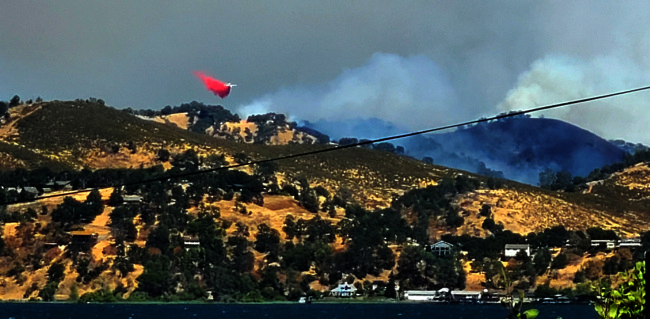
The Lake fire, as seen from the Point Lakeview Road in Lake County, California. Photo courtesy of James Rexrode.


LAKE COUNTY, Calif. — Firefighters from multiple agencies and counties are in Clearlake this afternoon fighting a wildland fire that has prompted evacuations in some parts of the city.

The Lake fire was first reported at 2:20 p.m. Sunday at Nacimiento Lake Drive and Oak Street, south of Borax Lake in Clearlake.

As of 4:30 p.m., Cal Fire reported over the air that the blaze had burned 340 acres, making it the largest fire of the summer season in Lake County so far. As of 5:15 p.m., it was 5% contained.

Radio traffic indicated at least one structure may have been burned.

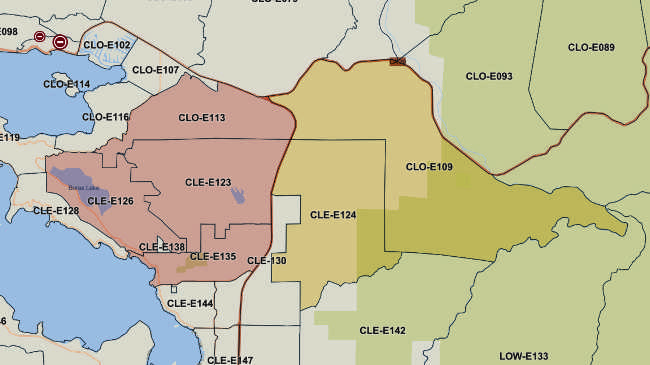
Mandatory evacuation zones as of 4:30 p.m. were CLO-E113, CLE-E123, CLE-E126 and CLE-E13. Advisory evacuation zones by that time were CLO-E109 and CLE-E124.

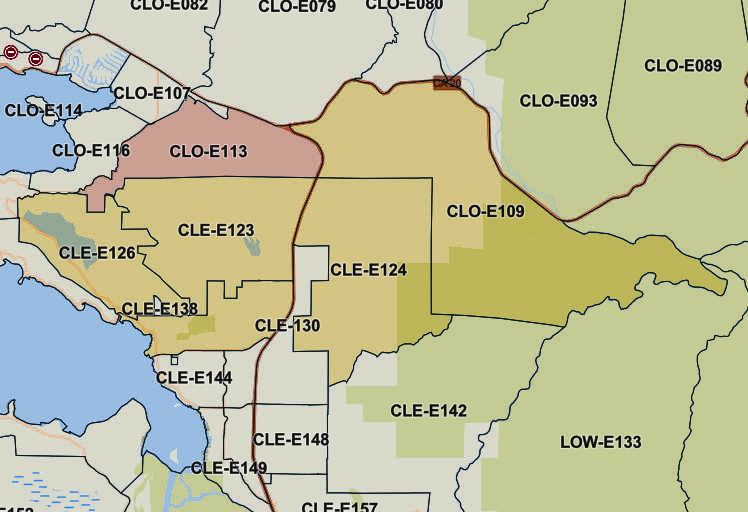
Just after 5 p.m., all but one of the mandatory evacuations were reduced to advisory, according to a radio report from Lake County Fire Chief Willie Sapeta.

The one remaining mandatory zone at that point was CLO-E113, and it was reduced to advisory a short time later.

Zones can be seen here.

Shortly before 2:30 p.m., the Clearlake Police Department issued a Nixle alert asking people to avoid the area of East Lake Drive and Second Street due to the fire.

About 10 minutes later, the agency issued its first evacuation advisory for everything east of zones CL-E126, which includes Borax Lake,  and CL-E123, which is to the east of that zone. 

As of 3:30 p.m., mandatory evacuations were ordered for the area of Acacia Street to Highway 53 and north of Eastlake Drive, with advisory evacuations for Highway 53 east from Ogulin Canyon and north of Ogulin Canyon Road. 

Fifteen minutes later, Clearlake Police reported the mandatory evacuations were expanded from Acacia Street west to 16th Street and Eastlake Drive north, Acacia Street east to Highway 53 and Old Highway 53 north of Burns Valley Road east to Highway 53. At about the same time, cell phones lit up with the warning.

Incident command has pulled in firefighters from Colusa and Mendocino counties, with air resources coming from Ukiah. Lake County Fire Protection District and other Lake County resources are part of the multi-agency firefighting effort.

A report of a fire on Mark West Springs Road near Santa Rosa just after 4:15 p.m. resulted in a brief redirect of two tankers from the fire, but after air resources for that new fire.

Scanner traffic shortly before 4:45 p.m. indicated good progress is being made on the Lake fire, with retardant and dozer lines being strengthened ahead of bringing in ground crews.

Reports from the scene stated that firefighters are working to protect structures, with retardant drops a key part of that work. 

Cal Fire said the cause remains under investigation.

At 5:20 p.m., dispatch reported receiving a report about a spot fire near Pomo Elementary, with firefighters responding.

The remaining tankers were released about 5:30 p.m., at which point the retardant work was done, according to radio reports.

Three helicopters continued to work the scene at that time, along with dozers on the ground.
Forward progress was reported to have been stopped at 6:13 p.m., according to radio traffic.

Incident command said the fire was holding at 340 acres, with containment up to 25%.

By that point, incident command was arranging to have the helicopters prepare to begin departing the fire in order to be back at base by dark.

All evacuation warnings and advisories were lifted as of 6:56 p.m., according to radio traffic.

Cal Fire said the cause remains under investigation.

Email Elizabeth Larson at This email address is being protected from spambots. You need JavaScript enabled to view it.. Follow her on Twitter, @ERLarson, and on Bluesky, @erlarson.bsky.social. Find Lake County News on the following platforms: Facebook, @LakeCoNews; X, @LakeCoNews; Threads, @lakeconews, and on Bluesky, @lakeconews.bsky.social. 

Mandatory evacuation zones in red and advisory evacuation zones in yellow for the Lake fire in Clearlake, California, on Sunday, Aug. 3, 2025, as for 4:30 p.m. All mandatory evacuation zones but CLO-E113 were downgraded shortly after 5 p.m. Aug. 3. Image courtesy of Genesys Protect.

Updated evacuation zones, one mandatory and the rest advisory, as of 5 p.m. Aug. 3, 2025. Image courtesy of Genesys Protect.

Tuleyome Tales: Berryessa Snow Mountain National Monument — a decade of conservation success

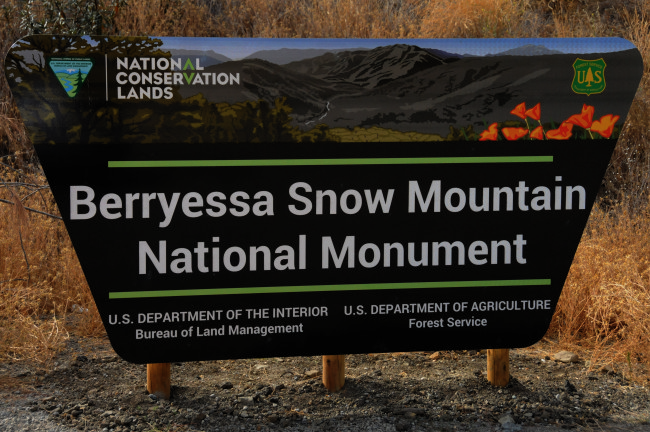
A Berryessa Snow Mountain National Monument entry sign. Photo by Tuleyome.

NORTHERN CALIFORNIA — On July 10, the Berryessa Snow Mountain National Monument celebrated its 10th anniversary, a milestone that showcases what becomes possible when communities unite to protect irreplaceable landscapes. 

The monument's designation in 2015, followed by its expansion to include Molok Luyuk in 2024, stands as a testament to grassroots conservation success in the heart of Northern California's inner coastal range.

Spanning 344,476 acres, the Berryessa Snow Mountain National Monument holds exceptional biodiversity and ecological integrity that ranks among the top 5% of all United States Forest and Bureau of Land Management properties in the contiguous United States. 

The ancient serpentine soil of the monument is the foundation of the vast landscape, creating one of California’s most unique ecosystems. 

These distinctive soils nurture rare plant species found nowhere else on Earth, including the delicate adobe lily (Fritillaria pluriflora) and the scythleaf onion (Allium falcifolium). 

Such botanical treasures represent thousands of years of evolutionary adaptation, harboring genetic diversity that, if lost, can never be recovered. 

The specialized ecosystems that serpentine soils support have evolved in isolation, creating rare biological communities. 

But the monument's significance extends far beyond its botanical rarities and unique soils. It holds a deep history of indigenous culture and heritage. This landscape has witnessed 20,000 years of documented cultural change and development.

The monument served as a key connector and trade route used by indigenous communities. Historic trail networks once connected Patwin, Pomo, Lake Miwok, and Wappo peoples, positioning this area at the center of extensive trade networks that linked the Clear Lake Basin with the Sacramento Valley.

Beyond the ecological and cultural significance, the same serpentine geology that creates the monuments unique biodiversity, also shaped early California history. 

From the 1860s through the 1970s, the Sulphur Creek mining district extracted mercury that was used for gold mining throughout the Sierra Nevada and regional mines. 

Miners and their families established the Sulphur Creek village during the mid-to-late 1800s, creating communities and infrastructure that led to the broader economic development of California during the Gold Rush era.

The geological foundation weaves together the monument's environmental treasures, Indigenous heritage, and Gold Rush history into a singular narrative of place demonstrating how landscape, ecology, and human story interconnect across millennia.

Today, the monument represents a new chapter in conservation leadership. Co-stewardship agreements between the Bureau of Land Management and indigenous communities create a powerful model for partnerships in land management, directly supporting federal and state mandates to integrate traditional ecological knowledge into land management practices.  

The monument's protection also contributes significantly to California's ambitious 30x30 initiative aiming to protect 30% of lands and waters by 2030. These efforts address the biodiversity crisis and climate change by safeguarding critical habitat corridors and carbon storage capacity.

Perhaps most importantly, the Berryessa Snow Mountain National Monument proves that conservation enhances public access rather than restricts it. 

The monument provides improved trail management and diverse recreational opportunities including OHV use, mountain biking, and hiking, welcoming visitors to experience these protected landscapes responsibly.

As we celebrate this 10th anniversary, the monument stands as proof that grassroots organizing and local advocacy can achieve federal conservation action. 

Community voices influenced national policy and secured permanent protection for the Berryessa Snow Mountain landscape. 

Demonstrating how our public lands are cherished by recreationists, Indigenous communities, scientists, and nature lovers alike.

The Berryessa Snow Mountain National Monument showcases that when communities come together around shared values of protection and stewardship, remarkable conservation victories become possible. 

Its first decade marks not an ending, but the beginning of a conservation model ready for replication across California and beyond.

Bryan Pride is policy director for Tuleyome, a 501 (c)(3) nonprofit conservation organization based in Woodland, California. For more information go to www.tuleyome.org. 

California expands historic commitment to local journalism fellowships

California is expanding its historic commitment to local journalism with a $15 million budget allocation for fellowships to early-career reporters and editors and training to strengthen the economic viability of news outlets.

This commitment will fund another infusion of California Local News Fellows — the nation’s largest publicly funded journalism initiative based at UC Berkeley Journalism — and will expand the program to include editing fellows.

Lingzi Chen, staff reporter for Lake County News, is a California Local News Fellow and part of the program’s second cohort. She joined the publication in September 2024.

Leadership and sustainability training and support for California newsrooms will be provided by the Maynard Institute’s Propel Initiative, in collaboration with California Black Media, the Latino Media Collaborative and American Community Media.  

“California is stepping up once again to support local journalism at a time when our democracy and the cohesion of our communities depend on fact-based reporting,” said Elena Conis, interim dean of UC Berkeley Journalism. “The state’s historic commitment signals that journalism is a precious public resource that contributes to the health and well-being of our state.”  

“This funding strengthens the people and organizations anchoring local journalism in communities across California,” said Martin G. Reynolds, co-executive director of the Robert C. Maynard Institute for Journalism Education. “It recognizes that the work these outlets and journalists do every day is essential to a democratic and informed society. By investing in those closest to the story, California is building a future where local news is not only sustainable, but truly reflective of the people it serves. The Institute is proud to work alongside Berkeley Journalism and our Propel partners in this historic, community-led coalition — a model for how states can support journalism that serves all of their residents.”

The FY26 budget will support California Local News Fellowships — in reporting and editing — to begin in 2026 and continue through 2028. The Maynard Institute’s Propel Initiative will equip journalists and publishers with practical tools for leadership and business sustainability, helping local outlets build long-term strength and resilience.

“Even in tight financial times, independent journalism, which underpins a citizen-informed democracy, is deserving of priority support,” said former State Senator Steve Glazer — who spearheaded a $25 million allocation in 2023 to launch the California Local News Fellowship Program. “I appreciate the legislative leadership by Senator Catherine Blakespear (D-Encinitas) and Assemblymember Marc Berman (D-Menlo Park) for championing this program’s renewal and expansion. They were supported by budget leaders Senators Scott Wiener (D-San Francisco) and John Laird (D-Santa Cruz) and Assemblymembers Jesse Gabriel (D-Encino) and David Alvarez (D-San Diego).” Glazer championed this latest effort as a volunteer. 

The California Local News Fellowship program currently supports more than 70 full-time reporters (with full-time pay and benefits), who report approximately 100 stories per week. 

Fellows such as Chen cover critical stories on immigration, climate change, and federal policies that affect Californians, especially in largely underserved communities. 

They are based in newsrooms across the state, in counties that account for approximately 92 percent of California’s population. 

A third cohort of full-time reporting fellows, supported by the state’s initial investment, will start working in newsrooms this fall. 

The Propel Initiative is a statewide training and leadership program that supports the people who power California’s local newsrooms. The initiative prioritizes support for ethnic media and community-based outlets, while also serving journalists and publishers across the journalism sector. 

Through coaching, business sustainability training, editorial leadership development, and peer learning, Propel equips participants with the tools and support needed to build a more resilient and representative local news ecosystem. 

“This approved fund is significant in terms of the state recognizing and supporting the crucial role of local news media in helping promote and preserve democracy in these trying times,” said Sandy Close, executive director of American Community Media.

“How we got here is historic,” said Julian Do, American Community Media’s co-director, “as all media sectors and groups — from mainstream and multicultural news outlets to journalism schools, unions, and media groups — have come together with one goal: to serve the public.”

The World Court just ruled countries can be held liable for climate change damage – what does that mean for the US?

Ralph Regenvanu, climate change minister of Vanuatu, speaks outside the International Court of Justice in The Hague on July 23, 2025. John Thys/AFP via Getty Images

The International Court of Justice issued a landmark advisory opinion in July 2025 declaring that all countries have a legal obligation to protect and prevent harm to the climate.

The court, created as part of the United Nations in 1945, affirmed that countries must uphold existing international laws related to climate change and, if they fail to act, could be held responsible for damage to communities and the environment.

The opinion opens a door for future claims by countries seeking reparations for climate-related harm.

But while the ruling is a big global story, its legal effect on the U.S. is less clear. We study climate policies, law and solutions. Here’s what you need to know about the ruling and its implications.

Why island nations called for a formal opinion

The ruling resulted from years of grassroots and youth-led organizing by Pacific Islanders. Supporters have called it “a turning point for frontline communities everywhere.”

Small island states like Vanuatu, Tuvalu, Barbados and others across the Pacific and Caribbean are among the most vulnerable to climate change, yet they have contributed little to global emissions.

Waves spend spray higher than houses and lap at the edges of homes, with palm trees in the background.
Waves hit the shore in Majuro, the capital of the Marshall Islands, during a storm on Nov. 27, 2019. Waves inundated parts of the island, washing rocks and debris into roads. Hilary Hosia/AFP via Getty Images

For many of them, sea-level rise poses an existential threat. Some Pacific atolls sit just 1 to 2 meters above sea level and are slowly disappearing as waters rise. Saltwater intrusion threatens drinking water supplies and crops.

Their economies depend on tourism, agriculture and fishing, all sectors easily disrupted by climate change. For example, coral reefs are bleaching more often and dying due to ocean warming and acidification, undermining fisheries, marine biodiversity and economic sectors such as tourism.

When disasters hit, the cost of recovery often forces these countries to take on debt. Climate change also undermines their credit ratings and investor confidence, making it harder to get the money to finance adaptive measures.

A satellite image of the Maldives islands.
The Maldives, shown in a satellite image from 2020, has an average elevation of less than 5 feet (1.5 meters) above sea level. With limited land where people can live, the country has tried to build up new areas of its islands for housing. NASA Earth Observatory

Tuvalu and Kiribati have discussed digital nationhood and leasing land from other countries so their people can relocate while still retaining citizenship. Some projections suggest nations like the Maldives or Marshall Islands could become largely uninhabitable within decades.

For these countries, sea-level rise is taking more than their land – they’re losing their history and identity in the process. The idea of becoming climate refugees and separating people from their homelands can be culturally destructive, emotionally painful and politically fraught as they move to new countries.

More than a nonbinding opinion

The International Court of Justice, commonly referred to as the ICJ or World Court, can help settle disputes between states when requested, or it can issue advisory opinions on legal questions referred to it by authorized U.N. bodies such as the General Assembly or Security Council. The advisory opinion process allows its 15 judges to weigh in on abstract legal issues – such as nuclear weapons or the Israeli occupation of the Palestinian territories – without a formal dispute between states.

While the court’s advisory opinions are nonbinding, they can still have a powerful impact, both legally and politically.

The rulings are considered authoritative statements regarding questions of international law. They often clarify or otherwise confirm existing legal obligations that are binding.

What the court decided

The ICJ was asked to weigh in on two questions in this case:

  1. “What are the obligations of States under international law to ensure the protection of the climate system … from anthropogenic emissions of greenhouse gases?”

  2. “What are the legal consequences under these obligations for States where they, by their acts and omissions, have caused significant harm to the climate system?”

In its 140-page opinion, the court cited international treaties and relevant scientific background to affirm that obligations to protect the environment are indeed a matter of international environmental law, international human rights law and general principles of state responsibility.

The decision means that in the authoritative opinion of the international legal community, all countries are under an obligation to contribute to the efforts to reduce global greenhouse emissions.

To the second question, the court found that in the event of a breach of any such obligation, three additional obligations arise:

  1. The country in breach of its obligations must stop its polluting activity, which would mean excess greenhouse gas emissions in this case.

  2. It must ensure that such activities do not occur in the future.

  3. It must make reparations to affected states in terms of cleanup, monetary payment and apologies.

The court affirmed that all countries have a legal duty under customary international law, which refers to universal rules that arise from common practices among states, to prevent harm to the climate. It also clarified that individual countries can be held accountable, even in a crisis caused by many countries and other entities. And it emphasized that countries that have contributed the most to climate change may bear greater responsibility for repairing the damage under an international law doctrine called “common but differentiated responsibility,” which is commonly found in international treaties concerning the environment.

While the ICJ’s opinion doesn’t assign blame to specific countries or trigger direct reparations, it may provide support for future legal action in both international and national courts.

What does the ICJ opinion mean for the US?

In the U.S., this advisory opinion is unlikely to have much legal impact, despite a long-standing constitutional principle that “international law is part of U.S. law.”

U.S. courts rarely treat international law that has not been incorporated into domestic law as binding. And the U.S. has not consented to ICJ jurisdiction in previous climate cases.

Contentious cases before international tribunals can be brought by one country against another, but they require the consent of all the countries involved. So there is little chance that the United States’ responsibility for climate harms will be adjudicated by the World Court anytime soon.

Still, the court’s opinion sends a clear message: All countries are legally obligated to prevent climate harm and cannot escape responsibility simply because they aren’t the only nation to blame.

The unanimous ruling is particularly remarkable given the current hostile political climate in the United States and other industrial nations around climate change and responses to it. It represents a particularly forceful statement by the international community that the responsibility to ensure the health of the global environment is a legal duty held by the entire world.

The takeaway

The ICJ’s advisory opinion marks a turning point in the global effort to hold countries responsible for climate change.

Vulnerable countries now have a more concrete, legally grounded base to claim rights and press for accountability against historical and ongoing climate harm – including financial claims.

How it will be used in the coming years remains unclear, but the opinion gives small island states in particular a powerful narrative and a legal tool set.The Conversation

Lauren Gifford, Faculty, Ecosystem Science & Sustainability; Director, Soil Carbon Solutions Center, Colorado State University and Daimeon Shanks-Dumont, Doctoral candidate in Law and Social Policy, University of California, Berkeley

This article is republished from The Conversation under a Creative Commons license. Read the original article.


Helping Paws: Puppies and senior dogs

LAKE COUNTY, Calif. — Lake County Animal Care and Control has a wide array of dogs — from puppies to seniors — needing new homes.

The dogs available for adoption this week include mixes of border collie, French bulldog, German shepherd, husky Labrador Retriever, pit bull terrier, Rottweiler, terrier and shepherd.

Dogs that are adopted from Lake County Animal Care and Control are either neutered or spayed, microchipped and, if old enough, given a rabies shot and county license before being released to their new owner. License fees do not apply to residents of the cities of Lakeport or Clearlake.

Those animals shown on this page at the Lake County Animal Care and Control shelter have been cleared for adoption.

Call Lake County Animal Care and Control at 707-263-0278 or visit the shelter online for information on visiting or adopting.

The shelter is located at 4949 Helbush in Lakeport.

Email Elizabeth Larson at This email address is being protected from spambots. You need JavaScript enabled to view it.. Follow her on Twitter, @ERLarson, and on Bluesky, @erlarson.bsky.social. Find Lake County News on the following platforms: Facebook, @LakeCoNews; X, @LakeCoNews; Threads, @lakeconews, and on Bluesky, @lakeconews.bsky.social. 


Scrappy's preview photo
Scrappy

Jax's preview photo
Jax

Bear's preview photo
Bear

Tallie's preview photo
Tallie

 
Hunter's preview photo
Hunter

Lucky's preview photo
Lucky

Tanner's preview photo
Tanner

Daisy's preview photo
Daisy

Flamingo's preview photo
Flamingo

Helen's preview photo
Helen

Bruce's preview photo
Bruce

Kennel#16c (red collar)'s preview photo
Kennel#16c (red collar)

Kennel#16d (green)'s preview photo
Kennel#16d (green)

Carra's preview photo
Carra

Max's preview photo
Max

Remmy's preview photo
Remmy

Mara's preview photo
Mara

Hamster's preview photo
Hamster

Kennel#15(Stormie)'s preview photo
Kennel#15(Stormie)

Kennel#7(Tank)'s preview photo
Kennel#7(Tank)

Kennel#22(Bacardi)'s preview photo
Kennel#22(Bacardi)

Kennel#20(Chapo)'s preview photo
Kennel#20(Chapo)

Kennel#22 (Big Boy)'s preview photo
Kennel#22 (Big Boy)

 
Charlotte's preview photo
Charlotte

Titan's preview photo
Titan

Zora's preview photo
Zora

Duncan's preview photo
Duncan

Scamp's preview photo
Scamp

Cici's preview photo
Cici

Champ's preview photo
Champ

Kennel#29's preview photo
Kennel#29

Kennel#18's preview photo
Kennel#18

 
Kennel #32's preview photo
Kennel #32

Space News: What’s up for August 2025

What’s up for August? Jupiter and Venus have a morning meetup, we check out this year's Perseid meteor shower, and peek into the future of our own Sun.

Mars is the lone planet in the early evening sky this month, visible low in the west for about an hour after the sky starts to darken. It’s now only about 60% as bright as it appeared back in May. 

Saturn is rising by about 10 p.m., and you’ll see it showing up a bit earlier each evening as the month goes on. You’ll find it in the east after dark with the constellations Cassiopeia and Andromeda. The Ringed Planet makes its way over to the western part of the sky by dawn, where early risers will find it on August mornings.

The real highlight of August is the close approach of Jupiter and Venus. They shine brightly in the east before sunrise throughout the month. 

The pair begin the month farther apart, but quickly approach each other in the sky. They appear at their closest on the 11th and 12th — only about a degree apart. Their rendezvous happens against a backdrop of bright stars including Orion, Taurus, Gemini, and Sirius. A slim crescent Moon joins the pair of planets after they separate again, on the mornings of the 19th and 20th.


One of the best annual meteor showers, the Perseids, peaks overnight on Aug. 12 and into Aug. 13. 

Unfortunately, this year the Moon is nearly full on the peak night, and its glare will wash out all but the brightest meteors. 

While that's not so great for Perseid watchers, the good news is that another favorite annual meteor shower, the Geminids, is poised for Moon-free viewing in December.

August is a great time to see one of the easiest-to-observe nebulas in the sky. 

The Dumbbell Nebula, also known as M27, is high overhead on August nights. It’s a type of nebula called a “planetary nebula.” 

A nebula is a giant cloud of gas and dust in space, and planetary nebulas are produced by stars like our Sun when they become old and nuclear fusion ceases inside them. They blow off their outer layers, leaving behind a small, hot remnant called a white dwarf. The white dwarf produces lots of bright ultraviolet light that illuminates the nebula from the inside, as the expanding shell of gas absorbs the UV light and re-radiates it as visible light. 

The Dumbbell Nebula, nicknamed for its dumbbell-like shape, appears as a small, faint patch of light about a quarter of the width of the full moon in binoculars or a small telescope. It lies within the Summer Triangle, a pattern of stars that's easy to find overhead in the August sky. You’ll find the nebula about a third of the way between its bright stars Altair and Deneb.

Here’s hoping you get a chance to observe this glimpse into the future that awaits our Sun about 5 billion years from now. It’s part of a cycle that seeds the galaxy with the ingredients for new generations of stars and planets — perhaps even some not too different from our own.

You can stay up to date on all of NASA's missions exploring the solar system and beyond at science.nasa.gov.

Chelsea writes for NASA's Jet Propulsion Laboratory.

  • 178
  • 179
  • 180
  • 181
  • 182
  • 183
  • 184
  • 185
  • 186
  • 187

Community

  • Sheriff’s Activities League and Clearlake Bassmasters offer youth fishing clinic

  • City Nature Challenge takes place April 24 to 27

Public Safety

  • Lakeport Police logs: Wednesday, Feb. 11

  • Lakeport Police logs: Tuesday, Feb. 10

Education

  • Ramos measure requiring school officer training in use of anti-opioid drug moves forward

  • Lake County Chapter of CWA announces annual scholarships 

Health

  • California ranks 24th in America’s Health Rankings Annual Report from United Health Foundation

  • Healthy blood donors especially vital during active flu season

Business

  • Employment law summit takes place March 9

  • Two Lake County Mediacom employees earn company’s top service awards

Obituaries

  • Terry Knight

  • Ellen Thomas

Opinion & Letters

  • Who should pay for AI’s power? Not California ratepayers

  • Crandell: Supporting nephew for reelection in supervisorial race

Veterans

  • State honors fallen chief warrant officer killed in conflict in Iran

  • CalVet and CSU Long Beach team up to improve data collection related to veteran suicides

Recreation

  • April Audubon program will show how volunteers can help monitor local osprey nests

  • First guided nature walk of spring at Anderson Marsh State Historic Park April 11

  • Second Saturday guided nature walks continue at Anderson Marsh State Historic Park

  • Wet weather trail closure in effect on Upper Lake Ranger District

Religion

  • Kelseyville Presbyterian Church plans Easter service

  • Easter ‘Sonrise’ Service returns to Xabatin Community Park

Arts & Life

  • ‘CIA’ delves into the shadowy world of an espionage thriller

  • ‘War Machine’ shifts the battlefield into uncharted territory

Government & Politics

  • Lake County Democratic Central Committee endorses Falkenberg

  • Crandell launches reelection campaign plans March 15 event

Legals

  • April 23 hearing on Lake Coco Farms Major Use Permit

  • NOTICE OF 30-DAY PUBLIC COMMENT PERIOD & NOTICE OF PUBLIC HEARING

How to resolve AdBlock issue?
Refresh this page