How to resolve AdBlock issue?
Refresh this page
Lake County News,California
  • Home
    • Registration Form
  • News
    • Education
    • Veterans
    • Community
      • Obituaries
      • Letters
      • Commentary
    • Police Logs
    • Business
    • Recreation
    • Health
    • Religion
    • Legals
    • Arts & Life
    • Regional
  • Calendar
  • Contact us
    • FAQs
    • Phones, E-Mail
    • Subscribe
  • Advertise Here
  • Login
How to resolve AdBlock issue?
Refresh this page

News

Clearlake City Council to discuss fire fee collection and animal control contract

CLEARLAKE, Calif. — The Clearlake City Council is preparing to discuss a shift in responsibilities in collecting fire fees, and consider the city’s animal control contract with North Bay Animal Services. 

The council will meet at 6 p.m. Thursday, Aug. 7, in the council chambers at Clearlake City Hall, 14050 Olympic Drive.

The agenda can be found here.

The meeting will be broadcast live on the city's YouTube channel or the Lake County PEGTV YouTube Channel. 

Community members also can participate via Zoom. The webinar ID is 819 8866 1218, the  pass code is 899422. One tap mobile is available at +16694449171,,82771053751#, or join by phone at 669-444-9171 or 646-931-3860.

Under business, the council will discuss if the city will continue collecting fire mitigation fees on behalf of the Lake County Fire Protection District, or the LCFPD.

Since 1990, the city has handled the collection of these fees, as state law prohibits fire districts from imposing them directly. Instead, they must rely on cities with police powers to do so. 

According to the staff report, the city has been collecting the fees during the building permit process and then remitting the fees to the LCFPD. 

Last year, the city council adopted amendments to the city’s Fire Mitigation Fee Ordinance, including changes to the fees and some administrative processes, including the collection of fees. 

In June this year, LCFPD Chief William Sapeta “requested that the process be changed to allow the district to collect the fees,” the staff report said. 

The council will also consider the animal control contract with North Bay Animal Services. As of publication time, no staff report or supporting documents have been attached to the item. The scope of the discussion remains unclear. 

On the meeting’s consent agenda — items that are considered routine in nature and usually adopted on a single vote — are warrants and continuation of emergency declarations for winter storms and the Boyles Fire; approval of Amendment No. 3 to the PEG TV Agreement for a five-year extension; and rejection of all bids received for the Austin Park Skatepark Project.

Email staff reporter Lingzi Chen atThis email address is being protected from spambots. You need JavaScript enabled to view it.. 

Study finds California Community Colleges support nearly 1.7 million jobs, deliver major returns 

Powering nearly 1.7 million jobs and contributing $173 billion last fiscal year, California's community colleges account for approximately 5% of California’s total gross state product, a new study reveals. 

The data reinforces that California's community colleges are an investment fueling the state’s economic engine and creating meaningful impact in the lives of millions, every single day.

“The California Community Colleges system is leading the way on opening doors of opportunity for Californians from all walks of life. This week’s release of our Economic Impact Report further demonstrates the ways in which our colleges are innovating to provide learners of all ages with access to state-of-the-art educational opportunities at the lowest tuition rate in the country. The California Dream, as it has been for years, is fueled by our outstanding community colleges,” said California Community Colleges Chancellor Sonya Christian.

The Economic Value of the California Community Colleges System report examined a wide range of factors such as payroll, job creation, and alumni’s improved standard of living. 

According to findings, for every $1 invested in the community colleges, students gain more than $13 in earnings, taxpayers gain just under $2 in added tax revenue, and society gains $14 in added income and social savings.

Among the report’s other significant findings:

• The activities of the colleges and their students support nearly 1.7 million jobs – that’s 1 out of every 15 jobs in California.
• Payroll for the 83,000 full-time and part-time faculty and staff across 116 colleges amounted to $8.9 billion, with colleges spending an additional $5.3 billion on day-to-day expenses. This initial round of spending creates more spending across other businesses throughout the state economy through what is commonly known as the multiplier effect.
• California community college students who graduate with an associate degree earn $11,300 more each year, or just under $486,000 over a working lifetime, compared to those with high school diplomas working in California.
• The increased earnings of California community college alumni and the businesses they work for amounted to $156.5 billion, an economic boost similar to hosting the Superbowl 441 times.

“The findings in this report affirm that investing in an education from the California Community Colleges is investing in a stronger, more equitable economy,” said California Community Colleges Board of Governors President Hildegarde B. Aguinaldo. “Our expansive system of 116 colleges allows us to provide opportunities where learners live and work. Our graduates gain the skills to earn more and live better, which in turn strengthens families, fuels local economies, and delivers lasting value to taxpayers."

The report’s release follows the recent approval, by the Board of Governors, of the system’s refined strategic plan, Vision 2030 – The July 2025 Edition. The updated approach builds on the original framework launched in 2023, reflects lessons learned from the past two years, and addresses emerging statewide and economic challenges. 

The refreshed workplan challenges community college “access” by bringing college to more Californians, engages in generative artificial intelligence to reshape how students learn, and builds pathways to a green economy and curricula that prepare college graduates to care for the planet. 

The Economic Impact Report underscores the importance of the Vision 2030 – The July 2025 Edition.

“The 2025 update to our Vision 2030 workplan calls on us to double down on our efforts to bring higher education and workforce training to students everywhere, ensuring that they will be prepared to seek high-wage jobs and careers in our changing economy,” said Christian.

The full Economic Value of the California Community Colleges System report can be found on the Chancellor’s Office website. 

The study was conducted by Lightcast and was based on numerous sources, including academic and financial reports from California’s community colleges, industry and employment data from the U.S. Bureau of Labor Statistics and U.S. Census Bureau, and a variety of studies and surveys related to social behavior.

The Vision 2030 – The July 2025 Edition report can also be found on the Chancellor’s Office website.

Since January, California has seized nearly $480 million in illicit cannabis

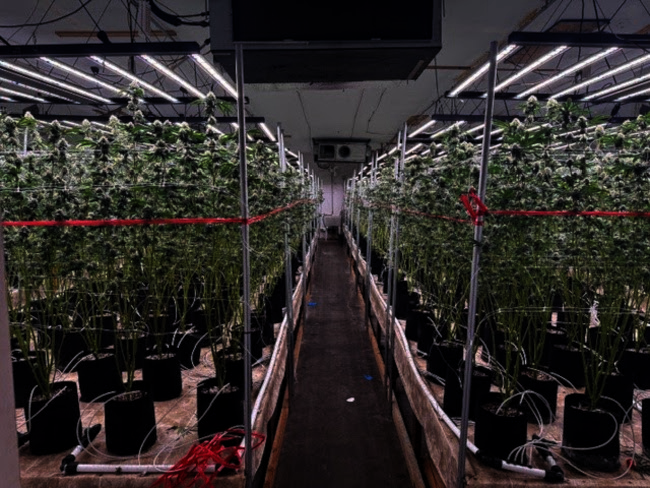
One of the cannabis operations seized by the state of California. Courtesy photo.


Continuing to strike down illegal cannabis operations statewide, Gov. Gavin Newsom on Tuesday announced that since January 2025, officials have seized nearly 270,000 pounds of illicit cannabis and eradicated more than 260,000 plants, worth an estimated nearly $480 million. 

The Department of Cannabis Control has worked with state, local and federal partners to conduct 111 statewide operations this year. 

In addition to the illicit cannabis seized, law enforcement officials have arrested 112 people, seized 52 firearms and confiscated more than $230,000 in cash.

“Illegal cannabis operations threaten the success of the legal market. We owe it to our businesses and consumers to take down these bad actors every chance we can,” said Newsom. 

Newsom’s office said that, since 2019, the Department of Cannabis Control has made major progress to tackle the scourge of illegal cannabis, including conducting 1,213 operations, seizing nearly 1.6 million pounds of product, and eradicating nearly 2.7 million plants, worth an estimated $2.8 billion.  

The administration recently enacted measures to bolster long-term enforcement efforts by dedicating cannabis tax revenue to fund civil and criminal enforcement activities. Newsom’s office said this will reduce the burden on legal businesses while ensuring sustained actions against illegal operators. 

In addition, Board of State and Community Corrections, or BSCC, grant eligibility has expanded to local jurisdictions, especially those allowing retail access, to further enhance and support local enforcement efforts against illegal cannabis activity. 

Newsom established the Unified Cannabis Enforcement Task Force to make significant gains against eliminating illegal cannabis statewide through strategic state, local and federal partnerships statewide.  

California’s regulated cannabis market is the largest in the world, fostering environmental stewardship, compliance-tested products and fair labor practices, while driving economic growth and funding vital programs in education, public health, and environmental protection.

The Department of Cannabis Control recently released a market outlook report that shows prices are stable, industry value is up and the licensed market is growing. 

EPA removal of vehicle emissions limits won’t stop the shift to electric vehicles, but will make it harder, slower and more expensive

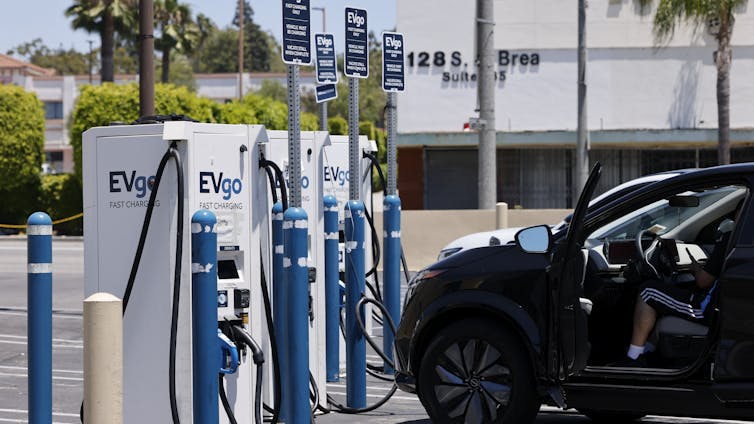
Customers have embraced electric vehicles; policy changes may decrease that interest but will not eliminate it. Carlin Stiehl/Los Angeles Times via Getty Images

The U.S. government is in full retreat from its efforts to make vehicles more fuel-efficient, which it has been waging, along with state governments, since the 1970s.

The latest move came on July 29, 2025, when the Environmental Protection Agency said it planned to rescind its landmark 2009 decision, known as the “endangerment finding,” that greenhouse gases pose a threat to public health and welfare. If that stands up in court and is not overruled by Congress, it would undo a key part of the long-standing effort to limit greenhouse gas emissions from vehicles.

As a scholar of how vehicle emissions contribute to climate change, I know that the science behind the endangerment finding hasn’t changed. If anything, the evidence has grown that greenhouse gas emissions are warming the planet and threatening people’s health and safety. Heat waves, flooding, sea-level rise and wildfires have only worsened in the decade and a half since the EPA’s ruling.

Regulations over the years have cut emissions from power generation, leaving transportation as the largest source of greenhouse gas emissions in the U.S.

The scientific community agrees that vehicle emissions are harmful and should be regulated. The public also agrees, and has indicated strong preferences for cars that pollute less, including both more efficient gas-burning vehicles and electric-powered ones. Consumers have also been drawn to electric vehicles thanks to other benefits such as performance, operation cost and innovative technologies.

That is why I believe the EPA’s move will not stop the public and commercial transition to electric vehicles, but it will make that shift harder, slower and more expensive for everyone.

A multilane highway is packed with cars and trucks.
Transportation is the largest source of greenhouse gas emissions in the U.S. Brandon Bell/Getty Images

Putting carmakers in a bind

The most recent EPA rule about vehicle emissions was finalized in 2024. It set emissions limits that can realistically only be met by a large-scale shift to electric vehicles.

Over the past decade and a half, automakers have been building up their capability to produce electric vehicles to meet these fleet requirements, and a combination of regulations such as California’s zero-emission-vehicle requirements have worked together to ensure customers can get their hands on EVs. The zero-emission-vehicle rules require automakers to produce EVs for the California market, which in turn make it easier for the companies to meet their efficiency and emissions targets from the federal government. These collectively pressure automakers to provide a steady supply of electric vehicles to consumers.

The new EPA move would undo the 2024 EPA vehicle-emissions rule and other federal regulations that also limit emissions from vehicles, such as the heavy-duty vehicle emissions rule.

The possibility of a regulatory reversal puts automakers into a state of uncertainty. Legal challenges to the EPA’s shift are all but guaranteed, and the court process could take years.

For companies making decade-long investment decisions, regulatory stability matters more than short-term politics. Disrupting that stability undermines business planning, erodes investor confidence and sends conflicting signals to consumers and suppliers alike.

An aerial view shows a very large building with an even larger parking lot outside, filled with cars.
Car manufacturers in the U.S. have invested large sums of money to produce electric vehicles. Elijah Nouvelage/Getty Images

A slower roll

The Trump administration has taken other steps to make electric vehicles less attractive to carmakers and consumers.

The White House has already suspended key provisions of the Inflation Reduction Act that provided tax credits for purchasing EVs and halted a US$5 billion investment in a nationwide network of charging stations. And Congress has retracted the federal waiver that allowed California to set its own, stricter emissions limits. In combination, these policies make it hard to buy and drive electric vehicles: Fewer, or no, financial incentives for consumers make the purchases more expensive, and fewer charging stations make travel planning more challenging.

Overturning the EPA’s 2009 endangerment finding would remove the legal basis for regulating climate pollution from vehicles altogether.

But U.S. consumer interest in electric vehicles has been growing, and automakers have already made massive investments to produce electric vehicles and their associated components in the U.S. – such as Hyundai’s EV factory in Georgia and Volkswagen’s Battery Engineering Lab in Tennessee.

Global markets, especially in Europe and China, are also moving decisively toward electrifying large proportions of the vehicles on the road. This move is helped in no small part due to aggressive regulation by their respective governments. The results speak for themselves: Sales of EVs in both the European Union and China have been growing rapidly.

But the pace of change matters. A slower rollout of clean vehicles means more cumulative emissions, more climate damage and more harm to public health.

The EPA’s proposal seeks to slow the shift to electric vehicles, removing incentives and raising costs – even though the market has shown that cleaner vehicles are viable, the public has shown interest, and the science has never been clearer. But even such a major policy change can’t stop the momentum of those trends.The Conversation

Alan Jenn, Associate Professor of Civil and Environmental Engineering, University of California, Davis

This article is republished from The Conversation under a Creative Commons license. Read the original article.


Lake fire acreage and containment rise; one injury reported

LAKE COUNTY, Calif. — Firefighters are making progress in the work of fully containing a fire that began on Sunday and destroyed half a dozen structures in Clearlake.

The Lake fire broke out on Sunday afternoon at Nacimiento Lake Drive and Oak Street, south of Borax Lake in Clearlake.

By Sunday night, the fire was at 340 acres with 5% containment.

On Monday evening, Cal Fire’s size estimate for the incident had risen to 401 acres, with containment up to 50%.

Cal Fire also reported on Monday that one firefighter had been injured.

Fire officials said the damage inspection process on Monday revealed that six outbuildings were destroyed in the fire and three additional structures were damaged — including two outbuildings and one single-family residence.

Firefighters will continue working the area for the next couple of days in the effort to fully contain the fire, Cal Fire reported.

Cal Fire’s Monday evening report said 150 personnel remain assigned to the incident, along with one engine, one dozer, three water tenders and six crews.

Email Elizabeth Larson at This email address is being protected from spambots. You need JavaScript enabled to view it.. Follow her on Twitter, @ERLarson, and on Bluesky, @erlarson.bsky.social. Find Lake County News on the following platforms: Facebook, @LakeCoNews; X, @LakeCoNews; Threads, @lakeconews, and on Bluesky, @lakeconews.bsky.social. 

Clearlake City Council to hold special meeting Aug. 6

CLEARLAKE, Calif. — The Clearlake City Council will meet this week in a special planning session.

The council will meet at 9 a.m. Wednesday, Aug. 6, at Adventist Health Clear Lake Hospital, 15630 18th Ave., Building F.

The agenda can be found here.

There will be no Zoom component to the meeting.

The only item of business on the agenda is a strategic planning workshop.

The public is welcome to attend.

Email Elizabeth Larson at This email address is being protected from spambots. You need JavaScript enabled to view it.. Follow her on Twitter, @ERLarson, and on Bluesky, @erlarson.bsky.social. Find Lake County News on the following platforms: Facebook, @LakeCoNews; X, @LakeCoNews; Threads, @lakeconews, and on Bluesky, @lakeconews.bsky.social. 

  • 176
  • 177
  • 178
  • 179
  • 180
  • 181
  • 182
  • 183
  • 184
  • 185

Community

  • Sheriff’s Activities League and Clearlake Bassmasters offer youth fishing clinic

  • City Nature Challenge takes place April 24 to 27

Public Safety

  • Lakeport Police logs: Wednesday, Feb. 11

  • Lakeport Police logs: Tuesday, Feb. 10

Education

  • Ramos measure requiring school officer training in use of anti-opioid drug moves forward

  • Lake County Chapter of CWA announces annual scholarships 

Health

  • California ranks 24th in America’s Health Rankings Annual Report from United Health Foundation

  • Healthy blood donors especially vital during active flu season

Business

  • Employment law summit takes place March 9

  • Two Lake County Mediacom employees earn company’s top service awards

Obituaries

  • Terry Knight

  • Ellen Thomas

Opinion & Letters

  • Who should pay for AI’s power? Not California ratepayers

  • Crandell: Supporting nephew for reelection in supervisorial race

Veterans

  • State honors fallen chief warrant officer killed in conflict in Iran

  • CalVet and CSU Long Beach team up to improve data collection related to veteran suicides

Recreation

  • April Audubon program will show how volunteers can help monitor local osprey nests

  • First guided nature walk of spring at Anderson Marsh State Historic Park April 11

  • Second Saturday guided nature walks continue at Anderson Marsh State Historic Park

  • Wet weather trail closure in effect on Upper Lake Ranger District

Religion

  • Kelseyville Presbyterian Church plans Easter service

  • Easter ‘Sonrise’ Service returns to Xabatin Community Park

Arts & Life

  • ‘CIA’ delves into the shadowy world of an espionage thriller

  • ‘War Machine’ shifts the battlefield into uncharted territory

Government & Politics

  • Lake County Democratic Central Committee endorses Falkenberg

  • Crandell launches reelection campaign plans March 15 event

Legals

  • April 23 hearing on Lake Coco Farms Major Use Permit

  • NOTICE OF 30-DAY PUBLIC COMMENT PERIOD & NOTICE OF PUBLIC HEARING

How to resolve AdBlock issue?
Refresh this page