How to resolve AdBlock issue?
Refresh this page
Lake County News,California
  • Home
    • Registration Form
  • News
    • Education
    • Veterans
    • Community
      • Obituaries
      • Letters
      • Commentary
    • Police Logs
    • Business
    • Recreation
    • Health
    • Religion
    • Legals
    • Arts & Life
    • Regional
  • Calendar
  • Contact us
    • FAQs
    • Phones, E-Mail
    • Subscribe
  • Advertise Here
  • Login
How to resolve AdBlock issue?

Refresh this page

News

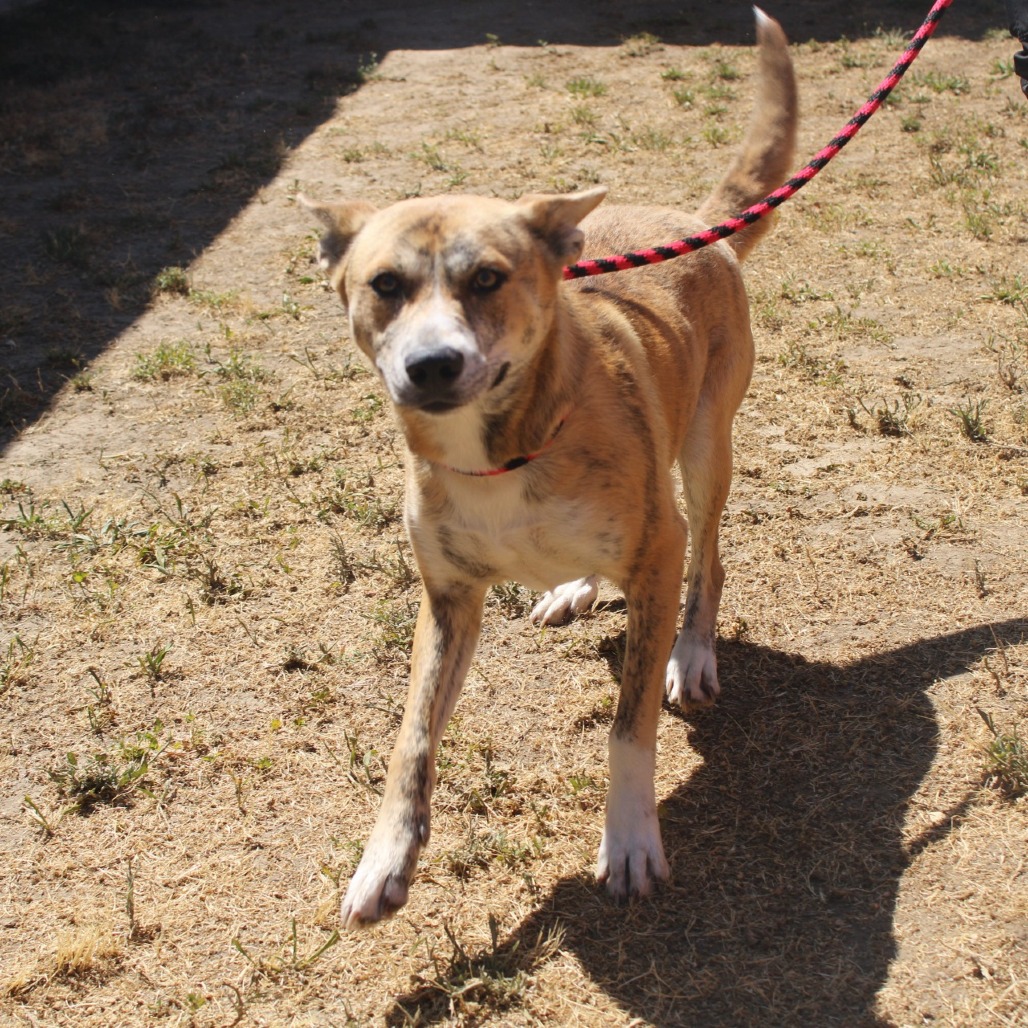
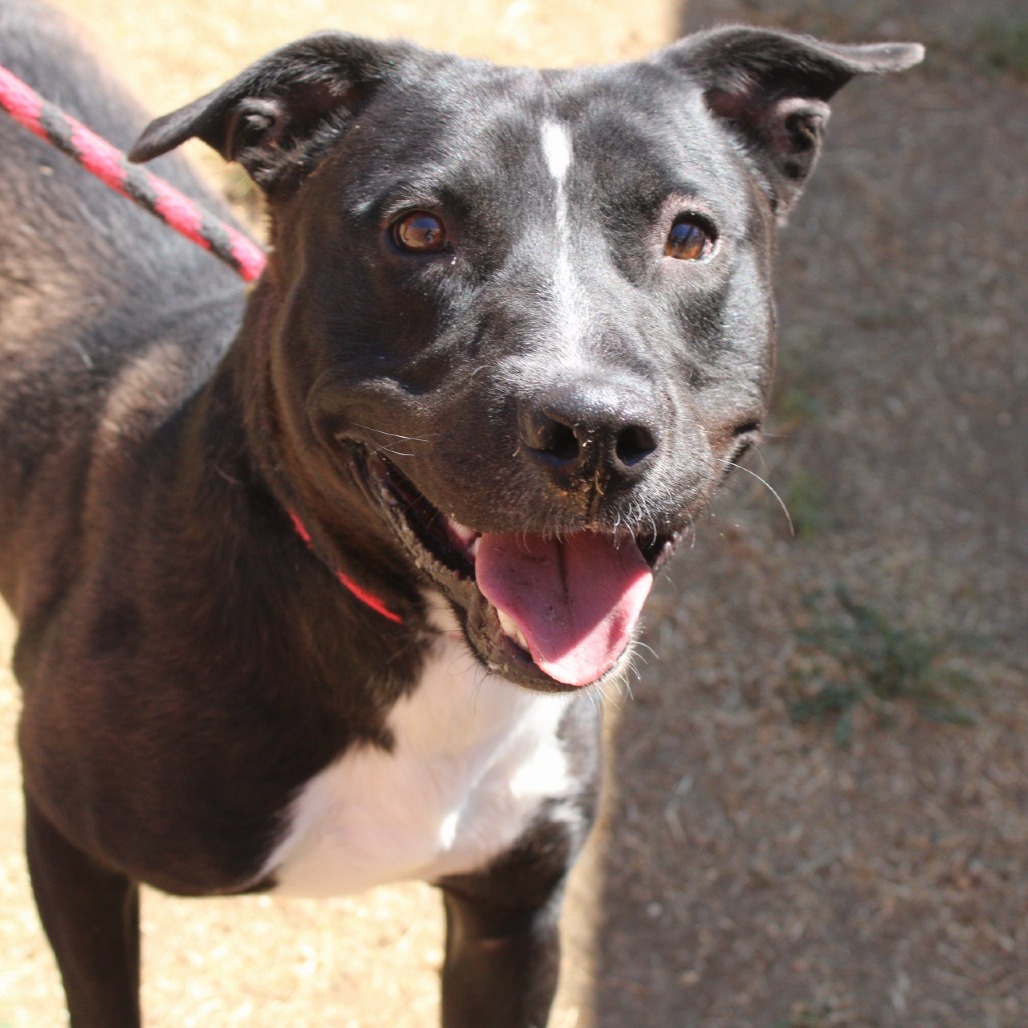
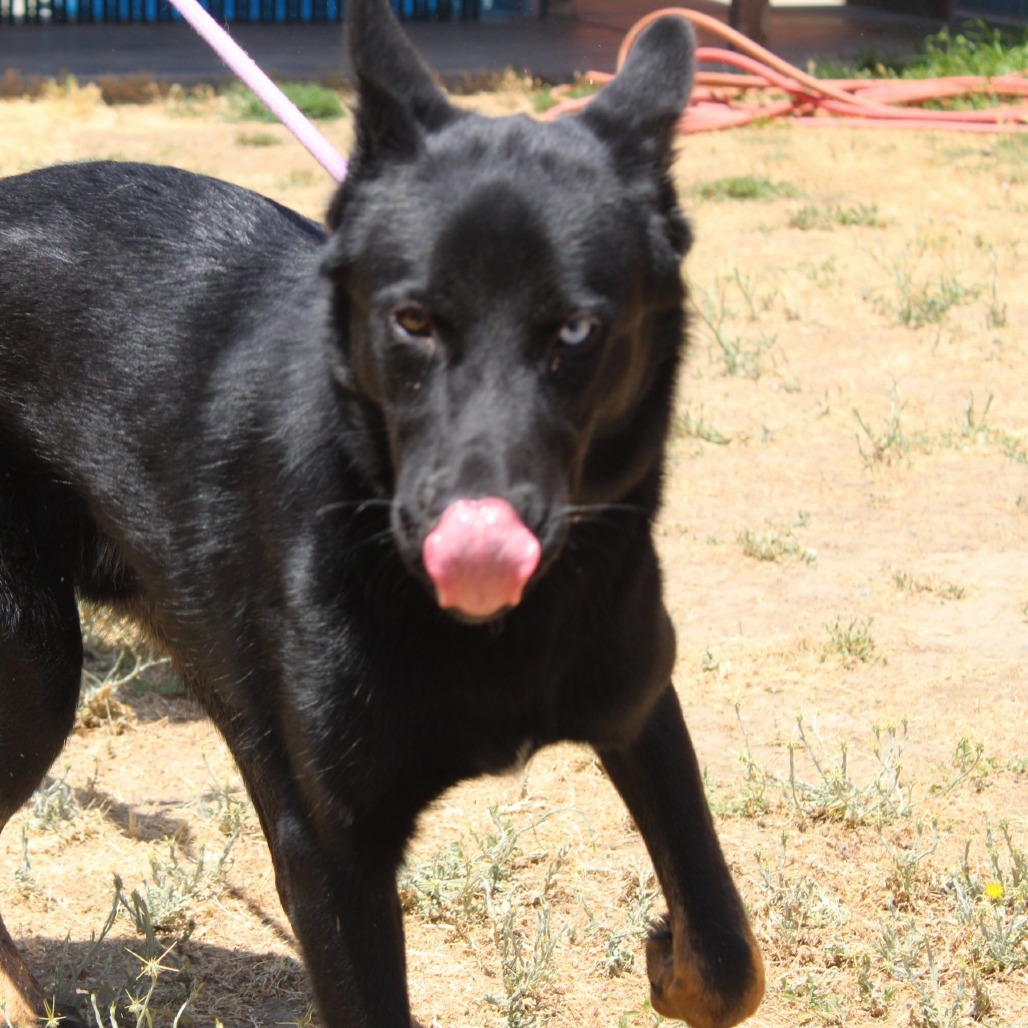
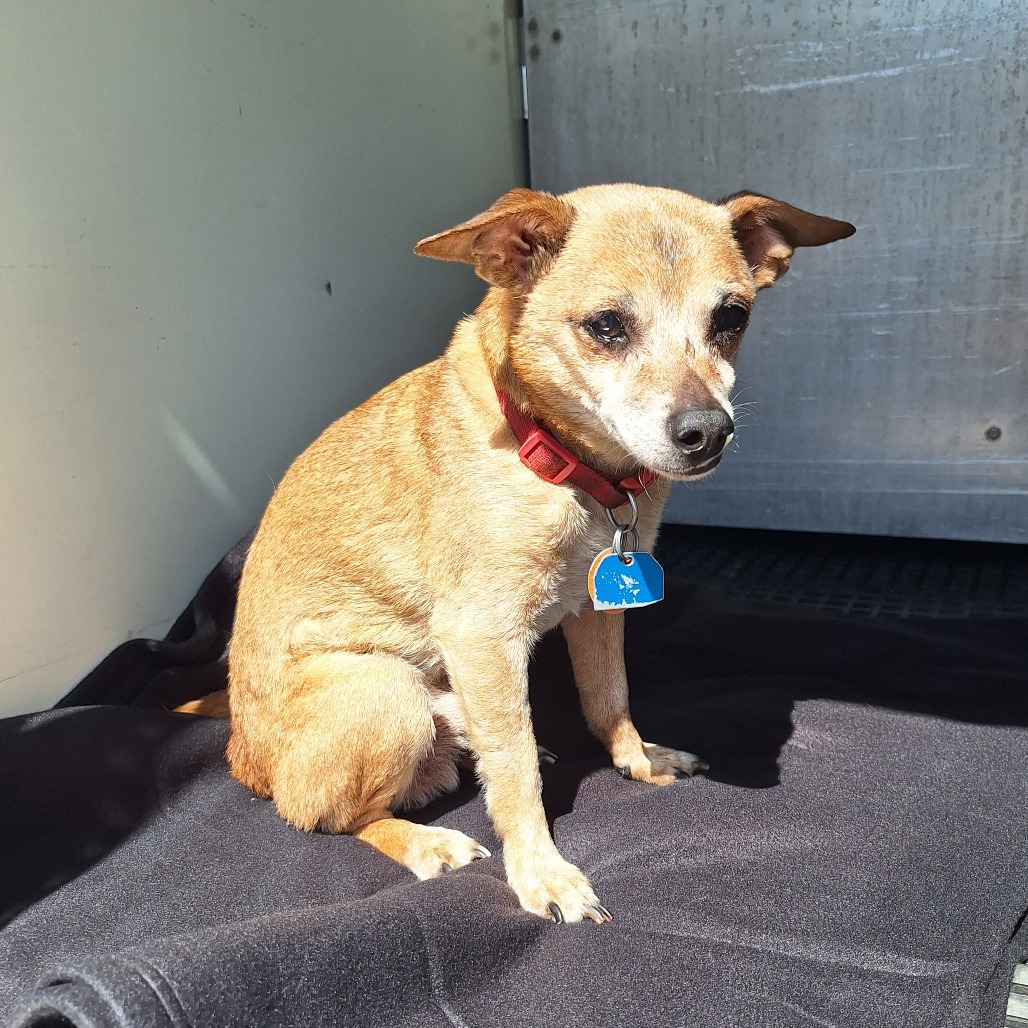
Helping Paws: Many new dogs and puppies

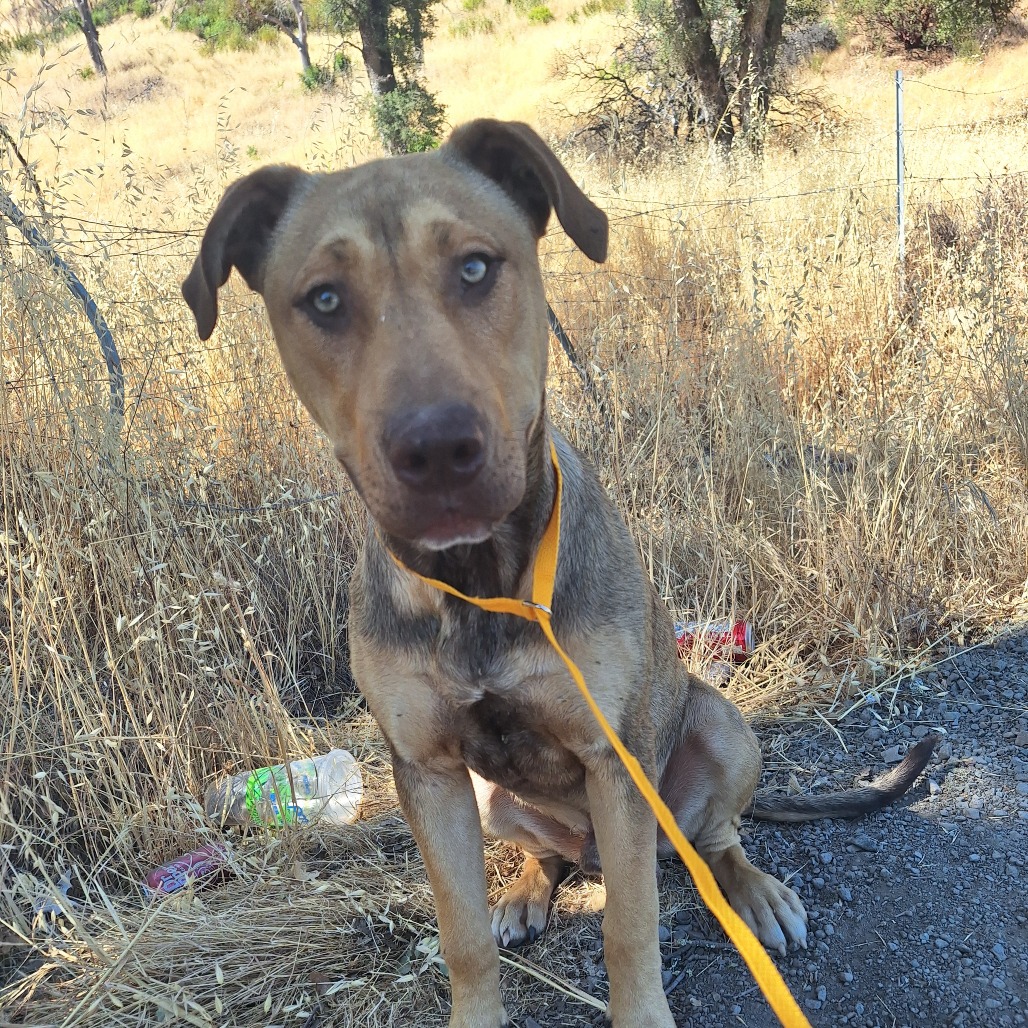
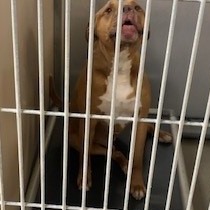
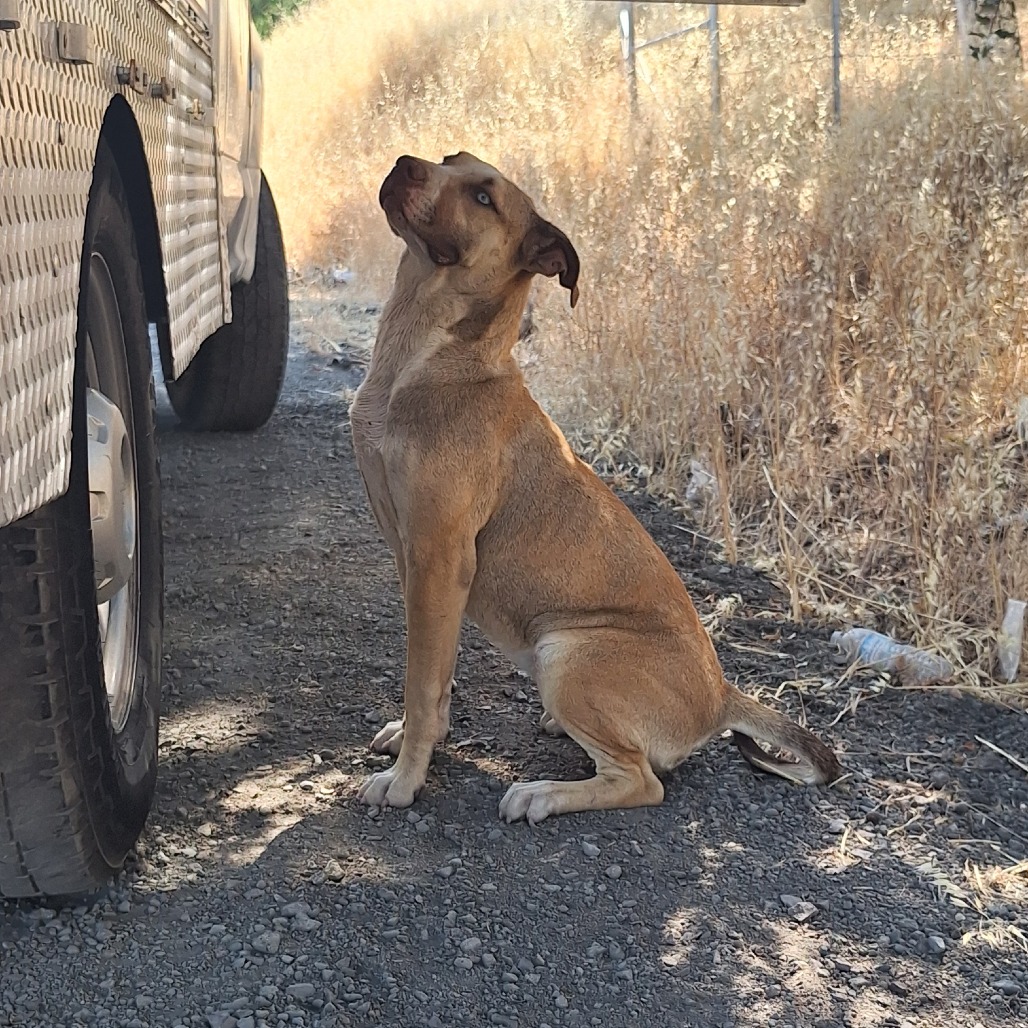
LAKE COUNTY, Calif. — Lake County Animal Care and Control is offering a new group of dogs and puppies for adoption to new families.

The dogs available for adoption this week include mixes of Chihuahua, German shepherd, husky, Labrador Retriever, pit bull terrier, Pomeranian, terrier, Shih Tzu and shepherd.

Dogs that are adopted from Lake County Animal Care and Control are either neutered or spayed, microchipped and, if old enough, given a rabies shot and county license before being released to their new owner. License fees do not apply to residents of the cities of Lakeport or Clearlake.

Those animals shown on this page at the Lake County Animal Care and Control shelter have been cleared for adoption.

Call Lake County Animal Care and Control at 707-263-0278 or visit the shelter online for information on visiting or adopting.

The shelter is located at 4949 Helbush in Lakeport.

Email Elizabeth Larson at This email address is being protected from spambots. You need JavaScript enabled to view it.. Follow her on Twitter, @ERLarson, and on Bluesky, @erlarson.bsky.social. Find Lake County News on the following platforms: Facebook, @LakeCoNews; X, @LakeCoNews; Threads, @lakeconews, and on Bluesky, @lakeconews.bsky.social. 

Desiree's preview photo
Desiree

Tiger's preview photo
Tiger

Angel's preview photo
Angel

Ray's preview photo
Ray

Cub's preview photo
Cub

Royal's preview photo
Royal

Dodger's preview photo
Dodger

Sox's preview photo
Sox

Raven's preview photo
Raven

Diamond's preview photo
Diamond

Sky 's preview photo
Sky

Chama's preview photo
Chama

Saphire's preview photo
Saphire

Scrappy's preview photo
Scrappy

Kennel #16a's preview photo
Kennel #16a

Kennel#15a(Purple)'s preview photo
Kennel#15a(Purple)

Kennel#15c(Yellow)'s preview photo
Kennel#15c(Yellow)

Kennel #16b's preview photo
Kennel #16b

Jax's preview photo
Jax

Bear's preview photo
Bear

Barlow's preview photo
Barlow

Cliff's preview photo
Cliff

Tilly's preview photo
Tilly

Snoopy's preview photo
Snoopy

Spunky 's preview photo
Spunky

Kennel #11a's preview photo
Kennel #11a

Kennel #11b's preview photo
Kennel #11b

Enty's preview photo
Enty

Romeo's preview photo
Romeo

 
Gunther's preview photo
Gunther

\Marco's preview photo
Marco

Pollo's preview photo
Pollo

Kristoph's preview photo
Kristoph

Lucky's preview photo
Lucky

Lacey's preview photo
Lacey

Nora's preview photo
Nora

Kennel #12a (GRN)'s preview photo
Kennel #12a (GRN)

Kennel #12b (YELLOW)'s preview photo
Kennel #12b (YELLOW)

Kennel #12c (PINK)'s preview photo
Kennel #12c (PINK)
Kennel#31's preview photo
Kennel#31

Kennel#3's preview photo
Kennel#3

Central Region Town Hall to meet July 14

LUCERNE, Calif. — The Central Region Town Hall will meet on Monday, July 14.

The meeting will begin at 6 p.m. at the Lucerne Alpine Senior Center, 3985 Country Club Drive.

Virtual participation is available via Zoom at https://app.zoom.us/wc. 

To join by phone dial 1 669 900 9128. The Zoom Webinar ID is 825 9780 9680; the passcode is 778050.

The full agenda can be seen here.

Agenda items include: 

• Update from Vice Chair Austin Pratt regarding the District 3 MAC Alliance, or D3 Supermac.  

• Update from the Lake County Public Services Department.

• Lake County's Zero Emission Vehicle Infrastructure Plan.

• An update from Supervisor EJ Crandell.

The Central Region Town Hall Board includes Chair Becky Schwenger, Vice Chair Austin Pratt, Recorder Atlas Pearson, and members Jon Karlsson and Jacob Blue.

Nine in 10 days in California this year partially powered by 100% clean energy

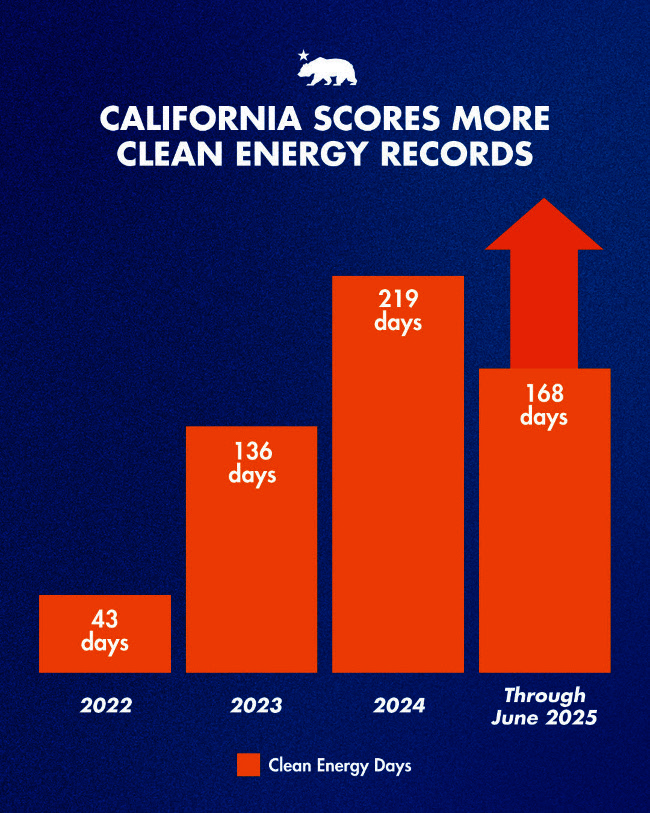
More than nine out of 10 days so far this year have been powered by 100% clean energy for at least some part of the day in California. 

In 2025, California’s grid has run on 100% clean electricity for an average of seven hours a day.

Data compiled by the California Energy Commission shows clean energy has powered the equivalent of 51.9 days in the state — nearly 30% of the year to date running on 100% clean electricity. 

That already surpasses the amount of “clean energy days” last year — and represents a 750% increase in clean energy days since 2022.

“The fourth largest economy in the world is running on more clean energy than ever before. Clean energy met our grid’s total demand for some part of the day almost every day this year — the equivalent of 51 full days powered by 100% clean electricity,” said Gov. Gavin Newsom. “Trump and Republicans can try all they want to take us back to the days of dirty coal but the future is cheap, abundant clean energy.” 

California has installed a record amount of clean energy — faster

The addition of new clean energy resources — including battery storage — to the state’s grid has helped make clean energy days a reality in California.  

Earlier this year, Gov. Newsom announced more than 25,000 megawatts of new resources have been added to the state’s electric grid over the past five years — an amount equivalent to roughly half of the state’s record peak demand in 2022 and in addition to existing capacity.

In 2024 alone, California added approximately 7,000 megawatts  of new clean energy nameplate capacity — representing the largest single-year increase in clean energy capacity added to the grid in state history. 

This new figure broke the previous records set in both 2022 and 2023, marking a third consecutive year of unprecedented clean energy growth.

Since the beginning of the Newsom Administration, battery storage is up to over 15,000 megawatts — a 1,944% increase.

Space News: Dune patterns in California desert hold clues that help researchers map Mars’ shifting sands

The author did some of her fieldwork at the Algodones Dunes in California. Ryan Ewing

Our two-person team loaded the car with a GPS, a drone, notebooks, sample bags, a trowel and a flat spatula lovingly called a scoopula. Then we drove 30 minutes in our rented truck from Yuma, Arizona, to the Algodones Dunes, a sandy field bordering California, Arizona and Mexico. The day was sunny, with a strong breeze. Turning off the highway, we carefully headed onto a gravelly path that acted as our road.

After making decent – if bumpy – progress, we pulled off onto the sand flats and drove slowly toward the dunes, worried we might get stuck in the sand. Having arrived on the outskirts of the Algodones, we stopped and loaded our backpacks, then set off into the desert on foot.

An image of desert sand.
The coarse- and fine-grained sand at the Algodones Dunes. Lauren Berger

It was November 2022. As a graduate student at Texas A&M University, I was beginning part of my Ph.D. research with my adviser, geology professor Ryan Ewing. We were looking for coarse-grained sand ripples, which are patterned piles of sand shaped by wind. Sand ripples and sand dunes are types of aeolian bedforms, which are wind-created geologic features.

Aeolian bedforms are common on Earth and across the solar system, including on Mars, Venus, Pluto, the Saturn moon Titan, the Neptune moon Triton, and Comet 67P. These geological features, among the first landforms observed by remote images of planetary surfaces, are robust indicators of a world’s wind patterns.

A woman in the desert, near a tripod and a GPS target.
Flying a drone at Algodones. Note the GPS on the tripod, and a GPS target on the ground, which was also a landing pad for the drone. Ryan Ewing

Measuring sand patterns in person

The shapes and patterns of aeolian bedforms can reveal the environmental conditions that created them.

Two sizes of the same bedform, such as small dunes on top of big dunes, are called compound bedforms. I study compound bedforms at two scales – the meter- and centimeter-sized coarse-grained ripples at the dunes here on Earth, and the kilometer- and meter-sized dunes on Mars.

At the Algodones, I measured the height of each large coarse-grained sand ripple and the distance between neighboring ripples. Then we flew our drone low and steady, above the ripples, to create high-resolution images. The drone data allows us to do further measurements on the ripples later, back at my desk.

On that day, I learned an essential rule of fieldwork in the desert: Don’t forget a shovel. Otherwise, if your vehicle gets stuck, as ours did, you’ll have to dig it out by hand. Luckily for us, a dune buggy driver passing by helped us out and we were able to get back to Yuma in time for dinner.

Four aerial photographs of sand ripples.
High-resolution drone images of the sand ripples at Algodones. Lauren Berger

My introduction to Mars

I first became interested in aeolian bedforms during my sophomore year of college, when I interned at the NASA Jet Propulsion Laboratory. My job was to view surface images of Mars and then map the sand ripples in the regions where Perseverance, the Mars rover, might land. I assessed the areas where ripples could be hazards – places where the rover could get stuck in the sand, the way our rental truck did in the Algodones.

I mapped those sand ripples on Mars for two years. But while I mapped, I became fascinated with the patterns the ripples made.

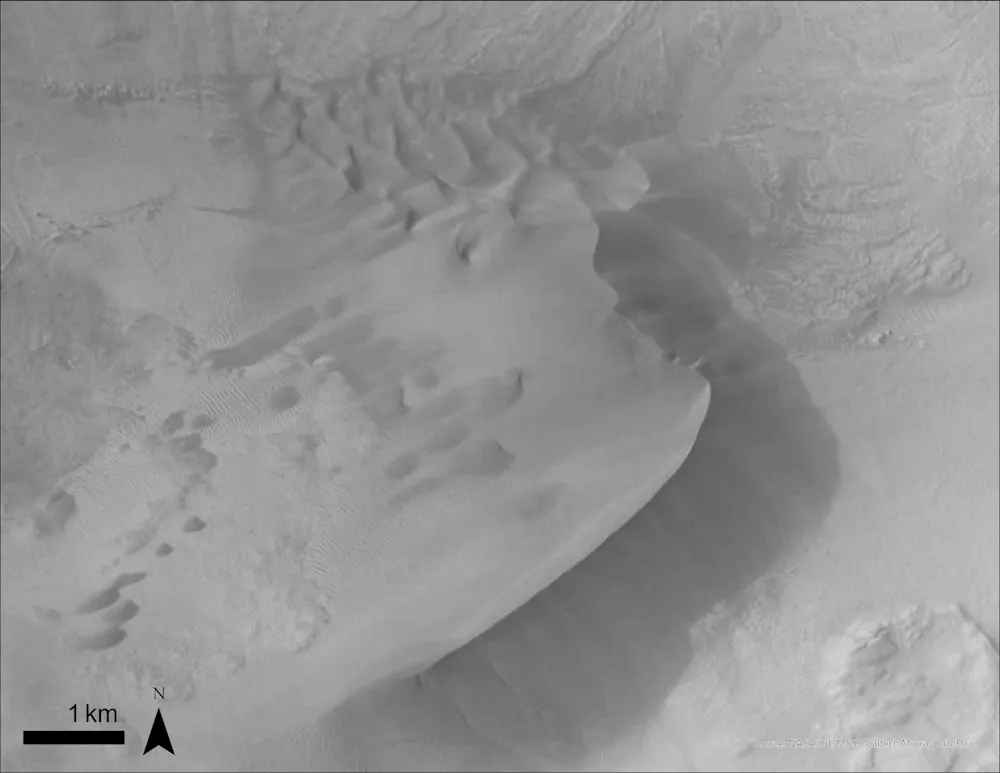
A black and white aerial image of a dune on Mars.
A potential compound dune on Mars. NASA/JPL-Caltech

Now, as a graduate student and aspiring planetary geologist, my time is split between work in the field and at my computer, where I have stitched together the drone’s photographs of the Algodones to create a large image of the entire study area. I then look for compound dunes on the Martian surface in images taken by the Mars reconnaissance orbiter’s context camera.

Scientists already know about Earth’s weather patterns, sand grain size and wind data. By measuring different parts of bedforms on both planets – such as their height, shape and spacing – I can compare the similarities and differences of the bedforms to find clues to the wind patterns, grains and atmosphere on Mars. Slowly but surely, as I listen to Studio Ghibli soundtracks, I’m creating the first database of compound dunes on Mars.

A black and white aerial images of dune fields on Mars.
Two dune fields on Mars, both inside an impact crater. NASA/JPL-Caltech

Developing this database is essential to the proposed human mission to Mars. Dust storms are frequent, and some can encircle the entire planet. Understanding aeolian bedforms will help scientists know where to put bases so they don’t get buried by moving sand.

It is wonderful to spend an afternoon ping-ponging all over a planet that’s 140 million miles from us, seeing gorgeous terrain while I try to answer questions about the compound dunes on Mars. How common are they? Where do they form? How do they compare to those on Earth? I hope to answer these questions as I work toward earning my Ph.D in geology.The Conversation

Lauren Berger, Ph.D. Student in Geology, Texas A&M University

This article is republished from The Conversation under a Creative Commons license. Read the original article.

Californians urged to take precautions as state endures triple digit heat, smoky conditions

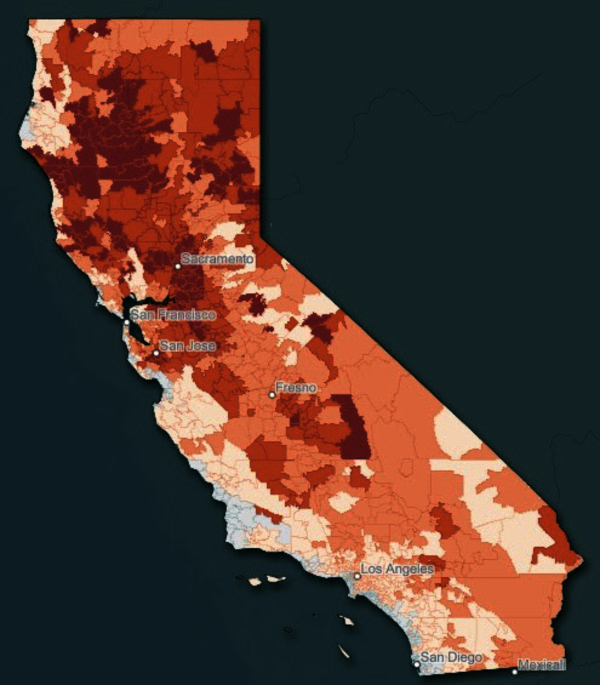
CalHeatScore map results from Friday, July 11, 2025.


Officials are encouraging residents to prepare for dangerous heat throughout California, and smoky conditions in the far northern part of the state, through early next week. 

The National Weather Service has issued heat advisories in many portions of the state on Friday and Saturday, extending through Sunday in parts of the Central Valley.  

In Northern California, areas west of Redding are under extreme heat warnings due to triple digit temperatures that are expected to linger into the first part of next week. 

Air quality will also be impacted due to smoke from several wildfires burning in remote California and Oregon locations.  

On Friday, temperatures topped 100 degrees in Lake County, where the air was thick with drift smoke from outside of the area.

“As temperatures soar across our state, I urge Californians to take precautions and utilize state and local resources to protect from dangerous heat illness and unhealthy air,” said Gov. Gavin Newsom.

The recently launched CalHeatScore heat-ranking tool indicates much of northern and central California will be impacted by moderate to severe heat conditions through Monday, with some areas feeling the heat through Wednesday. 

Residents can check their area by zip code for local conditions. 

Here are a few tips and considerations for Californians – especially those with access and functional needs, children and older residents – to stay safe from heat and reduce health risks: 

Have a heat plan: Monitor weather forecasts and advisories to know when excessive heat is expected and how long it’s expected to last. Create a heat plan and encourage others to stay safe during a heat event. 

Keep cool: Visit a local cooling center or air-conditioned space, such as a library, community center or shopping center. If you’re unable to travel or find an air-conditioned space, consider the following at home: 

• Close windows, doors, shades and curtains to prevent hot air and sunlight from entering your home during high heat days. 
• Place a cool, damp towel on the back of your neck and wear light-colored, loose-fitting clothes. 
• Use cool compresses and take a cool shower or bath to help reduce body temperature and provide relief from the heat.

Use your support networks: Identify individuals in your life, such as family, friends and neighbors, who could help support you during heat events. Remember, creating an emergency preparedness plan based on your personal needs is critical to ensure you and your loved ones remain safe during an emergency. 

Sign up for alerts and notifications: Sign up for emergency alerts with your county or local officials. You can choose how to get alerts sent to you when you sign up, including cell phone, home phone, email, text messages and, in some cases, TTY devices. 

Sign up for a medical baseline program: This is an assistance program for people who depend on power for certain medical needs. Participation is important to ensure you receive additional notification of current or upcoming power shutoff events, which may occur during extreme heat events. 

Legislators secure major funding for Cal Fire in new state budget

As wildfire season intensifies across the state, California is investing more resources in Cal Fire than ever before thanks to critical funding secured by legislative leadership in this year’s state budget. 

This year’s historic investment begins the landmark transition of Cal Fire’s antiquated seasonal firefighter staffing plan to a modern day staffing model, which will eventually transition all 3,000 seasonal Cal Fire firefighters to full-time status 365 days per year. 

The 2025-26 state budget includes funding to begin the transition of hundreds of seasonal firefighters, who will officially be on the fire lines full-time early next year.

Facing longer and more destructive fire seasons each year, the investments build on massive efforts by Democratic leaders over the past decade, which have nearly doubled the ranks of Cal Fire firefighters from 6,700 to over 12,000 today. 

Another 2,100 Cal Fire firefighters will be hired over the next 48 months thanks to a previous budget agreement championed by state Democrats.

“January’s LA firestorm was a painful reminder that wildfire season is now year round in the Golden State,” said Senate President pro Tempore Mike McGuire (D-North Coast). “We know that firefighters have been facing deteriorating conditions, longer and hotter fire seasons, and overwhelming fatigue as they battle the largest mega fires in American history. This year’s budget is a historic first that will pivot away from an antiquated seasonal staffing model and implement what our communities need right now — an all-hands-on-deck approach with every Cal Fire firefighter full-time and prepared to respond 24 hours per day, 365 days a year.”

The Golden State and the entire West are burning at historic rates and have presented firefighters with new challenges, devastating conditions, and long, grueling hours. 

Eight of the most destructive wildfires in California history have hit over the past five years, with two of the deadliest wildfires burning over 16,000 homes and businesses in Los Angeles County this January.

Across California, more than $4 billion has been allocated in vegetation management projects to reduce ongoing wildfire risks. 

This includes hazardous fuel reduction projects, vegetation management, defensible space programs, and cutting-edge technology to prevent devastating wildfires.

And recently passed legislation includes California Environmental Quality Act, or CEQA, exemptions for wildfire fuel breaks, shady fuel breaks, roadside fuel breaks and prescribed burns. 

Legislators said this new state law will significantly speed up wildfire mitigation projects and help make communities across the Golden State more fire safe.

“The conditions Cal Fire firefighters are facing is like nothing we’ve ever seen before, and we needed the state to have our backs so that we can keep fighting these blazes morning, noon and night, every season of the year,” said Tim Edwards, president of Cal Fire local 2881. “I’m so grateful for the leadership of Sen. McGuire who’s been fighting to fix the Cal Fire firefighter shortage for years. While we have more work ahead, the progress we’re making is remarkable. This year’s budget action — and the expanded resources over the last several years — are game changers to make the Golden State more wildfire safe.”

“The fires that ravaged LA earlier this year were a devastating reminder that firefighters are stretched thin, and their health and safety must be a priority,” said Sen. Tim Grayson (D-Concord). “We rely on them to protect our communities and our families, and we want them to know they can rely on the state for the resources they desperately need to do their jobs.” 

“A promise made is a promise kept. I was grateful to meet and work with Pro Tem McGuire and Senator Grayson, along with fire service leadership across the state, on these important and commonsense measures to expedite wildfire mitigation projects. They have followed through on their commitment to deliver for our communities, and now we can get to work on making California, and our residents, safer from wildfire thanks to their efforts,” said Chief Lewis Broschard of the Contra Costa County Fire Protection District.

McGuire is president pro tempore of the California Senate. He represents the North Coast of California, which stretches from the Golden Gate Bridge to the Oregon border, including Del Norte, Trinity, Humboldt, Lake, Mendocino, Sonoma and Marin counties.  


  • 193
  • 194
  • 195
  • 196
  • 197
  • 198
  • 199
  • 200
  • 201
  • 202

Community

  • Sheriff’s Activities League and Clearlake Bassmasters offer youth fishing clinic

  • City Nature Challenge takes place April 24 to 27

Public Safety

  • Lakeport Police logs: Wednesday, Feb. 11

  • Lakeport Police logs: Tuesday, Feb. 10

Education

  • Ramos measure requiring school officer training in use of anti-opioid drug moves forward

  • Lake County Chapter of CWA announces annual scholarships 

Health

  • California ranks 24th in America’s Health Rankings Annual Report from United Health Foundation

  • Healthy blood donors especially vital during active flu season

Business

  • Employment law summit takes place March 9

  • Two Lake County Mediacom employees earn company’s top service awards

Obituaries

  • Terry Knight

  • Ellen Thomas

Opinion & Letters

  • Who should pay for AI’s power? Not California ratepayers

  • Crandell: Supporting nephew for reelection in supervisorial race

Veterans

  • State honors fallen chief warrant officer killed in conflict in Iran

  • CalVet and CSU Long Beach team up to improve data collection related to veteran suicides

Recreation

  • April Audubon program will show how volunteers can help monitor local osprey nests

  • First guided nature walk of spring at Anderson Marsh State Historic Park April 11

  • Second Saturday guided nature walks continue at Anderson Marsh State Historic Park

  • Wet weather trail closure in effect on Upper Lake Ranger District

Religion

  • Kelseyville Presbyterian Church plans Easter service

  • Easter ‘Sonrise’ Service returns to Xabatin Community Park

Arts & Life

  • ‘CIA’ delves into the shadowy world of an espionage thriller

  • ‘War Machine’ shifts the battlefield into uncharted territory

Government & Politics

  • Lake County Democratic Central Committee endorses Falkenberg

  • Crandell launches reelection campaign plans March 15 event

Legals

  • April 23 hearing on Lake Coco Farms Major Use Permit

  • NOTICE OF 30-DAY PUBLIC COMMENT PERIOD & NOTICE OF PUBLIC HEARING

How to resolve AdBlock issue?

Refresh this page