How to resolve AdBlock issue?
Refresh this page
How to resolve AdBlock issue?
Refresh this page
Lake County News,California
  • Home
    • Registration Form
  • News
    • Community
      • Obituaries
      • Letters
      • Commentary
    • Education
    • Veterans
    • Police Logs
    • Business
    • Recreation
    • Health
    • Religion
    • Legals
    • Arts & Life
    • Regional
  • Calendar
  • Contact us
    • FAQs
    • Phones, E-Mail
    • Subscribe
  • Advertise Here
  • Login

Cancer research in the US is world class because of its broad base of funding − with the government pulling out, its future is uncertain


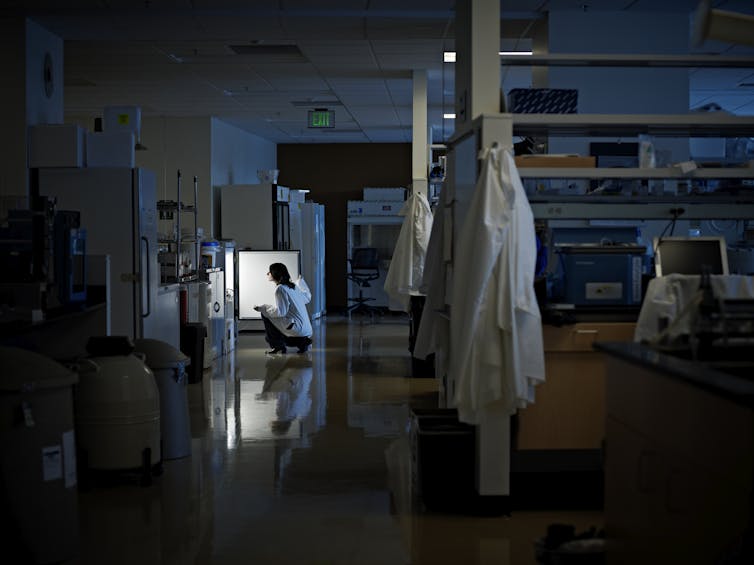
Without federal support, the lights will turn off in many labs across the country. Thomas Barwick/Stone via Getty Images

Cancer research in the U.S. doesn’t rely on a single institution or funding stream − it’s a complex ecosystem made up of interdependent parts: academia, pharmaceutical companies, biotechnology startups, federal agencies and private foundations. As a cancer biologist who has worked in each of these sectors over the past three decades, I’ve seen firsthand how each piece supports the others.

When one falters, the whole system becomes vulnerable.

The United States has long led the world in cancer research. It has spent more on cancer research than any other country, including more than US$7.2 billion annually through the National Cancer Institute alone. Since the 1971 National Cancer Act, this sustained public investment has helped drive dramatic declines in cancer mortality, with death rates falling by 34% since 1991. In the past five years, the Food and Drug Administration has approved over 100 new cancer drugs, and the U.S. has brought more cancer drugs to the global market than any other nation.

But that legacy is under threat. Funding delays, political shifts and instability across sectors have created an environment where basic research into the fundamentals of cancer biology is struggling to keep traction and the drug development pipeline is showing signs of stress.

These disruptions go far beyond uncertainty and have real consequences. Early-career scientists faced with unstable funding and limited job prospects may leave academia altogether. Mid-career researchers often spend more time chasing scarce funding than conducting research. Interrupted research budgets and shifting policy priorities can unravel multiyear collaborations. I, along with many other researchers, believe these setbacks will slow progress, break training pipelines and drain expertise from critical areas of cancer research – delays that ultimately hurt patients waiting for new treatments.

A 50-year foundation of federal investment

The modern era of U.S. cancer research began with the signing of the National Cancer Act in 1971. That law dramatically expanded the National Cancer Institute, an agency within the National Institutes of Health focusing on cancer research and education. The NCI laid the groundwork for a robust national infrastructure for cancer science, funding everything from early research in the lab to large-scale clinical trials and supporting the training of a generation of cancer researchers.

This federal support has driven advances leading to higher survival rates and the transformation of some cancers into a manageable chronic or curable condition. Progress in screening, diagnostics and targeted therapies – and the patients who have benefited from them – owe much to decades of NIH support.

The Trump administration is cutting billions of dollars of biomedical research funding.

But federal funding has always been vulnerable to political headwinds. During the first Trump administration, deep cuts to biomedical science budgets threatened to stall the progress made under initiatives such as the 2016 Cancer Moonshot. The rationale given for these cuts was to slash overall spending, despite facing strong bipartisan opposition in Congress. Lawmakers ultimately rejected the administration’s proposal and instead increased NIH funding. In 2022, the Biden administration worked to relaunch the Cancer Moonshot.

This uncertainty has worsened in 2025 as the second Trump administration has cut or canceled many NIH grants. Labs that relied on these awards are suddenly facing funding cliffs, forcing them to lay off staff, pause experiments or shutter entirely. Deliberate delays in communication from the Department of Health and Human Services have stalled new NIH grant reviews and funding decisions, putting many promising research proposals already in the pipeline at risk.

Philanthropy’s support is powerful – but limited

While federal agencies remain the backbone of cancer research funding, philanthropic organizations provide the critical support for breakthroughs – especially for new ideas and riskier projects.

Groups such as the American Cancer Society, Stand Up To Cancer and major hospital foundations have filled important gaps in support, often funding pilot studies or supporting early-career investigators before they secure federal grants. By supporting bold ideas and providing seed funding, they help launch innovative research that may later attract large-scale support from the NIH.

Without the bureaucratic constraints of federal agencies, philanthropy is more nimble and flexible. It can move faster to support work in emerging areas, such as immunotherapy and precision oncology. For example, the American Cancer Society grant review process typically takes about four months from submission, while the NIH grant review process takes an average of eight months.

Crowd of people in white T-shirts reading 'RUN JEFF RUN' standing in front of a backdrop of a sign with the American Cancer Society logo and another sign reading 'CALL IN YOUR PLEDGE...'
Ted Kennedy Jr., right, and Jeff Keith raise money for the American Cancer Society in 1984. Mikki Ansin/Getty Images

But philanthropic funds are smaller in scale and often disease-specific. Many foundations are created around a specific cause, such as advancing cures for pancreatic, breast or pediatric cancers. Their urgency to make an impact allows them to fund bold approaches that federal funders may see as too preliminary or speculative. Their giving also fluctuates. For instance, the American Cancer Society awarded nearly $60 million less in research grants in 2020 compared with 2019.

While private foundations are vital partners for cancer research, they cannot replace the scale and consistency of federal funding. Total U.S. philanthropic funding for cancer research is estimated at a few billion dollars per year, spread across hundreds of organizations. In comparison, the federal government has typically contributed roughly five to eight times more than philanthropy to cancer research each year.

Industry innovation − and its priorities

Private-sector innovation is essential for translating discoveries into treatments. In 2021, nearly 80% of the roughly $57 billion the U.S. spent on cancer drugs came from pharmaceutical and biotech companies. Many of the treatments used in oncology today, including immunotherapies and targeted therapies, emerged from collaborations between academic labs and industry partners.

But commercial priorities don’t always align with public health needs. Companies naturally focus on areas with strong financial returns: common cancers, projects that qualify for fast-track regulatory approval, and high-priced drugs. Rare cancers, pediatric cancers and basic science often receive less attention.

Industry is also saddled with uncertainty. Rising R&D costs, tough regulatory requirements and investor wariness have created a challenging environment to bring new drugs to market. Several biotech startups have folded or downsized in the past year, leaving promising new drugs stranded in limbo in the lab before they can reach clinical trials.

Without federal or philanthropic entities to pick up the slack, these discoveries may never reach the patients who need them.

A system under strain

Cancer is not going away. As the U.S. population ages, the burden of cancer on society will only grow. Disparities in treatment access and outcomes persist across race, income and geography. And factors such as environmental exposures and infectious diseases continue to intersect with cancer risk in new and complex ways.

Addressing these challenges requires a strong, stable and well-coordinated research system. But that system is under strain. National Cancer Institute grant paylines, or funding cutoffs, remain highly competitive. Early-career researchers face precarious job prospects. Labs are losing technicians and postdoctoral researchers to higher-paying roles in industry or to burnout. And patients, especially those hoping to enroll in clinical trials, face delays, disruptions and dwindling options.

Protectors holding signs reading 'SUPPORT SCIENCE' and 'IN SCIECE WE TRUST,' among others
Researchers have been rallying to protect the future of science in the U.S. AP Photo/John McDonnell

This is not just a funding issue. It’s a coordination issue between the federal government, academia and industry. There are currently no long-term policy solutions that ensure sustained federal investment, foster collaboration between academia and industry, or make room for philanthropy to drive innovation instead of just filling gaps.

I believe that for the U.S. to remain a global leader in cancer research, it will need to recommit to the model that made success possible: a balanced ecosystem of public funding, private investment and nonprofit support. Up until recently, that meant fully funding the NIH and NCI with predictable, long-term budgets that allow labs to plan for the future; incentivizing partnerships that move discoveries from bench to bedside without compromising academic freedom; supporting career pathways for young scientists so talent doesn’t leave the field; and creating mechanisms for equity to ensure that research includes and benefits all communities.

Cancer research and science has come a long way, saving about 4.5 million lives in the U.S. from cancer from 1991 to 2022. Today, patients are living longer and better because of decades of hard-won discoveries made by thousands of researchers. But science doesn’t run on good intentions alone. It needs universities. It needs philanthropy. It needs industry. It needs vision. And it requires continued support from the federal government.The Conversation

Jeffrey MacKeigan, Professor of Pediatrics and Human Development, Michigan State University

This article is republished from The Conversation under a Creative Commons license. Read the original article.
Details
Written by: Jeffrey MacKeigan, Michigan State University
Published: 29 April 2025

May 2 event focuses on Missing and Murdered Indigenous People movement

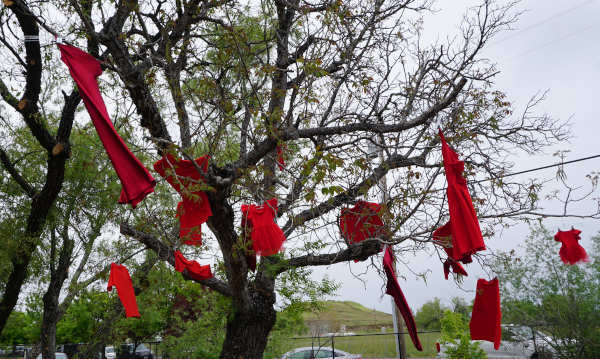
Red dresses and shirts adorn a tree at the 2023 Missing and Murdered Indigenous People event in May 2023. Photo by Elizabeth Larson/Lake County News.

LAKEPORT, Calif. — A special event this week will focus on the efforts to protect Native Americans from an epidemic of violence.

Lake County Tribal Health Consortium invites the community to the Missing and Murdered Indigenous People, or MMIP, event on Friday, May 2.

It will take place from noon to 5 p.m. at Xabatin Park, 800 N. Main St. in Lakeport.

National Missing and Murdered Indigenous People’s Day is marked on May 5.

The goal is to bring awareness about MMIP, which is the high rate of disappearances, violent crimes and sexual exploitation involving Native American people at what are reported to be disproportionately higher rates than all other races.

The Urban Indian Health Institute reports that California comes in at No. 6 nationwide for the number of MMIP cases within its borders.

The Centers for Disease Control said that, for Native Americans, homicide is the No. 3 leading cause of death among 1 to 19-year-olds and the No. 6 leading cause of death among 20 to 44-year-olds.

The institute’s statistics show that Native Americas are 2.5 times more likely to experience sexual assault crimes compared to all other races, and one in three Indian women reports having been raped during her lifetime. In addition, 34 percent of Native women are raped in their lifetimes.

Data from the National Criminal Justice Training Center shows that 40% of victims of sex trafficking are identified as Native American/Alaskan Native women.

For native men, the National Crime Information Center showed that, as of 2020, 4,276 reports of Native American and Alaskan Native males were logged into the center’s database.

The data also show that 81.6% or every four in five native men have experienced a form of violence in their lifetime. For comparison purposes, according to the CDC, the national average of violence against all men is one in four, which translates to 25% of the entire population. Native men are 56.6% more likely to experience a violent crime compared to all other races.

Organizers said there will be many raffle prizes and giveaways at Friday’s family-friendly event, along with more than 70 booths.

There also will be five feather dancer groups performing and one drum group for the opening ceremony.
Details
Written by: LAKE COUNTY NEWS REPORTS
Published: 28 April 2025

Cobb Area Pavement Reconstruction Project to begin in May

LAKE COUNTY, Calif. – Lake County’s Public Works Department announced that 16 miles of Cobb Area pavement damaged by the Valley Fire and subsequent rebuilding efforts will be reconstructed beginning in May.

On April 8, the Lake County Board of Supervisors awarded a $5.1 million Agreement to Argonaut Constructors, Inc., to complete the “2024 Pavement Rehabilitation Project.”

Funded by the State Road Maintenance and Rehabilitation Account, or SB1, this substantial construction project is expected to span 100 working days.

The county said work will include full-depth reclamation of existing county maintained roadways; grading; hot mix asphalt pavement, double chip seals, aggregate base, shoulder backing, drainage control infrastructure; asphalt concrete conforms and Portland cement concrete driveways and intersections; and adjustments to existing utility manholes, vaults, boxes and covers to “finish grade,” or to full conformity to approved plans.

The county credited Assistant Engineer Pablo Pantaleon for “outstanding work” as the project’s manager.

The Public Works Department can be reached at 707-263-2341.
Details
Written by: LAKE COUNTY NEWS REPORTS
Published: 28 April 2025

Honoring the heart of Yuba College: Athletic Hall of Fame’s 25th Class shines again

NORTHERN CALIFORNIA — On Saturday, April 26, Yuba College celebrated a legacy of excellence, resilience and community as it honored four alumni during the 25th annual Athletics Hall of Fame Dinner, Induction Ceremony and Fundraiser.

This year’s honorees are Rodney “Ronnie” Hannah (Men’s Basketball), Pete Flores (Track & Field), Gerrard Prince (Men’s Basketball) and Katelyn Noreen (Softball) — four alumni and athletes who embody the spirit of Yuba College athletics through their achievements on the field, track and court.

This year marks the 25th class of honorees, selected by a committee of former and present Yuba College athletes and employees and Yuba/Sutter area residents.

Honorees are selected based on outstanding achievement in intercollegiate athletics, unusual distinction in one or more intercollegiate sports and accomplishments achieved in alignment with the Yuba College spirit.

The 25th class of Honorees are:

• Rodney “Ronnie” Hannah (2002–04): Men’s Basketball.
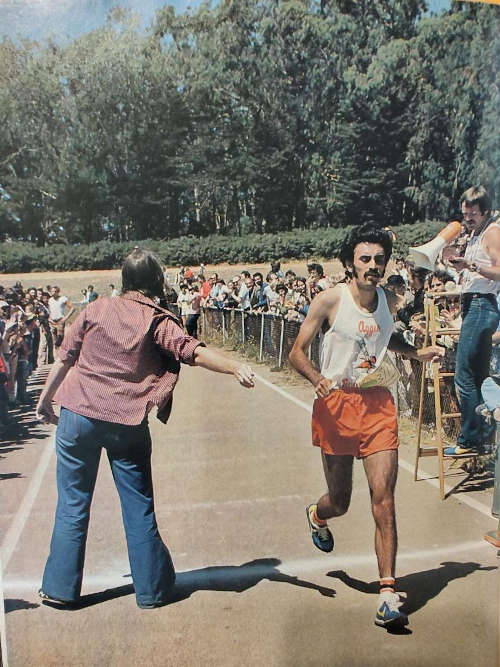
• Pete Flores (1971–73): Track and Field/Cross-Country.
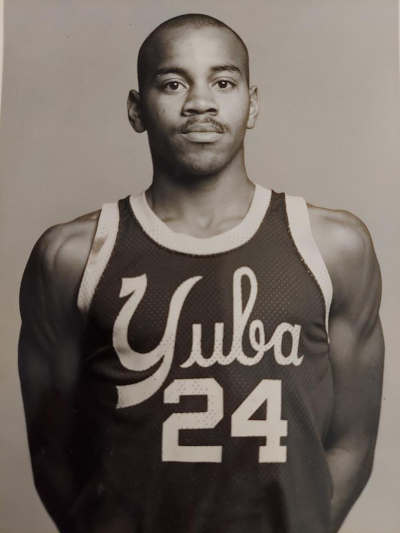
• Gerrard Prince (1987–89): Men’s Basketball.
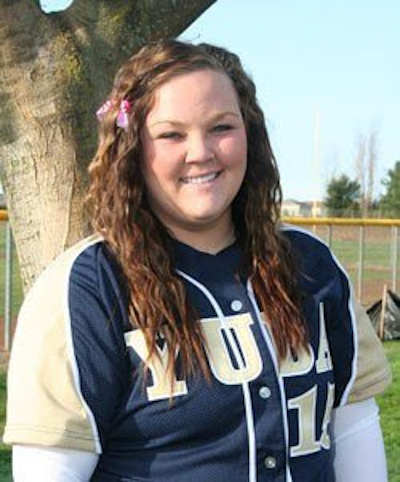
• Katelyn Noreen (2009–10): Softball.

Rodney “Ronnie” Hannah (2002–04): Men’s Basketball.

‘I’m never going to stop pursuing music’

A special recognition will be given to Ronnie Hannah, who passed away in February from a rare but aggressive cancer. Hannah was a talented athlete who excelled in basketball at Yuba College, then went on to play football at the University of Houston and eventually played professionally with the Dallas Cowboys for three seasons.

Despite success in professional sports, Hannah’s true passion and consistent thread throughout his life was music.

“Music was his whole purpose. No matter what else he was doing — whether it was sports or running a business — he always came back to the music,” said his father, Rodney Hannah, Sr. “He wrote over 200 songs in his lifetime. It was how he expressed himself, how he made sense of the world. That’s what truly lit him up.”

Hannah eventually moved on from professional sports into entrepreneurial endeavors, but music remained his passion. He decided to make the move to Nashville, Tennessee, in July 2024 to pursue music full time. Not long after his move to “Music City,” Hannah received his diagnosis.

Despite hospitalization and cancer treatment, Hannah continued to pursue music. With his laptop with him, Ronnie continued to write and record in his hospital bed with his keyboard and his computer.

“Well this year definitely didn’t go as planned,” Hannah said in a video recording. “I moved out to Nashville to do music and wound up getting a diagnosis of cancer.”

“Crazy, isn’t it?” he asks the listener. “You plan your life, and things can unfold that way and you have to go with the twist and the turns in the road. But hey, it’s part of life, right? But my one thing is – I’m never going to stop pursuing music. That’s the one thing that brought me out to Nashville.”

His celebration of life was held in March.

Pete Flores (1971–73): Track and Field/Cross-Country.

‘You’ve got two choices. You go straight to Vietnam, or you go to Yuba College.’

Pete Flores fell into running at 15 years old, following in the footsteps of his older brother Bobby. He joined the cross country team at Woodland High School and excelled, eventually winning the Delta League Conference Championship and breaking the course record, beating the nearest runner by nearly two minutes. This was enough to get him attention from colleges.

“When I was in my senior year, I went to talk to my school counselor,” he said. “He was named Mr. Brown. I liked him a lot. And he goes, ‘Pete. You’ve got two choices. Either you go straight to Vietnam or college.’ And I told him I didn’t want to go. [I wanted to] continue with college, and with my running."’

With college and collegiate running on the horizon, then-Coach John Orognen from Yuba College came out to some of his practices and worked hard to recruit Pete. When Bobby chose Yuba, so did Flores, despite offers from Oregon State, Washington State, Utah State and American River College.

Between the 1971 and 1972 cross country seasons, Flores earned 12 first-place finishes, six second place finishes and achieved 10 course records. He won the Bidwell Invitational, Sacramento Invitational and Sierra College Invitational, to name just a few of his accomplishments. Then, before he graduated from Yuba College, Flores was named the 1973 Yuba College Athlete of the Year.

Flores later returned to competitive running, joining the Aggie Running Club. With them, he participated in prestigious races, including Bay to Breakers, placing 17th with a 5:12/mile pace, the Pepsi 20-Mile Run, which he won in 1:45:58, ranking him third in the U.S. by Runner’s World magazine.

Gerrard Prince (1987–89): Men’s Basketball.

‘When I couldn’t talk to anybody, I would talk with the basketball’

Gang activity was just a given where Gerrard Prince grew up in Compton and South Central Los Angeles. The opportunities to make money were always there but Prince didn’t want to get into that lifestyle. Basketball provided the necessary distraction that kept Prince out of trouble.

“Basketball kept me away from gangs and selling drugs and just kept me positive. Even when I was struggling, I would just go grab my basketball,” Prince said. “Whenever I was dealing with anything or when I couldn’t talk to anybody, I would talk with the basketball.”

A friend who got out of the inner city and headed up to the Yuba-Sutter region and encouraged him to follow. Eager to get away from the gang violence that plagued his city, Prince took a leap of faith and a bus ride out to start life anew while in high school. It was far from easy: he first had to deal with the tremendous culture shock of moving from life in the inner city to a slower, more rural lifestyle.

“It wasn’t easy being 500 miles away from home. Then I had financial struggles from living in dorms and from not having any family up here,” he said. “But the great thing about it was, the high school I went to helped me with the transition of coming up here.”

He went on to Yuba College and joined the Men’s Basketball team, quickly gaining attention as a standout point guard, even scoring a triple-double in a home game against Sacramento City College. In 1989, he was ranked fifth in the state for assists in 1989.

Although he had dreams of playing professionally, his career was cut short by a severe case of rheumatoid arthritis in his early 20s. He credits his wife for giving him the strength to move forward during that difficult time.

Today, Prince gives back through PTP (Prince Training Players) Youth Basketball, a program he founded to mentor and train young athletes, especially those from underprivileged backgrounds.

The program emphasizes character development, academic accountability and community leadership, recently awarding local student-athletes “Player of the Month” and “Player of the Year” honors with $250 scholarships, Bluetooth speakers and public recognition.

Prince said he is deeply grateful for the selection into the Yuba College Hall of Fame, calling it a “full-circle moment,” one that is especially meaningful since his son also played for Yuba.

Despite his health setbacks, Prince remains active in youth mentorship and coaching, driven by his enduring love for basketball and his commitment to uplifting others.

“Although I can’t play anymore, it’s my purpose. I feel like I’m so blessed because people bring their children to me and they go, ‘Look at Coach Prince! Despite all the odds, he still shows up every day and doesn’t complain about what his health is. He still gives his all,’” said Prince. “So I’m very thankful to have basketball just in so many ways because it’s really taken care of me.”

Katelyn Noreen (2009–10): Softball.

‘I finally just decided to swing out of spite’

A Yuba City native, Katelyn Noreen had chosen Yuba College because she wanted to stay local and near family while in college. She had consistently played softball since kindergarten, so it was a no-brainer that she would join the team when she enrolled at Yuba College. Once a 49er, she switched over from being a catcher and moved to first base.

Known throughout the Bay Valley Conference for her slugging capabilities, Noreen would sometimes get walked on purpose. One game in particular stands out in her mind.

“I remember one game against Solano Community College. Each pitch was right outside my zone, I finally just decided to swing out of spite (knowing I was going to get in trouble) and I ended up hitting it over the right-center fence,” she said.

In 2009 alone, Noreen helped lead her team to the playoffs, was named the Bay Valley Conference Player of the Year and was tapped for the All-State team.

Celebrating the legacy

Each honoree has charted a powerful journey: from Flores choosing running and education over war, to Hannah's pursuit of music even during his courageous battle with cancer; from Prince finding hope through basketball and mentoring youth, to Noreen’s fierce competitiveness lighting up the softball field.

Together, their legacies celebrate not just athletic achievement, but the character, heart and determination that continue to inspire the Yuba College community.
Details
Written by: LAKE COUNTY NEWS REPORTS
Published: 28 April 2025
  • 292
  • 293
  • 294
  • 295
  • 296
  • 297
  • 298
  • 299
  • 300
  • 301

Public Safety

  • Lakeport Police Department celebrates long-awaited new headquarters

  • Lakeport Police Department investigates flag vandalism cases

  • Lakeport Police Department thanks Kathy Fowler Chevrolet for donation

Community

  • Hidden Valley Lake Garden Club installs new officers

  • 'America's Top Teens' searching for talent

  • 'The Goodness of Sea Vegetables' featured topic of March 5 co-op talk

Community & Business

  • Annual 'Adelante Jovenes' event introduces students, parents to college opportunities

  • Gas prices are dropping just in time for the holiday travel season

  • Lake County Association of Realtors installs new board and presents awards

  • Local businesses support travel show

  • Preschool families harvest pumpkins

  • Preschool students earn their wings

How to resolve AdBlock issue?
Refresh this page