How to resolve AdBlock issue?
Refresh this page
Lake County News,California
  • Home
    • Registration Form
  • News
    • Education
    • Veterans
    • Community
      • Obituaries
      • Letters
      • Commentary
    • Police Logs
    • Business
    • Recreation
    • Health
    • Religion
    • Legals
    • Arts & Life
    • Regional
  • Calendar
  • Contact us
    • FAQs
    • Phones, E-Mail
    • Subscribe
  • Advertise Here
  • Login
How to resolve AdBlock issue?
Refresh this page

News

BLM issues seasonal fire restrictions for Lake, eight other counties in western Central California

cachecreek

North Folk of Cache Creek in the Berryessa Snow Mountain National Monument. The Berryessa Snow Mountain National Monument, jointly managed by the BLM and U.S. Forest Service, encompasses nearly 331,000 acres of public land in the heart of northern California’s Inner Coast Range. Rising from near sea level in the south to over 7,000 feet in the mountainous north, and stretching across nearly 100 miles and dozens of ecosystems, the area possesses a richness of species that is among the highest in California and has established the area as a biodiversity hotspot. A part of the BLM’s National Conservation Lands, the Monument offers a wide range of outdoor activities, including hiking, hunting, fishing, camping, off-highway vehicle use, horseback riding, mountain biking and rafting. Photo by Jesse Pluim, BLM.


LAKE COUNTY, Calif. — The Bureau of Land Management is issuing seasonal fire restrictions effective Friday, June 6, due to dry conditions and wildland fire danger.

These seasonal restrictions are in addition to the year-round, statewide fire prevention order. The seasonal fire order will remain in effect until further notice.

The BLM-managed public lands affected by these fire restrictions are in the Ukiah Field Office for Colusa, Glen, Lake, Marin, Mendocino, Napa, Solano, Sonoma, and Yolo counties.

On average, human-caused wildfires make up 95 percent of all wildfires in California. Many of these wildfires occur close in proximity to roadways, communities and recreational areas, posing considerable threat to public safety.

Taking individual responsibility to reduce wildfire risk, while recreating on public lands, around homes and communities, before a fire occurs can help keep property, the public and firefighters safe.

The following restrictions will remain in place until the fire danger subsides:

• No setting, building, maintaining, attending, or using a campfire or open flame of any kind including within established campgrounds.
• No smoking, except within an enclosed vehicle or building, or a developed campground with a three-foot diameter area clear of brush and all flammable materials.
• No welding or operating acetylene or other torch with open flame.
• No motorized vehicles or tools powered by internal combustion engines off designated roads or trails.
• No target shooting, hot bullet fragments, exploding targets and metal from recreational shooting can spark a wildfire. Hunting in the pursuit of game and non-game species is allowed with a state of California hunting license and in accordance with California hunting regulations. The use of any steel-jacked, steel core or incendiary ammunition of any caliber is prohibited. Visit www.wheretoshoot.org for alternative recreational target shooting locations.

As always, possessing, discharging or using fireworks or pyrotechnic devices are prohibited across Bureau of Land Management lands.

Additionally, a valid California Campfire Permit is required to operate a stove or fire, where allowed, on these public lands.

Help prevent fires

Residents and visitors are reminded to help prevent human-caused fires:

  • Make sure all campfires are dead out! Drown it and stir around the fire area with a shovel to wet any remaining embers and ash. If it’s not cool, it is not out.
    • Be sure to maintain proper tire pressure for all vehicles, ensure adequate tire tread, and check brakes for overheating. Do not drive or park on brush or grass. Do not drag chains while towing.
    • Motorcycles, all-terrain vehicles and chainsaws require an approved spark arrestor.
    • Remember the use of steel-core ammunition, although legal while hunting, can greatly increase the chance of a wildfire if ricocheted off objects such as rocks.

    Anyone found guilty of violating a fire prevention order may be fined not more than $100,000 and/or face imprisonment for not more than 12 months.

Restitution for total fire suppression and damage costs incurred may be borne by the trespasser.

The public can visit Cal Fire’s website to learn how to prevent wildland fires. A map of current restrictions and active fire prevention orders are also available online. Fire weather forecasts are available through the National Weather Service.

For specific questions, please contact the Ukiah Field Office at 707-468-4000 or you may email the office at This email address is being protected from spambots. You need JavaScript enabled to view it..

Supervisors to weigh housing fund, new fire map and $8 million in service contracts

LAKE COUNTY, Calif. — The Board of Supervisors this week will consider a housing fund reallocation, new fire hazard severity zone map, a home hardening program and nearly $8 million in support services contracts.

The‌ ‌board will meet beginning ‌at‌ ‌9‌ ‌a.m. Tuesday, June 3, in the board chambers on the first floor of the Lake County Courthouse, 255 N. Forbes St., Lakeport.

The‌ ‌meeting‌ ‌can‌ ‌be‌ ‌watched‌ ‌live‌ ‌on‌ ‌Channel‌ ‌8, ‌online‌ ‌at‌ ‌https://countyoflake.legistar.com/Calendar.aspx‌‌ and‌ ‌on‌ ‌the‌ ‌county’s‌ ‌Facebook‌ ‌page. ‌Accompanying‌ ‌board‌ ‌documents, ‌the‌ ‌agenda‌ ‌and‌ ‌archived‌ ‌board‌ ‌meeting‌ ‌videos‌ ‌also‌ ‌are‌ ‌available‌ ‌at‌ ‌that‌ ‌link. ‌ ‌

To‌ ‌participate‌ ‌in‌ ‌real-time, ‌join‌ ‌the‌ ‌Zoom‌ ‌meeting‌ ‌by‌ ‌clicking‌ ‌this‌ ‌link‌. ‌ ‌

The‌ ‌meeting‌ ‌ID‌ ‌is‌ 865 3354 4962, ‌pass code 726865.‌ ‌The meeting also can be accessed via one tap mobile at +16694449171,,86533544962#,,,,*726865#. The meeting can also be accessed via phone at 669 900 6833.

At 9:30 a.m., the board will hold a public hearing on the use of a $867,981 balance from the state’s Permanent Local Housing Allocation, awarded to the county for 2019 through 2023, initially dedicated to the Collier Avenue housing project.

In December 2024, the county partnered with Lakeport and Clearlake to establish a Regional Housing Trust Fund. Now, the county seeks the state’s Housing and Community Development department’s approval to amend its allocation plan and redirect the unused funds to this new initiative.

At 10:15 a.m., the board will hear a report of the county’s pooled investment by Treasurer Patrick Sullivan.

The staff report noted a $5 million total earnings for the second quarter of the county’s 2024-2025 fiscal year.

At 11:15 a.m., the board will hold a public hearing on the state’s new fire hazard severity zone map in the unincorporated lands that fall under the Local Responsibility Areas, or the LRA.

The new map, released in February, marks the first update to the LRA designations since 2011 and adds 14,000 acres in Lake County to the “very high” zone — an 878% expansion in acreage classified as the most hazardous.

Unincorporated areas under county jurisdiction see a dramatic jump in the “very high” category from just 5 acres to 10,881 acres.

Local jurisdictions are required by state law to adopt the map by ordinance as is or with a higher hazard zone rating; they are not allowed to lower it.

The city of Clearlake was the first to hold a public hearing on the matter on May 15 and moved forward with it with unanimous vote, despite reluctance throughout the discussion.

At 1 p.m., the board will consider the presentation by the nonprofit North Coast Opportunities on its home hardening program.

Program manager Deanna Fernweh will present on partnerships, funding, environmental clearances, contractor vetting, current program status and a community overview of home hardening.

In the untimed items, the board will consider several county agreements totaling nearly $8 million for support services, including foster care, adult residential support and speciality mental health.

The full agenda follows.

CONSENT AGENDA

5.1: Adopt proclamation designating June 2025 as LGBTQIA2S+ Pride Month in Lake County, and approve the LGBTQIA2S+ Pride Flag to be displayed at the County Courthouse for the month of June.

5.2: Approve continuation of proclamation declaring a Clear Lake Hitch emergency.

5.3: Approve continuation of proclamation of the existence of a local emergency due to pervasive tree mortality.

5.4: Approve continuation of emergency proclamation declaring a shelter crisis in the County of Lake.

5.5: Adopt a proclamation recognizing Kelseyville High School K-Corps graduating class of 2025.

5.6: Adopt the resolution approving unanticipated revenue in BU 2601 Agricultural Commissioner in the amount of $153,160.00, and amend the capital asset list of the 2024–2025 budget to include in-truck prover ($45,000) and a water meter test bench ($14,500).

5.7: Approve Amendment No. 1 between County of Lake and Avero Advisors for implementation services; an increase of $140,289, total compensation not to exceed $300,000, and authorize the chair to sign.

5.8: Approve closure of the Auditor-Controller/Clerk Office from noon to 5 p.m. on Friday, June 13, 2025 for an all-staff training.

5.9: Approve the memorandum of understanding (MOU) between the California Mental Health Services Authority (CalMHSA) and the California Department of State Hospitals for county use of state hospital beds and authorize the Behavioral Health Director to sign the MOU.

5.10: Approve budget transfer in Budget Unit 4014 – Behavioral Health of $514,650 from inventory account 740.38-00 to capital asset account 740.63-13; and amend the list of capital assets of the 2024–2025 budget to increase the South Shore Clinic to $681,250 and authorize the chair of the board to sign.

5.11: Approve Amendment No. 1 to the agreement between County of Lake and New Life Health Authority dba New Life LLC. for Substance Use Disorder outpatient drug free services, intensive outpatient treatment services, and Narcotic Treatment Program services for fiscal year 2024–25 with no change to the contract maximum and authorize the chair to sign.

5.12: Approve closure of all Lake County Behavioral Health Services locations for an all-staff training on Wednesday, June 18, 2025 from 11:00 a.m. to 5:00 p.m.

5.13: Approve closure of Community Development, Public Works, and Water Resources Department counters on June 11, 2025, from 9:45 a.m. to 12:15 p.m. for multi-all-department staff training.

5.14: Approve purchase of two vehicles from Downtown Ford through the state contract, in the amount of $89,407.32, and authorize the Probation Chief to issue purchase order.

5.15: Approve waiving the 900 hour extra help limit for staff in the Sheriff’s Department.

5.16: Waive the formal bidding process pursuant to County Ordinance 3109 Section 2-38, subsection 38.1, extension of annual agreements; and approve Ninth Amendment to the lease between County of Lake and Ewing and Associates for the Child Welfare Services parking lot located on South Forbes Street in Lakeport, for the amount of $4,800 from July 1, 2025 to June 30, 2026, and authorize the chair to sign.

5.17: Adopt a proclamation designating June 2025 as Older American and Dependent Adult Awareness Month.

5.18: Approve budget transfer of $2,000,000 in appropriations from Budget Unit 5011, Social Services Admin to Budget Unit 5121 Public Assistance, and authorize the chair to sign.

5.19: Approve closure of the Special Districts Administrative Office on June 11, 2025, from 12:00 p.m. to 5:00 p.m. for staff training.

5.20: Waive the competitive bidding process, pursuant to Lake County Code Section 2-38.1, as an extension of an annual agreement; approve agreement between the County of Lake and Megabyte Systems Inc. for FY 2025–26 MPTS property tax system maintenance, online business property filing license/support and the transient occupancy tax licensing/support in the amount of $237,558.08 and authorize the chair to sign; approve web services addendum to the agreement between the County of Lake and Megabyte Systems Inc. for FY 2025–26 online tax bills and e-payment processing services, in the amount of $6,876.52 and authorize the chair to sign.

5.21: Approve request to waive 900 hour limit for extra-help Water Resources ramp monitors Anthony DeBolt, John MacDonald, Robert Dragness, Frank Levings Jr., Wayne Moore, Kenneth Wikstrom, Justin Braider, Mark Duncan, Albert Acrey and the two ramp coordinators Donald Purdy and Robert Valdez.

TIMED ITEMS

6.1, 9:02 a.m.: Public input.

6.2, 9:03 a.m.: Pet of the Week.

6.3, 9:05 a.m.: Presentation of proclamation recognizing Kelseyville High School K-Corps graduating class of 2025.

6.4, 9:10 a.m.: Presentation of proclamation designating June 2025 as LGBTQIA2S+ Pride Month in Lake County, and present the LGBTQIA2S+ Pride Flag to be displayed at the County Courthouse for the month of June.

6.5, 9:15 a.m.: Presentation of proclamation designating June 2025 as Older American and Dependent Adult Awareness Month.

6.6, 9:20 a.m.: (Sitting as the Lake County Housing Commission) Consideration of resolution of the Lake County Housing Commission (LCHC) Board of Commissioners authorizing the voluntary transfer of LCHC’s entire Housing Choice Voucher (HCV), Emergency Housing Voucher (EHV), and Veterans Affairs Supportive Housing (VASH) assistance programs and associated annual contributions contract to the Regional Housing Authority (RHA).

6.7, 9:30 a.m.: Public hearing - (a) Consideration and discussion of Permanent Local Housing Allocation (PLHA) grant five-year plan amendment; and (b) Consideration of resolution authorizing the application and amending the PLHA plan for the Permanent Local Housing Allocation Program.

6.8, 10:15 a.m.: Consideration of the March 31, 2025 report of Lake County pooled investments.

6.9, 10:30 a.m.: Consideration of presentation on becoming a resource family for foster youth.

6.10, 11:15 a.m.: Public hearing - Consideration of proposed ordinance designating fire hazard severity zones in the local responsibility areas in the unincorporated lands of Lake County.

6.11, 1:00 p.m.: Consideration of presentation by North Coast Opportunities Home Hardening Program.

6.12, 1:30 p.m.: A) Presentation of Food Policy Council activities and strategic plan B) Consideration of Food Policy Council by-laws C) Consideration of Food Policy Council MOU with Lake County Community Foundations D) Reopen application process to fill Food Policy Council members.

NON-TIMED ITEMS

7.1: Supervisors’ weekly calendar, travel and reports.

7.2: Consideration of Amendment No. 4 to the agreement between County of Lake and Redwood Community Services, Inc. for the Lake County WRAP Program, Foster Care Program and Intensive Services Foster Care (ISFC) Program for specialty mental health services for fiscal years 2022–23, 2023–24, and 2024–25 in the amount of $6,200,000.

7.3: Consideration of Amendment No. 2 to the agreement between County of Lake and Manzanita House for adult residential support services and specialty mental health services for fiscal years 2022–23, 2023–24, 2024–25 in the amount of $828,000.

7.4: Consideration of the appointment of members to the following: Lake County Resource Conservation District; Middletown Area Town Hall (MATH) Advisory Board.

7.5: Consideration of the agreement between county of Lake and Community Behavioral Health for Substance Use Disorder Outpatient Drug Free Services and Intensive Outpatient Treatment Services for Fiscal Years 2024-25 and 2025-26 for a contract maximum of $180,000 and authorize the Chair to sign.

ASSESSMENT APPEAL HEARINGS: 10 A.M.

8.1: Reconsideration of request by the appellant to continue the following assessment appeal application: No. 02-2024 through 09-2024 Donica, LLC.

CLOSED SESSION

9.1, 3 p.m.: Public employee appointment pursuant to Gov. Code section 54957(b)(1): Interviews for Public Health Officer; appointment of Public Health Officer.

9.2: Public employee evaluation – Title: Public Works Director.

9.3: Conference with labor negotiator – (a) Chief negotiator: C. Torrez; county negotiators: S. Parker, S. Carter, C. Moreno, P. Samac and D. Rico; and (b) employee organizations: LCDDAA, LCDSA, LCCOA, LCEA, LCSEA and LCSMA.

9.4: Employee grievance complaint pursuant to Gov. Code section 54957.

9.5: Sitting as the Board of Directors of the Lake County IHSS Public Authority: Conference with (a) Chief negotiator M. Long, county negotiator R. Dillman Parsons, A. Schimansky, K. Page; and (b) employee organization: Service Employees International Union (SEIU), Local 2015.

9.6: Conference with legal counsel – Significant exposure to litigation pursuant to Gov. Code section 54956.9(d)(2), (e)(1); one potential case.

Email staff reporter Lingzi Chen at This email address is being protected from spambots. You need JavaScript enabled to view it..

Lakeport City Council to consider new fire hazard map, July 4 police plan and water safety ordinance

LAKEPORT, Calif. — The Lakeport City Council this week will consider a new fire hazard map that expands Lakeport’s acreage in the highest-hazard zone, review a police plan to address illegal fireworks and public safety ahead of the July 4 holiday, and hold a second hearing on updates to local water safety regulations.

The council will meet Tuesday, June 3, at 6 p.m. in the council chambers at Lakeport City Hall, 225 Park St.

The agenda can be found here.

If you cannot attend in person, and would like to speak on an agenda item, you can access the Zoom meeting remotely at this link or join by phone by calling toll-free 669-900-9128 or 346-248-7799.

The webinar ID is 973 6820 1787, access code is 477973; the audio pin will be shown after joining the webinar. Those phoning in without using the web link will be in “listen mode” only and will not be able to participate or comment.

Comments can be submitted by email to This email address is being protected from spambots. You need JavaScript enabled to view it.. To give the city clerk adequate time to print out comments for consideration at the meeting, please submit written comments before 3:30 p.m. on Tuesday, June 3.

The meeting will hold the first public hearing on the ordinance adopting the new fire hazard severity zone, or FHSZ, map for local responsibility areas, or LRA, released by Cal Fire in February. It has been the first update to the LRA map since 2011.

The map designates urban and wildland areas under the LRA into “very high,” “high” and “moderate” zones in terms of fire hazard.

It has added 14,000 acres in Lake County to the “very high” zone — an 878% expansion in acreage classified as the most hazardous.

Lakeport used to have zero acreage rated as “very high;” now it has grown to 603 acres in the new map.

Local agencies are required by state law to adopt the map through an ordinance. The staff report also noted that under the state government code, adjustments can only be made to raise the rating — not lower it.

“City staff is not recommending any modifications to the FHSZ map provided by the State Fire Marshal,” the staff report said. “Parcels that span multiple FHSZ designations will be treated as falling within the highest hazard classification present on the parcel.”

The city has received three written communications raising concerns about the map’s impact on fire insurance, real estate disclosures and defensible space requirements, according to the staff report.

Under council business, the council will consider the illegal fireworks police operation plan for the 30-day period surrounding July 4, from June 17 through July 16.

With a firework show event and sales of safe fireworks moving forward, the city is expecting more people and more traffic.

On July 4, the police department will deploy all staff and mutual aid staff from other law enforcement agencies in the county, according to the staff report. The Lakeport Fire Protection District will also be ready to provide additional support.

“As in past years the possession and use of illegal fireworks remained a significant problem in the city in 2024,” said the staff report, adding that the police and fire departments will deploy an “illegal fireworks enforcement team.”

Also under council business is the second public hearing on proposed amendments to a city law that governs water safety.

A new statewide rule took effect on July 1, 2024, that changes how cities must protect their water systems from backflow — that’s when dirty or unsafe water flows backward into clean drinking water pipes.

The new rule replaces the old state rule, which is now outdated. But parts of Lakeport's city laws still refer to that old rule, which are required to be updated.

The first public hearing was held at the May 5 meeting.

On the consent agenda — items considered noncontroversial and usually accepted as a slate on one vote — are ordinances; minutes of the previous meeting on May 20; approval of the warrant register of May 20; approval of application 2025-030, with staff recommendations, for the Dickens’ Faire event; and approval of application 2025-031, with staff recommendations, for the Fourth of July Craft Fair.

Email staff reporter Lingzi Chen This email address is being protected from spambots. You need JavaScript enabled to view it..

California invests $32.4 million to help communities combat extreme heat

As part of a first of its kind grant program, Gov. Gavin Newsom is announcing $32.4 million in funding to help 47 California communities — including Middletown — protect people from the dangers of extreme heat.

Through the Extreme Heat and Community Resilience Program, or EHCRP, the state aims to support local, tribal, and regional efforts to reduce the impacts of extreme heat — by building long-lasting infrastructure solutions, while also strengthening the community resilience needed to withstand extreme heat events. EHCRP is the first government grant program in the U.S. to support communities building resilience to extreme heat in multiple ways.

“Extreme heat kills — and with the federal government cutting the very programs that help forecast it, California is taking aggressive action to protect residents from the impacts of extreme heat and build resilience in our most vulnerable communities,” said Gov. Newsom. “… we’re connecting more Californians — particularly those that are most vulnerable to dangerous heat – to life-saving information, resources, and programs across the state.”

In Lake County, North Coast Opportunities Inc. and the Middletown Rancheria of Pomo Indians have received $2.3 million for the “SolarCHHILL” program, which stands for “Cooling and Heating Homes with Innovative, Low-Impact Living.”

The project will include installing solar-powered mini-splits in homes of senior residents and those with chronic health conditions, with a focus on members of Middletown Rancheria of Pomo Indians. It also will provide workforce development programming to build community resilience and encourage construction of solar-powered mini-splits.

EHCRP is part of the governor’s Extreme Heat Action Plan, which guides the state’s response to extreme heat events. Developed in partnership with more than 20 state agencies and informed by more than 1000 individuals through listening sessions and public engagement, EHCRP responds directly to community needs and builds on existing state programs.

“California is taking aggressive action to protect residents from the impacts of extreme heat and build resilience in our most vulnerable communities,” said Samuel Assefa, Director of the Governor’s Office of Land Use and Climate Innovation (LCI), the agency overseeing the funding. “With lives on the line each summer, the Extreme Heat and Community Resilience Program will provide critical infrastructure investments in heat vulnerable communities.”

The EHCRP is a crucial component of the coordinated efforts between state agencies to build resilience to extreme heat across California, supporting infrastructure solutions that complement the state’s extreme heat planning approach, statewide initiatives like CalHeatScore, and grant programs including the California Strategic Growth Council’s Community Resilience Center Program, California Natural Resources Agency’s Urban Greening Grant Program, and Cal Fire’s Urban and Community Forestry Grant Program.

EHCRP Projects will build much needed cooling infrastructure in heat vulnerable communities across the state. In Imperial and Riverside counties, the Torres Martinez Desert Cahuilla Indians will be able to update a senior housing property with solar parking shades, clean energy for their gym/Cooling Center, and plant trees for more shade and green spaces.

"As stewards of our ancestral lands, we have witnessed firsthand the devastating impacts of extreme heat on our community, natural resources, and cultural heritage. It is imperative that we invest in sustainable solutions to protect our people, preserve our traditions, and ensure a resilient future for generations to come,” Torres Martinez Desert Cahuilla Indians.

In Redding, where it’s estimated that there may be 100 days over 100 degrees by the end of the century, city officials will construct a heat resilient playground and splashpad.

In San Bernardino County, the community college district will work directly with students to provide heat safe infrastructure including shaded spaces, cool water stations, and solar-powered study spots.

"We’re planning for the future, making sure that when the heat returns, our students have a campus that’s comfortable, safe, and designed with them in mind," said Gilbert J. Contreras, a grantee through San Bernardino Valley College. "These infrastructure upgrades came directly from our students’ voices. It’s all about building a campus where students feel supported and can focus on achieving their goals."

Extreme Heat solutions funded through EHCRP combine physical infrastructure with nature-based solutions and in-home technology to create a more resilient community. In Los Angeles, the county will work with local community-based organizations to provide heat safe spaces by planting tree canopies, installing water fountains, and hosting educational programming in parks across the county.

In Northern California, community-based organizations, North Coast Opportunities and the Middletown Rancheria of Pomo Indians of California, will partner to provide solar powered air conditioning in the homes of vulnerable community members.

EHCRP will also support projects in the northern part of the state, through projects like the Happy Camp Cool Community Resilience and Emergency Operations Center Project, and the far south, in Imperial Valley, where Comite Civico de Valle and the Imperial Valley Justice and Equity Coalition will lead partnership development and create a collaborative plan for extreme heat response and relief in one of the hottest parts of the state.

“Extreme heat exposure has severe consequences, and the impacts are felt at all levels in the Imperial Valley,” said Christian Torres, Director of Climate Equity and Resilience at Comite Civico del Valle, Inc. “Despite this, grassroots efforts and organizations are helping those most affected. The time to prepare for this challenge is now and we look forward to collaborating with local groups, agencies, and stakeholders to build a comprehensive extreme heat preparedness plan for the Imperial Valley."

Critical minerals don’t belong in landfills – microwave tech offers a cleaner way to reclaim them from e-waste


Broken electronics still contain valuable critical minerals. Beeldbewerking/iStock/Getty Images Plus

When the computer or phone you’re using right now blinks its last blink and you drop it off for recycling, do you know what happens?

At the recycling center, powerful magnets will pull out steel. Spinning drums will toss aluminum into bins. Copper wires will get neatly bundled up for resale. But as the conveyor belt keeps rolling, tiny specks of valuable, lesser-known materials such as gallium, indium and tantalum will be left behind.

Those tiny specks are critical materials. They’re essential for building new technology, and they’re in short supply in the U.S. They could be reused, but there’s a problem: Current recycling methods make recovering critical minerals from e-waste too costly or hazardous, so many recyclers simply skip them.

Sadly, most of these hard-to-recycle materials end up buried in landfills or get mixed into products like cement. But it doesn’t have to be this way. New technology is starting to make a difference.

Multiple printed circuit boards laid on top of one another.
A treasure trove of critical materials is often overlooked in e-waste, including gallium in LEDs, indium in LCDs, and tantalum in surface mount capacitors. Ansan Pokharel/West Virginia University, CC BY

As demand for these critical materials keeps growing, discarded electronics can become valuable resources. My colleagues and I at West Virginia University are developing a new technology to change how we recycle. Instead of using toxic chemicals, our approach uses electricity, making it safer, cleaner and more affordable to recover critical materials from electronics.

How much e-waste are we talking about?

Americans generated about 2.7 million tons of electronic waste in 2018, according to the latest federal data. Including uncounted electronics, a survey by the United Nations suggests that the U.S. recycles only about 15% of its total e-waste.

Even worse, nearly half the electronics that people in Northern America sent to recycling centers end up shipped overseas. They often land in scrapyards, where workers may use dangerous methods like burning or leaching using harsh chemicals to pull out valuable metals. These practices can harm both the environment and workers’ health. That’s why the Environmental Protection Agency restricts these methods in the U.S.

The tiny specks matter

Critical minerals are in most of the technology around you. Every phone screen has a super-thin layer of a material called indium tin oxide. LEDs glow because of a metal called gallium. Tantalum stores energy in tiny electronic parts called capacitors.

All of these materials are flagged as “high risk” on the U.S. Department of Energy’s critical materials list. That means the U.S. relies heavily on these materials for important technologies, but their supply could be easily disrupted by conflicts, trade disputes or shortages.

Right now, just a few countries, including China, control most of the mining, processing and recovery of these materials, making the U.S. vulnerable if those countries decide to limit exports or raise prices.


These materials aren’t cheap, either. For example, the U.S. Geological Survey reports that gallium was priced between US$220 to $500 per kilogram in 2024. That’s 50 times more expensive than common metals like copper, at $9.48 per kilogram in 2024.

Revolutionizing recycling with microwaves

At West Virginia University’s Department of Mechanical, Materials and Aerospace Engineering, I and materials scientist Edward Sabolsky asked a simple question: Could we find a way to heat only specific parts of electronic waste to recover these valuable materials?

If we could focus the heat on just the tiny specks of critical minerals, we might be able to recycle them easily and efficiently.

The solution we found: microwaves.

This equipment isn’t very different from the microwave ovens you use to heat food at home, just bigger and more powerful. The basic science is the same – electromagnetic waves cause electrons to oscillate, creating heat.

In our approach, though, we’re not heating water molecules like you do when cooking. Instead, we heat carbon, the black residue that collects around a candle flame or car tailpipe. Carbon heats up much faster in a microwave than water does. But don’t try this at home; your kitchen microwave wasn’t designed for such high temperatures.
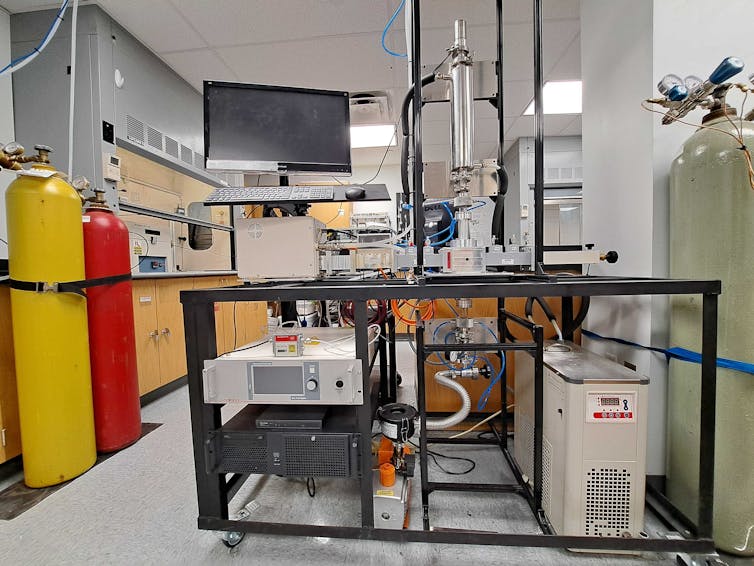
Photo of a chemistry lab space with colorful gas bottles. At the center of the image is a microwave reactor connected by a waveguide to a microwave source.
West Virginia University researchers are using this experimental microwave reactor to recycle critical materials from end-of-life electronics. Ansan Pokharel/West Virginia University, CC BY

In our recycling method, we first shred the electronic waste, mix it with materials called fluxes that trap impurities, and then heat the mixture with microwaves. The microwaves rapidly heat the carbon that comes from the plastics and adhesives in the e-waste. This causes the carbon to react with the tiny specks of critical materials. The result: a tiny piece of pure, sponge-like metal about the size of a grain of rice.

This metal can then be easily separated from leftover waste using filters.

So far, in our laboratory tests, we have successfully recovered about 80% of the gallium, indium and tantalum from e-waste, at purities between 95% and 97%. We have also demonstrated how it can be integrated with existing recycling processes.

Why the Department of Defense is interested

Our recycling technology got its start with help from a program funded by the Defense Department’s Advanced Research Projects Agency, or DARPA.

Many important technologies, from radar systems to nuclear reactors, depend on these special materials. While the Department of Defense uses less of them than the commercial market, they are a national security concern.

We’re planning to launch larger pilot projects next to test the method on smartphone circuit boards, LED lighting parts and server cards from data centers. These tests will help us fine-tune the design for a bigger system that can recycle tons of e-waste per hour instead of just a few pounds. That could mean producing up to 50 pounds of these critical minerals per hour from every ton of e-waste processed.

If the technology works as expected, we believe this approach could help meet the nation’s demand for critical materials.

How to make e-waste recycling common

One way e-waste recycling could become more common is if Congress held electronics companies responsible for recycling their products and recovering the critical materials inside. Closing loopholes that allow companies to ship e-waste overseas, instead of processing it safely in the U.S., could also help build a reserve of recovered critical minerals.

But the biggest change may come from simple economics. Once technology becomes available to recover these tiny but valuable specks of critical materials quickly and affordably, the U.S. can transform domestic recycling and take a big step toward solving its shortage of critical materials.The Conversation

Terence Musho, Associate Professor of Engineering, West Virginia University

This article is republished from The Conversation under a Creative Commons license. Read the original article.
Growing together: Lakeport Rotary’s ParkLife Tree Initiative brings shade and heart to the park

rotarytreeinitiative1

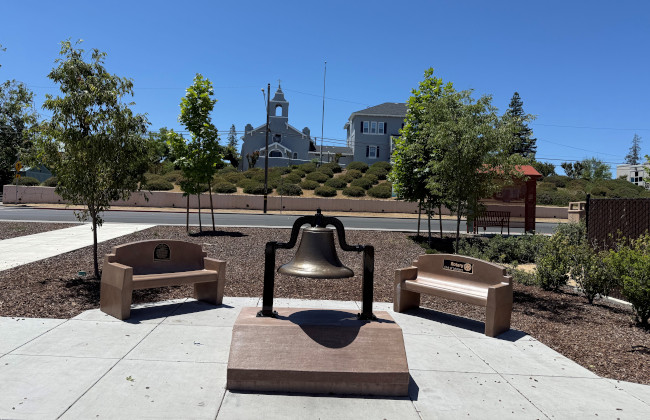
The Lakeport Rotary ParkLife Tree Initiative has helped bring new trees to Xabatin Park. Here the trees are located next to the Curfew Bell, another Rotary project. Photo courtesy of Pam Harpster.


LAKEPORT, Calif. — The Lakeport Rotary ParkLife Tree Initiative began with a simple and heartfelt mission: to add a little more to the original vision for Xabatin Park — a space designed to bring people together, shaded by trees, and filled with beauty and life.

When Xabatin Park was first developed, the city of Lakeport envisioned a thriving landscape filled with trees and natural features to create a welcoming and comfortable environment for all.

Many of these plans were thoughtfully designed, but due to budgetary setbacks, the city was unable to carry out every element.

In such a large park, the absence of trees was especially noticeable during hot summer days, when shade was needed most.

That’s when the Rotary Club of Lakeport stepped in.

Rotary members partnered closely with city officials and Public Works staff to help bring the park’s full vision closer to reality.

Rotarians were involved in selecting tree and grass species that would thrive in Lakeport’s climate and walked the park grounds alongside city staff to determine the best planting locations.

Every decision was made with care — balancing sustainability, ease of maintenance and the comfort of future parkgoers.

Now, with the additional trees in place, the park will offer much-needed shade — making it more inviting for families, seniors and children to relax, gather, and enjoy outdoor time, even on the hottest days.

The new trees will also contribute to cleaner air, reduced ground temperatures, and a more beautiful, tranquil space for the community to enjoy.

But the ParkLife Tree Initiative is about more than just planting trees. It’s about investing in the future of Lakeport.

Rotary members are sharing updates at City Council meetings and helping educate the public about the environmental and social benefits of urban trees.

It’s one more way Rotary demonstrates that small efforts — planted with purpose — can grow into lasting impact.

As the Rotary Club of Lakeport celebrates its 100th anniversary, this initiative marks the beginning of a renewed commitment to serving the community in meaningful ways.

The newly planted trees build on last year’s installation of the historic Curfew Bell, another Rotary-led project located in Xabatin Park.

These contributions reflect Rotary’s enduring values — honoring the past, enriching the present, and planting hope for the future.

Pam Harpster is president of Rotary Club of Lakeport.


rotarytreeinitiative2

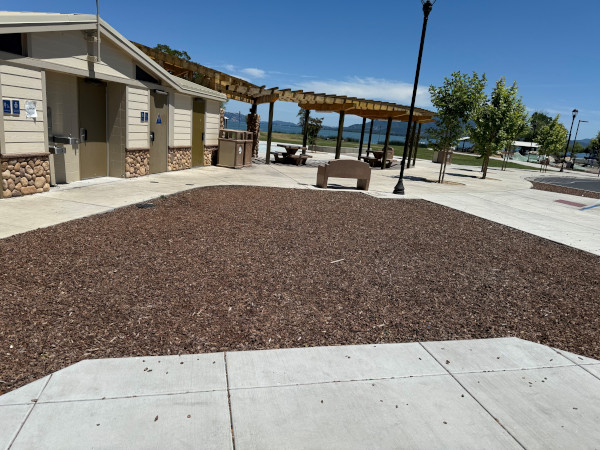
An area in Xabatin Park slated for new trees as part of the Lakeport Rotary ParkLife Tree Initiative. Photo courtesy of Pam Harpster.


  • 221
  • 222
  • 223
  • 224
  • 225
  • 226
  • 227
  • 228
  • 229
  • 230

Community

  • Sheriff’s Activities League and Clearlake Bassmasters offer youth fishing clinic

  • City Nature Challenge takes place April 24 to 27

Public Safety

  • Lakeport Police logs: Wednesday, Feb. 11

  • Lakeport Police logs: Tuesday, Feb. 10

Education

  • Ramos measure requiring school officer training in use of anti-opioid drug moves forward

  • Lake County Chapter of CWA announces annual scholarships 

Health

  • California ranks 24th in America’s Health Rankings Annual Report from United Health Foundation

  • Healthy blood donors especially vital during active flu season

Business

  • Employment law summit takes place March 9

  • Two Lake County Mediacom employees earn company’s top service awards

Obituaries

  • Terry Knight

  • Ellen Thomas

Opinion & Letters

  • Who should pay for AI’s power? Not California ratepayers

  • Crandell: Supporting nephew for reelection in supervisorial race

Veterans

  • State honors fallen chief warrant officer killed in conflict in Iran

  • CalVet and CSU Long Beach team up to improve data collection related to veteran suicides

Recreation

  • April Audubon program will show how volunteers can help monitor local osprey nests

  • First guided nature walk of spring at Anderson Marsh State Historic Park April 11

  • Second Saturday guided nature walks continue at Anderson Marsh State Historic Park

  • Wet weather trail closure in effect on Upper Lake Ranger District

Religion

  • Kelseyville Presbyterian Church plans Easter service

  • Easter ‘Sonrise’ Service returns to Xabatin Community Park

Arts & Life

  • ‘CIA’ delves into the shadowy world of an espionage thriller

  • ‘War Machine’ shifts the battlefield into uncharted territory

Government & Politics

  • Lake County Democratic Central Committee endorses Falkenberg

  • Crandell launches reelection campaign plans March 15 event

Legals

  • April 23 hearing on Lake Coco Farms Major Use Permit

  • NOTICE OF 30-DAY PUBLIC COMMENT PERIOD & NOTICE OF PUBLIC HEARING

How to resolve AdBlock issue?
Refresh this page