How to resolve AdBlock issue?
Refresh this page
Lake County News,California
  • Home
    • Registration Form
  • News
    • Education
    • Veterans
    • Community
      • Obituaries
      • Letters
      • Commentary
    • Police Logs
    • Business
    • Recreation
    • Health
    • Religion
    • Legals
    • Arts & Life
    • Regional
  • Calendar
  • Contact us
    • FAQs
    • Phones, E-Mail
    • Subscribe
  • Advertise Here
  • Login
How to resolve AdBlock issue?
Refresh this page

News

Too much sitting increases risk of future health problems in chest pain patients – new research


Chest pain could be a symptom of angina or a heart attack. Moyo Studio/E+ via Getty Images

For patients hospitalized with chest pain, the amount of time they spend sedentary afterward is linked to a greater risk for more heart problems and death within a year. That’s the key finding of a new peer-reviewed study my colleagues and I published in the journal Circulation: Cardiovascular Quality and Outcomes.

We asked 609 emergency room patients experiencing chest pain — average age of 62 — to wear a physical activity monitor for 30 days after leaving the hospital. The monitor measured movements, sitting time and sleep throughout the day. We then followed patients for one year to track whether they had additional heart problems or died.

We found that patients who averaged more than 15 hours of sedentary behavior daily — which does not include sleep — were more than twice as likely to experience more heart problems or die in the year after discharge than patients who accrued a daily average of 12 hours of sedentary time.

But our goal wasn’t just to document that sitting is harmful. It was also to figure out what patients should do instead to lower their risk.

We found that replacing 30 minutes of sedentary time with moderate or vigorous movement, like brisk walking or running, was most beneficial. It was associated with a 62% lower risk of experiencing more heart problems or dying in the year after discharge. But we also found that replacing 30 minutes of sedentary time with just light movement, such as slow walking or housework, lowered the risk of heart problems and death by 50%.

Sleep was also a healthier option. Replacing 30 minutes of sedentary time with sleep lowered the risk of heart problems and death by 14%.

A diagram that shows the human heart and an artery blocked by cholesterol.
Clogged arteries could lead to a heart attack. Veronica Zakharova/Science Photo Library via Getty Images

Why it matters

Over 8 million people in the U.S. are admitted to the hospital with chest pain suggestive of acute coronary syndrome. annually. This covers a range of conditions involving reduced blood flow to the heart, including angina and heart attack.

Patients with acute coronary syndrome remain at high risk of having another heart problem even with optimal medical treatment.

The risk also remains high for patients with chest pain who are discharged without a diagnosis of acute coronary syndrome, as their unexplained chest pain may be a precursor to more serious heart problems. Given this risk, there is a need to identify risk factors that can be modified to improve a patient’s prognosis after hospitalization for chest pain.

In previous research, we found that patients with acute coronary syndrome had a fear of exercise and were sedentary, spending over 13 hours a day sitting.

Given that sedentary behavior has been linked to poor heart health in the general population, we were concerned that patients were unknowingly increasing their risk of having another heart problem.

Our latest findings confirm that sedentary time is a harmful behavior for these patients. But beyond telling patients to stop sitting so much, our work provides important guidance: Any movement, regardless of how intense, can be beneficial after hospitalization. This is especially relevant for people recovering from heart problems who may find exercise difficult or scary.

While exercise provides the best “bang for your buck” in terms of health benefits, our findings are good news for patients who may not have the time, ability or desire to exercise. And for those unable to fit in more movement, just getting an extra half hour of sleep is a small, doable step that can make a meaningful difference for your health after hospitalization.

What still isn’t known

Researchers don’t fully understand why sedentary time is harmful. Muscles help regulate blood sugar and lipid levels. It is thought that when muscles aren’t used, such as when patients sit for hours, this can lead to harmful elevations in blood sugar and lipids.

In turn, this can cause inflammation, plaque buildup in the arteries and organ damage. More research is needed to understand the biological mechanisms so that we can determine just how much movement is needed in a day.

What’s next

While our study highlights the potential risks of sedentary behavior after being hospitalized for chest pain, it was an observational study. Clinical trials are needed to confirm that replacing sedentary time with activity or sleep can improve prognosis.

The Research Brief is a short take on interesting academic work.The Conversation

Keith Diaz, Associate Professor of Behavioral Medicine, Columbia University

This article is republished from The Conversation under a Creative Commons license. Read the original article.
Annual data shows slowing decline in state school enrollment; Lake County numbers on the rise


LAKE COUNTY, Calif. — New data from the state shows that a statewide public school enrollment decline has begun to slow while enrollment in Lake County’s schools continues to rise.

On Wednesday, the California Department of Education, or CDE, released 2024-25 school enrollment data on DataQuest.

In the 2024-25 school year, overall student enrollment declined by 0.54% compared to the year prior, representing a slowing of declining school enrollment, the data showed.

Though the change from the prior school year is minimal, the difference between current year enrollment and pre-pandemic enrollment remains significant, the state reported.

“The overall slowing enrollment decline is encouraging and reflects the hard work of our local educational agencies across the state,” said State Superintendent of Schools Tony Thurmond. “While we have more work to do, the dramatic growth in transitional kindergarten is inspiring and shows that providing rigorous and quality programs can be a key ingredient to bringing more families back to our schools. One of our initiatives in this area is expansion of dual language immersion programs as a strategy to drive future enrollment growth by providing school programs that are in high demand from California’s families.”

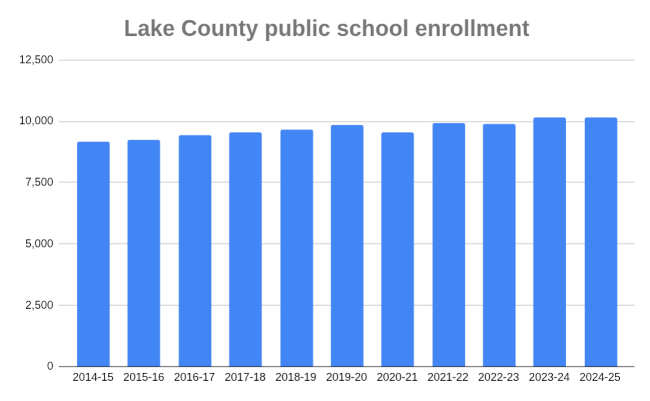
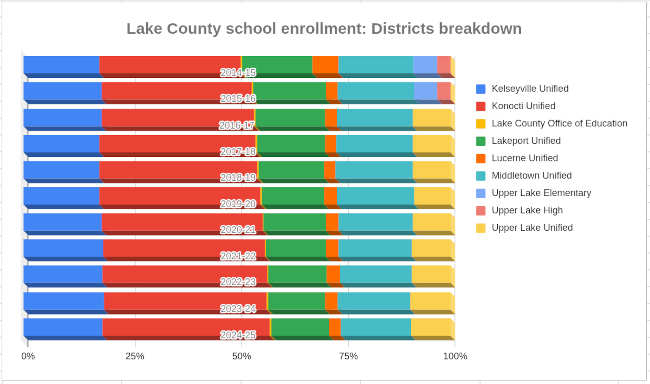
Regarding the overall enrollment picture, the news was different in Lake County, where enrollment was up 0.17%, the second year in a row that it showed an increase.

In fact, over the past 10 years, Lake County has shown enrollment rising annually with the exception of two years — 2020-21 and 2022-23.

Since the 2015-16 school year, Lake County’s overall enrollment has grown by 11%, while the total state enrollment has dropped by 6.88%.

While the overall decrease in school enrollment compared to prepandemic levels continues to be a source of strain on public schools, CDE said new initiatives such as transitional kindergarten, or TK, show significant growth and signs of promise as local educational agencies work to reengage families, especially as California’s families experience increased economic hardship.

CDE said the most significant trend in California’s 2024-25 school enrollment data reflects an increased demand for specific education initiatives, such as TK.

Both on the county and state levels, TK enrollment has grown steadily, although it rolled back in response to the COVID-19 pandemic.

Even as overall enrollment has fallen, CDE said TK enrollment continues to boom, with a year-over-year increase of 17.2%. In 2024-25, Lake County’s TK enrollment rose by 6.5%.

The state and Lake County both reported having their highest TK enrollments by far in 2024-25.

The number of local educational agencies offering TK at all school sites has increased to 85%, and as TK expansion creates more spaces in state preschool, enrollment of 3-year-olds in state preschool continues to rise. Overall, more and more families are taking advantage of public opportunities for early learning, CDE reported.

In addition, CDE said dual language immersion programs have shown significant growth statewide: as of 2023–24, there were 1,036 dual language immersion programs in California, a 39% increase from 747 such programs in 2018–19.

Email Elizabeth Larson at This email address is being protected from spambots. You need JavaScript enabled to view it.. Follow her on Twitter, @ERLarson, and on Bluesky, @erlarson.bsky.social. Find Lake County News on the following platforms: Facebook, @LakeCoNews; X, @LakeCoNews; Threads, @lakeconews, and on Bluesky, @lakeconews.bsky.social.


California Transportation Commission approves highway projects in Lake County and across the North Coast

LAKE COUNTY, Calif. — Several million dollars in highway repairs have been approved for Lake County in the latest round of highway funding allocated by the state.

Last week the California Transportation Commission, or CTC, allocated nearly $1.7 billion to help improve safety, increase mobility for all users and strengthen the state highway system.

Guided by Governor Gavin Newsom’s Build More, Faster – For All infrastructure agenda, Caltrans said these improvements will make California communities safer and more climate resilient.

In Lake County, approximately $4 million in Senate Bill 1 funding was approved for emergency allocations toward roadway, retaining wall and guardrail repairs and erosion control on Route 20 east of Walker Ridge Road near Clearlake Oaks following winter storms in December 2024.

The CTC also allocated $86.5 million to repair vital roadways and other transportation infrastructure damaged during recent wildfires and storms in Southern California.

“Investments made today support Caltrans’ mission to build and maintain a transportation system that helps Californians now and decades into the future,” said Mike Keever, acting director for Caltrans. “This funding translates into safer travel, more accessible mobility options and strengthening our roadways to protect all travelers during extreme weather events.”

In addition to the Lake County highway work, projects approved in District 1 include the following:

• $5.7 million including more than $5 million in federal Infrastructure Investment and Jobs Act funding and $660,000 in SB1 funding toward bridge replacement of the Dr. Ernest Fine Memorial Bridge No. 01-0020 on U.S. 101 near Crescent City in Del Norte County.

• $2.4 million in support allocations toward fish passage improvements along Route 1 at Tregoning Drive near Fort Bragg and at Sunset Drive near Anchor Bay in Mendocino County.

• $560,000 toward roadway, guardrail, drainage and other improvements on U.S. 101 from the Mendocino County Line to south of the Sprowl Creek Road Overcrossing near Garberville in Humboldt County.

• $10 million in SB1 funding for emergency allocations toward roadway repairs and the construction of a retaining wall on Route 36 east of Church Lane near Bridgeville in Humboldt County following winter storms and heavy rainfall in December 2024.

• $10 million in SB1 funding for emergency allocations toward the construction of a retaining wall, guardrail installation and roadway repairs on Route 169 at the Mawah Creek Bridge near Weitchpec in Humboldt County following winter storms and heavy rainfall in January 2025.

• $3.2 million in SB1 funding for emergency allocations toward roadway, guardrail, retaining wall and rock catchment fence repairs on U.S. 199 north of South Fork Road near Hiouchi in Del Norte County following heavy rainfall in December 2024.

• $2.6 million in SB1 funding for emergency allocations toward slide removal and roadway repairs on Route 36 from east of the Grizzly Creek Bridge to east of Alderpoint Road near Bridgeville in Humboldt County following winter storms and heavy rainfall in February 2025.

• $2.6 million in SB1 funding for emergency allocations toward guardrail repairs, rock slope protection and erosion control on Route 1 at Schooner Gulch Road near Gallaway in Mendocino County following winter storms in December 2024.

• $2 million in SB1 funding for emergency allocations toward the construction of a retaining wall, road and guardrail repairs and rock slope protection and erosion control on Route 253 west of Butler Ranch Road near Ukiah in Mendocino County following heavy rainfall in December 2024.

• $1.9 million in SB1 funding for emergency allocations toward the construction of a retaining wall, road and guardrail repairs and rock slope protection on Route 271 north of the U.S. 101 Cummings Road Separation near Cummings in Mendocino County following heavy rainfall in February 2025.

• $1.3 million in SB1 funding for emergency allocations toward erosion control and embankment and roadway repairs on Route 254 from north of Phillipsville Road to south of Maple Hills Road near Phillipsville in Humboldt County following winter storms and heavy rainfall in December 2024.

• $800,000 in SB1 funding for emergency allocations toward slide removal, roadway and drainage repairs and erosion control on Route 1 south of the South Fork Eel River Bridge near Leggett in Mendocino County following heavy rainfall in December 2024.

• $675,000 in SB1 funding for emergency allocations toward abutment repairs next to the Broaddus Creek Bridge No. 10-0054, drainage improvements and vegetation removal on Route 20 in Willits, Mendocino County following winter storms in December 2024.

Of the total allocation this month, nearly $651 million came via Senate Bill 1, the Road Repair and Accountability Act of 2017 and approximately $536 million from the Infrastructure Investment and Jobs Act of 2021 or IIJA.

IIJA, also known as the federal bipartisan infrastructure bill, is a once-in-a-generation investment in our nation’s infrastructure to improve the sustainability and resiliency of our country’s energy, water, broadband and transportation systems.

California has received nearly $62 billion in federal infrastructure funding since its passage. This includes investments to upgrade the state’s roads, bridges, rail, public transit, airports, ports and waterways. The funding alone has already created more than 170,000 jobs in California.

Meanwhile, SB 1 invests approximately $5 billion annually toward transportation projects. It provides funding split between the state and local agencies.

Road projects progress through construction phases more quickly based on the availability of funds, including projects that are partially funded by SB 1.

For more information visit https://build.ca.gov/.

New energy efficiency program brings savings, rebates, and resources to Lake County communities  

LAKE COUNTY, Calif. — Lake County’s residents are set to benefit from a new program that means to help them save money through bolstering their energy efficiency.

The Northern Rural Energy Network, or NREN, launched this month across 17 Northern California counties as a direct response to the unique issues and urgent needs of underrepresented rural California energy customers.

NREN is part of a statewide initiative of regional energy networks focused on helping communities address rising utility costs through the adoption of energy efficiency programs targeted at rural customers.

Lake Area Planning Council, Mendocino Council of Governments, Redwood Coast Energy Authority and Sierra Business Council are the four partners who have come together as NREN to provide energy efficiency programs and services to rural Californians while also reducing greenhouse gas emissions.

These four organizations collectively serve 17 rural Northern California counties and together will ensure that statewide energy efficiency dollars reach rural customers more effectively.

NREN will initially focus on residential programs that will help community members reduce energy costs and make their homes more comfortable and affordable.

Services include residential rebates for energy efficiency improvements such as heating, cooling and appliances, free home energy assessments conducted over the phone and free energy efficiency kits.

The energy efficiency kits include easy-to-use items such as light bulbs, water-saving aerators, power strips, energy monitors and other resources that can help customers reduce their energy use right away.

Upcoming NREN programs that will be launched throughout this year and next include incentives for small businesses and public buildings, micro- and gap-financing opportunities, a workforce education and training component for local contractors and codes and standards resources for public agencies.

“We are pleased to be a partner in the NREN effort to provide critical energy efficiency programs to Lake County residents, businesses and local governments. For every $1 invested in energy efficiency, communities reap $8 in benefits. We look forward to working with all Lake County communities on this important initiative,” said Lisa Davey-Bates, executive director of the Lake Area Planning Council.

Developed by rural agencies and organizations for rural communities, NREN delivers innovative approaches to reduce energy use and expand the adoption of energy-saving resources across Northern California’s vast rural regions.

More information on NREN's services can be found at https://northernren.org/.

FDA limits access to COVID-19 vaccine to older adults and other high-risk groups – a public health expert explains the new rules


Older adults will continue to receive yearly COVID-19 shots, but lower-risk groups will not, says the FDA. dusanpetkovic via iStock / Getty Images Plus

On May 20, 2025, the Food and Drug Administration announced a new stance on who should receive the COVID-19 vaccine.

The agency said it would approve new versions of the vaccine only for adults 65 years of age and older as well as for people with one or more risk factors for severe COVID-19 outcomes. These risk factors include medical conditions such as asthma, cancer, chronic kidney disease, heart disease and diabetes.

However, healthy younger adults and children who fall outside of these groups may not be eligible to receive the COVID-19 shot this fall. Vaccine manufacturers will have to conduct clinical trials to demonstrate that the vaccine benefits low-risk groups.

FDA Commissioner Marty Makary and the agency’s head of vaccines, Vinay Prasad, described the new framework in an article published in the New England Journal of Medicine and in a public webcast.

The Conversation U.S. asked Libby Richards, a nursing professor involved in public health promotion, to explain why the changes were made and what they mean for the general public.

Why did the FDA diverge from past practice?

Until the May 20 announcement, getting a yearly COVID-19 vaccine was recommended for everyone ages 6 months and older, regardless of their health risk.

According to Makary and Prasad, the Food and Drug Administration is moving away from these universal recommendations and instead taking a risk-based approach based on its interpretation of public health trends – specifically, the declining COVID-19 booster uptake, a lack of strong evidence that repeated boosters improve health outcomes for healthy people and the fact that natural immunity from past COVID-19 infections is widespread.

The FDA states it wants to ensure the vaccine is backed by solid clinical trial data, especially for low-risk groups.

Was this a controversial decision or a clear consensus?

The FDA’s decision to adopt a risk-based framework for the COVID-19 vaccine aligns with the expected recommendations from the Advisory Committee on Immunization Practices, an advisory group of vaccine experts offering expert guidance to the Centers for Disease Control and Prevention on vaccine policy, which is scheduled to meet in June 2025. But while this advisory committee was also expected to recommend allowing low-risk people to get annual COVID-19 vaccines if they want to, the FDA’s policy will likely make that difficult.

Although the FDA states that its new policy aims to promote greater transparency and evidenced-based decision-making, the change is controversial – in part because it circumvents the usual process for evaluating vaccine recommendations. The FDA is enacting this policy change by limiting its approval of the vaccine to high-risk groups, and it is doing so without any new data supporting its decision. Usually, however, the FDA broadly approves a vaccine based on whether it is safe and effective, and decisions on who should be eligible to receive it are left to the CDC, which receives research-based guidance from the Advisory Committee on Immunization Practices.

Rite-Aid sign advertising COVID-19 vaccines
Change is coming to COVID-19 vaccine policy. Rock Obst, CC BY-SA

Additionally, FDA officials point to Canada, Australia and some European countries that limit vaccine recommendations to older adults and other high-risk people as a model for its revised framework. But vaccine strategies vary widely, and this more conservative approach has not necessarily proven superior. Also, those countries have universal health care systems and have a track record of more equitable access to COVID-19 care and better COVID-19 outcomes.

Another question is how health officials’ positions on COVID-19 vaccines affect public perception. Makary and Prasad noted that COVID-19 vaccination campaigns may have actually eroded public trust in vaccination. But some vaccine experts have expressed concerns that limiting COVID-19 vaccine access might further fuel vaccine hesitancy because any barrier to vaccine access can reduce uptake and hinder efforts to achieve widespread immunity.

What conditions count as risk factors?

The New England Journal of Medicine article includes a lengthy list of conditions that increase the risk of severe COVID-19 and notes that about 100 million to 200 million people will fall into this category and will thus be eligible to get the vaccine.

Pregnancy is included. Some items on the list, however, are unclear. For example, the list includes asthma, but the data that asthma is a risk factor for severe COVID-19 is scant.

Also on the list is physical inactivity, which likely applies to a vast swath of Americans and is difficult to define. Studies have found links between regular physical activity and reduced risk of severe COVID-19 infection, but it’s unclear how health care providers will define and measure physical inactivity when assessing a patient’s eligibility for COVID-19 vaccines.

Most importantly, the list leaves out an important group – caregivers and household members of people at high risk of severe illness from COVID-19 infection. This omission leaves high-risk people more vulnerable to exposure to COVID-19 from healthy people they regularly interact with. Multiple countries the new framework refers to do include this group.

Why is the FDA requiring new clinical trials?

According to the FDA, the benefits of multiple doses of COVID-19 vaccines for healthy adults are currently unproven. It’s true that studies beyond the fourth vaccine dose are scarce. However, multiple studies have demonstrated that the vaccine is effective at preventing the risk of severe COVID-19 infection, hospitalization and death in low-risk adults and children. Receiving multiple doses of COVID-19 vaccines has also been shown to reduce the risk of long COVID.

The FDA is moving to risk-based access for COVID-19 vaccines.

The FDA is requiring vaccine manufactures to conduct additional large randomized clinical trials to further evaluate the safety and effectiveness of COVID-19 boosters for healthy adults and children. These trials will primarily test whether the vaccines prevent symptomatic infections, and secondarily whether they prevent hospitalization and death. Such trials are more complex, costly and time-consuming than the more common approach of testing for immunological response.

This requirement will likely delay both the timeliness and the availability of COVID-19 vaccine boosters and slow public health decision-making.

Will low-risk people be able to get a COVID-19 shot?

Not automatically. Under the new FDA framework, healthy adults who wish to receive the fall COVID-19 vaccine will face obstacles. Health care providers can administer vaccines “off-label”, but insurance coverage is widely based on FDA recommendations. The new, narrower FDA approval will likely reduce both access to COVID-19 vaccines for the general public and insurance coverage for COVID-19 vaccines.

The FDA’s focus on individual risks and benefits may overlook broader public health benefits. Communities with higher vaccination rates have fewer opportunities to spread the virus.

What about vaccines for children?

High-risk children age 6 months and older who have conditions that increase the risk of severe COVID-19 are still eligible for the vaccine under the new framework. As of now, healthy children age 6 months and older without underlying medical conditions will not have routine access to COVID-19 vaccines until further clinical trial data is available.

Existing vaccines already on the market will remain available, but it is unclear how long they will stay authorized and how the change will affect childhood vaccination overall.The Conversation

Libby Richards, Professor of Nursing, Purdue University

This article is republished from The Conversation under a Creative Commons license. Read the original article.

Lake County honors veterans with special ceremony and plaque

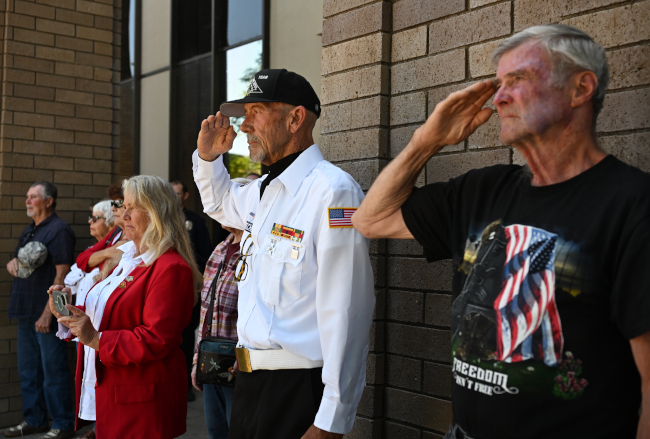
Dave Waldschmitt of We Serve Veterans Inc. (middle) in salute and Supervisor Helen Owen (left) at the military funeral ceremony in front of the courthouse, on May 20, 2025. Photo by Lingzi Chen/Lake County News.


LAKE COUNTY, Calif. — “Would you please put your hand over your heart? Those military may give a hand salute.”

With these words from Veteran Chaplain Dennis Alexander and a room standing solemnly, the special memorial event to honor Lake County veterans began with a pledge and a prayer during the Board of Supervisors meeting on Tuesday.

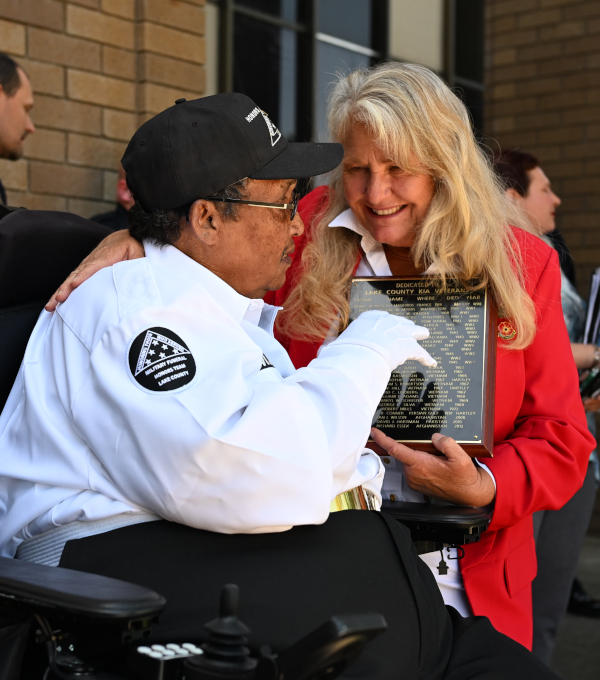
Rick Mayo, vice president of We Serve Veterans Inc., presented the board with two plaques: one expressing appreciation for veterans, and another listing the names of 30 Lake County veterans killed in action since World War I.

“This was a very special presentation — local members and veterans of the community that died in action, especially Joy Medeiros, who was the first KIA, killed in action, from Lake County,” Mayo said before presenting the plaques. “There's 29 other names of veterans, citizens, veterans in the community.”

Madeiros, the first name on the plaque, was recorded to have died in France in 1918 during World War I. He is buried in Hartley Cemetery.

“So we're here to honor them,” Mayo said. “Regardless of what names are affixed to this plaque or not, we're going to honor all our veterans.”

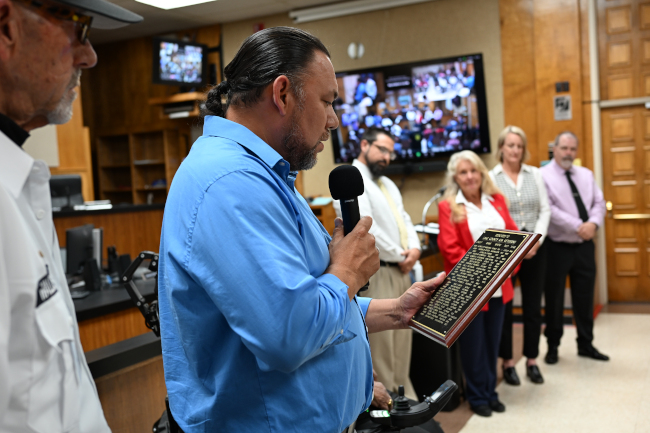
Board of Supervisors Chair Eddie Crandell, himself a veteran, then took the plaque and read aloud every name, along with the place and year of the death, and the war in which it occurred.

The board chamber was nearly full, with veterans, families, friends, and county and city officials gathered in a moment of memory and honor. Occasionally, soft groans could be heard from the audiences as Crandell continued reading the names.

“This is powerful — these are people who lost their lives for all of us. Some of them are a little bit more personal to me,” Supervisor Bruno Sabatier said. “As many of you know, I was born in France, and to hear of those who from Lake County were in France and lost their lives for my family, that means a lot.”

Board of Supervisors Chair Eddie Crandell read the names of Lake County veterans killed in action from the plaque on May 20, 2025. Photo by Lingzi Chen/Lake County News.

The veterans list

The list of names on the plaque, however, did not include all the Lake County veterans who died in wars.

In 2013, longtime Lake County resident and researcher Jan Cook, who worked for Lake County Library, wrote an article on Lake County soldiers who died in World War II. At that time, she found 28 names from the National Archive and Records Administration who were from Lake County and died of the second world war only.

Among those 28 names, only six were listed in the plaque presented to the Board of Supervisors.

She then found another eight names that were not listed in the national archives, but appeared in the Clear Lake Union High School’s Cardinal and Black memorial sections. None of them were on the plaque either.

When asked how the list of the 30 names on the plaque was determined, Mayo told Lake County News that they were drawn from the records at the Joy Madeiros Veterans Museum.

On Monday, Lake County News was contacted by the widow of a service member killed abroad in 1976. When asked about that service member, who also was not on the list, Mayo said that his widow may report it to the museum and provide the service member’s credentials.

“If he's got a DD 214 — it's just a form that says I was there, I was involved — that's half the battle,” said Dave Waldschmitt, president of We Serve Veterans Inc.

Waldschmitt also added that all the 30 names they drew from the museum were confirmed “killed in action, in combat,” he said.

“There's lots of people killed in the military by accidents — planes fell down, ships sank,” Waldschmitt added. “These were killed in a combat environment.”

Rick Mayo of We Serve Veterans Inc. (left) and Supervisor Helen Owen (right) after the memorial event in front of the courthouse on May 20, 2025. Photo by Lingzi Chen/Lake County News.

Veterans speak of local work

After the plaque presentation, representatives from multiple organizations spoke about their work to support Lake County veterans.

The Joy Madeiros Veterans Museum — named after the first killed-in-action Lake County soldier — has discovered and displayed “Lake County moments in history” from records and artifacts; the nonprofit Vet Connect has been helping homeless veterans in finding housing and acclimating to society, among other regional and local support efforts.

Various American Legion posts have shared how they contributed to both the veteran and broader communities, including the military funeral honors team of Lake County that would soon serve at the special ceremony outside the courthouse.

Additionally, Vietnam Veterans of America has been focusing on and known for its “strict advocacy in legislation in support of veterans,” said Dean Gotham, past president and current treasurer of the organization.

Gotham reflected on the group’s beginnings in the late 1970s, when “Vietnam veterans were not getting their needs met at all.” He also spoke about the challenges that aging veterans have faced in recent years, compounded by the effects of the pandemic.

“We have an unusually high population of veterans in our county. It's something really special, it's something to be proud of,” said Supervisor Jessica Pyska. “I appreciate the services that you all show up and provide for them.”

“My son and my father both did serve overseas as well, which is the Afghanistan War and World War II,” said Supervisor Helen Owen. “So you have no idea how much you mean to us, to America, when I say us, we would not have the freedom that we have today.

“And for those that were not treated properly by coming home from, say, Vietnam, that is such a huge black eye,” she added.

Supervisor Crandell also drew from his family and personal history of military service, and his friendship with veterans in the chamber.

“So once you get back home and you start talking to everybody, you start realizing that you cross paths — or cross deserts, or cross jungles, or whatever the case may be — and so you immediately know that you can joke a specific way, you can say specific things that you all understand,” Crandell said. “The camaraderie is already understood.”

Military funeral honors offered

The event concluded with a Department of Defense-authorized ceremony, carried out by the Lake County military funeral honors team.

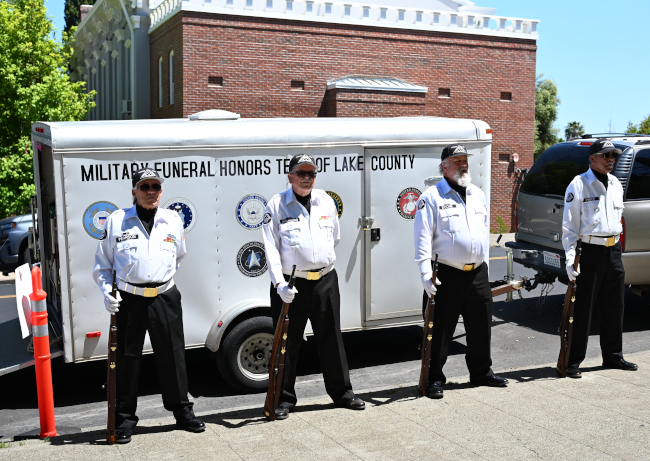
Four veterans in white uniforms performed the ceremonial rifle volleys, firing into the sky in memory of those killed in action.

Then came the sound of “Taps,” played through a 360-watt stereo built into a .50-caliber ammunition box, handcrafted by Mayo. As the sound filled the silent air, veterans raised their hands in salute.

Four veterans in white uniforms from the military funeral honors team of Lake County get ready to perform rifle volleys outside the courthouse on May 20, 2025. Photo by Lingzi Chen/Lake County News.


Lake County military members killed in action listed on plaque

Jacinto Joy Madeiros, U.S. Army, France, 1918, World War I

Freddie W. Myers, U.S. Army, Washington, 1918, World War I

George W. Vanoni, U.S. Army, 1918, World War I

Archie M. Hendricks, U.S. Army, Philippines, 1942, World War II

Kenneth L. Steadman, United States Air Force, POW Japan, 1942, World War II

Herbert M. Wilson, U.S. Army, Africa, 1943, World War II

Miles Schnitzer, U.S. Army, Italy, 1943, World War II

Harmon O. Tredway, U.S. Army, Iceland, 1943, World War II

Eric C. Patterson, U.S. Marine Corps, Guadalcanal, 1943, World War II

Henry F. Wolfram, U.S. Army, England, 1944, World War II

Marion L. Parker, United States Air Force, France, 1944, World War II

Richard L. Marston, U.S. Army, 1945, World War II

Donald Simpson, U.S. Army, Italy, 1945, World War II

Harvey R. Mosher, United States Air Force, 1945, World War II

Merrill C. Rannells, U.S. Marine Corps, Okinawa, 1945, World War II

Issac J. Smith, U.S. Army, Korea, 1953

William Moore, U.S. Marine Corps, Vietnam, 1965

Neal Rasmussen, U.S. Army, Vietnam, 1966

Louis Grothe, U.S. Army, Vietnam, 1967

William S. Robertson, U.S. Army, Vietnam, 1967

Paul W. Hill, U.S. Navy, Vietnam, 1967

David C. Lindberg, United States Air Force, Vietnam, 1967

William E. Adams, U.S. Marine Corps, Vietnam, 1968

Darryl W. Schuster, U.S. Army, Vietnam, 1969

George L. Silva, U.S. Marine Corps, Vietnam, 1969

Robert Mills, U.S. Navy, Vietnam, 1972

Michael R. Conner, U.S. Army, Persian Gulf, 1991

Ivan I. Wilson, U.S. Marine Corps, Afghanistan, 2008

David J. Hartman, U.S. Army, Pakistan, 2010

Richard Essex, U.S. Army, Afghanistan, 2012

 
Email staff reporter Lingzi Chen at This email address is being protected from spambots. You need JavaScript enabled to view it.. 
  • 229
  • 230
  • 231
  • 232
  • 233
  • 234
  • 235
  • 236
  • 237
  • 238

Community

  • Sheriff’s Activities League and Clearlake Bassmasters offer youth fishing clinic

  • City Nature Challenge takes place April 24 to 27

Public Safety

  • Lakeport Police logs: Wednesday, Feb. 11

  • Lakeport Police logs: Tuesday, Feb. 10

Education

  • Ramos measure requiring school officer training in use of anti-opioid drug moves forward

  • Lake County Chapter of CWA announces annual scholarships 

Health

  • California ranks 24th in America’s Health Rankings Annual Report from United Health Foundation

  • Healthy blood donors especially vital during active flu season

Business

  • Employment law summit takes place March 9

  • Two Lake County Mediacom employees earn company’s top service awards

Obituaries

  • Terry Knight

  • Ellen Thomas

Opinion & Letters

  • Who should pay for AI’s power? Not California ratepayers

  • Crandell: Supporting nephew for reelection in supervisorial race

Veterans

  • State honors fallen chief warrant officer killed in conflict in Iran

  • CalVet and CSU Long Beach team up to improve data collection related to veteran suicides

Recreation

  • April Audubon program will show how volunteers can help monitor local osprey nests

  • First guided nature walk of spring at Anderson Marsh State Historic Park April 11

  • Second Saturday guided nature walks continue at Anderson Marsh State Historic Park

  • Wet weather trail closure in effect on Upper Lake Ranger District

Religion

  • Kelseyville Presbyterian Church plans Easter service

  • Easter ‘Sonrise’ Service returns to Xabatin Community Park

Arts & Life

  • ‘CIA’ delves into the shadowy world of an espionage thriller

  • ‘War Machine’ shifts the battlefield into uncharted territory

Government & Politics

  • Lake County Democratic Central Committee endorses Falkenberg

  • Crandell launches reelection campaign plans March 15 event

Legals

  • April 23 hearing on Lake Coco Farms Major Use Permit

  • NOTICE OF 30-DAY PUBLIC COMMENT PERIOD & NOTICE OF PUBLIC HEARING

How to resolve AdBlock issue?
Refresh this page