How to resolve AdBlock issue?
Refresh this page
Lake County News,California
  • Home
    • Registration Form
  • News
    • Education
    • Veterans
    • Community
      • Obituaries
      • Letters
      • Commentary
    • Police Logs
    • Business
    • Recreation
    • Health
    • Religion
    • Legals
    • Arts & Life
    • Regional
  • Calendar
  • Contact us
    • FAQs
    • Phones, E-Mail
    • Subscribe
  • Advertise Here
  • Login
How to resolve AdBlock issue?
Refresh this page

News

Estate Planning: Skilled nursing facility residents appointing health care decision makers

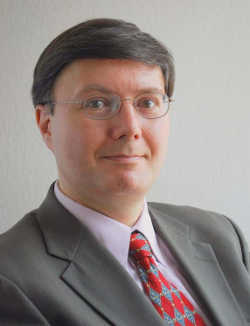
Dennis Fordham. Courtesy photo.
Residents at skilled nursing facilities are well advised to have an advanced health care directive, with an authorized agent (health care decisionmaker) in place to make decisions regarding medical treatment and placement.

However, a skilled nursing facility still cannot require the execution of an advanced health care directive as a condition to providing services (Probate Code Section 5677).

In California, “A patient is presumed to have the capacity to make a health care decision, to give or revoke an advance health care directive, and to designate or disqualify a surrogate (Probate Code Section 4657).”

An adult resident at a skilled nursing facility with capacity may appoint an agent, often a close family member or trusted friend, with representative authority, and express enforceable health care decisions using an advanced health care directive or a “power of attorney for health care.”

The representative authority to make health care decisions for the resident may either be immediate or delayed. A resident with capacity will usually make the advanced health care directive immediate, both in anticipation of an unforeseen health care crisis and so that the employees of the skilled nursing facility may discuss the resident’s health care with the agent.

The advanced health care directive will need to be supplemented by a Health Insurance Portability and Accountability Act, or HIPAA, release to allow disclosure of confidential medical information.

If a skilled nursing facility resident does not already have an advanced health care directive or power of attorney for health care, with which the resident agrees, then the resident will typically want to execute an advanced health care directive (present day approach).

California law requires that execution of an advanced health care directive by a skilled nursing facility resident involve the protective oversight of an ombudsman representative as a witness.

The ombudsman will need to meet with the skilled nursing facility resident, alone or with family if requested by the resident, to ensure that the resident has the capacity to sign the document.

That is, does the resident understand, at the time of signing, that the advanced health care directive is an important legal tool to express the resident’s preferences regarding health care and to appoint an agent as a health care decisionmaker.

Also, the ombudsman will want to ensure that the resident, at the time of signing, is acting voluntarily and not under duress, undue influence or menace.

If the ombudsman is still uncertain as to the resident’s capacity to understand the advanced health care directive, the ombudsman may look at the resident’s medical chart for further information before deciding.

Next, the signing of the prepared advanced health care directive involves either one of two approaches, that is, either the notary public and an ombudsman approach, or, second, an ombudsman and an additional witness approach. Typically the first approach is used.

The additional witness to the advanced health care directive (not the ombudsman) cannot be an employee of the skilled nursing facility or the agent nominated in the advanced health care directive.

Moreover, the additional witness (that is, other than the ombudsman), “… shall be an individual who is neither related to the patient by blood, marriage, or adoption, nor entitled to any portion of the patient’s estate upon the patient’s death under a will existing when the advance directive is executed or by operation of law then existing.”

That last restriction naturally favors hiring a travelling notary as most of the people who would be willing to come to the SNF and be a witness are disqualified persons.

As a temporary or emergency (“stop gap”) measure, a resident with capacity may choose to nominate a “surrogate” health care decisionmaker.

All this requires is that the resident personally inform the supervising health care provider or a designee of the skilled nursing facility (section 4711 Probate Code). The surrogate’s authority does not exceed 60 days but, while effective, the surrogate’s authority is the controlling authority, even over the authority of an agent under any existing advanced health care directive.

The foregoing is not legal advice. Consult a qualified estate planning attorney for guidance.

Dennis A. Fordham, attorney, is a State Bar-Certified Specialist in estate planning, probate and trust law. His office is at 870 S. Main St., Lakeport, Calif. He can be reached at This email address is being protected from spambots. You need JavaScript enabled to view it. and 707-263-3235. 

Space News: Jets from powerful black holes can point astronomers toward where − and where not − to look for life in the universe


Black holes, like the one in this illustration, can spray powerful jets. S. Dagnello (NRAO/AUI/NSF), CC BY-SA

One of the most powerful objects in the universe is a radio quasar – a spinning black hole spraying out highly energetic particles. Come too close to one, and you’d get sucked in by its gravitational pull, or burn up from the intense heat surrounding it. But ironically, studying black holes and their jets can give researchers insight into where potentially habitable worlds might be in the universe.

As an astrophysicist, I’ve spent two decades modeling how black holes spin, how that creates jets, and how they affect the environment of space around them.

What are black holes?

Black holes are massive, astrophysical objects that use gravity to pull surrounding objects into them. Active black holes have a pancake-shaped structure around them called an accretion disk, which contains hot, electrically charged gas.

The plasma that makes up the accretion disk comes from farther out in the galaxy. When two galaxies collide and merge, gas is funneled into the central region of that merger. Some of that gas ends up getting close to the newly merged black hole and forms the accretion disk.

There is one supermassive black hole at the heart of every massive galaxy.

Black holes and their disks can rotate, and when they do, they drag space and time with them – a concept that’s mind-boggling and very hard to grasp conceptually. But black holes are important to study because they produce enormous amounts of energy that can influence galaxies.

How energetic a black hole is depends on different factors, such as the mass of the black hole, whether it rotates rapidly, and whether lots of material falls onto it. Mergers fuel the most energetic black holes, but not all black holes are fed by gas from a merger. In spiral galaxies, for example, less gas tends to fall into the center, and the central black hole tends to have less energy.

One of the ways they generate energy is through what scientists call “jets” of highly energetic particles. A black hole can pull in magnetic fields and energetic particles surrounding it, and then as the black hole rotates, the magnetic fields twist into a jet that sprays out highly energetic particles.

Magnetic fields twist around the black hole as it rotates to store energy – kind of like when you pull and twist a rubber band. When you release the rubber band, it snaps forward. Similarly, the magnetic fields release their energy by producing these jets.

A diagram showing an accretion disk and black hole spraying out a jet of particles, surrounded by magnetic field lines.
The accretion disk around a black hole can form a jet of hot, energetic particles surrounded by magnetic field lines. NASA, ESA, and A. Feild (STScI), CC BY

These jets can speed up or suppress the formation of stars in a galaxy, depending on how the energy is released into the black hole’s host galaxy.

Rotating black holes

Some black holes, however, rotate in a different direction than the accretion disk around them. This phenomenon is called counterrotation, and some studies my colleagues and I have conducted suggest that it’s a key feature governing the behavior of one of the most powerful kinds of objects in the universe: the radio quasar.

Radio quasars are the subclass of black holes that produce the most powerful energy and jets.

You can imagine the black hole as a rotating sphere, and the accretion disk as a disk with a hole in the center. The black hole sits in that center hole and rotates one way, while the accretion disk rotates the other way.

This counterrotation forces the black hole to spin down and eventually up again in the other direction, called corotation. Imagine a basketball that spins one way, but you keep tapping it to rotate in the other. The tapping will spin the basketball down. If you continue to tap in the opposite direction, it will eventually spin up and rotate in the other direction. The accretion disk does the same thing.

Since the jets tap into the black hole’s rotational energy, they are powerful only when the black hole is spinning rapidly. The change from counterrotation to corotation takes at least 100 million years. Many initially counterrotating black holes take billions of years to become rapidly spinning corotating black holes.

So, these black holes would produce powerful jets both early and later in their lifetimes, with an interlude in the middle where the jets are either weak or nonexistent.

When the black hole spins in counterrotation with respect to its accretion disk, that motion produces strong jets that push molecules in the surrounding gas close together, which leads to the formation of stars.

But later, in corotation, the jet tilts. This tilt makes it so that the jet impinges directly on the gas, heating it up and inhibiting star formation. In addition to that, the jet also sprays X-rays across the galaxy. Cosmic X-rays are bad for life because they can harm organic tissue.

For life to thrive, it most likely needs a planet with a habitable ecosystem, and clouds of hot gas saturated with X-rays don’t contain such planets. So, astronomers can instead look for galaxies without a tilted jet coming from its black hole. This idea is key to understanding where intelligence could potentially have emerged and matured in the universe.

Black holes as a guide

By early 2022, I had built a black hole model to use as a guide. It could point out environments with the right kind of black holes to produce the greatest number of planets without spraying them with X-rays. Life in such environments could emerge to its full potential.

Looking at black holes and their role in star formation could help scientists predict when and where life was most likely to form.

Where are such conditions present? The answer is low-density environments where galaxies had merged about 11 billion years ago.

These environments had black holes whose powerful jets enhanced the rate of star formation, but they never experienced a bout of tilted jets in corotation. In short, my model suggested that theoretically, the most advanced extraterrestrial civilization would have likely emerged on the cosmic scene far away and billions of years ago.The Conversation

David Garofalo, Professor of Physics, Kennesaw State University

This article is republished from The Conversation under a Creative Commons license. Read the original article.
Middletown Area Town Hall discusses early plans for Valley Fire anniversary

LAKE COUNTY, Calif. — Community groups in the south county are in the early stages of planning to mark the 10th anniversary of the Valley Fire later this year.

The fire burned from Sept. 12 to Oct. 15, 2015. It began on Cobb due to faulty wiring in a residential hot tub, and within hours had burned down into Middletown.

The Valley Fire killed four people, destroyed 1,955 structures and burned 76,067 acres.

It’s listed as the eighth most destructive wildfire in California history.

During its meeting on Thursday night, the Middletown Area Town Hall, or MATH, hosted a brief discussion on the plans that are already developing to mark the anniversary.

Ken Gonzales, a former MATH Board member who now works for Harbin Hot Springs Resort Center — owned and operated by Heart Consciousness Church — as its health and safety coordinator, said the resort has its own plans and wants to work with other community groups as well.

“Harbin is going to invite all the residents back,” said Gonzales, explaining that there were 200 residents at the resort at the time of the fire.

“Ninety-five percent are gone,” he said, noting they have left the state.

Dan Tyrrell, president of the Middletown Area Merchants Association, or MAMA, said the group’s board vice president, Chanel Hellwege, is spearheading their anniversary plans.

He said MAMA wants to collaborate with other groups like MATH, the Middletown Arts Center, the Gibson Museum and South Lake County Fire Protection District.

“I think it’s going to be more of a resilience theme” as opposed to commemoration of the fire, which Tyrrell said is important for those who lived through it.

Mike Wink of Cal Fire said the agency wants to listen to anything the community has to say about the fire and the anniversary. Cal Fire and the fire district also want to support what the community wants to do for the anniversary event.

“Resiliency seems like a great theme because there is a lot of resiliency happening,” he said.

Hidden Valley Lake resident David Stoneberg said he hoped the 10th anniversary would include remembrances of the four people who died during the fire, including Leonard Neft.

Much more is to be determined and will be back for discussion, said MATH Chair Monica Rosenthal.

“We’ll talk about this more in future meetings,” Rosenthal said.

Email Elizabeth Larson at This email address is being protected from spambots. You need JavaScript enabled to view it.. Follow her on Twitter, @ERLarson, and on Bluesky, @erlarson.bsky.social. Find Lake County News on the following platforms: Facebook, @LakeCoNews; X, @LakeCoNews; Threads, @lakeconews, and on Bluesky, @lakeconews.bsky.social.

BLM to oversee prescribed fire in Black Forest

KELSEYVILLE, Calif. — A prescribed burn is set to take place beginning next week in Lake County’s Black Forest.

The Bureau of Land Management Ukiah Field Office, in cooperation with Cal Fire’s Lake Napa Unit, the Tribal EcoRestoration Alliance, Mendocino National Forest and Lake County District 5, plans to conduct prescribed fire operations in the Black Forest, which is located along Soda Bay Road, on the northeast side of Mount Konocti in Kelseyville.

Pile burn operations are scheduled to start April 14 and may continue periodically through May 30.

Burning will take place only when weather and fuel moisture allow for safe and successful burning.

The prescribed fire is part of a shaded fuel break initiated in 2008 to protect communities.

The project will remove hazardous fuels that could feed fires within this wildland-urban interface, where public lands meet urban development.

Approximately 36 acres of undergrowth and small trees have been hand-thinned by firefighters and piled over the last three years.

The operation aims to burn approximately 500 piles covering the entire shaded fuel break.

The Black Forest, a pristine Douglas fir forest, encompasses approximately 242 acres of BLM-managed public lands and supports many plants and species as well as valuable cultural resources and an important watershed

The BLM is committed to keeping public landscapes healthy and productive. More information is available from the BLM Ukiah Field Office at 707-468-4000.

Lake Local Agency Formation Commission seeks applicants for alternate public member

LAKE COUNTY, Calif. — The Lake Local Agency Formation Commission, or LAFCo, is accepting applications for the alternate public member on the commission to fill the
mid-term vacancy of a four-year term ending on May 5, 2027.

LAFCo is an independent, quasi-legislative agency created in each county by the California State Legislature in 1963.

The primary objectives of LAFCo are to encourage the orderly formation of local government agencies, to preserve agricultural and open space land, and to discourage urban sprawl.

LAFCo regulates the boundaries and service areas of cities and most special districts in the county, conducts municipal service reviews, and establishes spheres of influence.

Applicants must be residents of Lake County, be able to regularly attend LAFCo meetings, and cannot be officers or employees of the county, cities, or special districts within Lake County.

Commissioners are required by law to exercise independent judgment on behalf of the general public of the County, and are considered public officials that must file a standard annual financial disclosure statement as required by the California Fair Political Practices Commission.

LAFCo meetings are held on the third Wednesday of the month at 9:30 a.m.

Meeting dates on even-numbered months are held only as needed. In addition, the meeting location rotates between the council chambers at the city of Lakeport and the city of Clearlake.

Commissioners receive a $100 stipend per meeting.

Applicants must submit a letter of interest describing their background and reasons for wanting to serve as the alternate public member no later than Friday May 9, by 5 p.m. in order to be interviewed and considered for selection at the May 21 commission meeting at 9:30 a.m. in the Clearlake City Council chambers, located at 14050 Olympic Drive, Clearlake.

Please submit letters of interest preferably by email to This email address is being protected from spambots. You need JavaScript enabled to view it. or by postal mail to Lake LAFCo, PO Box 348, Yuba City, CA 95992.

For more information, please contact LAFCo Executive Officer Larkyn Feiler at 530-632-4406.

Are you one of the millions about to have cataract surgery? Here’s what ophthalmologists say you need to know


Cataract surgery removes the clouded lens of the eye and replaces it with a new, clear lens. Ivan-balvan/iStock via Getty Images Plus

Cataract surgery is one of the most popular and commonly performed procedures in the world. The vast majority of patients have excellent outcomes with few complications.

Here are the numbers:

  • By age 80, over half of all Americans have cataracts.

  • Close to 4 million cataract surgeries are performed in the U.S. every year.

  • Over 90% of patients have 20/20 vision with glasses after surgery, although those with other eye conditions may not do as well, including those with glaucoma, a progressive disease typically associated with elevated pressure within the eye; diabetic retinopathy, which ultimately can cause leakage in the retinal tissues; and macular degeneration, a disease that is typically related to age.

  • The rate of post-surgery infection from endophthalmitis is less than 0.1%.

As ophthalmologists who have performed thousands of these procedures, we know that many patients have misconceptions about both cataracts and the surgery. For example, some think a cataract is a growth on the eye’s surface.

We like to compare a cataract with the frosted glass of a bathroom window, where light can be transmitted but details cannot. Or when turbulence from a storm causes normally clear water in the ocean to become murky. In much the same way, the eye’s once transparent lens becomes cloudy.

After surgery, there’s no bending, inversions, lifting or straining, high-impact activities or eye makeup for one to two weeks or until the doctor says it’s OK.

About the surgery

Cataract surgery removes the clouded lens of the eye and replaces it with a new, clear lens to restore your vision. Most patients report the procedure is painless.

It’s typically an elective surgery that is performed on an outpatient basis. The patient is often awake, under local anesthesia, with sedation similar to that used for dental procedures. We like to say patients receive the equivalent of three margaritas in their IV.

Numbing drops are then applied to the eye’s surface, along with an anesthetic inside the eye. Patients with claustrophobia, or movement disorders such as Parkinson’s disease, may not be suitable candidates for awake surgeries and require general anesthesia.

Before surgery, patients receive dilating drops to make the pupil as large as possible. The surgeon makes a tiny incision, usually with a small pointed scalpel, between the clear and white part of the eye to gain access to the lens capsule, a thin membrane similar in thickness to a plastic produce bag at the grocery store.

This capsule is suspended by small fibers called zonules, which are arranged like the springs that suspend a trampoline from a frame. The surgeon then creates a small opening in the capsule, called a capsulotomy, to gain access to the cataract. The cataract is then broken into smaller parts so they are removable through the small incision.

This is similar to a tiny jackhammer, breaking the large lens into smaller pieces for removal. That sounds scary, but it’s painless. Ultrasound emulsifies the lens and vacuum power then aspirates it from the eye.

Laser-assisted cataract surgery has been found to have similar outcomes to traditional cataract surgery.

Complications are rare

Serious complications, such as postoperative infection, bleeding in the eye or a postoperative retinal detachment are rare; they occur in approximately 1 in 1,000 cases. But even in many of these situations, appropriate management can salvage useful vision.

Capsular complications deserve additional discussion. According to some studies, they occur in up to 2% of cases. If a hole or tear of the posterior capsule is encountered during cataract surgery, the clear gel in the vitreous – the back chamber of the eye – may be displaced into the front chamber of the eye.

If that happens, the gel must be removed at the time of the cataract surgery. This will reduce the likelihood of additional postoperative complications, but those who have the procedure, known as a vitrectomy, have an increased risk for additional complications, including postoperative infections and postoperative swelling.

After the surgery

Patients usually go home right after the procedure. Most surgery centers require that the patient have someone drive them home, more for the anesthesia rather than the surgery. Patients begin applying postoperative drops that same day and must wear an eye shield at bedtime for a few weeks after surgery.

Patients should keep the eye clean and avoid exposure to dust, debris and water. They should try not to bend over and should avoid heavy lifting or straining in the first week or so after surgery. Lifting or straining can cause a surge of blood pressure to the face and eye. Known as a choroidal hemorrhage, it can lead to bleeding into the wall of the eye and be devastating to vision.

Things that cause only moderate increases in heart rate such as walking are OK. Routine postoperative examinations are usually completed the day after surgery, about a week after surgery and about a month after surgery.

Light and UV exposure, coupled with time, causes the lens of the eye to become increasingly cloudy.

A choice of lens

The plastic lens used to replace the cataract, or intraocular lens, requires careful sizing for optimal results and a nuanced discussion between patient and surgeon.

Early intraocular lens technologies were monofocal, and most patients with these lenses chose distance correction and used reading glasses for near tasks. This is still the preferred approach for approximately 90% of patients having cataract surgery today.

Recent advances have led to intraocular lenses that offer multifocality – the opportunity to have near as well as distance vision, without glasses. Some multifocal lenses are even in the trifocal category, which includes distance, near, and intermediate vision, the latter of which in recent years has become very important for computer and phone use.

Most patients with these advanced technology multifocal lenses are happy with them. However, a small percentage of patients with multifocal lenses can be so bothered by visual disturbances – notably night glare and halos around light sources in the dark – that they request removal of the multifocal lens to exchange it for a standard intraocular lens. These exchanges are a reasonable option for such situations and offer relief for most affected patients.

Determining who’s an ideal candidate for a multifocal intraocular lens is an area of active research. Most clinicians would recommend against such a lens for a patient with a detail-oriented personality. Such patients tend to fixate on the shortcomings of these lenses despite their potential advantages.

As with many technologies, current generation advanced technology intraocular lenses are much better than their predecessors. Future offerings are likely to offer improved vision and fewer side effects than those available today.

But these newer lenses are often not reimbursed by insurance companies and often entail substantial out-of-pocket costs for patients.

Deciding on what type of lens is best for you can be complicated. Fortunately, except in unusual circumstances, such as when a cataract develops after trauma to the eye, there is seldom a hurry for adult cataract surgery.The Conversation

Allan Steigleman, Associate Professor of Ophthalmology, University of Florida and Elizabeth M. Hofmeister, Associate Professor of Surgery, Uniformed Services University of the Health Sciences

This article is republished from The Conversation under a Creative Commons license. Read the original article.
  • 257
  • 258
  • 259
  • 260
  • 261
  • 262
  • 263
  • 264
  • 265
  • 266

Community

  • Sheriff’s Activities League and Clearlake Bassmasters offer youth fishing clinic

  • City Nature Challenge takes place April 24 to 27

Public Safety

  • Lakeport Police logs: Wednesday, Feb. 11

  • Lakeport Police logs: Tuesday, Feb. 10

Education

  • Ramos measure requiring school officer training in use of anti-opioid drug moves forward

  • Lake County Chapter of CWA announces annual scholarships 

Health

  • California ranks 24th in America’s Health Rankings Annual Report from United Health Foundation

  • Healthy blood donors especially vital during active flu season

Business

  • Employment law summit takes place March 9

  • Two Lake County Mediacom employees earn company’s top service awards

Obituaries

  • Terry Knight

  • Ellen Thomas

Opinion & Letters

  • Who should pay for AI’s power? Not California ratepayers

  • Crandell: Supporting nephew for reelection in supervisorial race

Veterans

  • State honors fallen chief warrant officer killed in conflict in Iran

  • CalVet and CSU Long Beach team up to improve data collection related to veteran suicides

Recreation

  • April Audubon program will show how volunteers can help monitor local osprey nests

  • First guided nature walk of spring at Anderson Marsh State Historic Park April 11

  • Second Saturday guided nature walks continue at Anderson Marsh State Historic Park

  • Wet weather trail closure in effect on Upper Lake Ranger District

Religion

  • Kelseyville Presbyterian Church plans Easter service

  • Easter ‘Sonrise’ Service returns to Xabatin Community Park

Arts & Life

  • ‘CIA’ delves into the shadowy world of an espionage thriller

  • ‘War Machine’ shifts the battlefield into uncharted territory

Government & Politics

  • Lake County Democratic Central Committee endorses Falkenberg

  • Crandell launches reelection campaign plans March 15 event

Legals

  • April 23 hearing on Lake Coco Farms Major Use Permit

  • NOTICE OF 30-DAY PUBLIC COMMENT PERIOD & NOTICE OF PUBLIC HEARING

How to resolve AdBlock issue?
Refresh this page