How to resolve AdBlock issue?
Refresh this page
Lake County News,California
  • Home
    • Registration Form
  • News
    • Education
    • Veterans
    • Community
      • Obituaries
      • Letters
      • Commentary
    • Police Logs
    • Business
    • Recreation
    • Health
    • Religion
    • Legals
    • Arts & Life
    • Regional
  • Calendar
  • Contact us
    • FAQs
    • Phones, E-Mail
    • Subscribe
  • Advertise Here
  • Login
How to resolve AdBlock issue?
Refresh this page

News

Space News: 3D printing will help space pioneers make homes, tools and other stuff they need to colonize the Moon and Mars


3D printing could make many of the components for future structures on Mars. 3000ad/iStock via Getty Images Plus
Sven Bilén, Penn State

Throughout history, when pioneers set out across uncharted territory to settle in distant lands, they carried with them only the essentials: tools, seeds and clothing. Anything else would have to come from their new environment.

So they built shelter from local timber, rocks and sod; foraged for food and cultivated the soil beneath their feet; and fabricated tools from whatever they could scrounge up. It was difficult, but ultimately the successful ones made everything they needed to survive.

Something similar will take place when humanity leaves Earth for destinations such as the Moon and Mars – although astronauts will face even greater challenges than, for example, the Vikings did when they reached Greenland and Newfoundland. Not only will the astronauts have limited supplies and the need to live off the land; they won’t even be able to breathe the air.

Instead of axes and plows, however, today’s space pioneers will bring 3D printers. As an engineer and professor who is developing technologies to extend the human presence beyond Earth, I focus my work and research on these remarkable machines.

3D printers will make the tools, structures and habitats space pioneers need to survive in a hostile alien environment. They will enable long-term human presence on the Moon and Mars.

An astronaut holding a wrench poses for the camera.
NASA astronaut Barry Wilmore holds a 3D-printed wrench made aboard the International Space Station. NASA

From hammers to habitats

On Earth, 3D printing can fabricate, layer by layer, thousands of things, from replacement hips to hammers to homes. These devices take raw materials, such as plastic, concrete or metal, and deposit it on a computerized programmed path to build a part. It’s often called “additive manufacturing,” because you keep adding material to make the part, rather than removing material, as is done in conventional machining.

Already, 3D printing in space is underway. On the International Space Station, astronauts use 3D printers to make tools and spare parts, such as ratchet wrenches, clamps and brackets. Depending on the part, printing time can take from around 30 minutes to several hours.

For now, the print materials are mostly hauled up from Earth. But NASA has also begun recycling some of those materials, such as waste plastic, to make new parts with the Refabricator, an advanced 3D printer installed in 2019.

Manufacturing in space

You may be wondering why space explorers can’t simply bring everything they need with them. After all, that’s how the International Space Station was built decades ago – by hauling tons of prefabricated components from Earth.

But that’s impractical for building habitats on other worlds. Launching materials into space is incredibly expensive. Right now, every pound launched aboard a rocket just to get to low Earth orbit costs thousands of dollars. To get materials to the Moon, NASA estimates the initial cost at around US$500,000 per pound.

Still, manufacturing things in space is a challenge. In the microgravity of space, or the reduced gravity of the Moon or Mars, materials behave differently than they do on Earth. Decrease or remove gravity, and materials cool and recrystallize differently. The Moon has one-sixth the gravity of Earth; Mars, about two-fifths. Engineers and scientists are working now to adapt 3D printers to function in these conditions.

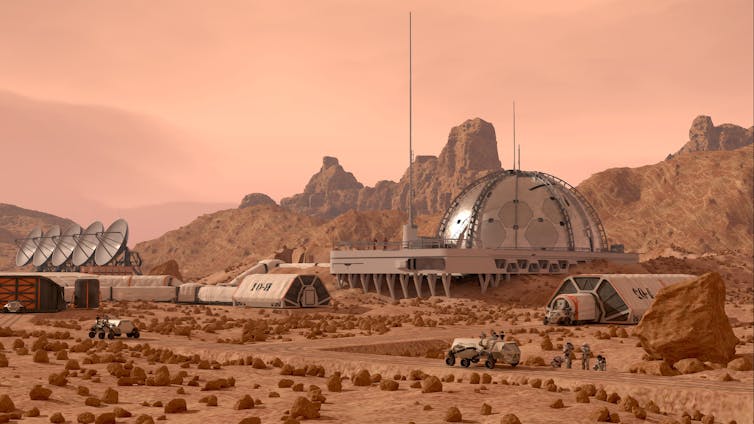
An illustration of an astronaut looking at a base camp on Mars.
An artist’s impressions of what a Mars base camp might look like. peepo/E+ via Getty Images

Using otherworldly soil

On alien worlds, rather than plastic or metal, 3D printers will use the natural resources found in these environments. But finding the right raw materials is not easy. Habitats on the Moon and Mars must protect astronauts from the lack of air, extreme temperatures, micrometeorite impacts and radiation.

Regolith, the fine, dusty, sandlike particles that cover both the lunar and Martian surfaces, could be a primary ingredient to make these dwellings. Think of the regolith on both worlds as alien dirt – unlike Earth soil, it contains few nutrients, and as far as we know, no living organisms. But it might be a good raw material for 3D printing.

My colleagues began researching this possibility by first examining how regular cement behaves in space. I am now joining them to develop techniques for turning regolith into a printable material and to eventually test these on the Moon.

But obtaining otherworldly regolith is a problem. The regolith samples returned from the Moon during the Apollo missions in the 1960s and 70s are precious, difficult if not impossible to access for research purposes. So scientists are using regolith simulants to test ideas. Actual regolith may react quite differently than our simulants. We just don’t know.

What’s more, the regolith on the Moon is very different from what’s found on Mars. Martian regolith contains iron oxide –that’s what gives it a reddish color – but Moon regolith is mostly silicates; it’s much finer and more angular. Researchers will need to learn how to use both types in a 3D printer.

See models of otherworldly habitats.

Applications on Earth

NASA’s Moon-to-Mars Planetary Autonomous Construction Technology program, also known as MMPACT, is advancing the technology needed to print these habitats on alien worlds.

Among the approaches scientists are now exploring: a regolith-based concrete made in part from surface ice; melting the regolith at high temperatures, and then using molds to form it while it’s a liquid; and sintering, which means heating the regolith with concentrated sunlight, lasers or microwaves to fuse particles together without the need for binders.

Along those lines, my colleagues and I developed a Martian concrete we call MarsCrete, a material we used to 3D-print a small test structure for NASA in 2017.

Then, in May 2019, using another type of special concrete, we 3D-printed a one-third scale prototype Mars habitat that could support everything astronauts would need for long-term survival, including living, sleeping, research and food-production modules.

That prototype showcased the potential, and the challenges, of building housing on the red planet. But many of these technologies will benefit people on Earth too.

In the same way astronauts will make sustainable products from natural resources, homebuilders could make concretes from binders and aggregates found locally, and maybe even from recycled construction debris. Engineers are already adapting the techniques that could print Martian habitats to address housing shortages here at home. Indeed, 3D-printed homes are already on the market.

Meanwhile, the move continues toward establishing a human presence outside the Earth. Artemis III, now scheduled for liftoff in 2027, will be the first human Moon landing since 1972. A NASA trip to Mars could happen as early as 2035.

But wherever people go, and whenever they get there, I’m certain that 3D printers will be one of the primary tools to let human beings live off alien land.The Conversation

Sven Bilén, Professor of Engineering Design, Electrical Engineering and Aerospace Engineering, Penn State

This article is republished from The Conversation under a Creative Commons license. Read the original article.

Thompson hosts over 150 constituents at ‘Coffee with Our Congressman’ event in Middletown

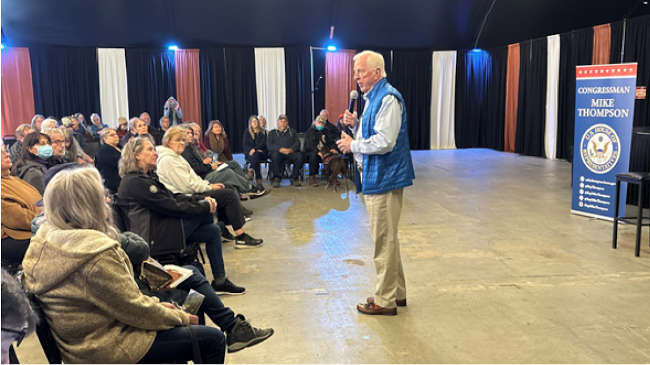
The Middletown “Coffee with Our Congressman” with Congressman Mike Thompson on Friday, March 21, 2025. Courtesy photo.

MIDDLETOWN, Calif. — On Friday, Rep. Mike Thompson (CA-04) held a “Coffee with Our Congressman” community event for residents in the Middletown area to meet him and ask questions about the latest news out of Washington.

The event was hosted at The Twin Pine Event Center, with over 150 residents in attendance.

“My event today was open to the entire Middletown community. Residents from both parties showed up and it was clear from the beginning that many residents are concerned about the chaos coming out of the administration. As your Congressman, I’m working to fight back against the president’s unlawful actions in Congress, in the courts, and in the court of public opinion,” Thompson said Friday.

“Thank you to the over 150 community members who attended today's event, and the countless more who have written me, called my office, and raised their voices against this administration’s unlawful and unethical actions,” Thompson said. “There’s a reason that Republican leaders are urging their party not to hold town halls. Americans are rightfully angry over threats to their personal data, health care, veterans’ services, Social Security, and more. The president and his party are losing in the court of public opinion.”

Friday’s event was one in a series of community events Thompson has hosted across our district.

Since the president took office in January, Thompson has worked to combat the Administration’s unlawful actions and protect Americans’ sensitive data from DOGE.

Some of Thompson’s actions include:

Congressional action

Rep. Thompson voted no on the Republican Budget, which slashed Medicaid, nutrition funding and other services, and voted no on Congressional Republicans’ partisan Fiscal Year 2025 funding bill, which enabled deeper Trump-Musk cuts to programs Americans rely on every day.

Congressional Republicans’ proposed cuts to health care and nutrition programs add up to the exact cost for their planned tax cuts for the ultra-rich. Congressional Republicans are sacrificing the programs Americans rely on in order to fund tax cuts for the ultra-rich. That’s why Rep. Thompson has coauthored dozens of bills and letters to demand answers from the President and hold him accountable.

Rep. Thompson continues to use his position on the powerful Ways and Means Committee to hold the president’s feet to the fire. Rep. Thompson, alongside Ways and Means Democrats, has introduced a resolution of inquiry to obligate the Department of Treasury and DOGE to answer questions on their unlawful access to sensitive taxpayer information and the federal payment systems. He also joined his Democratic colleagues to introduce a resolution of inquiry to demand answers from the Social Security Administration on their proposed mass layoffs and closures of field and regional offices.

Rep. Thompson has also cosponsored the Taxpayer Data Protection Act, which will protect the nation’s payment system from reckless and unlawful interference and ensure that anyone who accesses the federal government’s central payment system with a personal financial conflict faces criminal penalties.

Court action

Rep. Thompson has joined House Democrats to support over 108 lawsuits against the president’s unlawful executive orders, including his firing of inspectors general and termination of civil servants.

Public opinion

Rep. Thompson stands with the millions of Americans who are outraged at the president’s unlawful actions. Since January, Rep. Thompson has held community events and posted updates online reaching over half a million people. Through town halls, coffees, press conferences, and online video updates, Rep. Thompson is working daily to update Americans about the chaos coming out of Washington and how Democrats are working to combat it.

Thompson said public pressure is yielding results. Already, Congressional pressure, litigation, and public outrage have:

• Stopped the funding freeze for federal programs.
• Forced the reinstatement of tens of thousands of federal workers.
• Prevented DOGE access to certain sensitive data.
• Stopped the president’s attempt to end constitutional birthright citizenship.
• Reinstated bird flu researchers.
• Reinstated nuclear safety engineers.
• Stopped efforts to remove air traffic control workers and other FAA employees making flying safer.
• Rehired some agriculture researchers including those doing smoke exposure research.

Thompson’s office said this is only the beginning, that he remains committed to working on behalf of Fourth District residents to protect the programs they rely on and strengthen our democracy.

Thompson represents California’s Fourth Congressional District, which includes all or part of Lake, Napa, Solano, Sonoma and Yolo counties.

Tongson named Yuba College women’s volleyball coach

Kellie Tongson. Courtesy photo.

NORTHERN CALIFORNIA — It’s because of Yuba College’s summer volleyball camp that Kellie Tongson fell in love with the sport.

During the Thea Post era (volleyball coach from 1986-2005), it was Tongson’s impressionable experience as a young camper that kicked off a playing career that ultimately led to coaching.

“That was a big piece of our summers,” Tongson said. “Me, my friends, my sisters, we loved it and looked forward to it. It makes me emotional just thinking about it … being able to bring that back to our community.”

In a full circle moment, with the approval of the Yuba College Board of Trustees on March 13, Tongson was appointed the women’s volleyball coach for the 49ers.

“This will be a new experience being at the college level, but I think she’s really going to enjoy working with the older athletes and taking them to another level with their skillset,” said Yuba College Athletic Director Erick Burns.

Coaching at the college level wasn’t on Tongson’s radar. As the River Valley High School and a club coach for a top 18s team, Tongson enjoys youth development, fundamentals and seeing their growth.

But she started to notice a trend: her graduating players weren’t staying local. In fact, a couple of years ago, her entire roster of 12 all went on to play in college, but no one went to Yuba College, the most local option.

Tongson wants to change that.

“I know that not everyone can afford to go away for college,” Tongson said. “I want them to be able to play and not feel like they have to commute so they can play. I guess it’s filling that need and rebuilding. Thea left a legacy and that’s super important to me.”

Tongson is building a local legacy of her own. She became involved, as both a player and a coach, with Yuba Elite Volleyball Club, a local competitive volleyball league.

With no home base, gym space was rented from Yuba College or local schools, which occasionally led to canceled practices due to school events taking precedence.

Following the COVID-19 pandemic, Tongson zeroed in on facility ownership. In 2022, she opened the Yuba Elite Sports Facility in Yuba City, creating a home court for her volleyball club along with creating opportunities for the community to enjoy, including youth and adult recreation leagues and fitness training.

As part of the club’s academy program, Tongson’s system is teaching 130 kids ranging from seven-years-old to teens, volleyball fundamentals in preparation for the junior high level and beyond.

“It’s led to some really good improvements in our club and our high school volleyball as well,” Tongson said.

Tongson prides herself in building a good culture and community within her programs, emphasizing to the young players to be good people first, then good athletes. If they play for Yuba Elite, they're expected to meet a certain standard; a standard Tongson will carry to the college level.

“We talk about having integrity, doing the right thing when no one is watching, being kind and being good daughters,” she said.

Burns looks forward to having Tongson’s positive energy in the Yuba College program.

“She’s very organized and energetic and has a vision for the direction of the program,” he said.

Eligible Californians may submit taxes for free

California Attorney General Rob Bonta has issued a consumer alert urging Californians to learn about free or low-cost tax filing options.

As Tax Day approaches, many Californians may seek out assistance with filing their state and federal tax returns.

Through the IRS Direct File and CalFile programs, eligible California taxpayers can file their 2024 federal and state taxes for free.

“For many families, tax season brings an opportunity to get a catch up on bills, build some financial breathing room for emergencies, or finally take the car in for repairs,” said Attorney General Bonta. “Many consumers turn to third-party tax preparation services for help filing their tax returns and too often wind up paying when they could file for free. To keep more of their hard-earned money in their pockets, I encourage Californians to file early and find out if they qualify for free tax help.”

IRS Direct File and CalFile allow eligible taxpayers to file federal and state tax returns, respectively, free of charge, quickly, and securely.

By removing barriers to filing, these programs may allow consumers to get tax refunds and claim critical tax benefits like California’s Earned Income Tax Credit and Young Child Tax Credit. After completing their federal return with IRS Direct File, California taxpayers are provided a link to CalFile to complete their state tax return for free.

• IRS Direct File is a free service that allows eligible taxpayers to electronically file their federal tax returns directly with the IRS. To see if you qualify, check here.

• Franchise Tax Board’s CalFile is California's free e-filing service for state tax returns. The FTB’s CalFile program allows qualified individuals to quickly e-file their state tax return directly to the FTB, free of charge. To see if you qualify, check here.

More tax preparation resources

The IRS Volunteer Income Tax Assistance program provides free tax help to people who make $64,000 or less annually, persons with disabilities, and people who do not understand English well. The Tax Counseling for the Elderly program offers free tax help for all taxpayers, particularly those over 60, specializing in questions about pensions and retirement-related issues. More information on these programs is available here.

More cash in your pocket: You may qualify for cash back or a reduction of the tax you owe under the Earned Income Tax Credit and the California Earned Income Tax Credit programs.

Need more time to prepare? You can use IRS Free File to electronically request an automatic tax-filing extension, regardless of your income. You will then have until Oct. 15 to file a return. More information on how to request an extension can be found on the IRS website.

Find a reputable tax preparer: If you decide to hire a tax preparer, make sure your tax preparer is reputable and qualified to provide tax services. In California, only an attorney, certified public accountant, IRS-enrolled agent, or registered-tax preparer can prepare tax returns for a fee. To confirm whether a tax preparer is registered with the IRS, check here.

If you believe you have been the victim of a tax-related scam or other misconduct, you can file a complaint with our office at oag.ca.gov/report or with the IRS.

To learn about how to protect yourself and your loved ones against fraud, visit our website at https://oag.ca.gov/consumers/general/taxes.

Estate Planning: Controlling the trustee’s administration of a trust

Dennis Fordham. Courtesy photo.

Typically the settlor of a revocable living trust is also the initial trustee until they either resign or are unable to manage the affairs of the trust due to incapacity or death.

While the settlor is alive and competent, however, the settlor of a revocable trust may still direct the trustee’s administration of the settlor’s trust owned assets.

This is because assets in a revocable trust belong to the person who has the power to revoke the trust (usually the settlors) and own the assets free of trust.

With revocable trusts, the settlor may provide written directions, acceptable to the trustee, telling the trustee what to do with trust assets.

Alternatively, the trustee may delegate this power of direction over the trust administration to another person who can likewise direct the trustee’s actions (Probate Code section 16001).

Since January 1, 2024, with the California Uniform Directed Trust Act (Sections 16600 et seq. Probate Code), a power of direction over the trust is not limited to revocable trusts but may be expressly included within the trust document itself. That is, both revocable and irrevocable California trusts can be drafted as directed trusts to include a trust director with a power of appointment over, “some aspect(s) of the trust administration.”

The subject matter of the power of direction, for example, might be the power to direct investing the trust assets (brokerage accounts), to manage trust owned property (e.g., rentals), and to decide when and how to make distributions to or for the benefit of trust beneficiaries (section 16602(d) Probate Code).

With a directed trust arrangement, the directed trustee is required to take reasonable steps to implement the power of direction given by the trust director (section 16614(a) Probate Code). The directed trustee’s role (involvement) in the trust administration is, therefore, reduced to the same extent that authority is given to one or more trust directors.

The trust director’s power of direction (authority) needs to be clearly defined. One approach is to allocate certain trustee duties and/or powers wholly to the trust director. The trust could even appoint separate trust directors over separate aspects of the trust administration. Thus, settlors can appoint trusted advisors as trust directors.

A directed trust creates a decentralized administration of the estate where the trustee(s) and the trust director(s) collectively manage the assets and affairs of the trust estate as a team.

Whereas the traditional sole trustee administration makes the trustee responsible for all aspects of administration.

While the trustee can delegate some (not all) duties he is still responsible to supervise the delegated duties, with the limited exception of delegation to an independent investment advisor.

A directed trustee, however, is not responsible to supervise a trust director, and vice versa. In fact, the directed trustee and the trust director are relieved of liability for each other’s actions and inactions (Sections 16612 and 16614 Probate Code).

Moreover, the new law also applies to the co-trustee arrangement. That is, it is possible to segment the trustee duties or compartmentalize assets and duties amongst co-trustees.

Co-trustees otherwise are collectively and severally responsible for the entire administration of all trust assets and cannot delegate the entire office of trustee to one co-trustee.

Now, however, it is possible for a trust to narrowly segment (carve out) certain aspects of the overall trust administration and specifically allocate the same to one co-trustee (Section 16620 Probate Code).

Furthermore, it is possible for a trust to more broadly compartmentalize the administration of certain (special) assets and allocate all responsibilities over such assets to one co-trustee (a special co-trustee). Thus, co-trustees can now operate autonomously of each other with respect to some duties over all assets or with respect to all duties over special trust assets.

In sum, trusts can divide out responsibilities amongst several fiduciaries by taking authority from the trustee(s) and allocating authority to trust directors or co-trustees.

This new estate planning tool can provide creative and useful solutions where the estate planning goals are otherwise unattainable.

Dennis A. Fordham, attorney, is a State Bar-Certified Specialist in estate planning, probate and trust law. His office is at 870 S. Main St., Lakeport, Calif. He can be reached at This email address is being protected from spambots. You need JavaScript enabled to view it. and 707-263-3235.

Space News: NASA to launch three rockets from Alaska in single aurora experiment

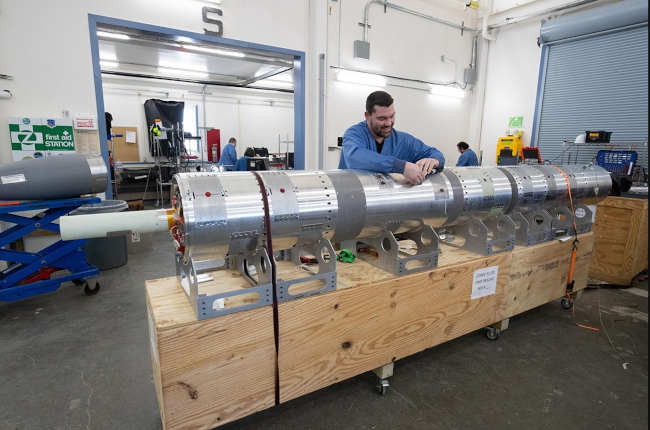
A technician with NASA’s Wallops Flight Facility sounding rocket office works on one of the payload sections of the rocket that will launch for the AWESOME campaign. Photo by NASA/Lee Wingfield.

Three NASA-funded rockets are set to launch from Poker Flat Research Range in Fairbanks, Alaska, in an experiment that seeks to reveal how auroral substorms affect the behavior and composition of Earth’s far upper atmosphere.

The experiment’s outcome could upend a long-held theory about the aurora’s interaction with the thermosphere. It may also improve space weather forecasting, critical as the world becomes increasingly reliant on satellite-based devices such as GPS units in everyday life.

The University of Alaska Fairbanks, or UAF, Geophysical Institute owns Poker Flat, located 20 miles north of Fairbanks, and operates it under a contract with NASA’s Wallops Flight Facility in Virginia, which is part of NASA’s Goddard Space Flight Center in Greenbelt, Maryland.

The experiment, titled Auroral Waves Excited by Substorm Onset Magnetic Events, or AWESOME, features one four-stage rocket and two two-stage rockets all launching in an approximately three-hour period.

Colorful vapor tracers from the largest of the three rockets should be visible across much of northern Alaska. The launch window is March 24 through April 6.

The mission, led by Mark Conde, a space physics professor at UAF, involves about a dozen UAF graduate student researchers at several ground monitoring sites in Alaska at Utqiagvik, Kaktovik, Toolik Lake, Eagle, and Venetie, as well as Poker Flat. NASA delivers, assembles, tests, and launches the rockets.

“Our experiment asks the question, when the aurora goes berserk and dumps a bunch of heat in the atmosphere, how much of that heat is spent transporting the air upward in a continuous convective plume and how much of that heat results in not only vertical but also horizontal oscillations in the atmosphere?” Conde said.

Confirming which process is dominant will reveal the breadth of the mixing and the related changes in the thin air’s characteristics.

“Change in composition of the atmosphere has consequences,” Conde said. “And we need to know the extent of those consequences.”

Most of the thermosphere, which reaches from about 50 to 350 miles above the surface, is what scientists call “convectively stable.” That means minimal vertical motion of air, because the warmer air is already at the top, due to absorption of solar radiation.

When auroral substorms inject energy and momentum into the middle and lower thermosphere (roughly 60 to 125 miles up), it upsets that stability. That leads to one prevailing theory — that the substorms’ heat is what causes the vertical-motion churn of the thermosphere.

Conde believes instead that acoustic-buoyancy waves are the dominant mixing force and that vertical convection has a much lesser role. Because acoustic-buoyancy waves travel vertically and horizontally from where the aurora hits, the aurora-caused atmospheric changes could be occurring over a much broader area than currently believed.

Better prediction of impacts from those changes is the AWESOME mission’s practical goal.

“I believe our experiment will lead to a simpler and more accurate method of space weather prediction,” Conde said.

Two two-stage, 42-foot Terrier-Improved Malemute rockets are planned to respectively launch about 15 minutes and an hour after an auroral substorm begins. A four-stage, 70-foot Black Brant XII rocket is planned to launch about five minutes after the second rocket.

The first two rockets will release tracers at altitudes of 50 and 110 miles to detect wind movement and wave oscillations. The third rocket will release tracers at five altitudes from 68 to 155 miles.

Pink, blue, and white vapor traces should be visible from the third rocket for 10 to 20 minutes. Launches must occur in the dawn hours, with sunlight hitting the upper altitudes to activate the vapor tracers from the first rocket but darkness at the surface so ground cameras can photograph the tracers’ response to air movement.

Rod Boyce works for the University of Alaska Fairbanks Geophysical Institute.
  • 271
  • 272
  • 273
  • 274
  • 275
  • 276
  • 277
  • 278
  • 279
  • 280

Community

  • Sheriff’s Activities League and Clearlake Bassmasters offer youth fishing clinic

  • City Nature Challenge takes place April 24 to 27

Public Safety

  • Lakeport Police logs: Wednesday, Feb. 11

  • Lakeport Police logs: Tuesday, Feb. 10

Education

  • Ramos measure requiring school officer training in use of anti-opioid drug moves forward

  • Lake County Chapter of CWA announces annual scholarships 

Health

  • California ranks 24th in America’s Health Rankings Annual Report from United Health Foundation

  • Healthy blood donors especially vital during active flu season

Business

  • Employment law summit takes place March 9

  • Two Lake County Mediacom employees earn company’s top service awards

Obituaries

  • Terry Knight

  • Ellen Thomas

Opinion & Letters

  • Who should pay for AI’s power? Not California ratepayers

  • Crandell: Supporting nephew for reelection in supervisorial race

Veterans

  • State honors fallen chief warrant officer killed in conflict in Iran

  • CalVet and CSU Long Beach team up to improve data collection related to veteran suicides

Recreation

  • April Audubon program will show how volunteers can help monitor local osprey nests

  • First guided nature walk of spring at Anderson Marsh State Historic Park April 11

  • Second Saturday guided nature walks continue at Anderson Marsh State Historic Park

  • Wet weather trail closure in effect on Upper Lake Ranger District

Religion

  • Kelseyville Presbyterian Church plans Easter service

  • Easter ‘Sonrise’ Service returns to Xabatin Community Park

Arts & Life

  • ‘CIA’ delves into the shadowy world of an espionage thriller

  • ‘War Machine’ shifts the battlefield into uncharted territory

Government & Politics

  • Lake County Democratic Central Committee endorses Falkenberg

  • Crandell launches reelection campaign plans March 15 event

Legals

  • April 23 hearing on Lake Coco Farms Major Use Permit

  • NOTICE OF 30-DAY PUBLIC COMMENT PERIOD & NOTICE OF PUBLIC HEARING

How to resolve AdBlock issue?
Refresh this page