How to resolve AdBlock issue?
Refresh this page
Lake County News,California
  • Home
    • Registration Form
  • News
    • Education
    • Veterans
    • Community
      • Obituaries
      • Letters
      • Commentary
    • Police Logs
    • Business
    • Recreation
    • Health
    • Religion
    • Legals
    • Arts & Life
    • Regional
  • Calendar
  • Contact us
    • FAQs
    • Phones, E-Mail
    • Subscribe
  • Advertise Here
  • Login
How to resolve AdBlock issue?
Refresh this page

News

Clearlake Animal Control: ‘Denver’ and the dogs

“Denver.” Photo courtesy of Clearlake Animal Control.

CLEARLAKE, Calif. — Clearlake Animal Control has more new dogs, big and little, waiting for their new families.

The shelter has 48 adoptable dogs listed on its website.

This week’s dogs include “Denver,” a male Labrador retriever mix with a black coat with white markings.

The shelter is located at 6820 Old Highway 53. It’s open from 9 a.m. to 6 p.m. Tuesday through Saturday.

For more information, call the shelter at 707-762-6227, email This email address is being protected from spambots. You need JavaScript enabled to view it., visit Clearlake Animal Control on Facebook or on the city’s website.

This week’s adoptable dogs are featured below.

Email Elizabeth Larson at This email address is being protected from spambots. You need JavaScript enabled to view it.. Follow her on Twitter, @ERLarson, and on Bluesky, @erlarson.bsky.social. Find Lake County News on the following platforms: Facebook, @LakeCoNews; X, @LakeCoNews; Threads, @lakeconews, and on Bluesky, @lakeconews.bsky.social.

Thompson names Moretti to Lake County field rep position

LAKE COUNTY, Calif. — A new congressional field representative has been appointed to serve Lake County.

On Wednesday, Rep. Mike Thompson (CA-04) announced that Luca Moretti has been promoted to serve in the post.

“I’m excited for Luca’s new role on our team serving the people of Lake County,” said Thompson. “Luca has been with Team Thompson for over two years now and was a favorite mentee of our late Deputy Chief of Staff, Brad Onorato. Luca has spent his time with our team getting to know the Lake Community and I could not imagine anyone better suited to carry on Brad’s legacy.”

Thompson added, “Luca is a dedicated public servant and a longtime member of our community, and I know he will provide excellent service to residents as Team Thompson’s ‘eyes and ears’ of Lake County.”

Moretti grew up in the Fourth District, where he attended Willett Elementary, Emerson Junior High, Davis Senior High School and Sacramento City College before graduating from UC Davis where he earned a bachelor’s degree in political science-public service.

Prior to his work with Team Thompson, Moretti served as the head coach of Davis Senior High School’s speech and debate program.

Moretti served as a constituent services representative for Rep. Thompson’s Napa Office and will continue to help lead the Congressman’s Student Leadership Council.

Rep. Thompson and his staff support Fourth District residents in communicating with federal agencies and accessing federal resources and benefits.

Constituents are encouraged to contact Rep. Thompson’s team with questions regarding Social Security and Medicare benefits, immigration matters, federal worker injury compensation, tax issues and IRS services, small business concerns, federal grant applications, student loans, military academy applications, military awards and commendations, veterans’ benefits, or any other issue facing themselves or their community.

California’s Fourth Congressional District includes all or part of Lake, Napa, Solano, Sonoma and Yolo counties.

Governor issues executive clemency for Thanksgiving

Gov. Gavin Newsom on Wednesday announced that he has granted 19 pardons.

The California Constitution gives the governor the authority to grant executive clemency in the form of a pardon, commutation or reprieve.

The pardons granted this Thanksgiving week are for individuals from Alameda, Fresno, Los Angeles, Monterey, Orange, Sacramento, San Diego, San Luis Obispo, San Mateo, Sonoma and Tuolumne counties.

The crimes for which the applicants were granted clemency included assault with a deadly weapon, assault with a firearm, burglary, conspiracy, drug-related charges (including possession and sales), kidnapping and robbery.

The governor regards clemency as an important part of the criminal justice system that can incentivize accountability and rehabilitation, increase public safety by removing counterproductive barriers to successful reentry, correct unjust results in the legal system, and address the health needs of incarcerated people with high medical risks.

Clemency recognizes the grantee’s self-development and accountability after conviction. A clemency grant does not forgive or minimize the harm the grantee caused.

A pardon may remove counterproductive barriers to employment and public service, restore civic rights and responsibilities, and prevent collateral consequences of conviction, such as deportation and permanent family separation. A pardon does not expunge or erase a conviction.

The governor weighs numerous factors in his review of clemency applications, including an applicant’s self-development and conduct since the offense, whether the grant is in the interest of justice, and the impact of a grant on the community, including crime victims and survivors.

While in office, Gov. Newsom has granted a total of 205 pardons.

The Governor’s Office encourages victims, survivors, and witnesses to register with CDCR’s Office of Victim and Survivor Rights and Services to receive information about an incarcerated person’s status.

For general information about victim services, to learn about victim-offender dialogues, or to register or update a registration confidentially, please visit www.cdcr.ca.gov/Victim_Services/ or call 1-877-256-6877 (toll free).

Additional information on executive clemency can be found here.

Pardon Certificates 11.27.2024 by LakeCoNews on Scribd

CHP sends safety messages directly to truckers during Thanksgiving enforcement period

This Thanksgiving, the California Highway Patrol is taking an innovative approach to keeping roadways safe during its 2024 Maximum Enforcement Period.

For the first time, the CHP’s Commercial Vehicle Section will send critical safety messages directly to commercial truck drivers through their electronic logging devices, or ELDs.

Under federal and state rules, all commercial truck drivers must use ELDs to track hours of service, or HOS.

These devices help ensure compliance with HOS regulations and promote a safer work environment for drivers.

Now, thanks to the Smart Roadways service developed by Drivewyze Inc., the CHP can use these devices to provide real-time safety alerts.

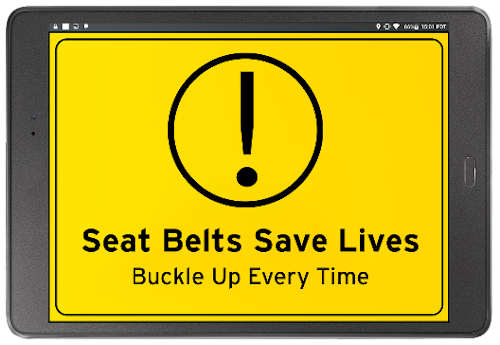
Short, geo-targeted messages — no more than 25 characters — will notify drivers of roadway hazards, long-term closures, enforcement operations, and high-crash areas.

These alerts, displayed on a bright yellow background on the driver’s dash-mounted ELD, give drivers advance warning to slow down or prepare for upcoming conditions.

California is among a handful of states leveraging this cutting-edge technology to enhance roadway safety.

In addition to delivering safety alerts, the CHP will ramp up enforcement efforts to address unsafe driving behaviors that contribute to crashes, such as speeding, following too closely, improper lane changes, reckless driving, and distracted driving.


Officers will actively patrol to ensure compliance and educate drivers about traffic safety.

“Our top priority is the safety of everyone traveling this Thanksgiving,” said CHP Commissioner Sean Duryee. “By leveraging innovative tools like Electronic Logging Devices to communicate directly with commercial drivers, we can provide timely alerts and help prevent crashes before they happen.”

The CHP said it remains committed to reducing crashes and keeping all road users safe during one of the busiest travel periods of the year.

Commercial drivers are encouraged to stay alert, follow traffic laws, and utilize the information provided through their ELDs to make safer driving decisions.

An upward spiral – how small acts of kindness and connection really can change the world, according to psychology research


Strengthening relationships strengthens communities, which influences societies. Charles Gullung/The Image Bank via Getty Images

Political chasms, wars, oppression … it’s easy to feel hopeless and helpless watching these dark forces play out. Could any of us ever really make a meaningful difference in the face of so much devastation?

Given the scale of the world’s problems, it might feel like the small acts of human connection and solidarity that you do have control over are like putting Band-Aids on bullet wounds. It can feel naive to imagine that small acts could make any global difference.

As a psychologist, human connection researcher and audience member, I was inspired to hear musician Hozier offer a counterpoint at a performance this year. “The little acts of love and solidarity that we offer each other can have powerful impact … ” he told the crowd. “I believe the core of people on the whole is good – I genuinely do. I’ll die on that hill.”

I’m happy to report that the science agrees with him.

Research shows that individual acts of kindness and connection can have a real impact on global change when these acts are collective. This is true at multiple levels: between individuals, between people and institutions, and between cultures.

This relational micro-activism is a powerful force for change – and serves as an antidote to hopelessness because unlike global-scale issues, these small acts are within individuals’ control.

two young men in conversation, seated at a table
A personal connection makes you more willing to find common ground. Hinterhaus Productions/DigitalVision via Getty Images

Abstract becomes real through relationships

Theoretically, the idea that small, interpersonal acts have large-scale impact is explained by what psychologists call cognitive dissonance: the discomfort you feel when your actions and beliefs don’t line up.

For example, imagine two people who like each other. One believes that fighting climate change is crucial, and the other believes that climate change is a political ruse. Cognitive dissonance occurs: They like each other, but they disagree. People crave cognitive balance, so the more these two like each other, the more motivated they will be to hear each other out.

According to this model, then, the more you strengthen your relationships through acts of connection, the more likely you’ll be to empathize with those other individual perspectives. When these efforts are collective, they can increase understanding, compassion and community in society at large. Issues like war and oppression can feel overwhelming and abstract, but the abstract becomes real when you connect to someone you care about.

So, does this theory hold up when it comes to real-world data?

Small acts of connection shift attitudes

Numerous studies support the power of individual acts of connection to drive larger-scale change.

For instance, researchers studying the political divide in the U.S. found that participants self-identifying as Democrats or Republicans “didn’t like” people in the other group largely due to negative assumptions about the other person’s morals. People also said they valued morals like fairness, respect, loyalty and a desire to prevent harm to others.

I’m intentionally leaving out which political group preferred which traits – they all sound like positive attributes, don’t they? Even though participants thought they didn’t like each other based on politics, they also all valued traits that benefit relationships.

One interpretation of these findings is that the more people demonstrate to each other, act by act, that they are loyal friends and community members who want to prevent harm to others, the more they might soften large-scale social and political disagreements.

Even more convincingly, another study found that Hungarian and Romanian students – people from ethnic groups with a history of social tensions – who said they had strong friendships with each other also reported improved attitudes toward the other group. Having a rocky friendship with someone from the other group actually damaged attitudes toward the other ethnic group as a whole. Again, nurturing the quality of relationships, even on an objectively small scale, had powerful implications for reducing large-scale tensions.

In another study, researchers examined prejudice toward what psychologists call an out-group: a group that you don’t belong to, whether based on ethnicity, political affiliation or just preference for dogs versus cats.

They asked participants to reflect on the positive qualities of someone they knew, or on their own positive characteristics. When participants wrote about the positive qualities of someone else, rather than themselves, they later reported lower levels of prejudice toward an out-group – even if the person they wrote about had no connection to that out-group. Here, moving toward appreciation of the other, rather than away from prejudice, was an effective way to transform preconceived beliefs.

So, small acts of connection can shift personal attitudes. But can they really affect societies?

From one-on-one to society-wide

Every human being is embedded in their own network with the people and world around them, what psychologists call their social ecology. Compassionate change at any level of someone’s social ecology – internally, interpersonally or structurally – can affect all the other levels, in a kind of positive feedback loop, or upward spiral.

For instance, both system-level anti-discrimination programming in schools and interpersonal support between students act reciprocally to shape school environments for students from historically marginalized groups. Again, individual acts play a key role in these positive domino effects.

a chain of colorful dominos falling one by one
Small positive steps can build off each other in a chain reaction. bee32/iStock via Getty Images Plus

Even as a human connection researcher, I’ve been surprised by how much I and others have progressed toward mutual understanding by simply caring about each other. But what are small acts of connection, after all, but acts of strengthening relationships, which strengthen communities, which influence societies?

In much of my clinical work, I use a model called social practice — or “intentional community-building” – as a form of therapy for people recovering from serious mental illnesses, like schizophrenia. And if intentional community-building can address some of the most debilitating states of the human psyche, I believe it follows that, writ large, it could help address the most debilitating states of human societies as well.

Simply put, science supports the idea that moving toward each other in small ways can be transformational. I’ll die on that hill too.The Conversation

Liza M. Hinchey, Postdoctoral Research Fellow in Psychology, Wayne State University

This article is republished from The Conversation under a Creative Commons license. Read the original article.
Christmas tree fundraiser to support VFW Post 2337’s work in community

CLEARLAKE, Calif. — The Veterans of Foreign Wars Auxiliary Post 2337 in Clearlake is launching a Christmas tree fundraiser this week.

The VFW Auxiliary Post, which supports veterans of all wars, will host a Christmas tree lot on its grounds at 3980 Veterans Lane, Clearlake.

Post Commander Irl Morehouse said the tree lot will open on Saturday, Nov. 30, and remain open daily from 10 a.m. to 4 p.m. while supplies last.

Morehouse, who has experience running Christmas tree lots, decided to sell a selection of 50 Christmas trees as a fundraiser for the post this year.

“This is the first year that we’ve attempted this,” said Morehouse, who is new to his post commander job.

Morehouse said the post, which has 119 members, supports vets and helps connect them to resources.

The post often finds itself responding to different types of needs, from immediate help such as food or a place to say.

Veterans in need “knock on our doors and say, ‘I’m broke,’” Morehouse said.

He said the post does what it can to provide assistance through its food pantry, contacts with other organizations and its own limited financial resources.

“The troops are in trouble and they need help, and that’s what we try to do,” Morehouse said.

He said the post is “trying in every way” to be a part of the community.

For more information about the post, call 707-994-4748.

Email Elizabeth Larson at This email address is being protected from spambots. You need JavaScript enabled to view it.. Follow her on Twitter, @ERLarson, and on Bluesky, @erlarson.bsky.social. Find Lake County News on the following platforms: Facebook, @LakeCoNews; X, @LakeCoNews; Threads, @lakeconews, and on Bluesky, @lakeconews.bsky.social.
  • 352
  • 353
  • 354
  • 355
  • 356
  • 357
  • 358
  • 359
  • 360
  • 361

Community

  • Sheriff’s Activities League and Clearlake Bassmasters offer youth fishing clinic

  • City Nature Challenge takes place April 24 to 27

Public Safety

  • Lakeport Police logs: Wednesday, Feb. 11

  • Lakeport Police logs: Tuesday, Feb. 10

Education

  • Ramos measure requiring school officer training in use of anti-opioid drug moves forward

  • Lake County Chapter of CWA announces annual scholarships 

Health

  • California ranks 24th in America’s Health Rankings Annual Report from United Health Foundation

  • Healthy blood donors especially vital during active flu season

Business

  • Employment law summit takes place March 9

  • Two Lake County Mediacom employees earn company’s top service awards

Obituaries

  • Terry Knight

  • Ellen Thomas

Opinion & Letters

  • Who should pay for AI’s power? Not California ratepayers

  • Crandell: Supporting nephew for reelection in supervisorial race

Veterans

  • State honors fallen chief warrant officer killed in conflict in Iran

  • CalVet and CSU Long Beach team up to improve data collection related to veteran suicides

Recreation

  • April Audubon program will show how volunteers can help monitor local osprey nests

  • First guided nature walk of spring at Anderson Marsh State Historic Park April 11

  • Second Saturday guided nature walks continue at Anderson Marsh State Historic Park

  • Wet weather trail closure in effect on Upper Lake Ranger District

Religion

  • Kelseyville Presbyterian Church plans Easter service

  • Easter ‘Sonrise’ Service returns to Xabatin Community Park

Arts & Life

  • ‘CIA’ delves into the shadowy world of an espionage thriller

  • ‘War Machine’ shifts the battlefield into uncharted territory

Government & Politics

  • Lake County Democratic Central Committee endorses Falkenberg

  • Crandell launches reelection campaign plans March 15 event

Legals

  • April 23 hearing on Lake Coco Farms Major Use Permit

  • NOTICE OF 30-DAY PUBLIC COMMENT PERIOD & NOTICE OF PUBLIC HEARING

How to resolve AdBlock issue?
Refresh this page