How to resolve AdBlock issue?
Refresh this page
Lake County News,California
  • Home
    • Registration Form
  • News
    • Education
    • Veterans
    • Community
      • Obituaries
      • Letters
      • Commentary
    • Police Logs
    • Business
    • Recreation
    • Health
    • Religion
    • Legals
    • Arts & Life
    • Regional
  • Calendar
  • Contact us
    • FAQs
    • Phones, E-Mail
    • Subscribe
  • Advertise Here
  • Login
How to resolve AdBlock issue?
Refresh this page

News

PFAS in pregnant women’s drinking water puts their babies at higher risk, study finds

Studies show PFAS can be harmful to human health, including pregnant women and their fetuses. Olga Rolenko/Moment via Getty Images

When pregnant women drink water that comes from wells downstream of sites contaminated with PFAS, known as “forever chemicals,” the risks to their babies’ health substantially increase, a new study found. These risks include the chance of low birth weight, preterm birth and infant mortality.

Even more troubling, our team of economic researchers and hydrologists found that PFAS exposure increases the likelihood of extremely low-weight and extremely preterm births, which are strongly associated with lifelong health challenges.

What wells showed us about PFAS risks

PFAS, or perfluoroalkyl and polyfluoroalkyl substances, have captured the attention of the public and regulators in recent years for good reason. These man-made compounds persist in the environment, accumulate in human bodies and may cause harm even at extremely low concentrations.

Most current knowledge about the reproductive effects of PFAS comes from laboratory studies on animals such as rats, or from correlations between PFAS levels in human blood and health outcomes.

Both approaches have important limitations. Rats and humans have different bodies, exposures and living conditions. And independent factors, such as kidney functioning, may in some cases be the true drivers of health problems.

We wanted to learn about the effects of PFAS on real-world human lives in a way that comes as close as possible to a randomized experiment. Intentionally exposing people to PFAS would be unethical, but the environment gave us a natural experiment of its own.

We looked at the locations of wells that supply New Hampshire residents with drinking water and how those locations related to birth outcomes.

We collected data on all births in the state from 2010 to 2019 and zoomed in on the 11,539 births that occurred within 3.1 miles (5 kilometers) of a site known to be contaminated with PFAS and where the mothers were served by public water systems. Some contamination came from industries, other from landfills or firefighting activities.

A conceptual illustration shows how PFAS can enter the soil and eventually reach groundwater, which flows downhill. Industries and airports are common sources of PFAS. The homes show upstream (left) and downstream (right) wells. Melina Lew

PFAS from contaminated sites slowly migrate down through soil into groundwater, where they move downstream with the groundwater’s flow. This created a simple but powerful contrast: pregnant women whose homes received water from wells that were downstream, in groundwater terms, from the PFAS source were likely to have been exposed to PFAS from the contaminated site, but those who received water from wells that were upstream of those sites should not have been exposed.

Using outside data on PFAS testing, we confirmed that PFAS levels were indeed greater in “downstream” wells than in “upstream” wells.

The locations of utilities’ drinking water wells are sensitive data that are not publicly available, so the women likely would not have known whether they were exposed. Prior to the state beginning to test for PFAS in 2016, they may not have even known the nearby site had PFAS.

PFAS connections to the riskiest births

We found what we believe is clear evidence of harm from PFAS exposure.

Women who received water from wells downstream of PFAS-contaminated sites had on average a 43% greater chance of having a low-weight baby, defined as under 5.5 pounds (2,500 grams) at birth, than those receiving water from upstream wells with no other PFAS sources nearby. Those downstream had a 20% greater chance of a preterm birth, defined as before 37 weeks, and a 191% greater chance of the infant not surviving its first year.

Per 100,000 births, this works out to 2,639 additional low-weight births, 1,475 additional preterm births and 611 additional deaths in the first year of life.

Looking at the cases with the lowest birth weights and earliest preterm births, we found that the women receiving water from wells downstream from PFAS sources had a 180% greater chance of a birth under 2.2 pounds (1,000 grams) and a 168% greater chance of a birth before 28 weeks than those with upstream wells. Per 100,000 births, that’s about 607 additional extremely low-weight births and 466 additional extremely preterm births.

PFAS contamination is costly

When considering regulations to control PFAS, it helps to express the benefits of PFAS cleanup in monetary terms to compare them to the costs of cleanup.

Researchers use various methods to put a dollar value on the cost of low-weight and preterm births based on their higher medical bills, lower subsequent health and decreased lifetime earnings.

We used the New Hampshire data and locations of PFAS-contaminated sites in 11 other states with detailed PFAS testing to estimate costs from PFAS exposure nationwide related to low birth weight, preterm births and infant mortality.

The results are eye-opening. We estimate that the effects of PFAS on each year’s low-weight births cost society about US$7.8 billion over the lifetimes of those babies, with more babies born every year.

We found the effects of PFAS on preterm births and infant mortality cost the U.S. about $5.6 billion over the lifetimes of those babies born each year, with some of these costs overlapping with the costs associated with low-weight births.

An analysis produced for the American Water Works Association estimated that removing PFAS from drinking water to meet the EPA’s PFAS limits would cost utilities alone $3.8 billion on an annual basis. These costs could ultimately fall on water customers, but the broader public also bears much of the cost of harm to fetuses.

We believe that just the reproductive health benefits of protecting water systems from PFAS contamination could justify the EPA’s rule.

Treating PFAS

There is still much to learn about the risks from PFAS and how to avoid harm.

We studied the health effects of PFOA and PFOS, two “long-chain” species of PFAS that were the most widely used types in the U.S. They are no longer produced in the U.S., but they are still present in soil and groundwater. Future work could focus on newer, “short-chain” PFAS, which may have different health impacts.

A woman holding a small child fills a glass with water.
If the water utility isn’t filtering for PFAS, or if that information isn’t known, people can purchase home water system filters to remove PFAS before it reaches the faucet. Compassionate Eye Foundation/David Oxberry via Getty Images

PFAS are in many types of products, and there are many routes for exposure, including through food. Effective treatment to remove PFAS from water is an area of ongoing research, but the long-chain PFAS we studied can be removed from water with activated carbon filters, either at the utility level or inside one’s home.

Our results indicate that pregnant women have special reason to be concerned about exposure to long-chain PFAS through drinking water. If pregnant women suspect their drinking water may contain PFAS, we believe they should strongly consider installing water filters that can remove PFAS and then replacing those filters on a regular schedule.The Conversation

Derek Lemoine, Professor of Economics, University of Arizona; Ashley Langer, Professor of Economics, University of Arizona, and Bo Guo, Associate Professor of Hydrology, University of Arizona

This article is republished from The Conversation under a Creative Commons license. Read the original article.
County adjusts sewage spill impact area; Wednesday town hall planned

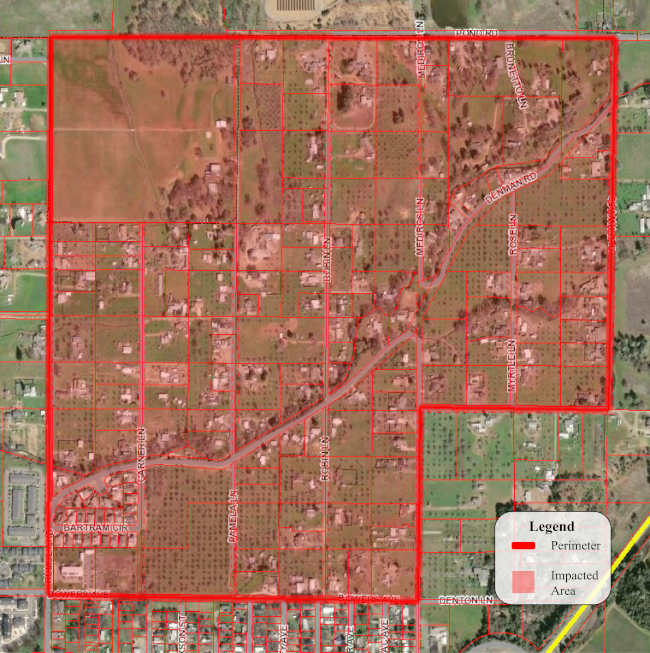
A new map of the 2026 Robin Lane Sewer Spill area in Clearlake, California. Image courtesy of the county of Lake.


LAKE COUNTY, Calif. — The county of Lake on Monday issued its latest update on the aftermath of the Robin Lane sewer spill, with most health recommendations remaining in place and a town hall set for midweek.

The spill, which began on Sunday, Jan. 11, lasted a day and a half but the impacts are expected to be ongoing, with no end yet in sight.

Lake County Special Districts operates the 16-inch force main on Robin Lane that ruptured early on Jan. 11. The county’s latest report submitted late last week to the California Governor’s Office of Emergency Services estimated the total size of the spill at 2.9 million gallons.

The Monday evening update included few new details, but did adjust the size of the sewage spill area.

An assessment of the new map puts the total area now at about 328 acres, down from an estimated 357 acres in the area east of Smith Lane, west of Old Highway 53, south of Pond Road and north of Bowers Avenue.

A town hall meeting to update the community is set to be held at 6 p.m. Wednesday, Jan, 21, at Clearlake City Hall, 14050 Olympic Drive.

Residents of the area have reported that there are still individuals who have not been notified of the spill and may still be drinking their well water, with some issues with sewage-related illness reportedly occurring.

The county reported that Special Districts crews are currently locating a 10-inch sewer force main, but offered little further explanation outside of noting that “potholing operations are underway to identify and confirm the exact location of the line.”

Public Health Officer Dr. Robert Bernstein’s recommendation that property owners in the spill area temporarily relocate until their wells are deemed safe remains in place.

The county said well sanitization is ongoing, with residents advised to call Environmental Health at 707-263-1164 to schedule the services. Officials said proactive well sanitization can help protect water quality and reduce potential health risks.

Regarding well sanitization, the county reported, “Significant progress was made over the holiday weekend, and we are grateful to those property owners who have made contact to facilitate this critical work.”

Environmental Health is due to resume sampling in the sewage release impact area at 5 a.m. Tuesday. 

“Environmental Health staff will be in the area throughout the day tomorrow, working with sampling teams and drillers to facilitate data collection. This work is essential to support any changes to health guidance and DO NOT USE notices, for example. Many thanks to all residents who have authorized this critical data gathering,” the county reported.

Officials are considering options for soil management, with residents to be notified of road impacts. 

Road work is expected to first occur near Pamela Lane, with the Robin Lane to follow; planning and coordination are ongoing for both areas at this time. Work on Pamela Lane is expected to begin on Friday, the county said.

The county also published a post on its Facebook account saying that staff responding to the incident “have received reports of unconfirmed ‘charities’ making contact with individuals affected by the event.”

However, responses to that post from spill area residents suggested it was a matter of people offering assistance and information.

Available resources

County officials direct spill area residents to the following resources.

ADA showers: Available 8 a.m. to 5 p.m. Tuesday and Friday at the Clearlake Senior Center, 3245 Bowers Ave.

Avoiding scams after a disaster: Visit this link, https://bit.ly/4jP8A1Z. 

Drinking water: Highlands Water Co. offers a free public water filling station from 8 a.m. to 4 p.m. Monday through Friday at 14580 Lakeshore Drive. Please bring your own jugs or bottles.

Drinking water guidance and information on testing of private wells: Contact Environmental Health at 707-263-1164.

Relocation: Affected residents are directed to first contact their homeowner’s insurance provider to inquire about coverage for temporary lodging under their policy. Residents may also contact Lake County Special Districts at 707-263-0119 for additional assistance and guidance.

Showers, laundry services and potable water: A mobile laundry and hygiene service trailer is available to the public at the entrance to the wastewater treatment plant located at 2485 Pond Road. It includes two laundry sets, with the ability to bring in a larger trailer if additional capacity is needed. Residents can drop off their laundry with on-site staff, who will tag each load with a number, then wash, dry, and fold items before returning them in a clean bag. The unit also includes a double-shower setup (family) and three sinks large enough to wash dishes. A separate family shower area is available and includes one sink, two showers, and a bench, providing space for families and individuals to clean up comfortably and safely. For potable water, members of the public are asked to bring their own water containers. Special Districts staff are on site to assist the public, and a 24-hour call-answering service is available to respond to inquiries related to Special Districts services.

Support to mitigate water and sewer-related needs: Call Special Districts at 707-263-0119.

Well sanitization services: To schedule well sanitization services or for more information, please contact Environmental Health at 707-263-1164. Environmental Health staff are available to review your location, confirm whether your property falls within the mapped area and provide guidance on appropriate next steps.

Email Elizabeth Larson at This email address is being protected from spambots. You need JavaScript enabled to view it.. Follow her on Twitter, @ERLarson, and on Bluesky, @erlarson.bsky.social. Find Lake County News on the following platforms: Facebook, @LakeCoNews; X, @LakeCoNews; Threads, @lakeconews, and on Bluesky, @lakeconews.bsky.social. 

Fourth Annual Lake County Restaurant Expo to be held Jan. 26

LAKE COUNTY, Calif. — The Lake County Economic Development Corp. will present the fourth annual Lake County Restaurant Expo this month.

The one-day education and networking event will take place on January 26, 2026, at the Lake County Campus of Woodland Community College. 

The event’s focus is supporting the continued growth, sustainability and innovation of Lake County’s food and beverage industry.

It is free to all culinary and wine entrepreneurs, employees and students — regardless of their stage in business development or career path. 

The expo is designed for restaurant owners, food trucks, caterers, specialty food producers, hospitality professionals, industry partners and culinary students seeking practical tools, real-world insight and meaningful connections.

Participants will be treated to presentations from industry experts. The event’s keynote speaker, Bob Santana, owner of Santana's Cottage Cafe and Catering, will share lessons on business startup, scaling operations and adapting to market demands.

The expo opens at 10 a.m. with sessions focusing on culinary career paths and start-up ventures. Professionals will share career journeys shaped by training, passion and opportunity. 

Additional morning sessions include content focused on licensing, funding, marketing, sustainable food business operations, and highlighting catering, pop-ups, commissary kitchens and collaborative models.

The afternoon includes discussions focused on health and safety in commercial kitchen and dining rooms, using AI in the industry, and how businesses can participate in the upcoming Restaurant Week events. 

The final sessions include information on leveraging the tourist and wine industries and addressing key risk and insurance coverage considerations for food businesses.

The expo concludes at 5 p.m., followed by a restaurant and wine industry mixer from 5 to 6:30 p.m.

This event is generously sponsored by NorthEdge Business Financing and Community Development, Adventist Health, Woodland Community College and the Guy Fieri Foundation.

In addition, the Fourth Annual Lake County Restaurant Week, hosted by the Lake County Chamber of Commerce, will span the week of Feb. 22.
 
Reserve your spot today to connect with industry leaders and advance your culinary career — register now at https://lakecountycaedc.org/restaurant-expo-2026/ .

Community Risk Reduction Week focuses on proactive approaches to prevent emergencies

Cal Fire’s Office of the State Fire Marshal, or OSFM, is joining fire departments and safety organizations nationwide in recognizing Community Risk Reduction, or CRR, Week.

Taking place Jan. 19 to 26, this annual campaign emphasizes the vital role CRR plays in protecting lives, property, and the environment.

Community risk reduction is a proactive approach that identifies local risks and implements strategies to prevent emergencies before they occur. 

By integrating CRR principles into daily operations, fire departments can improve public safety, reduce preventable incidents and strengthen community resilience.

“Community risk reduction is about more than responding to emergencies — it’s about preventing them,” said Chief Daniel Berlant, California State fire marshal. “When we work together to identify risks and take action, we save lives, protect property, and create safer communities for everyone.”

CRR strategies are built around the “Five Es”:

• Education – Raising awareness and promoting fire-safe behaviors.
• Engineering – Designing safer environments and technologies.
• Enforcement – Ensuring compliance with fire and life safety codes.
• Emergency Response – Delivering timely and effective assistance.
• Economic Incentives – Encouraging risk-reduction through grants and programs.

No matter the size or location of a fire department, CRR provides tools to address unique community risks and foster collaboration among stakeholders.

Cal Fire–OSFM actively supports CRR by providing educational resources, supporting enforcement programs, and fostering partnerships that enhance fire prevention statewide.

To learn more about Community Risk Reduction and how Cal Fire–OSFM is involved, visit the Community Risk Reduction Resource Hub.

Live healthier in 2026 by breathing cleaner air at home

It’s not hard to breathe easy at home. Milan Markovic/E+ via Getty Images

I have a health goal for the new year that doesn’t require me to get out of bed earlier or eat fewer cookies. I am an atmospheric chemist and will be committing to clean air at home.

People in the U.S. spend as much as 90% of their lives indoors. Overall, air pollution is responsible for approximately 135,000 premature deaths per year in the U.S. And levels of some chemicals can be two to five times higher in indoor air than outdoors.

Fortunately, there are some straightforward ways to improve your home’s air quality this year, in three major categories of activity.

Cooking

Cooking is a major source of indoor air pollution.

A person stirs vegetables in a frying pan on a gas stove.
It looks delicious, but what are you breathing? Grace Cary/Moment via Getty Images

Not all chemicals that cooking produces are bad, but some react to form other chemicals that like to clump together to form particulate matter. When inhaled, these particles enter the lungs and can then pass into the bloodstream, increasing people’s risk of heart disease and decreasing lung function.

The amount of particulate matter produced from your cooking depends on the food type, oil used and cooking temperature. High-fat-content foods, such as cheese, pork and bacon, emit the most particles, especially when cooked at high temperatures. Sunflower oil produces the least amount of particulate matter, followed by vegetable oil and then olive oil.

Cooking with a gas stove produces more particulate matter than with an electric stove, and the gas stove also emits other hazardous chemicals such as nitrogen dioxide and benzene.

Two simple and effective measures to keep kitchen air clean and prevent particulate matter from spreading through the home are using your range hood fan and opening nearby windows while cooking. The suction will move harmful chemicals out of your home and away from your lungs, and the fresh air will dilute what remains.

Personal care

In large cities such as Los Angeles and New York City, there are enough volatile organic chemicals from consumer products – paints, adhesives and personal care products – in the outdoor air to rival those produced by traffic and industry. Many of those products are first used indoors before they escape outside.

A person takes clothes out of a washing machine and holds them to her face.
Are your laundry detergent and fabric softener helping pollute your home? PonyWang/E+ via Getty Images

Government regulations limit the amount of chemicals allowed in some kinds of consumer products, such as adhesives and construction materials, because of their contribution to smog, but personal care products that contain fragrances remain largely unregulated.

Many common options for shampoo, conditioner, mousse, body wash, deodorant, lotion, laundry detergent and dryer sheets contain fragrance mixes composed of several chemicals, with the sole purpose of providing a pleasant aroma to consumer products. Fragrances release volatile organic compounds such as limonene, linalool, galaxolide, eugenol and diethyl phthalate that can react to form particulate matter. In addition to health risks from particulate matter formation, strong fragrances can trigger headaches, difficulty breathing, skin irritation and other physical responses that warrant concern.

I’m not suggesting you be smelly or live an unscented life. But consider whether you could choose perhaps three products that have your very favorite scents, and for the others buy fragrance-free versions when you need to resupply. That would reduce the volatile organic compounds and the ensuing potential for particulate matter formation without really changing how you smell.

Cleaning

Cleaning your home can improve indoor air quality by temporarily reducing the amount of chemicals on surfaces that can find their way back into the air. For example, oleic acid from cooking, squalene from human skin and bisphenol A from hard plastics can remain on surfaces for years if undisturbed.

A person wearing yellow gloves holds a bucket of cleaning supplies.
What’s in those bottles, and is it bad for your lungs? Nanci Santos/iStock/Getty Images Plus

But there’s a caveat: Cleaners are made of strong chemicals, designed to disinfect, degrease and eliminate odors, that may do more harm for air quality than good. To that end, the healthiest option may be found by carefully choosing the right cleaner for the job. For less intensive tasks like dusting or cleaning crumbs off the counter, consider avoiding strong disinfectants like bleach, hydrogen peroxide and a category of chemicals called quaternary ammonium compounds that can often be found in disinfectants, hair products and fabric softeners.

However, if you are cleaning the bathroom or a forgotten, moldy leftovers container, you may prefer a stronger disinfecting product. Be aware that studies have found bleach cleaners can produce harmful chlorinated byproducts, such as chloroform and carbon tetrachloride, which are possible carcinogens and worth avoiding altogether.

Still, nearly all commercially available cleaning products contain volatile organic compounds – like limonene for citrus scent, lactic acid for limescale and bacteria removal, and 2-phenoxyethanol for product preservation – that will increase chemical and particulate matter concentrations in the immediate area.

In this case, dilution is key to limiting your exposure. Increase ventilation while using these products by running the bathroom fan, opening windows while you clean, and using only as much of a cleaning product as is really required to do the job.

Overall improvements

Opening windows is an effective and often overlooked solution to improve indoor air quality. Chemicals that may be harmful to you in a closed space, where they are more concentrated, become less harmful when they are diluted and spread throughout the massive outdoor atmosphere. But avoid opening windows when smog, ozone or wildfire smoke levels are high outside, which would create an opportunity for outdoor air pollution to come indoors.

Luckily, your city or your neighbors are likely collecting outdoor air quality data that is publicly available to you, so you can track whether to open your windows.

A box fan sits on top of a square of air filters.
A Corsi-Rosenthal box is an inexpensive and very effective homemade air filter. Festucarubra via Wikimedia Commons, CC BY-SA

If air pollution is too high outside, an indoor air cleaner may be a better option. And you don’t have to shell out big bucks, either. Air quality engineers have shown that a homemade air cleaner using a box fan, four air filters and duct tape – all commonly available at hardware stores or online – can cost under $70 and be as effective at cleaning the air as factory-made appliances.

Overall, the best way to improve air quality is to put fewer harmful chemicals into the air in the first place. While scientists and policymakers can measure and regulate outdoor air quality, it’s up to us all to keep the air in our own homes clean and healthy.The Conversation

Katelyn Richard, Ph.D. Candidate in Analytical Chemistry, Colorado State University

This article is republished from The Conversation under a Creative Commons license. Read the original article.

Protecting Clear Lake: How Edna the chocolate lab keeps our waters safe

Alison Herrold from Nice, California, and Edna “E-DNA” from Mussel Dogs. Photo by Craig Nelson.

LAKE COUNTY — As the American Bass Association kicked off its season opener on Saturday morning, 23 boats braved a chilly 36-degree start. 

But the most important participant didn't have a fishing rod; she had a highly trained nose.

Meet Edna (nicknamed "E-DNA"), a 6-year-old chocolate lab and scent detection dog. 

Alongside her handler, Alison Herrold, Edna is the front line of defense against invasive species that threaten the health of Lake County’s waterways.

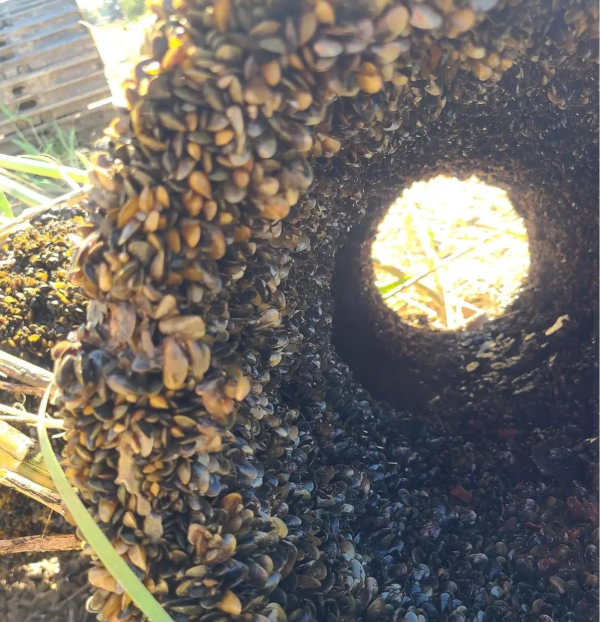
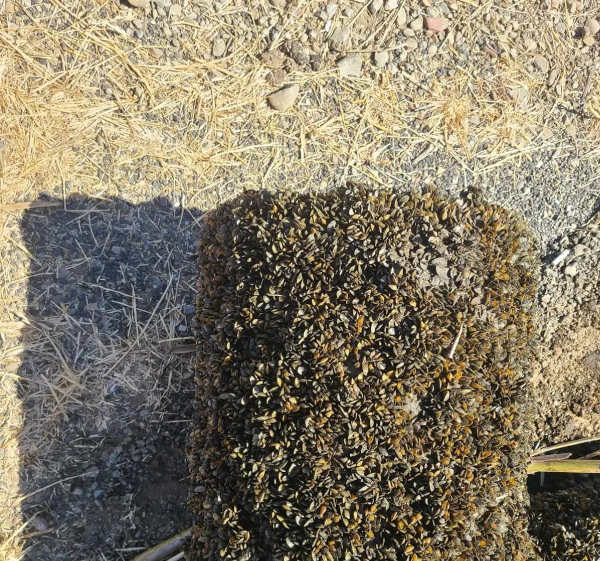
Examples of quagga mussel infestations as shown in park signage. Photo by Craig Nelson.

Edna is part of a specialized team from Mussel Dogs and Lake County Water Resources, operated by Dogs with Jobs LLC. 

Their mission is to prevent the spread of quagga, zebra and golden mussels — invasive filter feeders that strain essential food particles like phytoplankton, zooplankton and algae from the water, disrupting the entire local ecosystem.

The stakes for Lake County are incredibly high. 

Examples of quagga mussel infestations as shown in park signage. Photo by Craig Nelson.

Eighty percent of Lake County residents rely on the lake for their water. An infestation would "wreak havoc" on the county’s water pipes and infrastructure, according to water experts.

By partnering with federal, state and municipal agencies, Mussel Dogs uses the most effective methods to keep these species out of the water and keep the lake open for recreation.

While traditional inspections can be time-consuming, Edna makes the process seamless for  visitors and local anglers.

“It’s amazing; it takes 30 seconds to a minute for Edna to inspect a boat,” said Herrold.

The program is designed to be boater-friendly. Inspections are completely free to the boater. If mussels are found, the county provides decontamination services at no charge.

Alison Herrold from Nice, California, and Edna “E-DNA” from Mussel Dogs. Photo by Craig Nelson.

While private launch ramps remain a challenge, the team works diligently at public ramps to ensure the lake remains both safe and enjoyable.

When she isn't working the major bass tournaments hosted at Clear Lake, Edna stays at the Mussel Dogs facility in Ukiah. 

Herrold, who also teaches K-9 nose work — “the sport of scent detection” — ensures Edna remains at the top of her game.

Thanks to this partnership between local government, Lake County Water Resources and specialized scent-detection teams, Lake County’s waters remain protected — one 30-second sniff at a time. 

Craig Nelson is a former professional golfer who fell in love with tournament bass fishing 20 years ago. He found Lake County after fishing an FLW Stren Series event and never left. He’s the back-to-back winner of the Konocti Classic and runner up in the inaugural WON Bass Clear Lake Open.

Alison Herrold from Nice, California, and Edna “E-DNA” from Mussel Dogs. Photo by Craig Nelson.

  • 59
  • 60
  • 61
  • 62
  • 63
  • 64
  • 65
  • 66
  • 67
  • 68

Community

  • Sheriff’s Activities League and Clearlake Bassmasters offer youth fishing clinic

  • City Nature Challenge takes place April 24 to 27

Public Safety

  • Lakeport Police logs: Wednesday, Feb. 11

  • Lakeport Police logs: Tuesday, Feb. 10

Education

  • Ramos measure requiring school officer training in use of anti-opioid drug moves forward

  • Lake County Chapter of CWA announces annual scholarships 

Health

  • California ranks 24th in America’s Health Rankings Annual Report from United Health Foundation

  • Healthy blood donors especially vital during active flu season

Business

  • Employment law summit takes place March 9

  • Two Lake County Mediacom employees earn company’s top service awards

Obituaries

  • Terry Knight

  • Ellen Thomas

Opinion & Letters

  • Who should pay for AI’s power? Not California ratepayers

  • Crandell: Supporting nephew for reelection in supervisorial race

Veterans

  • State honors fallen chief warrant officer killed in conflict in Iran

  • CalVet and CSU Long Beach team up to improve data collection related to veteran suicides

Recreation

  • April Audubon program will show how volunteers can help monitor local osprey nests

  • First guided nature walk of spring at Anderson Marsh State Historic Park April 11

  • Second Saturday guided nature walks continue at Anderson Marsh State Historic Park

  • Wet weather trail closure in effect on Upper Lake Ranger District

Religion

  • Kelseyville Presbyterian Church plans Easter service

  • Easter ‘Sonrise’ Service returns to Xabatin Community Park

Arts & Life

  • ‘CIA’ delves into the shadowy world of an espionage thriller

  • ‘War Machine’ shifts the battlefield into uncharted territory

Government & Politics

  • Lake County Democratic Central Committee endorses Falkenberg

  • Crandell launches reelection campaign plans March 15 event

Legals

  • April 23 hearing on Lake Coco Farms Major Use Permit

  • NOTICE OF 30-DAY PUBLIC COMMENT PERIOD & NOTICE OF PUBLIC HEARING

How to resolve AdBlock issue?
Refresh this page