How to resolve AdBlock issue?
Refresh this page
Lake County News,California
  • Home
    • Registration Form
  • News
    • Education
    • Veterans
    • Community
      • Obituaries
      • Letters
      • Commentary
    • Police Logs
    • Business
    • Recreation
    • Health
    • Religion
    • Legals
    • Arts & Life
    • Regional
  • Calendar
  • Contact us
    • FAQs
    • Phones, E-Mail
    • Subscribe
  • Advertise Here
  • Login
How to resolve AdBlock issue?
Refresh this page

News

Space News: Astronomers surprised by mysterious shock wave around dead star

VLT image of a dead star creating a shock wave as it moves through space (Credit: ESO/K. Ilkiewicz and S. Scaringi et al. Background: PanSTARRS)

Gas and dust flowing from stars can, under the right conditions, clash with a star’s surroundings and create a shock wave. 

Now, astronomers using the European Southern Observatory’s Very Large Telescope, or VLT, have imaged a beautiful shock wave around a dead star — a discovery that has left them puzzled. 

According to all known mechanisms, the small, dead star RXJ0528+2838 should not have such structure around it. This discovery, as enigmatic as it’s stunning, challenges our understanding of how dead stars interact with their surroundings.

“We found something never seen before and, more importantly, entirely unexpected,” said Simone Scaringi, associate professor at Durham University, UK and co-lead author of the study published today in Nature Astronomy.

“Our observations reveal a powerful outflow that, according to our current understanding, shouldn’t be there,” said Krystian Ilkiewicz, a postdoctoral researcher at the Nicolaus Copernicus Astronomical Center in Warsaw, Poland and study co-lead. 

“Outflow” is the term used by astronomers to describe the material that is ejected from celestial objects. 

The star RXJ0528+2838 is located 730 light-years away and, like the Sun and other stars, it rotates around our galaxy’s centre.

As it moves, it interacts with the gas that permeates the space between stars, creating a type of shock wave called a bow shock, “a curved arc of material, similar to the wave that builds up in front of a ship,” explained Noel Castro Segura, research fellow at the University of Warwick in the UK and collaborator in this study. 

These bow shocks are usually created by material outflowing from the central star, but in the case of RXJ0528+2838, none of the known mechanisms can fully explain the observations. 

RXJ0528+2838 is a white dwarf — the left-over core of a dying low-mass star — and has a Sun-like companion orbiting it. In such binary systems, the material from the companion star is transferred to the white dwarf, often forming a disc around it. 

While the disc fuels the dead star, some of the material also gets ejected into space, creating powerful outflows. But RXJ0528+2838 shows no signs of a disc, making the origin of the outflow and resulting nebula around the star a mystery. 

“The surprise that a supposedly quiet, discless system could drive such a spectacular nebula was one of those rare ‘wow’ moments,” said Scaringi. 

The team first spotted a strange nebulosity around RXJ0528+2838 on images from the Isaac Newton Telescope in Spain. Noticing its unusual shape, they observed it in more detail with the MUSE instrument on ESO’s VLT.

“Observations with the ESO MUSE instrument allowed us to map the bow shock in detail and analyse its composition. This was crucial to confirm that the structure really originates from the binary system and not from an unrelated nebula or interstellar cloud,” Ilkiewicz explained.  

The shape and size of the bow shock imply that the white dwarf has been expelling a powerful outflow for at least 1000 years. Scientists don’t know exactly how a dead star without a disc can power such a long-lasting outflow — but they do have a guess. 

This white dwarf is known to host a strong magnetic field, which has been confirmed by the MUSE data. This field channels the material stolen from the companion star directly onto the white dwarf, without forming a disc around it. 

“Our finding shows that even without a disc, these systems can drive powerful outflows, revealing a mechanism we do not yet understand. This discovery challenges the standard picture of how matter moves and interacts in these extreme binary systems,” Ilkiewicz explained.  

The results hint at a hidden energy source, likely the strong magnetic field, but this ‘mystery engine’, as Scaringi puts it, still needs to be investigated. 

The data show that the current magnetic field is only strong enough to power a bow shock lasting for a few hundred years, so it only partly explains what the astronomers are seeing. 

To better understand the nature of such discless outflows, many more binary systems need to be studied. ESO’s upcoming Extremely Large Telescope (ELT) will help astronomers “to map more of these systems as well as fainter ones and detect similar systems in detail, ultimately helping in understanding the mysterious energy source that remains unexplained,” as Scaringi foresees. 

Clearlake City Council ratifies sewer spill emergency declaration

LAKE COUNTY, Calif. – As Clearlake residents continue to deal with the fallout of a sewage spill earlier this week that’s impacting well water and threatening health, the Clearlake City Council on Thursday night ratified an emergency declaration in response to the situation.

The Robin Lane sewer spill began on Sunday morning with the rupture of a 16-inch force main operated by the Lake County Sanitation District. 

The spill has impacted 58 properties in the area south of Pond Road and north of Rumsey Road, east of Pamela Lane and west of Robin Lane in and around the city of Clearlake.

The spill wasn’t stopped until Monday night, and cleanup and monitoring of the area are continuing, along with well testing. 

On Tuesday, the Board of Supervisors approved emergency declarations from the Public Health officer and the Lake County Sheriff’s Office of Emergency Service.

While the wastewater system is operated by the county, on Monday Clearlake City Manager Alan Flora issued the city’s declaration of a local emergency, which he asked the City Council to ratify at its Thursday evening meeting.

During a special town hall on Wednesday evening, county Public Health Officer Dr. Robert Bernstein urged residents in the impacted area to temporarily relocate, the first time that recommendation had been made publicly.

On Thursday, the council voted to add the emergency declaration as a special item.

Flora told the council that the sewage spill was ongoing for 37.5 hours. 

While the county operates the wastewater system, Flora said that, in discussion with the California Governor’s Office of Emergency Services, city staff was told that in order to maximize the community’s ability to recover, it was in the best interests of the city to declare a disaster.

It remains to be seen, however, if any state resources will be available to help, Flora said.

The council voted unanimously to ratify the declaration.

Council hears update from city manager

Later, at the end of the meeting, Flora said the response by Lake County Special Districts and the sanitation district it runs has been both frustrating and disappointing in a lot of ways.

“There's a real lack of information to the folks that are impacted out there, which is disappointing,” he said, adding that he didn’t see the county publicly issue any new information about the situation on Thursday.

Flora thanked all of the council members for being at the special town hall about the sewage spill held Wednesday night in the council chambers. 

It was noted during public comment by one community member that Lake County Special Districts Administrator Robin Borre was conspicuously absent from the town hall.

Flora thanked Supervisor Bruno Sabatier for participating in the meeting, adding that he thought the tenor in the room would have been different had he not been there. He credited Sabatier for being “honest and authentic about the situation.”

While neither Special Districts nor the County Administrative Office issued any updates on the situation on Thursday, Flora said he had information to share thanks to Sabatier.

Garbage service resumed in the spill area on Thursday, and people who are staying at hotels have had their stays extended, at least, through Tuesday. Their status will be reviewed before then, Flora said.

He said work is underway to address decontamination of wells and hard surfaces, and water is being taken to livestock in the area. 

Regarding ground decontamination, Flora said drone footage doesn't show a very thorough job having been done so far. He suggested they need to pay more attention to that work by the county.

He said Environmental Health initially had two teams out in the field working on well testing. “Now they have seven teams out there working, so a lot more testing is going to be coming in, and hopefully it will be a much quicker understanding of the status of what's going on in the aquifer and the water in the area.”

Flora said there’s been frustration about inadequate maps of the spill area, with the county now working on new ones that are expected to be released on Friday. 

Portable showers remain available, with the shower trailer to be moved to a new and more accessible location. Flora said he’d made multiple offers for the county to use the shower trailer at the senior center, but the county hasn’t accepted. He said they’ll continue to offer to make them available.

He said the county is planning to begin road work on Pamela Lane next week and on Robin Lane toward month’s end. County crews have dug up, or are planning to dig up, a patch that happened due to a sewage spill that occurred roughly 10 years ago.

Anyone who needs support or information is urged to contact Sabatier at 707-695-0834 or Lake County Special Districts at 707-263-0119.

Email Elizabeth Larson at This email address is being protected from spambots. You need JavaScript enabled to view it.. Follow her on Twitter, @ERLarson, and on Bluesky, @erlarson.bsky.social. Find Lake County News on the following platforms: Facebook, @LakeCoNews; X, @LakeCoNews; Threads, @lakeconews, and on Bluesky, @lakeconews.bsky.social. 

LCOE Youth Summer CNA Program alumni excel in school and the workforce after graduation

The Lake County Office of Education Certified Nursing Assistant Summer Youth graduating Class of 2025 with CNA Instructors Rhonda Daugherty L.V.N and KayLynn Erdman R.N. at graduation on Friday, Aug. 1, 2025, at the Kelseyville High School Student Service Center. Courtesy photo.


LAKEPORT, Calif. – Recently, the Lake County Office of Education, or LCOE, successfully graduated its first Youth Summer Certified Nursing Assistant Cohort — but where are they today? 

LCOE is proud to share the continued success of students who participated in its first Youth Program.

The program’s first cohort included high school students from across Lake County.

“Lake County students are the future leaders of our county, state and county. This program gives students the opportunity to explore a career in the medical field and develop real-world skills before they graduate,” said Lake County Superintendent of Schools Brock Falkenberg. “By preparing them for the workforce while they’re still in high school, we’re helping students take confident steps toward their future.” 

Three months after completion, many of the program’s alumni have gone on to pursue college degrees in nursing or health-related fields, while others have entered the local workforce serving residents across Lake County’s skilled nursing facilities.

Nine of the 14 youth work or are onboarding at local care homes, including Meadowood Nursing Center, Rocky Point Care Center and Lakeport Post Acute.

Students are earning between $22 and $25 per hour, gaining valuable real-world experience in patient care while continuing their education. Other participants are still in high school and already working part time in skilled nursing facilities. 

“Balancing academics, part-time work, and patient care responsibilities is no small feat, and these students continue to demonstrate remarkable commitment, maturity, and compassion,” said Christian Villalobos, LCOE’s grant coordinator for career and college readiness.

Several other participants are full-time college students in nursing pathways. Alumni like Maliyna Aguilar (Chico State University) and Ire Rivera (Pacific Union College) have transitioned seamlessly into higher education, applying their CNA training toward future medical programs.

“The LCOE Youth Summer CNA program has helped me in my educational journey at PUC by providing me with so much more confidence in my nursing skills and abilities than many of my classmates possess,” said Ire Rivera, now pursuing pre-nursing at Pacific Union College. “Attending clinicals feels easier for me because of the hands-on experience I gained at Rocky Point Care Center. Ultimately, my experience in the Youth Summer CNA program has greatly impacted my educational journey.”

For those already working in the field, the program has been equally transformative.

“Working at a local skilled nursing facility is a beautiful experience and a feeling of accomplishment knowing that I’m making a difference in residents’ lives,” said Nataly Torres, a senior at Lower Lake High School. “I enjoy creating bonds with my residents and knowing they feel supported and cared for correctly.”

The LCOE Youth Summer CNA Program was made possible through collaboration with local skilled nursing facilities and Lake County high schools, with funding support from Empowered Aging and the Healthcare Career Pathway program.

“From my time as a Paramedic through teaching Health Careers classes to my current role, it has always been my hope to offer an opportunity like this to high school students. Being a part of this high school CNA program was an incredible experience. Our teachers and support staff did a wonderful job preparing these young students for success as CNAs and have prepared them for success in their future medical careers as well. I had the opportunity to observe the students both in the classroom and at the clinical site. Their dedication to learning and their professionalism while caregiving was always apparent and shows what Lake County students are capable of doing. We are excited to be able to offer this program again in the summer of 2026, and hope to be able to continue to offer it in the future,” said Matt Russell, director of Adult Education & Career & College Readiness.

The Lake County Office of Education is currently in the process of recruiting its second cohort. To learn more about our Medical Training Programs, visit lakecoe.org/MTP. 

After winter storms, California out of drought, according to U.S. Drought Monitor

Following a series of winter storms and multiple years of improved hydrologic conditions, California’s ongoing efforts to recover from the multiyear drought that began in 2021 are showing significant progress. 

Current conditions are notably better across much of the state, and the work to restore long-term water security continues, officials reported.

Reservoir storage has improved substantially, with Lake Oroville — the largest reservoir in the State Water Project — rising 137 feet since Dec. 20 and capturing over 300,000 acre-feet of water.

“California's water strategy is working. We're not just managing for today's conditions – we're building a system that can handle whatever our changing climate throws at us. That means capturing rainwater when storms hit, storing it for dry seasons, and protecting communities from floods. This is how California, a state of nearly 40 million people, leads,” said Gov. Gavin Newsom.

Snowpack is near to above seasonal averages in many regions, and groundwater conditions continue to benefit from multiple years of precipitation. 

Several state and national indicators, including the U.S. Drought Monitor, show eased drought conditions across California – a reflection of both favorable weather and sustained investments in smarter, more resilient water management.

Managing for climate extremes 

While statewide indicators show improvement, some areas remain drier than average, underscoring the need for continued conservation and forward-looking water management. 

Recovery from multiyear droughts can be a multiyear process, and increasing climate instability means that periods of intense precipitation can quickly give way to renewed dry periods.

Tools like California Water Watch provide a detailed, real-time picture of precipitation, snowpack and reservoir storage, helping water managers make informed, day-to-day decisions based on local and regional conditions.

As the 2026 water year begins with above-average conditions to date, state agencies continue to capture stormwater when possible, protect communities from flooding, and store water for dry periods ahead — strengthening California’s ability to manage extremes and ensuring the state is better prepared for whatever comes next.

Building water storage for a more resilient California

Along the Sacramento River Basin, the Big Notch fish passage project is now in action to both modernize and improve California’s water system while also protecting juvenile endangered winter-run Chinook salmon. The Big Notch is a key State Water Project infrastructure investment, improving conditions for migratory fish while supporting the water supply depended upon by tens of millions of Californians. It’s part of the State Water Project’s ongoing efforts to balance water supply and environmental protection.   

In August, California committed an additional $219 million to the Sites Reservoir project. Sites Reservoir is a key component of Gov. Newsom’s water strategy – capturing water from the Sacramento River during wet seasons and storing it for use during drier seasons. These efforts will hold up to 1.5 million acre-feet of water, which is enough to supply over 4.5 million homes for a year. The project will help California maintain a resilient water supply in the face of climate change, weather extremes, and water scarcity. 

In addition to surface water storage, the Newsom administration is working to improve California’s underground water storage through groundwater recharge efforts. 

Over the course of 2024, the state received average precipitation, helping sustain recharge efforts after the exceptionally wet 2023. These last three years (2023, 2024, and 2025) have seen continued increases in groundwater storage. 

Water Year 2024 increased by 2.2 million acre-feet reported across 98 basins – a direct result of state and local actions to capture and store more water underground.

“These investments ensure that when water does arrive, we can store it, use it wisely, and build long-term resilience for the entire state,” the Governor’s Office said in its statement on water conditions. 

The US used to be really dirty – environmental cleanup laws have made a huge difference


Growing up in the 1970s, I took for granted the trash piles along the highway, tires washed up on beaches, and smog fouling city air. The famed “Crying Indian” commercial of 1971 became a symbol of widespread environmental damage across the United States.

That’s why the first Earth Day on April 22, 1970, energized the nation. In the largest single-day public demonstration in U.S. history, roughly 10% of the population took to the streets to shout together: “Enough is enough!”

Republican and Democratic politicians alike listened. Over the decade that followed, all the nation’s foundational environmental laws were passed with strong bipartisan support – the Clean Air Act, Clean Water Act, Endangered Species Act and more.

The “Crying Indian” ad began running on TV in the U.S. in 1971 and shows scenes of pollution that were common across the country at the time. The harms were all too real, though it was later revealed the actor was of Italian ancestry, not Indigenous heritage.

These laws are taking a beating at the moment, including from the Environmental Protection Agency – the federal government agency created in 1970 to protect the environment. The agency’s own leader, Lee Zeldin, boasted of “driving a dagger straight into the heart” of environmental regulations. President Donald Trump regularly derides environmental laws as job killers and government overreach.

But the conditions that made these laws necessary have largely been forgotten. This environmental amnesia allows critics to focus entirely on costs while ignoring the laws’ very real benefits and achievements.

I’m an environmental law professor, so I was excited to learn recently about the Documerica project, courtesy of a wonderful article by writer Gideon Leek. It shows in clear photographic evidence how dirty the U.S. used to be and wakes people up to how much better the environment is today.

Crowds of people cover all of a wide city street and its sidewalks.
Across the U.S., including on Fifth Avenue in New York City, millions of people demanded environmental protection on the first Earth Day, April 22, 1970. Bettmann Archive via Getty Images

An inspired origin

Environmental protection was a bipartisan effort in the 1970s: The EPA was created by President Richard Nixon, a Republican. The agency’s first leader was Bill Ruckelshaus, a Republican congressman from Indiana.

Inspired by the famous photographs of Depression-era farmworkers commissioned in the 1930s by the Farm Security Administration, Ruckelshaus’ newly created EPA commissioned a nationwide photo record. The goal, as Leek put it, was to “provide the EPA with a great deal of qualitative environmental data, create a ‘visual baseline’ against which to judge their efforts, and introduce the agency to the country through art.”

In its few short years of operation, from 1972 through 1978, the Documerica project produced over 20,000 photographs of rivers and farms, highways and city streets. The photos provide a vivid window into the state of the U.S. environment in the 1970s. Now, looking back, they highlight the progress made in the decades since, a demonstration of environmental laws’ successes far more powerful than graphs and statistics.

A broad swath of trash sits on the ground. In the distance are a green meadow and sharp mountain peaks.
The landfill in Boulder County, Colo., in 1972 was just an open pit people could walk right up to and throw their trash in. Bill Gillette, Documerica Project, U.S. National Archives

Solid waste

As a kid, every Sunday my father and I would load the back of our station wagon with trash barrels and drive to the town dump – literally a hole in the ground. My dad would back up to the edge of the pit, and I would enthusiastically run out for what we called “The Olympic Trash Throw!” pouring the barrels’ contents down to where a bulldozer rumbled back and forth, compacting the trash while gulls circled overhead.

To say America’s landscape was littered in the 1970s is not merely poetic phrasing. Waste disposal was a matter of local law, and illegal dumping was commonplace. Drums of pesticides and chemicals could be sent to the local dump along with tires and just about anything else people and companies wanted to get rid of. When the dump was full, it was covered with topsoil and became open land, ready for recreation or building construction.

One place where this happened was Love Canal, a neighborhood near Niagara Falls, New York. A dump holding decades of chemical drums from the Hooker Chemical Co. was lightly covered and sold to the town for just $1. The town was grateful. A neighborhood was built on the land.

Only when people noticed high levels of miscarriages and cancer clusters among the residents – and saw oozing waste – did opinion change.

A bulldozer pushes dirt across open land, marked with a sign saying 'Danger, keep out.'
In 1980, a massive cleanup got underway in the Love Canal neighborhood of Niagara Falls, N.Y. Bettmann Archive via Getty Images

In 1976, Congress passed the Resource Conservation Recovery Act, which was the first law that tracked waste materials from their creation to their disposal and set tough standards for how to dispose of them. But by then, decades of unregulated waste disposal had contaminated sites all over the country. The contaminants, toxicity and people responsible were often unknown.

Four years later, the 1980 law known as “Superfund” set standards and assigned financial responsibility for cleaning up hazardous waste sites. The law created a multibillion-dollar fund that could pay for the cleanups and required potentially responsible parties to reimburse the government or clean up the sites on their own.

Faced with requirements to track their waste and heavy fines if the disposal resulted in hazardous sites, companies paid much more careful attention to their waste disposal. No one wanted to pay for cleaning up a Superfund site.

A beach covered in tires stretches out to a waterway, with docks and boats in the distance.
Discarded tires litter the shorefront of Baltimore Harbor in 1973. Jim Pickerell, Documerica Project, U.S. National Archives

Water pollution

I had the misfortune in 1978 to capsize while sailing a boat on the Charles River in Boston. My shame turned to a dermatologist’s visit when I broke out in rashes the next day. You fell in the Charles at your peril.

Environmental advocates weren’t kidding when, in the 1960s and 1970s, they declared “Lake Erie is a dead lake” because of all the industrial pollution pouring into its waters. An oil slick on Cleveland’s Cuyahoga River famously caught fire in 1969, but it was actually the 12th time the river had burned in a century.

Just as with dumps on land, all kinds of waste was being disposed of in rivers, lakes and harbors. There was a federal law in place, but it was ineffective and relied on states to set limits and enforce them.

The Clean Water Act of 1972 sought to create a national standard, requiring companies that wanted to discharge waste into waterways to get a federal permit and use the best available technology to reduce the amount and toxicity of what they did dump. The act also provided billions of taxpayer dollars to upgrade sewage treatment plants so they didn’t just dump untreated sewage into the water.

A large stretch of discolored water flows into a larger body of water.
The badly polluted Buffalo River flows into Lake Erie in Buffalo, N.Y., in 1973. George Burns, Documerica Project, U.S. National Archives

The ambitious goal was to end water pollution entirely and make all of the nation’s waters safe for swimming and fishing within a decade. Those aspirational goals for the country’s waters still have not been fully met, though Ruckelshaus used to quip that at least they are not flammable.

Even more telling, the Charles River and other urban rivers that people avoided in the 1970s now boast all manner of recreation, with little or no risk of rashes even while swimming.

A curtain of smog obstructs the view of a city and the mountains behind it.
Smog blankets Salt Lake City in 1972. Bruce McAllister, Documerica Project, U.S. National Archives

Air pollution

Perhaps the most obvious improvement since the 1970s has been in air quality around the U.S.

The horrible smog around Los Angeles is well known. But many other cities were blanketed in polluted air that led to respiratory illnesses and millions of early deaths across the nation over the decades. In Pittsburgh it was only half-jokingly said that you had to floss your teeth after breathing.

The Clean Air Act of 1970 was the first law to require the EPA to set uniform nationwide standards for air quality to protect the air people breathe. In short order, lead was phased out of gasoline, catalytic converters were required on cars, acid rain was ended, and the sources of smog were stringently regulated. An EPA study found that the benefits under the law exceeded costs by a factor of more than 30 to 1 and in 2020 alone prevented over 230,000 early deaths.

A thick layer of smog covers a cityscape with tall buildings and several bridges over a river.
Smog was a problem in Louisville, Ky., and across the nation in the early 1970s. William Strode, Documerica Project, U.S. National Archives

I could go on with photos and stories about laws from the 1970s that protected wetlands, conserved open space, reduced pesticide use, increased recycling and made many other changes to how Americans treat our lands and waters.

But it all boils down to two simple facts. First, with the exception of greenhouse gases, which have been effectively unregulated, every major measure of environmental health has improved significantly over the past five decades. And second, those improvements all occurred during times of strong economic growth, with inflation-adjusted gross domestic product increasing fivefold.

Calling these laws “job killers” misses the point entirely. They created jobs and stopped environmental killers. The laws now being demonized are the very reason the Documerica photos are images of the past, not the present. Environmental laws and regulations have their costs, to be sure, but these photographs still hold visceral power: They show just how far the nation has come and what is at risk if we forget.

This article was updated on Jan. 5, 2026, to correctly identify a river in New York.The Conversation

James Salzman, Professor of Environmental Law, Bren School of Environmental Science & Management, University of California, Santa Barbara; University of California, Los Angeles

This article is republished from The Conversation under a Creative Commons license. Read the original article.
County officials update residents on Robin Lane sewer spill; Public Health officer urges temporary relocation

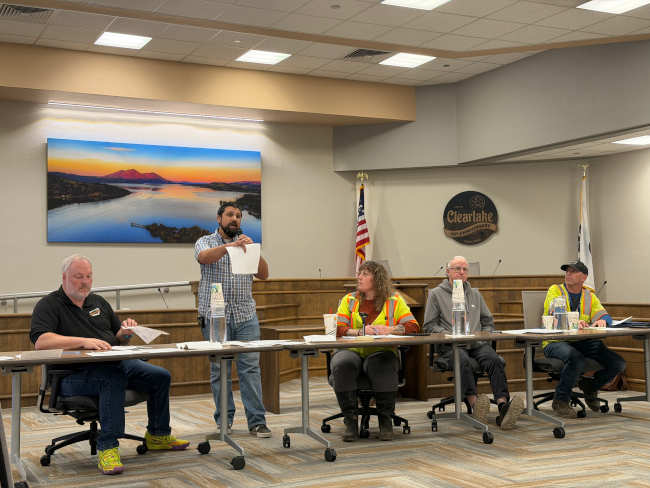
From left, Environmental Health Director Craig Wetherbee, Supervisor Bruno Sabatier, Lake County Special Districts Customer Service Supervisor Lori Baca, Public Health Officer Dr. Robert Bernstein and Special Districts staffer Albert Coats at a town hall for the Robin Lane sewer spill on Wednesday, Jan. 14, 2026, in Clearlake, California. Photo by Lingzi Chen/Lake County News.

CLEARLAKE, Calif. — County officials updated community members on Wednesday night about the response to the Sunday sewer system failure in Clearlake that has resulted in contaminated wells and led to new public health advice to temporarily relocate affected residents.

The town hall was called Wednesday afternoon, with public notifications going out less than two hours beforehand, as officials sought to share new details about the Robin Lane sewer spill.

The incident began on Sunday morning when a 16-inch force main operated by the Lake County Sanitation District ruptured.

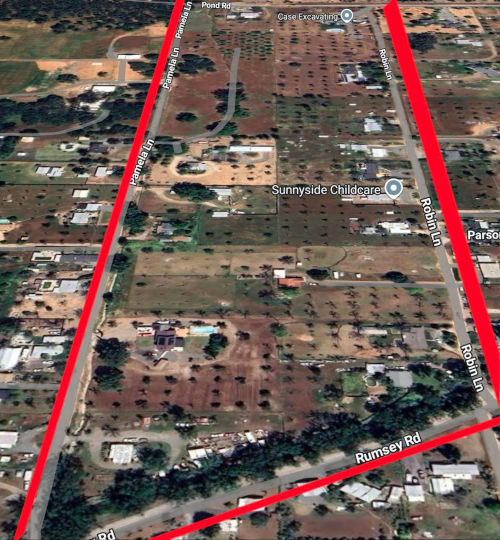
The spill has impacted 58 properties in the area south of Pond Road and north of Rumsey Road, east of Pamela Lane and west of Robin Lane.

The sewer system failure and a massive spillage have caused Lake County Special Districts to warn against using well water, as early tests have shown well contamination. 

That, in turn, has led to new relocation advice that came four days after Robin Lane was first flooded with raw sewage.

Lake County Public Health Officer Dr. Robert Bernstein urged residents in the spill area to temporarily relocate out of concern for health impacts.

While the spill was finally stopped following repairs on Monday night, the situation and its developing impacts left county officials on Wednesday with some answers but still more questions.

One of the questions — posed by a community member — resulted in an answer from Environmental Health Director Craig Wetherbee that, as he acknowledged, got everyone’s attention.

The question was whether or not it was possible that the aquifer could be permanently impacted.

“That is entirely possible, that this aquifer does not recover in any safe manner,” Wetherbee said, but he added that it was highly unlikely and would require extraordinary circumstances.

“I have every expectation that even if this contamination continues for a long period, that it will recover over time. I cannot say what that time would be,” he said, explaining that as new water infuses into the system and pushes out old water it naturally replenishes itself.

“But there are circumstances where this could be a permanent or long-term problem. Again, that is a highly unlikely event,” he said.

Town hall called Wednesday afternoon

The hour-and-a-half-long town hall in the council chambers at Clearlake City Hall was called Wednesday afternoon, with a Nixle going out just after 4:30 p.m. The meeting started at 6 p.m.

Wetherbee told the full room of concerned residents that they were focusing on what they know.

“We know that this has not gone well and no amount of apologies is going to fix that,” he said, adding that their goal is to move forward.

Lori Baca, Lake County Special Districts’ customer service supervisor, said her agency was notified at around 7:30 a.m. Sunday there was sewage running down the street. When they showed up on scene, they realized a 16-inch force main that runs down Robin Lane was the starting point.

Crew members were on site right away to begin work, Baca said. That included putting out wattles and sandbags, and running pumping trucks for several days, with 10 companies called in from around the region.

That pumping went on around the clock for four days, she said.

They also had to call an out-of-area company to come and replace the damaged valve, which took longer than expected due to the company being on another job.

In order to do that repair, Baca said they had to turn on another valve by Safeway. That 10-inch valve failed, however, they were able to get a contractor there immediately and a new valve was installed on Monday evening. They were then able to turn it off and turn on the 16-inch valve.

Baca said the spill finally stopped at 9:55 p.m. Monday. 

A Google image with the spill area outlined in red. Graphic by Lingzi Chen/Lake County News.

Assistance for property owners

To help impacted property owners, the county has brought in an eight-unit shower trailer and a potable water station. 

Baca said she delivered water to as many residents as she could, and staff also went door to door to let people know about the availability of potable water and showers.

While the spill is over, Baca said they are continuing to pump out as much sewage as possible. 

The team has started with decontamination of ag lines so there is safe water for livestock and natural flora, she said.

Staff also will be coming out to do disinfection on hard surfaces and look at driveways, Baca said. 

“We’re not done,” Baca said. “You will still be seeing us out there.”

There also will continue to be around-the-clock monitoring. “We are trying our best. The best may not be the best,” Baca said.

They also have multiple water companies working with Environmental Health on water and well samples, she said.

Baca said they don’t yet know the size of the spill but when they do, that information will be released.

Wetherbee said Environmental Health is the agency responsible for making sure the cleanup is completed.

“The primary safety concern here is the contamination of the water wells,” said Wetherbee.

Some wells have been surrounded by sewage up to casing. Wetherbee said many of the wells in their area were developed well before modern standards — back as far as the 1930s and 1940s. New wells have sanitary seals.

Initial water testing reports for the first 15 samples focusing on Robin Lane have come back showing contamination, but Wetherbee said testing will continue for some time. Some wells will be tested at least twice, others will be tested more.

As of Wednesday, 75 samples had been taken, and that number is expected to double as testing continues on Thursday and Friday.

That testing will help them figure out if the impact is limited to the spill area or if it impacts the aquifer generally, Wetherbee said.

Public Health officer explains recommendations

Dr. Bernstein said residents who live in the area south of Pond Road, north of Rumsey Road, east of Pamela Lane and west of Robin Lane, and who rely on private drinking water wells are advised to temporarily relocate until their private wells are deemed safe by him.

He said affected residents may first ask their homeowners policy for temporary lodging coverage or, alternately, seek assistance from Lake County Special Districts.

Bernstein said relocation is recommended for residents with children under age 5, people over age 60, or those with health or immune system concerns.

Those choosing to remain in their homes are strongly advised to contact Lake County Special Districts to get a minimum amount of safe water, which he said is 60 gallons of water per person, per day, for all needs. All residents should take additional precautions to clean household items.

Supervisor Bruno Sabatier was apologetic in his approach to the public discussion.

“Our system upended your guys’ lives and I'm hating the situation that we’re all dealing with,” Sabatier said.

He told residents it may take some time to deal with the situation, noting that with fires they know how to respond, but that hasn’t been the case with a situation like this.

There were repeated questions throughout the meeting about whether the site of the force main break was the same as one that occurred about 20 years ago.

Baca confirmed there was a break in the area around that time frame. She said force mains are under pressure and so there is no way to check on their condition.

Wetherbee told the group that he is putting together a long-term plan — of one month or longer — to continuously monitor the area to better understand the nature of contamination and the nature of it.

“This is something that we’ll be looking at for some time,” he said.

Email Elizabeth Larson at This email address is being protected from spambots. You need JavaScript enabled to view it.. Follow her on Twitter, @ERLarson, and on Bluesky, @erlarson.bsky.social. Find Lake County News on the following platforms: Facebook, @LakeCoNews; X, @LakeCoNews; Threads, @lakeconews, and on Bluesky, @lakeconews.bsky.social. 

County and city officials spoke with community members after a town hall for the Robin Lane sewer spill on Wednesday, Jan. 14, 2026, in Clearlake, California. Photo by Lingzi Chen/Lake County News.


  • 62
  • 63
  • 64
  • 65
  • 66
  • 67
  • 68
  • 69
  • 70
  • 71

Community

  • Sheriff’s Activities League and Clearlake Bassmasters offer youth fishing clinic

  • City Nature Challenge takes place April 24 to 27

Public Safety

  • Lakeport Police logs: Wednesday, Feb. 11

  • Lakeport Police logs: Tuesday, Feb. 10

Education

  • Ramos measure requiring school officer training in use of anti-opioid drug moves forward

  • Lake County Chapter of CWA announces annual scholarships 

Health

  • California ranks 24th in America’s Health Rankings Annual Report from United Health Foundation

  • Healthy blood donors especially vital during active flu season

Business

  • Employment law summit takes place March 9

  • Two Lake County Mediacom employees earn company’s top service awards

Obituaries

  • Terry Knight

  • Ellen Thomas

Opinion & Letters

  • Who should pay for AI’s power? Not California ratepayers

  • Crandell: Supporting nephew for reelection in supervisorial race

Veterans

  • State honors fallen chief warrant officer killed in conflict in Iran

  • CalVet and CSU Long Beach team up to improve data collection related to veteran suicides

Recreation

  • April Audubon program will show how volunteers can help monitor local osprey nests

  • First guided nature walk of spring at Anderson Marsh State Historic Park April 11

  • Second Saturday guided nature walks continue at Anderson Marsh State Historic Park

  • Wet weather trail closure in effect on Upper Lake Ranger District

Religion

  • Kelseyville Presbyterian Church plans Easter service

  • Easter ‘Sonrise’ Service returns to Xabatin Community Park

Arts & Life

  • ‘CIA’ delves into the shadowy world of an espionage thriller

  • ‘War Machine’ shifts the battlefield into uncharted territory

Government & Politics

  • Lake County Democratic Central Committee endorses Falkenberg

  • Crandell launches reelection campaign plans March 15 event

Legals

  • April 23 hearing on Lake Coco Farms Major Use Permit

  • NOTICE OF 30-DAY PUBLIC COMMENT PERIOD & NOTICE OF PUBLIC HEARING

How to resolve AdBlock issue?
Refresh this page