How to resolve AdBlock issue?
Refresh this page
Lake County News,California
  • Home
    • Registration Form
  • News
    • Education
    • Veterans
    • Community
      • Obituaries
      • Letters
      • Commentary
    • Police Logs
    • Business
    • Recreation
    • Health
    • Religion
    • Legals
    • Arts & Life
    • Regional
  • Calendar
  • Contact us
    • FAQs
    • Phones, E-Mail
    • Subscribe
  • Advertise Here
  • Login
How to resolve AdBlock issue?
Refresh this page

News

FDA claims on COVID-19 vaccine safety are unsupported by reliable data – and could severely hinder vaccine access

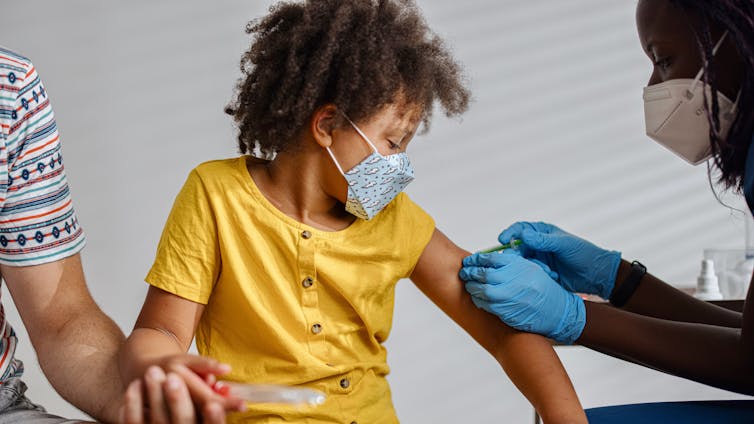
The FDA has provided no evidence that children died because of receiving a COVID-19 vaccine. Anchiy/E+ via Getty Images

The Food and Drug Administration is seeking to drastically change procedures for testing vaccine safety and approving vaccines, based on unproven claims that mRNA-based COVID-19 vaccines caused the death of at least 10 children.

The agency detailed its plans in a memo released to staff on Nov. 28, 2025, which was obtained by several news outlets and published by The Washington Post.

Citing an internal, unpublished review, the memo, written by the agency’s top vaccine regulator, Vinay Prasad, attributes the children’s deaths to myocarditis, an inflammation of the heart muscle. And it says the deaths were reported to the Vaccine Adverse Event Reporting System, or VAERS, but provides no evidence that the vaccines caused the deaths.

The death of children due to an unsafe vaccine is a serious allegation. I am a pediatric cardiologist who has studied the link between COVID-19 vaccines and heart-related side effects such as myocarditis in children. To my knowledge, studies to date have shown such side effects are rare, and severe outcomes even more so. However, I am open to new evidence that could change my mind.

But without sufficient justification and solid evidence, restricting access to an approved vaccine and changing well-established procedures for testing vaccines would carry serious consequences. These moves would limit access for patients, create roadblocks for companies and worsen distrust in vaccines and public health.

In my view, it’s important for people reading about these FDA actions to understand how the evidence on a vaccine’s safety is generally assessed.

Determining cause of death

The FDA memo claims that the deaths of these children were directly related to receiving a COVID-19 immunization.

From my perspective as a clinician, it is awful that any child should die from a routine vaccination.

However, health professionals like me owe it to the public to uphold the highest possible standards in investigating why these deaths occurred. If the FDA has evidence demonstrating something that national health agencies worldwide have missed – widespread child deaths due to myocarditis caused by the COVID-19 vaccine – I don’t doubt that even the most pro-vaccine physician will listen. So far, however, no such evidence has been presented.

While a death logged in VAERS is a starting point, on its own it is insufficient to conclude whether a vaccine caused the death or other medical causes were to blame.

To demonstrate a causal link, FDA staff and physicians must align the VAERS report with physicians’ assessments of the patient, as well as data from other sources for monitoring vaccine safety. These include PRISM, which logs insurance claims data, and the Vaccine Safety Datalink, which tracks safety signals in electronic medical records.

It’s known that most deaths logged only in VAERS of children who recently received vaccines have been incorrectly attributed to the vaccines – either by accident or in some cases on purpose by anti-vaccine activists.

Heart-related side effects of COVID-19 vaccines

In his Substack and Twitter accounts, Prasad has said that he believes the rate of severe cardiac side effects after COVID-19 vaccination is severely underestimated and that the vaccines should be restricted far more than they currently are.

In a July 2025 presentation, Prasad quoted a risk of 27 cases per million of myocarditis in young men who received the COVID-19 vaccine. A 2024 review suggested that number was a bit lower – about 20 cases out of 1 million people. But that same study found that unvaccinated people had greater risk of heart problems after a COVID-19 infection than vaccinated people. In a different study, people who got myocarditis after a COVID-19 vaccination developed fewer complications than people who got myocarditis after a COVID-19 infection.

Existing vaccine safety infrastructure in the U.S. successfully identifies dangers posed by vaccines – and did so during the COVID-19 pandemic. Today, most COVID-19 vaccines in the U.S. rely on mRNA technology. But as vaccines were first emerging during the COVID-19 pandemic, two pharmaceutical companies, Janssen and AstraZeneca, rolled out a vaccine that used a different technology, called a viral vector. This type of vaccine had a very rare but genuine safety problem that was detected.

A report in VAERS is at most a first step to determining whether a vaccine caused harm.

VAERS, the Vaccine Safety Datalink, clinical investigators in the U.S. and their European counterparts detected that these vaccines did turn out to cause blood clotting. In April 2021, the FDA formally recommended pausing their use, and they were later pulled from the market.

Death due to myocarditis from COVID-19 vaccination is exceedingly rare. Demonstrating that it occurred requires proof that the person had myocarditis, evidence that no other reasonable cause of death was present, and the absence of any additional cause of myocarditis. These factors cannot be determined from VAERS data, however – and to date, the FDA has presented no other relevant data.

A problematic vision for future vaccine approvals

Currently, vaccines are tested both by seeing how well they prevent disease and by how well they generate antibodies, which are the molecules that help your body fight viruses and bacteria.

Some vaccines, such as the COVID-19 vaccine and the influenza vaccine, need to be updated based on new strains. The FDA generally approves these updates based on how well the new versions generate antibodies. Since the previous generation of vaccines was already shown to prevent infection, if the new version can generate antibodies like the previous one, researchers assume its ability to prevent infection is comparable too. Later studies can then test how well the vaccines prevent severe disease and hospitalization.

The FDA memo says this approach is insufficient and instead argues for replacing such studies with many more placebo-controlled trials – not just for COVID-19 vaccines but also for widely used influenza and pneumonia vaccines.

That may seem reasonable theoretically. In practice, however, it is not realistic.

Today’s influenza vaccines must be changed every season to reflect mutations to the virus. If the FDA were to require new placebo-controlled trials every year, the vaccine being tested would become obsolete by the time it is approved. This would be a massive waste of time and resources.

A pharmacy with a sign advertising flu shots
Influenza vaccines must be updated for every flu season. Jacob Wackerhausen/iStock via Getty Images Plus

Also, detecting vaccine-related myocarditis at the low rate at which it occurs would have required clinical trials many times larger than the ones that were done to approve COVID-19 mRNA vaccines. This would have cost at least millions of dollars more, and the delay in rolling out vaccines would have also cost lives.

Placebo-controlled trials would require comparing people who receive the updated vaccine with people who remain unvaccinated. When an older version of the vaccine is already available, this means purposefully asking people to forgo that vaccine and risk infection for the sake of the trial, a practice that is widely considered unethical. Current scientific practice is that only a brand-new vaccine may be compared against placebo.

While suspected vaccine deaths should absolutely be investigated, stopping a vaccine for insufficient reasons can lead to a significant drop in public confidence. That’s why it’s essential to thoroughly and transparently investigate any claims that a vaccine causes harm.

Vaccine vs illness

To accurately gauge a vaccine’s risks, it is also crucial to compare its side effects with the effects of the illness it prevents.

For COVID-19, data consistently shows that the disease is clearly more dangerous. From Aug. 1, 2021, to July 31, 2022, more than 800 children in the U.S. died due to COVID-19, but very few deaths from COVID-19 vaccines in children have been been verified worldwide. What’s more, the disease causes many more heart-related side effects than the vaccine does.

Meanwhile, extensive evidence shows that COVID-19 vaccination reduces the risk of hospitalization by more than 70% and the risk of severe illness in adolescent children by 79%. Studies also show it dramatically reduces their risk of developing long COVID, a condition in which symptoms such as extreme fatigue or weakness persist more than three months after a COVID-19 infection.

Reporting only the vaccines’ risks, and not their benefits, shows just a small part of the picture.The Conversation

Frank Han, Assistant Professor of Pediatric Cardiology, University of Illinois Chicago

This article is republished from The Conversation under a Creative Commons license. Read the original article.

Cobb man arrested for Tuesday evening stabbing

LAKE COUNTY, Calif. — The Lake County Sheriff’s Office said it has arrested a Cobb man for stabbing another man during a fight on Tuesday evening.

David Clark, 42, was taken into custody for the incident, according to Lauren Berlinn, the sheriff’s public information office.

At 6:30 p.m. Tuesday, sheriff’s deputies responded to a report of a stabbing in the Middletown area, Berlinn said.

Berlinn said the initial information incorrectly indicated that the incident may have occurred at Middletown High School. 

However, deputies quickly confirmed this was not the case. The incident did not occur on school grounds and was not associated with any school activities, Berlinn said.

At the time deputies arrived, Berlinn said the injured individual was located across the street at a nearby gas station, where he was waiting for medical assistance.

“This was an isolated incident, and there is no ongoing threat to students, school staff or the broader community,” Berlinn’s report said.

Berlinn said the investigation determined that the stabbing occurred earlier at Trailside Park in Middletown. 

Witnesses reported that Clark and another adult male were involved in a physical altercation at the park, during which Clark stabbed the victim.

After the incident, the victim left the park and drove to the gas station, where he was evaluated by paramedics before being transported to an out-of-county hospital for treatment, Berlinn said.

Deputies later located Clark at his residence, where he was taken into custody without incident, according to Berlinn’s report.

Berlinn said deputies arrested Clark on charges related to attempted murder and assault with a deadly weapon.

Elections office certifies final election results; Lake County votes against Prop 50 in narrow margin

LAKE COUNTY, Calif. — The Lake County Registrar of Voters Office said Tuesday that it has certified the final election results for the special November statewide election to decide on Proposition 50.

Prop 50 implements a plan for congressional redistricting that’s expected to result in several additional seats for Democrats in Congress. It is a response to a redistricting action taken in Texas to bolster Republican seats.

Statewide, Prop 50 won with 64.4%, or 7,452,222 yes votes, to 35.6%, or 4,116,452 no votes, according to the Secretary of State’s Office.

In Lake County, while the measure had led after the initial count, it ultimately lost locally on a slim margin, with the no votes only leading by 49 ballots.

Lake County’s final count was no votes with 50.1%, or 10,399 ballots, to 49.9%, or 10,350 ballots for those voting yes.

Overall, Lake County’s voter turnout for the special election was 53.71%. Approximately 20,763 of the 38,660 registered voters participated. 

The Registrar’s Office said the election results will be presented to the Lake County Board of Supervisors at its Dec. 9 meeting, at which time the board is expected to accept the certified results.

The Secretary of State’s Office plans to certify the statewide results on Dec. 12.

Email Elizabeth Larson at This email address is being protected from spambots. You need JavaScript enabled to view it.. Follow her on Twitter, @ERLarson, and on Bluesky, @erlarson.bsky.social. Find Lake County News on the following platforms: Facebook, @LakeCoNews; X, @LakeCoNews; Threads, @lakeconews, and on Bluesky, @lakeconews.bsky.social. 

CHP releases more details on Sunday crash involving underage driver

LAKE COUNTY, Calif. — The California Highway Patrol has released additional information on a Sunday night crash involving an unlicensed 13-year-old driver that injured her and most of her five passengers.

The CHP’s Clear Lake Area office said the crash occurred at 10:13 p.m. Sunday at 2450 Hill Road in north Lakeport.

The report said the juvenile driver, who is from Upper Lake, was driving a 2008 Volkswagen Jetta southbound on Hill Road at a high rate of speed, with four minor passengers in the backseat and a 20-year-old passenger, Alexis Miller of Willows, the vehicle’s owner, in the right front seat. All are reported to be related.

For reasons that the CHP said are so far unknown, the minor driver failed to see the yield sign as well as the upcoming transition and turn in the roadway, and didn’t properly slow to negotiate the turn.  

The CHP said the Jetta traveled across Hill Road where it hit a telephone pole, continued through a fence and ultimately hit a tree where it came to rest.  

None of the vehicle’s occupants were properly restrained in seat belts, and several sustained major injuries, the CHP said.

Officers gave field sobriety tests and it was determined that alcohol impairment was not a factor in the crash, according to the report.

Both the driver and Miller as well as two other passengers suffered major injuries in the crash, the CHP said.

The driver sustained a broken left ankle and was taken to Adventist Health Clear Lake Hospital for treatment, the CHP said, while Miller had a broken right arm and left leg along with facial lacerations and was taken to Sutter Lakeside Hospital.

The CHP said the 17-year-old passenger from Lakeport had lacerations to his face and the 12-year-old male from Lucerne had a broken right leg. Both were assessed with major injuries and taken to Sutter Lakeside Hospital.

A 15-year-old male from Upper Lake was uninjured and a 16-year-old, whose gender was not listed, had a bloody nose and sought their own medical aid, the report said.

Radio reports indicated that the crash victims could not be flown out of the county due to weather.

Reports from the scene stated a dog was injured and transported to a veterinary clinic for treatment. 

Due to most of the crash victims being underage, the CHP said it was limited in the information it could release.

The CHP said further investigation is ongoing into potential charges against the driver as well as Miller. 

Officer Blake Bartlett is leading the crash investigation.

Email Elizabeth Larson at This email address is being protected from spambots. You need JavaScript enabled to view it.. Follow her on Twitter, @ERLarson, and on Bluesky, @erlarson.bsky.social. Find Lake County News on the following platforms: Facebook, @LakeCoNews; X, @LakeCoNews; Threads, @lakeconews, and on Bluesky, @lakeconews.bsky.social. 

California awards $140 million in road safety projects

The California Office of Traffic Safety, or OTS, is awarding over $140 million in federal funding for 495 grants to improve bicycle and pedestrian safety and provide critical education and enforcement programs that serve the traffic safety needs of Californians.

“We’re reshaping traffic safety in California. Our investments are making our roads safer, our communities stronger, and our infrastructure more resilient. While there’s still more work to do, we’re doing it together, up and down the state, making smart, targeted improvements that will protect Californians for years to come,” said Gov. Gavin Newsom.

This funding adds to the $14.6 billion in dedicated state funding for the state’s transportation infrastructure. 

Recently, through a joint initiative on statewide policy on road safety by the California State Transportation Agency, or CalSTA, and California Health and Human Services Agency, the state set an interim goal to reduce the number of people killed and seriously injured in traffic crashes by 30% by 2035. 

This targeted, prevention-first approach complements nearly $5 billion in investments specific to Gov. Newsom’s build more, faster agenda, delivering infrastructure upgrades that improve roads, expand safe transportation options and continue to support the safe movement of people throughout the state. See projects in your community at build.ca.gov. 

“Thanks to Gov. Newsom’s unwavering leadership, California is making bold, data-driven investments that prioritize safety and save lives,” said CalSTA Secretary Toks Omishakin. “From equipping first responders with life-saving tools like the ‘Jaws of Life’ and digital alert technology, to supporting groundbreaking emergency care innovations like UCLA’s prehospital blood transfusion pilot, these historic grants reflect our commitment to building a transportation system where every person — whether walking, biking or driving — can travel safely in every community.” 

The OTS funds hundreds of projects throughout the state in the areas of alcohol and drug-impaired driving, distracted driving, seat belts and child safety seats, bicycle and pedestrian safety, emergency medical services, police traffic services and traffic records. 

Funding also supports the OTS “Go Safely, California” program, a statewide public education and awareness initiative that drives forward a positive road safety culture. 

“Every person deserves to be safe walking, biking, or driving,” said OTS Director Stephanie Dougherty. “The OTS is committed to saving lives through a collective set of actions – public education, enforcement targeted at dangerous driving behaviors and establishing a strong road safety culture that empowers people to put safety first – that will reduce the number of people killed on our roads.” 

As part of the traffic safety funding, the OTS is awarding nearly $22.3 million to the California Highway Patrol to support 20 projects that span both statewide initiatives and localized efforts. 

These grants aim to reduce traffic fatalities and injuries through targeted outreach, enforcement, and community engagement programs tailored to the unique needs of communities across California.

“These grants are a vital investment in the safety of every Californian who uses our roads. From educating young drivers to preventing impaired and distracted driving, this funding allows our officers to engage directly with communities and take meaningful action to reduce crashes and save lives,” said CHP Commissioner Sean Duryee.

The CHP statewide initiatives include:

Reduce Drunk Driving, $6 million: Funds DUI checkpoints, saturation patrols, and public education campaigns, including participation in national enforcement efforts.

Speed Prevention, Education and Enforcement Deterrence, $2.2 million: Supports enforcement and outreach to reduce crashes caused by speeding and aggressive driving.

Teen TeImpaired Driving Education, $2 million: Expands enforcement and education efforts, including the Every 15 Minutes program, to prevent impaired driving among teens.

Sideshow, Takeover, Racing, Education, and Enforcement Taskforce, $1.7 million: Aims to reduce illegal street racing and sideshows through public education, training, and enforcement.

Bicycle and Pedestrian Safety, Education, Enforcement and Awareness Program, $1.25 million: Supports enhanced enforcement operations and public awareness campaigns to improve pedestrian safety, especially in school zones and at bus stops.

Teen Distracted Driving, $900,000: Partners with Impact Teen Drivers (ITD) to raise awareness about distracted driving and promote safe habits among teens.

California Restraint Safety Education and Training, $850,000: Provides child safety seat inspections, distributions, and training for CHP and allied agencies.

Get Educated and Ride Safe, $650,000: Enhances enforcement in high-risk areas for motorcycle crashes and promotes helmet use and safe riding practices.

Start Smart Teen Driver Safety Education, $575,000: Educates newly licensed teen drivers and their parents on safe driving habits through free, officer-led classes at CHP offices.

El Protector, $450,000: Provides Spanish-language traffic safety education at schools, businesses, and community events to reduce crashes and save lives.

Native-Tribal Traffic Education $425,000: Promotes traffic safety in tribal communities through outreach and education.

Adult Distracted Driving $350,000: Provides education and enforcement to reduce distracted driving among adults, including free interactive classes and community outreach.

Keeping Everyone Safe, $225,000: Helps older drivers stay safe and confident behind the wheel.

Among other projects funded Tuesday:

$54 million for law enforcement agencies: Helps more than 200 law enforcement agencies focus on the most dangerous driving behaviors such as speeding, and distracted and impaired driving, as well as to support education programs focused on bicycle and pedestrian safety.

$13 million for Bicycle and Pedestrian Safety Programs: Funds walking and biking safety assessments and trainings to implement infrastructure solutions that improve active transportation, while also funding Safe Routes to Schools activities, classroom education, community events, bicycle trainings, and temporary road demonstrations focused on overall biking and walking safety.

$8.38 million for Car Seat Safety Programs: Supports more than three dozen county health departments, fire departments, law enforcement agencies, non-profits, and other organizations to provide free child safety seat education and installation assistance, child passenger safety technician training and certification, and no-cost child safety seats to families in need.

Nearly $3 million for Emergency Medical Services: Funds extrication equipment, also known as the “Jaws of Life,” for nearly three dozen fire departments, that allow first responders to help and treat crash victims faster. Investments also include the use of e-digital alert technology by two fire departments and the Napa Police Department. Through phone-based apps, drivers are warned of emergency vehicles on the road so they can move over a lane or slow down when approaching first responders and other vehicles on the side of the road.

$921,895 for the University of California, Los Angeles (UCLA) Department of Emergency Medicine: Funds are supporting a new prehospital blood transfusion pilot program (LA-DROP) in collaboration with the UCLA Department of Emergency Medicine for data collection, research, and collaboration. Additionally, the funding evaluates a trauma training mobile application and analyzes crash care data to identify hotspots and post-crash care gaps in Los Angeles County.

$900,000 for the Southern California Association of Governments (SCAG): Funds provide the development of a real-time and predictive traffic safety data analysis platform to assess safety risks and appropriate traffic safety measures to address them. 

$750,000 for the California Department of Transportation (Caltrans): Funds help the department’s ongoing work to develop a GenAI tool to identify corridors and intersections where bicycle and pedestrian safety improvements could be added and monitored.  

$429,500 for California, Berkeley Safe Transportation Research and Education Center (SafeTREC) and California Department of Public Health (CDPH): Funds the initial phase of a California Safe System Leadership Institute for California communities that have committed to the Safe System Approach (SSA), a more proactive, holistic approach to road safety. Additionally, funds support a CDPH pilot program to train local health departments on SSA implementation in their work.

$283,000 for Amador, Calaveras County Public Health Departments: Funds assist a comprehensive traffic safety program in two rural counties in the foothills of the Sierra Nevada. Projects will include safety trainings and equipment for youth at Head Start programs, on-foot pedestrian safety trainings for older adults at senior centers, and free child safety seats and education to parents/guardians in need.

The grant programs run until Sept. 30, 2026.

Planning life after high school isn’t easy – 4 tips to help students and families navigate the process

While many high school students think mostly about four-year college opportunities, some students might be less certain about what is best. iStock/Getty Images Plus

Many high school seniors are now focusing on what they will do once they graduate – or how they don’t at all know what is to come.

Families trying to guide and support these students at the juncture of a major life transition likely also feel nervous about the open-ended possibilities, from starting at a standard four-year college to not attending college at all.

I am a mental health counselor and psychology professor.

Here are four tips to help make deciding what comes after high school a little easier for everyone involved:

1. Shadow someone with a job you might want

I have worked with many college students who are interested in a particular career path, but are not familiar with the job’s day-to-day workings.

A parent, teacher or another adult in this student’s life could connect them with someone they shadow at work, even for a day, so the student can better understand what the job entails.

High school students may also find that interviewing someone who works in a particular field is another helpful way to narrow down career path options, or finalize their college decisions.

Research published in 2025 shows that high school students who complete an internship are better able to decide whether certain careers are a good fit for them.

2. Look at the numbers

Full-time students can pay anywhere from about US$4,000 for in-state tuition at a public state school per semester to just shy of $50,000 per semester at a private college or university. The average annual cost of tuition alone at a public college or university in 2025 is $10,340, while the average cost of a private school is $39,307.

Tuition continues to rise, though the rate of growth has slowed in the past few years.

About 56% of 2024 college graduates had taken out loans to pay for college.

Concerns about affording college often come up with clients who are deciding on whether or not to get a degree. Research has shown that financial stress and debt load are leading to an increase in students dropping out of college.

It can be helpful for some students to look at tuition costs and project what their monthly student loan payments would be like after graduation, given the expected salary range in particular careers. Financial planning could also help students consider the benefits and drawbacks of public, private, community colleges or vocational schools.

Even with planning, there is no guarantee that students will be able to get a job in their desired field, or quickly earn what they hope to make. No matter how prepared students might be, they should recognize that there are still factors outside their control.

A blue circular maze shows people from above walking on different paths.
No matter what route graduating high school students take, it’s often a stressful period of time. Klaus Vedfelt/Royalty-Free

3. Normalize other kinds of schools

I have found that some students feel they should go to a four-year college right after they graduate because it is what their families expect. Some students and parents see a four-year college as more prestigious than a two-year program, and believe it is more valuable in terms of long-term career growth.

That isn’t the right fit for everyone, though.

Enrollment at trade-focused schools increased almost 20% from the spring of 2020 through 2025, and now comprises 19.4% of public two-year college enrollment.

Going to a trade school or seeking a two-year associate’s degree can put students on a direct path to get a job in a technical area, such as becoming a registered nurse or electrician.

But there are also reasons for students to think carefully about trade schools.

In some cases, trade schools are for-profit institutions and have been subjected to federal investigation for wrongdoing. Some of these schools have been fined and forced to close.

Still, it is important for students to consider which path is personally best for them.

Research has shown that job satisfaction has a positive impact on mental health, and having a longer history with a career field leads to higher levels of job satisfaction.

4. Consider a gap year before shutting down the idea

One strategy that high school graduates have used in recent years is taking a year off between high school and college in order to better determine what is the right fit for a student. Approximately 2% to 3% of high school graduates take a gap year – typically before going on to enroll in college.

Some young people may travel during a gap year, volunteer, or get a job in their hometown.

Whatever the reason students take gap years, I have seen that the time off can be beneficial in certain situations. Taking a year off before starting college has also been shown to lead to better academic performance in college.The Conversation

Shannon Pickett, Professor of Psychology and Licensed Mental Health Counselor, Purdue Global, Purdue University

This article is republished from The Conversation under a Creative Commons license. Read the original article.

  • 92
  • 93
  • 94
  • 95
  • 96
  • 97
  • 98
  • 99
  • 100
  • 101

Community

  • Sheriff’s Activities League and Clearlake Bassmasters offer youth fishing clinic

  • City Nature Challenge takes place April 24 to 27

Public Safety

  • Lakeport Police logs: Wednesday, Feb. 11

  • Lakeport Police logs: Tuesday, Feb. 10

Education

  • Ramos measure requiring school officer training in use of anti-opioid drug moves forward

  • Lake County Chapter of CWA announces annual scholarships 

Health

  • California ranks 24th in America’s Health Rankings Annual Report from United Health Foundation

  • Healthy blood donors especially vital during active flu season

Business

  • Employment law summit takes place March 9

  • Two Lake County Mediacom employees earn company’s top service awards

Obituaries

  • Terry Knight

  • Ellen Thomas

Opinion & Letters

  • Who should pay for AI’s power? Not California ratepayers

  • Crandell: Supporting nephew for reelection in supervisorial race

Veterans

  • State honors fallen chief warrant officer killed in conflict in Iran

  • CalVet and CSU Long Beach team up to improve data collection related to veteran suicides

Recreation

  • April Audubon program will show how volunteers can help monitor local osprey nests

  • First guided nature walk of spring at Anderson Marsh State Historic Park April 11

  • Second Saturday guided nature walks continue at Anderson Marsh State Historic Park

  • Wet weather trail closure in effect on Upper Lake Ranger District

Religion

  • Kelseyville Presbyterian Church plans Easter service

  • Easter ‘Sonrise’ Service returns to Xabatin Community Park

Arts & Life

  • ‘CIA’ delves into the shadowy world of an espionage thriller

  • ‘War Machine’ shifts the battlefield into uncharted territory

Government & Politics

  • Lake County Democratic Central Committee endorses Falkenberg

  • Crandell launches reelection campaign plans March 15 event

Legals

  • April 23 hearing on Lake Coco Farms Major Use Permit

  • NOTICE OF 30-DAY PUBLIC COMMENT PERIOD & NOTICE OF PUBLIC HEARING

How to resolve AdBlock issue?
Refresh this page