How to resolve AdBlock issue?
Refresh this page
Lake County News,California
  • Home
    • Registration Form
  • News
    • Education
    • Veterans
    • Community
      • Obituaries
      • Letters
      • Commentary
    • Police Logs
    • Business
    • Recreation
    • Health
    • Religion
    • Legals
    • Arts & Life
    • Regional
  • Calendar
  • Contact us
    • FAQs
    • Phones, E-Mail
    • Subscribe
  • Advertise Here
  • Login
How to resolve AdBlock issue?
Refresh this page

News

New ‘Konocti Climb’ mountain run debuts Nov. 8; signups underway

KELSEYVILLE, Calif. — A new sporting event will put the spotlight on Lake County’s best-known mountain. 

The county of Lake announced the first-ever Konocti Climb, where runners and outdoor enthusiasts from across Lake County are gearing up for a 5K mountain run set for Saturday, Nov. 8, at 10 a.m. at Mt. Konocti County Park in Kelseyville.

“The Konocti Climb is more than just a race — it’s a celebration of our shared love for the outdoors and the natural beauty that makes Lake County so special,” said Lars Ewing, Public Services director. “This event brings together families, athletes, and community partners who all share a passion for health, nature and connection.”

This year’s run is made possible through generous financial support from Adventist Health Clear Lake, Sutter Lakeside Hospital, Homestake Mining Co. of California, Lake County Tribal Health and Flowers by Jackie, whose shared commitment to community wellness and active living helps bring this event to life. 

Organizers said this event would not be possible without the contributions of time and services from Kelseyville Unified School District, Kelseyville Fire Department, Lake County Recreation Agency, K-Corps, Lakeport Unified School District and the American Red Cross.

“As a health care organization, we’re proud to support community events that encourage physical activity and mental well-being,” said Don Smith, director of Well-Being at Adventist Health Clear Lake. “The Konocti Climb is a great way to inspire healthy living while connecting with the incredible natural environment that surrounds us.”

All registered participants will receive a t-shirt, snacks, water, and raffle entry on the day of the event. Directions and event signage will be clearly posted at Mt. Konocti County Park.

Participants can register by visiting www.rec.us/lake-county. Participation is limited to 150 runners, so early registration is encouraged.

Event organizers are also seeking volunteers to assist with traffic control, parking, course spotting, and registration. 

Those interested in volunteering are encouraged to contact the Lake County Public Services Department at 707-262-1618 for more information.

Pumpkins’ journey from ancient food staple to spicy fall obsession spans thousands of years

Pumpkin patch excursions have become a fall staple in many U.S. households. Creative Touch Imaging Ltd./NurPhoto via Getty Images

October in much of the U.S. brings cooler weather, vibrant fall colors and, of course, pumpkin-spiced everything. This is peak pumpkin season, with most of the American pumpkin crop harvested in October.

With the pumpkin spice craze fully underway, I find myself thinking more about pumpkins. As an extension specialist working at Oklahoma State University’s botanic garden, I educate the people pouring in to buy pumpkins at our annual sale about the plant’s storied history and its prominence today.

While people often picture pumpkins as bright orange, they actually come in a wide range of colors, including red, yellow, white, blue and even green. They vary in size and texture too: Some are smooth, others warty. They can even be miniature or giant.

The word “pumpkin” comes from the Greek word “peopon,” meaning “large melon.” Botanically, pumpkins are fruits because they contain seeds, and they belong to the squash family, Cucurbitaceae. This family also includes cucumbers, zucchini and gourds. Pumpkins are grown for many purposes: food, seasonal decorating, carving for Halloween and even giant pumpkin contests.

A crowd of people look at five large pumpkins lined up on small platforms
Some pumpkins can be over 1,000 pounds. Pumpkin-growing contests are common at county and state fairs. Joseph Prezioso/AFP via Getty Images

All 50 states produce some pumpkins, with Illinois harvesting the most. In 2023, Illinois grew 15,400 acres of pumpkins. The next largest amount was grown in Indiana, with about 6,500 acres.

Pumpkin yields vary each year, depending on the varieties grown and the growing conditions in each area. The top six pumpkin-producing states are California, Illinois, Indiana, Michigan, Pennsylvania and Washington.

Early pumpkin history

Pumpkins originated in Central and South America, ending up in North America as Native Americans migrated north and carried the seeds with them. The oldest pumpkin seeds discovered were found in Mexico and date back about 9,000 years.

Pumpkins were grown as a crop even before corn or beans, the other two sisters in a traditional Native American “three sisters” garden. The three sister crops – corn, beans and squash – are planted together, and each has a role in helping the others grow.

Native Americans planted corn in the spring, and once the plants were a few inches tall, they planted beans. The beans vine around the corn as it grows, giving them a natural trellis. Beans also have the ability to take nitrogen from the atmosphere, and with the help of bacteria they convert it into forms that plants can use, such as ammonia, for fertilizer.

After the beans started growing, it was time to plant squash, such as pumpkin. Squash leaves covered the ground, shading the soil and helping keep it moist. The giant leaves also helped reduce the number of weeds that would compete with the corn, bean and squash growth.

Every part of the pumpkin plant is edible, even the flowers. Some Native American groups would dry pumpkins’ tough outer shells, cut them into strips and weave them into mats.

Pumpkins were introduced to Europe from North America through the Columbian Exchange. Europeans found that the pumpkins grown in the New World were easier to grow and sweeter than the ones in 1600s England or France, likely due to the weather and soil conditions in the Americas.

A black and white illustration of a group of people loading pumpkins in a cart.
People have been harvesting pumpkin for centuries. This historical illustration from around 1893 shows the pumpkin harvest in Hungary. bildagentur-online/uig via Getty Images

Baking American pumpkins

Native Americans introduced early settlers to pumpkins, and the colonists eagerly incorporated them into their diet, even making pies with them.

Early settlers’ pumpkin pies were hollowed-out pumpkins filled with milk, honey and spices, cooked over an open fire or in hot ashes. Others followed English traditions, combining pumpkin and apple with sugar and spices between two crusts.

The custard-style pumpkin pie we know today first appeared in 1796 as part of the first cookbook written and published in the United States, “American Cookery,” by Amelia Simmons. There were actually two pumpkin pie recipes: one used mace, nutmeg and ginger, the other just allspice and ginger.

The pumpkin spice craze

Pumpkin spice as one mixed ingredient was sold beginning in the early 1930s for convenience. The spice mix typically includes a blend of cinnamon, nutmeg, ginger, allspice and cloves.

Pumpkins and pumpkin spice are now synonymous with fall in America. Pumpkin spice flavoring is used in candles, marshmallows, coffees, lotions, yogurts, pretzels, cookies, milk and many other products.

A white mug with a Starbucks logo, filled with foamy coffee and powdered cinnamon on top.
Starbucks’ pumpkin spice latte kicked off the craze thath put this seasonal flavor in high demand. Beata Zawrzel/NurPhoto via Getty Images

While pumpkin spice is available in one form or another all year long, sales of pumpkin-spiced products increase exponentially in the fall. The pumpkin spice craze is so popular that the start of the pumpkin spice season is a couple of months before the pumpkins themselves are even ready to harvest in October.

Pumpkin excursions

Americans continue to wholeheartedly embrace pumpkins today. Pumpkins in production are typically hand-harvested as soon as they mature, when the skins are hard enough to not be dented when you press it with your thumb.

Children often take field trips to pumpkin patches to pick their own. With the growing popularity of agritourism, many farmers are letting the customers go into the field and pick their own, getting more dollars per pumpkin than farmers could get by selling through the markets. Customer harvesting also reduces labor costs, produces immediate profits and builds community relationships.

In addition, farmers often combine the you-pick experience with other sources of income: corn mazes, hay rides, petting zoos and more. The customers get fresher fruit, enjoy a fun and educational activity and support the local economy.

This year you could get pumpkin spice flavors across the United States by late August, and the industry started promoting pumpkin spice season in July. Because fall has the right conditions for pumpkin picking, the season will keep its hold on pumpkin spice flavor, and consumers will continue to eagerly await its return each year.The Conversation

Shelley Mitchell, Senior Extension Specialist, Horticulture and Landscape Architecture, Oklahoma State University

This article is republished from The Conversation under a Creative Commons license. Read the original article.


Helping Paws: More new adoptable dogs

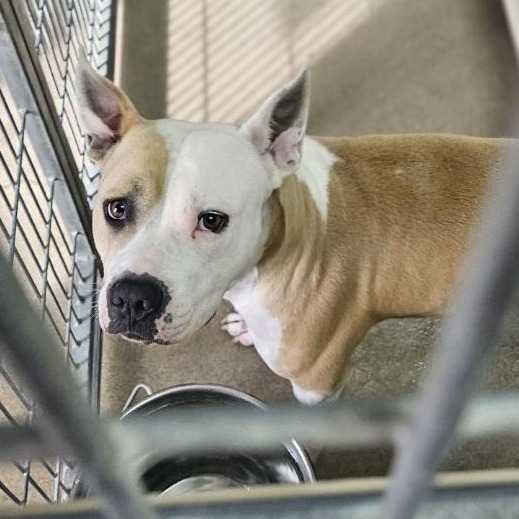
LAKE COUNTY, Calif. — Lake County Animal Care and Control is filled with dogs needing loving homes.

The dogs available for adoption this week include mixes of Australian shepherd, bulldog, cattle dog, chow, German shepherd, husky, Labrador Retriever, pit bull terrier, terrier and shepherd.

Dogs that are adopted from Lake County Animal Care and Control are either neutered or spayed, microchipped and, if old enough, given a rabies shot and county license before being released to their new owner. License fees do not apply to residents of the cities of Lakeport or Clearlake.

Those animals shown on this page at the Lake County Animal Care and Control shelter have been cleared for adoption.

Call Lake County Animal Care and Control at 707-263-0278 or visit the shelter online for information on visiting or adopting.

The shelter is located at 4949 Helbush in Lakeport.

Email Elizabeth Larson at This email address is being protected from spambots. You need JavaScript enabled to view it.. Follow her on Twitter, @ERLarson, and on Bluesky, @erlarson.bsky.social. Find Lake County News on the following platforms: Facebook, @LakeCoNews; X, @LakeCoNews; Threads, @lakeconews, and on Bluesky, @lakeconews.bsky.social. 

Kennel#34a Joey 's preview photo
Kennel#34a Joey

Kennel#18 Eva 's preview photo
Kennel#18 Eva

Kennel#7 Lulu's preview photo
Kennel#7 Lulu

 Kennel#9 Landon's preview photo
Kennel#9 Landon

 Kennel#2 Lee's preview photo
Kennel#2 Lee

Kennel#15 Scooby's preview photo
Kennel#15 Scooby

Kennel#24 Cowboy's preview photo
Kennel#24 Cowboy

 Kennel#3 Bandit's preview photo
Kennel#3 Bandit

Kennel#21 Winston's preview photo
Kennel#21 Winston

Kennel#28(Tessa)'s preview photo
Kennel#28(Tessa)

Kenel#13 Nina's preview photo
Kenel#13 Nina
 

Kennel#26 Blair's preview photo
Kennel#26 Blair

Kennel#4 Amore's preview photo
Kennel#4 Amore

Kennel#22 Azula's preview photo
Kennel#22 Azula

Kennel#6 Athena's preview photo
Kennel#6 Athena

Kennel#17 Trina's preview photo
Kennel#17 Trina

Kennel#31 Bear's preview photo
Kennel#31 Bear

Kennel#10a Phoenix's preview photo
Kennel#10a Phoenix

Kennel#10b Dallas's preview photo
Kennel#10b Dallas

Kennel#10c Paris's preview photo
Kennel#10c Paris

Kennel#32 (Bluey)'s preview photo
Kennel#32 (Bluey)

Kennel#33 (Oreo)'s preview photo
Kennel#33 (Oreo)

Kennel#12 Kora's preview photo
Kennel#12 Kora

Kennel#30a King's preview photo
Kennel#30a King

Kennel#30b Rex's preview photo
Kennel#30b Rex


Kennel#27 Betty's preview photo
Kennel#27 Betty
 
Kennel#25 Murphey's preview photo
Kennel#25 Murphey

Kennel#20 Duke's preview photo
Kennel#20 Duke

Kennel#29 Judy's preview photo
Kennel#29 Judy
 
Kennel#14's preview photo
Kennel#14

Kennel#16's preview photo
Kennel#16

Kennel#19's preview photo
Kennel#19

Kennel#5's preview photo
Kennel#5

Space News: Office of Space Commerce faces an uncertain future amid budget cuts and new oversight

The OSC advocates for commercial activities in space, including commercial satellite launches. AP Photo/John Raoux

When I imagine the future of space commerce, the first image that comes to mind is a farmer’s market on the International Space Station. This doesn’t exist yet, but space commerce is a growing industry. The Space Foundation, a nonprofit organization for education and advocacy of space, estimates that the global space economy rose to US$613 billion in 2024, up nearly 8% from 2023, and 250 times larger than all business at farmer’s markets in the United States. This number includes launch vehicles, satellite hardware, and services provided by these space-based assets, such as satellite phone or internet connection.

Companies involved in spaceflight have been around since the start of the Space Age. By the 1980s, corporate space activity was gaining traction. President Ronald Reagan saw the need for a federal agency to oversee and guide this industry and created the Office of Space Commerce, or OSC.

The logo of the OSC, which is circular and has three stars and nine black and white stripes.
The Office of Space Commerce is under the National Oceanic and Atmospheric Administration. Office of Space Commerce − National Oceanic and Atmospheric Administration

So, what exactly does this office do and why is it important?

As a space scientist, I am interested in how the U.S. regulates commercial activities in space. In addition, I teach a course on space policy. In class, we talk about the OSC and its role in the wider regulatory landscape affecting commercial use of outer space.

The OSC’s focus areas

The Office of Space Commerce, an office of about 50 people, exists within the Department of Commerce’s National Oceanic and Atmospheric Administration. To paraphrase its mission statement, its chief purpose is to enable a robust U.S. commercial interest in outer space.

OSC has three main focus areas. First, it is the office responsible for licensing and monitoring how private U.S. companies collect and distribute orbit-based images of Earth. There are many companies launching satellites with special cameras to look back down at the Earth these days. Companies offer a variety of data products and services from such imagery – for instance, to improve agricultural land use.

A second primary job of OSC is space advocacy. OSC works with the other U.S. government agencies that also have jurisdiction over commercial use of outer space to make the regulatory environment easier. This includes working with the Federal Aviation Administration on launch licensing, the Federal Communications Commission on radio wavelength usage and the Environmental Protection Agency on rules about the hazardous chemicals in rocket fuel.

This job also includes coordinating with other countries that allow companies to launch satellites, collect data in orbit and offer space-based services.

In 2024, for example, the OSC helped revise the U.S. Export Administration Regulations, one of the main documents restricting the shipping of advanced technologies out of the country. This change removed some limitations, allowing American companies to export certain types of spacecraft to three countries: Australia, Canada and the United Kingdom.

The OSC also coordinates commercial satellites’ flight paths in near-Earth space, which is its third and largest function. The Department of Defense keeps track of thousands of objects in outer space and issues alerts when the probability of a collision gets high. In 2018, President Donald Trump issued Space Policy Directive-3, which included tasking OSC to take this role over for nongovernment satellites – that is, those owned by companies, not NASA or the military. The Department od Defense wants out of the job of traffic management involving privately owned satellites, and Trump’s directive in 2018 started the process of handing off this task to OSC.

A rocket launching from a structure, with a plume of smoke beneath it.
When companies launch satellites into orbit, as on this SpaceX Falcon 9 rocket, the OSC helps manage the satellites’ flight paths in orbit to avoid collisions. AP Photo/John Raoux

To prevent satellites from colliding, OSC has been developing the traffic coordination system for space, known as TraCSS. It went into beta testing in 2024 and has some of the companies with the largest commercial constellations – such as SpaceX’s Starlink – participating. Progress on this has been slower than anticipated, though, and an audit in 2024 revealed that the plan is way behind schedule and perhaps still years away.

Elevating OSC

Deep in the text of Trump’s Aug. 13, 2025, executive order called Enabling Competition in the Commercial Space Industry, there’s a directive to elevate OSC to report directly to the office of the secretary of commerce. This would make OSC equivalent to its current overseer, NOAA, with respect to importance and priority within the Department of Commerce. It would give OSC higher stature in setting more of the rules regarding commercial use of space, and it would make space commerce more visible across the broader economy.

So, why did Trump include this line about elevating OSC in his Aug. 13 executive order?

An astronaut pointing a camera out a circular window in the International Space Station at a
European Space Agency astronaut Alexander Gerst, Expedition 41 flight engineer, uses a still camera at a window in the cupola of the International Space Station as the SpaceX Dragon commercial cargo craft approaches the station on Sept. 23, 2014. Alex Gerst/Johnson Space Center

Back in 2018, Trump issued Space Policy Directive-2 during his first term, which included a task to create the Space Policy Advancing Commerce Enterprise Administration, or SPACE. SPACE would have been an entity reporting directly to the secretary of commerce. While it was proposed as a bill in the House of Representatives later that year, it never became law.

The Aug. 13 executive order essentially directs the Department of Commerce to make this move now. Should the secretary of commerce enact the order, it would bypass the role of Congress in promoting OSC. The 60-day window that Trump placed in the executive order for making this change has closed, but with the government shutdown it is unclear whether the elevation of OSC might still occur.

Troubles for OSC

While all of this sounds good for promoting space as a place for commercial activity, OSC has been under stress in 2025. In February, the Department of Government Efficiency targeted NOAA for cuts, including firing eight people from OSC. Because about half of the people working in OSC are contractors, this represented a 30% reduction of force.

The dome of the Congress building in the dark.
Many space industry professionals have urged Congress to restore funding to the OSC, but its future remains uncertain. AP Photo/J. Scott Applewhite

In March, Trump’s presidential budget request for the 2026 fiscal year proposed a cut of 85% of the $65 million annual budget of OSC. In July, space industry leaders urged Congress to restore funding to OSC.

The Aug. 13 executive order appeared to be good news for OSC. On Sept. 9, however, Bloomberg reported that the Department of Commerce requested a 40% rescission to OSC’s fiscal year 2025 budget.

Rescissions are “clawbacks” of funds already approved and appropriated by Congress. The promised funding is essentially put on hold. Once proposed by the president, rescissions have to be voted on by both chambers of Congress to be enacted. This must occur within 45 days, or before the end of the fiscal year, which was Sept. 30.

This rescission request came so close to that deadline that Congress did not act to stop it. As a result, OSC lost this funding. The loss could mean additional cutbacks to staff and perhaps even a shrinking of its focus areas.

Will OSC be elevated? Will OSC be restructured or even dismantled? The future is still uncertain for this office.The Conversation

Michael Liemohn, Professor of Climate and Space Sciences and Engineering, University of Michigan

This article is republished from The Conversation under a Creative Commons license. Read the original article.

Lake County Social Services reports on CalFresh benefits delay due to federal shutdown

LAKE COUNTY, Calif. — The Lake County Department of Social Services has issued an update on the government shutdown’s impact on food benefits.

The agency said California received notice from the federal government that November CalFresh benefits will be disrupted due to the federal shutdown. 

Millions of Californians receiving CalFresh benefits will be impacted.

CalFresh benefits are funded for the month of October. November CalFresh benefits will be delayed. People can keep using their existing CalFresh benefits as usual. No action is required.

“We understand this is a difficult situation and will share more information about your November CalFresh benefits as soon as possible,” Social Services reported.

If you need food now, you can click here to find your local food bank. Lake County’s Food Distribution and Pantry List can be found pinned to the top of the agency’s Facebook page.

For more information on CalFresh benefits and impacts from the federal shutdown you may also visit the California Department of Social Services website at www.cdss.ca.gov. 

You can check your balance in the ebtEDGE app or by calling the number on the back of your EBT card.

At this time, CalWORKs benefits for the month of November 2025 are not impacted.

Cal Fire celebrates first graduating class at new Atwater Training Center

Cal Fire celebrated the first graduating class of company officers at its new Atwater Training Center in Merced County on Friday, Oct. 24, 2025. Courtesy photo.


Gov. Gavin Newsom on Friday announced the first graduating class of company officers at Cal Fire’s new Atwater Training Center. 

Thirty-eight firefighters completed the rigorous Company Officer Academy, earning promotion to company officer — Cal Fire’s frontline leaders in emergency response and crew development.

Located at the former Castle Air Force Base, the Atwater Training Center opened in July to meet growing training demands. 

The facility joins three other Training Centers in Ione, Redding, and Riverside, expanding the Cal Fire Training Program’s capacity to run concurrent Fire Control Academies and specialized leadership, aviation and equipment operations training. 

Officials said the expansion was essential to accommodate the growth in Cal Fire's permanent and seasonal staffing, prompted by the increasing intensity of fire activity in California.

“With every graduating class, California is expanding its world‑class firefighting force and preparing for the challenges of tomorrow,” said Gov. Gavin Newsom. "The new Atwater Training Center represents our state’s commitment to ensuring Cal Fire’s firefighters have the tools, training, and leadership to keep Californians safe in an era of evolving fire risk.”

Company officers play a critical role in Cal Fire’s mission. They lead crews during emergencies, assume initial Incident Command, and oversee readiness, training and fire prevention efforts during non-emergency periods. 

The academy prepares them for this leadership transition through standardized, statewide instruction.

With this graduating class, Cal Fire has trained over 500 new company officers in 2025 and expects to surpass 650 by year’s end.

The ceremony concluded with a badge-pinning and oath administered by Cal Fire Director and Fire Chief Joe Tyler, who delivered the keynote address.

“The successful graduation of Fire Control Class 25-15 at the Atwater Training Center is a testament to Cal Fire’s enduring commitment to leadership excellence,” said Chief Tyler. “These 38 new company officers have demonstrated the dedication, discipline, and skills required to lead in today’s dynamic emergency response environment.”

  • 119
  • 120
  • 121
  • 122
  • 123
  • 124
  • 125
  • 126
  • 127
  • 128

Community

  • Sheriff’s Activities League and Clearlake Bassmasters offer youth fishing clinic

  • City Nature Challenge takes place April 24 to 27

Public Safety

  • Lakeport Police logs: Wednesday, Feb. 11

  • Lakeport Police logs: Tuesday, Feb. 10

Education

  • Ramos measure requiring school officer training in use of anti-opioid drug moves forward

  • Lake County Chapter of CWA announces annual scholarships 

Health

  • California ranks 24th in America’s Health Rankings Annual Report from United Health Foundation

  • Healthy blood donors especially vital during active flu season

Business

  • Employment law summit takes place March 9

  • Two Lake County Mediacom employees earn company’s top service awards

Obituaries

  • Terry Knight

  • Ellen Thomas

Opinion & Letters

  • Who should pay for AI’s power? Not California ratepayers

  • Crandell: Supporting nephew for reelection in supervisorial race

Veterans

  • State honors fallen chief warrant officer killed in conflict in Iran

  • CalVet and CSU Long Beach team up to improve data collection related to veteran suicides

Recreation

  • April Audubon program will show how volunteers can help monitor local osprey nests

  • First guided nature walk of spring at Anderson Marsh State Historic Park April 11

  • Second Saturday guided nature walks continue at Anderson Marsh State Historic Park

  • Wet weather trail closure in effect on Upper Lake Ranger District

Religion

  • Kelseyville Presbyterian Church plans Easter service

  • Easter ‘Sonrise’ Service returns to Xabatin Community Park

Arts & Life

  • ‘CIA’ delves into the shadowy world of an espionage thriller

  • ‘War Machine’ shifts the battlefield into uncharted territory

Government & Politics

  • Lake County Democratic Central Committee endorses Falkenberg

  • Crandell launches reelection campaign plans March 15 event

Legals

  • April 23 hearing on Lake Coco Farms Major Use Permit

  • NOTICE OF 30-DAY PUBLIC COMMENT PERIOD & NOTICE OF PUBLIC HEARING

How to resolve AdBlock issue?
Refresh this page