 How to resolve AdBlock issue?
Recreation
- Details
- Written by: California Department of Fish and Wildlife
Please check the rules and regulations for the waters you plan to fish, and read up on recommendations for fishing during a drought.
You’re also invited to participate in virtual offerings from Fishing in the City, a program that allows Californians to learn to fish in metropolitan areas.
General information about the Fishing in the City program can be found on the CDFW website.
All fishing regulations, such as bag and size limits, gear restrictions, report card requirements and fishing hours and stream closures, remain in effect.
Every angler must have an appropriate report card if they are fishing for steelhead or sturgeon anywhere in the state, or for salmon in the Smith and Klamath-Trinity river systems.
Those interested in fishing in California’s lakes, streams and rivers can find information about inland fishing locations and species on the CDFW website.
Information about ocean fishing, including spots along California beaches, is also available on the website. A list of free fishing piers and a zoomable map of pier locations is also available to help you plan a pier fishing adventure.
It is free to fish certain piers, jetties or breakwaters along the coast year-round in California, but Free Fishing Days are a great time to be introduced to fishing for perch, greenling, rockfish and bass.
Other helpful resources for anglers include the fish planting schedule and fishing guide.
The Saturday of Labor Day weekend is typically reserved as California’s second Free Fishing Day of the year, with the Saturday of Fourth of July weekend being the first (July 2 in 2022).
Children 16 and younger can fish for free every day of the year in California, but Free Fishing Day offers a time when families and friends can experience the hobby together because those 17 and older can fish without having to buy a sport fishing license. Free Fishing Days also provide an easy opportunity for licensed anglers to introduce non-angling friends to fishing and the outdoors.
Don’t miss out on the final day of 2022 for free fishing! This is a great opportunity to use that beginner’s luck and enjoy one of California’s most popular pastimes. If you get “hooked” on fishing, be sure to purchase an annual resident sport fishing license. The revenue generated from license sales helps conserve our fish populations and habitats while supporting California's longstanding angling opportunities for today and future generations.
- Details
- Written by: California Department of Fish and Wildlife
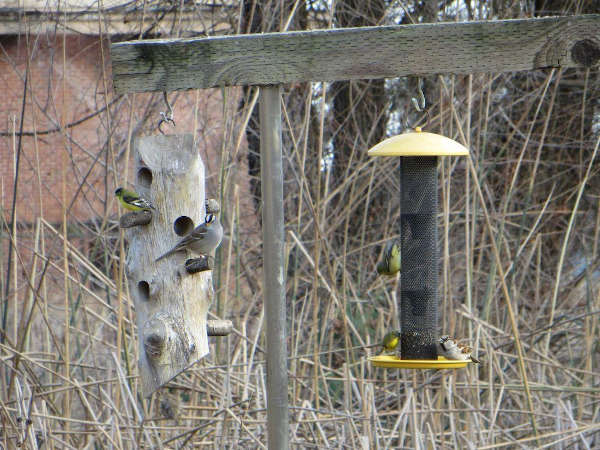
Bird feeders
Q: In response to recent warnings about avian flu in wild birds, I have taken down my bird feeders and bird baths. When is it OK to put them back out?
A: Infection with avian influenza viruses among songbirds, including many common backyard birds, appears to be relatively rare. However, feeding and providing water to wild birds is generally discouraged because the increased congregation of wild birds at bird feeders and bird baths may lead to fecal contamination of the local environment, which can aid in disease transmission.
While the risk of avian influenza to most songbird species appears low, there are other more common diseases, such as avian pox and avian trichomonosis, that periodically circulate among wild birds that may cause increased mortality during outbreaks.
Rather than providing bird seed to wild birds, a healthier option would be to provide natural sources of food by landscaping with native plants, if possible. This will benefit wild birds and pollinators like butterflies and bees.
If you do choose to have bird feeders and bird baths, it is generally recommended that bird feeders and bird baths are thoroughly cleaned outdoors at least once a week, and more often if there is heavy use by birds. Disposable gloves should be worn and hands should be thoroughly washed after handling of bird feeders and bird baths.
Please note, some pathogens can persist in water, on surfaces or in soil for hours to days, so even the most rigorous cleaning may not be enough to stop all disease transmission. If backyard chickens or other captive birds such as ducks, geese, pigeons, doves and parrots are present in the area, it’s strongly recommended not to have bird feeders and bird baths, and to exclude wild birds from accessing chicken feed and water.
Hunter education
Q: I recently completed my hunter education course. How do I obtain my hunter education certificate?
A: Currently, CDFW’s Hunter Education course is offered in three formats – traditional, hybrid and online. The traditional and hybrid courses include in-person instruction and testing. Those who successfully complete one of these courses will be issued a card-style hunter education certificate by the instructor. The online only course allows you to print out a paper certificate upon completion.
Regardless of which course format you complete, a Hunter Education certificate on durable license paper can also be purchased through CDFW’s Online License Sales and Services webpage by following these steps: login, select “Purchase Licenses,” then select “Hunter Education,” and then “Hunter Education Certificate (Dup).”
For additional information about both basic Hunter Education and Advanced Hunter Education, please visit CDFW's California Hunter Education webpage.
You may also consider purchasing a lifetime license. There are two types: the lifetime fishing license and lifetime hunting license. To learn more, visit CDFW’s Lifetime Licensing webpage.
Welcome to the ranks of California hunters! We wish you many memorable and successful seasons ahead.
Shipping wildlife skulls
Q: Can I ship a crocodile skull to California? I sell them online and have a client in California who would like to purchase one.
A: California Penal Code section 653o prohibits the sale of alligator or crocodile parts in California, even though neither are native to our state. However, this Penal Code provision is the subject of active litigation, and currently both the California Department of Fish and Wildlife and the Attorney General are enjoined from enforcing this law.
- Details
- Written by: nderson Marsh State Historic Park
The next guided walk will be held on Saturday, Aug. 13, beginning at 8:30 a.m.
The August nature walk will be led by Henry Bornstein, a certified California Naturalist and volunteer State Parks docent.
The hike will cover parts of the Cache Creek Nature Trail, the Marsh Trail and the Ridge Trail.
The hike is over mostly level terrain and will cover about 3 miles at a leisurely pace. It should last between one and a half to two hours.
Bring binoculars and meet in the parking lot at 8:15 a.m. for time to experience the early morning wildlife that can be found in the Ranch House and Barn complex yard — the walk will begin at 8:30 a.m.
There is no charge for the guided nature walk and parking is free for those attending.
Anderson Marsh State Historic Park is located on Hwy 53, between Lower Lake and Clearlake.
For more information about the guided walk, email
- Details
- Written by: California Department of Fish and Wildlife
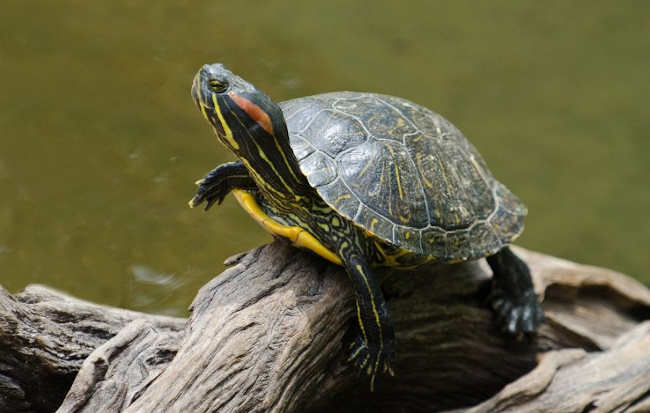
Red-eared sliders
Q: I see turtles all the time in the creeks that run through my neighborhood and the small lake at the local park. How can I tell which turtles are invasive? Should I remove the invasives from the water or leave them alone?
A: There’s a good chance you’re seeing red-eared sliders (Trachemys scripta elegans), which can be common in urban and suburban waterways where people are more likely to release their unwanted pets. Red-eared sliders can thrive in a variety of natural freshwater habitats, including streams, rivers, ponds, lakes, swamps and marshes. They can also be found in artificial habitats such as ditches and canals, and they’re often the only turtle species in urban and suburban park lakes and ponds.
Non-native red-eared sliders can establish self-sustaining populations and reach high densities, and they can compete with native species for habitat and food. For example, in California and the other Pacific states, sliders compete with native western pond turtles (Actinemys marmorata and A. pallida) for basking sites. Red-eared sliders are also vectors of disease and can transmit parasites to native animal species, as well as the bacteria Salmonella to humans.
Red-eared sliders can typically be distinguished from native western pond turtles by the thick red stripe behind each of their eyes, although some individuals lose their colorful skin and shell patterns over time and appear dark overall (melanistic). Unlike the smooth-edged shell of the western pond turtle, the marginal (outer carapace) scutes of red-eared sliders are serrated or slightly forked in appearance. Male sliders have elongated front claws, and are substantially smaller than females as adults. Adult red-eared sliders can range from approximately 5 to 11 inches in length and can live up to 20 years in the wild.
Can you remove a red-eared slider and take it home? Yes, you can capture them using authorized methods named in section 5.60 of CDFW’s freshwater sport fishing regulations. There is no bag limit on sliders, so you aren’t limited to just one; however, the purpose for collection dictates which permit is needed to remove them from the wild. If you want to take them home as pets or for food, a fishing license is required for individuals 16 and over. However, if you are asking about removing them as part of an invasive species control project, you’d need to contact CDFW.
And remember, if you remove a red-eared slider from the wild, you can’t ever release it again – and they can live for up to 40 years in captivity, which is quite a commitment! If you don’t have the resources to keep them at home, and you don’t want to kill them, your best bet might be to take a photo and file an invasive species sighting report with CDFW. If your sighting took place in a waterway where red-eared sliders weren’t previously known to exist, this information is especially useful to biologists, who might opt to remove them before they become established.
Tule elk
Q: How many tule elk are there in California?
A: There are currently about 6,000 tule elk persisting in 22 recognized populations scattered throughout the state. California’s other two sub-species of elk are Rocky Mountain and Roosevelt. For more information, please visit CDFW’s elk webpage.
California bears
Q: I live in the foothills of the Sierra Nevada and a neighbor of mine said she’s seen a grizzly bear in the wild. Is that possible?
A: Black bears are the only wild bears in California. However, they do come in many different colors, from solid black to shades of brown and tan. Some have different patches of color, such as a white blaze on the chest or lighter colored muzzles.
People will sometimes claim to have seen a “brown bear.” Generally, the term “brown bear” refers to Ursus arctos, the grizzly bear. California grizzly bears became extinct by the 1920s and only the one on our state flag remains. There are two subspecies of black bears recognized in California: The northwestern or Olympic black bear (Ursus americana altifrontalis) in the northwest corner of California, and the California black bear (Ursus americana californiensis) throughout the rest of California. They are thought to be geographically distinguished from each other by the crest of the Klamath Mountains.
California’s black bear population is robust and has increased over the past 25 years. Since the extinction of the California grizzly, black bears have been able to expand throughout much of the state as they no longer face direct competition from the larger bear species. For more information, please visit CDFW’s black bear webpage. For resources on co-existing with bears, please see CDFW’s Keep Me Wild webpage and Bear Naked Truth blog.