 How to resolve AdBlock issue?
Recreation
- Details
- Written by: Mendocino National Forest
The hours for the front desk are 8:30 a.m. to noon and 1 to 4 p.m., Monday through Friday.
Visitor information will also be available by phone at 530-934-3316. Staff at the front desk will be able to issue firewood permits.
Due to the amount of hazard tree abatement completed this year, the Mendocino National Forest and the Chico Seed Orchard have an abundance of firewood available to those with a permit. Firewood permits are free this year. The Grindstone District has provided a map with locations of wood rounds at Letts Lake and Mill Valley.
Beginning Monday, Nov. 7, the pedestrian gate at the Chico Seed Orchard will be open from 7 a.m. to 5 p.m. daily, except on federal holidays. These hours coordinate with sunrise and sundown after daylight saving ends on Sunday, Nov. 6.
The hours for the drive-through gate remain the same throughout the year, Monday through Friday from 7 a.m. to 3 p.m., except on federal holidays.
Visitors are not allowed on the property after dark. Pet owners must have dogs on a leash at all times.
Forest Order 08-22-02 and the associated map for public use identifies orchard hours, parking and closed areas.
To get a permit and collect firewood at Chico Seed Orchard, please contact Orchard Manager Lisa Crane at 530-879-6627.
The orchard is an active production facility with heavy equipment, and anyone collecting firewood will need to check in for accountability before driving through the orchard to pick up firewood.
- Details
- Written by: California Department of Fish and Wildlife
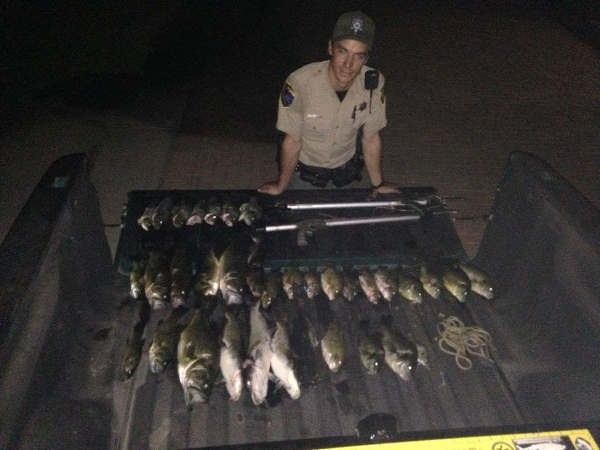
CALTIP
Q: How many crime tips does the California Department of Fish and Wildlife (CDFW) receive each year through CALTIP?
A: CALTIP, which stands for Californians Turn in Poachers and Polluters, was started in 1981 to serve as a tool for the public to report crimes involving wildlife - including plants, habitat and pollution. It is essentially a secret witness program where concerned citizens can report crimes and choose to remain anonymous.
CALTIP receives about 6,000 reports per calendar year. In 2015, CALTIP incorporated TIP411 as a tool for reporting violations using text, a phone app, or the “Report Poachers and Polluters” link on CDFW’s homepage. Currently about 2,000 reports are submitted via TIP411 per calendar year.
Reporting through CALTIP allows the public to be additional eyes and ears for CDFW’s wildlife officers while helping to protect California state resources from those who choose to act illegally by unlawfully killing animals, uprooting protected plants or polluting California waterways, for example.
The four ways to submit a crime tip through CALTIP or TIP411 are:
• Call 1-888-334-2258 (1-888-334-CALTIP).
• Text a message to 847411 (TIP411): Begin the message with “CALTIP,” leave a space, then text the violation.
• Use the free CALTIP smartphone app available at www.wildlife.ca.gov/Enforcement/CalTIP.
• Use the “Report a Violation Online” link located on the CALTIP page at www.wildlife.ca.gov/Enforcement/CalTIP.
To learn more, watch the Advanced Hunter Education CALTIP webinar on CDFW’s YouTube page.
Shotgun plug
Q: I’m a new hunter and plan on hunting upland game birds and small animals like rabbits and squirrels. I’ve been told that my shotgun needs to be “plugged.” What does that mean?
A: Wildlife regulations require that shotguns used for the take of game mammals and birds be restricted to a maximum capacity of three shotgun shells. This means that the total capacity of the shotgun, including the magazine and chamber, cannot exceed three shells. As some shotguns come from the factory “un-plugged” (able to accept more than three shells), you must check your shotgun to see how many shells it will hold. If it holds more than three, you must buy (or make) a plug to restrict the magazine capacity. See California Code of Regulations (CCR), Title 14, section 311(a), which states:
“Shotguns 10 gauge or smaller using shot shells only and incapable of holding more than three shells in the magazine and chamber combined. If a plug is used to reduce the capacity of a magazine to fulfill the requirements of this section, the plug must be of one-piece construction incapable of removal without disassembling the gun.”
Also see CCR, Title 14, section 353(d), and CCR, Title 14, section 507(a)(4).
Grizzly bears
Q: Would CDFW support the idea of re-introducing grizzly bears into California?
A: While it is an interesting concept, CDFW isn’t convinced that reintroducing the grizzly into present day California is a good idea because of California’s high human population and intensive urban development throughout much of what was historically prime grizzly habitat.
Historically, grizzly bears inhabited the foothills, valleys and coastal areas. Inland, they could be found wherever there was an abundance of anadromous fish, acorns or large herds of pronghorn antelope and tule elk. Along the coast, they could be found wherever there was an abundance of marine mammals and invertebrates. These places have been subject to development. For example, major freeways have been constructed and the landscape no longer provides suitable space for grizzlies to roam. California already faces issues of wildlife connectivity, urban-wildland interface problems and vehicular deaths with species that currently exist. We believe reintroducing grizzlies would exacerbate these problems.
CDFW also has public safety concerns. California’s Sierra Nevada is not like a Yellowstone ecosystem. The Sierra Nevada entertains millions more visitors annually. More people live, play and work there. Human-wildlife and depredation conflicts involving species such as mountain lions, black bears and coyotes are on the rise throughout California creating a heavy workload on department staff. We fear that the reintroduction of grizzly bears would add to this burden.
- Details
- Written by: Elizabeth Larson
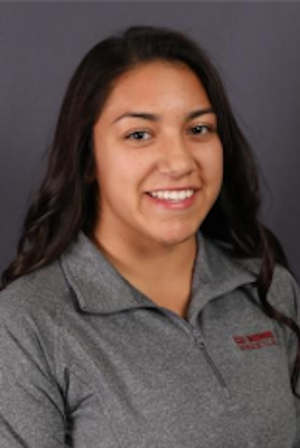
LAKE COUNTY, Calif. — Do you know what the fastest growing sport in the United States is?
If you guessed women’s wrestling then you are correct and it’s happening right here in Lake County! An all girls wrestling camp is coming to Clearlake Oct. 24 and 28 and is featuring one of Lake County’s most prestigious wrestlers.
Adriana Lopez of Upper Lake is running the camp and this is a huge opportunity for the girls in the community.
Lopez is the first state champion out of Lake County in any individual sport. She is giving back to her community by running the all girls camp.
“I’m super excited and happy to be able to give back to my community and do something I love,” Lopez said.
After high school, Lopez continued her wrestling career at Campbellsville University in Kentucky. There she was the Mid-South Conference Champion at 123 pounds, Mid-South Conference Freshman of the Year and First Team All Mid-South Conference.
Lopez will be bringing her extensive knowledge and experience back to Lake County.
“We are very fortunate to have Adriana on board to run this camp for our community,” said Coach Peter Stephan, who is the president of the Gladiator Wrestling Club. “As a wrestling community, we are trying to change the wrestling culture and putting Lake County wrestling on the map at the state level.”
The all-girls camp idea came about when Gladiator Wrestling met with the Lake County Sheriff's Activity League. Coach Peter along with Dr. Wayne Ogata met with the SAL Board that discussed bringing free opportunities for kids in the Clearlake Area.
There are plans to do many different activities and the first plan was to bring this All-girls Wrestling Camp to Clearlake.
The goal of the Lake County Sheriff's Activities League is to provide Lake County youth with exposure to a variety of positive leisure time activities.
For more information about Lake County Sheriff's Activities League check out the website at www.lakecountysal.com or the Lake County Sheriff's Activities Facebook page.
The camp will take place on Monday, Oct. 24, and Friday, Oct. 28, from 6 to 8 p.m. at Burns Valley Elementary, 3620 Pine St, Clearlake.
The camp is expecting over 50 girls from all around the county including kindergarten through high school girls.
Businesses from Lake County are also pitching in to make this camp happen as Barbecue By Biasotti, Next Home Yvette Sloan, and LAM Printing are sponsoring this event.
Tim Biasotti with Barbecue by Biasotti is also providing a special dinner for all the girls at the camp. “I am excited to help offset costs to provide a free camp for the female youth in the county and feed them”.
To register for the camp, please go to https://www.gladiatorwrestlingclub.com/.
- Details
- Written by: California Department of Fish and Wildlife
Beginning Nov. 15, 2022, California anglers will be able to purchase a 2023 fishing license that will take effect on Jan. 1, 2023, and last the entire year. All licenses purchased on or after January 1, 2023, will be effective from the date of purchase for a continuous 365 days.
"I’m proud to announce that we’re able to sell yearlong licenses many months sooner than we anticipated,” said CDFW Director Charlton H. Bonham. “I applaud the staff that worked tirelessly to bring this benefit to California’s anglers who have been asking for the 365-day license for a very long time.”
Assemblymember Jim Wood (D-Healdsburg) introduced AB 817 in February 2021, allowing a transition of California’s fishing license validity from a calendar year to a full 365 days from purchase.
Prior to this change, anglers who purchase their license after New Year’s Day were charged the same price for fewer days of fishing, and some are not willing to pay the full price of a license when purchasing it later in the year resulting in fewer license sales.
This change will allow anglers to receive 365 days' worth of benefits after purchasing a license any time of year.
“Thanks to the dedicated staff efforts at CDFW, California will be moving to our new 365-day fishing license even sooner than expected,” said Wood. “This license will encourage more Californians to fish and increase fishing license revenue which funds critical state fishing and conservation programs. Making fishing more accessible really supports communities that rely on outdoor recreation and tourism, like my northern California district.”
The idea, which has been discussed and desired by California’s fishing community for many years, was embraced by CDFW’s Recruit, Retain, Reactivate (R3) initiative. The concept was further developed with stakeholders responsible for drafting the R3 initiative, including Wayne Kotow of the Coastal Conservation Association – California (CCA CAL).
“Providing a fishing license that offers greater value and incorporates 21st-century technology is long overdue,” said Kotow, executive director of CCA CAL, sponsor of AB 817 which led to the new license option. “It is also an important step in the implementation of California’s R3 program, which seeks to boost the number of anglers and others recreating in the outdoors. We are thrilled Assemblymember Wood’s perseverance on this issue has paid off, and proud to partner with CDFW to achieve this milestone for California anglers.”
CDFW’s R3 team works alongside partners and stakeholders, like CCA CAL, to create goals and strategies and then implement changes that reduce the barriers to participation in outdoor activities.
To purchase a fishing license, please visit CDFW’s online internet sales webpage. At checkout there is an additional option to enroll in auto-renewal for fishing licenses, which allows anglers to automatically purchase and receive their new license when their current one expires, so California’s anglers never miss a day of fishing!
Interested in becoming an angler but not sure where to start? Check out CDFW’s R3 webpage to find the latest information on fishing programs, regulations, tutorials and additional resources. Don’t miss the California’s Wild Kitchen tab to view recipes for use on harvested fish plus additional informational videos found under the R3 Harvest Huddle Hour (R3H3) section.