 How to resolve AdBlock issue?
Recreation
- Details
- Written by: California Department of Fish and Wildlife
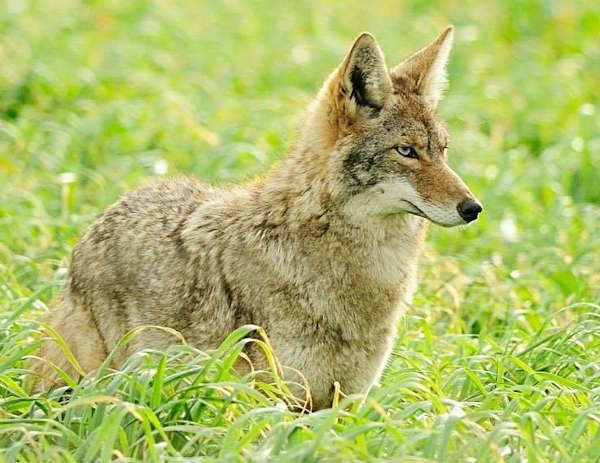
Can I shoot a coyote with a compound bow?
Q: I live in a condominium complex in Orange County, and coyotes sometimes run around the building — which worries those of us who have small dogs. Can I legally shoot a coyote with a compound bow if I obtain a California hunting license?
A: Assuming you are asking specific to the condominium complex where you describe seeing the coyote, the quick answer is no. Here’s why:
Per California Code of Regulations, Title 14, section 472(a), a coyote is categorized as a nongame mammal. This means you can hunt them if you have a hunting license and a legal place to hunt.
Coyotes may be taken at any time of the year and in any number, and archery equipment is a legal method of take. However, most cities restrict the discharge of a firearm in urban areas like those with condominium complexes.
Many municipalities further restrict the discharge of archery equipment, and pellet rifles as well. You would have to check your local ordinances to see what is prohibited.
After those possible restrictions, here's the primary law that would prohibit you from hunting a coyote in or very near your condominium complex: California Fish and Game Code section 3004(a) makes it unlawful for a person, other than the owner, person in possession of the premises, or a person having the express permission of the owner or person in possession of the premises, while within 150 yards of an occupied dwelling house, residence or other building, or within 150 yards of a barn or other outbuilding used in connection with an occupied dwelling house, residence or other building, to either hunt or discharge a firearm or other deadly weapon while hunting. The 150-yard area is a “safety zone.”
We encourage you to visit CDFW’s Keep Me Wild page where you’ll find information on how to best coexist with coyotes and prevent attracting them in the first place. You can also reach out to CDFW’s regional offices or submit a Wildlife Incident Report online if you’re experiencing conflicts with coyotes in your community.
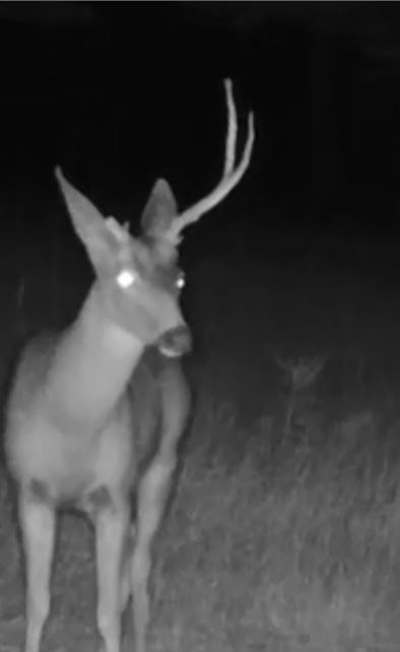
Legal buck?
Q: This past deer season, my hunting friends and I got into a heated debate about whether the buck in the photo would be legal to harvest. What would CDFW say? The photo is from a trail camera on a ranch where we have permission to shoot.
A: Great question! Thanks for the photo. Yes, the buck – or male deer – in your photo is legal to take during deer season with a proper deer tag for the zone and a valid hunting license.
A California deer tag that allows the harvest of a buck has a minimum requirement of a buck that is forked horn or better. California Code of Regulations, Title 14, section 351 defines a forked-horn buck as a “male deer having a branched antler on either side with the branch in the upper two-thirds of the antler. Eyeguards or other bony projections on the lower one-third of the antler shall not be considered as points or branches.”
While the deer in your photo is missing an antler on one side, it clearly has a branched antler on the other side with the branch in the upper two-thirds of the antler, which makes it legal. If the buck is still out on the landscape, he will likely look much different next season.
Male deer shed their antlers annually and regrow them through the spring and summer. Deer antlers get bigger each year so this should be a fine-looking animal if you’re lucky enough to encounter it next deer season.
Spearfishing
Q: Can I spearfish in freshwater inland lakes, streams and rivers?
A: There are only a few inland waters where spearfishing is allowed, and the species that can be taken by spearfishing is limited. Information on location and species can be found in CDFW’s California Freshwater Sport Fishing Regulations booklet.
The definition of “spearfishing” comes from California Code of Regulations, Title 14, section 1.76:
The taking of fish by spear or hand by persons who are in the water and may be using underwater goggles, face plates, breathing tubes, scuba or other artificial underwater.
Locations for spearfishing can be found in California Code of Regulations, Title 14, section 2.30. Spearfishing is permitted only in:
(a) The Colorado River District for carp, tilapia, goldfish and mullet, all year.
(b) The Valley District and Black Butte Lake (Tehama County) for carp, tilapia, goldfish, striped bass, western sucker, Sacramento blackfish, hardhead, Sacramento pikeminnow and lamprey, from May 1 through Sept. 15, except that no spearfishing is permitted in:
(1) Shasta County (see Section 2.12).
(2) Tehama County except Black Butte Lake.
(3) Butte Creek (Butte Co.).
(4) Feather River below Oroville Dam (Butte Co.).
(5) Designated salmon spawning areas (See California Fish and Game Code section 1505).
(c) The Kern River from the Kern-Tulare county line upstream to the Johnsondale Bridge for carp, goldfish, western sucker, hardhead and Sacramento pikeminnow, from May 1 through Sept.15.
(d) See bullfrogs (Section 5.05).
- Details
- Written by: California Department of Fish and Wildlife
The new regulations were adopted by the Pacific Fishery Management Council in June 2022 and the California Fish and Game Commission in November 2022 and are expected to take effect on or around Jan. 1, 2023.
As in previous years, the boat-based fishery for most groundfish species will be closed statewide beginning Jan. 1, while spear divers and shore-based anglers will continue to have year-round fishing opportunities for groundfish.
For groundfish including Rockfish, Cabezon and Greenling, or RCG, as well as lingcod, the boat-based seasons will bring a mix of increased and reduced fishing opportunities, depending on the species.
Unlike prior years, all Groundfish Management Areas will have a portion of the season when ‘all-depth’ fishing is allowed and anglers are not subject to the Rockfish Conservation Area, or RCA, depth constraints. This allows new fishing opportunities for deeper-water shelf and slope rockfish, which are most abundant in areas that have been previously closed to recreational groundfish fishing.
The following is a summary of the new boat-based regulations for RCG species and lingcod in each management area:
Southern Management Area between 34°27' N. latitude (Point Conception) and the U.S./Mexico border:
• For nearshore rockfish, cabezon and greenlings: closed Jan. 1 through March 31, open at all depths April 1 through Sept. 15, closed Sept. 16 through Dec. 31.
• For all other rockfish (shelf and slope species) and lingcod: closed Jan. 1 through March 31, open at all depths April 1 through Sept. 15. From Sept. 16 through Dec. 31, take of shelf and slope rockfish and lingcod is open seaward of the 50 fathom RCA line. Take is prohibited shoreward of the 50 fathom RCA line.
• Additional regulations still apply within the Cowcod Conservation Areas.
Central Management Area between 37°11' N. latitude (Pigeon Point) and 34°27' N. latitude (Point Conception):
• For nearshore rockfish, cabezon and greenlings: closed Jan. 1 through April 30, open at all depths May 1 through Sept. 30, closed Oct. 1 through Dec. 31.
• For all other rockfish (shelf and slope species) and lingcod: closed Jan. 1 through April 30, open at all depths May 1 through Sept. 30. From Oct. 1 through Dec. 31, take of shelf and slope rockfish and lingcod is open seaward of the 50 fathom RCA line. Take is prohibited shoreward of the 50 fathom RCA line.
San Francisco Management Area between 38°57.5' N. latitude (Point Arena) and 37°11' N. latitude (Pigeon Point):
• For nearshore rockfish, cabezon and greenlings: closed Jan. 1 through July 15, open at all depths July 16 through Dec. 31.
• For all other rockfish (shelf and slope species) and lingcod: closed Jan. 1 through May 14.
• From May 15 through July 15, take of shelf and slope rockfish and lingcod is open seaward of the 50 fathom RCA line. Take is prohibited shoreward of the 50 fathom RCA line. From July 16 through Dec. 31, open at all depths.
Mendocino Management Area between 40°10' N. latitude (near Cape Mendocino) and 38°57.5' N. latitude (Point Arena):
• For nearshore rockfish, cabezon and greenlings: closed Jan. 1 through July 15, open at all depths July 16 through Dec. 31.
• For all other rockfish (shelf and slope species) and lingcod: closed Jan. 1 through May 14.
• From May 15 through July 15, take of shelf and slope rockfish and lingcod is open seaward of the 50 fathom RCA line. Take is prohibited shoreward of the 50 fathom RCA line. From July 16 through Dec. 31, open at all depths.
Northern Management Area between the California/Oregon state line and 40°10' N. latitude (near Cape Mendocino):
• For rockfish, cabezon, greenlings and lingcod: closed Jan. 1 through May 14, open at all depths May 15 through Oct. 15, closed Oct. 16 through Dec. 31.
Anglers will need to identify rockfish species they catch, and beginning in 2023, be able to determine if the fish is categorized as a nearshore, shelf or slope rockfish species, as different seasons and depths apply to each category depending on the Groundfish Management Area and month.
The RCG bag limit will remain at 10 fish in combination of rockfish, cabezon and greenlings, with sub-bag limits of not more than four vermilion rockfish, one copper rockfish and one quillback rockfish. Take and possession of cowcod, yelloweye and bronzespotted rockfish will remain prohibited.
The new groundfish regulations are a significant departure from the fishing seasons and depth limits that anglers are accustomed to and are necessary due to scientific information suggesting that copper rockfish and quillback rockfish populations are in severe decline.
The season structures for each management area were developed in consultation with fishing industry representatives, non-governmental organizations and state, federal and tribal governments, and were designed to provide the greatest amount of groundfish fishing time and opportunity to anglers throughout the year.
“While recognizing there are concerns with copper and quillback rockfish that will reduce nearshore fishing time in the near-term, the California Department of Fish and Wildlife (CDFW) is excited to offer recreational anglers new deeper-water and offshore bank and reef opportunities for groundfish that have been closed for more than two decades,” said CDFW Environmental Program Manager Marci Yaremko. “We look forward to seeing the diversity of healthy species come across the docks in the coming years as significant new fishing grounds will now be available to recreational angling.”
There are also changes for several species that have been subject to boat-based closures in the past, which may offer new alternatives for boat-based anglers as early as January. They include:
• New year-round opportunities: ocean whitefish, California scorpionfish, leopard shark, soupfin shark, Dover sole, English sole, arrowtooth flounder, spiny dogfish, skates, ratfish, grenadiers, finescale codling, Pacific cod, Pacific whiting, sablefish and thornyheads will now be open year-round in all depths, statewide.
• Boat-based fishing for California sheephead, will be open from March 1 through Dec. 31, statewide. The bag limit, regardless of fishing mode, will decrease from five fish to two fish.
To meet harvest goals, the recreational groundfish fishery is subject to in-season regulatory changes. Please stay informed by visiting CDFW’s summary of recreational groundfish fishing regulations webpage before fishing.
- Details
- Written by: Anderson Marsh Interpretive Association
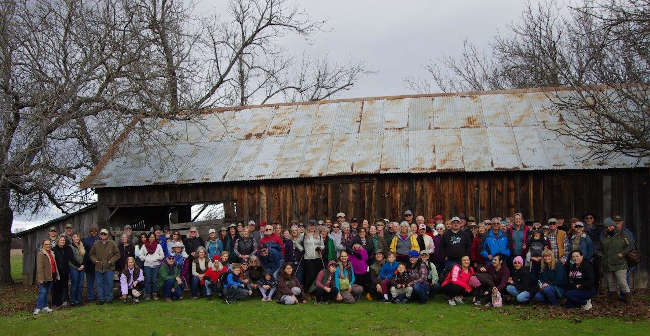
LOWER LAKE, Calif. — Anderson Marsh State Historic Park will offer a free, community hike beginning at noon on New Year’s Day.
The hike is part of America's State Parks First Day Hikes program.
The nationwide First Day Hikes program offers individuals and families an opportunity to begin the New Year by taking a healthy hike on January 1st at a state park close to home.
The New Year’s Day hike will be led by State Parks volunteers associated with the Anderson Marsh Interpretive Association, or AMIA.
“The event offers a wonderful opportunity to begin the New Year right by getting outside, enjoying nature and welcoming the New Year with friends and family on Jan. 1,” said Henry Bornstein, an AMIA Board member who is one of this year’s hike leaders,
Participants can choose between two routes this year.
The McVicar hike is a leisurely trip to the end of the trail and back, from the parking lot to the shores of Clear Lake, across from Indian Island. The entire walk is about 7½ miles of mainly flat terrain and should take between three and four hours, depending on how many times we stop to admire what we see along the way.
The shorter Cache Creek, Marsh and Ridge Trails walk is a 3½-mile loop over these three trails. This shorter hike will take between 2 and 2 ½ hrs.
“Hikers will experience grasslands, oak woodlands, willow and cottonwood riparian habitats and the tule marsh habitat of the Anderson Marsh Natural Preserve, and may encounter a variety of migrating and resident birds and other wildlife,” said Bornstein.
Both hikes begin at noon at the park off Highway 53, between Lower Lake and Clearlake. Children of all ages are welcome.
Hikers should bring water and snacks, binoculars if they have them, and a hat for protection against the weather.
Sturdy shoes that can handle a little mud are recommended.
Participants on both hikes are welcome to walk part way and make an early return at their own pace.
No dogs are allowed on these trails, which pass through the Anderson Marsh Natural Preserve.
Heavy rain will cancel the walks.
For further information, the public is asked to contact AMIA at 707-995-2658 or
- Details
- Written by: California Department of Fish and Wildlife
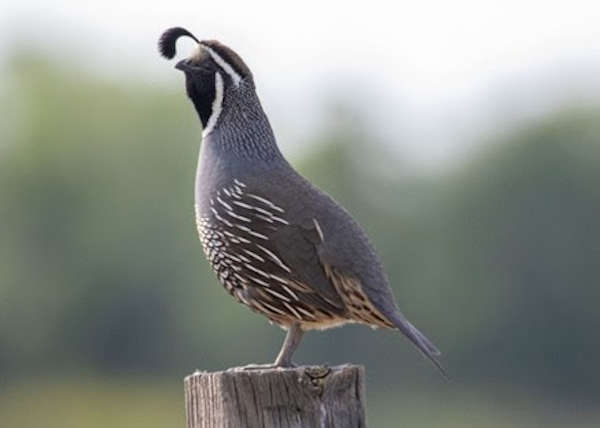
Native quail
Q: I live near a park that is frequented by quail, and I love watching them on my morning walks. What plants can I put in my own yard to encourage quail to visit my property?
A: Quail certainly are charismatic birds — we understand why you’d want to see them near your home.
California is home to three species of quail: mountain, California and Gambel’s quail. To encourage quail to visit your property, we suggest planting brush species that provide cover and perches, and forb species that provide food.
For mountain quail, this would include shrubs like manzanita and buckbrush, and native oak trees. California quail also gravitate toward brittlebush, deerweed, redberry and Pacific blackberry. Gambel’s quail have evolved with the dry dusty desert areas.
They like acacia, brittlebush, mesquite, cacti and yucca. All three species of quail prefer seeds in the pea family: lotus, lupine and clover. Filaree and chickweed are other good forb options.
Oak trees are a good option because they can provide perches for birds and California quail will eat the oak galls.
Finally, consider the species of trees and shrubs that you see quail use on your walks in natural areas. Take time to observe how quail use native vegetation for food and shelter in those areas, and then simulate that in your own yard.
Bait regulations
Q: Is it legal to catch sunfish and use them as live bait for bigger fish? What kind of live bait can you use in freshwater?
A: These are seemingly simple questions, but the answers are a bit complex because they depend on several factors including the California sport fishing district where you will be fishing, the body of water where you plan to fish and the species of live bait you intend to use.
The applicable regulations can be found in California Code of Regulations, Title 14, sections 4.10-4.30. You can find these in the California Freshwater Sport Fishing Regulations booklet, which is available for download. On the last page of the booklet there’s a map of the seven California sport fishing districts.
Each sport fishing district will have its own additional regulations on what kind of live bait is allowed, along with water-specific, area-specific and bait-specific regulations.
There are variables between districts to authorize or prohibit movement of live fish from the location where captured.
For example, in the Valley Sport Fishing District, which covers all or parts of 25 counties in the middle part of the state, live or dead fin fish (which includes sunfish) generally cannot be used as bait (California Code of Regulations Title 14, section 4.20).
However, there are exceptions to the general prohibition and certain waters where live fin fish are lawfully caught can be used for live bait in the waters where they were caught (CCR Title 14, section 4.20(a)-(f)).
By contrast, in the Southern Sport Fishing District, which covers all or part of seven Southern California counties, sunfish may never be used as live bait, though some other fish species may be used (CCR Title 14, section 4.10).
The bottom line: It’s imperative to check the bait fish use regulations in the sport fishing district where you plan to fish before using any live bait.
Bears
Q: I live in the foothills of the Sierra Nevada and a neighbor of mine said she’s seen a grizzly bear in the wild. Is that possible?
A: Black bears are the only wild bears in California. However, they do come in many different colors, from solid black to shades of brown and tan. Some have different patches of color, such as a white blaze on the chest or lighter colored muzzles.
Many people will claim to have seen a “brown bear.” Generally, the term “brown bear” refers to Ursus arctos, the grizzly bear.
California grizzly bears became extinct by the 1920s and only the one on our state flag remains.
There are two subspecies of black bears recognized in California: The northwestern or Olympic black bear (Ursus americana altifrontalis) in the northwest corner of California, and the California black bear (Ursus americana californiensis) throughout the rest of California.
They are thought to be geographically distinguished from each other by the crest of the Klamath Mountains. California’s black bear population is robust and has increased over the past 25 years.
Since the extinction of the California grizzly, black bears have been able to expand throughout much of the state as they no longer face direct competition from the larger bear species.