 How to resolve AdBlock issue?
Recreation
- Details
- Written by: California Department of Fish and Wildlife
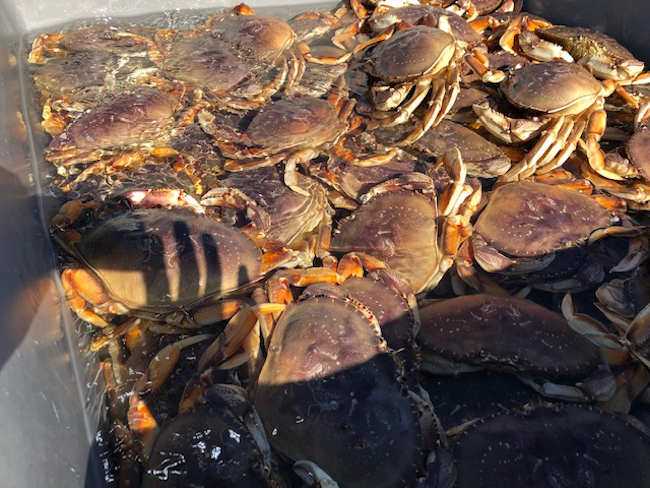
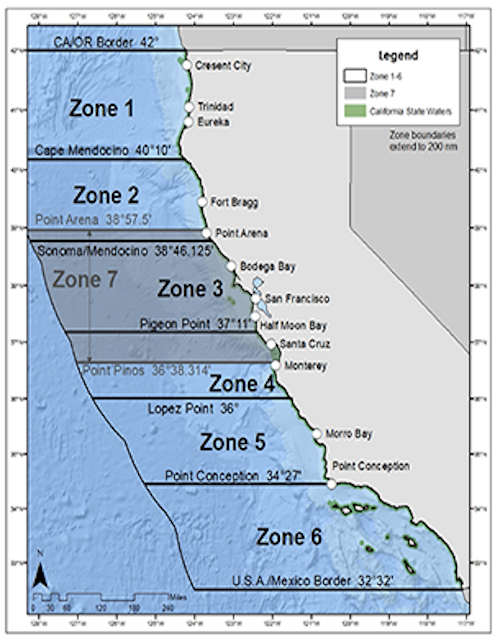
The recreational take of Dungeness crab using crab traps in Fishing Zones 3 and 4 (from the Sonoma/Mendocino county line to Lopez Point) will be temporarily restricted when the season opens on Nov. 6 due to presence of humpback whales and leatherback sea turtles and the potential for entanglement from trap gear.
The season had been scheduled to open statewide on Nov. 6, 2021. However, the deployment and use of crab traps in any recreational crab fishery (including rock crab) is temporarily restricted in those zones until lifted by the California Department of Fish and Wildlife director.
The recreational take of Dungeness crab using crab traps is allowed starting Nov. 6, 2021, in Fishing Zones 1 and 2 (from the Oregon state line to the Sonoma/Mendocino county line) and in Fishing Zones 5 and 6 (the area south of Lopez Point).
The CDFW director is opening the fishery in these zones under a fleet advisory and reminds recreational crabbers to implement best practices, as described in the best practices guide.
Recreational take of Dungeness crab by other methods, including hoop nets and crab snares, is not affected by the temporary trap restriction and is allowed statewide beginning Nov. 6.
For more information, please see the FAQs for the new recreational crab trap regulations or CDFW’s Whale Safe Fisheries Webpage.
The commercial Dungeness crab fishery south of the Sonoma/Mendocino county line was scheduled to open on Nov. 15 in Fishing Zones 3, 4, 5 and 6. However, the season opener has been delayed in Fishing Zones 3 and 4 (Sonoma/Mendocino county line to Lopez Point) due to presence of humpback whales and leatherback sea turtles and the potential for entanglement.
Fishing Zones 5 and 6 are scheduled to open Nov. 15 under a Fleet Advisory, pending Domoic Acid testing results. CDFW reminds the commercial fleet in these fishing zones to implement best practices, as described in the Best Practices Guide.
CDFW also reminds all commercial fishery participants that, pursuant to Senate Bill 80 (McGuire, 2021), “fair start” now applies to delays implemented to reduce the risk of marine life entanglement and commercial traps may be baited 64 hours before the opening of the season statewide.
“This is the first time the recreational Dungeness crab fishery is subject to similar measures as commercial crabbers to help protect whales and sea turtles," said CDFW Director Charlton H. Bonham. "We recognize that change takes time but thank all Californians who treasure these recreational fishing opportunities. We continue to value and appreciate the work put in by the fleet and the California Dungeness Crab Fishing Gear Working Group. This year, while the start of the recreational season may look different, the process allowed us to open some parts of the coast to recreational crab traps and all the coast to recreational crabbing with other fishing methods. This shows there is a way to partner more closely with the recreational fishery to protect California's whales and sea turtles while still providing meaningful recreational and commercial fishing opportunities."
Prior to this determination, CDFW worked with a broad range of scientific partners, researchers, agencies and the California Dungeness Crab Fishing Gear Working Group to collect and synthesize information regarding presence of humpback whales, blue whales and leatherback sea turtles across each fishing zone.
Aerial surveys, vessel-based surveys, and satellite telemetry data indicate aggregations of humpback whales and several leatherback sea turtles still present within Fishing Zones 3 and 4.
Under triggers established as part of the Risk Assessment and Mitigation Program regulations for the commercial fishery, as well as new regulations adopted by the Fish and Game Commission for the recreational Dungeness crab fishery, the CDFW Director is required to implement a management action for these fishing zones to reduce marine life entanglement risk.
For the commercial fishery, Fishing Zones 1 and 2 are not scheduled to open until Dec.1 and crab meat quality test results are not yet available. CDFW has not yet evaluated the need for any actions to reduce marine life entanglement risk in these zones.
CDFW anticipates the next risk assessment will take place on or before Nov. 22 at which time the director will reevaluate the temporary recreational crab trap restriction and commercial fishery delay in Fishing Zones 3 and 4, as well as the need for any management actions for the commercial fishery in Fishing Zones 1 and 2.
For more information related to the risk assessment process, please visit CDFW’s Whale Safe Fisheries page or more information on the Dungeness crab fishery, please visit www.wildlife.ca.gov/crab.
- Details
- Written by: Editor
Effective immediately all overnight camping will be closed for the season at BMDSF.
The closure is being implemented due to current and expected weather forecasts, saturated roads, and overall hazardous conditions.
BMDSF will remain open for day-use only during this period. Day-use activities include hiking,
mountain biking, and horseback riding and are restricted to the hours of sunrise to sunset.
Forest roads may be subject to temporary closure to vehicle traffic pending wet weather and saturated soil conditions.
For additional information on the Demonstration State Forest Program, visit
https://www.fire.ca.gov/programs/resource-management/resource-protection-improvement/demonstration-state-forests/ or call the forest office at 707- 928-4378.
- Details
- Written by: California Department of Fish and Wildlife
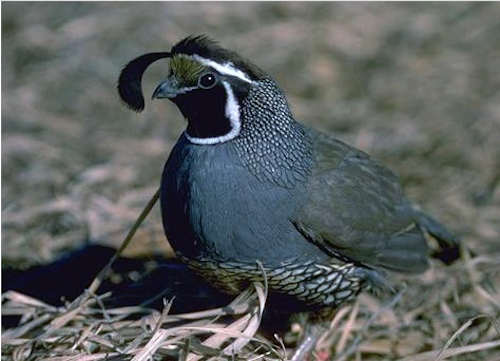
How many shotgun shells am I allowed to have in my shotgun when quail hunting?
Q: How many shotgun shells am I allowed to have in my shotgun when quail hunting? I want to know if my gun needs a plug installed.
A: Sounds like you are getting ready to go quail hunting! The short answer to your question is — yes, you need a plug in your shotgun.
California Code of Regulations (CCR), Title 14, section 311(a) states that only shotguns “incapable of holding more than three shells in the magazine and chamber combined” may be used for taking resident small game species that include quail, pheasant, rabbits, squirrels, etc. Furthermore, the regulation goes on to specify the type of plug required. “If a plug is used to reduce the capacity of a magazine to fulfill the requirements of this section, the plug must be of one piece construction incapable of removal without disassembling the gun.”
And then there are federal regulations requiring a maximum three-shot capacity in shotguns when hunting migratory birds such as doves, snipe, ducks and geese. These are spelled out in Code of Federal Regulations, Title 50, part 20. Hope this helps.
Bakersfield lake
Q: I saw photos online of a fish with odd looking teeth that was caught in a lake in Bakersfield. Some people thought it might be a piranha. Did the California Department of Fish and Wildlife (CDFW) look into this?
A: Yes, they were great photos, which made it easy to identify the fish as a pacu. Pacus are a popular tropical aquarium species that often outgrow their tanks and are unfortunately released by owners who no longer want them. Pacu and piranha can be differentiated by the shape of their mouth and teeth. When the mouth of a pacu is opened the gap between the upper and lower lip form a squarish gap, whereas on the piranha the upper and lower lip form a V-shape. And while pacu teeth may appear sharp, they are no comparison to those of piranha, which are as sharp as razors.
Winter cold water temperatures probably would have taken the fish out if the angler hadn’t. Based on their tropical water temperature requirements, we do not anticipate pacus, or piranha either, are capable of invading California waters. For more information, visit our Don’t Let it Loose campaign online.
Russian River coho
Q: What’s the status of the coho salmon population in the Russian River?
A: Before the Russian River coho Salmon Captive Broodstock Program (RRCSCBP) began at Warm Springs Hatchery in 2001, coho salmon were close to extirpated from the Russian River basin. Only a few juveniles remained, and these juveniles were used to start the broodstock program.
Over the past 10 to 15 years, adult coho returning to the Russian River have fluctuated from approximately 100 to more than 700 a few years ago, with an average of around 300 to 500. The recent drought has resulted in fewer than 300 adult coho returning in winter 2020/21. The majority of these adult returners are fish that were released as juveniles in Russian River tributaries through the RRCSCBP. The program released between 100,000 and 230,000 coho annually, with an average of approximately 180,000.
The number of adult coho in the Russian River is indeed very low and very likely the result of a relative lack of suitable habitat, and especially a lack of adequate water, especially during the dry summer months. The latter problem obviously is exacerbated by the current drought conditions. Recovery of the endangered Central Coast coho salmon will require continued habitat restoration, combined with other management actions such as population enhancement through genetically guided conservation hatchery intervention.
Kayaking for crabs
Q: I want to catch crab from a kayak and am confused by the regulations. I live in Los Angeles, and I want to go off the coast and use crab traps and hoop nets. Are these allowed?
A: State regulations do not allow for the use of traps to recreationally take any species of crabs in Southern California south of Point Arguello in Santa Barbara County. You may use hoop nets to recreationally take crabs south of Point Arguello, provided you follow the regulations in CCR, Title 14, section 29.80(b). Visit CDFW’s Invertebrate Fishing Regulations page for full text of the regulations.
- Details
- Written by: Editor
Temporary wet weather trail closures go into effect when two inches of rainfall occur within a 24-hour period or when the soils are saturated.
The wet weather off-highway vehicle, or OHV trail closures restrict the use of OHV trails when conditions are too wet to sustain use without causing soil loss, impacting water quality, damaging trail tread and putting public safety at risk.
These limited duration closures will remain in place until no measurable precipitation is recorded within 48 consecutive hours.
By issuing these closures as precipitation events occur, the Forest provides for public safety, protects natural resources during and after storms and allows time for trails to dry out prior to resuming use.
The restrictions may be implemented anytime during this fall and winter season through June 2022.
Trail users can check the precipitation data online before traveling to the forest.
Look at MNF02 Portable (Howard Mill) rain gauge on the Upper Lake Ranger District and MNF03 Portable (Fouts Springs) on the Grindstone Ranger District. If Howard Mill rain gauge is inoperable, the Konocti location will be used for the Upper Lake Ranger District.
When closures occur, information will be posted on the forest website and social media.
The restrictions prohibit the use of motor vehicles on National Forest System trails within the Upper Lake and Grindstone Ranger Districts on the Mendocino National Forest pursuant to 36 CFR 261.55(b).
All forest orders, including Forest Order No. 08-21-07 (wet weather closure), are posted here.